



TL;DR
- This Bitcoin short squeeze helped launch a rally that carried BTC near $77,000 and produced two major liquidation waves.
- Spot Bitcoin ETFs recorded $517 million and $606 million in consecutive daily inflows as forced buying began giving way to a test of broader demand.
- Treasury buybacks, shifting long-term yields and upcoming U.S. regulatory decisions could influence whether the rally has support beyond short covering.
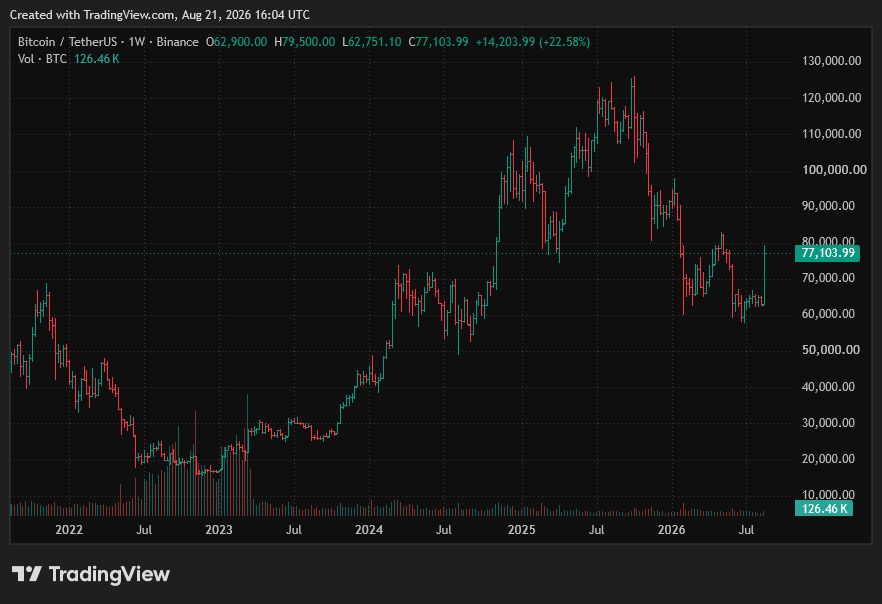
Bitcoin traded near $77,000 on August 21, capping its strongest weekly gain since March 2023. It advanced roughly 24% since Monday. The rally traces back to a short squeeze earlier in the week that forced billions of dollars in bearish bets to close. It has continued through a second wave of liquidations and two consecutive days of large exchange-traded fund inflows. Treasury Secretary Scott Bessent added a fresh signal on top of that.
How a short squeeze started the move
A short position gains when an asset falls in price. Traders can use leverage to increase the size of that bet, and their exchange requires collateral to cover potential losses. When the price rises too far, the collateral no longer supports the position, and the exchange liquidates the trade by closing it automatically. Closing a short requires buying back the asset, so each liquidation can add upward pressure of its own.
Bitcoin spent six weeks trading between roughly $62,000 and $66,900 after July 8. Volatility during that stretch fell to multiyear lows. Traders built up a dense cluster of short positions betting the range would hold. Once Bitcoin broke above the range, a large share of those bets became vulnerable at the same time. Exchanges liquidated the positions automatically, and the resulting wave of forced buying pushed prices higher still.
How the Treasury’s yield relief came and went
The move began on August 19, when the U.S. Treasury said it would at least double the maximum size of its buyback operations for 10-to-20-year and 20-to-30-year government bonds, from $2 billion to at least $4 billion per operation, running from September 9 through November 4. The announcement pulled the 30-year Treasury yield down from a 19-year high of 5.32% and supported demand for riskier assets, including Bitcoin.
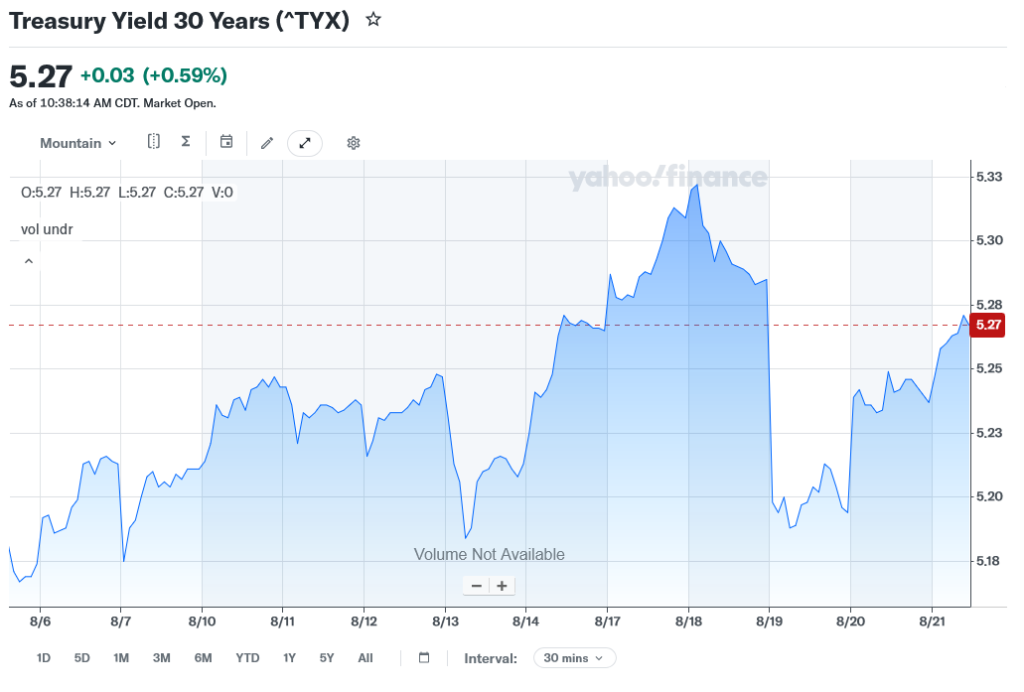
The relief did not last. The yield rose back above 5.27% the next day, August 20, before Treasury Secretary Scott Bessent eased it slightly with comments on CNBC that afternoon. He said the government expects to conduct these buybacks regularly and could increase their size beyond the $4 billion already announced. “We have a big toolkit,” Bessent said. The comment extended the crypto rally instead of letting it fade once the initial squeeze had run its course.
The yield rose again on August 21, erasing the relief from Bessent’s comments. The long-term borrowing costs remained close to where they stood before the Treasury’s announcement.
Two liquidation waves in 48 hours
The first wave hit on August 19 and 20, when roughly $3 billion in short positions closed within 24 hours, compared with $263.5 million on the long side. Bitcoin positions accounted for about $1.67 billion of that total. Ether contributed another $1.14 billion, with more than $1 billion of shorts closing within a single hour.
A second wave followed as the rally kept extending. Over the 24 hours spanning August 20 and 21, an additional $1.25 billion in positions liquidated, on top of the roughly $3.3 billion recorded the day before. The scale of the follow-through indicates the squeeze was not a single event that burned out shorts and stopped. Leveraged positioning kept getting caught on the wrong side as Bitcoin extended its gains toward $77,000.
Is the demand behind the rally real?
Spot demand needs to replace the forced buying once the liquidation cycle slows. Spot Bitcoin ETFs pulled in $517 million on August 19 and $606 million on August 20. Ether funds took in $189 million and $221 million over the same two days. Each figure topped the prior day’s total, marking the largest back-to-back inflows in months.
Open interest tells a less settled story. CoinDesk tracked open interest rising 9.11% to $131.25 billion in the day after the squeeze, with Bitcoin’s share up 7.18% to $23.4 billion, and read the pickup as notional exposure rebuilding quickly. Bloomberg, drawing on the same CoinGlass data, called the rebuild muted and concluded the two-day advance was driven mostly by short covering. It does not see a broad shift into new bullish positions.
What happens if Congress doesn’t pass Clarity?
President Donald Trump renewed his call for Congress to pass the Clarity Act, the crypto market-structure bill that has been the industry’s top legislative priority. Senate Banking Committee Chairman Tim Scott said at the SALT conference that the bill has a reasonable chance of advancing next month. A procedural vote is scheduled for September 15.
The Securities and Exchange Commission is not waiting on Congress. On August 18, the agency proposed a new Regulation Crypto Assets framework that would create tailored registration exemptions for certain crypto-related investment contracts. Under the proposed rules issuers could raise up to $5 million over four years or $75 million annually under lighter disclosure requirements. The proposal moves on its own track regardless of what happens with the Clarity Act.
Congress failing to act at all is also a scenario the Commodity Futures Trading Commission is preparing for. CFTC Chairman Michael Selig said in prepared remarks at the agency’s Innovation Advisory Committee meeting on August 20 that he has directed staff to begin drafting rules for a crypto asset market structure using the agency’s existing authority. Selig said the agency would “utilize its existing authorities to begin establishing a regime” for crypto markets if the Clarity Act continues to stall, giving the market a third regulatory path alongside the SEC’s proposal and the Senate vote.
>>> Read more: SEC and CFTC Define Digital Commodities Framework
Whether the rally holds now depends on two dated events. The Senate’s September 15 procedural vote will show whether the Clarity Act has the votes to advance. The Treasury’s expanded buybacks begin September 9, and Bessent’s suggestion that the size could grow beyond $4 billion per operation leaves open how much further that liquidity support might extend.