


TL;DR
- The ECB launched Pontes for tokenized settlement, giving eligible institutions a live route to settle tokenized trades using central bank money.
- Pontes links asset transfers on distributed ledgers with payment through either temporary cash tokens or the Eurosystem’s T2 system.
- The service has limited hours and features at launch, with broader functionality and 24/7 operation planned by 2028.
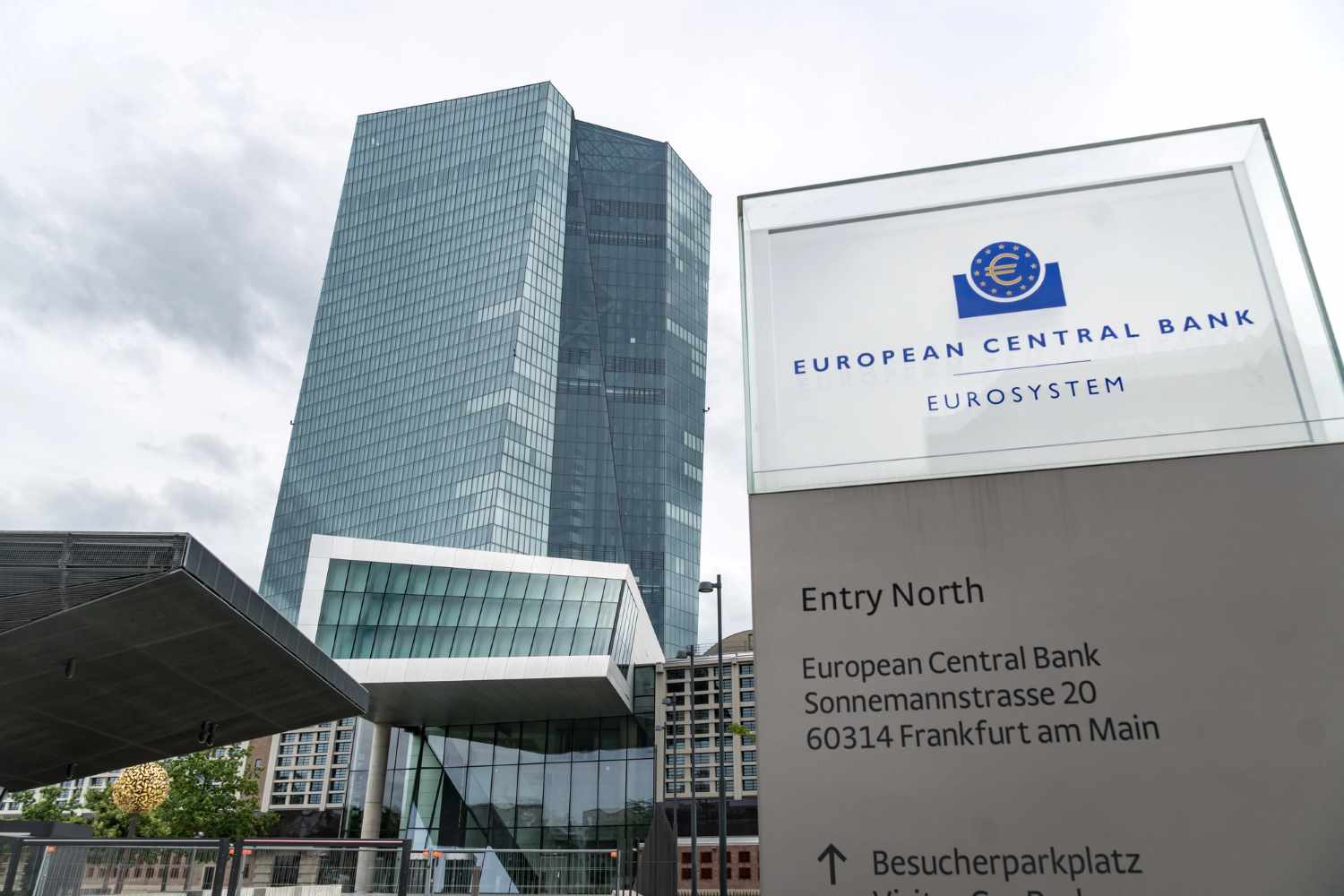
On September 21, the European Central Bank’s Eurosystem launched Pontes, a service that lets eligible financial institutions settle tokenized-asset transactions in central bank money. Pontes connects newer digital-ledger systems to the payment infrastructure banks already use across the euro area.
The ECB launched Pontes for tokenized settlement after testing several approaches in 2024. Thirteen market participants, four distributed-ledger operators and Germany’s Bundesbank had completed on-boarding at launch. The service is live, although the ECB has not yet disclosed transaction volumes.
Why tokenized markets need a settlement bridge
Institutions already hold reserves at the central bank, the safest form of money in the financial system. Banks keep two kinds: a mandatory minimum, and additional reserves they hold voluntarily beyond that floor. The problem was using that money on newer, distributed-ledger platforms.
A tokenized asset is a digital representation of something such as a bond that can be recorded and transferred on a distributed ledger, the technology also used by many blockchain systems. Moving the digital asset covers only half of a financial transaction. The buyer must also send payment to the seller, and traditional markets handle both legs through established financial infrastructure.
The challenge appears when the asset sits on a newer ledger system while payment moves through the conventional banking system. Institutions completing that payment leg had choices, but not a good one. They could settle through balances held at a commercial bank, or increasingly through privately issued stablecoins. Both carry a risk their own reserves at the central bank do not: the issuer could fail or default, leaving the payment side of the transaction exposed.
Pontes closes that gap. Banks fund it from reserves they already hold at the central bank. That is typically the voluntary balance, not the mandatory minimum. It lets approved financial institutions use that money directly when settling tokenised-asset transactions, instead of falling back on commercial money or stablecoins. It does not require a new cryptocurrency or digital coin.
How a Pontes transaction works
Pontes provides two ways to complete the payment side of a transaction.
The first route uses cash tokens. A bank moves money from its regular T2 account into a dedicated cash account, and the Eurosystem mints tokens against that balance. Those tokens can then move freely between banks on the distributed-ledger platform throughout the day, without each transfer touching T2 directly. The tokens exist only for the trading day. Balances convert back to a standard T2 balance before the day closes, so no new money enters circulation.
The second route skips tokens entirely. It sends a trigger instruction straight into T2, the Eurosystem’s real-time payment system, each time a payment needs to settle.
Both routes link the payment leg to the asset transfer through a mechanism called delivery versus payment. The distributed-ledger platform holding the tokenized asset reserves it for transfer. The payment settles through a cash token or a T2 trigger at the same moment. Both legs complete together, or neither does.
Legal settlement finality for the cash leg rests with T2 in both cases. A cash token changing hands on the ledger represents a claim on a bank’s T2 balance, not a final transfer of central bank money on its own.
Conventional financial markets already require this kind of coordination for ordinary securities trades. Pontes extends the same guarantee to transactions where the asset itself sits on distributed-ledger technology.
>>> Read more: Swift Records First Live Bank Transaction With Tokenized Deposits
Who’s already connected
The onboarded banks include Deutsche Bank, Santander, Société Générale, DZ Bank, Deka Bank, BayernLB, ABANCA and Cecabank. Development finance institutions on the list include the European Investment Bank, KfW, NRW.BANK and France’s Caisse des Dépôts et Consignations. Germany’s Bundesbank onboarded separately, as a market participant rather than an overseer.
The four distributed-ledger operators are Axiology, Cashlink, Clearstream and SWIAT. The Eurosystem has said more participants are committed to connecting in the coming months.
The four platforms differ in their underlying technology. Axiology builds on code from the XRP Ledger. Cashlink supports multiple chains, including Ethereum and Avalanche. Clearstream and SWIAT run their own purpose-built systems.
What Pontes can and can’t do yet
Pontes operates between 8 a.m. and 4 p.m. CET on business days at launch. The Eurosystem plans to extend that window step by step, reaching 22.5 hours a day before full 24/7 operation by 2028.
The limit traces back to T2. Pontes settles the cash leg’s legal finality through T2, the Eurosystem’s existing real-time payment system. T2 runs on a business-day schedule; it does not operate continuously. Extending Pontes to 24/7 will likely depend on T2’s own operating hours expanding first.
The feature set narrows for the same reason. Today’s version handles delivery-versus-payment settlement and little else. Later versions plan to bring settlement finality onto a Eurosystem-operated ledger directly. Smart contract functionality and support for multiple currencies are also on the roadmap.
Access stays limited too. Approved financial institutions and qualifying ledger operators can use Pontes. Ordinary consumers and public blockchain users cannot.
Pontes invites comparison to two other things, and it is neither. A wholesale central bank digital currency would let central bank money exist natively as a token, with settlement final the moment the token moves. Pontes doesn’t do that: one of its two settlement routes uses tokens, but they represent a temporary claim on a T2 balance. They are not central bank money in tokenised form. Final settlement still runs through T2 itself. A stablecoin carries a different risk entirely. It’s issued by a private company, backed by reserves that company holds and manages, and its holders depend on that company staying solvent. Pontes tokens carry no such dependency, since they trace back to the Eurosystem at every step. Its purpose stays narrow: giving financial institutions access to central bank money when they settle tokenised transactions.
>>> Read more: EU Nations Challenge ECB Control Over Digital Euro
The ECB could eventually use Pontes itself
The ECB announced preparatory work for investing a small part of its own funds in tokenised securities, alongside the launch. The investments would initially focus on euro-denominated public-sector and supranational debt, with settlement taking place through Pontes. No purchases have started, and the ECB’s Executive Board still has to decide the timing and operating details.
Pontes gives European banks a real alternative to stablecoins for settling tokenised trades in an asset with no issuer risk. Whether they use it instead of the private alternatives is the question the ECB is now trying to answer.
Readers’ frequently asked questions
Is Pontes a cryptocurrency?
No. Pontes settles transactions using central bank money, not a new digital currency. One of its two payment routes uses tokens. Those tokens represent a temporary claim on a bank’s T2 balance. They are not an independent form of money.
Can individual consumers use Pontes?
No. Pontes is open only to approved financial institutions and qualifying distributed-ledger operators. Ordinary consumers and public blockchain users cannot access the platform directly.
What’s the difference between Pontes and the digital euro?
The digital euro is a retail project, meant for households and businesses to pay each other directly in central bank money. Pontes serves a different purpose entirely. It gives banks a way to settle tokenized-asset trades using reserves they already hold at the central bank. The two projects run on separate tracks, with separate timelines.