Home Blog Page 159

MiCA Compliance: Coinbase Prepares to Transform Stablecoin Offerings in Europe
Coinbase will delist non-compliant stablecoins in Europe by 2024 due to MiCA regulations

As the European Union moves closer to the full implementation of its Markets in Crypto-Assets (MiCA) regulations, major players in the cryptocurrency industry are aligning their operations with these new rules. Among them is Coinbase, one of the largest cryptocurrency exchanges globally. The exchange announced its plan to delist non-compliant stablecoins in Europe by the end of 2024. This includes the possible removal of Tether’s USDT, currently the largest stablecoin by market capitalization. The decision underscores a broader transformation in the European crypto landscape. Regulatory compliance is becoming a key factor in shaping the future of digital assets.

MiCA: A Game-Changer for European Crypto Markets

The MiCA regulations are part of the European Union’s broader initiative to standardize the treatment of digital assets across member states. MiCA aims to provide a comprehensive regulatory framework that includes supervision, consumer protection, and anti-money laundering provisions. Crucially, stablecoin issuers must now obtain an e-money license to operate within the European Economic Area (EEA). It ensures that issuers underwrite these assets with sufficient liquid reserves. They will also be subject to greater oversight.

The regulation is set to be fully implemented by December 31, 2024. However, the rules for stablecoins came already into effect in June 2024. These rules place stablecoin issuers like Tether and Circle (issuer of USDC) under the supervision of the European Banking Authority (EBA)​. The result is a clear push for stablecoins to align with traditional financial safeguards. That shift will have profound implications for the crypto market.

Coinbase’s Proactive Approach

In response to MiCA, Coinbase has announced that it will cease supporting non-compliant stablecoins for its European customers by the end of 2024. This move is a significant step in ensuring that the exchange remains compliant with EU regulations. The most notable asset potentially impacted by this decision is Tether’s USDT. It has yet to receive the required regulatory approval to operate in Europe.

Coinbase’s decision is not entirely surprising. The exchange has a history of promoting compliance, having co-created the USD Coin (USDC) in partnership with Circle in 2018. USDC has already become MiCA-compliant, offering Coinbase a regulatory-friendly alternative for its users in the EU​. Coinbase is encouraging its European users to convert their holdings from non-compliant stablecoins to USDC. That signals a strategic shift toward assets that meet regulatory standards.

Broader Implications for the Market

The removal of non-compliant stablecoins like USDT could cause some market disruption, particularly given USDT’s dominant role in crypto trading volumes. However, it also opens the door for compliant alternatives to capture greater market share. USD Coin (USDC), for example, is poised to become the stablecoin of choice in Europe. Other emerging stablecoins, such as Eurite (EURI), are also gaining traction in the regulated market.

Moreover, other major exchanges are making similar adjustments to their offerings. Binance, for instance, has already begun introducing EU-compliant stablecoins and adjusting its platform to meet MiCA requirements. This shift toward compliance reflects a broader trend in the crypto industry. Regulators across the globe, not just in Europe, push for more robust oversight of digital assets.

The Road Ahead for Coinbase

Coinbase’s proactive stance on MiCA compliance could serve as a blueprint for other exchanges operating in the EU. By focusing on offering fully regulated stablecoins, the exchange is positioning itself as a leader in the maturing European crypto market. The short-term impact may include liquidity disruptions and forced asset conversions. Still, the long-term outlook suggests a more stable and transparent market for institutional and retail investors alike.

As MiCA transforms the regulatory landscape, the relationship between crypto platforms and regulatory frameworks is evolving. Coinbase’s strategy of aligning its stablecoin offerings with these new regulations is just the beginning of a broader shift in how crypto exchanges operate in Europe. With MiCA setting the standard, compliant assets like USDC will likely dominate the future of stablecoins in the EU. This paves the way for a more structured and regulated digital asset ecosystem.

Readers’ frequently asked questions

What is MiCA?

MiCA, or the Markets in Crypto-Assets regulation, is a comprehensive legal framework designed by the European Union to regulate digital assets, including cryptocurrencies and stablecoins, across its member states. The regulation aims to provide a standardized set of rules for the entire EU. It ensures that crypto-asset issuers, exchanges, and related services comply with strict guidelines on consumer protection, market integrity, and financial stability. One of the key aspects of MiCA is the regulation of stablecoins. These must now have backing in liquid reserves and meet specific criteria to operate within the European Economic Area (EEA). Issuers of these assets must obtain an e-money license from regulators such as the European Banking Authority (EBA). MiCA is intended to reduce risks such as fraud, money laundering, and financial instability within the crypto space.

When will MiCA come into force?

MiCA is being implemented in stages. The regulations for stablecoins came into effect in June 2024. The rest of the framework is scheduled to be fully operational by December 31, 2024. This gradual rollout allows the industry time to adjust to the new compliance requirements. Exchanges like Coinbase are already making changes in preparation for these regulations. They plan to delist non-compliant stablecoins like USDT by the end of 2024.

How will MiCA affect stablecoins in Europe?

MiCA will significantly impact the issuance and trading of stablecoins in Europe. Under this regulation, stablecoin issuers must maintain adequate liquid reserves and obtain authorization to continue operating. As a result, stablecoins like Tether (USDT), which have not yet met these requirements, are likely to be delisted from exchanges such as Coinbase. This will push European users toward compliant alternatives like USD Coin (USDC), which already meets MiCA’s standards. In the broader sense, MiCA will enhance market transparency, prevent market manipulation, and provide clearer rules for consumer protection. This is expected to reduce risks and provide a more secure environment for retail and institutional investors in the cryptocurrency market​.

What Is In It For You? Action Items You Might Want to Consider

Evaluate Your Exposure to USDT

With Coinbase preparing to delist USDT and other non-compliant stablecoins in Europe by the end of 2024, now is the time to assess your reliance on these assets in your trading strategy. If you frequently trade using USDT pairs, you should consider converting to compliant alternatives like USD Coin (USDC), which already meets MiCA’s standards. This shift could help you avoid potential liquidity issues or forced conversions closer to the deadline

Monitor Regulatory Developments in Real-Time

As MiCA regulations continue to roll out, staying informed on any updates from stablecoin issuers like Tether is crucial. Tether has yet to obtain the required licenses to operate under MiCA, and developments could affect your ability to trade with USDT. Keep a close eye on announcements from both Coinbase and Tether, as regulatory decisions could impact other exchanges and stablecoins.

Diversify Stablecoin Holdings

If you’re holding a significant amount of non-compliant stablecoins, consider diversifying into compliant options. Stablecoins like USDC or newly emerging MiCA-compliant options such as Eurite (EURI) are already gaining traction in Europe. This move could protect you from potential market disruptions and position you to capitalize on growing liquidity in compliant stablecoin markets


Worldcoin’s Biometric Gamble: Is the Cost of Financial Inclusion Too High?

Worldcoin’s Biometric Data Risks and Token Struggles Amid FTX Auction

Sam Altman’s Worldcoin project has captured global attention with its bold ambition: to create a new form of financial inclusion by distributing free cryptocurrency in exchange for biometric data. Through its innovative World ID system, which collects and stores iris scans to verify user identities, the project claims to offer a path toward universal basic income (UBI). This promise has garnered interest, particularly in underbanked regions like Guatemala and Malaysia, where financial inclusion remains a pressing issue. However, the ambitious plan has not come without significant controversy.

Critics argue that Worldcoin’s reliance on sensitive biometric data could come at a steep price. They raise ethical questions about privacy, data security, and the true cost of financial inclusion. With regulatory scrutiny increasing – especially in Europe, where stringent data protection laws like the General Data Protection Regulation (GDPR) are in place – the project finds itself at a crossroads. Can Worldcoin deliver on its promise of economic empowerment without infringing on the privacy rights of millions?

The Allure of Financial Inclusion

Worldcoin’s value proposition is clear: offer free cryptocurrency to anyone willing to participate. The project especially targets populations with limited access to traditional banking systems. In regions like Latin America, Southeast Asia, and parts of Africa, where financial exclusion remains prevalent, receiving free digital assets in exchange for participating in a new global financial system is an attractive proposition. By linking individuals to a verified digital identity using biometric data, Worldcoin seeks to address issues like fraud and multiple identities while fostering economic participation.

Guatemala is one of the countries where Worldcoin has launched, alongside Malaysia and Poland. In these markets, the project claims to have seen a positive reception. Users are eager to gain access to digital assets and the potential economic opportunities they bring. For many, particularly those who lack access to traditional banking, Worldcoin represents a leap toward financial empowerment and integration into the digital economy.

Ethical Concerns: Data Privacy in Exchange for Cryptocurrency

Despite its appealing narrative of inclusion, Worldcoin’s model has raised alarms among privacy advocates and regulators. At the heart of the criticism is the collection of biometric data – iris scans – that are central to the World ID system. To receive tokens, users must agree to have their irises scanned and stored. The process immediately invites questions about data security, user consent, and the potential misuse of such sensitive information.

The European Union, known for its strict data protection laws under GDPR, has already scrutinized Worldcoin’s operations. The project has faced regulatory pressure, with authorities raising concerns over how it handles and processes personal data. Worldcoin’s operations have encountered similar challenges in Singapore. There, investigations are underway to determine whether the project violates local privacy laws. These regulatory challenges have led the project to shift its focus away from Europe and toward markets in Asia and Latin America, where legal frameworks around data protection may be less restrictive.

GDPR’s requirements mandate that companies collecting biometric data must ensure explicit consent, proper storage, and the ability to delete or anonymize such data upon request. Worldcoin’s model, which stores irises on a blockchain to create a tamper-proof digital identity, raises difficult questions about how users can exercise their data rights in case of a breach or misuse. Critics argue that the lack of clear guidelines on how biometric data will be stored, shared, or protected creates an uneven power dynamic. Vulnerable populations may trade their privacy for access to financial resources.

Worldcoin Token: Financial Struggles and Auction Risks

In addition to the ethical and regulatory challenges surrounding Worldcoin’s biometric data collection, the financial performance of its native token (WLD) has also raised red flags. According to recent reports, a staggering 84% of WLD holders are currently facing losses. This steep decline in token value has shaken investor confidence and added another layer of complexity to the project’s trajectory.

Compounding these concerns is the upcoming auction of 22.3 million locked Worldcoin tokens held by the bankrupt FTX estate. This sale, which aims to liquidate the tokens as part of FTX’s bankruptcy proceedings, could further depress WLD prices by flooding the market with a large supply of tokens. The auction’s timing has worried investors. They fear that it will exacerbate existing downward pressure on the token, making recovery even more difficult.

Despite these financial setbacks, Worldcoin continues to push forward with its global expansion. It is banking on its long-term vision of financial inclusion to regain momentum. However, the combination of falling token prices and the looming FTX auction presents significant risks for the project’s financial health and investor sentiment. Whether Worldcoin can weather these challenges remains to be seen.

A Shift Toward Asia Amid Regulatory Hurdles

Facing mounting challenges in Europe, Worldcoin has recalibrated its strategy, shifting its attention to more welcoming regulatory environments. Asia, in particular, has become a focal point for the project’s expansion. Countries like Japan and Malaysia are now key markets in Worldcoin’s growth plan. The project believes that these regions, with their growing digital economies and less stringent data privacy regulations, offer fertile ground for its technology’s adoption.

However, the pivot toward Asia does not resolve the underlying concerns. Critics argue that while Worldcoin may be able to evade stricter European regulations by moving into more lenient jurisdictions, the ethical issues surrounding biometric data collection remain the same. Furthermore, some fear introducing such systems into regions where data protection laws are underdeveloped could expose users to even greater risks of exploitation and misuse.

The Promise and Perils of Biometric Identification

Worldcoin’s use of iris scanning technology is not merely a technical choice – it is central to the project’s vision. By creating a unique, verifiable digital identity for every participant, Worldcoin aims to eliminate fraud, reduce inequality, and distribute wealth more evenly. In theory, this system would help resolve many problems plaguing traditional financial systems, such as identity theft and financial exclusion.

However, using biometrics as a solution to these issues also raises concerns about the permanence of the data collected. Biometric data, unlike a password or personal identification number (PIN), cannot be easily changed if compromised. Once an individual’s iris scan is stored on a blockchain, the data is immutable. That potentially makes users vulnerable to future breaches without any recourse to protect their identity.

The long-term implications of creating such a vast database of biometric data are still unclear. Worldcoin assures users that their data will be securely stored and used only for identity verification. However, the decentralized nature of blockchain technology complicates the ability to control or manage this data in practice. For populations unfamiliar with the intricacies of blockchain and cryptocurrency, the risks may not be fully understood before they agree to participate.

Can Worldcoin Strike a Balance?

The tension between innovation and ethical responsibility is at the heart of the Worldcoin debate. On the one hand, the project offers a bold vision of financial inclusion that could bring millions into the global economy. On the other, it raises profound concerns about the cost of that inclusion, particularly in terms of personal privacy and data security.

As Worldcoin continues to expand into new markets, its success will likely depend on its ability to balance these competing demands. The project must find ways to address the legitimate privacy concerns raised by regulators and critics. At the same time, it should continue to offer a compelling value proposition for users, particularly in underbanked regions.

For now, Worldcoin’s gamble on biometrics remains a risky proposition. Whether the project can deliver on its promises without compromising user privacy will be a critical test for Worldcoin and the broader cryptocurrency space as it grapples with the complex intersection of technology, ethics, and financial inclusion.

Readers’ frequently asked questions

What is Worldcoin?

Worldcoin is a cryptocurrency project launched by Sam Altman, CEO of OpenAI. It’s goal is to create a global financial system accessible to everyone. At its core is the concept of World ID, a digital identity that verifies an individual’s humanity through biometric data, specifically iris scans. In exchange for their biometric data, participants receive Worldcoin tokens (WLD). They can use or trade $WLD in the cryptocurrency ecosystem.

The project aims to promote financial inclusion, particularly in underbanked regions. It gives people access to digital assets and a global economy. Worldcoin envisions its tokens being used for various purposes, including universal basic income (UBI), where users receive payments just for being verified members of the system.

However, Worldcoin has faced criticism and scrutiny, particularly due to its reliance on collecting sensitive biometric data. This has raised privacy concerns, with some regulators questioning the security and ethical implications of the project. Despite these challenges, Worldcoin continues to expand into new markets, focusing on regions with less stringent data protection regulations.

Are there alternatives to Worldcoin’s biometric system that can achieve financial inclusion without such invasive data collection?

Yes, there are alternatives to achieving financial inclusion without relying on biometric data. One such approach uses digital identities linked to government-issued documents like national ID cards or passports. This method allows people to access financial services without compromising personal biometric information.

Decentralized finance (DeFi) platforms are another option, enabling users to engage in financial activities such as lending and borrowing without needing centralized verification. Instead, these platforms rely on cryptographic proofs or community-based verifications, eliminating the need for invasive data collection.

Additionally, microfinance institutions provide small loans and banking services in underbanked regions. They help people access financial resources without requiring advanced digital identities or biometric data. These alternatives promote inclusion while mitigating privacy concerns.

What risks do participants in countries with weaker regulatory frameworks face when using Worldcoin?

Participants in countries with weaker regulatory frameworks face several risks when engaging with Worldcoin, particularly regarding the protection and control of their biometric data. In nations where data privacy laws are underdeveloped or poorly enforced, there is a heightened danger of misuse or exploitation of the biometric data collected by Worldcoin. This could include unauthorized sharing of data with third parties, government surveillance, or even commercial exploitation without the user’s informed consent.

Additionally, in regions where legal recourse is limited or where citizens have little awareness of their rights to data privacy, individuals may not fully understand the implications of handing over their biometric information. This creates an uneven power dynamic, where users could be disproportionately impacted by security breaches or changes in Worldcoin’s data policies.

The lack of strong regulations also means that if something goes wrong – such as a hack or a data breach – users may find it difficult to seek redress or have their data removed. Given the permanence of blockchain technology, this becomes particularly concerning. Individuals may have no means to retract their data once it has been uploaded to the system. For these reasons, experts caution against the rapid adoption of Worldcoin in regions where data privacy protections are inadequate. They suggest that more robust safeguards should be introduced before the technology is introduced on a large scale.

What Is In It For You? Action Items You Might Want to Consider

Monitor the Upcoming FTX Auction for WLD Tokens

The impending sale of 22.3 million locked Worldcoin tokens from the FTX estate could significantly impact the market. Keep a close eye on the auction’s timing and its effect on WLD prices. If you hold WLD, consider how this influx of supply could affect the token’s value. Plan your trading strategy accordingly – this might be a time to reduce exposure or prepare for potential volatility.

Be Cautious of Regulatory Developments

Worldcoin is facing growing scrutiny, especially in regions like Europe and Singapore. As regulatory crackdowns could influence WLD’s long-term viability, stay informed on global regulatory trends. Traders may want to consider this uncertainty when assessing the risk associated with Worldcoin and adjust their positions if any significant legal action unfolds.

Look for Market Entry Points Post-Dip

With 84% of current WLD holders in losses and market sentiment low, there could be an opportunity for traders to enter at a more favorable price. If you believe in the project’s long-term potential and expansion into Asia, consider waiting for post-auction dips to buy in at lower levels. However, tread carefully given the token’s current challenges.

Competition Heats Up: Binance’s Decline Paves the Way for Rivals

Binance Market Share Declines, Rival Exchanges Gain Ground

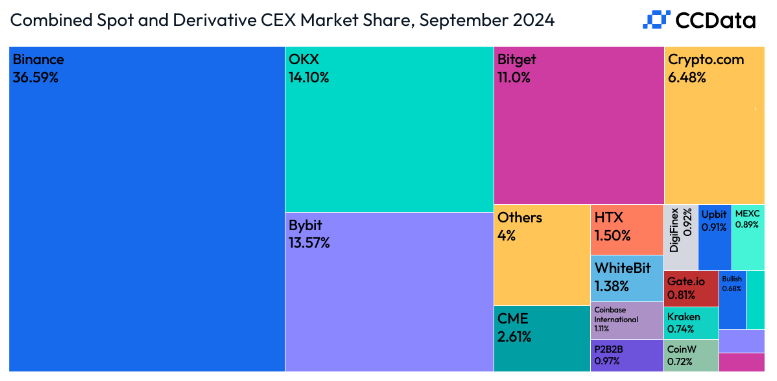
With Binance’s overall market share sinking to approximately 36.6%, rival exchanges seize the opportunity to capture market share and redefine the competitive landscape. Reports indicate that Binance has experienced a decline in its market share due to increasing regulatory scrutiny and a general drop in trading volumes across centralized exchanges (CEXs). As traders increasingly seek alternatives amid these challenges, competitors like Crypto.com and others are emerging as formidable challengers. This article examines the shifting dynamics within the cryptocurrency exchange market and the strategies these competitors employ to attract former Binance users.

The Regulatory Landscape

The regulatory environment has been a significant factor in Binance’s market decline. Increased scrutiny from governments worldwide has impacted Binance’s operations, forcing the exchange to adapt to new compliance requirements. According to multiple sources, this regulatory pressure has affected Binance’s ability to retain users but has also influenced public perception of its trustworthiness. As a result, traders are exploring other options, fueling the growth of rival platforms.

Rising Competitors

As Binance struggles to maintain its position, competitors are stepping in to fill the void. Platforms like Crypto.com are capitalizing on Binance’s challenges by offering appealing features and incentives designed to attract former Binance users. Reports indicate that these exchanges are implementing marketing strategies, lowering fees, and enhancing user experience to draw in traders seeking more stable and compliant platforms.

Source: CCData Exchange Review September 2024

For instance, Crypto.com has focused on expanding its product offerings, including staking and a diverse range of cryptocurrencies. By providing a more user-friendly interface and improved customer service, it aims to capture the interest of users disillusioned with Binance’s current trajectory. Other exchanges, such as Kraken and KuCoin, are also positioning themselves as viable alternatives. They are enhancing their liquidity and services to appeal to a wider audience.

Shifting Market Dynamics

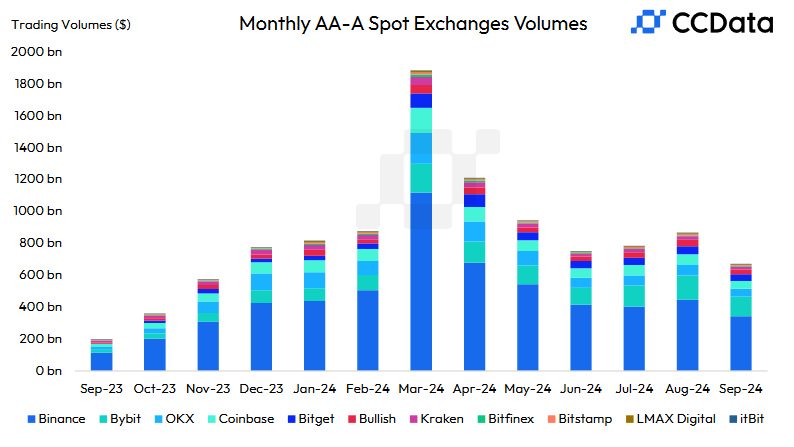
The decline of Binance is indicative of broader shifts within the cryptocurrency exchange market. Data reveals a general decrease in trading volumes across CEXs, which fell by 17% in September 2024. This decline is not only affecting Binance but is also reshaping the entire market landscape. As traders become more selective and discerning, the need for exchanges to adapt to their evolving preferences has never been more critical.

Source: CCData Exchange Review September 2024

In this environment, customer trust and regulatory compliance are paramount. Exchanges that can effectively communicate their commitment to user security and regulatory adherence are likely to gain a competitive edge. This focus on compliance is essential for attracting users who are increasingly cautious about the platforms they choose.

As Binance navigates its challenges, the competitive landscape in the cryptocurrency exchange market is becoming more dynamic. The decline of a once-dominant player is opening doors for rivals to redefine their strategies and capture market share. With competitors like Crypto.com leading the charge, the implications of this shift could significantly alter the future of cryptocurrency trading. As the industry continues to evolve, only those exchanges prioritizing compliance, customer trust, and innovation will thrive in this increasingly competitive arena.

Readers’ frequently asked questions

What specific regulatory challenges has Binance faced, and how have they impacted its operations?

Binance has been under intense regulatory scrutiny from several jurisdictions around the world. For instance, regulatory bodies in the United States, United Kingdom, and Europe have all taken action against the exchange due to concerns over its compliance with anti-money laundering (AML) regulations, Know Your Customer (KYC) practices, and unlicensed operations. This regulatory pressure has forced Binance to withdraw or limit services in certain regions. For example, they halted derivatives trading in parts of Europe and reduced its leverage offerings. Furthermore, Binance has faced fines and investigations from multiple authorities. That hurt its reputation and led to a loss of trust among some users. These issues have contributed to a noticeable drop in trading volumes on its platform. Many users have opted to migrate to exchanges that are more compliant with regional regulations.

Why are competitors like Crypto.com successfully attracting Binance users, and what are they offering that Binance cannot?

Competitors like Crypto.com are attracting Binance users by capitalizing on the weaknesses in Binance’s regulatory standing. At the same time, they are also offering services perceived to be more secure and stable. One key area where Crypto.com excels is its focus on compliance with global regulations. It gives it an edge in regions where regulatory concerns have made users wary of Binance. Additionally, Crypto.com has invested heavily in user experience. They are offering lower transaction fees, higher security, and a range of products like staking and crypto-backed credit cards. All these features appeal to traders looking for more versatile offerings. Another factor is Crypto.com’s aggressive marketing strategies, including partnerships with major sports leagues and celebrities. These activities have boosted its brand recognition. For users looking for alternatives to Binance, Crypto.com’s solid reputation for regulatory compliance and its extensive product range make it an attractive choice.

How does Binance’s decline reflect broader trends in the cryptocurrency exchange market?

Binance’s decline is part of a larger trend affecting the entire cryptocurrency exchange market. Trading volumes across centralized exchanges (CEXs) have been declining, with a reported 17% drop in September 2024. This trend indicates a cooling off in the previously high levels of cryptocurrency trading, which may be due to several factors. One reason is the increased scrutiny from regulators globally. It dampened enthusiasm among some traders, particularly those concerned about legal risks. Additionally, the rise of decentralized finance (DeFi) platforms is another important trend; these platforms allow users to trade and invest without relying on centralized exchanges like Binance, offering more autonomy and privacy. As traders become more selective and cautious in their choices of platforms, the broader market is shifting toward platforms that can offer competitive trading features but also strong regulatory compliance and security, further intensifying competition.

What Is In It For You? Action Items You Might Want to Consider

Evaluate Your Trading Platform

Take a moment to assess your current trading platform. With Binance’s recent decline in market share due to regulatory challenges, now might be the perfect time to explore alternative exchanges. Research platforms like Crypto.com, Kraken, or KuCoin to see which one aligns best with your trading needs. Look for features such as lower fees, robust security measures, and a diverse range of trading options that can enhance your trading experience.

Diversify Your Trading Strategies

Given the shifting market landscape and decreasing trading volumes, consider diversifying your trading strategies. Rather than relying solely on spot trading, explore options like staking or trading on decentralized platforms. Engaging in various strategies can help mitigate risks and potentially improve returns. Keep an eye on emerging trends and platforms that are gaining traction in the market, as these may present new profit opportunities.

Stay Informed About Regulatory Changes

As a trader, staying updated on the evolving regulatory landscape is crucial. Follow reputable news sources and industry updates to keep abreast of any changes that may affect the exchanges you use or the broader market. Understanding regulatory shifts will not only help you make informed trading decisions but also assist you in choosing platforms that prioritize compliance and security, ultimately protecting your investments.

Coty de Monteverde: The Woman Leading Blockchain Innovation at Banco Santander

Coty de Monteverde: The Woman Leading Blockchain Innovation at Banco Santander

In an industry where male voices often dominate the conversation, Coty de Monteverde has made a name for herself as one of the most influential figures. As the Head of the Crypto & Blockchain Center of Excellence at Banco Santander and the bank’s Global Blockchain CTO, Coty has spent the last decade pushing the boundaries of what blockchain can achieve in traditional banking. Her work has positioned Banco Santander at the forefront of blockchain innovation, setting new standards for integrating decentralized finance into global financial systems.

Who is Coty de Monteverde, and what inspired her to enter fintech, an industry dominated by men?

Early Life and Education

Coty de Monteverde’s path to fintech began with a strong foundation in engineering. She holds a degree in Telecommunication Engineering from the Polytechnic University of Madrid, one of Spain’s leading institutions for technical education. Coty has also studied communication networks and computer systems.

Coty took a gap year and participated in the Erasmus Programme, where she attended the University of Stuttgart in Germany, focusing on communication networks and computer systems. This international experience broadened her perspective. It gave her the technical knowledge that would later form the backbone of her work in blockchain technology.

Career Beginnings

First Steps

After university, Coty joined Deloitte as a strategic consultant. Here, she gained invaluable experience in consulting and technology.

Coty was responsible for conducting a cost audit for a prominent mobile operator and modeling operating processes for a Mobile Virtual Operator. She also developed marketing strategies and designed a data warehouse for both an insurance company and a leading cable operator. Her ambition and curiosity for emerging technologies led her to Banco Santander.

Rise to Prominence

In November 2008, a month after leaving Deloitte, Coty joined Santander Group as a senior consultant. She worked here for five years, rising through the ranks to innovation/Blockchain project manager and later the Head of Crypto and Blockchain Center of Excellence and Global Blockchain CTO.

“I first heard about Bitcoin from my boss (Santander’s Head of R&D) in late 2013, just after joining the Innovation team. He saw the potential application of Blockchain and the Distributed Ledgers to the bank’s products and processes before there was any interest of the bank to even understand it.” Coty de Monteverde in an interview with Meltem Demirrors published in Medium, The Leaders Series.

Coty has successfully executed multiple projects that are now challenging traditional banking. She has spent most of her time in Banco Santander’s Innovation Area, defining new business models and strategic international agreements.

Key Projects and Initiatives

Coty’s career is marked by noteworthy achievements. In 2019, Banco Santander appointed Coty Head of the Crypto & Blockchain Center of Excellence. In 2023, they further recognized her expertise, naming her the bank’s Global Blockchain CTO. Coty is responsible for defining the governing blockchain framework for Santander Group, outlining the rules and best practices necessary to build and DLT-based solution.

 Coty is also the Vice-chairwoman at Alastria Blockchain Ecosystem.

Leadership and Vision

Leadership Style

Her ambition, dedication, and emphasis on teamwork have been instrumental to her success in Banco Santander and fintech as a whole. Coty’s team describes her as a hands-on and innovative leader, unafraid afraid to challenge traditional systems and push the boundaries of what’s possible.

“Coty is a born leader, very hard-working, great communication skills, and supportive with her teammates. Best of all, is her attitude, she does not lose her smile for a second,” says Maria Angeles, who worked on the same team with Coty.

Vision for the Future

Coty believes blockchain will continue to transform traditional banking in greater ways. She hopes to remain at the forefront of this revolution. She believes that blockchain’s potential is only just beginning to be realized. Her vision for the future of decentralized finance is bold. She sees a world where blockchain is seamlessly integrated into every facet of global finance, from consumer banking to complex international transactions.

Personal Insights

Personal Life

Outside of her professional life, Coty leads a balanced and active lifestyle. According to her social media profiles, she enjoys going to the gym to recharge and stay focused. She also has a passion for music and travel. She enjoys spending time with friends—a reflection of her belief in maintaining strong personal connections in both her personal and professional life.

Philanthropy and Values

Coty de Monteverde is also passionate about teaching the world the power and importance of Blockchain. In her LinkedIn profile, she states that her mission is to bring massive adoption of this new technology to the bank and, more widely, to the whole financial sector. Coty has been invited to speak at many Blockchain/Fintech events including the Paris Blockchain Week.

Challenges and Controversies

Obstacles Overcome

While Coty’s rise to leadership has been impressive, it hasn’t been without its challenges. As a woman in a male-dominated industry, she has had to ‘prove’ herself countless times.

Men largely dominate Fintech. With fewer women in leadership positions, it is difficult for other women to see pathways for advancement. Like other industries, fintech has also been accused of implicit bias in hiring and promotion.

Lessons Learned

Her journey has taught her the importance of perseverance, continuous learning, and staying ahead of technological trends. These lessons have shaped her leadership style and continue to inform her approach to innovation.

Future Plans and Industry Impact

Coty has significantly impacted fintech through her work at Banco Santander. Her efforts to bring massive adoption of blockchain could be a game changer for the finance sector. Looking into the future, she is committed to further advancing blockchain technology within banking to enhance the efficiency and transparency of transactions.

Coty de Monteverde’s success is both inspiring and significant. Her role as a leader in such a complex, fast-moving field demonstrates her technical acumen, resilience, and determination. Her journey serves as an example for women who are navigating male-dominated industries. Throughout her career, Coty has consistently broken through barriers, proving that gender is no limitation to leadership in technology.

It also highlights the increasing diversity in fintech leadership and the growing importance of female voices in shaping the future of finance.


Are you a founder, executive, or operator building in crypto or blockchain?
We regularly profile leaders shaping the industry. Contact us to be featured!


Russia Cracks Down on Crypto Crime: Over 100 Arrested in Cryptex Raid

massive Cryptex raid in Russia targets illegal cryptocurrency activities and global cybercrime

In a sweeping operation that has sent shockwaves through the cryptocurrency world, Russian authorities have arrested over 100 individuals connected to the notorious Cryptex cryptocurrency exchange and its affiliate, the Universal Anonymous Payment System (UAPS). Cryptex was long suspected of facilitating large-scale money laundering and enabling cybercrime. In a coordinated international effort, law enforcement agencies from the U.S., Netherlands, and other European partners dismantled it. This unprecedented crackdown is now recognized as one of the largest-ever cybercrime investigations led by Russia, marking a significant shift in the country’s approach to tackling illicit activities in the digital asset space.

A Coordinated International Operation

Cryptex, operational since 2013, built its reputation on providing users anonymity by allowing transactions without adherence to the Know-Your-Customer (KYC) standards typically required by financial institutions. This structure made it an attractive platform for cybercriminals, particularly those engaging in ransomware attacks, darknet transactions, and other illegal activities.

The operation came just days after U.S. authorities imposed sanctions on Cryptex and its founder, Sergey Ivanov. These sanctions were part of a broader international effort to disrupt the network of cybercrime financing. Cryptex played a crucial role in laundering proceeds from various illicit operations, including ransomware payments. According to U.S. Treasury sources, Cryptex had been linked to handling more than $600 million in ransomware-related transactions.

Dutch authorities were also instrumental in the operation. They seized servers and infrastructure connected to Cryptex and associated services, further weakening its capacity to facilitate illegal financial activities. This international collaboration, involving the U.S. Department of Justice and European law enforcement, showcases a new level of global cooperation in the fight against cryptocurrency-based cybercrime.

The Scale of the Crackdown

Russian law enforcement agencies conducted 148 raids across 14 regions of the country, resulting in the arrest of over 100 individuals believed to be directly involved with Cryptex. Investigators reported seizing over 1.5 billion rubles ($16 million) in assets, including luxury cars, helicopters, and cryptocurrencies. The individuals arrested now face charges of participating in a criminal organization, unlawful banking operations, and money laundering.

The scale of the raid has drawn attention because of the number of arrests but also due to the sophisticated infrastructure that Cryptex and UAPS had built over the years. The platforms processed over 112 billion rubles ($1.2 billion) in 2023 alone. That highlights their central role in the global cybercrime ecosystem.

Russia’s Shifting Stance on Crypto Regulation

The Cryptex raid represents a significant shift in Russia’s stance toward cryptocurrency regulation. Historically, Russia has been perceived as a safe haven for cybercriminals, particularly those using cryptocurrencies to facilitate their activities. The country’s relatively lax regulatory framework allowed platforms like Cryptex to operate with little oversight, contributing to the growth of illegal financial networks. However, this raid, along with recent legislative moves to regulate cryptocurrency more strictly, suggests that Russia is realigning its policies.

The fact that this operation was carried out in conjunction with U.S. and European law enforcement is particularly notable. Russia has traditionally been reluctant to cooperate on international cybercrime investigations, especially when U.S. sanctions are involved. However, the Cryptex crackdown signals a possible new era of cooperation, as Moscow aligns itself with global efforts to combat cybercrime.

Implications for the Future of Crypto Crime Enforcement

This crackdown on Cryptex and the subsequent arrests serve as a warning to other anonymous cryptocurrency platforms operating on the fringes of legality. It underscores the growing capabilities of international law enforcement to trace and dismantle complex financial networks that exploit the decentralized nature of cryptocurrencies. The operation also highlights the increasing difficulty for such platforms to provide total anonymity. The regulatory environment is becoming progressively hostile to illegal activities in the crypto space.

Russia’s hardline stance, exemplified by the Cryptex raid, could reshape the broader crypto landscape within its borders and globally. As more nations collaborate to tackle crypto-related crimes, the space for anonymous and unregulated platforms continues to shrink. Authorities are pushing the industry toward greater transparency and compliance.

The Cryptex crackdown is a defining moment in the ongoing battle against cybercrime in the cryptocurrency world. It raises important questions about the future of privacy, regulation, and international cooperation in digital finance.

 Readers’ frequently asked questions

Why is Russia cooperating with the U.S. and European authorities on this crackdown, given their historical reluctance?

Russia’s cooperation in the Cryptex raid represents a departure from its typical stance regarding U.S.-sanctioned entities. Traditionally, Russia has been protective of its domestic platforms, especially those targeted by Western sanctions. However, the increasing complexity and scale of cybercrime, especially involving cryptocurrencies, have created challenges that require broader international collaboration. Cryptex was implicated in large-scale money laundering, ransomware payments, and darknet activities. These have become global issues affecting not just the financial systems of the West but also Russia’s internal security. By participating in this operation, Russia is likely signaling its intent to tighten control over its cryptocurrency space. It possibly aims to prevent its economy from becoming overly entangled with criminal elements that could undermine its financial stability. Furthermore, this cooperation with international authorities could also help Russia avoid further isolation from global financial markets and strengthen its position in shaping future crypto regulations

What will happen to the arrested individuals, and how serious are the charges against them?

The individuals arrested in the Cryptex raid face serious criminal charges, including participating in a criminal organization, money laundering, and illegal banking activities. In Russia, these charges carry severe penalties. Depending on the extent of their involvement in the criminal network, individuals face potential prison sentences of up to 20 years. The investigative committee overseeing the case has described the accused as key operatives in a complex illegal financial network that enabled cybercriminals to launder massive sums of money through anonymous cryptocurrency transactions​. In addition to the criminal charges, many of the suspects’ assets, including luxury cars, helicopters, and cryptocurrencies, have been seized. Authorities are not only targeting individuals but also dismantling the infrastructure that supports these illicit activities. The legal process will likely involve domestic Russian prosecution and international cooperation for individuals wanted by foreign governments.

Does this crackdown indicate a broader shift in Russia’s approach to cryptocurrency regulation?

Yes, the Cryptex raid appears to be a signal that Russia is moving toward a stricter regulatory approach regarding cryptocurrencies. In recent years, Russia’s regulatory framework for digital assets has been somewhat ambiguous. It allowed platforms like Cryptex to operate in a legal gray area. However, as cybercrime, including ransomware attacks, increasingly involves cryptocurrency, Russia seems to be recognizing the need for more robust oversight to prevent these platforms from becoming breeding grounds for illegal activity. This raid as well as recent legislative efforts to regulate cryptocurrency mining and transactions show that the Russian government prioritizes closing gaps that cybercriminals have exploited. As international pressure mounts and more countries adopt stricter cryptocurrency regulations, Russia’s evolving stance suggests a willingness to align with global norms. That could have significant implications for the future of cryptocurrency within its borders.

What Is In It For You? Action Items You Might Want to Consider

Prioritize Compliance with KYC and AML Regulations

As this crackdown on Cryptex demonstrates, regulators are increasingly targeting platforms that allow anonymous transactions. As a trader, ensure that any exchange you use is fully compliant with Know-Your-Customer (KYC) and Anti-Money Laundering (AML) regulations. Avoid platforms that offer total anonymity, as they may be at higher risk of legal action or even closure. Choosing regulated exchanges not only protects your assets but also keeps you on the right side of the law.

Diversify Across Regulated Platforms

In light of this raid, it’s clear that authorities are paying closer attention to cryptocurrency exchanges that operate in legal gray areas. To minimize risk, consider diversifying your holdings across multiple well-regulated platforms, both in your home country and internationally. This can reduce the impact of potential government actions targeting a specific exchange, ensuring that your assets remain accessible in case of unforeseen disruptions.

Stay Informed on International Sanctions and Legal Developments

Cryptex’s downfall came in part due to international sanctions and cooperation between countries. For traders, it’s crucial to stay up-to-date on sanctions and legal developments affecting cryptocurrency platforms, especially those in countries with less transparent regulatory frameworks. Regularly check if any platforms you use are facing scrutiny or sanctions, as this could affect their ability to operate and protect your investments. Consider signing up for alerts from trusted regulatory sources to stay ahead of any legal risks.

- Advertisement -

FEATURED