Home Blog Page 179

Payeer Faces €9.3M Penalty: EU Sanctions Violations Shake Cryptocurrency Sector

Payeer faces €9.3M penalty for breaching EU sanctions involving Russia.

Payeer, a prominent cryptocurrency payment service provider, has been levied with a substantial €9.3 million penalty by Lithuanian authorities. The fine is a direct result of allegations that Payeer facilitated transactions that violated European Union sanctions against Russia. This development has significant implications for the intersection of digital finance and geopolitical regulations. It sheds light on the complexities that cryptocurrency platforms face in adhering to international financial compliance standards.

Regulatory Scrutiny and Sanctions Breach

The fine imposed on Payeer underscores the stringent regulatory environment surrounding cryptocurrency operations within the European Union. Lithuanian authorities found Payeer in violation of EU sanctions imposed to restrict financial transactions with entities in Russia, particularly those linked to sanctioned individuals and organizations. These sanctions are part of broader geopolitical measures. They aim to exert economic pressure on Russia in response to geopolitical tensions and international policy disagreements.

Implications for the Cryptocurrency Industry

The repercussions of this penalty extend beyond Payeer itself, resonating throughout the cryptocurrency sector. It highlights the growing importance of regulatory compliance and the challenges digital payment service providers face in ensuring adherence to international sanctions regimes. The case sets a precedent for how EU member states enforce sanctions in the digital finance space. It may influence regulatory practices and compliance standards across Europe.

Navigating Complex Regulatory Landscapes

Cryptocurrency platforms operating in multiple jurisdictions must navigate a complex landscape of regulatory requirements, often spanning international boundaries. The Payeer case underscores the critical need for robust compliance measures and effective regulatory oversight within the cryptocurrency industry. As governments worldwide tighten scrutiny on digital transactions, firms like Payeer face increasing pressure to implement stringent compliance protocols to mitigate regulatory risks.

The €9.3 million fine imposed on Payeer marks a pivotal moment in the evolving regulatory framework governing cryptocurrency transactions. It serves as a stark reminder of the consequences of non-compliance with international sanctions. It also underscores the broader implications for market integrity and regulatory oversight in the digital finance sector. Moving forward, stakeholders in the cryptocurrency industry will closely monitor regulatory developments, aiming to enhance transparency and compliance in line with evolving global standards.

Standard Chartered’s Zodia Markets Set to Acquire Elwood Technologies’ OTC Division in Major Crypto Expansion

Zodia Markets Standard Chartered plans to acquire Elwood's OTC crypto unit.

Zodia Markets, the crypto trading unit of Standard Chartered, is in advanced negotiations to acquire the OTC crypto trading division of Elwood Technologies. The move highlights the increased interest of traditional finance institutions in the burgeoning cryptocurrency market. Backed by hedge fund billionaire Alan Howard, Elwood’s OTC unit is set to enhance Zodia’s trading capabilities and market reach. This acquisition marks a significant step for Standard Chartered as it deepens its footprint in the digital asset space.

Strategic Expansion into Crypto

Zodia Markets’ potential acquisition of Elwood Technologies’ OTC trading arm highlights Standard Chartered’s strategic push into the cryptocurrency sector. This move aligns with the bank’s broader strategy to integrate traditional financial services with cutting-edge digital asset capabilities. Elwood Technologies is renowned for its robust trading infrastructure and advanced technological solutions. It will significantly bolster Zodia’s operational capabilities and market presence.

Elwood Technologies, supported by Alan Howard, has been a prominent player in the crypto market. It offers sophisticated trading solutions and deep liquidity. The firm’s OTC division, specializing in large-scale, off-exchange trading, provides critical services to institutional investors seeking to execute large trades without significantly impacting market prices. Integrating Elwood’s OTC services would attract a broader client base to Zodia Markets, including institutional investors looking for secure and efficient trading solutions.

Implications for the Crypto Market

This acquisition is a strategic move for Standard Chartered and a significant development for the broader cryptocurrency market. It underscores the growing acceptance and integration of digital assets within the traditional financial ecosystem. As more established financial institutions like Standard Chartered deepen their involvement in the crypto space, it signals a maturing market. It also indicates a shift towards greater legitimacy and regulatory compliance.

Moreover, the acquisition reflects the increasing demand for institutional-grade trading solutions in the cryptocurrency market. Utilizing Elwood’s expertise and technology, Zodia Markets positions itself well to meet this demand. It will be able to offer enhanced trading services that cater to the needs of institutional investors. This could result in increased liquidity and stability in the crypto markets, further encouraging institutional participation.

Challenges and Opportunities

While the acquisition presents numerous opportunities, it also comes with challenges. The regulatory landscape for cryptocurrencies remains complex and evolving. Standard Chartered and Zodia Markets will need to navigate this environment carefully to ensure compliance and mitigate risks. Additionally, integrating Elwood’s technology and operations into Zodia Markets will require significant effort and resources.

However, the potential benefits outweigh the challenges. By acquiring Elwood’s OTC division, Zodia Markets will gain access to advanced trading technology, deep liquidity, and a broader client base. This positions the company to capitalize on the growing institutional interest in cryptocurrencies and drive innovation in the digital asset space.

The impending acquisition of Elwood Technologies’ OTC crypto trading division by Zodia Markets represents a strategic expansion for Standard Chartered into the cryptocurrency market. It underscores the increasing convergence of traditional finance and digital assets, highlighting the significance of institutional involvement in the crypto ecosystem. As this deal progresses, market participants will watch closely. It could set a precedent for future collaborations between established financial institutions and cryptocurrency firms.

This move enhances Zodia Markets’ capabilities and signals a broader trend of legitimizing and integrating digital assets within the financial industry. The successful integration of Elwood’s OTC services into Zodia Markets could pave the way for more institutional adoption of cryptocurrencies, driving the market towards greater maturity and stability.

Crypto Market in Fear as Liquidations Surge and Bitcoin Dips Below $54K

Crypto Market Fear surges as Bitcoin drops below $54K, triggering $665M in liquidations.

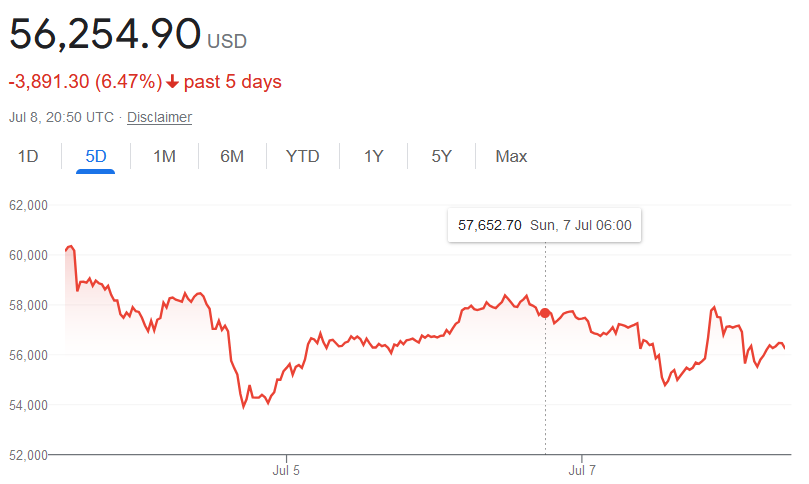
The crypto market is in a state of heightened fear as Bitcoin’s price dropped below $54,000, triggering nearly $665 million in liquidations within a single day. The Crypto Fear and Greed Index has plummeted to “Fear,” reflecting widespread anxiety among investors. Concerns over the U.S. economic outlook contribute to this negative sentiment, with recent inflation data suggesting prolonged high interest rates. As the market grapples with these pressures, other major cryptocurrencies, including Ethereum and Solana, have declined substantially, too.

Mounting Pressures from Mt. Gox

The impending payout from the defunct Mt. Gox exchange is adding to the market’s woes. After its 2014 collapse, the exchange is set to distribute approximately 47,229 BTC to its creditors by the end of October this year. This massive payout, worth around $8.5 billion, has stoked fears of a potential sell-off as creditors might liquidate their holdings, further driving down Bitcoin’s price.

Source: Google Finance

Economic Concerns and Market Sentiment

The broader economic environment has also played a significant role in the recent market downturn. Recent U.S. inflation data has come in hotter than expected, leading to fears that the Federal Reserve might maintain high interest rates for an extended period. This has created a risk-off sentiment across financial markets, affecting not only cryptocurrencies but also traditional assets.

The Crypto Fear and Greed Index, a measure of market sentiment, has plunged into “Fear” territory, indicating that investors are becoming increasingly cautious. This index reflects the emotions and sentiments from various sources, including volatility, market momentum, and social media activity. A low score on this index often correlates with heightened market volatility and potential sell-offs.

Widespread Declines Across Cryptocurrencies

Ethereum (ETH), the second-largest cryptocurrency by market capitalization, has not been spared from the downturn. ETH dropped below the critical $3,000 mark, and other major altcoins like Solana (SOL) also experienced double-digit percentage losses. These declines have contributed to a significant decrease in the overall cryptocurrency market capitalization.

Investor Anxiety and Market Outlook

The current market conditions reflect a complex interplay of immediate and long-term factors. On one hand, the sudden price drops and liquidations suggest that many traders were unprepared for such volatility. On the other hand, the looming economic uncertainties and large-scale Bitcoin distributions from Mt. Gox present potential longer-term pressures on the market.

The cryptocurrency market is navigating a period of intense fear and uncertainty. With Bitcoin falling below $54,000 and triggering substantial liquidations, investor sentiment has turned notably bearish. The combination of economic concerns, such as persistent inflation and high interest rates, and the specific pressures from events like the Mt. Gox payouts, have created a challenging environment for cryptocurrencies. As the market continues to react to these developments, traders and investors are advised to stay cautious and watch for further signals that could indicate the market’s next move.

Crypto Security Breaches Cost $1.19B in 2024: A Call for Stronger Safeguards

Crypto security breaches cost $1.19B in H1 2024.

The crypto industry has faced staggering losses of $1.19 billion in the first half of 2024 due to high-profile security breaches. These incidents, including sophisticated phishing attacks and private key compromises, underscore the urgent need for enhanced security measures and regulatory interventions. As the industry grapples with these challenges, stakeholders advocate for robust solutions to protect digital assets.

Major Security Breaches

The most significant breaches, as detailed in CertiK’s report, involve high-profile targets such as the DMM Bitcoin hack, resulting in a $304 million loss, and the BtcTurk attack, which cost $90 million. These incidents highlight the persistent vulnerabilities within the crypto ecosystem, despite advancements in technology and security protocols.

https://twitter.com/CertiK/status/1808495939432153387

Urgent Need for Enhanced Security

The recurring nature of these attacks has prompted a call for more stringent security practices. One primary recommendation is the widespread adoption of multifactor authentication (MFA). MFA adds an extra layer of security by requiring users to provide multiple forms of identification before accessing their accounts. That makes it significantly harder for unauthorized parties to gain access.

Additionally, the report emphasizes the importance of regular security audits and continuous monitoring of blockchain networks. These measures can help detect and mitigate threats before they result in substantial losses. Enhanced encryption techniques and secure private key management are also crucial in safeguarding digital assets.

Regulatory Interventions on the Horizon

Regulatory bodies started to take action in response to the alarming increase in security breaches. The introduction of the FIT21 bill aims to enhance consumer protections and support innovation within the crypto sector. This bill proposes stricter security requirements for crypto exchanges and custodial services, ensuring they implement robust security measures to protect user funds.

Industry experts believe that regulatory interventions will play a critical role in establishing a safer and more resilient crypto ecosystem. However, they also caution that regulations must strike a balance between security and innovation to avoid stifling the growth of this dynamic industry.

Stakeholder Advocacy and Community Response

As the threat landscape evolves, stakeholders across the crypto industry advocate for a collaborative approach to security. This includes sharing threat intelligence, developing industry standards, and fostering a culture of security awareness among users. If the community works together, they can build a more robust defense against cyber threats.

Several industry leaders have already taken proactive steps to enhance their security frameworks. For example, some exchanges have invested in advanced security technologies, such as AI-driven threat detection systems, to identify and neutralize potential threats in real time.

Conclusion

The $1.19 billion in losses in the first half of 2024 due to security breaches remind us of the persisting vulnerabilities within the crypto industry. Technological advancements and regulatory measures are crucial in addressing these challenges, but a collective effort from all stakeholders is essential to safeguard the future of digital assets. Enhanced security practices, regulatory interventions, and community collaboration will be key in building a resilient and secure crypto ecosystem.

By addressing these compliance failures, regulators aim to bolster the integrity of the financial system. Ensuring that institutions engaged in cryptocurrency transactions are held to high standards of accountability and transparency is paramount. As the crypto industry continues to evolve, the lessons learned from these security breaches will be crucial in shaping a secure and compliant ecosystem for digital finance.

Silvergate Bank Settles $63M with SEC Over Misleading AML Statements

Silvergate Bank settles $63M with SEC over misleading AML statements

In a significant legal resolution, Silvergate Bank has agreed to pay $63 million to U.S. regulators, including the SEC, to settle allegations concerning misleading statements about its anti-money laundering (AML) program. This event underscores the growing regulatory focus on financial institutions within the cryptocurrency sector. The SEC’s lawsuit highlighted Silvergate Bank’s alleged non-compliance with the Bank Secrecy Act, creating waves across the crypto community, particularly given Silvergate’s association with the now-defunct FTX exchange.

Allegations and Settlement Details

The SEC accused Silvergate Bank of providing false information about the effectiveness of its AML program. According to the complaint, Silvergate’s misleading statements enabled it to attract substantial business from the cryptocurrency market, including its dealings with FTX. The Bank Secrecy Act requires financial institutions to implement robust AML protocols to prevent illicit activities. Silvergate’s purported failure to meet these standards led to a thorough investigation by the SEC, culminating in the $63 million settlement.

Multi-Agency Regulatory Action

Silvergate’s settlement involves payments to the SEC, the Federal Reserve, and California state regulators. This case exemplifies the collaborative effort among regulatory bodies to address compliance deficiencies in financial institutions linked to cryptocurrency transactions. The increased vigilance of these authorities aims to ensure transparency and adherence to AML standards across the financial sector.

Implications for the Cryptocurrency Industry

This settlement has significant implications for the broader cryptocurrency industry. Financial institutions involved with digital assets are likely to face stricter oversight and more rigorous enforcement of AML standards. The Silvergate case serves as a stark reminder of the potential consequences of non-compliance and the critical need for financial entities to maintain robust AML measures.

Impact on Silvergate Bank

Beyond the financial penalties, Silvergate Bank’s reputation has been significantly affected. Its close association with FTX, which faced its legal troubles before its collapse, has further intensified scrutiny of Silvergate’s business practices. This development is likely to prompt other crypto-friendly banks to reassess their compliance frameworks to avoid similar issues.

Future of Regulatory Frameworks

Experts suggest that the Silvergate settlement could lead to more stringent regulatory frameworks for banks involved in the crypto market. The growing involvement of mainstream financial institutions in cryptocurrency necessitates a balance between innovation and regulatory compliance. As regulators aim to protect the financial system from abuse, banks must prioritize robust AML measures and transparent reporting practices.

The Silvergate Bank settlement with the SEC marks a pivotal moment for the cryptocurrency sector. It signals a shift towards more rigorous regulatory enforcement and highlights the importance of compliance. This case will likely serve as a precedent for future regulatory actions. It emphasizes the need for financial institutions to adhere to legal standards while navigating the complexities of the crypto landscape.

By addressing these compliance failures, regulators aim to bolster the integrity of the financial system. Ensuring that institutions engaged in cryptocurrency transactions are held to high standards of accountability and transparency is paramount. As the crypto industry continues to evolve, the lessons learned from the Silvergate case will be crucial in shaping a secure and compliant ecosystem for digital finance.

- Advertisement -

FEATURED