Home Blog Page 182

Winklevoss Twins’ Bitcoin Donation to Trump: Crypto’s Role in Political Finance
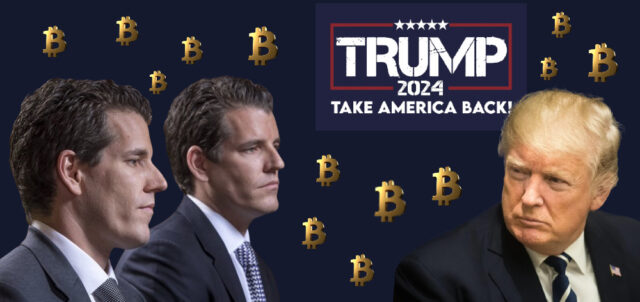
Winklevoss twins' $2M Bitcoin donation to Trump sparks debate on crypto's role in politics and regulatory implications.

The recent $2 million Bitcoin donation from the Winklevoss twins to the Donald Trump campaign has ignited discussions across political and financial spheres. This move, aimed at bolstering Trump’s crypto-friendly policies, underscores the growing influence of cryptocurrency in shaping political landscapes and regulatory environments.

Background of the Donation

Tyler and Cameron Winklevoss, known for their role in the Gemini cryptocurrency exchange, made headlines with their substantial Bitcoin donation to the Trump campaign. Their intent was clear: to support a candidate they believe will foster favorable regulations for digital currencies. However, a portion of their donation had to be refunded due to legal limits on individual campaign contributions. This prompted further scrutiny of the intersection of crypto and political financing laws.

Debate on Cryptocurrency in Political Finance

The Winklevoss twins’ donation has sparked a broader debate about the implications of cryptocurrencies in political funding. Advocates argue that digital currencies offer efficient and transparent methods for supporting candidates, leveraging blockchain’s traceability to ensure legitimacy. Conversely, critics express concerns about potential abuse. They cite the challenges of regulating crypto donations and preventing illicit contributions that could undermine electoral integrity.

Public and Regulatory Response

The donation has elicited diverse reactions from various quarters. Supporters of Trump welcomed it as a vote of confidence in his policies, while detractors raised ethical concerns about undue influence in politics. Regulatory bodies, including the Federal Election Commission (FEC), are now scrutinizing the incident. They are considering revisions to guidelines to accommodate cryptocurrency’s unique characteristics in campaign finance.

Implications for the Crypto Industry

This episode highlights opportunities and challenges in political engagement for the cryptocurrency industry. Significant donations like the Winklevoss twins’ can shape regulatory outcomes favorably but also necessitate compliance with stringent campaign finance laws. As cryptocurrencies increasingly intersect with politics, clearer regulatory frameworks will be vital to ensure transparency and adherence to legal boundaries.

The Winklevoss twins’ $2 million Bitcoin contribution to Trump’s campaign has not only stirred headlines but also ignited a crucial dialogue on the future of cryptocurrency in political financing. As digital currencies evolve, their role in shaping political landscapes will undoubtedly influence both industries’ trajectories. Balancing innovation with regulatory integrity will be pivotal as this dynamic relationship unfolds.

UK Authorities Bust $1.3 Billion Illegal Crypto Exchange in London, Suspects Released on Bail

UK authorities arrest two suspects for running an illegal crypto exchange processing over $1.3 billion. Investigation continues.

UK authorities have arrested two suspects in London believed to be operating an illegal crypto exchange that processed transactions exceeding $1.3 billion. Following coordinated raids on their premises, the suspects were released on bail. The Financial Conduct Authority (FCA) continues its investigation. This arrest is part of a strategic initiative to crack down on financial crimes and ensure compliance in the crypto industry.

Coordinated Enforcement Action

The arrests came after the FCA, in collaboration with the Metropolitan Police Service, conducted thorough searches of the suspects’ offices and residences. They seized significant amounts of digital assets during these raids, indicating the scale of the operation. The two individuals, aged 38 and 44, have been identified as key figures behind the unregistered illegal crypto exchange.

Regulatory Crackdown

This operation underscores the FCA’s commitment to combating illegal financial activities within the UK’s financial system. Therese Chambers, the executive director of enforcement and market oversight at the FCA, emphasized the agency’s resolve to eliminate illegal crypto operations to prevent “dirty money” from infiltrating the UK’s financial markets. Chambers stated, “These arrests show we will do everything in our power to stop crypto firms operating illegally in the UK”.

The FCA’s action is part of a broader regulatory crackdown on illegal crypto activities. It reflects a global trend of increasing scrutiny over the cryptocurrency sector. Recent years have seen a series of high-profile crypto scandals, such as the collapse of the FTX exchange and the sentencing of Thodex founder Faruk Fatih Ozer, which have prompted regulators worldwide to tighten controls.

Ongoing Investigation

Despite the arrests, the investigation is still ongoing. The suspects were released on bail. Authorities are conducting further inquiries to uncover the full extent of the illegal operations. The FCA and Metropolitan Police will continue their collaborative efforts to bring those responsible to justice and to dismantle the illegal crypto exchange network.

Impact on the Crypto Industry

This crackdown is significant for the cryptocurrency industry, as it highlights the regulatory challenges and risks associated with unregistered exchanges. The FCA’s actions serve as a warning to other operators in the sector about the consequences of non-compliance with regulatory standards. Ensuring that crypto exchanges are properly registered and regulated is crucial for protecting investors and maintaining the integrity of financial markets.

In conclusion, the arrest of the two suspects in London represents a major step in the FCA’s ongoing efforts to regulate the cryptocurrency industry and combat financial crimes. The case continues to develop as authorities work to ensure that all crypto trading activities within the UK are conducted legally and transparently.

Binance Strategic Shift Under MiCA: Implications for European Stablecoin Traders

Binance MiCA Stablecoins: Binance's compliance with MiCA regulations means a sell-only phase for non-compliant stablecoins from June 30, 2024.

Binance announced significant changes to its stablecoins offerings within the European Union, aligning itself proactively to the forthcoming Markets in Crypto-Assets Regulation (MiCA). As of June 30, 2024, non-compliant stablecoins will enter a “sell-only” phase. It allows users to transition to compliant assets such as Bitcoin, Ether, and regulated stablecoins. The regulatory shift aims to bolster investor protection and enhance the stability of the crypto market across the European Economic Area (EEA). By categorizing stablecoins into “regulated” and “unauthorized,” Binance sets a precedent for responsible governance in the rapidly evolving digital asset landscape.

Regulatory Compliance and Market Stability

Understanding MiCA

With the implementation of MiCA the European Union solidifies its attempt to bring transparency, security, and stability to the cryptocurrency market. Amongst other measures, it enacts stringent oversight of stablecoins and aims to bolster investor safeguards. Another key objective is the promotion of the Euro in digital transactions. MiCA will standardize the rules on how stablecoins can be issued and traded. Issuers must be registered Electronic Money Institutions (EMI) or credit institutions. The regulation will take full effect by the end of 2024.

Binance’s Compliance Strategy

Binance now outlined a phased approach to ensure compliance. Starting from June 30, 2024, any stablecoins that do not meet the standards set by MiCA will be restricted to “sell only” mode for Binance users in Europe. It means users can sell stablecoins that do not comply with the policy but they cannot buy them. The transition period gives users plenty of time to move their investments to other digital assets that comply with the regulations or change them to fiat currencies. Hence the effort should minimize market disruptions.

This strategic move affects several aspects of Binance’s platform, including peer-to-peer (P2P) trading, Binance OTC, the Web3 Wallet’s Earn section, and NFT purchases. By limiting these stablecoins, Binance aims to align with the regulatory requirements while maintaining the functionality and integrity of its services.

Broader Implications for the Market

Categorizing stablecoins into “regulated” and “unauthorized”, as Binance did, highlights the increasing importance of regulatory adherence in the cryptocurrency industry. While Binance’s approach ensures compliance with MiCA, it also helps to educate users on the regulatory status of their digital assets, especially stablecoins. The gradual transition allows everyone to adapt without causing significant market volatility.

MiCA is expected to have a substantial impact on the stablecoin market. Other leading cryptocurrency platforms, like Kraken and OKX, are making adjustments, too, to comply with the new regulations. This includes potential delistings of popular stablecoins like Tether’s USDT, as exchanges strive to meet the new legal standards.

Ensuring Market Stability

Binance’s proactive measures reflect a broader trend toward regulatory compliance within the cryptocurrency industry. As it sets a precedent for responsible governance, Binance contributes to a more stable and secure market environment. The exchange’s efforts to align with MiCA regulations show its commitment to transparency and investor protection, which are crucial for the long-term growth and acceptance of digital assets.

The evolving landscape of the cryptocurrency market highlights the importance of frameworks such, as MiCA in creating a transparent environment. Binance’s effort to restrict non-compliant stablecoins and guide users towards regulated options represents a significant move towards realizing these objectives. Through a phased approach to these adjustments, Binance aims to facilitate a smooth transition to a compliant market for all parties concerned.

Binance’s move highlights the significance of adhering to regulations, serving as a benchmark for other exchanges. With the implementation of MiCA regulations, the European cryptocurrency market is on the brink of change offering increased stability and bolstering investor trust.

50 Cent Unwittingly Promotes Crypto Scam, Investors Lose Millions in Rug-Pull

Rapper 50 Cent's X account hacked in a crypto scam rug-pull, leading to $3 million loss for investors. Learn how to protect your assets.

Rapper 50 Cent became an unwitting participant in a cryptocurrency scam when hackers took over his X (formerly Twitter) account to endorse a dubious token named GUNIT. The scam quickly amassed about $3 million from investors before the token’s value crashed. This episode illustrates the dangers of fraudulent schemes in the unregulated cryptocurrency market and the perils of celebrity endorsements.

A High-Profile Target

On June 22, 2024, 50 Cent, whose real name is Curtis James Jackson III, reported that his X account had been compromised. The hackers used his substantial follower base of approximately 12.9 million to promote a new meme coin, GUNIT. They suggested the rapper endorsed this token. This crypto scam tactic is known as a “rug-pull”. They hype up a cryptocurrency, usually through misleading endorsements or claims, to attract investors. Once the price is sufficiently inflated, the scammers sell off their holdings. That causes the token’s value to plummet and leaves investors with worthless assets.

The Impact on Investors

The hackers managed to generate significant buzz around GUNIT, rapidly pulling in investments that totaled around $3 million. However, the token’s value collapsed almost immediately after the initial influx of investments, reflecting a classic rug-pull crypto scam scenario. The speed and scale of the scam underscore the risks that investors face in the largely unregulated cryptocurrency market. Such schemes are alarmingly frequent.

Celebrity Endorsements and Crypto Scams

This incident highlights a growing trend in the cryptocurrency world. Scammers exploit the credibility and influence of celebrities to lend legitimacy to fraudulent projects. Celebrities with large social media followings are particularly attractive targets for hackers. Their endorsements can rapidly attract a large number of investors. In this case, 50 Cent’s unwitting involvement lent a veneer of credibility to the scam, drawing in more victims.

The Need for Vigilance and Security

In response to the hack, 50 Cent and his team worked with X to regain control of his account and mitigate the fallout. The rapper publicly disavowed any association with the fraudulent token, emphasizing that he had not endorsed any cryptocurrency project. This swift action helped to limit further damage. Still, the incident serves as a stark reminder of the importance of robust security measures for social media accounts, particularly those of high-profile individuals.

The 50 Cent GUNIT scam is a sobering example of the potential for significant financial loss in the cryptocurrency market, especially when scams are bolstered by unauthorized celebrity endorsements. For investors, this incident underscores the critical need for due diligence and skepticism towards cryptocurrency projects, regardless of apparent endorsements. Meanwhile, for celebrities and influencers, it highlights the importance of securing their digital identities to prevent misuse that can have far-reaching consequences.

This incident not only brought to light the sophisticated tactics employed by cybercriminals but also emphasized the broader implications for the cryptocurrency market. As the industry continues to evolve, both investors and public figures must remain vigilant against the ever-present threat of scams and fraudulent schemes.

BtcTurk Cyberattack Reveals Critical Weaknesses in Turkey’s Largest Crypto Exchange

BtcTurk Cyberattack exposes $54M vulnerability, impacts AVAX price, and prompts Binance's swift response.

In a major cybersecurity breach, BtcTurk, Turkey’s largest cryptocurrency exchange, has fallen prey to a devastating cyberattack. It resulted in the theft of approximately $54 million worth of digital assets. This attack, which targeted several hot wallets, has reverberated throughout the crypto community, shedding light on persistent vulnerabilities within digital asset platforms. In response, Binance swiftly intervened to assist with the investigation. They successfully froze over $5.3 million of the stolen funds, while Turkish authorities ramp up scrutiny of crypto exchanges.

The cyberattack on BtcTurk is one of the most severe breaches in the history of Turkish cryptocurrency exchanges. The hackers specifically targeted hot wallets, susceptible due to their online connection. They stole various cryptocurrencies and sparked widespread concern among investors and platform users.

Binance Takes Decisive Action

Following the hack, Binance, a global leader in cryptocurrency exchange, played a pivotal role in mitigating the fallout. By freezing more than $5.3 million of the stolen assets, Binance significantly bolstered ongoing investigation and recovery efforts. This rapid response underscores the crucial role of cooperation and swift action in the cryptocurrency ecosystem, particularly during times of security crises.

Richard Teng, Head of Regional Markets at Binance, reiterated the firm’s unwavering support for BtcTurk during this challenging period. He emphasized the ongoing collaboration with both BtcTurk and Turkish authorities to track down and recover the remaining stolen assets.

Market Impact: Avalanche (AVAX) Price Decline

The immediate aftermath of the BtcTurk hack witnessed a notable decline in the market value of Avalanche’s AVAX token. Hackers managed to abscond with a significant quantity of AVAX. The stolen tokens subsequently flooded the market, precipitating a sharp price drop for AVAX. This downturn vividly illustrates the interconnected nature of digital asset markets and the cascading repercussions that security breaches can trigger, severely denting investor confidence and fueling market instability. Such incidents underscore the imperative for robust security measures to safeguard digital assets and uphold market integrity.

Broadening Cybersecurity Challenges

The BtcTurk breach illuminates the overarching cybersecurity challenges confronting cryptocurrency exchanges worldwide. Despite implementing advanced security measures, even the largest and ostensibly secure platforms remain vulnerable to sophisticated cyber threats. This incident serves as a stark reminder of the continual need to enhance security protocols and implement robust protective measures to shield digital assets.

Experts advocate for the adoption of stricter security frameworks, urging the increased utilization of cold wallets – offline and less susceptible to hacking – to store the majority of funds. Additionally, they stress the importance of regular security audits and real-time monitoring systems to proactively detect and thwart potential breaches.

Heightened Regulatory Scrutiny

In response to the hack, Turkish authorities have intensified their oversight of cryptocurrency exchanges operating within the country. The Financial Crimes Investigation Board (MASAK) has taken a proactive role in the investigation. They previously imposed penalties on local branches of major exchanges, including Binance, for infractions identified during liability audits.

This heightened regulatory vigilance underscores the pressing necessity for robust oversight and regulatory frameworks to uphold the security and credibility of cryptocurrency exchanges. As digital assets gain mainstream acceptance, safeguarding users and reinforcing trust in the system emerge as pivotal priorities.

The BtcTurk hack has laid bare significant vulnerabilities within Turkey’s premier cryptocurrency exchange, underscoring the urgent imperative for fortified security measures across the industry. The incident galvanized rapid and coordinated responses from major industry players like Binance and regulatory authorities. They aimed at mitigating damage and forestalling future breaches. As the cryptocurrency landscape evolves, ensuring steadfast cybersecurity remains paramount for both exchanges and regulators, shaping the future integrity of digital asset markets.

- Advertisement -

FEATURED