Home Blog Page 192

Ripple XRP Legal Woes Continue: SEC Pursues $2 Billion Fine Amidst Ongoing Court Battle

Ripple XRP in Court defending against SEC

The high-stakes battle between Ripple Labs and the U.S. Securities and Exchange Commission (SEC) is again garnering the crypto community’s attention. At its core, the dispute revolves around the future of the XRP token. Ripple defends against the SEC’s allegations of violating securities laws. The verdict of this case will have significant implications not only for Ripple but also for the larger cryptocurrency market. Let’s delve into the complexities of this conflict and understand why Ripple XRP is currently being litigated in court.

The SEC’s Legal Basis for Imposing the Fine

The SEC’s legal action against Ripple began in 2020. The case revolves around the argument about whether XRP should be considered a security under U.S. Securities laws. According to the SEC Ripple allegedly violated securities regulations by selling XRP tokens to investors, which they claim is unlawful. Its position is that XRP qualifies as a security due to its design. The direct involvement of Ripple executives in promoting and distributing it further supports this assertion.

The SEC states that Ripple exerted significant control over the supply and distribution of XRP. This positioned it more like a traditional security rather than a decentralized digital currency. The SEC’s decision to penalize Ripple Labs stems primarily from the allegation the company breached securities regulations by selling XRP tokens. They root their enforcement action in the Securities Act of 1933. The act mandates that securities offered or sold in the United States must be registered with the SEC unless an exemption is applicable. The Commission further contends that Ripple raised significant funds over several years violating the registration requirements.

The SEC also argues in court that Ripple selling XRP constituted an investment contract, making XRP itself a security under the Howey Test. This test was set by the Supreme Court in 1946. It describes an investment agreement as a deal where someone invests money in a shared project, hoping for profits coming solely from the work of others. The SEC alleges that Ripple’s actions met these criteria, thereby subjecting XRP to securities laws.

Despite some legal victories for Ripple, the SEC continues to assert that institutional sales of XRP were illegal. It is pushing for a hefty fine of $2 billion on Ripple Labs. The requested amount includes $876 million in disgorgement, $198 million in prejudgment interest, and an additional $876 million as a civil penalty. Its responsibility to safeguard investors and uphold efficient markets reinforces the SEC’s stance. Through its enforcement actions targeting Ripple, the SEC aims to maintain integrity and ensure adherence to securities laws, within the cryptocurrency sector.

Ripple’s Defense Against the Fine

Ripple vehemently denies the SEC’s allegations, asserting that XRP is not a security. It is rather a digital currency similar to Bitcoin and Ethereum. The company argues that XRP operates on a decentralized ledger called the XRP Ledger, distinct from Ripple’s corporate operations. Furthermore, Ripple contends that the SEC’s enforcement action caused significant harm to XRP holders and the broader cryptocurrency market, citing disruptions to XRP trading and investment activities.

Ripple made a counterproposal in response to the SEC’s proposed $2 billion fine. According to sources close to the matter, it offered to settle the case for a significantly lower penalty, less than $10 million. However, the counteroffer reportedly includes certain compliance measures and regulatory commitments from Ripple. These would address the SEC’s concerns and ensure future compliance with securities laws.

Ripple maintains that XRP’s utility as a means of facilitating cross-border payments and remittances distinguishes it from traditional securities. Therefore it should not be subject to the same regulatory scrutiny. The company stresses its dedication to complying with laws and rules. But they also call for clear guidelines and stability in the regulatory landscape for cryptocurrencies.

Predictions for the Future of XRP

Given the legal, industry analysts and enthusiasts remain divided on the token’s prospects. Some predict that a favorable outcome for Ripple in the SEC lawsuit could pave the way for XRP’s resurgence, potentially leading to significant price appreciation. For instance, analysts like Armando Pantoja have suggested that XRP’s value could skyrocket to anywhere between $8 to $20 by 2026. He is drawing parallels with its performance during the 2017 bull market. Additionally, Ripple CEO Brad Garlinghouse has expressed optimism about XRP’s long-term potential, emphasizing its utility in revolutionizing cross-border payments.

On the other hand, some are concerned that prolonged legal battles and regulatory scrutiny could weaken investor confidence in XRP. That could cause continued volatility and downward pressure on its price. The ongoing litigation against the SEC has already led to price fluctuations for XRP; and the final ruling is still up in the air. Additionally, the debate on whether XRP will be labeled as a security or a digital currency contributes to uncertainty about its trajectory. Some analysts caution against overly optimistic projections. They suggest that investors approach XRP with caution until regulations are more clear.

As Ripple’s legal dispute with the SEC continues, the crypto community eagerly awaits the impact on XRP and the wider digital asset landscape. The stakes have never been higher with the SEC pursuing a hefty $2 billion penalty and Ripple vehemently defending its position. Whether XRP emerges victorious or faces further setbacks remains to be seen. One thing, however, is certain – the outcome of this battle will shape the future of Ripple and its native digital asset XRP.

Read more: Will Ripple’s XRP Explode in 2024?

Asset Tokenization on the Blockchain: Financial Giants’ Trial

Asset tokenization on blockchain - Industry giants announce major trial project

Leading financial institutions such as JPMorgan, Citi, Visa, and Mastercard recently announced their collaboration on a project using shared ledger technology. The industry is buzzing over the high-profile trial, known as the Regulated Settlement Network (RSN). It will explore the potential of asset tokenization on the blockchain. This pilot has the potential to pave the way for mass adoption of blockchain technology in the financial sector.

What is Asset Tokenization?

Tokenizing assets involves transforming physical and digital assets into tokens tradable on a blockchain. This innovative technology offers several advantages, like improved liquidity, faster transactions, and enhanced security. Through tokenizing assets like bank funds, U.S. Treasury securities, and high-quality debts, financial institutions can simplify settlement procedures and increase operational efficiency.

The Regulated Settlement Network (RSN)

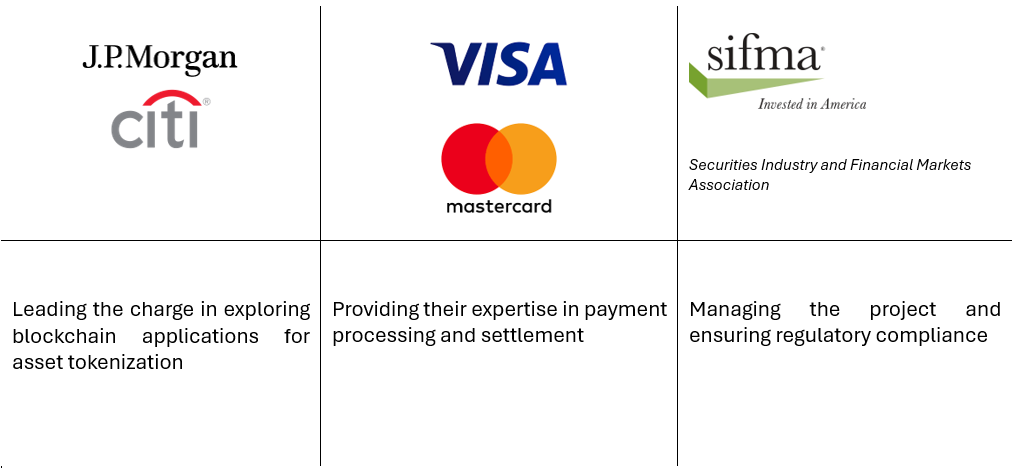
The RSN trial brings together a group of financial institutions like JPMorgan, Citi, Visa, and Mastercard with the support of the Securities Industry and Financial Markets Association (SIFMA). Their objective is to assess the viability of a shared ledger for processing various tokenized assets. This proof-of-concept seeks to replicate U.S. Dollar transactions showcasing the enhancements in handling multiple asset settlements.

Key Participants and Their Roles

Potential Benefits of Shared Ledger Technology

24/7 Programmable Settlements

One of the primary advantages of the RSN is the ability to conduct programmable settlements around the clock. This feature eliminates the constraints of traditional banking hours and enables real-time transactions. As a result, financial institutions can improve their efficiency and reduce the risk of errors and fraud.

Increased Transparency and Security

Blockchain technology provides unparalleled levels of transparency and security. Each transaction is recorded on a decentralized ledger, making it permanent and easily traceable. Such transparency helps prevent fraudulent activities and maintain compliance with regulatory requirements.

Cost Reduction

By streamlining settlement processes and reducing the need for intermediaries blockchain technology can significantly cut costs. This cost reduction can be passed on to customers, making financial services more affordable and accessible.

Challenges and Considerations

While the benefits of asset tokenization on the blockchain are clear, several challenges remain. Regulatory compliance is a significant hurdle. The financial industry must navigate complex legal frameworks. Additionally, integrating blockchain technology with existing systems can be technically challenging and require substantial investment.

Regulatory Compliance

Ensuring compliance with existing laws and regulations is crucial for the success of the RSN trial. The project aims to demonstrate that tokenized asset settlements can be conducted within the current legal framework, paving the way for broader adoption.

Technological Integration

Integrating blockchain technology with conventional financial systems is no small feat. Financial institutions must commit resources to update their infrastructure and expertise to support this transition. Collaboration between the public and private sectors will be crucial to overcome these technical hurdles.

The Future of Asset Tokenization Blockchain

The RSN trial marks a milestone towards the mass adoption of blockchain technology the finance sector. Through showcasing the feasibility of asset tokenization on a shared ledger this project has the potential to transform how financial transactions are carried out.

Industry Insights

Raj Dhamodharan, Executive Vice President of Blockchain and Digital Assets at Mastercard, emphasized the transformative potential of shared ledger technology. He stated, “The application of shared ledger technology to dollar settlements could unlock the next generation of market infrastructures—where programmable settlements are 24/7 and frictionless.”

Market Potential

Citi analysts predict that the market for tokenized assets could reach $5 trillion by 2030. This growth is driven by the increasing recognition of digital assets as legitimate investment vehicles and the ongoing efforts to integrate blockchain technology into traditional financial systems.

The collaboration between these major financial institutions to test the RSN marks a significant milestone in advancing blockchain technology. By exploring the potential of asset tokenization on the blockchain, these leading companies are laying the groundwork for mass adoption. The success of this trial could usher in a new era of financial transactions, characterized by increased efficiency, transparency, and security. As the industry continues to innovate, the future of finance looks increasingly digital and decentralized.

Read more: JP Morgan Exposed: Bitcoin a Ponzi Scheme or Not?

Who Hacked Sonne Finance? Unraveling the $20 Million Heist

Sonne Finance Hack - $20 Million worth of crypto tokens stolen

Sonne Finance experienced a $20 million hack, highlighting persistent vulnerabilities in blockchain security. This breach sparked widespread concern about the safety of DeFi protocols and the measures needed to protect digital assets. Although investigations are underway, the identity of the hacker remains unknown. This article is an overview of the Sonne Finance hack, detailing the key facts surrounding the incident and its potential impact on the DeFi community.

Understanding the Sonne Finance Hack

The Exploit

The Sonne Finance hack occurred on May 14, 2024, and resulted in the theft of $20 million worth of cryptocurrencies, including Wrapped Ether (WETH), Velo (VELO), soVELO, and Wrapped USDC (USDC.e). Web3 security firm Cyvers first detected the attack around 10:30 PM UTC. When Sonne Finance became aware of the situation 25 minutes later, the hacker had already drained the funds.

https://twitter.com/CyversAlerts/status/1790509607074349448

Method of Attack

The hacker exploited a well-known vulnerability in the Compound v2 forks used by Sonne Finance. This vulnerability involved manipulating the exchange rates between tokens through a “donation” attack. By donating large amounts of cryptocurrency, the attacker tricked the platform into believing it had more collateral than it did. This allowed them to siphon off funds undetected until it was too late.

Immediate Response and Damage Control

Pausing Operations

In response to the attack, Sonne Finance quickly paused all markets on the Optimism network to prevent further losses. The Base network, however, remained unaffected. This swift action prevented an additional $6.5 million from being stolen.

Recovery Efforts

Sonne Finance is exploring all possible options to recover the stolen funds. They offered a bug bounty to the hacker, promising not to pursue legal action if he returned the funds. Despite this, the hacker seems uninterested in negotiations. He already moved $7.8 million of the stolen assets to a new wallet address.

Implications for DeFi Security

Recurring Vulnerabilities

The Sonne Finance hack highlights a recurring issue within the DeFi ecosystem: the security of protocols built on inherited codebases. Compound v2 has been widely forked, and its vulnerabilities have been exploited multiple times. Previous attacks on platforms like Hundred Finance and Midas Capital followed similar patterns, underscoring the need for rigorous security measures.

Community Reaction

The DeFi community has expressed frustration and concern over the incident. Critics argue that Sonne Finance should have been more cautious, given the known risks associated with Compound v2 forks. Some even suggest that a deliberate backdoor facilitated the exploit.

Lessons Learned and Future Precautions

In light of the Sonne Finance hack, there are crucial lessons to be gleaned for both developers and users within the blockchain and cryptocurrency space. These lessons underscore the importance of proactive measures to enhance security and mitigate future risks.

Importance of Audits

Regular and comprehensive audits of smart contracts are paramount. Security firms should continuously review code to identify and rectify vulnerabilities before they can be exploited. By conducting thorough audits, developers can proactively address potential weaknesses and bolster the overall security of their protocols.

Strengthening Governance

Governance mechanisms and timelock implementations must be scrutinized and fortified. Protocols must ensure that governance proposals do not inadvertently introduce vulnerabilities. By implementing robust governance frameworks, developers can minimize the risk of malicious exploits and maintain the integrity of their platforms.

Enhancing Community Vigilance

The broader DeFi community must remain vigilant and proactive in identifying and addressing potential threats. Collaboration between projects, security firms, and users is essential for fostering a collective response to emerging risks. By sharing information and best practices, stakeholders can work together to strengthen the security of the ecosystem as a whole.

Robust Incident Response

DeFi protocols should have robust incident response plans in place to effectively manage security breaches. This includes clear procedures for halting operations, communicating with stakeholders, and initiating recovery efforts. By establishing comprehensive incident response protocols, developers can minimize the impact of security incidents and swiftly restore trust in their platforms.

The Sonne Finance hack is a stark reminder of the vulnerabilities that persist in the DeFi space. While the sector continues to innovate, security remains a paramount concern. By prioritizing security, enhancing governance mechanisms, and fostering a culture of continuous improvement, the industry can build a more resilient and secure decentralized financial system. As Sonne Finance works to recover from this setback, the lessons learned must guide future efforts to safeguard the burgeoning world of decentralized finance.

Read more: BlockTower Capital Hacked

BlockTower Capital Hacked

BlockTower Capital, a prominent player in the cryptocurrency investment space, has been hacked. The cyberattack on its main hedge fund has resulted in substantial financial losses. The incident underscores the persistent vulnerabilities within the digital asset ecosystem, highlighting the need for robust security measures.

BlockTower Capital: A Target for Cybercrime

On May 15, BlockTower Capital, with $1.7 billion in assets under management, reported a major security breach. Fraudsters partially drained the firm’s primary hedge fund. The exact amount of stolen funds remains undisclosed. The attackers have yet to be captured and the stolen money recovered.

Immediate Response and Investigation

BlockTower Capital acted swiftly by engaging blockchain forensics analysts to investigate the breach. These experts aim to trace the stolen funds and identify the perpetrators. The firm also informed its limited partners about the incident, maintaining transparency despite the sensitive nature of the situation.

Past Security Challenges

This hack is not the first time BlockTower Capital has faced security issues. In February 2023, the firm lost $1.55 million worth of TrueFi tokens in a similar incident. Additionally, the company had to shut down a market-neutral crypto fund managing over $100 million due to dried-up investment opportunities.

Impact on the Cryptocurrency Industry

The BlockTower Capital hack is a stark reminder of the risks associated with digital assets. Despite advances in security measures, the crypto industry continues to be a target for cybercriminals. This incident adds to the list of significant breaches, including attacks on Sonne Finance, Mixin Network, and others.

Industry-Wide Concerns

In 2022, hackers stole $4 billion from various crypto projects, and while the total amount stolen in 2023 decreased to $2 billion, the frequency of attacks rose. Recent reports indicate a 65% reduction in hacking incidents as of April 2024, yet the financial losses remain significant. This trend highlights the need for continuous improvement in cybersecurity protocols.

Lessons Learned and Future Measures

BlockTower Capital’s experience serves as a crucial lesson for other firms in the industry. The incident emphasizes the importance of investing in advanced security infrastructure and maintaining vigilance against evolving cyber threats. Enhanced risk management strategies and proactive measures are essential to safeguard digital assets.

The hack on BlockTower Capital underscores the ongoing security challenges within the cryptocurrency sector. While the firm works to recover from this setback, the incident is a sobering reminder of the persisting vulnerabilities. Strengthening cybersecurity measures and fostering transparency are crucial steps towards a more secure and resilient digital asset ecosystem.

Read more: How North Korea Steals Crypto

Ripple XRP Japan – Strategic Partnerships and Market Expansion

Ripple XRP Japan

Ripple, the American blockchain company behind the digital asset XRP, is achieving significant progress in the Japanese market through strategic partnerships and market expansion initiatives. With a focus on leveraging the XRP Ledger (XRPL) for innovative solutions, Ripple aims to bolster its presence in a leading cryptocurrency market.

Partnership with HashKey DX

Ripple recently announced a collaboration with HashKey DX, a Tokyo-based consulting company specializing in blockchain technology. This partnership aims to introduce XRPL-powered solutions to Japan, focusing on supply chain finance. By leveraging the decentralized nature of the XRPL, they plan to tokenize and exchange both crypto-native and real-world assets. This initiative paves the way for enhanced efficiency and transparency in the Japanese business landscape.

SBI VC Trade’s Validator Launch

In addition to the partnership with HashKey DX, Ripple’s subsidiary SBI VC Trade has launched a validator on the XRP Ledger. This validator confirms the validity of transactions on the XRPL. It signifies SBI’s commitment to securing the network and representing the voices of XRP holders in Japan. By becoming a trusted validator, SBI VC Trade aims to contribute to the enhancement and stability of the XRPL ecosystem.

Ripple’s Longstanding Presence in Japan

Ripple’s partnership with Japanese financial giant SBI Holdings dates back to 2017, focusing on enhancing cross-border payments efficiency. CEO Brad Garlinghouse has praised Japan as one of the most crypto-friendly jurisdictions, highlighting the company’s commitment to the market. With recent expansions and collaborations, Ripple is solidifying its position as a key player in the Japanese cryptocurrency landscape.

Market Response and Future Outlook

Ripple’s efforts in Japan have been well received by the market, boosting the value of XRP post announcement. Despite regulatory uncertainties and market fluctuations, Ripple remains hopeful about its prospects in Japan and how it could influence the global cryptocurrency sector. Forming alliances and growing its reach the company is set to fuel innovation and acceptance in the Japanese market.

Ripple highlights its dedication to advancing innovation and acceptance in the cryptocurrency domain through its alliances and endeavors to broaden its presence in Japan. As it focuses on implementing solutions driven by XRPL technology and ensuring network security, the company stands ready to seize opportunities emerging from Japan’s growing enthusiasm for technology. Through partnerships with significant industry stakeholders, Ripple hopes to significantly impact the shaping of the financial landscape, not only in Japan but also globally.

Read more: Ripple and CIB Collaboration Signals New Era in Egypt’s FinTech

- Advertisement -

FEATURED