Home Blog Page 194

FTX Bankruptcy: Are Customers Truly Getting Full Repayment?

FTX Bankruptcy: Are Customers Truly Getting Full Repayment?

As FTX, a once-prominent cryptocurrency exchange, emerges from the shadows of its bankruptcy, it promises full repayment to its customers. However, questions linger about the fairness and adequacy of its proposed compensation plan. Amidst the tumultuous world of digital assets, where volatility and uncertainty reign supreme, FTX’s pledge to fully reimburse its creditors raises eyebrows and invites scrutiny.

FTX’s Bold Claim

FTX, a major player in the cryptocurrency market until its collapse in November 2022, asserts that it will repay its creditors, including almost all customers, the entirety of their losses. The exchange faced allegations of fraud and misconduct which led to the imprisonment of its co-founder, Sam Bankman-Fried. It now vows to settle its debts, exceeding $11 billion, with an estimated $14.5 to $16.3 billion in assets.

The Dubious Reckoning

While FTX’s promise of full repayment may sound reassuring, skeptics question the equity of the proposed plan. Since the exchange’s downfall, the surge in cryptocurrency prices prompts concerns. Are customers truly being compensated for their potential gains had they retained their digital assets? With Bitcoin’s value soaring by over 270% since FTX’s bankruptcy filing, some argue that the reimbursement falls short of addressing the opportunity costs incurred by customers during the tumultuous period.

Navigating the Repayment Landscape

FTX’s reorganization plan outlines a tiered approach to repayment, with smaller creditors expected to receive approximately 118% of their claims. Yet, as the exchange grapples with missing cryptocurrency assets and legal complexities, the road to restitution appears fraught with challenges. Customers, many of whom were entangled in the exchange’s collapse, now navigate the intricacies of a compensation process shrouded in uncertainty.

The Verdict

As FTX endeavors to rebuild its tarnished reputation and restore trust within the cryptocurrency community, the efficacy and fairness of its repayment efforts remain under intense scrutiny. While the exchange’s commitment to full reimbursement is commendable, the disparity between lost opportunities and actual compensation underscores the complexities inherent in the digital asset landscape. As stakeholders await the bankruptcy court’s verdict on FTX’s reorganization plan, the true extent of customer restitution hangs in the balance.

As the saga of FTX’s bankruptcy unfolds, the promise of full repayment to customers emerges as a contentious issue. While FTX strives to right the wrongs of its tumultuous past, the adequacy of its compensation plan remains a subject of debate. As stakeholders grapple with the implications of FTX’s reorganization efforts, the road to redemption for the embattled exchange remains fraught with challenges and uncertainties.

Read more: FTX bankruptcy – No Comeback, Full Repayment Promised

The Bitcoin Halving 2024 is Over: What’s Next?

Cutting Bitcoin in half with a scissor. Bitcoin Halving 2024 has concluded.

The 2024 Bitcoin halving has just concluded. Approximately every four years the reward for mining new blocks is cut in half. As a result, Bitcoin miners now receive 3.125 BTC per block instead of 6.25 BTC. This mechanism, designed to create scarcity and control inflation, is closely watched by investors for its potential impact on Bitcoin’s price.

Impact on Bitcoin’s Price and Market Dynamics

Historically, the Bitcoin halving has been a catalyst for bullish trends in the market. Reducing the supply of new Bitcoins tends to push prices up if demand remains steady or increases. However, this year’s event has unfolded under complex economic conditions, including inflation concerns and geopolitical tensions, adding layers of uncertainty to the market’s response.

Unprecedented Crypto Fee Price Chaos Post-Halving

Following the recent Bitcoin halving, transaction fees on the Bitcoin network have surged to record highs. This trend is corroborated by multiple sources. The halving block itself carried a record-high fee of 37.6 BTC, worth over $2.4 million, signaling a dramatic increase in transaction costs. It remained elevated in the hours following the event. This fee surge reflects the intense competition among miners and users to process transactions swiftly in the new halving cycle. It causes widespread concern among users and investors over the escalating transaction fees for Bitcoin.

Short-Term Price Volatility Expected

The aftermath of a Bitcoin halving traditionally introduces a period of heightened price volatility. As the market adjusts to the new reward structure – halved payouts per mined block – investors and traders often react swiftly. This can lead to pronounced fluctuations in Bitcoin’s price. The adjustment phase is critical as the market recalibrates its expectations around the reduced supply of new Bitcoins. Such conditions are ripe for significant price movements. Traders might speculate more aggressively based on their interpretations of the halving’s long-term impact on supply dynamics.

Moreover, increased trading volume is commonly observed as existing and new investors attempt to position themselves advantageously in anticipation of potential price increases. The influx of trading activity can exacerbate volatility. Large volumes of buys and sells can cause more dramatic price changes in shorter periods.

Long-Term Prospects: Scarcity Could Boost Prices

In the long term, the decreased supply of new Bitcoins may exert upward pressure on prices. This scarcity effect is a fundamental principle of economics: the supply of new Bitcoins decreases due to the halving, and assuming demand remains constant or increases, the price should theoretically rise. However, the actual market outcome will be influenced by a complex interplay of various factors, including technological advancements, regulatory developments, and macroeconomic conditions.

Analyzing Past Halvings for Future Insights

Studying the previous instances of Bitcoin halvings can offer significant insights into potential market reactions and pricing trends. Historically, the value of Bitcoin has shown a tendency to increase in the months following a halving. For example, after the first halving in 2012, Bitcoin experienced a substantial price surge, peaking at over $1,000 in late 2013, up from around $12 before the halving. Similarly, the 2016 halving was followed by a prolonged bull run that culminated in a price close to $20,000 at the end of 2017. The most recent halving in 2020 also saw a considerable rise, with prices reaching new highs of over $60,000 in early 2021.

It’s crucial to note that past performance is not necessarily indicative of future results. However, these patterns highlight a potential for price appreciation. The reduced supply of new Bitcoins entering circulation intensifies scarcity. The growing demand compounds this effect, particularly if Bitcoin continues gaining acceptance among retail and institutional investors.

Moreover, the market dynamics surrounding each halving have evolved. The cryptocurrency landscape now includes more sophisticated trading tools and broader institutional involvement. This can mitigate extreme volatility and provide a more stable market growth post-halving. Regulatory developments and technological advancements in the blockchain ecosystem also play critical roles in shaping the post-halving market environment.

Thus, while direct correlations between past and future performance should be approached with caution, the historical context provides a valuable framework for understanding the potential economic impacts of Bitcoin halvings. Investors looking to capitalize on this cyclical event should consider both the historical precedence and the current market conditions, which could influence the extent of the halving’s impact on Bitcoin’s price trajectory.

Navigating The Markets Post 2024 Bitcoin Halving

As we move forward from the Bitcoin halving, investors and traders alike must stay informed and adaptable. Watching how the halving impacts the supply-demand dynamics will be crucial. Additionally, keeping an eye on broader economic indicators will help stakeholders make educated decisions in this evolving landscape.

In summary, the Bitcoin halving 2024 marks a significant milestone for the cryptocurrency community. While the immediate effects on price are uncertain, the long-term implications could be substantial, influencing strategies and decisions across the global financial landscape.

Read more: Bitcoin Halving Predictions: Will Expectations Meet Reality?

JP Morgan Exposed: Ponzi Scheme or Not? – The Ethical Quagmire of its Bitcoin Bet

Is JP Morgan facilitating a Bitcoin Ponzi Scheme?

JP Morgan CEO Jamie Dimon’s most recent labeling of Bitcoin as a “Ponzi scheme” has reignited discussions within the financial and cryptocurrency communities. It challenges the intersection of traditional banking with digital currencies. Dimon’s assertion raises critical questions about JP Morgan’s ethical and legal standing. This is particularly relevant given its role as an authorized participant in the BlackRock Spot Bitcoin ETF.

The bank finds itself at the center of a provocative thought experiment: If Bitcoin were indeed a Ponzi scheme, could JP Morgan’s engagement implicate it in such an alleged scheme?

The Ethical and Legal Conundrum

Dimon’s critique, while not new, has encouraged a deeper contemplation of the implications of JP Morgan associating with Bitcoin. If Bitcoin were hypothetically a Ponzi scheme, the bank’s participation in the cryptocurrency market could suggest a facilitation of such a scheme, raising significant ethical and legal concerns.

This scenario underlines the paramount importance of due diligence and the ethical imperatives facing banking officials. They are entrusted with the fiduciary duty to act in the best interests of their clients and shareholders.

Promoting a financial instrument like Bitcoin ETFs while JP Morgan’s CEO considers Bitcoin a Ponzi Scheme, tests the integrity of the banking sector. It places its leaders under a microscope for ethical and potentially legal scrutiny.

If you mean crypto like Bitcoin,
I’ve always said it’s a fraud.

…if they think they are a
currency, there’s no hope for it.
It’s a Ponzi scheme, it’s a public decentralized Ponzi.

Jamie Dimon, CEO JP Morgan

Navigating Murky Waters

Jamie Dimon’s latest statement on Bloomberg TV, calling Bitcoin a “Ponzi scheme” raises an interesting dilemma.

The dual nature of JP Morgan’s predicament underscores the complex interplay between finance and cryptocurrency, traversing a landscape filled with legal and ethical gray areas. While the bank’s involvement in the Bitcoin market might be lawful, the ethical ramifications cannot be ignored. This is especially true when engaging with what the CEO believes is a potentially fraudulent scheme. This raises broader considerations about the role of financial institutions in safeguarding the integrity of markets, trades, and financial instruments.

Moreover, the bank’s officers and managers face heightened personal accountability. Directors and Officers (D&O) insurance may offer some financial protection against claims. However, it would not absolve individuals from knowingly participating in ethical breaches or criminal activities. The threat of class action lawsuits, predicated on allegations of misrepresentation or failure to fulfill fiduciary duties, further highlights the significant legal and reputational risks at stake.

Conclusion: The Imperative of Ethical Decision-Making

The controversy stirred by JP Morgan’s CEO Jamie Dimon’s comments extends beyond mere debate. It prompts a critical examination of JP Morgan’s role within the cryptocurrency ecosystem, highlighting the need for transparency, accountability, and ethical scrutiny.

The financial landscape continues to evolve, incorporating digital currencies and blockchain technology. This evolution makes the discourse surrounding JP Morgan’s involvement with Bitcoin a poignant reminder of the intricate dynamics at play. It underscores the importance of ethical vigilance and integrity. This ensures that the traditional financial sector and cryptocurrency world navigate this complex terrain with caution and responsibility.

The question being raised here is not just about Bitcoin. It is about whether banks should sell financial instruments to their clients that their own CEO believes are based on a Ponzi scheme. However, it will be interesting to know Jamie Dimon’s actual thoughts about other financial instruments in JP Morgan’s portfolio.

Read more: Crypto Controversy: BlackRock vs. JPMorgan – Dueling Visions

Kraken Crypto Wallet is here

Kraken Crypto Wallet launched.

The Kraken Crypto Wallet has recently been launched, introducing a new tool for those involved in the digital currency space. This release is notable for its emphasis on enhanced user security, privacy, and control over their digital assets. With features designed to meet the needs of cryptocurrency enthusiasts and traders, the Kraken Crypto Wallet aims to provide a more secure and private way to manage cryptocurrencies. It positions itself as more than just a digital wallet, promising to facilitate access to the broader ecosystem of decentralized finance.

A New Era of Self-Custody

At its core, the Kraken Crypto Wallet champions the principle of self-custody. In simple terms, it empowers users to be the sole guardians of their digital assets, unlike traditional banking or even some digital platforms where third parties control your funds. This shift is monumental and resonates deeply with the original ethos of cryptocurrency: decentralization and control over one’s financial destiny.

Privacy and Security at Its Heart

Kraken’s commitment to privacy and security is unwavering. The wallet collects only the minimal data necessary to function, ensuring users’ identities and locations remain shielded. Moreover, it boasts robust security features, including mobile biometrics and password protection. Such measures not only safeguard assets but also instill confidence among users, encouraging broader adoption of cryptocurrencies.

Open-Source: A Community-Driven Approach

Interestingly, the Kraken Crypto Wallet is open-sourced. Developers around the globe can scrutinize its code, contribute improvements, and identify vulnerabilities. This approach enhances the wallet’s security over time and fosters a sense of community. It’s a testament to Kraken’s belief in transparency, collaboration, and the collective advancement of the crypto ecosystem.

Beyond Storage: A Portal to Decentralized Finance (DeFi)

The Kraken Crypto Wallet is more than a secure vault for digital currencies. It’s a DeFi bridge. Users can explore and interact with various decentralized finance platforms and services directly through the wallet. This functionality opens up a world of possibilities, from earning interest on digital assets to participating in decentralized exchanges and more.

Global Implications and the Future Ahead

The release of the Kraken Crypto Wallet comes at a critical time. With increasing regulatory scrutiny and the clamor for more secure digital asset management solutions, it offers a timely alternative. By prioritizing user control, privacy, and security, Kraken is responding to the current landscape and shaping the future of digital finance.

The introduction of the Kraken Crypto Wallet is a noteworthy advancement in the sphere of self-custody. It reflects the foundational principles that sparked the initial cryptocurrency movement. To its users, this wallet serves not merely as a means to manage digital assets but also symbolizes a stride towards autonomy in an increasingly digital world. Innovations like the Kraken Crypto Wallet are poised to play a significant role in shaping the future of individual and collective financial independence as the landscape of global finance evolves.

Read more: Ledger CEO Explores Challenges of Crypto Self-Custody

Bitcoin Supply Shock – Will We See a Shortage in the Near Future?

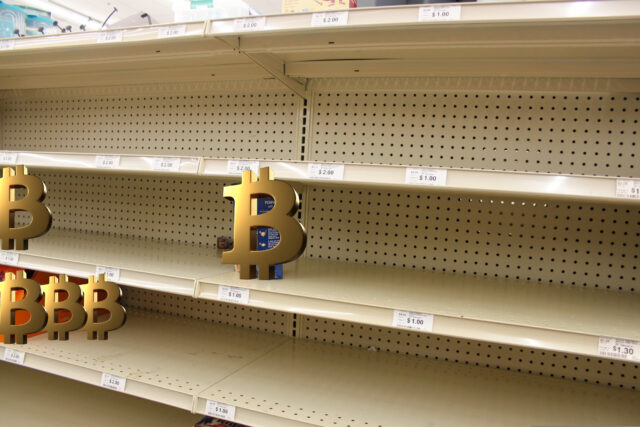
Depicting empty shelves, symbolizing the risk of Bitcoin supply shock.

Investors and traders are closely monitoring the dynamics of Bitcoin supply, especially in anticipation of the upcoming halving events. Recent reports from leading crypto exchanges and industry experts suggest that a Bitcoin supply shock might be on the horizon, leading to potential shortages. This article delves into the factors contributing to this supply squeeze and explores the implications for the broader crypto ecosystem.

Understanding the Bitcoin Supply Shock

Cryptocurrency exchange Bybit recently released a report highlighting the dwindling reserves of Bitcoin on exchanges. It indicates that only nine months’ worth of supply remains at current prices. This depletion is attributed greatly to increased institutional adoption. The upcoming halving event will reduce the mining reward by 50%. With just 2 million Bitcoins left and significant daily outflows to Bitcoin Spot ETFs, the supply crunch is expected to intensify, potentially leading to shortages soon.

Factors Driving the Supply Shortage

Institutional investors have been instrumental in driving the recent bull market in cryptocurrencies. They have contributed significant capital inflows into Bitcoin and other digital assets. The approval of Bitcoin spot ETFs in the United States has facilitated institutional entry into the market. This led to heightened demand and dwindling exchange reserves. Additionally, the upcoming halving event will reduce the rate of new Bitcoin issuance, exacerbating the supply shortage.

Implications for the Crypto Ecosystem

The looming Bitcoin supply shortage has significant implications for the broader crypto ecosystem. As supply dwindles and demand remains robust, the price of Bitcoin is expected to experience upward pressure. However, increased scarcity could also fuel volatility in the market, as traders and investors react to the evolving supply dynamics. New all-time highs are likely, but not guaranteed. Moreover, the shortage of Bitcoin on exchanges may prompt users to seek alternative sources or platforms for acquiring the digital asset. The crypto landscape might be due for a fundamental reshape.

In conclusion, the prospect of a Bitcoin supply shock underscores the dynamic nature of the cryptocurrency market and the importance of monitoring supply-side dynamics. With exchange reserves rapidly depleting and institutional demand rising, the possibility of a shortage in Bitcoin supply is becoming increasingly plausible. As the market prepares for the upcoming halving events, investors and traders must remain vigilant and adapt their strategies to navigate potential disruptions in the world’s largest cryptocurrency supply.

- Advertisement -

FEATURED