
Home Blog Page 24

Tether to Launch Georgian Lari Stablecoin With Government Support

TL;DR

  • Tether plans to launch GEL₮, a stablecoin tied to Georgia’s lari, with support from Georgian authorities.
  • The project reflects Georgia’s broader push to attract digital asset businesses through crypto-friendly regulation.
  • Important details around reserves, oversight, and the government’s long-term role have not yet been disclosed.

Tether plans to launch a new stablecoin representing the Georgian lari, marking a notable step in Georgia’s effort to position itself as a digital asset hub. The company said the token, called GEL₮ or GELT, will be developed with support from the Georgian government.

Tether’s stablecoin initiative in Georgia stands out because it links a private issuer with a national currency project backed by public-sector support. However, several key details remain unresolved. It is still unclear how the token will be structured, what reserves will support it, and what the government’s role will be in practice.

A Lari-Linked Stablecoin for Digital Payments in Georgia

Tether said GEL₮ will act as a digital representation of Georgia’s lari to support cross-border commerce, fintech development, and digital payments.

For everyday users, the concept is relatively straightforward. A lari-linked token could make local-currency transfers faster and easier across digital platforms. For businesses, it could create another channel for payments, settlement, and financial technology services tied to Georgia’s national currency.

Still, stablecoins are not the same as bank deposits or central bank money. They are usually issued by private companies and depend on reserve backing, redemption rules, and regulatory oversight to maintain trust.

Government Support, But Details Remain Limited

Tether described the project as an “official” stablecoin. While senior Georgian officials, including Prime Minister Irakli Kobakhidze and National Bank of Georgia President Natia Turnava, have publicly endorsed the initiative as part of the country’s broader digital finance ambition, the exact nature of the government’s involvement has not been fully explained.

But a public endorsement is different from a defined institutional role. Neither Tether nor Georgian authorities have specified what ongoing government participation in the project will look like.

Tether said it will announce more details on the token’s structure, rollout, and implementation later. Those details will likely determine whether GEL₮ becomes a practical payment tool or remains limited to a smaller crypto-focused ecosystem.

Georgia’s Crypto Strategy Comes Into Focus

Georgia has taken a relatively open approach to digital assets and has long been known as an active crypto mining location, partly because of its comparatively low energy costs. The GEL₮ launch builds on stablecoin rules developed by the National Bank of Georgia. Those rules aimed to provide legal clarity for digital asset businesses and attract fintech investment.

For Georgia, the project could expand digital payment infrastructure. It also avoids the complexity and expense of building a central bank digital currency from scratch. Instead of creating a sovereign digital currency internally, the government is working alongside a private issuer operating under a dedicated regulatory framework.

Whether the approach succeeds will largely depend on adoption. Clear rules around reserves, redemption, compliance, and user protections will also be critical.

For Tether, the move also extends its strategy beyond dollar-pegged stablecoins. The company already dominates the global stablecoin market through USDT, but non-dollar stablecoins have historically seen much lower demand.

Stablecoin Adoption Still Faces Trust Questions

The broader question is whether users and businesses in Georgia will adopt a lari-backed stablecoin at meaningful scale. Stablecoins are widely used within crypto trading markets, but they are still not commonly used for everyday payments in most countries.

The Tether Georgia stablecoin project also arrives at a time when policymakers remain cautious about privately issued digital money. The Bank for International Settlements has previously warned that private stablecoins could create risks related to financial stability and monetary sovereignty.

That makes Georgia’s experiment significant beyond its domestic market. If GEL₮ achieves meaningful usage under a clearly defined regulatory framework, it could become a reference point for other smaller economies exploring local-currency stablecoins.

For now, the announcement appears more important as a policy signal than as a fully developed financial product. The next phase will depend on whether Tether and Georgian authorities can provide enough transparency around reserves, oversight, redemption mechanisms, and compliance standards to support broader adoption.

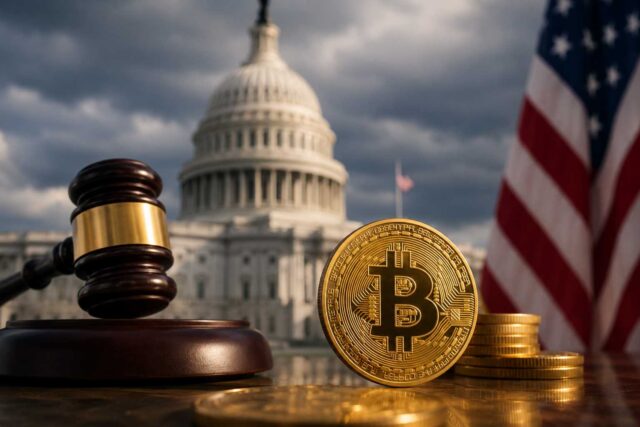
SEC’s Planned Tokenized Stock Exemption Hits Resistance Almost Immediately

TL;DR

  • The SEC is reportedly slowing or narrowing its proposed tokenized stock exemption after pushback from exchanges and financial industry groups.
  • Concerns center on third-party tokenized equities, investor protections, AML compliance, and the risk of fragmented equity markets outside traditional safeguards.
  • Despite the apparent slowdown, Nasdaq, NYSE, and DTCC initiatives suggest tokenized financial infrastructure development is still moving forward.

The U.S. Securities and Exchange Commission appears to be slowing or narrowing its proposed tokenized stock exemption. The reported shift follows resistance from stock exchanges, financial industry groups, and market-structure participants concerned about investor protections and regulatory oversight.

The development comes only days after widespread reports suggested the SEC was preparing an “innovation exemption” framework. The proposal could allow blockchain-based versions of public equities to trade through crypto platforms and decentralized finance infrastructure.

While the SEC still appears supportive of blockchain-based financial systems, the agency now seems increasingly cautious about how far crypto-native trading models should operate outside traditional securities infrastructure.

Concerns Around Third-Party Tokenized Equities Intensified

One of the biggest concerns reportedly involved the possibility of third-party tokenized equities.

Under some of the models discussed in recent reporting, firms could potentially issue blockchain-based versions of public stocks. In certain cases, the underlying company itself might not be directly involved. Critics warned that approach could create confusion around shareholder rights, custody arrangements, disclosure obligations, and market oversight.

In some cases, tokenized assets may function more like blockchain-based representations of economic exposure rather than direct ownership of registered equities. Hence, regulators are increasingly focused on how tokenized financial products should fit within existing securities rules.

The debate around the proposed tokenized stock exemption also expanded beyond crypto firms. Concerns increasingly spread into the broader financial industry as well. Several reports indicated that exchanges and market participants raised concerns about fragmented liquidity, surveillance gaps, and parallel equity markets developing outside traditional exchange protections.

Wall Street Appears More Comfortable With Controlled Tokenization

The recent backlash does not appear to signal opposition to tokenization itself. Instead, the emerging divide centers on how tokenized financial assets should operate and who should control the infrastructure behind them.

Traditional exchanges and financial institutions are already moving deeper into tokenized market systems under regulated frameworks. Nasdaq received SEC approval for tokenized equity trading in March 2026.

The New York Stock Exchange filed a proposed rule change in April 2026 that mirrors Nasdaq’s approved tokenized equity framework. Unlike Nasdaq’s filing, the NYSE proposal became operative immediately upon filing under the Exchange Act’s immediately-effective process. However, the SEC still retains authority to suspend the rule change within 60 days.

Both initiatives operate under the Depository Trust Company’s three-year tokenization pilot. The framework allows tokenized and traditional shares to trade on the same order book infrastructure.

Meanwhile, the Depository Trust & Clearing Corporation announced on May 4, 2026 that it plans to facilitate initial limited production trades involving tokenized assets in July 2026. A full service launch is planned for October 2026.

These projects suggest major financial institutions remain interested in blockchain-based settlement systems and digital asset infrastructure. However, the preference increasingly appears to favor tightly supervised trading environments rather than open-ended crypto-native equity markets.

Much of the regulatory resistance now appears directed less at tokenization itself and more at permissionless trading models that could bypass traditional securities safeguards.

AML and Investor-Protection Concerns Are Growing

Industry groups including Citadel Securities and the Securities Industry and Financial Markets Association have reportedly raised concerns about broad exemptions for tokenized equities. The groups argue the proposals could weaken investor protections tied to know-your-customer and anti-money laundering requirements.

Traditional securities markets rely heavily on centralized intermediaries, surveillance systems, disclosure rules, and compliance obligations. Decentralized finance infrastructure operates very differently. Many systems depend on automated smart contracts instead of centralized operators.

Supporters of blockchain stock trading argue tokenization could eventually improve settlement speed, accessibility, operational efficiency, and market availability. They also point to features such as 24/7 trading and fractional ownership.

Critics argue the same systems could create regulatory blind spots if tokenized equities begin trading outside existing securities frameworks.

As a result, the SEC now appears to be balancing two competing goals:

  • encouraging financial infrastructure modernization,
  • while preventing the emergence of lightly regulated parallel equity markets.

The SEC Still Appears Supportive of Tokenization Infrastructure

Despite the apparent slowdown, the broader direction of U.S. policy toward digital financial infrastructure does not appear to be reversing entirely. The SEC has discussed blockchain-based securities infrastructure since mid-2025 under its broader “Project Crypto” initiative. The agency has also continued engaging with industry participants exploring tokenized securities, settlement systems, and blockchain-based financial rails.

At the same time, Congress continues advancing broader crypto market structure legislation. The CLARITY Act already passed the House of Representatives with bipartisan support. The Senate version recently cleared committee, opening the path to a full vote. That broader policy backdrop suggests regulators still view tokenization as an important part of future financial infrastructure development.

What now appears to be changing is the scope of the original proposal. Earlier reports created the impression that crypto-native platforms and DeFi systems could soon gain broad access to tokenized equity markets under a relatively flexible framework. The latest developments instead suggest regulators may narrow the model toward issuer-backed assets, regulated trading venues, and exchange-controlled systems with stronger compliance requirements.

A Market-Structure Battle Is Emerging

The evolving debate increasingly looks less like a traditional crypto policy fight and more like a broader battle over market structure.

On one side are firms pushing for faster settlement systems, programmable financial assets, and blockchain-based trading infrastructure. On the other are exchanges, regulators, and financial institutions concerned about preserving oversight, investor protections, and orderly market operations.

The proposed tokenized stock exemption now sits directly at the center of that conflict.

Whether the SEC ultimately adopts a narrower framework or delays implementation further, the larger tokenization trend appears unlikely to disappear. Instead, the industry may now be entering a phase where tokenized finance develops more slowly and under tighter institutional control than many crypto-native firms originally expected.

Congress Tries Again to Lock Trump’s Bitcoin Reserve Into Law

TL;DR

  • The ARMA bill would codify the U.S. Strategic Bitcoin Reserve into federal law.
  • Earlier Bitcoin reserve bills from Nick Begich and Cynthia Lummis remain stalled in committees.
  • The proposal keeps a 1 million BTC target but does not mandate active Treasury purchases.

U.S. lawmakers are once again attempting to formalize President Donald Trump’s Bitcoin reserve policy after more than a year of limited congressional movement on the issue.

The latest effort comes through the proposed ARMA bill. It aims to codify the U.S. Strategic Bitcoin Reserve into permanent federal law. The push follows Trump’s March 2025 executive order establishing the reserve without direct congressional approval.

While crypto markets and social media users have largely framed the development as bullish for Bitcoin, the practical impact for ordinary Americans remains limited for now.

The bigger significance may lie in how parts of Washington increasingly view Bitcoin. Some lawmakers now see it as a potential long-term strategic asset rather than a fringe speculative technology.

Earlier Bitcoin Reserve Bills Stalled in Congress

The new proposal arrives after previous legislative efforts struggled to gain momentum in Congress.

Shortly after Trump’s March 2025 executive order, Senator Cynthia Lummis re-introduced her Bitcoin Act (first proposed in July 2024) as Senate bill S.954. Congressman Nick Begich introduced H.R.2032, known as the Bitcoin Act of 2025, as the companion bill in the House.

Those proposals attempted to establish a broader legal framework around federal Bitcoin holdings. They also attracted attention for discussing large-scale Bitcoin accumulation targets, including a potential 1 million BTC acquisition plan.

However, despite strong support from parts of the crypto industry, the bills remained stuck in congressional committees with little meaningful progress. That lack of movement suggests the issue has not ranked among the highest legislative priorities in either the House or Senate, even under a crypto-friendly political environment.

Congress has instead focused more heavily on stablecoin regulation, crypto market structure, and digital asset oversight. Those issues directly affect broader financial markets and banking systems.

Why Lawmakers Are Trying Again

The renewed push appears largely driven by one major concern: executive orders are temporary.

Because Trump’s Bitcoin reserve was created through executive authority rather than legislation, a future administration could potentially reverse or dismantle the framework. Codifying the reserve into law would make the policy significantly harder to unwind.

Supporters argue the Strategic Bitcoin Reserve would help formalize Bitcoin’s role as a long-term sovereign reserve asset similar to gold or other government holdings.

The ARMA bill keeps the earlier 1 million BTC target, but changes how that goal would be pursued. Unlike the Bitcoin Act of 2025, ARMA does not mandate Treasury purchases of 200,000 BTC per year. Instead, the bill directs Treasury and Commerce to study possible budget-neutral Bitcoin acquisitions.

The 1 million BTC figure therefore remains an aspiration rather than an immediate requirement.

The proposal also includes a 20-year holding structure. However, Bitcoin could still be sold before that period expires if the proceeds are used to reduce the national debt.

That shift may reflect political realities inside Congress.

Preserving a reserve that already exists is likely easier to defend politically than proposing aggressive mandatory Bitcoin purchases. Fiscal concerns and national debt levels remain major issues in Washington.

What This Means for Ordinary Americans

Despite the excitement surrounding the proposal in crypto circles, Americans should not expect immediate changes to daily financial life.

The dollar remains the dominant U.S. currency. Taxes are still paid in dollars. There is also no indication that Bitcoin would suddenly become integrated into routine government payments or consumer finance.

For most people, the proposal matters more as a long-term institutional signal than an immediate economic development.

Years ago, the central debate in Washington focused on whether cryptocurrencies should even be allowed to operate within the financial system. Now some lawmakers are openly debating whether Bitcoin should play a role in national reserve strategy.

That shift alone represents a major change in how Bitcoin is viewed politically and institutionally.

Still, analysts caution against interpreting the ARMA bill as evidence that Congress is preparing for rapid nationwide Bitcoin adoption.

The previous reserve bills spent more than a year without significant advancement. That highlights the limited urgency lawmakers have shown around the issue so far.

The National Debt Debate

Supporters of the reserve initiative often connect Bitcoin to growing concerns about U.S. national debt and long-term fiscal sustainability.

The argument centers on Bitcoin’s fixed supply structure. Unlike traditional currencies, Bitcoin cannot be expanded indefinitely through monetary policy. Some advocates therefore describe it as a hedge against inflation and long-term currency debasement.

However, the reserve proposal would not meaningfully solve America’s debt problem in the near term. The U.S. national debt is measured in tens of trillions of dollars. Even a large sovereign Bitcoin reserve would remain far smaller by comparison.

Instead, supporters view Bitcoin as a potentially appreciating reserve asset. They believe it could strengthen long-term government balance sheets if adoption and value continue growing over time.

Critics, meanwhile, argue that Bitcoin’s volatility still makes it difficult to justify as a core strategic reserve asset for the federal government.

For now, the broader significance of the ARMA bill may be less about immediate economic transformation and more about normalization.

Even without passage, the continued debate around a Strategic Bitcoin Reserve shows how Bitcoin is increasingly entering mainstream policy discussions surrounding sovereign reserves, strategic assets, and the future direction of the global financial system.

TrapDoor Malware Targets Crypto Developers Through Fake Open-Source Packages

TL;DR

  • Socket Security identified TrapDoor Malware as a supply-chain attack targeting crypto and AI developers through malicious packages on npm, PyPI, and Crates.io.
  • The campaign involved 34 malicious packages and more than 384 package versions designed to steal credentials, wallet data, and developer environment access.
  • Researchers also found attempts to manipulate AI coding assistants through modified .cursorrules and CLAUDE.md project files.

Socket Security’s researchers have uncovered a large-scale malware campaign targeting crypto and AI developers through malicious open-source packages hosted on npm, PyPI, and Crates.io repositories.

The operation, known as TrapDoor Malware, reportedly relied on fake developer tools and software packages designed to infiltrate developer environments. The malware aimed to steal sensitive credentials linked to crypto projects, cloud infrastructure, and software repositories.

According to Socket Security, attackers distributed 34 malicious packages and more than 384 altered package versions. The packages appeared legitimate to developers searching for blockchain, automation, or AI-related tools.

Supply-chain attack targets developer ecosystems

Socket researchers said the campaign focused on software supply-chain compromise tactics rather than directly targeting retail crypto users.

In practice, attackers attempted to infect the tools developers use during daily workflows. This included software tied to application development, repository management, and blockchain infrastructure deployment.

Once installed, the malware could reportedly harvest browser session data, SSH keys, API credentials, GitHub tokens, and crypto wallet information.

Socket linked the campaign to packages uploaded across widely used developer repositories, including npm for JavaScript projects, PyPI for Python software, and Crates.io for Rust-based applications.

Several reports indicated the malware specifically targeted developers involved in crypto and DeFi projects. Researchers also linked the campaign to Solana, Sui, Aptos, and broader Move-based blockchain ecosystems.

https://twitter.com/SocketSecurity/status/2058565153138844043

Crypto developers face increasing security pressure

The emergence of TrapDoor Malware highlights how attackers are increasingly shifting away from direct phishing attacks toward developer-focused infiltration strategies.

Crypto companies often rely heavily on open-source software libraries and third-party packages to accelerate development. This improves efficiency, but it also creates opportunities for attackers to insert malicious code into trusted software pipelines.

Socket researchers warned that developers may unintentionally install compromised packages if they closely resemble legitimate tools or contain misleading descriptions. In some cases, attackers reportedly used naming conventions designed to imitate genuine libraries already used by developers.

The reports also noted that compromised developer systems can provide attackers with access to broader infrastructure tied to wallets, cloud services, internal repositories, and deployment systems.

Malware campaign linked to credential theft

Socket researchers said the malware’s primary objective appeared to be credential harvesting and data exfiltration.

Some reports suggested the malicious packages included features capable of collecting environment variables, authentication tokens, browser information, and locally stored wallet credentials. Researchers also noted that the campaign attempted to target AI coding assistants through modified .cursorrules and CLAUDE.md project files.

Those files were reportedly designed to influence development environments and developer workflows. This type of access could potentially allow attackers to move deeper into systems connected to crypto applications or blockchain infrastructure.

Socket urged developers to review installed packages, remove suspicious dependencies, rotate credentials, and monitor repository activity for unusual behavior.

Security researchers have broadly noted a rise in fake job offers, malicious coding assignments, and trojanized developer utilities targeting crypto and AI professionals over the past year.

Separate Android campaign caused confusion

Part of the confusion surrounding the story stems from another malware operation that also used the “TrapDoor” name.

That separate campaign involved 455 malicious Android applications tied to ad fraud operations and fake advertising traffic generation. Researchers clarified that the Android campaign is not directly connected to the developer-focused supply-chain attack affecting crypto and AI ecosystems.

While both operations involve malware distribution, the crypto-focused campaign centered on compromised developer tools and software packages rather than mobile applications.

The discovery of TrapDoor Malware adds to growing concerns around open-source software security. The risk is increasing as crypto and AI development ecosystems continue expanding rapidly.

Researchers expect software supply-chain attacks to remain a major cybersecurity threat as developers increasingly depend on third-party packages and automated tooling.

How an Old Private Key Triggered the Polymarket Exploit

TL;DR

  • Polymarket said a compromised internal wallet tied to UMA-related top-up operations caused the exploit, not a breach of core user-facing contracts.
  • The attack reportedly involved a six-year-old private key, with losses estimated between $573,000 and $700,000.
  • Investigators froze roughly $164,000 of the stolen funds, while questions remain about legacy wallet management and internal security controls.

Polymarket said user funds and market resolution were safe after a rapid wallet drain on Polygon triggered concerns about a possible platform-level security breach.

On-chain investigator ZachXBT was the first to flag the Polymarket exploit. He said a Polymarket-linked admin address appeared to have been compromised on Polygon. Early estimates placed the loss above $520,000, while later tracking from Bubblemaps suggested the figure had climbed toward $700,000.

The incident drew attention because the Polymarket hack involved one of the most visible platforms in the prediction markets sector. Users rely on its contracts and settlement systems to record market positions and pay out winning outcomes after events resolve.

Internal wallet, not core contracts

Josh Stevens, VP of Engineering at Polymarket, later said an approximately six-year-old private key connected to UMA-related top-up operations had been compromised. UMA is part of the oracle infrastructure Polymarket uses when disputed markets require token-holder resolution.

Stevens said the compromised wallet handled internal top-up functions. The main Polymarket contracts were not exploited. He also said the team revoked all permissions tied to the affected key immediately after identifying the breach.

Shantikiran Chanal, who works on the Polymarket protocol team, also publicly addressed the incident and reiterated that the exploit did not affect user funds or market resolution systems.

A smart-contract exploit would have raised broader concerns about user positions, balances, and settlement mechanics. An operational wallet breach points more directly to key management and internal permissions.

Polygon Labs CTO Mudit Gupta also said Polymarket contracts and user funds were safe, adding that the issue appeared to involve a compromised market initializer rather than user-facing infrastructure.

Loss estimates moved higher

The first alerts described more than $520,000 in losses. Later reporting placed the officially confirmed loss figure at approximately $573,000, while Bubblemaps estimated the total closer to $700,000.

Bubblemaps said the stolen funds were split across 16 addresses and routed through centralized exchanges and other services. The visible on-chain pattern reportedly included repeated 5,000 POL transfers roughly every 30 seconds during the active drain phase.

The incident also triggered a partial recovery effort. ZachXBT, working alongside ChangeNOW, said approximately $164,000 of the stolen funds had been frozen.

Estimates changed repeatedly during the first hours after the exploit as investigators traced wallet movements on-chain.

Were user funds at risk?

For everyday users, the key question is whether deposited funds, active positions, or market payouts were at risk. Based on statements from Polymarket executives and protocol contributors, the answer appears to be no. The affected wallet supported internal operational functions, not user market balances.

The incident also highlights a familiar problem in crypto infrastructure: operational wallets. Smart contracts can function as intended while privileged back-end systems remain vulnerable to compromised keys or excessive permissions.

Platforms that rely on automated funding or reward systems face this risk more often because compromised wallets can continue draining funds until permissions are revoked.

Unanswered questions after the exploit

Polymarket has not yet released a full public post-mortem on the exploit or explained how the six-year-old private key was compromised and which internal systems the attacker accessed.

The remaining questions center on operational controls. Are similar legacy wallets still active internally? What monitoring changes did the team introduce after the breach?

The freezing of approximately $164,000 in stolen funds may reduce the final realized losses. The incident is unlikely to affect market outcomes or user balances directly. It does, however, raise questions about how teams manage older operational wallets prediction markets continue to grow.

- Advertisement -

FEATURED