Home Blog Page 64

Polymarket account breach linked to third-party login provider

TL;DR

  • The Polymarket account breach was linked to a third-party login provider. It did not involve the platform’s core protocol or smart contracts.
  • The incident highlights how external access tools, not protocol design, are often the weak point in decentralized platforms.

The Polymarket account breach came to light after users reported unauthorized access to their accounts and unexpected fund movements. Affected users described login activity they did not initiate. Some even reported that funds were moved without their consent.

Polymarket confirmed the incident and said it did not involve its core protocol, smart contracts, or market mechanics. According to the company, they traced the issue to a third-party login provider used by some users to access the platform.

Breach tied to external authentication service

Polymarket said the affected accounts relied on an external authentication tool that enables email-based access rather than direct wallet connections. The platform stated that its trading systems and settlement processes continued to operate normally throughout the incident.

The company framed the event as an account-level breach linked to external access tooling. It was not a failure of the underlying protocol.

Scope limited to specific access method

Based on what has been disclosed so far, the breach appears limited to users who used the third-party login service. There has been no indication that it impacted accounts connected through standard wallet integrations.

Polymarket has not released figures on how many users were impacted. It has also not clarified whether the vulnerability originated within the third-party provider itself or from how the service was integrated.

What Polymarket has stated clearly is that the account breach did not involve a protocol exploit or any market manipulations.

Why third-party login tools keep showing up in incidents

Decentralized platforms use third-party login tools frequently to reduce onboarding friction. These services handle authentication and account access outside the protocol. They introduce dependencies beyond the control of the core system, hence introducing an additional point of failure.

Past crypto security incidents show a consistent pattern: when breaches occur without a protocol exploit, they often originate in access tooling or external integrations. The Polymarket account breach follows that same pattern, where the decentralized core remains intact but an external dependency fails.

What remains unclear

Technical details about the vulnerability have not been made public. The third-party provider has yet to issue a detailed statement. Polymarket said its investigations continue, and the company will provide updates as it confirms more information.

For now, the incident adds to a growing list of cases where simplified access, rather than protocol design, becomes the weakest point in decentralized platforms.

Justin Sun, World Liberty Financial, and the Limits of Early Influence

TL;DR

  • Justin Sun’s conflict with World Liberty Financial was not primarily about market losses, but about how control shifts once a project moves past launch and credibility has already been absorbed.
  • Sun’s early backing helped legitimize WLFI, but that influence diminished once trading began and governance priorities shifted toward tighter internal control.
  • The episode highlights a broader risk in crypto projects: governance powers that seem dormant at launch can later be used selectively, reshaping who holds real authority.

When World Liberty Financial blacklisted a wallet linked to Justin Sun shortly after the token began trading in September, the immediate focus fell on price. As WLFI declined in the weeks that followed, the locked holdings tied to Sun shed roughly $60 million in marked-to-market value. The episode was widely framed as a dispute over security controls or enforcement discretion.

However, that explanation leaves a more important question unanswered. Sun was not a peripheral trader caught in a routine compliance sweep. After all, he was one of WLFI’s earliest and most visible backers. Hence, understanding why his wallet ended up frozen requires looking beyond market volatility. It also requires examining how incentives shift once credibility has already been extracted.

Sun’s early role was about validation, not liquidity

In its early phase, World Liberty Financial needed more than capital. Of course, the project launched with strong political branding and instant name recognition. But it lacked something the crypto market often demands before assigning serious value: crypto-native legitimacy.

Clearly, Sun’s early backing helped fill that gap. His involvement signaled that WLFI was not merely a political token or a marketing exercise. It suggested that experienced crypto capital was willing to associate its reputation with the project. For many market participants, that validation mattered as much as the size of Sun’s individual token allocation.

That credibility transfer happened early. By the time WLFI entered public trading, the market had already largely absorbed the signaling function of Sun’s backing. The project no longer depended on him to appear legitimate to crypto-native investors.

Incentives changed once WLFI began trading

After launch, the risk profile shifted. For an early backer, upside is often front-loaded. Once a token trades freely and legitimacy is priced in, broader market dynamics tend to cap incremental gains.

At the same time, downside exposure can grow quickly. This is especially true when a project becomes entangled with political narratives and regulatory optics. From that perspective, reducing exposure is not inherently hostile. In crypto markets, early backers routinely rotate capital once liquidity emerges and uncertainty increases.

The market reads that behavior as de-risking and not necessarily as an attempt to undermine a project.

Nevertheless, the problem for WLFI is perception. A visible exit by a high-profile early supporter would have sent a different signal. Headlines about a Justin Sun frozen wallet were damaging enough. But headlines about an early backer exiting voluntarily? That could have raised even sharper questions about confidence and internal alignment.

Why WLFI could not allow a clean exit

This is where the governance conflict becomes clearer. Allowing Sun to reduce his exposure would likely have been interpreted as an insider vote of no confidence. That interpretation would have followed regardless of his underlying motivation.

For a project positioning itself at the intersection of crypto, finance, and U.S. politics, perception risk matters. In fact, it may even outweigh decentralization optics. World Liberty Financial accomplished several things at once when it blacklisted Sun’s wallet. It prevented a potentially destabilizing exit, and it inverted the narrative.

Instead of “early backer leaves,” the story became “project enforces controls.” The move also consolidated authority. It demonstrated that discretionary intervention was possible when deemed necessary.

Seen through this lens, the WLFI token freeze looks less like a narrow technical response. It looks more like a governance choice driven by incentive alignment. Political risk in crypto projects often manifests this way. It appears not through code, but through decisions about who is allowed to act freely.

Governance reality versus decentralization rhetoric

Supporters of WLFI have pointed to security tools and guardian addresses to justify the blacklist. Those mechanisms exist, and many protocols maintain similar capabilities. What stands out here is not their existence. It is how selectively and consequentially they were applied.

The project welcomed Sun’s backing when it strengthened its credibility. Once that credibility was no longer essential, his autonomy became a liability. The same governance framework then became the tool to neutralize his ability to act.

This asymmetry highlights a familiar tension. It sits at the heart of centralized control in decentralized finance. Projects often market decentralization as a permanent property. In practice, it can function as a phase.

That phase is useful during bootstrapping. However, it is often subordinated to tighter control once the stakes change. This governance episode at WLFI shows how quickly that transition can occur.

Credibility arbitrage and the risk to early backers

The deeper lesson extends beyond one individual or one project. Early crypto backers frequently provide two forms of capital. One is financial. The other is reputational.

The latter is harder to price and easier to overlook. Once a project has converted credibility into liquidity and attention, the incentives change. Crypto projects can then exercise discretion in governance in ways that disproportionately burden early contributors.

Most market participants still understand this kind of outcome poorly. Governance powers that sit quietly in the background during a launch can become decisive later, reshaping who can act and who cannot. World Liberty Financial stands out not because the mechanism is new, but because the shift happened in full public view. It moved from early validation to public launch to selective enforcement.

What this episode ultimately signals

The standoff between Justin Sun and World Liberty Financial is often reduced to a dollar figure. The $60 million decline in the value of locked tokens is real. It is not the core issue.

The more significant signal lies in how governance power is exercised once credibility has been monetized. For investors and early supporters, the takeaway is straightforward. Price risk is visible and often hedgeable. Governance risk is harder to quantify.

That risk is also easier to dismiss. It often remains invisible until it materializes. As crypto increasingly intersects with traditional power structures, the gap between rhetoric and reality is likely to widen. In the case of Justin Sun and World Liberty Financial, early validation proved easier to absorb than to share. Once the project moved beyond launch, control remained firmly internal.

Senate Confirms Mike Selig as CFTC Chair, Resetting the U.S. Crypto Enforcement Playbook

TL;DR

  • The Senate confirmed Mike Selig as CFTC chair, giving the agency permanent leadership as Congress debates expanding its role in crypto market oversight.
  • Selig has signaled a more focused enforcement approach, prioritizing fraud and market integrity over broad regulation by enforcement.
  • Early signals will come from how the CFTC handles enforcement priorities and coordination with the SEC, rather than from immediate rule changes.

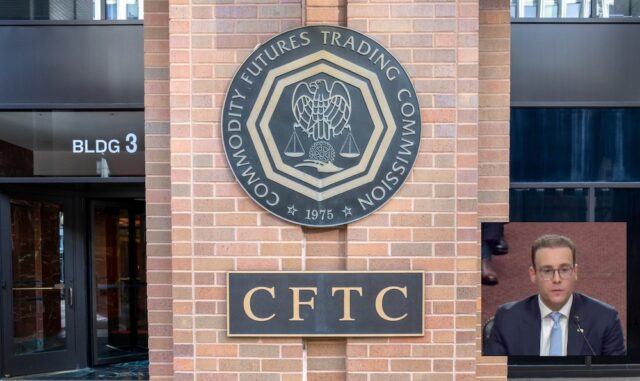
The U.S. Senate has confirmed Mike Selig as the Chair of the Commodity Futures Trading Commission (CFTC), ending a prolonged period of acting leadership at the commodities regulator. The vote also confirmed Travis Hill to lead the Federal Deposit Insurance Corporation, giving two key financial agencies permanent leadership at a moment when crypto oversight remains unresolved.

While the confirmation itself was expected, the timing matters. Congress is still debating whether to expand the CFTC’s authority over parts of the digital asset market. That debate now shifts from theory to implementation, with a confirmed chair in place.

Why the CFTC Suddenly Matters More for Crypto

The CFTC has long overseen crypto derivatives, including futures tied to Bitcoin and Ether. Its role in crypto regulation could grow significantly if lawmakers grant the agency authority over spot crypto markets, an area that has remained largely unregulated at the federal level.

For exchanges and brokers, the issue is not whether the CFTC becomes a crypto regulator overnight. It is whether the agency is positioned to move quickly if Congress acts. With leadership uncertainty now removed, the CFTC looks structurally ready to take on a larger role in crypto market oversight, even if the legal mandate is still pending.

This shift would not eliminate the SEC’s influence. Instead, it would formalize a split that market participants have been navigating informally for years.

Selig’s Enforcement Philosophy: Focus Over Overreach

During the confirmation process, Selig emphasized the need for clearer rules and more targeted enforcement. His public comments suggest a crypto enforcement policy that prioritizes fraud, manipulation, and systemic risk over technical violations.

That approach contrasts with recent criticism of regulation by enforcement, where firms face penalties without clear guidance on compliance expectations. For crypto markets, the distinction matters. Enforcement focused on clear misconduct reduces uncertainty, while broad or inconsistent actions tend to deter legitimate participation.

Selig has not promised leniency. Instead, he has framed enforcement as a tool that works best when market participants understand the rules they are expected to follow.

What Changes First Inside the CFTC

The most immediate impact of the leadership change at the CFTC may be procedural rather than philosophical, as the new chair begins setting internal priorities. Market participants are watching for faster responses on registrations, clearer guidance for compliant firms, and more predictable enforcement sequencing.

If Congress expands the agency’s remit, staffing and resources will become a constraint. Even without new authority, internal prioritization can signal how the CFTC plans to approach oversight in practice. Clear timelines and consistent messaging would mark a departure from the uncertainty that has defined recent years.

For firms operating in crypto derivatives, this could translate into a more stable regulatory environment. For spot markets, it remains conditional on legislative action.

Coordination, Not a Turf War, With the SEC

Jurisdictional tension between the CFTC and the SEC has shaped U.S. crypto policy for years. Overlapping authority has left firms unsure which rules apply and which regulator will act.

Selig has signaled that coordination between the SEC and the CFTC will be essential, especially if Congress redraws the regulatory map. Coordination does not require agreement on every issue, but it does require clarity on who regulates what.

For the industry, reduced duplication would lower compliance costs and legal risk. For regulators, it would help avoid conflicting interpretations that undermine enforcement credibility.

Event Contracts as an Early Stress Test

One area that could test the CFTC’s direction quickly is event contracts, particularly prediction markets. These products sit at the intersection of derivatives law, public policy, and market integrity, making them unusually sensitive to regulatory interpretation.

How the agency enforces the boundary between U.S.-compliant, off-chain prediction markets and non-compliant or offshore models may offer an early signal of Selig’s regulatory instincts. A narrow, risk-focused approach would align with his stated enforcement priorities. A broader clampdown could suggest a more cautious posture under political pressure.

This issue is not central to crypto market structure, but it is a visible proving ground for regulatory consistency.

What to Watch Next

In the coming months, the market will be watching for practical signals rather than rhetoric from the new CFTC chair. Early guidance, enforcement actions, and public statements will matter more than confirmation hearing transcripts.

The bigger question remains legislative. Without congressional action, the CFTC’s role in spot crypto markets stays limited. If lawmakers move forward, Selig’s leadership will shape how quickly and effectively the agency can respond.

For now, the confirmation of Mike Selig as the CFTC’s new chair closes one chapter of uncertainty. Whether it opens a new era of clarity depends less on intent than on execution, and on whether Congress delivers the authority the market has been waiting for.

SoFi Bank Launches SoFi Stablecoin on Ethereum, Targeting Enterprise Payments Infrastructure

TL;DR

  • SoFi Bank has launched SoFiUSD, a fully reserved, dollar-backed stablecoin on Ethereum, issued by its nationally chartered bank.
  • The focus is infrastructure, not retail crypto. SoFiUSD positions as a backend payments and settlement rail for banks, fintechs, and enterprise partners.
  • The move signals growing comfort among regulated banks with public blockchains as settlement layers.

SoFi has entered the stablecoin market through its regulated banking arm, launching a fully reserved dollar token designed for payments and settlement rather than retail crypto trading. The SoFi stablecoin, issued by SoFi Bank, N.A., is live on Ethereum. Banks, fintechs, and corporate partners can integrate it into their payment flows as enterprise-grade infrastructure.

The token, branded SoFiUSD, is backed one-to-one by U.S. dollars held by the bank and redeemable at par. The initial focus is always-on settlement rails for institutional partners. Consumer-facing use cases may follow later as part of SoFi’s push into embedded financial infrastructure, not speculative crypto products.

What SoFiUSD Is — and What It Is Not

SoFiUSD is issued directly by SoFi Bank, the company’s nationally chartered banking subsidiary, and runs on the public Ethereum blockchain. According to the company, the token is fully reserved with cash or cash-equivalent assets and designed to support programmable, near-instant settlement.

Crucially, the launch is not framed as a retail crypto token or a yield-bearing product. Instead, SoFi describes it as a payments and settlement instrument to move dollars on-chain with the compliance and reserve structure of a regulated bank. In that sense, SoFi’s Ethereum stablecoin is closer to financial plumbing than a consumer crypto offering.

Why SoFi Is Building a Stablecoin at All

The move reflects a broader shift in stablecoin usage across finance. Rather than competing for retail mindshare, banks and fintechs are increasingly looking at stablecoins as backend settlement tools. They want to enable 24/7 payment settlement, expedite reconciliations, and lower operational friction.

Traditional bank rails remain constrained by batch processing and business-hour cutoffs. Blockchain-based settlement, on the other hand, allows dollars to move continuously, with finality that can be directly integrated into modern payment and treasury systems. SoFi bets that this infrastructure layer will matter more over time than consumer-facing crypto features.

Enterprise-First Stablecoin Infrastructure, Not a Consumer Crypto Product

SoFi is positioning SoFiUSD explicitly as stablecoin infrastructure for partners rather than a consumer-facing crypto product. The company says banks, fintech platforms, and enterprise clients will be able to use the token for enterprise payments settlement, internal treasury movements, and programmable disbursements.

A key part of the pitch is flexibility. Partners can integrate SoFiUSD directly or use it as the foundation for white-label stablecoin issuance, allowing them to access public blockchain rails without issuing or managing a token themselves. In this model, SoFi acts less like a consumer crypto brand and more like a provider of on-chain dollar settlement services.

That approach fits into SoFi’s broader push toward regulated, embedded financial infrastructure. SoFiUSD can function as both an internal settlement tool for the company’s own crypto and payment flows and as external infrastructure for partners. Over time, the same Ethereum-based rail could support merchant settlement and cross-platform transfers. It could even underpin embedded finance use cases where end-users may not even notice the blockchain involvement.

Why the National Bank Label Matters

SoFi has repeatedly emphasized that SoFiUSD is issued by a nationally chartered bank. That distinction is central to its positioning. A bank-issued stablecoin carries different expectations around reserve quality, redemption rights, and regulatory oversight than tokens issued by crypto-native firms.

At the same time, SoFi’s choice to deploy the token on a public, permissionless blockchain highlights a growing convergence between traditional banking and open financial networks. The result is what some observers describe as tokenized bank money. Dollars that retain the legal and regulatory characteristics of bank deposits while gaining the interoperability of blockchain-based assets.

Whether regulators ultimately treat this as a national bank stablecoin or a form of tokenized deposit remains an open question. However, the structure reflects how banks are experimenting with on-chain settlement without abandoning existing oversight frameworks.

A Quiet Shift in Payments Infrastructure

Rather than launching another consumer crypto product, SoFi is using SoFiUSD to make a structural play for the payments stack. What matters here isn’t the branding. It’s that regulated banks are now willing to use public blockchains as settlement layers.

If that trend continues, stablecoins like SoFiUSD may operate largely behind the scenes, powering faster and more flexible financial systems while remaining invisible to most end users.

Readers’ frequently asked questions

How can I verify the official SoFiUSD contract address on Ethereum?

Use SoFi’s official announcement channels (press release, investor relations, or in-app notices) and cross-check the contract address on a trusted block explorer (like Etherscan). Don’t rely on token tickers or search results alone. Scam tokens often mimic names.

Can I hold SoFiUSD in a standard Ethereum wallet, and how do I add it?

Yes, if SoFiUSD is an ERC-20 token, most Ethereum wallets can hold it. If it doesn’t appear automatically, add it as a custom token using the verified contract address from an official SoFi source. You’ll also need a small amount of ETH for network gas if you plan to move it.

Only use links and contract details from SoFi’s official communications. Verify the contract address on a block explorer, confirm the token’s contract creator/metadata where available, and never connect your wallet to unknown “claim,” “airdrop,” or “verification” sites.

What Is In It For You? Action items you might want to consider

Confirm official SoFiUSD details before any interaction

Check SoFi’s official announcements for the verified Ethereum contract address and supported use cases. Cross-check the address on a trusted block explorer before adding or transferring the token.

Set up wallet and gas requirements in advance

If you plan to hold or move SoFiUSD on Ethereum, make sure your wallet supports ERC-20 tokens and keep a small ETH balance available for network fees.

Monitor partner and platform support

Watch for announcements from payment platforms, fintech partners, or wallet providers confirming native support for SoFiUSD, as availability and functionality may differ by platform.

Coinbase Expands Its European Footprint With BLIK Integration in Poland

Coinbase will delist non-compliant stablecoins in Europe by 2024 due to MiCA regulations

TL;DR

  • Coinbase added support for BLIK in Poland, integrating a widely used domestic payment method into its European platform.
  • The move reflects a localisation-first strategy, aligning the exchange with established payment habits rather than introducing new user flows.
  • By matching local expectations, Coinbase improves its competitive position against exchanges that already support Polish payment rails.

Coinbase has expanded its European operations by integrating BLIK, Poland’s most widely used mobile payment system. It will allow local users to fund accounts and purchase cryptocurrencies using a familiar domestic payment method. The rollout is supported by payments infrastructure provider ppro and marks another step in Coinbase’s country-by-country localisation strategy across regulated European markets.

The BLIK integration enables Polish Coinbase users to bypass card payments and traditional bank transfers. Instead, they can rely on a payment rail that is already embedded in everyday banking and commerce. For Coinbase, the move reflects a broader effort to reduce friction at the fiat on-ramp level while aligning its platform with local financial infrastructure.

Why Poland Matters in Coinbase’s European Strategy

Poland represents one of the European Union’s larger digitally active markets. Mobile banking adoption is high, and domestic solutions dominate the payments landscape rather than international card networks. For Coinbase, expanding in Poland is less about geographic reach and more about strategic depth within Europe.

This move fits a wider pattern across Coinbase’s European roadmap. Its growth is increasingly driven by local compliance, domestic payment rails, and tailored user access rather than uniform, one-size-fits-all product launches. As regulatory clarity improves across the EU, exchanges that can integrate directly with domestic financial systems gain a structural advantage.

The Role of BLIK in Poland’s Payments Ecosystem

BLIK is not a niche payment option. It is deeply integrated into Polish banking apps and widely used for e-commerce, peer-to-peer transfers, and in-store payments. For many users, BLIK functions as a default payment method rather than an alternative.

Supporting crypto purchases through BLIK lowers the barrier for Polish Coinbase users by relying on a payment method already embedded in everyday banking, retail, and online payments. In practical terms, it removes friction tied to card payments and cross-border bank transfers, especially for smaller, frequent transactions.

Competitive Context: Meeting Local Expectations

While the integration strengthens Coinbase’s position in Poland, it also reflects existing market realities. Several major exchanges already support BLIK for Polish users, making local payment access a baseline expectation rather than a differentiator.

Platforms such as Binance and OKX allow direct crypto purchases using BLIK. Other exchanges, including Kanga Exchange, Bitget, Paybis, Bybit, and zondacrypto, support BLIK deposits or purchases through local payment rails. These integrations have helped normalize BLIK as a standard fiat on-ramp within Poland’s crypto market.

In this context, the move can be seen as an effort to reach competitive parity in the local market. Exchanges that rely solely on card-based payment methods often face higher costs, lower approval rates, or weaker user retention in markets dominated by domestic payment systems. Aligning with BLIK allows Coinbase to compete more effectively with regional platforms that have long adapted to Polish payment habits.

Payments Infrastructure as a Scaling Strategy

The integration is powered by ppro, a payments infrastructure provider that connects global platforms with local payment methods across multiple markets. The involvement of ppro highlights a broader industry trend. Large exchanges are increasingly outsourcing regional payment complexity to specialized infrastructure providers.

This model allows platforms like Coinbase to scale more efficiently across Europe without rebuilding payment integrations market by market. It also supports a broader European fiat on-ramp strategy that prioritizes reliability, regulatory alignment, and user familiarity over speed alone.

What This Signals for Coinbase’s European Roadmap

The launch in Poland reinforces the direction of Coinbase’s broader European expansion efforts. Rather than focusing on headline-driven announcements, the exchange is embedding itself into local financial systems, market by market. The use of domestic payment rails suggests that similar integrations could follow in other jurisdictions where local payment methods dominate consumer behavior.

For regulated European crypto markets, this approach signals a shift away from experimentation toward infrastructure-level integration. Exchanges that fail to adapt to domestic payment ecosystems risk being structurally disadvantaged, regardless of brand recognition.

A Calculated, Not Flashy Expansion

Coinbase’s expansion in Poland is not framed as a disruptive leap but as a measured, infrastructure-driven move. The BLIK integration reduces friction for Polish Coinbase users. Consequently, the exchange aligns itself with local expectations and strengthens its competitive position without overpromising on adoption or volume.

In that sense, the Poland rollout serves as a template rather than a milestone. It reflects a strategy focused on durability and regulatory alignment. Coinbase positions itself to compete in Europe not through speed or scale alone, but through integration with the financial systems users already rely on.

Readers’ frequently asked questions

Can Polish users withdraw funds using BLIK after the integration?

No. BLIK support on Coinbase is currently limited to funding accounts and purchasing crypto. Withdrawals still rely on other supported payout methods.

Does the BLIK integration change Coinbase’s fees for Polish users?

Coinbase did not announce any fee changes in connection with the BLIK rollout. Standard Coinbase fees apply unless stated otherwise by the platform.

Is BLIK available to all Coinbase users in Poland immediately?

Availability may roll out gradually and can depend on account verification status and supported banking apps. Users should check their Coinbase app for access.

What Is In It For You? Action items you might want to consider

Check BLIK availability in your Coinbase account

If you are a Poland-based user, verify whether BLIK appears as a funding option in your Coinbase app, as access may roll out gradually.

Compare payment options before funding

Evaluate BLIK against cards or bank transfers based on fees, settlement speed, and transaction limits to determine the most efficient option for your use case.

Monitor further local payment integrations

If you operate or invest in crypto platforms, track whether Coinbase adds similar domestic payment methods in other European markets as part of broader localisation strategies.

- Advertisement -

FEATURED