Home Blog Page 126

Meme coins Are Just “Collectibles,” Says SEC – But Fraud Enforcement Remains on the Table

Meme coins are "collectibles" according to the SEC

Meme coins, often dismissed as speculative internet fads, have now been officially categorized as “collectibles” rather than securities, according to the U.S. Securities and Exchange Commission (SEC). While this decision alleviates concerns of securities regulation for meme coin projects, it does not grant them a free pass. The SEC has made it clear that fraud enforcement remains a top priority. These tokens may not face securities-related scrutiny, but misleading promotions, pump-and-dump schemes, and outright scams will still be subject to legal action. The ruling presents a paradox – less regulatory burden on the coins themselves, but increased vigilance on those behind them.

Regulatory Leniency: A Win for the Memecoin Sector?

The SEC’s clarification is a significant shift for the cryptocurrency industry, particularly for memecoins, which often operate in a regulatory gray area. By classifying memecoins as collectibles, the SEC has effectively stated that they do not meet the criteria to be considered securities under the Howey Test, a legal framework used to determine whether an asset falls under securities regulations.

This classification removes the risk of enforcement actions based on securities violations for tokens like Dogecoin (DOGE), Shiba Inu (SHIB), and newer speculative assets. It also means that projects issuing or trading meme coins will not need to comply with the strict reporting, registration, and investor protection measures required for securities. Many in the crypto industry view this as a step towards a more favorable regulatory environment. Innovation in digital assets can now thrive without excessive oversight.

SEC’s Warning: We Will Still Prosecute Fraudulent Practices!

However, the SEC’s statement comes with a strong warning: just because meme coins are not securities does not mean they are immune from regulatory scrutiny. Fraudulent activities associated with these tokens, including misleading marketing, deceptive promotions, and pump-and-dump schemes, remain illegal and subject to enforcement.

This clarification underscores the SEC’s focus on consumer protection. Projects and influencers who engage in deceptive practices, such as hyping tokens based on false claims or artificial market manipulation, can still face legal consequences under anti-fraud provisions. This aligns with ongoing efforts by regulators to crack down on scams plaguing the crypto space, particularly in the highly volatile and speculative meme coin market.

Market Reaction: A Mixed Response

Some in the crypto community welcomed the SEC’s decision as a sign of a more hands-off approach to digital assets. However, the market’s response has been mixed. Following the announcement, Dogecoin (DOGE), the leading meme coin by market capitalization, experienced a sharp 10% drop. Other meme coins also saw price fluctuations. Some traders interpret the SEC’s stance as a sign that speculative assets will continue to face regulatory scrutiny, even if they are not classified as securities.

Analysts suggest that the price decline may be due to lingering uncertainty. How will the SEC apply fraud enforcement in practice? While the regulatory burden on meme coin projects themselves may be reduced, the commission’s continued focus on fraudulent activities creates a climate of caution among investors. Additionally, some market participants may have expected a more favorable ruling offering a clearer pathway for meme coins to gain legitimacy.

What’s Next for Memecoins?

The SEC’s statement will likely shape the future of meme coins in several ways. First, projects operating in this space may take the opportunity to develop clearer legal frameworks to avoid fraudulent associations. At the same time, regulators could ramp up enforcement against bad actors, making compliance a key factor in long-term sustainability.

For investors, the decision presents both opportunities and risks. On the one hand, the lack of securities classification removes a major regulatory hurdle, potentially leading to increased mainstream acceptance of meme coins. On the other hand, the heightened focus on fraud prevention means that market participants must remain vigilant against schemes that could trigger regulatory crackdowns.

The SEC’s decision to classify meme coins as collectibles rather than securities represents a nuanced approach to crypto regulation. While the ruling somewhat relieves meme coin projects by exempting them from securities laws, it does not absolve them of accountability. Fraud enforcement remains firmly in place, ensuring that deceptive practices will still be met with legal action. As the crypto industry evolves, this ruling sets the stage for a more structured yet speculative market – one where regulatory clarity and investor caution will go hand in hand.

Readers’ frequently asked questions

If meme coins are not securities, does that mean they are completely unregulated?

No, the SEC’s decision does not mean that meme coins are completely unregulated. While the SEC does not consider them securities and therefore does not subject them to the SEC’s strict securities laws, other regulatory frameworks still apply. Fraudulent activities such as market manipulation, misleading promotions, and rug pulls remain illegal under general anti-fraud and consumer protection laws. Additionally, other agencies like the Commodity Futures Trading Commission (CFTC) or the Federal Trade Commission (FTC) may have jurisdiction over certain activities involving meme coins. In some cases, individual states may also impose their own rules on crypto-related transactions. The ruling simply removes one layer of regulation but does not create a lawless environment for meme coins.

How does this decision affect traders and investors in meme coins?

For traders and investors, the SEC’s ruling provides some clarity but also introduces new considerations. On the positive side, meme coins are now explicitly categorized as collectibles rather than securities. They won’t be subject to the same compliance and reporting requirements as stocks or other financial instruments. This could encourage more mainstream adoption and institutional interest in meme coins.

However, the ruling also highlights the risks of fraud enforcement. Traders must be more cautious when evaluating meme coin projects. Just because these tokens are not securities does not mean they are safe investments. Market manipulation and scams remain prevalent, and regulatory agencies will still take action against fraudulent actors. Traders should not mistake this ruling for an endorsement of meme coins’ legitimacy. This is rather a legal classification that helps distinguish them from other crypto assets with financial or investment properties.

Could this ruling impact other cryptocurrencies beyond meme coins?

Yes, this ruling could set a precedent for how other cryptocurrencies are classified in the future. The SEC’s decision indicates that tokens primarily driven by speculation, community hype, or cultural significance rather than financial investment may not fall under securities regulations. This could impact other types of tokens. Gaming tokens, fan tokens, or NFTs share similarities with meme coins in terms of speculative value and market behavior.

However, this ruling does not automatically mean all cryptocurrencies are exempt from securities laws. Many crypto assets, particularly those tied to investment schemes, staking rewards, or revenue-sharing models, may still be considered securities under the Howey Test. The classification of digital assets will likely continue to evolve as regulators refine their approach to distinguishing between different types of tokens.

What Is In It For You? Action Items You Might Want to Consider

Stay Alert for Fraudulent Hype

Just because meme coins aren’t classified as securities doesn’t mean they’re safe bets. The SEC has made it clear that fraud enforcement remains a top priority. So, be cautious of overly hyped projects, celebrity endorsements, and social media-driven pumps. Always research the team, tokenomics, and community sentiment before making a move.

Use the SEC’s Ruling to Your Advantage

The classification of meme coins as collectibles rather than securities removes one regulatory hurdle, potentially opening the door for broader adoption and mainstream interest. This could create trading opportunities, but it also means volatility will remain high. If you’re trading meme coins, consider short-term strategies taking advantage of price swings. But, always keep an eye on long-term regulatory developments.

Diversify and Don’t Rely on Regulatory Certainty

The SEC’s stance on meme coins today doesn’t guarantee the same approach in the future. Also, global regulators may take different views on crypto assets. Treat meme coins as a high-risk part of your portfolio and balance them with more stable investments. If you’re speculating, make sure you have an exit strategy in place before the market turns against you.

Deutsche Telekom Expands Blockchain Footprint by Joining Injective as a Validator

Deutsche Telekom expands blockchain footprint, joining Injective protocol as validator.

Deutsche Telekom has solidified its position in the blockchain space with its subsidiary, Deutsche Telekom MMS, becoming an Injective blockchain validator. This move marks a significant step in the company’s broader strategy to support Web3 infrastructure and decentralized finance (DeFi) applications. As the telecommunications giant deepens its engagement with blockchain networks, its latest partnership with Injective highlights the increasing institutional adoption of decentralized technologies. With experience validating on networks like Polygon, NEAR, and Celo, Deutsche Telekom’s continued foray into blockchain signals a shift in how traditional enterprises embrace Web3 innovations.

Institutional Adoption: Deutsche Telekom’s Strategic Move into Blockchain

Deutsche Telekom MMS’s decision to become a validator for Injective reflects the company’s expanding blockchain strategy. The Injective blockchain, a layer-1 protocol designed specifically for DeFi applications, aims to enhance financial services by offering decentralized, efficient, and interoperable trading infrastructure. As a validator, Deutsche Telekom MMS will contribute to the network’s security and stability. It will verify transactions, propose new blocks, and participate in governance decisions.

This move aligns with Deutsche Telekom’s broader involvement in blockchain technology. The company has previously engaged with major blockchain networks, including serving as a validator on Polygon, NEAR, and Celo. Additionally, it has operated Bitcoin nodes and participated in Bitcoin mining using renewable energy. The company is demonstrably committed to blockchain infrastructure in the long term. Supporting Injective reinforces Deutsche Telekom’s position as a key institutional player in the Web3 space. It may encourage other enterprises to explore similar integrations.

https://twitter.com/injective/status/1895126846586433575

Market Implications: What It Means for INJ Token

Institutional backing often has significant implications for the price and adoption of a blockchain’s native token. In this case, Injective’s native token, INJ, could see increased market confidence following Deutsche Telekom’s involvement. Historically, strategic partnerships and enterprise adoption have been catalysts for price appreciation in blockchain ecosystems. The perception of Injective as a credible and scalable network could improve, attracting both retail and institutional investors.

However, market sentiment remains influenced by broader crypto trends. While Deutsche Telekom’s entry as a validator adds legitimacy to Injective, external factors such as macroeconomic conditions, regulatory developments, and overall DeFi adoption rates will also play a role in INJ’s price movements. Analysts and traders will closely monitor how this validation effort impacts the token’s utility and trading volumes in the coming months.

Technical Impact: Strengthening Blockchain Security and Decentralization

From a technical perspective, Deutsche Telekom’s participation enhances Injective’s security and decentralization. Validators are critical to maintaining the integrity of blockchain networks by verifying transactions and ensuring consensus is achieved fairly. By leveraging its robust IT infrastructure and expertise, Deutsche Telekom MMS will likely improve Injective’s resilience against network attacks and performance bottlenecks.

Decentralization remains a key concern for blockchain projects. While institutional validators bring credibility and stability, some in the crypto community argue that corporate involvement could centralize decision-making. However, Injective operates on a proof-of-stake (PoS) consensus mechanism. It incentivizes distributed participation while allowing large-scale validators to contribute without overpowering the network. Deutsche Telekom’s role, therefore, balances institutional credibility with decentralized security.

Future Prospects: Blockchain Infrastructure and the Path Forward

The involvement of a global telecom leader like Deutsche Telekom in blockchain validation suggests a broader trend of enterprise adoption. As blockchain technology matures, more corporations are recognizing its potential to improve transparency, security, and efficiency across industries. Injective’s focus on financial applications aligns with the growing institutional interest in DeFi, which could further drive adoption and innovation.

In the long run, Deutsche Telekom’s expansion into blockchain infrastructure sets a precedent for other major enterprises. If more telecommunications and tech companies follow suit, blockchain networks could experience greater stability, scalability, and mainstream acceptance. Integrating traditional corporate infrastructure with decentralized systems may lead to new use cases, bridging the gap between Web2 and Web3 technologies.

Deutsche Telekom’s decision to join Injective as a validator represents a significant milestone in the institutional adoption of blockchain. This move not only strengthens Injective’s network security but also adds legitimacy to the DeFi ecosystem. While the impact on the INJ token price remains to be seen, the partnership signals a broader industry shift towards corporate participation in decentralized finance. As enterprises like Deutsche Telekom deepen their engagement with blockchain, the future of Web3 looks increasingly intertwined with traditional infrastructure players.

Readers’ frequently asked questions

What exactly does a blockchain validator do, and why is Deutsche Telekom’s involvement significant?

A validator is responsible for verifying transactions, securing the blockchain network, and ensuring all transactions adhere to the consensus rules. Validators play a crucial role in preventing fraudulent activities and maintaining network stability. Deutsche Telekom’s involvement is significant because it represents an institutional player stepping into blockchain validation, adding credibility to Injective and the broader DeFi space. This could encourage more enterprises to integrate blockchain technology into their operations, which in turn strengthens decentralization efforts.

Will Deutsche Telekom’s participation impact Injective’s transaction speeds or fees?

Deutsche Telekom’s role as a validator primarily affects network security and decentralization rather than directly influencing transaction speeds or fees. However, adding more validators to the network can help improve overall efficiency by reducing congestion and ensuring smooth transaction processing. Fees in Injective’s ecosystem depend on its specific tokenomics and usage dynamics. Nevertheless, having a major validator like Deutsche Telekom reinforce the network’s reliability may drive more users to the platform and, over time, impact fee structures based on demand.

How does Deutsche Telekom’s involvement compare to other corporate blockchain validators?

Many large corporations have entered the blockchain space as validators. For example, Google Cloud validates for networks like Solana and Ethereum Layer-2 solutions, and financial institutions validate transactions on private blockchains. Deutsche Telekom’s move is unique because it builds on its prior experience validating for multiple public blockchains, such as Polygon and Celo, reinforcing its commitment to decentralized networks. Unlike companies that engage with blockchain purely for research or exploratory purposes, Deutsche Telekom’s ongoing participation indicates a long-term strategy to integrate blockchain infrastructure into its core business operations.

What Is In It For You? Action Items You Might Want to Consider

Monitor INJ Price Movements for Potential Institutional Impact

With Deutsche Telekom joining Injective as a validator, market confidence in INJ could strengthen. Traders should keep an eye on price action, especially around key support and resistance levels, to identify potential bullish trends triggered by increased institutional backing. Look for increased trading volumes as a sign of growing interest from both retail and institutional investors.

Assess Injective’s Growing Institutional Adoption for Long-Term Positioning

Institutional participation often signals network credibility and sustainability. If you’re a long-term investor, consider researching Injective’s development roadmap and adoption metrics to evaluate whether INJ has the potential for sustained growth. Deutsche Telekom’s involvement could pave the way for more enterprises to follow, making Injective a network worth tracking.

Analyze Validator Growth and Its Effect on Network Security and Staking Rewards

More validators can enhance blockchain security and decentralization, but they also influence staking dynamics. If you’re holding INJ or considering staking, assess how Deutsche Telekom’s participation affects staking rewards and validator competition. A stronger validator ecosystem can improve network performance. But, it’s essential to track how rewards are distributed among validators and delegators.

From Breach to Recovery: How Lazarus Group Laundered $1.5B from Bybit – and How the Exchange Fought Back

When news broke of the $1.5 billion Bybit hack, skepticism loomed over how the exchange's response to such a massive loss.

When the Lazarus Group executed a staggering $1.5 billion heist on cryptocurrency exchange Bybit, it sent shockwaves throughout the digital asset world. The North Korean-backed hackers exploited internal wallet transfer processes, siphoning off vast amounts of Ethereum (ETH) and Lido Staked Ether (stETH). This incident now stands as the largest cryptocurrency exchange hack to date. The attackers moved swiftly, laundering hundreds of millions through decentralized protocols and intricate cross-chain swaps. However, Bybit’s response was equally rapid. Within just 72 hours, the exchange replenished its reserves through a combination of bridge loans, OTC market acquisitions, and a crucial $600 million ETH infusion from Mirana Ventures. With withdrawals fully restored and a bounty program launched to recover stolen assets, Bybit’s handling of the crisis has been met with both industry praise and critical scrutiny.

This piece delves into both sides of the story: the Lazarus Group’s sophisticated laundering operation and Bybit’s aggressive recovery efforts. It wants to shed light on the challenges centralized platforms face in an era of increasingly advanced crypto crimes.

Attribution of the Hack: How Did It Happen and Who Was Responsible?

Multiple cybersecurity investigations, including those by Chainalysis, Elliptic, and TRM Labs, have attributed the Bybit hack to the Lazarus Group – a state-sponsored cybercrime syndicate operating under North Korean intelligence. Known for previous attacks on major platforms like Axie Infinity’s Ronin Bridge and Harmony Protocol, Lazarus Group’s latest operation leveraged a vulnerability during a routine transfer between Bybit’s cold and hot wallets.

Reports indicate that the hackers initiated unauthorized transactions during this window. They rerouted over $1.5 billion worth of ETH and stETH to addresses under their control. Although the specific infiltration method remains under investigation, early findings suggest a combination of social engineering tactics and compromised internal processes may have been exploited. Notably, sophisticated phishing attempts targeted several Bybit employees, although Bybit has not confirmed whether these were the direct entry points.

Following the Money: Lazarus Group’s Laundering Tactics

Within hours of securing the stolen funds, the Lazarus Group began an elaborate laundering process to obscure the asset trail. Blockchain analytics firms have traced approximately 89,500 ETH (worth around $224 million) already laundered within 60 hours of the breach.

Key Laundering Techniques Employed:

  • Decentralized Exchange (DEX) Swaps: Lazarus utilized decentralized protocols such as THORChain and Uniswap to convert ETH into multiple tokens across different blockchains, bypassing centralized compliance systems.
  • Cross-Chain Bridges: The stolen assets were transferred across networks like Binance Smart Chain, Avalanche, and Tron. This makes the funds more difficult to trace.
  • Peel Chains: Funds were moved in incremental amounts through thousands of intermediary wallets, a tactic designed to complicate tracking efforts.
  • Use of Mixers: Despite increased regulatory scrutiny and sanctions, services like Tornado Cash were used in earlier laundering phases to obscure transaction origins.

Analysts believe that approximately 82% of the stolen assets remain in wallets controlled by Lazarus. Global law enforcement entities and blockchain intelligence firms will continue surveilling these wallets.

Bybit’s Response and Recovery Efforts

Immediate Crisis Management and Bounty Launch

Within hours of detecting the breach, Bybit suspended withdrawals to prevent further losses and initiated an emergency incident response plan. Shortly thereafter, the exchange offered a bounty of up to 10% of any recovered funds, incentivizing cybersecurity experts and ethical hackers to assist in the recovery operation.

Full Restoration of Exchange Services

Despite the scale of the breach, Bybit resumed withdrawal services within 48 hours and restored full functionality across its platform by February 26, 2025. According to company reports, over 580,000 withdrawal requests were processed successfully, covering approximately 99.9% of pending transactions.

Replenishing the ETH Reserves: A Three-Pronged Strategy

Bybit’s ability to recover and secure liquidity in under three days involved a multifaceted approach:

  • Bridge Loans from Institutional Partners: To address immediate liquidity gaps, Bybit secured short-term bridge loans from private investment groups, covering approximately 80% of the stolen ETH.
  • OTC Acquisitions: Bybit purchased approximately 157,660 ETH through over-the-counter deals facilitated by liquidity providers such as Galaxy Digital and Wintermute. These transactions minimized market disruption while ensuring rapid replenishment.
  • $600 Million ETH Infusion from Mirana Ventures: Mirana Ventures, an investment arm closely tied to Bybit’s leadership, played a critical role in the recovery process. The firm liquidated $500 million in Bitcoin (BTC) and $100 million in Tether (USDT) through a combination of OTC desks and direct market purchases to secure the necessary ETH. This strategic partnership allowed Bybit to rapidly close the liquidity gap.

Industry Reaction: Applause and Criticism

The crypto industry’s response to Bybit’s crisis handling has been mixed. On one hand, leading blockchain security firms like Chainalysis and Elliptic praised the exchange’s transparency and swift action. They cited their collaborative approach, working alongside law enforcement and cybersecurity experts as a model for future incident response protocols.

However, skepticism remains. Critics argue that the hack exposes broader vulnerabilities inherent in centralized exchanges. Cybersecurity experts have pointed out that internal process audits and enhanced wallet transfer protocols could have prevented the breach. Calls for stricter industry-wide security standards and greater transparency in internal operations have grown louder in the wake of the attack.

Financial analysts also raised eyebrows at Bybit’s ability to secure such large sums so quickly, prompting questions about the exchange’s reliance on affiliated entities like Mirana Ventures for emergency liquidity.

The Bybit hack is more than just another entry in the growing list of crypto-related cyberattacks. It’s a pivotal moment that underscores the sophistication of modern-day cybercrime and the immense challenges facing centralized platforms. Lazarus Group’s use of decentralized tools and cross-chain solutions highlights the evolving complexity of blockchain-based laundering operations. At the same time, Bybit’s rapid response showcases the resilience possible with coordinated industry partnerships and swift internal action.

Yet, questions linger. Can centralized exchanges balance user convenience with the level of security required to thwart future threats? Will the crypto industry take this incident as a wake-up call to tighten operational security, or will history repeat itself?

For now, Bybit’s comeback is both a cautionary tale and a testament to what’s possible when crisis management and industry cooperation align.

Readers’ frequently asked questions

Cold wallets are fully offline cryptocurrency storage solutions, making them highly secure against online hacking attempts. Hot wallets, on the other hand, are connected to the internet to facilitate faster transactions. That’s why they are more vulnerable to cyberattacks. In this case, the hack occurred during a routine transfer of funds from Bybit’s cold wallet to its hot wallet. It’s a necessary process to ensure the exchange has enough liquidity for user withdrawals. While cold wallets are safe for long-term storage, the transition of funds to a hot wallet introduces a brief window to exploit vulnerabilities, as has happened in this incident.

What are OTC (Over-the-Counter) crypto acquisitions, and why did Bybit use them instead of buying ETH on regular exchanges?

OTC crypto acquisitions involve buying and selling large amounts of cryptocurrency directly between parties, often facilitated by specialized brokers. Bybit used OTC markets to quickly acquire large quantities of ETH without causing significant price fluctuations in public markets. Purchasing such a large volume on regular exchanges could have spiked the price of ETH. That would have made the replenishment process more expensive and disruptive. OTC deals provide privacy, speed, and price stability – key factors in Bybit’s rapid response efforts.

What is a liquidity gap, and why was it important for Bybit to close it quickly after the hack?

A liquidity gap occurs when an institution doesn’t have enough readily available assets to meet withdrawal demands or financial obligations. After the hack, Bybit faced a significant liquidity gap because a large portion of its ETH reserves were stolen. The exchange was potentially unable to process customer withdrawals. Closing this gap quickly was critical to maintaining user trust and preventing a withdrawal panic. By securing loans, conducting OTC purchases, and receiving support from Mirana Ventures, Bybit ensured customers could access their funds without interruption. That helped stabilize the exchange’s operations and reassure the market.

What Is In It For You? Action Items You Might Want to Consider

Prioritize Security: Don’t Rely Solely on Exchanges

Even major platforms like Bybit, with robust security measures, aren’t immune to breaches. Consider moving your long-term holdings to cold wallets and only keep what you need for active trading on exchanges. Setting up strong two-factor authentication (2FA) and regularly updating passwords can add an extra layer of protection to your accounts.

Stay Informed About Exchange Liquidity and Recovery Plans

Liquidity gaps can impact your ability to withdraw funds during critical times. Research how the exchange handles crisis recovery before committing large amounts to any platform. Does it have strong financial backing, like Bybit’s relationship with Mirana Ventures? Being aware of an exchange’s contingency plans can help you make informed decisions in volatile market conditions.

Use Market Events to Spot Trading Opportunities

Significant incidents like the Bybit hack often lead to short-term price volatility in related assets. Stay vigilant during these periods! While the market reacts to news of breaches or recoveries, you may find opportunities for well-timed entries or exits. Always pair this strategy with risk management techniques to avoid getting caught in unexpected price swings.

Uniswap Escapes SEC Charges: UNI Token Rallies Amid Regulatory Retreat

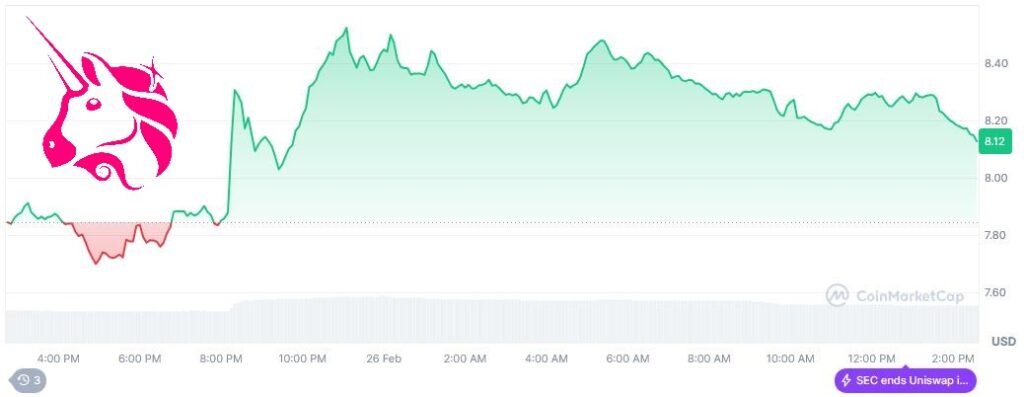
Uniswap Labs emerged unscathed as the US Securities and Exchange Commission (SEC) officially dropped its investigation into the decentralized exchange protocol. The decision sent Uniswap’s native token, UNI, soaring by 5%, reflecting renewed investor confidence. This regulatory retreat is not isolated—similar investigations into major crypto players like Coinbase and Robinhood Crypto have also been shelved. Is the SEC’s softened stance a win for innovation, or a temporary lull in regulatory scrutiny?

SEC Closes Uniswap Probe Without Enforcement Action

On February 25, 2025, Uniswap Labs announced that the SEC concluded its investigation without recommending any enforcement action. The investigation, initiated in April 2024 under then-SEC Chair Gary Gensler, centered around allegations that Uniswap operated as an unregistered broker and exchange and may have issued unregistered securities through its UNI token. Despite extensive scrutiny, the SEC found insufficient grounds to pursue charges.

Uniswap Labs welcomed the decision, emphasizing its ongoing commitment to regulatory compliance and transparency. In a public statement, the company reiterated its belief in the legality of decentralized protocols and highlighted the importance of clear regulatory guidelines for the industry.

https://twitter.com/Uniswap/status/1894452298698358989

Market Reacts: UNI Token Surges

The market responded positively to the news. Following the announcement, Uniswap’s UNI token surged approximately 5%, reflecting a broader sense of relief among investors. Market participants interpreted the SEC’s decision to drop the investigation as a sign of potential regulatory leniency, at least toward established decentralized finance (DeFi) platforms like Uniswap.

“The closure of the investigation removed a significant overhang for Uniswap and the DeFi sector,” noted a crypto market analyst from CoinDesk. “Investors are now reassessing risk premiums attached to tokens with regulatory exposure.”

Trading volumes for UNI also saw a noticeable uptick, indicating renewed confidence and speculation on further gains in light of a perceived regulatory retreat.

Broader Regulatory Context: A Shift in Approach?

The decision to end the Uniswap probe is part of a broader trend. In recent weeks, the SEC has also concluded investigations into other major crypto entities, including Coinbase and Robinhood Crypto, without filing charges. These actions come amid growing pressure on U.S. regulators to provide clearer, innovation-friendly frameworks for digital assets.

Industry insiders speculate that the SEC’s shift may stem from judicial setbacks and mounting political pressure to foster innovation in the blockchain space. However, the regulatory landscape remains fluid. While some see this as a sign of lasting change, others caution that future enforcement actions could still emerge, particularly under different political leadership.

Investor Sentiment and Industry Implications

For investors, the SEC’s retreat has been a catalyst for optimism. The decision buoyed UNI and sent ripples across the broader DeFi market, with several decentralized protocols experiencing price gains. Market participants view this development as a green light for innovation, albeit with a recognition that regulatory uncertainty is far from over.

“This is a short-term win for DeFi,” commented an analyst from CryptoSlate. “But the industry must remain vigilant, as regulatory attitudes can shift quickly.”

The SEC’s decision to drop its investigation into Uniswap marks a pivotal moment for the DeFi sector, bolstering investor confidence and potentially setting a precedent for how regulators approach decentralized platforms. Yet, whether this represents a lasting regulatory shift or merely a pause in enforcement remains to be seen. For now, markets are celebrating, but the industry continues to navigate an evolving regulatory landscape.

Readers’ frequently asked questions

What is Uniswap, and how do people use it?

Uniswap is a decentralized exchange (DEX) that allows users to trade cryptocurrencies directly from their digital wallets without needing an intermediary like a traditional exchange. It operates on the Ethereum blockchain, using smart contracts to automate trades. Users connect their crypto wallets, select the tokens they want to trade, and execute transactions through the platform. Unlike centralized exchanges, Uniswap doesn’t require account creation or identity verification for basic use.

What is the UNI token, and why does its price matter?

The UNI token is Uniswap’s governance token, allowing holders to vote on decisions about the platform’s development and policies. Holding UNI gives users a say in upgrades, fee structures, and how the platform’s treasury is used. The token’s price matters because it reflects market confidence in Uniswap’s future and can influence how much sway token holders have in governance. A higher price can also encourage broader participation in the Uniswap ecosystem.

How does a regulatory investigation like this affect crypto users?

Regulatory investigations into major crypto platforms can impact users in several ways. If a regulator enforces penalties or restrictions, it can limit access to certain services or tokens. Even without charges, an investigation can create uncertainty, which may affect token prices and platform usage. In this case, the SEC dropping the investigation means Uniswap users can continue using the platform without disruptions tied to legal issues.

What Is In It For You? Action Items You Might Want to Consider

Reassess Your UNI Holdings

With the SEC dropping its investigation, UNI’s recent 5% surge could be just the beginning. Consider revisiting your UNI position—whether you’re holding long-term or looking for short-term gains, market sentiment has turned positive. Keep an eye on trading volume and price action for potential entry points or profit-taking opportunities.

Explore DeFi Platforms with Renewed Confidence

Regulatory clarity often sparks market optimism. With Uniswap in the clear, this could be the right time to explore or re-engage with DeFi protocols. Platforms like Uniswap might see increased usage and liquidity, which can translate into better trading conditions and yield opportunities. Stay vigilant but consider diversifying within the DeFi space.

Monitor Regulatory Developments Closely

While this is a win for Uniswap, regulations remain a moving target. Stay informed on future SEC actions, as regulatory sentiment can shift quickly and affect market dynamics. Use this period of stability to review your portfolio’s exposure to DeFi and adjust strategies to manage potential regulatory risks.

Half a Billion Dollar Fine: How OKX’s Settlement Sets a Precedent for Global Crypto Markets

$500M OKX settlement with the DOJ

With a $505 million penalty settlement, OKX finds itself at the center of a pivotal moment for cryptocurrency regulation. The U.S. DOJ’s actions against the exchange highlight the growing intolerance for non-compliant operations in global markets. OKX’s case serves as both a cautionary tale and a catalyst for other exchanges to reassess their compliance frameworks. As regulatory bodies worldwide increase oversight, this high-profile settlement may mark a turning point in how crypto platforms operate across borders.

Background of the Settlement

On February 24, 2025, the U.S. Department of Justice (DOJ) announced a settlement with Aux Cayes FinTech Co. Ltd., the operator of OKX, one of the world’s largest cryptocurrency exchanges. The agreement follows OKX’s guilty plea to charges of operating an unlicensed money-transmitting business in the United States and failing to implement adequate anti-money laundering (AML) protocols.

Despite implementing a policy in 2017 to restrict U.S. users, OKX continued to serve retail and institutional clients within the country from 2018 to early 2024. Investigations revealed that the exchange processed over $1 trillion in transactions during this period. More than $5 billion in transactions were linked to suspicious activities and criminal proceeds. OKX having facilitated ways for U.S.-based customers to bypass geographic restrictions contributed to the charges.

The settlement requires OKX to pay $505 million, consisting of an $84.4 million fine and the forfeiture of approximately $420.3 million in revenue earned from U.S. clients. Additionally, the exchange must retain an independent compliance consultant until at least February 2027 to ensure adherence to global AML standards.

Global Compliance Ripple Effect

The DOJ’s decisive action against OKX underscores the rising regulatory scrutiny on cryptocurrency exchanges globally. While the settlement directly involves U.S. authorities, its implications extend far beyond American borders. Governments and financial regulators worldwide are intensifying efforts to tighten oversight of digital asset markets. They recognize that non-compliant platforms pose significant risks to global financial stability and anti-money laundering efforts.

For international exchanges operating in multiple jurisdictions, the OKX case sends a clear message: compliance with local regulations is non-negotiable. Industry experts suggest that other global platforms may now prioritize reinforcing their AML protocols and cross-border compliance mechanisms to avoid facing similar legal consequences.

OKX’s Compliance Overhaul and Market Reaction

In response to the settlement, OKX acknowledged its historical compliance shortcomings and outlined steps to rectify these issues. The exchange emphasized that the affected U.S.-based users represented a small fraction of its global user base. They also confirmed that those accounts have since been deactivated. OKX’s leadership stated their commitment to collaborating with regulators and enhancing their compliance infrastructure, highlighting the appointment of an independent consultant to oversee improvements.

Despite the significant financial penalty, market analysts note that OKX’s swift acknowledgment of the charges and proactive steps toward compliance may mitigate long-term reputational damage. The exchange’s commitment to achieving “regulatory gold standards” could bolster investor confidence and serve as a model for industry best practices.

Implications for the Broader Crypto Industry

The OKX settlement marks one of the largest enforcement actions against a cryptocurrency exchange, reflecting broader global regulatory trends. Recent years have seen heightened vigilance from agencies like the Financial Action Task Force (FATF), European Securities and Markets Authority (ESMA), and the U.K. Financial Conduct Authority (FCA), all of which are ramping up AML and know-your-customer (KYC) requirements.

This case sets a precedent for how global regulators may collaborate to curb illicit financial activities facilitated through crypto platforms. For exchanges operating in gray regulatory areas, the settlement is a stark warning to prioritize compliance. Otherwise, they risk severe financial and reputational consequences.

Industry observers predict that the OKX case may accelerate discussions around creating uniform global standards for cryptocurrency regulation, reducing jurisdictional arbitrage that allows companies to exploit regulatory gaps.

Looking Ahead: A Turning Point for Global Crypto Compliance

OKX’s $505 million settlement represents more than just a punitive measure; it signals a potential paradigm shift in how global cryptocurrency markets operate. For regulators, it reinforces the urgency of comprehensive oversight frameworks. For crypto platforms, it underscores the need for transparent, compliant operations prioritizing user protection and global financial integrity.

As the digital asset industry matures, the OKX case will likely be remembered as a pivotal moment that prompted many market participants to reassess their compliance strategies and regulatory engagement. Whether this will usher in an era of greater trust and stability in the crypto space remains to be seen. However, the era of regulatory leniency is clearly over.

Readers’ frequently asked questions

Why was OKX fined so much, and how does this affect everyday crypto users?

OKX was fined $505 million because it operated in the U.S. without the necessary licenses and allowed U.S. users to access its platform despite restrictions. The penalty reflects the seriousness of regulatory violations, particularly when they involve anti-money laundering (AML) failures. For everyday crypto users, this case highlights the importance of using regulated exchanges that comply with local laws. Using platforms that lack proper licensing can expose users to risks like frozen accounts or legal complications. This settlement may also prompt other exchanges to tighten their compliance measures, potentially leading to stricter account verification processes for users.

How can I check if an exchange is registered to operate in my country?

To check if a cryptocurrency exchange is legally operating in your country, you can visit the website of your local financial regulator. For example, in the U.S., you can use the Financial Crimes Enforcement Network (FinCEN) website to verify if an exchange is registered as a Money Services Business (MSB). You can check with national financial authorities or the European Securities and Markets Authority (ESMA) in the European Union. Many regulators provide public search tools where you can look up the exchange by name. Checking these sources ensures that you’re using a compliant and authorized platform.

If I used OKX during the violation period, do I need to take any action?

As part of the settlement agreement, OKX deactivated accounts of U.S.-based users during the period under investigation (2018 to early 2024). If your account was deactivated and you still have funds locked in the account, contact OKX customer support directly to understand the process for recovering assets. Additionally, if you’re concerned about any legal implications, it may be helpful to consult a legal professional familiar with financial regulations in your jurisdiction. For future use, migrate to regulated platforms that comply with local laws to avoid potential disruptions.

What Is In It For You? Action Items You Might Want to Consider

Reevaluate Your Exchange Choices

If you’re trading on platforms that operate in regulatory gray areas, now is the time to reassess. The OKX settlement is a clear sign that authorities are cracking down on non-compliant exchanges. Stick with platforms fully licensed in your jurisdiction – it’s not just about avoiding account freezes or sudden restrictions; it’s about safeguarding your assets.

Prioritize Compliance Over Convenience

Sure, some exchanges make it easy to skip lengthy verification processes, but ask yourself – is saving a few minutes worth the risk? Regulators worldwide are tightening their grip. Using platforms that comply with AML and KYC standards could save you from future headaches. Don’t wait for a compliance crackdown to lock you out of your funds.

Stay Ahead of Regulatory Shifts

This settlement is more than just news – it’s a glimpse into the future of global crypto markets. Keep an eye on regulatory trends, as they’re likely to impact liquidity, fees, and available services across exchanges. Traders who stay informed can adjust strategies early, while those who don’t risk being caught off guard. Knowledge isn’t just power – it’s profit.

- Advertisement -

FEATURED