Home Blog Page 127

Relief for Robinhood: SEC Ends Crypto Investigation, Stock Surges

The SEC closed its investigation into Robinhood

Robinhood Markets received a significant boost as the US Securities and Exchange Commission (SEC) officially closed its investigation into the company’s cryptocurrency division without imposing any penalties. The decision, announced on February 24, sent Robinhood’s stock price upward, reflecting renewed investor confidence following months of regulatory uncertainty.

Background of the SEC Investigation

The SEC’s investigation began in 2023 and intensified with a Wells Notice issued in May 2024. It focused on potential securities law violations related to Robinhood’s crypto operations. However, after months of scrutiny, the Commission opted not to pursue enforcement action. The closure of this investigation comes shortly after the SEC dropped its lawsuit against Coinbase earlier this month, signaling a potential shift in the regulatory landscape for U.S.-based cryptocurrency firms.

Robinhood’s Response and Commitment to Compliance

Dan Gallagher, Robinhood’s Chief Legal, Compliance, and Corporate Affairs Officer, expressed relief at the decision. “We applaud the staff’s decision to close this investigation with no action,” Gallagher stated. “Let me be crystal clear – this investigation never should have been opened. Robinhood Crypto always has and will always respect federal securities laws and never allowed transactions in securities. As we explained to the SEC, any case against Robinhood Crypto would have failed. We appreciate the formal closing of this investigation, and we are happy to see a return to the rule of law and commitment to fairness at the SEC.”

Investor Reaction and Market Impact

Investors responded positively to the news, with Robinhood’s stock climbing over 6% in intraday trading on February 24. Market analysts suggest that removing regulatory uncertainty could pave the way for renewed growth opportunities for the company, particularly as it expands its crypto offerings. “The closure of the SEC investigation is a relief for Robinhood shareholders,” said a senior analyst at a major financial firm. “Regulatory clarity is crucial for market stability, and this development reduces the overhang that had weighed on the stock for months.”

Broader Regulatory Context and Industry Implications

The broader cryptocurrency market also reacted favorably. The decision to end investigations into Robinhood and Coinbase within the same month has fueled speculation the SEC may be adopting a more measured approach to crypto regulation under its current leadership. Some industry experts view these decisions as a recognition of the complexities in regulating digital assets under existing securities laws.

Looking Ahead: What This Means for Robinhood and the Crypto Industry

Despite the positive market reaction, regulatory uncertainty still looms for the broader crypto industry. While the SEC’s decision brings immediate relief to Robinhood, many companies continue to grapple with unclear compliance expectations. Gallagher emphasized the need for comprehensive regulatory frameworks to prevent future ambiguity and support innovation in the rapidly evolving digital asset sector.

As Robinhood moves forward, the company aims to capitalize on this regulatory reprieve to enhance its crypto offerings while maintaining a focus on compliance and transparency. Investors will be watching closely to see how the company leverages this momentum in an increasingly competitive market.

Readers’ frequently asked questions

Why was Robinhood under investigation by the SEC in the first place?

Robinhood’s cryptocurrency division was under investigation by the U.S. Securities and Exchange Commission (SEC) because regulators were examining whether the company had offered unregistered securities through its crypto trading platform. The concern stemmed from the SEC’s broader scrutiny of whether certain cryptocurrencies should be classified as securities. That would require platforms like Robinhood to comply with strict regulatory standards. The investigation intensified in May 2024 when Robinhood received a Wells Notice, a formal notification that the agency was considering enforcement action. Ultimately, the SEC concluded the investigation without finding violations, highlighting the complexity and evolving nature of cryptocurrency regulation.

How does the end of the SEC investigation affect Robinhood users who trade crypto on the platform?

For Robinhood users trading cryptocurrencies, the end of the SEC investigation provides reassurance that the platform remains in good regulatory standing, at least for now. This outcome means users can continue trading crypto on Robinhood without immediate concerns about service disruptions due to legal action from the SEC. However, it’s essential to note that while this investigation has been closed, the broader regulatory environment remains uncertain. Users should stay informed about future regulatory developments that could affect which cryptocurrencies are available for trading and how the platform operates.

Why does the SEC’s decision matter for the broader cryptocurrency market?

The SEC’s decision to end its investigation into Robinhood without enforcement action matters beyond just one company. It reflects a potentially softer stance from regulators toward the crypto industry. This is especially significant since the SEC also dropped its lawsuit against Coinbase earlier this month. For the broader market, such moves can boost investor confidence, reduce fears of aggressive crackdowns, and encourage more participation from retail and institutional players. While this doesn’t eliminate all regulatory uncertainty, it suggests that the SEC may reconsider how it approaches enforcement actions against crypto companies, especially as the industry pushes for clearer regulations.

What Is In It For You? Action Items You Might Want to Consider

Capitalize on Market Optimism

With Robinhood’s regulatory overhang lifted and its stock surging, consider exploring short-term trading opportunities in Robinhood shares and related crypto assets. Positive sentiment often carries momentum—don’t miss the chance to ride the wave while investor confidence is high.

Reassess Your Crypto Holdings

The SEC’s softened stance, highlighted by the dropped investigations into Robinhood and Coinbase, suggests a friendlier regulatory environment – at least for now. This could be the right moment to reevaluate your crypto portfolio. Evaluate adding exposure to platforms and assets likely to benefit from reduced regulatory pressure.

Stay Ahead of Regulatory Shifts

While this is a win for Robinhood, the regulatory landscape remains fluid. Stay vigilant by tracking future SEC moves and legislative developments. Positioning yourself early in response to regulatory clarity (or uncertainty) can give you an edge in a rapidly evolving market.

Bybit’s $1.5 Billion Hack: The Largest Crypto Heist in History and What It Means for Industry Security

$1.5 Billion Bybit hack is the largest heist in history of crypto

In a staggering breach rattling the cryptocurrency world, Bybit, one of the world’s leading crypto exchanges, fell victim to a $1.5 billion Ethereum theft. The largest heist in crypto history! The hack, executed during a routine wallet transfer, once again calls into question the security of centralized exchanges. While Bybit has acted swiftly to replenish user funds and restore services, the incident has reignited debates over the vulnerabilities of centralized platforms. Is the industry prepared to counter increasingly sophisticated cyber threats?

How the Bybit Hack Unfolded

The breach occurred on February 21, 2025, during a scheduled transfer from Bybit’s cold wallet to a warm wallet. According to blockchain forensic analysis, attackers exploited weaknesses in the wallet management process. They bypassed multi-signature safeguards through either compromised credentials or advanced phishing tactics. Bybit detected the unauthorized transfer within minutes, but due to the decentralization and irreversibility of blockchain transactions, it could not halt the siphoning of approximately 395,000 ETH (valued at around $1.5 billion at the time). Following the breach, the attackers moved the stolen funds through multiple wallets and laundered them via decentralized exchanges (DEXs), cross-chain bridges, and privacy-focused mixing services, including Tornado Cash. These laundering methods complicated recovery efforts despite ongoing blockchain analysis and law enforcement collaboration.

Who Is Behind the Attack?

While the investigation is ongoing, preliminary reports from cybersecurity firms and blockchain analytics companies point toward the North Korean state-sponsored hacking group Lazarus, well known for targeting cryptocurrency platforms to fund the regime’s activities. No definitive attribution has been made, but the tactics employed mirror previous attacks linked to Lazarus, including the use of mixing services and decentralized exchanges to launder stolen funds.

Bybit’s Response and Recovery Measures

In the wake of the breach, Bybit CEO Ben Zhou addressed the incident publicly. He reassured users that “all customer assets remain secure and fully backed 1:1.” The exchange acted swiftly, replenishing $1.23 billion worth of stolen Ethereum through a combination of market purchases, whale deposits, and emergency loans. To incentivize the recovery of the stolen assets, Bybit announced a $140 million bounty for information leading to the recovery of funds.

Operationally, Bybit paused certain wallet functions and, as of February 24, 2025, is working to fully resume those services. The exchange has emphasized implementing enhanced security measures and plans to release an audited proof-of-reserves report in the coming weeks.

Impact on the Cryptocurrency Market

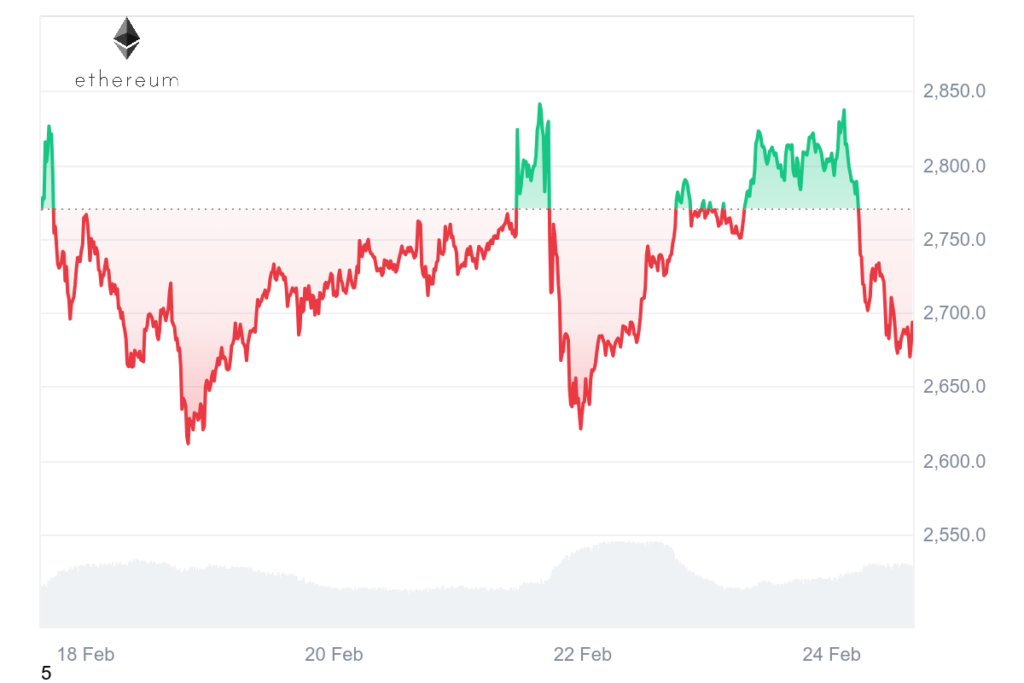
The immediate aftermath of the Bybit hack triggered a market-wide reaction. Ethereum prices dropped nearly 7% as news of the theft spread. Bitcoin and other major cryptocurrencies also experienced declines, reflecting shaken investor confidence in centralized exchanges. Analysts note that such incidents underscore the importance of robust custodial solutions. It may accelerate the adoption of decentralized exchanges (DEXs), where user-held keys offer enhanced security.

Industry Implications and Security Concerns

The Bybit breach highlights the persistent vulnerabilities faced by centralized cryptocurrency platforms. Despite advancements in cybersecurity, exchanges remain prime targets for cybercriminals, especially during wallet transfers and system upgrades. Experts emphasize the need for multi-layered security strategies, including hardware wallet integration, decentralized custody solutions, and rigorous internal access controls.

Regulatory scrutiny is also expected to intensify following the incident. Authorities in Asia and Europe have already called for heightened oversight of exchange security standards, potentially leading to new compliance requirements around wallet management and user fund protection.

While Bybit’s swift response has been lauded in some circles, the incident is a stark reminder of the risks associated with centralized platforms. For investors, the breach reinforces the importance of self-custody and due diligence when selecting trading venues. For the industry, it marks a pivotal moment to reassess and fortify security protocols amid escalating cyber threats.

As investigations continue and the crypto community watches closely, the Bybit hack will undoubtedly shape discussions around digital asset security and the future of centralized exchange infrastructure.

Readers’ frequently asked questions

How can hackers steal cryptocurrencies during wallet transfers, and why could Bybit not stop the theft immediately?

Hackers exploit vulnerabilities in the transfer process between wallets, especially when moving funds from a cold wallet (offline storage) to a warm wallet (semi-online storage). In Bybit’s case, the attackers bypassed the security protocols during this scheduled transfer. Despite having detection systems in place, cryptocurrency transactions on the blockchain are irreversible once confirmed. So, even though Bybit noticed the unauthorized transfer within minutes, it could not reverse the transactions or stop the funds from being moved once they were validated on the blockchain network.

What happens to the stolen cryptocurrencies after a hack like this, and how do authorities try to recover them?

After a hack, attackers often use tactics to obscure the movement of stolen funds. They transfer the cryptocurrency through multiple wallets and use cross-chain bridges to switch between blockchains. They also rely on mixing services like Tornado Cash to, ultimately, break the traceable link between transactions. Authorities and blockchain analytics firms track these movements using specialized software. They identify wallet patterns and potential exchange points where stolen assets might be converted to fiat currency. Recovery is challenging and slow, but sometimes funds can be frozen if hackers attempt to cash out on regulated platforms.

How can users protect their cryptocurrency assets and avoid risks like those seen in the Bybit hack?

Users can protect themselves by practicing self-custody. They should store their cryptocurrencies in personal wallets, particularly hardware wallets, instead of keeping them on exchanges. Using wallets that require multi-signature approvals or two-factor authentication adds additional security. It’s also crucial to avoid sharing sensitive information online and to use reputable, regulated platforms when trading and holding assets. While large exchanges like Bybit offer convenience, they also present single points of failure. Diversifying storage solutions and staying informed about security best practices can significantly reduce risk.

What Is In It For You? Action Items You Might Want to Consider

Prioritize Self-Custody for Your Assets

Relying solely on centralized exchanges exposes you to risks beyond your control, as the Bybit hack illustrates. Consider transferring the majority of your holdings to secure cold wallets. Hardware wallets and self-custody solutions offer greater protection against exchange breaches. Don’t wait for another incident. Take control of your assets today.

Diversify Trading Platforms and Stay Informed

Even top-tier exchanges aren’t immune to cyberattacks. Spread your trading activities across multiple platforms to mitigate potential losses in the event of a breach. Subscribe to trusted security alerts and industry news to stay updated on platform vulnerabilities and evolving cyber threats. Knowledge is your best defense.

Use Stop-Loss Orders and Monitor Market Reactions

Hacks of this scale can trigger significant market volatility. Be proactive and set stop-loss orders to protect your portfolio from sudden downturns, like the 7% dip in Ethereum following the Bybit incident. Pay close attention to market reactions after security events; sometimes, volatility presents lucrative short-term trading opportunities if approached with caution.

Coinbase Stock Surges as SEC Drops Lawsuit: What It Means for Investors

The SEC agreed to dismiss the lawsuit against Coinbase which sent Coinbase stock soaring.

Coinbase stock soared over 4% after the US Securities and Exchange Commission (SEC) announced plans to dismiss its lawsuit against the crypto giant. The lawsuit, which had cast a shadow over the company since 2023, accused Coinbase of facilitating unregistered securities trading. With the case’s dismissal, investors are optimistic about a more favorable regulatory environment and renewed growth prospects for the U.S. crypto market. But what does this mean for retail and institutional investors moving forward?

Background: The Lawsuit and Its Implications

The SEC filed a lawsuit against Coinbase in 2023, alleging that the company operated as an unregistered securities exchange by allowing the trading of certain crypto assets it deemed to be securities. Coinbase has consistently denied these claims. The company argued that the digital assets listed on its platform do not qualify as securities under U.S. law.

The lawsuit represented a broader crackdown by the SEC on the crypto industry under former Chair Gary Gensler. Several exchanges and token issuers faced similar enforcement actions. For Coinbase, the litigation introduced uncertainty that weighed on its stock price and disrupted investor confidence.

https://twitter.com/coinbase/status/1892923603814936896

Why the SEC Dropped the Case

The decision to drop the lawsuit follows significant shifts within the SEC and the broader U.S. regulatory landscape. Since the 2024 elections and the appointment of new leadership under Acting Chair Mark Uyeda, the SEC has signaled a move towards clearer, industry-friendly regulations rather than pursuing aggressive enforcement actions.

SEC staff and Coinbase reached an agreement to dismiss the enforcement action, pending formal approval from the SEC commissioners. This resolution involves no fines or operational changes for Coinbase, further bolstering investor confidence.

Market Reaction: Investor Sentiment and Stock Performance

News of the lawsuit’s dismissal triggered a sharp positive reaction in financial markets. Coinbase shares surged by more than 4% in premarket trading, reflecting growing investor optimism about the company’s regulatory outlook and long-term viability. Analysts noted that the absence of legal overhang could lead to increased institutional interest in Coinbase stock, which had been suppressed due to regulatory uncertainties.

Retail investors, who had been wary of holding Coinbase shares during the lawsuit, are now reevaluating their positions. With legal risks substantially diminished, market sentiment toward Coinbase has improved markedly.

What This Means for Investors

For both retail and institutional investors, the dismissal of the SEC lawsuit brings several key takeaways:

  1. Reduced Regulatory Risk:
    The end of the lawsuit removes a major overhang on Coinbase’s stock, making it a more attractive investment option. Institutional investors, often risk-averse to regulatory uncertainty, may increase their exposure to Coinbase.
  2. Potential for Market Expansion:
    With the SEC signaling a shift towards regulatory clarity, Coinbase could benefit from a more favorable environment for launching new products and expanding its services, potentially driving revenue growth.
  3. Improved Industry Sentiment:
    The lawsuit’s dismissal could set a positive precedent for other crypto firms facing similar legal challenges, improving overall sentiment toward the digital asset sector.
  4. Short-Term Volatility and Long-Term Growth:
    While short-term volatility may persist due to broader market dynamics and crypto price fluctuations, the long-term outlook for Coinbase appears stronger post-dismissal.

Looking Ahead: Regulatory Landscape and Investment Strategies

The broader implication of the SEC’s shift is the potential establishment of comprehensive crypto legislation through Congress. Such regulatory clarity could further de-risk investments in U.S.-based crypto firms like Coinbase. Investors should monitor upcoming policy developments, as these could significantly influence market dynamics.

Analysts recommend a balanced approach: while the improved regulatory environment is a bullish signal, investors should remain aware of broader economic factors, competition, and the volatility inherent to the cryptocurrency market.

The SEC’s decision to drop its lawsuit against Coinbase marks a pivotal moment for the exchange and the broader crypto industry. For investors, this development alleviates significant regulatory uncertainty, making Coinbase a more compelling investment opportunity. While challenges remain in the evolving digital asset landscape, the lawsuit’s dismissal provides a clearer path forward for both the company and its shareholders.

Readers’ frequently asked questions

Why did the SEC consider some cryptocurrencies on Coinbase to be securities?

The SEC believed certain cryptocurrencies traded on Coinbase functioned like traditional securities because they involved investments where people expected profits from the efforts of others (similar to stocks or bonds). The agency uses the “Howey Test” to determine what qualifies as a security. If a cryptocurrency project raises money from investors to develop a platform or service that increases the token’s value, the SEC may argue that it should be regulated as a security. This classification requires exchanges like Coinbase to register with the SEC and comply with stricter rules.

Now that the lawsuit has been dropped, is investing in Coinbase stock or cryptocurrencies safer?

The dismissal of the lawsuit reduces a major risk for Coinbase, which is good news for people considering investing in the company’s stock. Investors no longer have to worry about immediate legal consequences affecting Coinbase’s operations. However, while the legal risk is lower, investing in Coinbase or cryptocurrencies still involves volatility. Crypto prices fluctuate a lot, and Coinbase’s business depends on trading activity, which can vary. So, while it’s safer from a regulatory standpoint now, it’s still important for investors to consider their risk tolerance. They should diversify their investments rather than putting all their money into one stock or asset class.

No, dismissing the lawsuit against Coinbase does not mean that all cryptocurrencies are fully legal or regulated in the U.S. While Coinbase no longer faces this specific legal challenge, the broader regulatory environment for cryptocurrencies in the U.S. is still evolving. Cryptocurrencies are legal to trade, but the rules around how they are classified and regulated vary depending on the asset and ongoing legislative developments.

What Is In It For You? Action Items You Might Want to Consider

Reassess Your Coinbase Holdings

With the SEC lawsuit dismissed and Coinbase shares gaining over 4%, now is a prime opportunity to revisit your portfolio. If you’ve been holding off on investing due to regulatory concerns, this resolution removes a significant overhang. Consider whether adding or increasing exposure to Coinbase stock aligns with your risk profile and market outlook.

Watch for Increased Institutional Interest

The removal of regulatory uncertainty could attract institutional investors previously hesitant about the crypto space. This influx of capital might boost market activity on Coinbase and related assets. Stay alert to volume spikes and institutional inflows—these can present lucrative short-term trading opportunities.

Monitor Upcoming Regulatory Developments

While the lawsuit is behind Coinbase, the broader regulatory environment is still evolving. Keep an eye on policy changes and legislative proposals in the U.S. market, as clearer regulations could further enhance trading conditions. Staying informed will help you anticipate market shifts and adjust your strategy accordingly.

SEC Downsized but Determined: Can the New CETU Handle the Growing Cyber Crime Wave?

SEC establishes Cyber and Emerging Technologies Unit (CETU)

In a move that has stirred debate within financial circles, the U.S. Securities and Exchange Commission (SEC) has replaced its larger Crypto Assets and Cyber Unit with the newly formed Cyber and Emerging Technologies Unit (CETU). With nearly half the manpower – approximately 30 fraud specialists and attorneys compared to the previous unit’s 50 – CETU faces mounting pressure to address increasingly complex cyber frauds, including cryptocurrency scams and AI-driven financial crimes. This downsizing has raised questions about whether the SEC’s streamlined team can effectively safeguard retail investors amid the rapid evolution of digital threats.

A Strategic Restructure Amid Rising Cyber Threats

Announced on February 20, 2025, the CETU’s establishment reflects the SEC’s attempt to adapt to the shifting digital landscape. The unit is tasked with addressing a wide array of cyber-related misconduct, including fraud in emerging technologies, unauthorized access to financial accounts, and blockchain-related scams. Laura D’Allaird, who previously co-led the now-defunct Crypto Assets and Cyber Unit, has been appointed to lead CETU. She brings extensive experience in prosecuting complex cyber fraud cases.

While the restructuring aims to broaden the SEC’s enforcement scope beyond just cryptocurrencies, the reduction in personnel has raised eyebrows. Industry experts argue that a downsized enforcement team could face challenges in keeping pace as cybercriminals become more sophisticated, especially with the increasing use of artificial intelligence and complex blockchain technologies.

Balancing Innovation with Investor Protection

Acting SEC Chairman Mark Uyeda has emphasized that the CETU will work closely with other regulatory bodies and the recently formed Crypto Task Force to ensure comprehensive oversight of the digital asset space. “Our goal is to foster innovation while maintaining robust investor protections,” Uyeda stated. The CETU’s mandate includes investigating misleading cybersecurity disclosures by issuers, enforcing compliance with cybersecurity regulations, and cracking down on digital fraud schemes propagated through social media and the dark web.

However, some market participants are skeptical. “The cyber threat landscape is expanding, not shrinking. Reducing enforcement capacity seems counterintuitive,” remarked a senior analyst from a leading financial consultancy. Critics also point to the increasing complexity of crypto-related crimes. They often involve cross-border operations and sophisticated laundering techniques that require significant investigative resources.

Industry Reactions and Future Implications

Reactions within the cryptocurrency industry have been mixed. Some stakeholders view the restructuring as an opportunity for more targeted and efficient enforcement. Others fear it may embolden bad actors. The CETU’s formation, combined with the SEC’s stated commitment to balancing regulation and innovation, could signal a shift towards clearer guidelines for digital asset companies. This may encourage legitimate market participants while deterring fraudulent operators.

Notably, the CETU’s focus extends beyond cryptocurrencies. It encompasses a broader range of emerging technologies, including AI-driven financial products and decentralized finance (DeFi) platforms. This wider lens reflects the SEC’s recognition of evolving risks in the financial technology sector.

The SEC’s decision to replace its Crypto Assets and Cyber Unit with the leaner CETU marks a significant shift in its cyber and cryptocurrency enforcement approach. While the new unit aims to enhance efficiency and broaden its enforcement scope, concerns over resource adequacy persist. As the digital economy evolves, the CETU’s effectiveness in protecting investors and maintaining market integrity will be closely watched. Whether the smaller team can rise to the challenge remains an open question. One thing, however, is certain: the stakes have never been higher.

Readers’ frequently asked questions

What is the SEC, and why is it involved in regulating cryptocurrencies?

The U.S. Securities and Exchange Commission (SEC) is a government agency responsible for protecting investors and maintaining fair, orderly financial markets. It oversees securities, which include stocks, bonds, and certain digital assets that function like investments. The SEC regulates cryptocurrencies when they are considered securities under U.S. law. If a cryptocurrency project raises money from investors with the promise of future profits, it might fall under SEC oversight. The SEC’s involvement aims to prevent fraud and ensure investors have accurate information about the risks involved.

How will the creation of CETU affect everyday cryptocurrency users and investors?

For everyday users and investors, establishing CETU means the SEC will monitor the crypto space with a wider lens, including other emerging technologies. This could lead to better protection against scams and fraudulent platforms. Bad actors increasingly target retail investors through social media and deceptive online campaigns. The SEC’s focus on enforcing cybersecurity compliance among companies might also improve the overall security of platforms where users trade or store digital assets. However, with fewer personnel, enforcement actions may focus more on large-scale frauds, potentially leaving smaller scams less prioritized.

What should I do if I think a crypto scam has targeted me?

If you believe you’ve encountered a cryptocurrency scam, you can file a report with the SEC through their official website. The SEC provides an online form for submitting tips and complaints related to securities fraud, which includes certain crypto scams. It’s also important to contact your local law enforcement agency. To protect yourself, avoid clicking on suspicious links. Never share personal information with unverified contacts and double-check that any investment platform you use is legitimate. Checking if the company is registered with the SEC or other regulatory agencies can also help you avoid scams.

What Is In It For You? Action Items You Might Want to Consider

Stay Ahead by Following Regulatory Updates

With the SEC’s restructuring and the creation of CETU, regulations surrounding crypto and emerging technologies are evolving. Traders should keep an eye on official SEC announcements and industry news to understand how new enforcement priorities might affect specific tokens or platforms. Staying informed can help you anticipate market reactions to regulatory actions and adjust your strategies accordingly.

Prioritize Platforms with Strong Compliance Practices

As CETU focuses on cracking down on fraudulent platforms and cybersecurity lapses, trading on well-regulated exchanges with solid compliance records can safeguard your investments. Before committing funds, verify if the platform follows local regulations and employs robust security measures—this simple step can save you from falling victim to scams that are increasingly targeting retail investors.

Enhance Your Cybersecurity Measures

With cyber frauds becoming more sophisticated, now is the time to tighten your personal security protocols. Use hardware wallets for storing assets, enable two-factor authentication on trading platforms, and be wary of unsolicited investment offers, especially on social media. Proactive steps in protecting your accounts can prevent costly mistakes and keep you one step ahead of cybercriminals.

Pi Network Mainnet Goes Live: Accessibility Meets Volatility in Crypto’s New Frontier

PI network mainnet launch overshadowed by price volatility

The much-anticipated launch of Pi Network’s Open Mainnet on February 20, 2025, has captivated the attention of the cryptocurrency community and beyond. With a user base exceeding 60 million, Pi Network has positioned itself as a unique project aiming to democratize cryptocurrency mining through mobile devices. The Open Mainnet’s debut enabled Pi Coin (PI) to trade on major cryptocurrency exchanges. That’s a significant milestone in the project’s roadmap. However, the market debut of Pi Coin has been marked by extreme price volatility, underscoring the complexities and challenges that lie ahead.

Market Volatility and Investor Sentiment

Dramatic price fluctuations characterized the immediate aftermath of Pi Coin’s market introduction. PI opened trading at approximately $1.70, surged briefly to $2.00 amid initial investor enthusiasm, but quickly fell to around $0.97 within hours. At its peak, Pi Coin’s fully diluted valuation soared to $195 billion, briefly surpassing established players like Solana (SOL). Such volatility has been attributed to the token’s limited liquidity on crypto exchanges. Market depth reports from platforms like OKX indicated available liquidity ranging from $33,000 to $60,000, amplifying price swings from speculative trading activity.

PI Spot price (source: Coinmarketcap)

This volatility has evoked mixed reactions. Early adopters, many of whom have been mining Pi via the mobile app for several years, view the mainnet launch as a vindication of their patience and commitment. Meanwhile, more seasoned traders have voiced concerns over the coin’s sustainability and real-world value, citing its initial hype-driven surge and subsequent sell-offs. The disparity between community enthusiasm and market skepticism highlights the tension between Pi Network’s grassroots-driven growth and the realities of open market dynamics.

Pi Network’s Mission: Redefining Accessibility in Cryptocurrency

Founded in 2019 by Stanford University Ph.D. graduates Nicolas Kokkalis and Chengdiao Fan, Pi Network was conceived to make cryptocurrency mining accessible to a global audience. Traditional cryptocurrency mining often requires specialized hardware and consumes vast amounts of electricity, creating significant barriers to entry. Pi Network addresses these issues. It enables users to mine PI directly from their smartphones without draining battery life or requiring constant connectivity.

This innovative approach leverages a modification of the Stellar Consensus Protocol (SCP) and incorporates “trust circles” to enhance network security. By decentralizing the mining process and making it more environmentally friendly, Pi Network appeals to users interested in sustainable alternatives to traditional proof-of-work systems like Bitcoin. 110 million app downloads to date signal widespread interest in the project’s vision.

Navigating Market Challenges: Real-World Utility and Sustainability

Despite its large community and ambitious mission, Pi Network faces considerable hurdles in proving the long-term utility and value of its native token. Before the Open Mainnet launch, Pi Coin was subject to speculative trading through IOUs (I Owe You contracts) on certain exchanges. There, prices were often inflated without official backing. The subsequent market correction following the official launch exposed the disconnect between speculative valuations and actual market demand.

A critical challenge for Pi Network moving forward will be developing a robust ecosystem that encourages real-world use cases for PI. While the project has announced plans for a decentralized marketplace and various applications within its ecosystem, concrete implementations remain limited so far. Without practical use cases beyond trading and speculation, sustaining long-term demand for PI could prove difficult.

Investor caution is also fueled by regulatory uncertainties. Pi Network has emphasized that its tokens are not intended for speculative trading until official exchanges list them with project approval. However, the flurry of unofficial listings and subsequent market volatility underscore the complexities of controlling token distribution in an open market environment.

Community Strength vs. Market Realities

One of Pi Network’s most distinguishing features is its community-driven growth. The project’s referral-based user acquisition strategy has successfully attracted millions worldwide, particularly in regions with limited access to traditional financial infrastructure. This grassroots approach has fostered a sense of inclusivity and democratization within the network. It aligned with blockchain’s broader promise of financial empowerment.

However, critics argue that Pi Network’s growth model bears similarities to multi-level marketing (MLM) schemes. They voice concerns about sustainability once user growth plateaus. Additionally, while the project has achieved impressive user adoption, transitioning from a mined but non-transferable token to a fully tradable asset introduces new challenges. Managing the expectations of millions of early adopters eager to monetize their holdings while ensuring long-term network integrity will be a delicate balancing act.

Technological and Societal Implications

Pi Network’s emphasis on accessibility and eco-conscious mining speaks to a broader trend within the blockchain industry: the push toward inclusivity and sustainability. Pi Network created opportunities for individuals previously excluded from the digital asset economy through lower technical and financial barriers to entry. Mobile-based mining offers an alternative path to financial participation in regions with limited banking infrastructure.

However, accessibility alone may not suffice to secure the project’s longevity. The blockchain space is increasingly competitive, with numerous projects vying for market share and user engagement. Pi Network must deliver tangible products and services to stand out. It must leverage its extensive user base beyond mere token distribution.

Furthermore, as the cryptocurrency industry continues to attract regulatory scrutiny, Pi Network’s global reach presents both opportunities and challenges. Successfully navigating different jurisdictions while adhering to evolving compliance standards will be crucial in establishing credibility within the broader financial ecosystem.

Looking Ahead: Opportunities and Risks

The Pi Network Open Mainnet launch represents both a significant achievement and a critical inflection point for the project. On one hand, the ability to trade PI on major exchanges validates years of community-building and technological development. On the other, the initial volatility and market uncertainty expose the need for clear use cases, regulatory clarity, and sustainable economic models.

For early adopters, the mainnet launch offers an opportunity to capitalize on their mined holdings. Yet, the broader investment community remains cautious, mindful of the speculative fervor that has characterized many crypto launches. The coming months will be pivotal as Pi Network works to convert its vast user base into a thriving, utility-driven ecosystem.

Ultimately, Pi Network’s success will hinge on its ability to balance grassroots enthusiasm with market discipline, technological innovation with regulatory compliance, and accessibility with long-term sustainability. As the cryptocurrency landscape evolves, Pi Network stands at the crossroads of promise and peril. Its journey is a litmus test for the viability of large-scale, community-focused blockchain projects.

Readers’ frequently asked questions

How can I buy or sell Pi Coin (PI) now that the mainnet is live?

To buy or sell Pi Coin (PI) after the mainnet launch, you need to use one of the cryptocurrency exchanges officially listing the token. Platforms like OKX, Bitget, and MEXC have made PI available for trading. First, create an account on one of these exchanges, complete the required identity verification (KYC), and deposit funds (usually in USDT or another stablecoin). You can then search for the PI trading pair (e.g., PI/USDT) and place a buy or sell order. If you’ve mined PI through the Pi Network app, you’ll need to complete the in-app KYC process to transfer your mined coins to an external wallet or exchange account. Keep in mind that prices have been volatile. It’s essential to approach trading cautiously and consider transaction fees and withdrawal limitations on different platforms.

Can I still mine Pi Coin on my phone, and is it worth starting now?

Yes, you can still mine Pi Coin using the Pi Network mobile app. The app is available on both iOS and Android devices. Mining PI through the app remains free and doesn’t consume significant battery power or data. New users can join the network by downloading the app and entering an invitation code from an existing user. However, the mining rate has decreased as the network’s user base has grown. It will continue decreasing over time. Whether it’s worth starting now depends on your expectations. Mining PI requires minimal effort, but the long-term value of the coin remains uncertain. If Pi Network successfully develops practical use cases for the coin and expands its ecosystem, the mined coins could gain more value. Still, there’s no guarantee of significant financial returns.

What can I do with Pi Coin besides trading it on exchanges?

Currently, the primary use case for Pi Coin is trading it on cryptocurrency exchanges. However, Pi Network aims to build an ecosystem where PI can be used for real-world applications. That would include purchasing goods and services through its decentralized marketplace and participating in decentralized apps (dApps) built on the network. Some community-driven initiatives within the Pi Network have started experimenting with local marketplaces and peer-to-peer services using PI as a payment method. These use cases are still in the early stages, and widespread acceptance is limited at this point. The project’s future utility will depend on how quickly developers and businesses integrate PI into their platforms and whether regulatory compliance can be maintained across different regions. If Pi Network achieves its vision, holding PI could eventually provide more options beyond just trading.

What Is In It For You? Action Items You Might Want to Consider

Watch for Liquidity Improvements Before Entering Large Positions

Pi Coin’s early trading days are marked by significant volatility and limited liquidity. If you’re considering trading PI, it’s wise to monitor order book depth and trading volume on exchanges like OKX and Bitget. Jumping into large positions in thin markets can lead to substantial slippage. Wait for liquidity to stabilize—this often happens once the initial hype subsides and more market makers step in.

Leverage Short-Term Volatility for Quick Trades—but Stay Cautious

The dramatic price swings following Pi’s mainnet launch present opportunities for short-term gains. If you’re a day trader, consider setting up volatility-based strategies, like scalping or range trading. Use tight stop-loss orders to manage downside risk. Just remember: while volatility can be profitable, Pi’s market is still speculative. Don’t let FOMO dictate your trades—plan your entries and exits carefully.

Keep an Eye on Ecosystem Developments for Long-Term Value

While speculative trading is the current play, real utility will determine Pi’s staying power. Follow Pi Network’s ecosystem announcements—especially updates on dApps, partnerships, or merchant adoption. If practical use cases for PI emerge, early positioning could pay off in the long run. On the flip side, if development stalls, holding onto PI may become less attractive. Stay informed and be ready to adjust your strategy accordingly.

- Advertisement -

FEATURED