Home Blog Page 128

Beyond the Lawsuit: How Binance.US’s USD Comeback Reflects Changing U.S. Crypto Policies

Binance.US reinstated USD services.

Reinstating USD services on Binance.US isn’t just a corporate milestone – it’s a barometer of shifting political and regulatory tides in the United States. After months of financial isolation due to SEC litigation, the platform’s renewed access to banking channels suggests a broader re-assessment of crypto regulation under new political leadership. While users welcome the return of fiat functionality, industry observers note that the move could signal a softening regulatory environment. It raises hopes for other embattled crypto companies operating stateside.

USD Services Restored: A Key Turning Point for Binance.US

Binance.US announced on February 19, 2025, that it has reinstated USD deposits and withdrawals after an almost two-year suspension caused by regulatory complications. The suspension, which began in June 2023, stemmed from a lawsuit filed by the U.S. Securities and Exchange Commission (SEC) accusing the exchange of operating an unregistered securities platform and violating investor protection laws. During this period, Binance.US operated solely as a crypto-to-crypto trading platform, significantly limiting user options for fiat transactions.

The restoration of fiat services includes zero-fee Automated Clearing House (ACH) bank transfers. This enables users to deposit and withdraw U.S. dollars and access over 160 cryptocurrencies for trading. Binance.US has also revived additional features, including staking rewards, recurring purchases via its “Auto-Buy” function, and over-the-counter (OTC) trading for large-volume transactions.

https://twitter.com/BinanceUS/status/1892227764268265664

Interim CEO Norman Reed stressed the company’s commitment to navigating regulatory hurdles. He stated, “Today’s news would not be possible without the incredible work of our team, who have been tirelessly committed to re-enabling this important function, and our customers for remaining supportive.”

Regulatory Shifts: A Softer Stance on Crypto?

While Binance.US’s operational recovery is significant, the broader narrative centers around what this development signals for U.S. cryptocurrency regulation. Over the past year, the regulatory landscape has been marked by heightened scrutiny. Federal agencies significantly ramped up enforcement actions against prominent crypto platforms. The SEC’s legal action against Binance.US was one of the most high-profile cases, reflecting a broader push to classify several crypto assets as securities.

However, recent political shifts may be softening this regulatory posture. Analysts point to changes in congressional leadership and increasing bipartisan discussions on the need for clear, crypto-friendly legislation. These changes, coupled with growing institutional interest in digital assets, suggest that U.S. regulators could be moving toward a more balanced approach that encourages innovation while maintaining investor protection.

Several crypto industry insiders believe that Binance.US’s renewed access to banking services – an element often crippled by regulatory pressure under what some have called “Chokepoint 2.0” – reflects behind-the-scenes negotiations and evolving regulatory attitudes. While the SEC lawsuit remains unsettled, the platform’s ability to re-establish banking partnerships seems to indicate that regulators acknowledge the importance of fiat on-ramps for legitimate crypto businesses.

Implications for the U.S. Crypto Market

Binance.US resuming USD services by Binance.US could have far-reaching implications beyond the platform itself. Other cryptocurrency companies that have faced similar fiat access restrictions may find new opportunities to re-engage with U.S. banking institutions. This development comes as global competitors expand their U.S. footprints, emphasizing the need for domestic platforms to regain competitive ground.

For users, restoring fiat services enhances market liquidity and trading convenience. It allows for smoother capital flows between traditional finance and digital assets. For regulators, the move provides a case study on balancing enforcement with market stability.

Industry observers caution, however, that while Binance.US’s comeback is a positive signal, the regulatory environment remains complex and fluid. Ongoing legal challenges, both for Binance.US and the broader crypto ecosystem, highlight the need for comprehensive legislation to clarify the classification and oversight of digital assets.

Looking Ahead: Is This a New Era for U.S. Crypto Regulation?

Binance.US’s successfully restoring USD services marks a pivotal moment for the exchange and the broader U.S. crypto industry. It reflects not just a company overcoming operational setbacks but a potential shift in how regulators and policymakers approach the maturing digital asset space.

As discussions on crypto regulation continue in Washington, the Binance.US case could catalyze more constructive engagement between industry stakeholders and regulators. Whether this development represents a long-term trend toward regulatory clarity or a temporary easing of restrictions remains to be seen.

One thing is clear: the interplay between regulation, political will, and market demand will continue to shape the future of cryptocurrency in the United States.

Readers’ frequently asked questions

Why were USD services on Binance.US suspended in the first place?

USD services on Binance.US were suspended in June 2023 due to a lawsuit filed by the U.S. Securities and Exchange Commission (SEC). The SEC accused Binance.US of operating without proper registration and violating securities laws. This legal action led to regulatory pressures, cutting off the platform’s banking partnerships. It effectively halted users’ ability to deposit or withdraw U.S. dollars. During the pause, Binance.US continued operating as a crypto-to-crypto exchange. However, users could not convert their holdings into fiat currency, which made accessing funds more challenging.

How does restoring USD services affect everyday Binance.US users?

After reinstating USD services on Binance.US users can now deposit and withdraw U.S. dollars via bank transfers, including fee-free ACH transfers. This change improves the platform’s accessibility, allowing users to buy and sell cryptocurrencies with fiat money rather than having to rely solely on crypto-to-crypto transactions. For users, this translates to more convenience and smoother transitions between traditional bank accounts and cryptocurrency investments. The restoration also brings back features like automated recurring buys and staking rewards, making it easier for both new and existing users to manage their digital assets.

What concrete changes allowed Binance.US to restore USD services?

Binance.US was able to restore USD services by re-establishing partnerships with banking institutions that facilitate fiat transactions. This reinstatement allows users to deposit and withdraw U.S. dollars through ACH bank transfers and other supported methods. The change follows internal efforts by Binance.US to address compliance issues raised during the SEC lawsuit. While the lawsuit remains ongoing, the platform’s renewed access to banking services indicates it has met certain operational and regulatory requirements necessary to support fiat transactions again.

What Is In It For You? Action Items You Might Want to Consider

Take advantage of renewed fiat access on Binance.US

With USD deposits and withdrawals back online, now’s the time to streamline your trading strategies. Use the zero-fee ACH transfers to quickly move funds into the platform and capitalize on market volatility. Rebalancing your portfolio just got easier with direct fiat access—don’t let the opportunity to optimize your positions pass you by.

Explore staking and recurring purchase options

Binance.US has revived staking rewards and the Auto-Buy feature. Consider setting up recurring purchases to dollar-cost average into your preferred assets, especially during market dips. Plus, staking certain proof-of-stake cryptocurrencies could offer you passive income while you hold—why not let your assets work for you?

Monitor regulatory developments closely

While restoring USD services is a positive step, the regulatory landscape is still evolving. Stay updated on the SEC lawsuit and potential new policies that could impact trading conditions. Traders who keep an eye on legal developments can better anticipate market sentiment shifts—and position themselves ahead of the curve.

Solana Under Fire: How the $LIBRA Memecoin Scandal Sparked a Crisis of Confidence

The $LIBRA scandal has significantly affected Solana's reputation and market performance.

The fallout from the $LIBRA meme coin scandal has sent shockwaves through the cryptocurrency community, placing Solana right at the center of an unfolding controversy. Allegations of financial misconduct involving Argentine President Javier Milei and accusations of market manipulation surrounding the $LIBRA token have ignited debates about Solana’s token launch protocols. As investor confidence wavers, Solana’s native token, SOL, has experienced a sharp decline. The downturn underscores growing concerns over the blockchain’s vulnerability to fraudulent projects.

The $LIBRA Scandal: What Happened?

The controversy began when the $LIBRA meme coin was launched on the Solana blockchain. It experienced an explosive price surge following public endorsements from prominent figures, including Argentine President Javier Milei. Reports suggest that the president’s token promotion significantly contributed to a market frenzy, prompting rapid investments from retail traders. However, within days, $LIBRA’s value collapsed, wiping out millions in market capitalization and leaving a trail of investor losses.

The situation escalated as investigations revealed that Hayden Davis, CEO of Kelsier Ventures and a key figure behind $LIBRA, allegedly made payments to Karina Milei, President Milei’s sister, to secure the President’s promotional support. Both parties have denied direct involvement in fraudulent activities. Nevertheless, the revelations have sparked widespread condemnation and calls for stricter oversight of token promotions.

Impact on Solana and Its Ecosystem

Solana, renowned for its high-speed transactions and low fees, has emerged as a popular platform for launching meme coins. Yet, this openness has become a double-edged sword. The $LIBRA scandal has cast a spotlight on the blockchain’s ease of access. While it fosters innovation, it also enables bad actors to exploit the system.

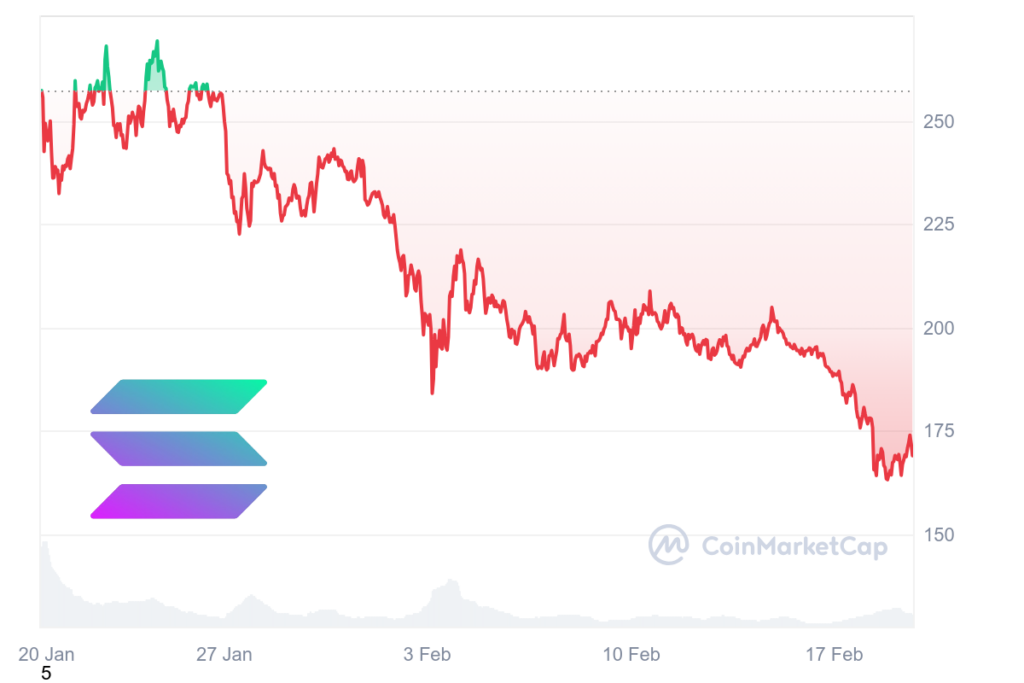
Following the $LIBRA collapse, SOL’s price plummeted more than 9% within 24 hours, extending a 38% drop from its January peak. This downturn reflects waning investor trust, particularly as concerns grow about Solana’s ability to prevent similar incidents. Analysts from Galaxy Research pointed out that the rapid proliferation of low-quality tokens on Solana could pose long-term risks if not addressed.

Community and Market Reactions

Reactions from the crypto community have been mixed. While some argue that investors should exercise greater due diligence, others have called on Solana developers to implement stricter token launch requirements. Platforms like Pump.Fun, facilitating easy token creation on Solana, are now under pressure to introduce enhanced verification measures to prevent further exploitation.

Meanwhile, meme coin influencers and early $LIBRA promoters have come under fire for their role in the scandal. Protos reported that several prominent figures are now distancing themselves from the project, citing a lack of transparency and accountability.

What’s Next for Solana?

The $LIBRA debacle has prompted serious reflection within Solana’s developer community. Discussions are underway about introducing tougher token vetting processes, possibly requiring enhanced KYC (Know Your Customer) checks for token creators. Such measures could help rebuild investor confidence but may also challenge Solana’s commitment to decentralization and open access.

Market volatility is expected to persist in the short term as regulatory bodies worldwide scrutinize the events surrounding $LIBRA. Analysts warn that without proactive steps, Solana risks becoming synonymous with pump-and-dump schemes, potentially scaring off legitimate projects and institutional investors.

The $LIBRA scandal is a stark reminder of the risks associated with speculative assets and unchecked token launches. For Solana, the crisis represents both a reputational challenge and an opportunity to strengthen its ecosystem. Whether the blockchain can recover from this blow hinges on its willingness to address the underlying vulnerabilities that allowed the scandal to unfold. One thing is clear: investor confidence, once shaken, requires decisive action to be restored.

Readers’ frequently asked questions

How can a meme coin like $LIBRA cause Solana’s price to drop?

A meme coin like $LIBRA can significantly impact Solana’s price because these tokens are often launched on Solana’s blockchain, utilizing its infrastructure. When a high-profile token like $LIBRA collapses amid controversy, it reflects poorly on the platform’s ecosystem. It raises concerns about the safety and legitimacy of projects built on it. Investors may perceive Solana as enabling fraudulent activities or lacking proper oversight, prompting them to sell their SOL holdings out of caution. This selling pressure leads to a decline in SOL’s price, as seen after the $LIBRA scandal. In essence, when trust in the projects hosted on Solana erodes, it directly affects the value of the blockchain’s native token.

Why doesn’t Solana prevent scam tokens like $LIBRA from launching on its platform?

Solana, like many blockchains, operates on a decentralized, permissionless network. Anyone can create and launch a token without needing approval from a central authority. This open system encourages innovation but also makes it challenging to prevent scams. While Solana provides the technical infrastructure, it does not typically intervene in how third-party developers use the platform. To address growing concerns, discussions are emerging about implementing stricter token creation standards or encouraging third-party platforms to conduct more rigorous project vetting. However, enforcing such measures without compromising decentralization remains a complex challenge.

What should I do to avoid investing in fraudulent tokens like $LIBRA?

To avoid falling victim to scams, it’s essential to conduct thorough research before investing in any token. Start by reviewing the token’s whitepaper. Check whether the team behind it is transparent, and verify whether the project has reputable partnerships. Be cautious of tokens that experience sudden, dramatic price spikes without clear fundamentals or legitimate use cases. Use trusted crypto tracking platforms to monitor token legitimacy and community sentiment. Additionally, avoid making investment decisions solely based on celebrity endorsements or social media hype, as seen with the $LIBRA case. Ensuring you only use reputable exchanges and wallets can also help protect you from fraudulent projects.

What Is In It For You? Action Items You Might Want to Consider

Reassess Your Exposure to Solana-Based Tokens

Given the recent $LIBRA scandal and the subsequent dip in SOL’s price, now is the time to review your portfolio. If you’re heavily invested in Solana-based tokens – especially meme coins – consider diversifying to reduce risk. Not every project on Solana is problematic, but caution is warranted until the platform addresses token vetting concerns. Use this opportunity to focus on projects with solid fundamentals rather than chasing the next hype-driven coin.

Stay Ahead by Tracking Regulatory Developments

The $LIBRA debacle has caught the attention of regulators, and increased oversight of token launches could be on the horizon. Savvy traders should keep an eye on regulatory news affecting Solana and broader crypto markets. Stricter rules may initially shake the market, but they could lead to a healthier ecosystem in the long run. Position yourself accordingly by following reliable news sources and adjusting your strategy as new regulations emerge.

Prioritize Projects with Transparent Teams and Use Cases

The $LIBRA collapse underscores the dangers of speculative trading in tokens with anonymous teams and no real utility. Moving forward, prioritize tokens backed by transparent development teams, clear roadmaps, and genuine use cases. While meme coins can offer quick gains, they also carry higher risks – $LIBRA being the latest example. When in doubt, stick to projects that solve real problems rather than those riding temporary hype waves.

Robinhood Expands Crypto Horizons: Singapore Set to Become Asian Hub by 2025

Robinhood prepares for expansion into Singapore after completing Bitstamp acquisition.

Robinhood Markets Inc. is making a bold push into Asia, with Singapore as the centerpiece of its expansion strategy. The trading platform, known for its commission-free stock and crypto trading, is set to launch its cryptocurrency services in the city-state by late 2025. This move follows the $200 million acquisition of Bitstamp, a regulated European exchange with an established presence in Singapore. By leveraging Bitstamp’s existing licenses and compliance infrastructure, Robinhood aims to fast-track its entry into one of the most crypto-friendly financial hubs in the world. But with established players like Binance and Coinbase already in the region, can Robinhood carve out its niche in the competitive Asian crypto market?

Strategic Expansion and Market Positioning

Robinhood’s expansion into Singapore is part of its broader strategy to establish a foothold in Asia. The region is rapidly adopting crypto and boasts a strong institutional trading environment. Singapore’s well-defined regulatory framework and its reputation as a financial hub make it an attractive destination for companies looking to scale their digital asset services. By acquiring Bitstamp, Robinhood gains operational capabilities but also regulatory approvals that could accelerate its entry into the market.

Johann Kerbrat, Vice President and General Manager of Robinhood Crypto, highlighted that Bitstamp’s existing licenses in Singapore were crucial in the acquisition. This strategic move allows Robinhood to bypass the lengthy and complex licensing process. It can focus on service rollout and user acquisition instead.

Competitive Landscape: Challenges and Opportunities

Singapore is already home to major global crypto exchanges, including Binance, Coinbase, and local players such as Crypto.com. Robinhood’s entry into this crowded market will require a strong value proposition beyond its commission-free trading model, which has been a key differentiator in the U.S. market.

One of Robinhood’s potential advantages is its established retail user base and intuitive trading platform. While competitors in Asia often focus on institutional investors, Robinhood’s retail-driven approach could attract a new wave of users seeking a simplified trading experience. However, customer trust and brand recognition will be crucial. Robinhood has historically faced scrutiny over issues such as trading restrictions during the 2021 GameStop short squeeze.

Another challenge for Robinhood is regulatory compliance. While Bitstamp’s licenses provide an entry point, the Monetary Authority of Singapore (MAS) maintains stringent digital asset trading and compliance rules. Robinhood must ensure it aligns with Singapore’s regulatory expectations to avoid potential setbacks.

Potential Impact on Robinhood’s Global Growth

Robinhood’s expansion into Singapore could serve as a springboard for broader Asian market penetration. With plans to establish a regional headquarters in Singapore, the company is signaling its long-term commitment to the region. This expansion aligns with Robinhood’s recent efforts to diversify beyond its U.S. operations.

Robinhood’s international ambitions have also positively influenced investor sentiment. The company’s stock recently saw an uptick, fueled by optimism surrounding its Asian expansion and the broader crypto market rally. If Robinhood successfully gains traction in Singapore, it could pave the way for further growth in other key Asian markets, such as Japan and South Korea.

Conclusion: Can Robinhood Succeed in Asia?

Robinhood’s foray into Singapore represents a significant step in its global growth strategy. By leveraging Bitstamp’s regulatory approvals and infrastructure, the company has positioned itself for a smoother market entry. However, competition is fierce, and Robinhood must differentiate itself through superior user experience, regulatory compliance, and effective marketing strategies.

As the crypto industry matures, investors, regulators, and competitors will watch closely Robinhood’s expansion into Singapore. Whether it can replicate its U.S. success in Asia remains to be seen, but its latest move marks a clear intention to become a global crypto powerhouse.

Readers’ frequently asked questions

What does it mean that Robinhood is acquiring Bitstamp’s regulatory approvals?

In Singapore, cryptocurrency exchanges must be licensed by the Monetary Authority of Singapore (MAS) to operate legally. By acquiring Bitstamp, which already holds these licenses, Robinhood can enter the Singaporean market without applying for regulatory approval from scratch. This allows Robinhood to offer its crypto services more quickly and in compliance with local regulations.

What services will Robinhood offer in Singapore?

While Robinhood has announced its expansion into Singapore, the specific crypto services it will provide have not been detailed yet. Based on its existing offerings in other regions, it is expected to include cryptocurrency trading. However, any additional services, such as staking, lending, or institutional trading, will depend on regulatory approvals and business decisions that Robinhood makes closer to its launch later in 2025.

Will Robinhood be available to all Singapore residents?

Robinhood’s crypto services in Singapore will likely require users to complete identity verification under Know Your Customer (KYC) rules. Additionally, local regulations may impose restrictions on certain customer groups or require additional documentation for access. Users in Singapore should check Robinhood’s eligibility criteria and regulatory requirements once the platform officially launches.

What Is In It For You? Action Items You Might Want to Consider

Stay Ahead of Regulatory Developments

With Robinhood entering the Singapore market through its acquisition of Bitstamp’s licenses, it’s a good time to monitor regulatory updates from the Monetary Authority of Singapore (MAS). If you’re trading or planning to enter the market, stay informed about compliance requirements. That can help you anticipate how new platforms like Robinhood might affect liquidity, fees, and market competition.

Evaluate Robinhood’s Value Proposition

If you’re considering using Robinhood’s crypto services once they launch in Singapore, compare its features with existing exchanges like Binance, Coinbase, and Crypto.com. Pay close attention to fees, liquidity, security measures, and available trading pairs. Understanding these differences in advance can help you determine whether Robinhood fits your trading strategy.

Diversify Your Trading Options

The entry of a major player like Robinhood into the Asian market could impact trading volumes and pricing dynamics. As a trader, it’s wise to diversify across multiple exchanges to take advantage of arbitrage opportunities and reduce risk. If Robinhood offers competitive pricing or new trading pairs, having accounts across different platforms will ensure you can quickly react to market shifts.

Bitcoin Maximalist No More? PlanB Transfers Entire BTC Holdings to ETFs

Bitcoin analyst PlanB ditches self-custody for Bitcoin ETFs.

In a move that has ignited extensive debate within the cryptocurrency community, renowned Bitcoin analyst PlanB has announced the transfer of his entire Bitcoin holdings into spot Bitcoin exchange-traded funds (ETFs), a significant departure from traditional self-custody practices. And, it challenges the core tenets of Bitcoin maximalism, which emphasize decentralization and personal control over assets.

A Shift Towards Institutional Custody

PlanB, celebrated for his Stock-to-Flow model predicting Bitcoin’s price movements, disclosed his decision on February 15, 2025. He cited the desire for simplified asset management and enhanced peace of mind as primary motivators for the transition. Moving his holdings into ETFs allows him to manage his Bitcoin investments alongside traditional assets like equities and bonds. It reduces the complexities associated with private key management. PlanB stated, “Not having to hassle with keys gives me peace of mind.”

Community Reactions: Pragmatism vs. Principle

The announcement has polarized opinions within the crypto sphere. Supporters view the move as pragmatic, acknowledging that institutional custody solutions can offer robust security and align with conventional investment strategies. This perspective suggests that such transitions could make Bitcoin more accessible to a broader audience, potentially accelerating mainstream adoption.

Conversely, critics argue that entrusting assets to institutional custodians undermines Bitcoin’s foundational principles of self-sovereignty and decentralization. They contend that reliance on third parties reintroduces elements of the traditional financial system that Bitcoin was designed to circumvent. As one community member noted, “You’re trading sovereignty for convenience, handing over the very thing that makes Bitcoin revolutionary: self-custody.”

PlanB’s decision mirrors a broader trend of increasing institutional involvement in cryptocurrency markets. The approval and proliferation of Bitcoin ETFs provided investors with regulated avenues to gain exposure to digital assets without the intricacies of direct ownership. Since their approval in January 2024, Bitcoin ETFs have amassed over $106 billion in assets under management, attracting net inflows of $36 billion.

Favorable regulatory developments and significant capital inflows further bolstered this institutional embrace. This contributed to Bitcoin’s price surpassing the $100,000 mark in December 2024.

Reevaluating Bitcoin Maximalism

PlanB’s transition prompts a reevaluation of what it means to be a Bitcoin maximalist. Traditionally, maximalists advocate for self-custody to maintain full control over one’s assets. They view it as essential to preserving Bitcoin’s decentralized ethos. However, the growing acceptance of institutional custody solutions suggests a potential shift in this ideology. Unwavering support for Bitcoin doesn’t necessarily mandate personal custody anymore.

In summary, PlanB’s move to transfer his Bitcoin holdings into ETFs underscores the dynamic and evolving nature of the cryptocurrency landscape. It highlights the ongoing tension between the ideals of decentralization and the practicalities of asset management. Investors and advocates reconsider the pathways to achieving widespread adoption and integration of Bitcoin into the global financial system.

Readers’ frequently asked questions

What exactly is a Bitcoin ETF, and how does it differ from holding Bitcoin directly?

A Bitcoin exchange-traded fund (ETF) is a financial product that allows investors to gain exposure to Bitcoin without directly buying or storing the cryptocurrency. Instead of holding Bitcoin in a private wallet, investors buy shares in an ETF that tracks Bitcoin’s price and is managed by a financial institution. These ETFs are traded on traditional stock exchanges, similar to stocks or mutual funds.

The main difference between holding Bitcoin directly and investing in a Bitcoin ETF lies in custody and control. When you own Bitcoin directly, you have full control over your private keys. You are responsible for storing and securing your funds. However, with a Bitcoin ETF, a custodian – typically a regulated financial institution – holds the Bitcoin on behalf of investors. While ETFs offer ease of access and traditional investment protections, they also require trust in third-party institutions. Ironically, this is something Bitcoin was originally designed to eliminate.

Why would someone prefer a Bitcoin ETF over holding Bitcoin directly?

A Bitcoin ETF simplifies the process of investing in Bitcoin by eliminating the need for self-custody. Many people find it difficult or risky to store Bitcoin securely. It requires managing private keys, understanding wallet security, and protecting against hacks or accidental loss. With an ETF, an investor can buy and sell Bitcoin exposure through a regular brokerage account, just like stocks, without worrying about these technical challenges.

Another advantage is regulation. Bitcoin ETFs are typically issued and managed by financial institutions that comply with regulatory requirements, which can provide some investors with a sense of security. Additionally, for investors in certain jurisdictions, ETFs can offer tax advantages compared to holding Bitcoin directly, depending on how capital gains are treated.

Does investing in a Bitcoin ETF mean I own Bitcoin?

No, when you invest in a Bitcoin ETF, you do not own Bitcoin directly. Instead, you own shares of an ETF that holds Bitcoin on behalf of its investors. The ETF tracks the price of Bitcoin, so its value moves in line with Bitcoin’s market price, but you do not have access to the actual Bitcoin stored by the fund.

This means you cannot withdraw Bitcoin from an ETF or use it for transactions. Instead, you can only buy and sell ETF shares through traditional stock markets. If you want to hold and use Bitcoin yourself, you would need to buy it directly and store it in a personal wallet.

What Is In It For You? Action Items You Might Want to Consider

Reevaluate Your Bitcoin Storage Strategy

If you’re currently holding Bitcoin, take this as an opportunity to reassess your storage method. Are you comfortable managing your own private keys, or would an institutional custody solution like an ETF better suit your investment goals? While self-custody ensures full control, ETFs offer convenience and regulatory oversight. Consider your risk tolerance, technical expertise, and long-term objectives before making a decision.

PlanB’s move signals a shift in how high-profile investors manage their Bitcoin exposure. With Bitcoin ETFs gaining popularity, it’s worth keeping an eye on institutional inflows and regulatory developments. A growing preference for ETFs among large investors could influence Bitcoin’s price action and market dynamics. Stay informed about ETF trading volumes, fund inflows, and regulatory shifts that may impact Bitcoin’s accessibility and valuation.

Diversify Your Bitcoin Exposure

Rather than choosing between direct ownership and ETFs, consider a hybrid approach. Holding some Bitcoin in self-custody ensures direct control while allocating a portion to an ETF can provide easier liquidity and institutional security. This strategy allows you to benefit from both the decentralized nature of Bitcoin and the convenience of traditional investment structures. Evaluate your portfolio and decide if balancing between self-custody and ETFs aligns with your risk management strategy.

FTX’s $2 Billion Solana Unlock: Market Disruption or Institutional Buy-In?

FTX set to unlock 11.2 million Solana tokens, equivalent to over $2 billion in value, on March 1, 2025.

On March 1, 2025, the cryptocurrency market is set for a major event. 11.2 million Solana (SOL) tokens, valued at over $2 billion, will be unlocked as part of the FTX bankruptcy estate’s liquidation. This release represents 2.2% of Solana’s circulating supply, fueling concerns about increased selling pressure and potential price volatility.

However, the situation is not purely bearish. Institutional players such as Galaxy Digital and Pantera Capital have previously acquired large portions of FTX’s SOL holdings at auction, signaling potential confidence in Solana’s long-term viability. This raises an important question: will this token unlock trigger a market-wide sell-off, or does institutional interest suggest a more controlled redistribution of assets?

The Background: How FTX’s Solana Holdings Came to Market

FTX, once a leading crypto exchange, held a significant amount of Solana before its collapse in November 2022. As part of its bankruptcy proceedings, FTX’s administrators have sought to liquidate assets to repay creditors, including vast amounts of locked SOL tokens.

Rather than releasing all holdings at once, FTX conducted structured auctions throughout 2024. That allowed major institutional investors to acquire large quantities of SOL at discounted rates. Galaxy Digital, Pantera Capital, and Figure were among the most notable buyers. They secured SOL at prices reportedly ranging from $64 to $102 per token.

These auctions were intended to prevent a market collapse by distributing assets to long-term investors rather than flooding exchanges with immediate sell pressure. However, the upcoming March 1 unlock will be a significant test of whether the strategy has worked.

Potential Market Impact: Will Selling Pressure Drive SOL Down?

The primary concern for traders and analysts is whether the influx of 11.2 million SOL into the market will cause a significant price drop. Historically, large token unlocks have led to heightened volatility, as investors look to capitalize on their holdings, particularly those who acquired SOL at much lower prices during previous auctions.

Some analysts predict that some newly unlocked tokens could be sold off quickly, causing a temporary price dip. Retail investors, seeing the unlock as a bearish signal, might react by selling their holdings in anticipation of further declines, amplifying market movements.

Institutional Confidence: A Counterbalance to Selling Pressure?

Despite concerns of a sell-off, the involvement of major institutional investors in previous FTX auctions suggests a different perspective. Galaxy Digital and Pantera Capital’s acquisitions indicate long-term confidence in Solana’s fundamentals rather than short-term speculative trading.

Institutions often take a different approach from retail investors. Rather than selling their holdings immediately, they may opt to stake their SOL instead. That would further reduce circulating supply and mitigate downward pressure. Some experts believe that if institutions absorb a significant portion of the unlocked tokens, the impact on Solana’s price could be less severe than feared.

Current Market Sentiment and What to Expect

As of February 17, 2025, Solana (SOL) is trading at $185.95, reflecting a 3.57% decrease from the previous close. The intraday high reached $192.85, while the low touched $181.05. Meanwhile, Bitcoin (BTC) is priced at $96,314, down 0.88%, indicating broader market caution ahead of the FTX-related token movements.

While short-term volatility is expected, the long-term impact of the unlock will largely depend on how quickly the market absorbs the influx of SOL. If institutions continue accumulating, any price dip may be temporary, paving the way for long-term stability.

Conclusion: A Market Balancing Act

The March 1 Solana token unlock presents a crucial test for the crypto market. On one hand, the sheer size of the release could lead to short-term price fluctuations as some investors cash in on their holdings. On the other hand, institutional buyers and long-term holders may step in to absorb the new supply, preventing a dramatic sell-off.

For investors, the key takeaway is to monitor institutional activity. Prepare for market swings, and assess Solana’s long-term fundamentals rather than reacting to short-term price movements. The real impact of this unlock will be about immediate price action and how the market digests and integrates these tokens in the coming months.

Readers’ frequently asked questions

Why did FTX hold so much Solana (SOL) in the first place?

FTX had a large stake in Solana because the exchange was an early investor in the project. Before its collapse, FTX and its affiliated trading firm, Alameda Research, heavily backed Solana. They acquired millions of SOL tokens at significantly lower prices during its early funding rounds. This close relationship between FTX and Solana is why a lot of SOL remained locked up as part of FTX’s holdings. When the exchange went bankrupt, its SOL assets became part of the liquidation process. They had to be gradually sold off or distributed to repay creditors.

What happens to the unlocked SOL tokens? Are they automatically sold on the market?

Not necessarily. Just because tokens are unlocked does not mean they will immediately flood the market. The FTX estate and creditors may decide to sell some, hold some, or distribute them gradually to minimize price impact. In previous auctions, institutional investors like Galaxy Digital and Pantera Capital bought large chunks of locked SOL at discounted prices. They are not forced to sell immediately when the tokens unlock. If these investors choose to stake their SOL (locking it in for rewards) rather than sell, it could help maintain price stability instead of causing a sell-off.

How does this token unlock compare to other token unlock events?

Token unlocks are common in crypto. Especially projects with vesting schedules release tokens gradually over time to prevent market manipulation. However, the FTX SOL unlock is different because it is happening due to a bankruptcy liquidation, not a pre-planned vesting schedule. Other token unlock events – like those for early investors, developers, or team allocations – are usually predictable and designed to avoid sudden price crashes. The uncertainty around how much SOL will be sold from this event makes it riskier and more unpredictable than standard unlocks. However, because institutions have already bought large amounts in previous auctions, the market reaction may be less severe than feared.

What Is In It For You? Action Items You Might Want to Consider

Monitor Market Sentiment and Institutional Movements

As March 1 approaches, keep an eye on how institutional players like Galaxy Digital and Pantera Capital react. If they start accumulating more SOL or choose to stake rather than sell, it could signal market confidence and reduce downside risks. On-chain analytics tools and exchange order books can provide real-time insights into buying and selling trends.

Be Ready for Short-Term Volatility

Large unlock events often lead to price swings, even if the long-term impact is neutral or positive. If you’re holding SOL, consider whether short-term dips could be buying opportunities or if it makes sense to hedge your position using stop-loss orders or derivatives like options and futures. Having a strategy in place will help you stay ahead of reactive market movements.

Wait for Confirmation Before Entering New Trades

If you’re considering buying or selling SOL, avoid acting on speculation alone. Watch how the market reacts in the first few days post-unlock. If prices stabilize and institutions show signs of long-term holding, it could indicate a stronger recovery. If sell pressure dominates, waiting for a clear support level before entering a trade could reduce risk. Patience is key—let the market reveal its direction before making a move.

- Advertisement -

FEATURED