Home Blog Page 135

Crypto Giants Set Up Shop in Malta: The Race for MiCA Compliance Heats Up

Malta crypto hub attracts major exchanges like OKX & Gemini for MiCA compliance

The European Union’s Markets in Crypto-Assets (MiCA) framework is reshaping the regulatory landscape for cryptocurrency exchanges operating within the bloc. As the June 2024 implementation deadline approached, crypto industry heavyweights like Gemini and OKX strategically relocated parts of their operations to Malta, a jurisdiction known for its progressive approach to fintech and digital assets.

By securing regulatory approvals and establishing compliance hubs, these exchanges raced to align with the new rules to ensure uninterrupted access to the European Economic Area (EEA) market. But what makes Malta the preferred destination for crypto firms, and how does this strategic shift impact the broader industry?

MiCA Compliance: A Defining Moment for Crypto Exchanges

The Markets in Crypto-Assets (MiCA) regulation, adopted by the European Parliament in 2023, is one of the most comprehensive regulatory frameworks for crypto-assets worldwide. It introduces licensing requirements, investor protections, and strict operational guidelines for companies offering crypto services within the EU.

One of MiCA’s most significant provisions is the requirement for crypto service providers (CSPs) to be registered and fully licensed within at least one EU member state to operate across the bloc. This prompted a strategic re-evaluation among crypto exchanges, many of which sought licenses ahead of the deadline to avoid service disruptions.

Why Crypto Exchanges Chose Malta as a hub

Among the various regulatory jurisdictions in the EU, Malta has emerged as a top choice for crypto firms aiming for MiCA compliance. The island nation, already known as the “Blockchain Island”, has cultivated a crypto-friendly regulatory environment while ensuring adherence to international financial standards.

Malta’s Advanced Regulatory Framework

Malta was among the first European countries to implement clear crypto regulations with the Virtual Financial Assets (VFA) Act in 2018. The Malta Financial Services Authority (MFSA) oversees digital asset regulation, ensuring firms comply with stringent anti-money laundering (AML) and consumer protection laws. This well-defined regulatory landscape makes the transition to MiCA compliance smoother for exchanges operating within the country.

MiCA Pre-Authorizations & Licensing Successes

Two major players, OKX and Gemini, have already secured regulatory milestones in Malta as part of their MiCA compliance strategy:

  • OKX obtained MiCA pre-authorization from the MFSA, bringing it closer to full licensing approval in the EU. This marked a key step for the exchange to provide regulated services across Europe while adhering to MiCA’s operational standards.
  • Gemini, led by the Winklevoss twins, designated Malta as its European regulatory hub, ensuring compliance with MiCA. The exchange received a VFA license from the MFSA in late 2024, positioning it ahead of competitors still navigating the approval process.

A Business-Friendly Environment for Crypto Innovation

Beyond regulations, Malta offers a favorable business climate for crypto firms. With low corporate taxes, access to EU financial markets, and a government actively supporting fintech innovation, the country is an attractive hub for companies looking to operate under MiCA’s framework.

Moreover, Malta has a well-established blockchain and crypto ecosystem, with various startups, investment firms, and legal experts specializing in digital assets, making it easier for exchanges to integrate and scale their operations.

Industry Impact: What This Means for Crypto Exchanges and Investors

The shift toward Malta as a compliance hub represents a broader trend among crypto exchanges to align with global regulatory standards rather than operate in unregulated gray zones.

For the crypto industry, this move signals greater legitimacy as leading firms proactively seek regulatory oversight rather than waiting for enforcement actions. It also sets a precedent for other jurisdictions, as regulatory clarity could attract more crypto exchanges to establish a hub in Malta and similar EU locations.

For investors and users, MiCA compliance in Malta means increased consumer protections, better transparency, and stronger security measures for crypto services operating in Europe. Regulated exchanges must adhere to strict operational and financial disclosure rules, reducing risks associated with fraud and market manipulation.

The Future of Crypto in Malta and Beyond

With MiCA now fully implemented, Malta has solidified itself as a leading regulatory hub for crypto exchanges seeking a seamless transition into the new framework. The moves by OKX and Gemini could pave the way for other major players to follow suit, reinforcing Malta’s role as the EU’s crypto gateway.

As MiCA regulations take full effect, the global crypto industry will closely watch how firms adapt to the EU’s new compliance landscape, with Malta standing at the forefront of this regulatory transformation.

Readers’ frequently asked questions

What exactly does MiCA regulate, and how does it affect crypto exchanges?

MiCA, or the Markets in Crypto-Assets Regulation, is a European Union framework that introduces legal certainty for digital assets that were previously outside existing financial regulations. It applies to crypto service providers (CSPs), stablecoins, and utility tokens, ensuring that companies offering these services follow standardized licensing, operational transparency, and investor protection rules across all EU member states.

For crypto exchanges like OKX and Gemini, MiCA means they must be licensed by an EU regulator to continue operating in the region. This involves meeting strict compliance standards, including anti-money laundering (AML) procedures, financial disclosure requirements, and consumer protection policies. It also means exchanges can operate across all EU countries once licensed in just one, making it easier for them to expand their services without facing individual regulations in each country.

Why are crypto exchanges choosing Malta over other EU countries as a hub for MiCA compliance?

Crypto exchanges are setting up compliance hubs in Malta because of its long-standing crypto-friendly regulatory environment and experience in digital asset oversight. Malta was one of the first European countries to introduce dedicated crypto laws under the Virtual Financial Assets (VFA) Act in 2018, which makes the transition to MiCA compliance easier and faster for companies already operating there.

Unlike some EU nations with stricter or less defined regulatory policies, Malta offers a clear and structured framework for crypto businesses, supervised by the Malta Financial Services Authority (MFSA). This makes it an attractive location for firms that want regulatory stability, a favorable business climate, and access to expertise in crypto governance. The fact that both OKX and Gemini chose Malta suggests that it is one of the most efficient gateways to full MiCA compliance.

How does MiCA impact everyday cryptocurrency users in Europe?

For regular cryptocurrency users in the EU, MiCA brings greater security and reliability when using exchanges, buying assets, or investing in crypto-related services. Since exchanges must comply with strict financial and operational regulations, this reduces risks associated with fraud, exchange collapses, and unclear legal protections. Users can expect more transparency in how exchanges handle their funds, clearer information on risks, and improved safeguards against market manipulation.

Additionally, MiCA ensures that stablecoins—crypto assets pegged to real-world currencies—are fully backed by reserves and issued under strict regulatory conditions. This means users who rely on stablecoins for transactions or savings will face fewer risks of devaluation, sudden delistings, or liquidity crises. Overall, MiCA is designed to create a safer, more standardized crypto environment within the EU, benefiting both new and experienced users.

What Is In It For You? Action Items You Might Want to Consider

Evaluate Your Exchange’s Compliance with MiCA Regulations

If you’re trading on a crypto exchange that operates in the EU, now is the time to check whether it has secured MiCA compliance. Platforms like OKX and Gemini are already positioning themselves under the new framework, but not all exchanges are as proactive. Using a MiCA-compliant exchange ensures that your funds are protected under EU investor protection rules and that the platform meets strict transparency and security requirements. Before making your next trade, verify whether your exchange has an EU license or plans to secure one soon.

Take Advantage of Malta-Based Exchanges’ Regulatory Stability

With major crypto firms setting up compliance hubs in Malta, traders may benefit from tighter security, lower regulatory risks, and a more stable trading environment. MiCA-compliant exchanges operating out of Malta will need to meet clear financial disclosure and operational security standards, reducing the chances of abrupt platform failures or regulatory crackdowns. If you’re considering long-term trading or investing, it may be worth exploring platforms headquartered in Malta for added protection.

Monitor the Impact of MiCA on Stablecoins and Market Liquidity

MiCA regulations also introduce new rules for stablecoins, ensuring that they are properly backed and issued under strict financial oversight. This means that certain stablecoins might be delisted or see changes in liquidity as exchanges adjust to the regulations. If you rely on stablecoins for hedging, payments, or trading pairs, stay updated on any announcements from your exchange. It might also be a good time to diversify your stablecoin holdings or ensure you’re using regulated, well-backed options to avoid unexpected disruptions.
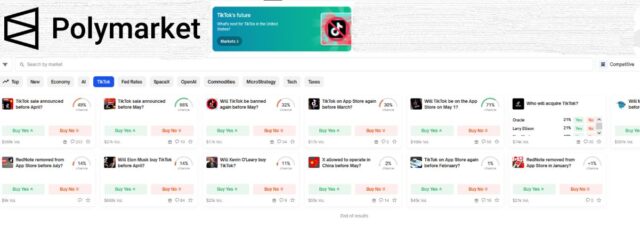

Polymarket Under Fire: Controversy Erupts Over TikTok Ban Bet Resolution

Decentralized prediction market Polymarket faces backlash over a TikTok ban bet resolution

Polymarket, a decentralized prediction market, faces intense scrutiny following its controversial decision to resolve its TikTok ban market as a “Yes” win – even though the social media platform remains accessible in the United States. Critics argue that the resolution was premature. They question the reliability of blockchain-based betting platforms regarding high-stakes political and regulatory events. The dispute has reignited broader discussions about the role of decentralized prediction markets in financial forecasting and the ethical and regulatory implications of betting on real-world geopolitical developments.

The TikTok Ban Market Controversy

The Polymarket contract in question asked traders to bet on whether the U.S. would ban TikTok by May 2025. Following a recent U.S. Supreme Court ruling upholding a ban on the app due to national security concerns, Polymarket resolved the market as a win on January 20, 2025. However, this decision came after former President Donald Trump granted TikTok a 75-day extension to negotiate a potential deal. The platform remained operational beyond the supposed ban date.

Many users and market participants took to social media and crypto forums to express their frustration. They argued that Polymarket’s resolution ignored the practical reality of the situation. Critics claim that the decision was made in a way that benefited certain stakeholders at the expense of others, raising concerns about how decentralized platforms define event outcomes and ensure market integrity.

Market Integrity & Trust in Decentralized Prediction Markets

Decentralized prediction markets like Polymarket operate by allowing users to trade contracts based on the likelihood of real-world events occurring. Ideally, these markets leverage the “wisdom of the crowd” to forecast outcomes with a high degree of accuracy. However, the TikTok bet controversy exposes a key vulnerability in these systems—ambiguity in resolution criteria.

Unlike traditional regulated betting markets, decentralized platforms rely on oracles and predefined resolution rules to settle outcomes. The issue arises when the real-world interpretation of an event does not align with the technical resolution criteria. In this case, the question of whether TikTok was “banned” before the deadline became murky. The law was upheld but enforcement was delayed.

This has led to calls for clearer resolution frameworks, independent arbitration mechanisms, and improved governance models for blockchain-based betting platforms. Without these safeguards, critics warn that decentralized prediction markets risk losing credibility and alienating users feeling at the mercy of arbitrary decisions.

The Role of Prediction Markets in Political and Regulatory Events

Prediction markets have increasingly been used as financial instruments for gauging public sentiment and assessing probabilities of political and regulatory outcomes. They provide a mechanism for traders to hedge risks and for analysts to interpret market signals regarding upcoming policy decisions.

In theory, decentralized platforms like Polymarket offer a censorship-resistant alternative to traditional markets. They allow bets on controversial topics such as elections, regulatory crackdowns, and geopolitical conflicts. However, as the TikTok case illustrates, these platforms also face significant challenges when dealing with unpredictable government actions and legal gray areas.

A major concern is that such markets may inadvertently influence the events they are predicting. If major financial incentives are at play, stakeholders with vested interests could manipulate outcomes or use their influence to sway political decisions. This raises ethical questions. Is it responsible to allow users to bet on high-impact regulatory events? Or does it open the door to potential conflicts of interest?

The Ethical Implications of Blockchain-Based Betting Markets

While decentralized prediction markets are often praised for their transparency and lack of centralized control, their ethical implications remain a topic of debate.

One ethical concern is whether betting on real-world events, particularly those involving legal and political decisions, distorts incentives. If financial markets are built around the expectation of a ban or policy change, do they subtly pressure decision-makers to act in ways that align with market interests?

Additionally, the lack of regulatory oversight in decentralized prediction markets means there are few protections for participants in cases of disputed resolutions. Traditional betting markets, operating under legal frameworks, provide avenues for recourse when outcomes are disputed. In contrast, blockchain-based platforms often leave traders with no alternative but to accept the resolution provided. Even when the resolution appears to contradict real-world events.

The TikTok controversy has amplified discussions around whether decentralized prediction markets should be more accountable to their users, potentially through improved governance mechanisms or third-party resolution services that prevent perceived conflicts of interest.

Conclusion: A Turning Point for Prediction Markets?

The backlash against Polymarket over its handling of the TikTok ban market serves as a warning sign for decentralized betting platforms. As these markets gain prominence in financial speculation and political forecasting, maintaining integrity, clear resolution criteria, and fair governance will be crucial for their long-term credibility.

Blockchain-based prediction markets offer a novel and potentially valuable tool for risk assessment and financial forecasting. However, their effectiveness hinges on trust. If traders believe that market outcomes can be arbitrarily decided or that there are misaligned incentives, confidence in these platforms will erode. Their adoption might stall.

As the dust settles on the TikTok bet dispute, the broader crypto and blockchain community will be watching closely to see whether decentralized prediction markets implement reforms to prevent similar future controversies. Whether Polymarket and its competitors can regain the trust of their users may determine the fate of blockchain-based forecasting markets in an increasingly regulated world.

Readers’ frequently asked questions

How does Polymarket decide when to settle a bet, and why is there controversy around this decision?

Polymarket, like most decentralized prediction markets, relies on predefined resolution criteria and external oracles to determine the outcome of bets. These oracles gather real-world data to verify whether an event has occurred. In the case of the TikTok ban bet, Polymarket justified its decision based on a U.S. Supreme Court ruling that upheld a law banning the platform. However, the controversy stems from the fact that despite the ruling, TikTok remains accessible due to a 75-day extension granted by the U.S. government. This discrepancy between the legal ruling and the practical outcome led to accusations that Polymarket resolved the bet prematurely. It raised concerns about whether its resolution process is transparent and fair enough to maintain user trust.

If decentralized prediction markets like Polymarket are not regulated, who ensures they operate fairly?

Unlike traditional betting platforms operating under government oversight, decentralized prediction markets function on smart contracts and blockchain technology. There is no central authority enforcing rules. Instead, fairness is supposed to come from transparent, algorithm-driven processes. However, as the TikTok case shows, market operators still have some discretion over how they interpret events, leading to potential disputes. Some decentralized platforms attempt to mitigate bias by using third-party resolution services or decentralized governance models where users vote on disputed outcomes. That said, because these platforms lack traditional consumer protections, traders often have no legal recourse if they disagree with a resolution, making trust in the platform’s integrity a key factor in participation.

Can prediction markets actually influence real-world events, or are they just a reflection of public sentiment?

Prediction markets are often seen as tools for gauging public sentiment, but they can also have real-world impact. When large amounts of money are wagered on political or regulatory decisions, the financial stakes may incentivize influential players to act in ways that align with market predictions. For example, if a market predicts with high certainty that a government will ban TikTok, it could contribute to media narratives pressuring policymakers. While this doesn’t mean that markets directly control events, they can shape perceptions and influence decision-making. They could even attract speculative financial activities that reinforce specific outcomes. The ethical dilemma arises when these platforms are used not just to predict events, but to profit from their outcomes in ways that could incentivize manipulation.

What Is In It For You? Action Items You Might Want to Consider

Scrutinize Resolution Criteria Before Entering Prediction Markets

Before placing bets on decentralized prediction platforms like Polymarket, always review how outcomes are determined. In cases involving regulatory or political events, the interpretation of a “win” may not be as clear-cut as it seems. If the resolution process lacks transparency or relies on subjective judgment, reconsider your position or hedge your bets accordingly.

Diversify Your Strategy Beyond Single-Event Bets

Markets influenced by legal and political decisions come with unpredictable variables. Court rulings, executive orders, and last-minute extensions can drastically shift outcomes. Instead of relying on a single prediction market bet consider diversifying your strategy. Engage in other markets with clearer resolution criteria or spread your risk across multiple events.

Monitor Market Sentiment and Exit Early If Needed

Price action within prediction markets often shifts based on breaking news and trader sentiment. If you’re holding a position in a market facing controversy, closely track community reactions and early payout disputes. If uncertainty arises – like in the TikTok ban market – consider exiting before a resolution to lock in gains or limit losses. Being proactive in volatile situations can help you avoid disputes and unexpected outcomes.

Bitcoin, Banks, and the Battle for Digital Dominance: U.S. Makes Bold Crypto Moves

A futuristic digital vault with Bitcoin symbols inside, representing banks custodying crypto, alongside the U.S. Capitol building in the background, symbolizing government policy shifts. A subtle American flag overlay reinforces the national impact of the digital asset reserve.

In an unprecedented push to position the United States as a leader in digital finance, President Donald Trump unveiled sweeping crypto-friendly policies. These include repealing restrictive SEC regulations, empowering banks to custody digital assets, and exploring the creation of a national digital asset reserve. The administration also firmly rejected the idea of a U.S. central bank digital currency (CBDC), aligning itself with the principles of decentralization. With markets rallying and global competitors watching closely, the stakes are high. Will these moves secure America’s dominance in the digital economy, or will they create unforeseen challenges in a rapidly evolving space?

A Pro-Crypto Policy Shift

The cornerstone of the Trump administration’s recent pro-crypto agenda is the repeal of Staff Accounting Bulletin No. 121 (SAB 121) by the Securities and Exchange Commission (SEC). This regulation, introduced in 2022, mandated that companies holding digital assets for customers record these holdings as liabilities on their balance sheets. Its removal significantly lowers the compliance burden on banks and other financial institutions. The administration is paving the way for them to offer cryptocurrency custody services.

Financial institutions can now safely manage digital assets for their clients without onerous accounting requirements. Industry insiders suggest that this change will encourage more traditional institutions to enter the crypto market. It will increase accessibility and adoption for both retail and institutional investors.

The End of the CBDC Debate in the U.S.

Another defining aspect of the administration’s policy shift is its outright rejection of a U.S. central bank digital currency (CBDC). President Trump’s executive order explicitly prohibits the development or promotion of a CBDC, citing concerns about privacy and financial stability. The administration’s stance contrasts sharply with other nations like China and the European Union, actively developing and deploying their digital currencies.

Proponents of CBDCs argue that they could modernize monetary systems and streamline cross-border transactions. However, critics warn of potential overreach by central authorities and the erosion of financial privacy. The U.S. has opted instead to emphasize decentralization, aligning its strategy with blockchain-based cryptocurrencies like Bitcoin.

Exploring a Digital Asset Reserve

The Trump administration has also signaled interest in creating a national strategic reserve of digital assets. This initiative, managed by the newly established Presidential Working Group on Digital Asset Markets, aims to evaluate the feasibility of stockpiling cryptocurrencies – possibly including Bitcoin – seized in legal operations. Such a reserve could bolster the U.S.’s financial resilience and act as a hedge against global economic volatility.

While details remain scarce, the idea has sparked debates about its implications for market dynamics. Analysts suggest that accumulating a national digital asset reserve could tighten supply. That in turn influences prices and potentially strengthens Bitcoin’s role as a store of value.

Market and Global Reactions

The market response to these policy changes has been swift and significant. Bitcoin’s price surged past $105,000 following the announcements, while the S&P 500 index reached record highs. These movements reflect investor optimism about the administration’s pro-crypto stance and the potential for increased institutional adoption.

However, global competitors are watching closely. Countries like China, which has aggressively developed its digital yuan, may see the U.S.’s moves as a challenge to their own digital finance strategies. The contrasting approaches highlight a broader geopolitical contest over the future of money and financial sovereignty.

Risks and Opportunities

While these developments signal progress, they also introduce risks. Critics argue that empowering banks to custody cryptocurrencies could expose the financial system to new vulnerabilities, including cyberattacks and systemic risks from volatile digital assets. Additionally, the rejection of a U.S. CBDC may leave the country at a disadvantage in international digital trade and monetary policy.

On the other hand, the administration’s strategy could establish the U.S. as a global leader in decentralized finance (DeFi). By fostering innovation and reducing regulatory barriers, these policies might catalyze a new wave of technological advancements and economic growth.

The Trump administration’s bold crypto policies mark a turning point in the U.S. approach to digital assets. By repealing restrictive regulations, rejecting CBDCs, and exploring a digital asset reserve, the U.S. is positioning itself as a champion of decentralization. These moves could cement America’s leadership in the digital economy, but they also come with risks that require careful management.

As the global financial landscape evolves, the stakes are higher than ever. The U.S.’s ability to navigate these challenges will determine whether its bold strategy pays off in securing digital dominance or exposes it to unforeseen consequences in a fast-changing world.

Readers’ frequently asked questions

How do banks custodying Bitcoin change how I can buy, sell, or store cryptocurrency?

With banks now allowed to custody Bitcoin, customers may have new ways to buy, store, and manage their digital assets through traditional financial institutions. Instead of using a crypto exchange or a personal wallet, individuals could deposit their Bitcoin into a bank account, similar to how they store cash or stocks. This could make crypto management easier for those unfamiliar with private keys and digital wallets. However, it might also mean higher fees or restrictions. Banks would follow federal regulations that may differ from crypto-native platforms.

If the U.S. rejects a central bank digital currency (CBDC), does that mean crypto is replacing the dollar?

No, rejecting a U.S. CBDC does not mean cryptocurrencies are replacing the dollar. The U.S. dollar remains the dominant currency for trade and finance. The government is not replacing it with Bitcoin or any other digital asset. The rejection of a CBDC simply means the U.S. will not create a government-backed digital version of the dollar, unlike China with its digital yuan. Instead, the U.S. is supporting decentralized cryptocurrencies like Bitcoin by allowing banks to custody them and exploring a digital asset reserve. The traditional banking system and fiat currency still remain in place.

Does the U.S. government owning Bitcoin through a digital asset reserve mean it will control Bitcoin’s price?

Not necessarily. While a digital asset reserve would mean the government holds Bitcoin, it does not mean it can control Bitcoin’s price in the same way it influences the value of the dollar through monetary policy. Bitcoin operates on a decentralized network, and its price is driven by supply and demand in global markets. However, if the government were to buy large amounts of Bitcoin, it could drive prices up by increasing demand. Likewise, if it decided to sell its holdings, it could temporarily push prices down. But overall, Bitcoin’s price is still determined by a wide range of global participants, including retail investors, institutions, and miners.

What Is In It For You? Action Items You Might Want to Consider

Keep an Eye on Institutional Adoption – It’s Just Getting Started

With U.S. banks now cleared to custody Bitcoin, we could see a wave of institutional money entering the crypto space. This shift could bring more stability and liquidity to Bitcoin markets. However, it may also introduce new dynamics driven by traditional financial institutions. Traders should monitor how major banks and financial firms roll out crypto custody services. This could impact both short-term volatility and long-term price trends.

Watch for Market Reactions to U.S. Crypto Reserves

The idea of a national digital asset reserve is still in its early stages, but if the U.S. government starts accumulating Bitcoin, demand could spike. Traders should track official statements and policy updates on this reserve. Any confirmation of large-scale BTC acquisitions by the government could trigger bullish momentum. Conversely, if the government decides to offload seized digital assets, expect price swings. Staying ahead of these moves could present trading opportunities.

Don’t Underestimate the Ripple Effects of the CBDC Ban

The U.S. decision to reject a central bank digital currency (CBDC) sets it apart from other major economies like China and the EU. This could reinforce Bitcoin’s position as a decentralized alternative, but it may also influence how stablecoins are regulated in the U.S. Traders should watch how policymakers approach stablecoins, as stricter regulations or new frameworks could impact liquidity in the crypto market. Staying informed on stablecoin policies could be crucial for managing trading strategies.

North Korean Hackers Suspected in $70M Phemex Heist: What We Know So Far

North Korean hackers are suspected in the $70M Phemex hack, exposing major crypto security risks. How did it happen, and what does it mean for traders?

A major crypto heist has once again put North Korean hacking groups under the spotlight. Blockchain security analysts suggest that the recent Phemex hack, which saw up to $70 million in crypto assets vanish, bears the hallmarks of notorious state-backed cybercriminals. If confirmed, this attack would be yet another in a series of high-profile cryptocurrency thefts allegedly orchestrated by North Korea to fund its sanctioned regime. As investigations unfold, the case raises pressing questions about exchanges’ vulnerability and nation-states’ role in crypto-related cybercrime.

North Korea’s Cyber Footprint in Crypto Theft

Yet another major exchange hack has rocked the cryptocurrency community, this time targeting Singapore-based Phemex. Initial reports estimated the stolen amount at $29 million. Later assessments suggested that losses could be as high as $70 million. Blockchain security analysts and cyber intelligence firms point to North Korean state-backed hackers as the likely culprits behind the exploit. If confirmed, this attack would be the latest in a series of sophisticated cyber heists allegedly orchestrated by the Democratic People’s Republic of Korea (DPRK) to bypass economic sanctions and fund its regime.

https://twitter.com/CrispyBull/status/1882430469037240800

The Attack: Multi-Chain Exploit and Fund Movements

On January 23, 2025, Phemex detected suspicious withdrawals from its hot wallets across multiple blockchain networks. Those included Ethereum, Binance Smart Chain, Polygon, Base, Optimism, and Arbitrum. The attackers siphoned off stablecoins such as USDT and USDC, along with major assets like ETH, LINK, PEPE, FET, and AVAX.

Security firms tracking the incident noted that the stolen stablecoins were quickly converted into Ethereum. Such moves are commonly used to avoid issuers like Tether and Circle freezing the assets. The rapid movement of funds is a hallmark tactic associated with North Korean hacker groups, such as Lazarus Group. The group has been implicated in multiple crypto-related cybercrimes over the past few years.

The North Korean Connection: A Pattern of Cyber Heists

The Lazarus Group and other DPRK-backed cyber units have been tied to numerous high-profile cryptocurrency thefts. According to the United Nations and cybersecurity firms, North Korea has stolen billions in digital assets to evade economic sanctions and finance its nuclear weapons program.

The tactics used in the Phemex hack bear striking similarities to past DPRK cyber heists, including:

  • Multi-chain exploitations to diversify risk and evade detection.
  • Rapid conversion of stolen assets to Ethereum to prevent tracking and blacklisting.
  • Utilization of privacy-enhancing tools such as mixing services and cross-chain bridges to launder funds.

While forensic investigations are still underway, the attack methodology strongly aligns with previous North Korean-sponsored cyber campaigns.

Security Vulnerabilities in Centralized Exchanges

This incident underscores the persistent vulnerabilities of centralized cryptocurrency exchanges (CEXs). Despite heightened security measures, hot wallets – used for quick transactions – remain attractive targets for hackers. The Phemex hack highlights key security concerns, including:

  • Lack of multi-layered authentication: Even with multi-signature protection, hot wallets can still be exploited if private keys or operational credentials are compromised.
  • Centralized control of funds: Unlike decentralized exchanges (DEXs), centralized platforms rely on internal security, making them high-value targets.
  • Delayed incident response: The speed at which hackers moved the stolen funds suggests that the exchange’s detection mechanisms were not fast enough to thwart the attack in real-time.

Phemex’s Response and User Impact

In the aftermath of the hack, Phemex swiftly halted withdrawals and announced an emergency security review. The exchange assured users that its cold wallets – where most customer assets are stored – remained secure. Trading services continued uninterrupted, but the exchange temporarily froze user withdrawals to prevent further losses.

To address customer concerns, Phemex has stated that it is developing a compensation plan for affected users. However, the lack of transparency regarding the full scope of losses and the timeline for fund recovery has led to growing frustration among traders.

Geopolitical Implications and Regulatory Concerns

If the investigation confirms North Korean involvement, this breach will further intensify calls for stricter global crypto regulations. The U.S. and its allies have been actively working to curb North Korea’s cyber theft activities, imposing sanctions on crypto-related entities that facilitate illicit financial flows.

Regulatory bodies worldwide may push for:

  • Tighter compliance on centralized exchanges, including real-time transaction monitoring.
  • More stringent KYC/AML policies to prevent illicit actors from cashing out stolen assets.
  • Stronger cooperation between crypto firms and law enforcement agencies to improve response times to large-scale hacks.

Conclusion: Strengthening Defenses in an Era of Cyber Warfare

Rather than being seen as isolated incidents, hacks such as the Phemex hack illustrate the increasing sophistication of state-backed cybercriminals. The rise of nation-state actors in crypto-related cybercrime demands more than just reactive measures from exchanges. It calls for proactive security frameworks, real-time monitoring solutions, and enhanced collaboration between governments, exchanges, and cybersecurity firms. As the digital asset space evolves, ensuring its resilience against geopolitical threats will be a key challenge for the industry moving forward.

Readers’ frequently asked questions

How can I protect my funds if I use a centralized exchange like Phemex?

To protect your funds while using centralized exchanges, it’s essential to take several precautionary steps. First, enable two-factor authentication (2FA) to add an extra layer of security to your account. Additionally, consider using hardware security keys, which provide stronger authentication than SMS-based 2FA. Whenever possible, store most of your crypto holdings in a personal cold wallet, such as a hardware or paper wallet. Don’t keep all your assets on an exchange. Exchanges are prime targets for hackers due to their large asset pools. While most have security measures in place, no system is completely immune to breaches. Regularly updating passwords, monitoring withdrawal limits, and using exchanges that offer insurance or reimbursement plans for hacks can further reduce your risk exposure.

Why do North Korean hackers target cryptocurrency exchanges instead of traditional financial institutions?

North Korean hackers prioritize cryptocurrency exchanges over traditional banks for several reasons. Unlike traditional financial institutions, which operate under strict regulatory oversight and robust security infrastructures, crypto exchanges often have weaker security protocols and varying regulatory standards depending on their jurisdiction. This makes them easier targets for sophisticated cyberattacks. Additionally, cryptocurrency transactions can be executed and moved quickly across multiple blockchains. That makes it harder for authorities to trace and recover stolen funds. Digital assets also provide an efficient way for sanctioned entities, such as North Korea, to bypass global financial restrictions. By stealing and laundering cryptocurrencies, North Korean hacking groups can generate funds to support the country’s economic and military programs without relying on traditional financial networks that are closely monitored by global regulators.

What happens to the stolen crypto, and can it ever be recovered?

Once hackers steal funds from an exchange, they typically move them through a series of transactions to cover their tracks. One common method is converting stablecoins like USDT or USDC into decentralized assets like Ethereum or Bitcoin. That reduces the risk of issuers freezing the stolen funds. Hackers also use mixing services, such as Tornado Cash, or cross-chain bridges to swap assets across different blockchain networks. Tracking and confiscating assets becomes more challenging. Despite these efforts, blockchain forensic firms and law enforcement agencies are becoming more adept at tracing stolen funds. Some high-profile thefts resulted in partial or full recovery of stolen assets, but the process can take months or even years. If the funds stolen from Phemex are traced and identified, exchanges and law enforcement agencies may attempt to freeze or seize them. However, the likelihood of full recovery depends on how effectively the hackers have laundered the assets.

What Is In It For You? Action Items You Might Want to Consider

Prioritize Cold Storage for Long-Term Holdings

If you’re keeping significant amounts of crypto on a centralized exchange, consider moving your holdings to a cold wallet. Hardware wallets or other offline storage solutions provide extra security against exchange hacks. Use exchanges only for active trading, and keep your long-term investments safely stored where hackers can’t reach them.

Monitor On-Chain Activity for Early Warning Signs

Traders who actively use centralized exchanges should keep an eye on large fund outflows from exchange hot wallets. Platforms like Etherscan, Arkham Intelligence, and Whale Alert can help you track abnormal transactions, which may signal security breaches before official announcements. Staying informed gives you a chance to withdraw funds early if an exchange experiences suspicious activity.

Diversify Your Trading Platforms and Reduce Counterparty Risk

Relying on a single exchange, no matter how reputable, can be risky. Consider spreading your trading activity across multiple platforms to reduce exposure in case of a security breach. Additionally, using decentralized exchanges (DEXs) for some of your trades minimizes reliance on centralized entities that are frequent hacking targets. Balancing between CEXs and DEXs can give you more flexibility and security in your trading strategy.

From Internet Joke to Wall Street: The Rise of Memecoin ETFs

Memecoin ETFs might soon conquer Wall Street.

What started as a niche phenomenon in the crypto world is now making its way into traditional finance. Meme coins – once dismissed as mere internet jokes – are now the basis for newly proposed ETFs from investment firms REX Shares and Osprey Funds. Their filings with the SEC seek to create exchange-traded funds tracking Dogecoin, Bonk, and the newly launched Trump token, among others. This move highlights the evolving relationship between digital culture and financial markets. It sparks the debate over whether meme coins can be considered legitimate investment assets or if their presence in ETFs merely fuels speculative excess.

Memecoins Enter Institutional Finance

Once dismissed as speculative digital assets fueled by internet culture, meme coins are now knocking on the doors of Wall Street. The latest filings from asset managers REX Shares and Osprey Funds seek to introduce exchange-traded funds (ETFs) tracking Dogecoin (DOGE), Bonk (BONK), and the newly launched Trump (TRUMP) token. These filings, submitted to the U.S. Securities and Exchange Commission (SEC), signal an evolving landscape where meme coins are increasingly viewed as viable investment products.

The potential approval of such ETFs could mark a turning point in how the financial sector perceives meme coins. It could shift them from a niche category to a structured asset class accessible to institutional and retail investors. However, this development has ignited a fierce debate over the legitimacy, risks, and regulatory implications of bringing highly speculative and often volatile digital assets into mainstream financial products.

https://twitter.com/CrispyBull/status/1880658406270456046

Regulatory Implications and the SEC’s Stance

The SEC, under new leadership following Donald Trump’s return to office, faces a pivotal decision in shaping crypto’s future in traditional finance. Historically, the regulatory body has been cautious, if not outright resistant toward crypto-based financial products. They rejected multiple Bitcoin spot ETF applications before ultimately approving them in early 2024.

With the leadership shift, speculation is mounting over whether the SEC will take a more crypto-friendly stance, particularly toward unconventional digital assets like meme coins. Proponents argue that memecoin ETFs would enhance market accessibility and liquidity. Its critics highlight concerns over market manipulation, price volatility, and the fundamental lack of utility behind many of these tokens.

Notably, the Trump (TRUMP) memecoin’s rapid ascent and its connection – symbolic or otherwise – to a now sitting U.S. president have raised additional ethical and legal questions. Given its valuation swings and concerns over its potential misuse in political fundraising or influence campaigns, the SEC’s handling of this specific token will likely set a precedent for future political or celebrity-affiliated cryptocurrencies.

The Legitimacy and Risks of Memecoin ETFs

Proponents of memecoin ETFs argue that these products represent the natural evolution of crypto’s integration into traditional finance. They point out that, like Bitcoin and Ethereum ETFs, memecoin-based ETFs could provide safer and more regulated access to these assets. They reduce the need for direct token purchases on unregulated exchanges.

However, the risks associated with memecoin ETFs are significant. Unlike Bitcoin or Ethereum, which have established ecosystems and use cases, many meme coins are driven primarily by speculation, social media trends, and online communities. Their extreme volatility raises concerns over investor protection. Do retail investors fully grasp the high-risk nature of these assets?

Moreover, the inclusion of politically or culturally charged tokens like TRUMP adds another layer of complexity. If approved, such ETFs could introduce novel risks. They could be prone to price manipulation, regulatory scrutiny, and reputational concerns for traditional financial institutions involved in these products.

Wall Street’s Growing Appetite for Crypto

Despite regulatory hurdles, Wall Street’s interest in crypto-based financial products continues to grow. The success of Bitcoin ETFs has demonstrated institutional demand for crypto exposure, paving the way for more diverse offerings. As investment firms push for greater crypto integration, memecoin ETFs could represent an experiment in blending digital culture with traditional asset management.

Whether these ETFs gain approval or not, their filings indicate a larger shift: cryptocurrency, in all its forms, is no longer confined to fringe internet communities. Instead, it is actively shaping modern finance, prompting regulators, investors, and institutions to reconsider its place in global markets.

The SEC’s decision on these ETFs will not only determine the future of meme coins in mainstream finance. It will also signal how the regulatory body plans to navigate the rapidly evolving crypto landscape under a new administration.

Readers’ frequently asked questions

What is an ETF, and how does a crypto ETF work?

An Exchange-Traded Fund (ETF) is a financial product that allows investors to buy shares in a fund that tracks the price of an asset or a group of assets. In the case of a crypto ETF, the fund holds cryptocurrencies or related financial instruments, allowing investors to gain exposure to crypto prices without having to buy and store the digital assets themselves. With an approved memecoin ETF investors could trade shares of a fund that tracks the price movements of Dogecoin, Bonk, or Trump coin through traditional stock exchanges rather than crypto exchanges.

If meme coins are risky and volatile, why would investors be interested in memecoin ETFs?

Investors may be interested in a memecoin ETF because it offers a regulated and potentially safer way to gain exposure to the price movements of these assets. ETFs eliminate the need to manage private keys, deal with unregulated crypto exchanges, or worry about security risks like hacking. Additionally, meme coins have historically shown the ability to generate large returns in short periods. It attracts traders who are willing to take high risks for potentially high rewards. An ETF would allow investors to access meme coins while using traditional brokerage accounts, making them easier to trade.

If the SEC approves memecoin ETFs, does that mean meme coins are a safe investment?

No, SEC approval of a memecoin ETF would not mean meme coins are a safe investment. It would only mean that the financial product meets regulatory requirements for transparency, reporting, and investor protection. Meme coins remain highly volatile assets that can experience extreme price fluctuations based on market hype, social media trends, and community sentiment. Investors should still conduct thorough research and understand the risks before investing in meme coins, whether through an ETF or directly on a crypto exchange.

What Is In It For You? Action Items You Might Want to Consider

Monitor SEC Announcements and ETF Approval Developments

Regulatory decisions can have a massive impact on market sentiment. If the SEC signals openness to approving memecoin ETFs, it could drive speculation and price surges in Dogecoin, Bonk, and Trump coin. Stay updated on official filings and statements from SEC leadership, and any indications of a shift in regulatory stance under the new administration. Early awareness of these decisions could provide trading opportunities before the broader market reacts.

Assess the Volatility and Liquidity of Memecoins Before Trading

Memecoins are known for extreme price swings, often influenced by social media trends and celebrity endorsements rather than fundamental value. If you’re considering trading these assets, evaluate their liquidity and historical price movements. Use stop-loss strategies and position sizing to manage risk effectively. Sudden market shifts can lead to significant gains – or losses – within hours.

Consider ETF-Driven Market Cycles and Institutional Interest

If memecoin ETFs move closer to approval, institutional investors could start positioning themselves in the underlying assets. This could trigger preemptive price runs, similar to what happened with Bitcoin ETFs. Watch for accumulation patterns and increased trading volume in Dogecoin, Bonk, and Trump coin. These could signal institutional interest ahead of a formal ETF launch. Being ahead of these cycles can give traders an edge in timing their entries and exits.

- Advertisement -

FEATURED