Home Blog Page 137

Solana Overloaded, Ethereum Gains: How Trump’s Memecoin Craze Reshaped Blockchain Networks

Trump meme coins create a frenzy.

The Trump memecoin frenzy is causing ripple effects across the blockchain ecosystem. Solana is struggling to handle the transaction surge while Ethereum attracts institutional investments linked to the Trump crypto boom. As speculation drives trading volume into the billions, network congestion, soaring gas fees, and blockchain stability are now central concerns. Meanwhile, World Liberty Finance (WLF)’s aggressive Ethereum purchases suggest a strategic pivot toward more politically affiliated crypto projects. With these shifts, the industry is left wondering: Are Trump-linked assets fueling innovation? Or, are they setting the stage for blockchain turmoil?

Solana Buckles Under the Weight of Trump Memecoins

The launch of Donald Trump’s $TRUMP and Melania Trump’s $MELANIA tokens on Solana has pushed the network to its limits. The meme coins attracted billions in trading volume within days, leading to record-high transactions, surging fees, and periods of congestion.

Solana has historically marketed itself as a high-speed, low-cost blockchain, often outperforming Ethereum regarding scalability. However, the overwhelming demand for Trump-themed tokens has stressed its infrastructure. Developers and traders are concerned about network resilience and stability. This situation has reignited debates over whether Solana can truly handle massive spikes in demand, especially as meme coins continue to drive speculation-driven activity.

Solana’s fees skyrocketed at the height of the trading frenzy, surpassing levels seen in past congestion events. The network, which boasts lower transaction costs than Ethereum, suddenly struggled to process transactions efficiently. That left users frustrated and exposed the blockchain’s vulnerabilities.

Ethereum Gains as World Liberty Finance Makes Big Moves

While Solana struggled with congestion, Ethereum saw a different kind of surge. World Liberty Finance (WLF), a crypto-focused investment firm founded by Donald Trump’s sons Don and Eric, made significant Ethereum purchases, fueling speculation that Ethereum could serve as the backbone for politically-aligned crypto ventures.

Ethereum has long been the preferred blockchain for institutional and high-value investors. It offers more mature infrastructure, higher security, and a well-established ecosystem. WLF’s strategic accumulation of Ethereum suggests a deliberate pivot toward ETH-based projects, possibly in anticipation of future blockchain initiatives tied to Trump’s broader financial ventures.

This move has sparked discussions about the intersection of politics and decentralized finance (DeFi). With WLF actively reshaping its portfolio, analysts predict Ethereum may become a key player in Trump-related digital assets. That could further cement its role as the go-to blockchain for institutional investors.

Memecoins, Market Manipulation, and Insider Concerns

The unprecedented rise of Trump affiliated meme coins has led to significant market volatility, with major price swings and whale-driven market movements.

  • $TRUMP saw explosive growth, surging to highs of $70 before stabilizing around $50.
  • $MELANIA rapidly gained traction, reaching a $2 billion market cap.
  • Reports indicate that 80% of the $TRUMP supply is controlled by insiders, raising concerns about potential price manipulation and liquidity risks.
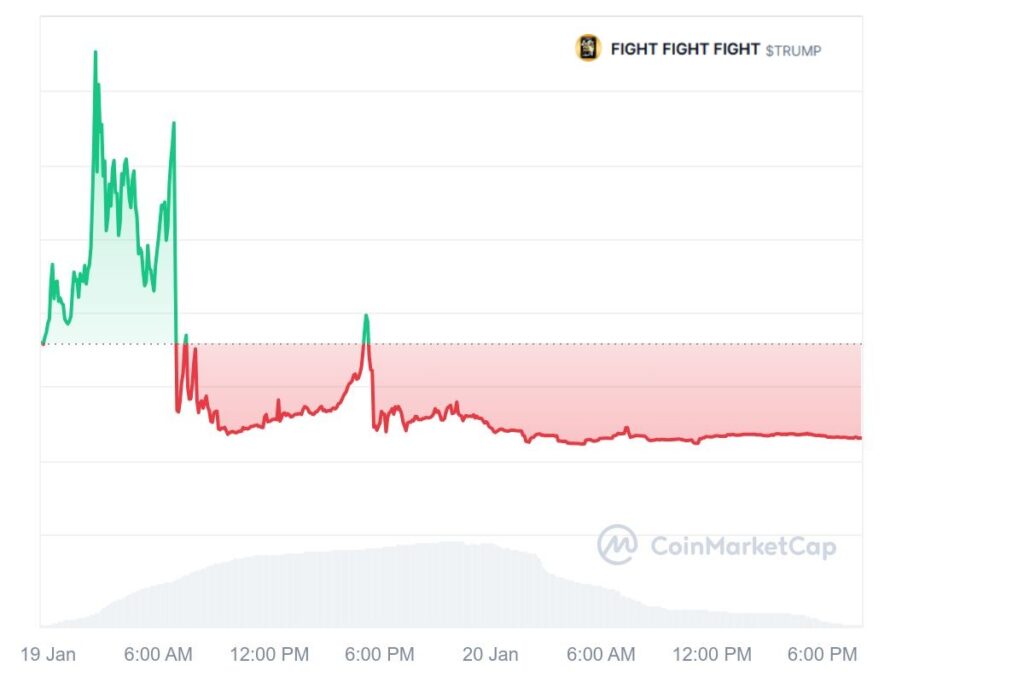
Trump meme coin Price chart

A notable event during the trading frenzy was the alleged intervention of a single whale. He caused a sharp dip in $TRUMP’s price by liquidating massive holdings. This incident highlights the fragility of memecoin markets, where a handful of players can dramatically sway prices.
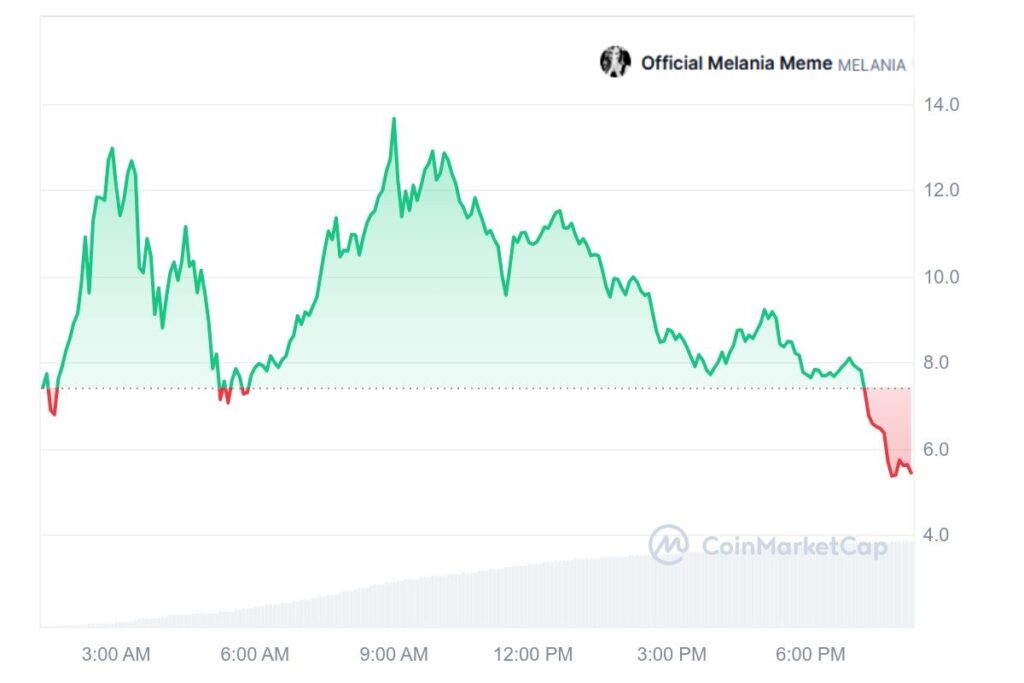
Melania meme coin price chart

Regulatory and Ethical Dilemmas: The Future of Politically-Linked Cryptos

The launch of Trump and Melania-backed cryptocurrencies has sparked heated debates about the legal and ethical implications of politically-affiliated digital assets. While some see this as a major step toward mainstream crypto adoption, others warn that political figures entering the crypto space raise serious regulatory concerns.

Key Regulatory Issues:

  • Potential conflicts of interest: Critics argue that the direct involvement of political figures in cryptocurrency ventures could create unethical financial incentives.
  • Transparency concerns: With a significant portion of $TRUMP tokens held by insiders, investors are demanding clarity on the utilization of the supply.
  • Legal scrutiny: The U.S. Securities and Exchange Commission (SEC) and other regulators may investigate whether these TRUMP meme coins violate securities laws or engage in deceptive practices.

Meanwhile, major exchanges are capitalizing on the frenzy. Binance recently introduced a $MELANIA-USDT perpetual contract with 25x leverage, allowing traders to amplify their exposure to the token’s volatility. Moves like these could further intensify speculation and raise additional regulatory red flags.

Conclusion: Innovation or Market Turmoil?

The Trump memecoin craze has left an undeniable impact on the crypto market. It exposed Solana’s scalability limits and positioned Ethereum as a potential hub for political crypto projects. While WLF’s Ethereum investments suggest institutional confidence, the widespread speculation, insider influence, and regulatory uncertainty surrounding $TRUMP and $MELANIA could undermine investor trust.

If politically affiliated cryptocurrencies become more prevalent, the industry will face a crucial question: Will these tokens drive blockchain adoption, or will they invite tighter scrutiny and potential regulation? Regardless of the outcome, the intersection of politics and cryptocurrency is now firmly in the spotlight. And, the implications could shape the future of digital assets for years to come.

Readers’ frequently asked questions

Why did Solana experience congestion because of Trump-themed meme coins, and does this mean it’s unreliable?

Solana’s congestion issues stemmed from an overwhelming surge in transaction volume triggered by speculative trading of $TRUMP and $MELANIA meme coins. Solana is designed for high-speed, low-cost transactions, making it a popular choice for meme coins and NFT projects. However, when an influx of users floods the network simultaneously, the system struggles to maintain smooth operations. That leads to delays and increased fees.

This does not necessarily mean Solana is unreliable, but it does highlight scalability challenges that become apparent during high-traffic periods. Solana faced similar issues in the past, particularly during NFT minting booms. Though the network has made upgrades to improve performance, the Trump memecoin frenzy exposed that despite these improvements, Solana can still buckle under extreme demand. The key takeaway here is that while Solana remains a leading blockchain for fast, cheap transactions, traders should expect volatility in network performance during major speculative events.

Why is Ethereum benefiting from this situation, and how is it different from Solana?

Ethereum is benefiting from the Trump memecoin boom because World Liberty Finance (WLF), a crypto investment firm founded by Donald Trump’s sons, has been purchasing large amounts of Ethereum. While Solana was chosen as the platform for launching Trump meme coins, Ethereum is seen as a more secure, institutional-friendly blockchain, making it the preferred choice for high-value investments and long-term crypto projects.

The key difference between Solana and Ethereum lies in their architecture and target audience. Solana operates with a proof-of-history (PoH) consensus mechanism, which allows for faster transactions at lower costs. However, it has faced downtime issues and congestion problems when traffic spikes. Ethereum, on the other hand, runs on a proof-of-stake (PoS) system, which prioritizes security and decentralization over speed. While Ethereum transactions are more expensive, they are also more stable and widely used by institutional investors.

Ethereum’s ability to attract institutional investors, including those with political affiliations, suggests that the Trump family’s crypto ventures may extend beyond meme coins into larger blockchain-based financial projects. If that happens, Ethereum could see long-term benefits from increased adoption by politically aligned financial entities.

Are politically-affiliated cryptocurrencies like $TRUMP and $MELANIA legal, and will they be regulated?

Politically-affiliated cryptocurrencies exist in a legal gray area. Currently, there are no explicit laws prohibiting political figures from launching or endorsing cryptocurrencies, but regulatory bodies like the U.S. Securities and Exchange Commission (SEC) and the Commodity Futures Trading Commission (CFTC) are closely monitoring such developments.

The main concerns surrounding $TRUMP and $MELANIA are market manipulation, insider control, and transparency. Reports indicate that 80% of the $TRUMP supply is held by insiders, which raises red flags about potential price manipulation. If regulators determine that these tokens are being used to raise funds in a non-transparent manner, they could classify them as securities, subjecting them to strict regulations.

Furthermore, political cryptocurrencies raise ethical questions. If politicians or their families profit directly from token sales or speculative trading, it could lead to conflicts of interest and calls for new laws governing politically affiliated digital assets. Right now, the lack of clear rules allows these meme coins to operate freely, but regulatory scrutiny is increasing, and future restrictions are highly possible.

What Is In It For You? Action Items You Might Want to Consider

Monitor Solana’s Network Stability Before Trading Memecoins

Solana’s congestion issues during the Trump memecoin surge exposed the network’s vulnerability to extreme demand spikes. If you’re trading $TRUMP, $MELANIA, or other high-traffic meme coins, keep an eye on Solana’s real-time network performance. Check transaction speeds and fees before executing trades—delays or failed transactions could cost you money. If congestion persists, consider alternative trading windows or switching to a more stable chain.

Follow Institutional Moves on Ethereum for Long-Term Opportunities

With World Liberty Finance (WLF) making big Ethereum purchases, there’s a clear signal that Ethereum could play a key role in politically-affiliated crypto ventures. Whether this is just a meme coin hype cycle or the start of a more strategic blockchain pivot, tracking institutional wallet activity on ETH can offer valuable insights. If politically linked projects begin leveraging Ethereum for DeFi, security tokens, or tokenized fundraising, long-term traders may find hidden opportunities beyond just meme coins.

Stay Ahead of Regulatory Developments for Politically-Linked Tokens

The regulatory landscape for politically affiliated cryptocurrencies is still unclear, but the involvement of high-profile figures means scrutiny is inevitable. If you’re trading $TRUMP or $MELANIA, stay updated on SEC and CFTC statements regarding meme coins, potential classification as securities, or new disclosure rules. A regulatory crackdown could impact liquidity, exchange listings, and price action, so positioning yourself ahead of policy shifts will be crucial for navigating risk.
Trump Memecoin Soars: Is This the Future of Political Cryptocurrency or Just a Speculative Hype?

Trump memecoin launched with great fanfare.

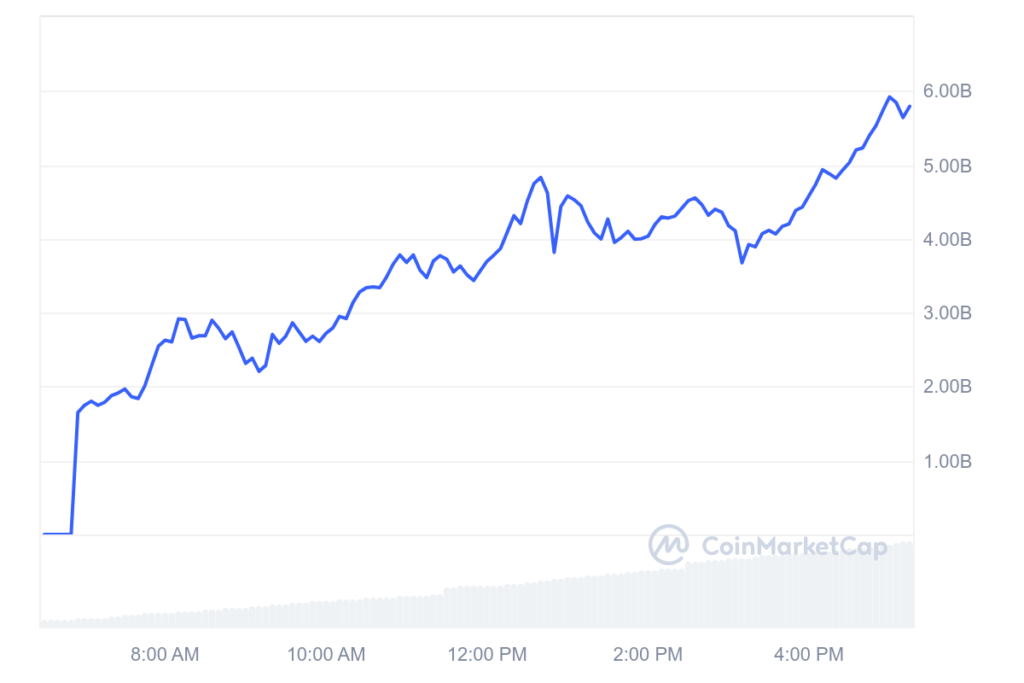
The Trump Memecoin, a cryptocurrency closely associated with former U.S. President Donald Trump, has experienced a meteoric rise since its launch. Within hours of its debut on the Solana blockchain, its market capitalization surged to over $10 billion. It attracted significant attention from both the cryptocurrency community and political observers. While the coin’s rapid price increase and political branding have generated a great deal of excitement, the question remains: is this the beginning of a new trend in political cryptocurrencies, or is it simply another speculative asset fueled by social media hype?

A Meteoric Debut

The Trump Memecoin’s launch took the crypto market by surprise. Initially, the coin saw massive gains, with its value climbing by over 200% within hours of its release. The rapid surge has been attributed to many factors, including its strong political association and the fervor surrounding its introduction. As is typical with meme coins, social media played a significant role in driving the initial buzz. Trump supporters as well as crypto enthusiasts embraced the coin, viewing it as both a political statement and a potentially profitable asset.

Several reports have highlighted the coin’s performance, including its listing on major exchanges like Binance, which further fueled its rise. The coin’s listing allowed it to reach a broader audience and contributed to the growth of its market capitalization. Within the first few hours of trading, the market capitalization surged to over $10 billion. That’s a remarkable feat for any cryptocurrency, let alone a meme coin.

Political Branding Meets Cryptocurrency

At its core, the Trump Memecoin represents a unique intersection between politics and cryptocurrency. Some see the coin as a way for Trump to tap into the growing cryptocurrency market. He is leveraging his personal brand to create a digital asset that resonates with his supporters. This blend of politics and crypto could be a sign of things to come. Other political figures may launch their own coins, too, as a means of engagement with their bases. The timing of the Trump Memecoin’s release, closely aligned with political momentum, has sparked discussions about the future of political cryptocurrencies.

Critics, however, argue that the coin might simply be a campaign gimmick to capitalize on the political climate and the growing popularity of cryptocurrencies. Some question whether the coin has lasting value beyond its initial hype. Others view it as part of a broader trend. Political figures are trying to gain influence in the increasingly profitable world of blockchain technology.

Speculation and Profits

While the political angle is a major part of the story, the financial side of the Trump Memecoin launch is equally important. The speculative nature of meme coins means that early investors can experience significant profits. Reports suggest that traders made millions in the hours following the coin’s release. However, this speculative boom also comes with risks. Like other meme coins, the Trump Memecoin is highly volatile. Prices could surge in the short term but are equally likely to plummet once the hype fades or if market sentiment shifts.

This speculative nature is evident in the reactions of some analysts. They caution potential investors about the risks of buying into the coin at its current inflated price. Hype and social media trends often drive meme coins with little regard for long-term utility or stability. As a result, early investors may stand to gain. However, others entering the market without fully understanding the volatility could face significant losses.

Some traders have already reaped massive rewards from the Trump Memecoin’s price explosion, but the volatility inherent in these assets suggests that profits may not be sustainable. Like many meme coins before $TRUMP, its market performance could be subject to rapid swings based on social media chatter, celebrity endorsements, and political events.

Long-Term Prospects: Political Currency or Passing Fad?

Despite its early success, the future of the Trump Memecoin remains uncertain. The rapid price surge and the political undertones of the coin could indicate that this is just the beginning of a new era where political figures launch their own cryptocurrencies to engage with their followers. However, there are still significant risks associated with the long-term viability of the coin. Meme coins, by their very nature, are often short-lived, and their value disappears as quickly as it appears.

For now, the Trump Memecoin is a symbol of the growing intersection between politics, social media, and cryptocurrency. As more politicians and public figures explore the potential of digital assets, the role of political cryptocurrencies will continue to evolve. However, investors should approach such assets with caution, keeping in mind the volatility and speculative nature of meme coins.

The Trump Memecoin’s launch has certainly captured the attention of the crypto world and beyond. Its rapid market rise underscores the potential for political figures to leverage cryptocurrencies as a new form of digital engagement. While some see it as a harbinger of political cryptocurrency’s future, others remain skeptical. they warn that the coin’s meteoric rise may be little more than a speculative bubble. As with all cryptocurrencies, the market will ultimately decide whether this political memecoin is here to stay or just another fleeting trend.

Readers’ frequently asked questions

What exactly is a memecoin, and how is it different from other cryptocurrencies?

A memecoin is a cryptocurrency usually created around a specific theme, meme, or pop culture reference rather than a particular use case or utility. Unlike major cryptocurrencies like Bitcoin or Ethereum, designed for decentralized transactions or smart contracts, memecoins often gain popularity due to social media trends, celebrity endorsements, or cultural movements. The value of memecoins is largely driven by speculation, hype, and community interest, rather than the underlying technology or real-world application. In the case of the Trump Memecoin, its value has surged largely because of its connection to a political figure. Its price is influenced by how much attention and enthusiasm it generates among investors and the public.

How do I know if Trump Memecoin is available on a cryptocurrency exchange?

To find out if the Trump Memecoin is listed on a cryptocurrency exchange, you can visit the exchange’s website and search for the coin by its name or ticker symbol $TRUMP. Exchanges like Binance, Coinbase, or Kraken list various cryptocurrencies. You can typically search for them by name in their trading sections. If you cannot find the Trump Memecoin, you can check if it’s listed on smaller exchanges or decentralized exchanges (DEXs). Additionally, news outlets and cryptocurrency blogs often announce new coin listings, so you can stay informed by following reliable crypto news sources.

What exactly is Solana, and why is Trump Memecoin launched on it?

Solana is a blockchain platform offering high-speed and low-cost transactions, making it an attractive choice for various digital assets, including cryptocurrencies and decentralized applications (dApps). Unlike Ethereum, which can face congestion and higher fees, Solana can process thousands of transactions per second. That is beneficial for meme coins and other fast-moving tokens. Trump Memecoin was launched on Solana because it allows for quicker and cheaper transactions. Users can trade the coin with minimal fees and delays, especially during periods of high demand.

What Is In It For You? Action Items You Might Want to Consider

Monitor Market Sentiment Regularly

Given the highly speculative nature of Trump Memecoin, it’s crucial to stay on top of social media trends and political news. Since meme coins are often driven by hype and viral moments, trading activity can fluctuate rapidly. Set up alerts for news and market updates related to Trump Memecoin. Closely track social media platforms where its community and supporters are active. This will help you react quickly to market swings and decide the best time to enter or exit trades.

Start Small and Scale Gradually

If you’re considering trading Trump Memecoin, start with a small position to manage your risk. Due to its volatility, jumping in with a large investment could expose you to significant losses. Instead, consider dollar-cost averaging (DCA), where you gradually increase your position over time. This approach can help you avoid entering at the peak of a hype-driven rally and mitigate the risk of sharp price corrections.

Set Realistic Profit and Loss Targets

With the Trump Memecoin’s price rising and falling rapidly, it’s essential to define clear profit and loss targets before making any trades. Set stop-loss orders to protect your capital from significant downturns. Establish profit-taking levels to lock in gains before the market sentiment shifts. This strategy will help you navigate the volatility without getting caught up in emotional trading decisions driven by sudden market movements.

IRS Rolls Out Mandatory Crypto Reporting: What It Means for Investors and Exchanges

IRS Cryptocurrency tax reporting coming into effect in 2025

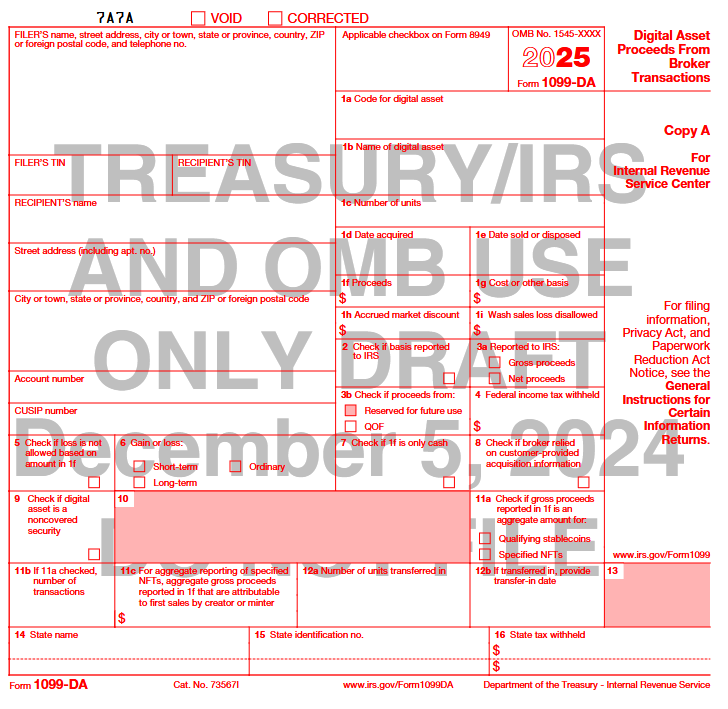
The U.S. Internal Revenue Service (IRS) is introducing new cryptocurrency tax reporting requirements in 2025. It marks a significant shift in digital asset regulation. For the first time, the IRS will require centralized exchanges (CEXs), such as Coinbase and Gemini, to report user transactions directly using Form 1099-DA. While the initiative aims to enhance compliance and streamline tax filings, it also raises concerns about the administrative burden on cryptocurrency exchanges and the potential impact on investor privacy. The crypto industry faces a pivotal transition as reporting obligations will expand to decentralized platforms by 2027. What do these changes mean for traders, investors, and the broader crypto ecosystem?

Breaking Down the IRS’s New Cryptocurrency Tax Reporting Rules

The IRS’s updated regulations, set to take effect in 2025, will require cryptocurrency brokers, including CEXs, to issue Form 1099-DA to both users and the IRS. This form will provide detailed information on annual digital asset transactions. It ensures that taxable events are properly documented. This initiative is part of the broader enforcement strategy outlined in the 2021 Infrastructure Investment and Jobs Act. The act mandates enhanced oversight of digital asset transactions.

The reporting obligations will be phased in:

  • 2025: Centralized exchanges must begin reporting basic transaction details.
  • 2026: Cost basis information (i.e., original purchase prices) will be included, aiding in the accurate calculation of gains and losses.
  • 2027: Decentralized exchanges (DEXs) and non-custodial wallets will be required to report gross proceeds from transactions, marking a major expansion of tax oversight in DeFi.

These measures are intended to close tax loopholes and ensure digital asset investors comply with existing tax laws. The IRS argues that cryptocurrency transactions should be treated similarly to traditional financial instruments to maintain fairness in the tax system.

Implications for Investors and Exchanges

For investors, these new regulations mean increased scrutiny of their crypto transactions. Those who previously underreported or failed to report crypto-related income may face penalties as the IRS gains greater visibility into their activity. While Form 1099-DA is designed to simplify tax compliance, it also raises concerns about how transaction details will be interpreted, especially in cases where users engage in multiple exchanges and cross-platform trades.

Exchanges, particularly U.S.-based platforms, are now responsible for ensuring compliance with the IRS’s new requirements. This will likely lead to:

  • Increased operational costs due to system upgrades and compliance infrastructure.
  • Stricter Know Your Customer (KYC) and Anti-Money Laundering (AML) measures.
  • A potential exodus of users seeking offshore or decentralized alternatives to avoid IRS scrutiny.

Privacy and Regulatory Overreach Concerns

One of the most contentious aspects of the IRS’s new regulations is their impact on user privacy. Critics argue that these requirements could infringe on financial sovereignty by forcing exchanges to disclose sensitive transaction data. Unlike traditional banking systems, many crypto users value the pseudonymous nature of blockchain transactions. Mandating centralized and decentralized platforms to report user transactions could set a precedent for increased surveillance in the industry.

Furthermore, the requirement for decentralized platforms to comply by 2027 has sparked debate over the practicality of enforcing such rules. Unlike centralized exchanges, DEXs operate through smart contracts and often lack a formal entity that could comply with regulatory demands. This raises questions about whether such regulations could push DeFi innovation offshore or drive development further into decentralized autonomous organizations (DAOs) that resist compliance.

The Future of Crypto Regulation and Compliance

The IRS’s push for greater oversight aligns with broader global trends. Regulators worldwide seek to integrate digital assets into existing financial frameworks. While some view this as a step toward legitimizing cryptocurrencies within mainstream finance, others see it as a move that could stifle innovation and deter participation in the U.S. crypto market.

Investors and exchanges alike must prepare for these regulatory shifts by:

  • Keeping detailed records of transactions to ensure compliance with tax requirements.
  • Exploring tax reporting software and professional accounting services for accurate filings.
  • Monitoring ongoing regulatory developments that may affect their trading strategies.

As the crypto landscape evolves balancing regulatory oversight and financial privacy will remain a key debate. Whether these new IRS rules foster broader crypto adoption or drive users toward alternative solutions remains to be seen.

Readers’ frequently asked questions

How does Form 1099-DA impact individual crypto investors, and do I need to take any action?

Centralized exchanges (CEXs) like Coinbase or Gemini will issue Form 1099-DA to users and the IRS, detailing taxable crypto transactions. So, if you trade on a CEX, the IRS will have direct access to your transaction records, and it will be harder to underreport or overlook taxable events. As an investor, you should ensure that all your cryptocurrency transactions are accurately recorded, including cost basis information, to avoid discrepancies in your tax filings. While the form is meant to simplify tax reporting, you may still need to track transactions across multiple platforms, including decentralized exchanges (DEXs), to ensure accurate filings. Consulting a tax professional or using crypto tax software can help you stay compliant.

If I trade only on decentralized exchanges (DEXs) or use self-custody wallets, will these new IRS regulations affect me?

For now, the new reporting requirements mainly target centralized exchanges. However, that changes in 2027 when the IRS will require decentralized platforms to report transaction proceeds. While DEXs function without intermediaries, the IRS aims to close tax loopholes by enforcing compliance on platforms facilitating peer-to-peer transactions. This raises enforcement challenges since many DEXs operate as smart contracts without a central authority. If you frequently interact with centralized services (e.g., off-ramping funds from a CEX), they may still flag your transactions. It’s crucial to keep personal records of trades and consult tax guidance. Expect compliance measures for DEX users to evolve.

Will the new IRS reporting rules lead to increased scrutiny or penalties for past unreported crypto gains?

The IRS’s primary goal is to improve tax compliance going forward. Nevertheless, introducing Form 1099-DA could lead to a higher detection rate for prior underreported transactions. While these regulations do not explicitly target past gains, the increased visibility into crypto holdings may prompt audits or retroactive enforcement. Investors who have not reported previous cryptocurrency gains should consider voluntary compliance through amended tax returns before stricter enforcement measures take effect. The IRS has historically provided guidance on correcting past noncompliance, and taking proactive steps may help mitigate penalties.

What Is In It For You? Action Items You Might Want to Consider

Keep Your Transaction Records Organized Now

Don’t wait until tax season to scramble for transaction details. Start maintaining a clear record of your trades, including purchase prices, transfers between wallets, and any staking or yield farming rewards. With Form 1099-DA coming into play, ensuring that your reported gains match IRS records will save you from unnecessary audits or tax complications. Consider using crypto tax software that automatically tracks your transactions across multiple platforms.

Review Your Trading Strategy with Compliance in Mind

If you rely heavily on centralized exchanges, expect tighter reporting requirements. This might be the time to reassess how and where you trade. For those using decentralized platforms, keep in mind that reporting obligations for DEXs will kick in by 2027. Evaluate whether holding assets in self-custody or using off-shore exchanges aligns with your risk tolerance and compliance responsibilities. The regulatory landscape is shifting fast—adapting your strategy now can help you stay ahead.

Consult a Tax Professional Before It’s Too Late

Crypto tax regulations are becoming more complex, and the IRS is making it harder to stay off the radar. If you’ve been trading actively, it’s worth consulting a tax expert who understands digital assets. A professional can help you navigate the new reporting requirements, ensure accurate filings, and even advise on how to minimize your taxable gains through strategic trading or tax-loss harvesting. Acting now can help you avoid penalties later.

Dogecoin Mania: Is the $1 Dream a Reality or Just Hype?

A futuristic digital chart featuring the Dogecoin logo, a rising price graph, and trading screens displaying "Dogecoin futures" with candlestick patterns in a neon-lit market setting.

The Dogecoin hype machine is running at full speed. Predictions of a surge to $1 by 2025 are dominating headlines. Analysts, traders, and even machine-learning models are contributing to the frenzy. Futures markets for Dogecoin are breaking records, and recent whale activity suggests high-stakes play from major market movers. But beneath the excitement lies a lingering question: is this rise a genuine shift in the cryptocurrency’s value or yet another speculative bubble poised to burst?

A Record-Breaking Market

Dogecoin futures volumes have recently reached unprecedented levels, underscoring heightened interest in the meme coin. According to Coindesk, this surge in futures activity aligns with bullish price predictions from analysts who cite growing retail enthusiasm and institutional curiosity as driving forces. Simultaneously, machine-learning algorithms from platforms like CoinCodex project Dogecoin reaching $1.04 by March 2025.

The Role of Whale Transactions

A critical factor in Dogecoin’s recent momentum is the activity of cryptocurrency whales. A report highlighted an “abnormal” transfer of 231 million DOGE, valued at tens of millions of dollars. Such transactions often suggest large-scale speculative positioning. While some view this as a bullish signal, indicating confidence from significant holders, skeptics argue that concentrated ownership makes the market vulnerable to manipulation.

Elon Musk’s Influence: From Catalyst to Caution

Elon Musk has been instrumental in shaping Dogecoin’s trajectory since 2021, and his influence remains a defining factor in its market movements. The Tesla and SpaceX CEO has long been a vocal supporter of the meme coin. He frequently tweets about it and even integrated DOGE payments into some of his businesses. However, his evolving stance raises questions about whether his impact on Dogecoin remains as potent as it once was.

Musk’s Past: The Catalyst for Dogecoin’s Biggest Rallies

Musk’s relationship with Dogecoin dates back to 2019 when he first tweeted about the cryptocurrency, calling it his “fav cryptocurrency.” However, it was in 2021 when his influence truly became undeniable. His tweets and public endorsements – especially his appearance on Saturday Night Live, where he jokingly called Dogecoin a “hustle” – caused dramatic price movements. Each time Musk mentioned Dogecoin on Twitter (now X), the coin experienced sharp increases in value.

Musk’s 2025 Stance: A More Measured Tone

In August 2024, during his presidential campaign, Donald Trump proposed the creation of the Department of Government Efficiency (DOGE), appointing Elon Musk to lead the initiative. The announcement led to a surge in Dogecoin’s value. Investors instantly speculated on the potential government adoption of the cryptocurrency. However, as the department’s ambitious goal of cutting $2 trillion from the federal budget faced scrutiny, Musk tempered expectations. He acknowledged that achieving such a target was unlikely. Musk’s more measured tone has contributed to stabilizing Dogecoin’s price. The initial excitement gave way to a more realistic outlook.

Diverging Opinions: Can Dogecoin Thrive Without Musk?

Despite the optimism, not all traders are convinced that Dogecoin will reach its $1 target – even with Musk’s support. According to reports, some market participants are shifting their focus to alternative tokens like RCO Finance (RCOF), which promises higher growth potential. These traders cite Dogecoin’s meme-driven origins and unpredictable price history as reasons to diversify.

Some analysts argue that Dogecoin’s heavy reliance on Musk is a double-edged sword. While his endorsements can send DOGE soaring, they also highlight the coin’s lack of fundamental value outside of hype-driven speculation. Without Musk’s backing, Dogecoin could struggle to sustain momentum.

Others believe Dogecoin has outgrown Musk’s influence. The coin’s community-driven nature, widespread recognition, and increasing adoption in payment systems give it a level of resilience that could allow it to continue thriving, even if Musk were to step away.

A Tug-of-War Between Organic Growth and Speculation

Dogecoin’s future remains a polarizing topic. On one hand, proponents argue that its growing integration into payments and increased adoption as a digital currency lend credence to its $1 aspirations. On the other hand, critics highlight the speculative nature of its price movements, driven largely by social media trends, whale transactions, and external influences like Musk’s comments.

As 2025 unfolds, the dream of Dogecoin reaching $1 hangs in a delicate balance. While market indicators and bullish predictions fuel hope, the cryptocurrency’s trajectory remains deeply tied to speculative forces. Whether Dogecoin can break free from its meme coin roots and achieve sustained growth or become another cautionary tale for the crypto world is a question only time – and the market –can answer.

Readers’ frequently asked questions

What is a futures market, and why does it matter for the price of Dogecoin?

A futures market is a type of financial marketplace where traders buy and sell contracts that speculate on the future price of an asset – such as Dogecoin (DOGE) – instead of purchasing the asset itself. These contracts allow investors to bet on whether the Dogecoin’s price will rise or fall by a specific date.

Futures markets matter for Dogecoin’s price because they can drive volatility. A surge in futures trading often means that many traders are making big bets on price movements for an asset. If most futures contracts are betting on a price increase, demand for Dogecoin can rise, pushing its price up. On the other hand, if traders start closing their positions or betting against Dogecoin, it can trigger sharp declines. Futures trading can amplify upward and downward movements, making prices more unpredictable.

What does “whale activity” mean, and why does it affect Dogecoin?

“Whale activity” refers to large transactions made by investors who hold massive amounts of a cryptocurrency token. These investors, called “whales”, can significantly influence the market because their trades are large enough to impact supply and demand.

In the case of Dogecoin, recent reports highlighted an abnormal transfer of 231 million DOGE. It signals that a whale was either accumulating, selling, or moving funds between wallets. When whales buy large amounts of Dogecoin, it can drive prices up, as it signals confidence in the asset. Conversely, if whales start selling, it can cause panic among smaller investors, leading to a price drop. Because Dogecoin has a concentrated distribution – where a small number of wallets hold a large portion of its total supply – whale movements can have a more significant impact than cryptocurrencies like Bitcoin, which have more evenly distributed ownership.

If Dogecoin is just a meme coin, why do people take it seriously?

Dogecoin started as a joke in 2013. However, over the years, it gained a strong community and real-world use cases that set it apart from other “meme coins.” While its original purpose was lighthearted, it has since become one of the most widely recognized cryptocurrencies.

There are a few reasons why people take Dogecoin seriously:

Adoption for payments: Several companies, including Tesla, accept Dogecoin for purchases. It is one of the few cryptocurrencies with mainstream commercial use.

Low transaction fees and fast processing times: Compared to Bitcoin, Dogecoin transactions are faster and cheaper. It is more practical for small payments and tipping.

Community-driven support: Dogecoin has an active and engaged community that continuously promotes its use and development, helping it stay relevant in the market.

High liquidity and availability: Because it is listed on major cryptocurrency exchanges, Dogecoin is easy to buy, sell, and trade, giving it staying power compared to many other meme-based tokens.

That said, Dogecoin still lacks the advanced technology and widespread institutional adoption of other major cryptocurrencies like Bitcoin and Ethereum. While it has gained legitimacy, its price remains heavily influenced by speculation. It is riskier for investors compared to more established digital assets.

What Is In It For You? Action Items You Might Want to Consider

Watch for Whale Movements Before Making Large Trades

Dogecoin’s price is heavily influenced by whale activity, with large holders moving millions of DOGE in single transactions. Before entering a trade, monitor on-chain data for significant transfers. If a whale is accumulating, it might signal a potential uptrend, while large sell-offs could indicate incoming volatility. Keeping an eye on whale movements can help you time your trades more effectively.

Use Futures Market Trends to Gauge Market Sentiment

With Dogecoin futures setting new records, derivatives trading is a key indicator of market sentiment. If open interest and long positions are rising, it suggests bullish momentum. An increase in short positions could signal a potential dip. Before making a move, check futures data and funding rates on major exchanges. Confirm whether the trend aligns with your strategy.

Diversify Beyond Dogecoin to Manage Risk

While Dogecoin has strong community backing and periodic surges, its price remains highly speculative. If you’re holding DOGE for the long term, consider diversifying into other assets like Bitcoin, Ethereum, or even emerging projects with solid fundamentals. This way, you’re not overly reliant on hype cycles and can balance your portfolio against unexpected market swings.

The Pump.fun Phenomenon: A Memecoin Gold Rush or a High-Stakes Casino?

Pump.fun faces legal firestorm over meme coins.

Pump.fun has taken the crypto world by storm, enabling users to launch and trade meme coins effortlessly with minimal barriers to entry. The platform’s explosive growth – generating over $350 million in transaction fees – has turned it into a hub of speculative trading. However, behind the numbers lies a deeper debate: is Pump.fun an innovative vehicle democratizing token creation, or is it merely fueling high-risk gambling under the guise of decentralized finance? Data suggests that only a fraction of traders have realized significant profits. Hence, critics warn that the platform perpetuates a cycle of reckless speculation that could leave retail investors holding the bag.

The Rise of Pump.fun: A Memecoin Factory

Launched in early 2024, Pump.fun allows anyone to easily create and trade meme coins on the Solana blockchain. By removing technical barriers to token issuance, the platform has spurred an explosion of new coins. With over 5.5 million coins created so far, it induced a digital gold rush for retail traders and crypto enthusiasts alike.

Unlike traditional cryptocurrency projects that often involve whitepapers, roadmaps, or fundamental utility, meme coins are largely driven by hype, social media trends, and influencer endorsements. This dynamic has allowed Pump.fun to capitalize on the viral nature of crypto speculation. However, it has also drawn significant scrutiny from regulators and legal experts who question whether the platform enables reckless gambling rather than legitimate investment.

A System Rigged Against Traders?

While Pump.fun’s accessibility and gamified approach have attracted millions of traders, data suggests that the vast majority are not profiting. According to blockchain analytics, only 0.412% of traders have realized profits exceeding $10,000, and a mere 0.00217% have made more than $1 million. The overwhelming majority have either broken even or suffered losses.

Critics argue that Pump.fun’s system is designed to disproportionately benefit early adopters, influencers, and those with inside knowledge. Many tokens experience a meteoric rise in value within hours of their launch, only to crash shortly after as initial holders sell off their stakes. It’s a pattern reminiscent of classic pump-and-dump schemes. The prevalence of “soft rug pulls” has further exacerbated concerns. Token creators dump their holdings, leaving later investors with worthless assets.

Legal Scrutiny and Investor Protection Concerns

Pump.fun’s rapid rise has not gone unnoticed by regulators and legal professionals. Burwick Law, a U.S. firm specializing in cryptocurrency litigation, is preparing a potential lawsuit against the platform. They allege that Pump.fun facilitated fraudulent activities and harmed investors. The firm has pointed to the platform’s anonymous leadership and lack of accountability as key issues that could make legal recourse challenging for affected traders.

Regulatory bodies, including the UK’s Financial Conduct Authority (FCA), have also cautioned regarding the risks associated with meme coins and platforms like Pump.fun. The FCA has blocked UK residents from accessing the site, citing concerns over investor protection and the platform’s speculative nature.

The Ethics of High-Stakes Crypto Trading

A major point of contention in the Pump.fun debate is the balance between financial freedom and investor responsibility. For example, crypto investigator ZachXBT dismissed claims of widespread investor victimization. He argued that most traders know of the high-risk nature of meme coin speculation. He has described many of those seeking legal action as “degenerate gamblers” rather than victims of fraud.

https://twitter.com/zachxbt/status/1879677724652187747

On the other hand, critics argue that Pump.fun’s gamified mechanics encourage impulsive trading behaviors. That makes it difficult for inexperienced investors to recognize the risks. The ease of launching new tokens combined with the speculative frenzy has created an environment disproportionately exposing retail traders to financial losses.

Conclusion: Innovation or Speculation Gone Too Far?

Pump.fun represents both the promise and peril of decentralized finance. It has democratized token creation, allowing anyone to participate in the crypto economy. However, its model has also led to concerns over market manipulation, investor exploitation, and the broader ethics of speculative trading.

As regulators and legal experts continue to assess Pump.fun’s operations, its future remains uncertain. Will it evolve into a more responsible trading platform with enhanced investor protections, or will it succumb to increasing scrutiny and legal challenges? Regardless of the outcome, Pump.fun has undeniably reshaped the memecoin landscape, for better or worse.

Readers’ frequently asked questions

How do “soft rug pulls” work, and why are they difficult to prevent on platforms like Pump.fun?

A soft rug pull happens when the creator of a cryptocurrency token slowly sells off their holdings after artificially inflating its price, rather than abruptly withdrawing liquidity as in a traditional rug pull. This tactic makes it difficult to identify malicious intent because the price decline appears to be part of regular market movements rather than a deliberate exit scam. On platforms like Pump.fun launching and promoting meme coins is extremely easy, so soft rug pulls are common. Token creators can hype up a new coin, attract buyers, and then gradually offload their holdings without immediate suspicion. Since Pump.fun lacks strong mechanisms for vetting projects, it provides an environment where these speculative plays thrive. Unlike centralized exchanges with fraud detection systems, decentralized platforms rely on individual due diligence, which leaves many investors vulnerable.

If Pump.fun is not explicitly scamming users, why is a law firm preparing legal action against it?

Pump.fun itself does not directly scam users by stealing funds or manipulating transactions. However, legal concerns arise from the platform facilitating an environment where harmful practices, such as insider trading and misleading token promotions, can flourish unchecked. The legal argument centers on whether Pump.fun bears responsibility for investor losses due to its lack of safeguards against fraud and price manipulation. Burwick Law, the firm investigating potential legal action, may pursue claims that Pump.fun’s anonymous structure and lack of transparency allowed bad actors to profit at the expense of retail traders. The case is significant because it could set a precedent for holding decentralized platforms accountable. Even if they are not directly engaging in fraud themselves.

What kind of regulations could be introduced to prevent the risks associated with meme coins and platforms like Pump.fun?

Regulators could introduce stricter rules around token issuance, requiring creators to disclose their identities or provide more transparency on project intentions. Another potential measure is implementing smart contract locks that prevent developers from dumping their holdings within a short period. That would reduce the impact of soft rug pulls. Exchanges and platforms like Pump.fun could also be required to conduct due diligence before listing new tokens. Traditional markets impose disclosure requirements before securities offerings, too. However, meme coins thrive on decentralization and community-driven hype. Excessive regulation might stifle innovation and push activity into even less regulated corners of the crypto space. Striking a balance between protecting investors and preserving the open nature of blockchain trading remains a key challenge.

What Is In It For You? Action Items You Might Want to Consider

Approach Memecoin Trading Like a High-Stakes Bet, Not an Investment

If you’re diving into Pump.fun or similar platforms, recognize that memecoin trading is more akin to speculative gambling than long-term investing. Most traders fail to secure substantial profits, with only a tiny fraction making serious gains. Treat any funds you allocate as high-risk capital. Only trade what you’re willing to lose and don’t expect sustainable returns from every token you buy.

Be Wary of Hype-Driven Coins and Watch for “Soft Rug Pull” Patterns

Before jumping into a new token, analyze its price movements, holder distribution, and liquidity levels. Many tokens experience a rapid surge in value before creators or insiders offload their holdings, crashing the price. If a project lacks transparency, has heavy insider allocations, or sees early holders aggressively selling, it’s a red flag. Instead of chasing hype, time your entries and exits wisely to avoid being the exit liquidity for early movers.

Keep an Eye on Legal and Regulatory Developments

Pump.fun is already under legal scrutiny. Potential lawsuits or regulatory actions could impact how the platform operates – or even its ability to function in certain regions. If you’re an active trader, stay updated on any changes that could affect token liquidity, trading restrictions, or potential legal claims. A shifting regulatory landscape could introduce new risks or even opportunities, depending on how the situation unfolds.

- Advertisement -

FEATURED