Home Blog Page 138

eToro Eyes $5B U.S. IPO Amid Renewed Crypto Market Optimism
eToro limits crypto trading to Bitcoin, Ethereum, and Bitcoin Cash after SEC settlement, impacting U.S. users. Find out more about eToro crypto trading changes.

eToro, the social trading platform known for its cryptocurrency-friendly services, has confidentially filed for an initial public offering (IPO) in the United States. It aims for a valuation exceeding $5 billion. The move comes amid a resurgence of fintech firms cautiously returning to public markets after a prolonged downturn in tech IPOs over the past two years. eToro’s decision underscores renewed optimism in both the retail trading sector and cryptocurrency markets. It comes at a time when investors are weighing its growth potential against regulatory and market challenges.

A Second Attempt at Public Markets

This IPO marks eToro’s second attempt at going public. In 2021, the company pursued a $10.4 billion merger with a special-purpose acquisition company (SPAC), FinTech Acquisition Corp. V. However, the deal was ultimately abandoned due to unfavorable market conditions. It reflected the broader volatility in the fintech and cryptocurrency sectors at the time. In the wake of that setback, eToro secured a $250 million funding round in 2023. It valued the company at approximately $3.5 billion which was significantly lower than its initial SPAC valuation.

Despite these past challenges, eToro has continued to grow its user base, offering a mix of stocks, commodities, and crypto trading to millions of retail investors worldwide. The firm has also expanded its regulatory compliance measures to navigate evolving financial regulations, particularly in the U.S. market.

Renewed Confidence in Fintech and Crypto Markets

eToro’s renewed push for a U.S. listing aligns with a broader revival in fintech and crypto-related public offerings. As regulatory clarity in the cryptocurrency space improves and investor confidence rebounds, platforms integrating traditional and digital assets are seeing increased market interest. The IPO comes at a time when U.S. regulators are scrutinizing crypto firms more heavily, making eToro’s approach particularly strategic as it seeks to balance innovation with compliance.

The decision to confidentially file for an IPO suggests that eToro is keen on gauging market conditions before fully committing to the public offering. By partnering with major banks such as Goldman Sachs, Jefferies, and UBS to lead the IPO process, eToro signals confidence in its ability to attract institutional and retail investors despite past market turbulence.

Challenges and Market Positioning

While eToro’s IPO reflects renewed optimism, it also faces notable hurdles. Regulatory scrutiny remains a key factor, particularly given the company’s history with the U.S. Securities and Exchange Commission (SEC). In September 2024, eToro settled with the SEC over federal securities law violations, leading it to halt trading for nearly all cryptocurrency assets in the U.S. This compliance adjustment will be critical as the company seeks to strengthen its foothold in the American market.

Additionally, eToro must contend with stiff competition from established brokerage platforms such as Robinhood, expanding its crypto offerings in recent years. However, its social trading model sets eToro apart as a unique player in the sector. It allows users to follow and replicate the trades of experienced investors.

eToro’s second attempt at going public reflects a broader trend of fintech firms re-engaging with public markets amid improving investor sentiment. With a $5 billion valuation target and backing from major financial institutions, the company is positioning itself as a leading platform for traditional and crypto trading. However, regulatory challenges and market competition will remain critical factors in determining the success of its IPO. As the fintech sector evolves, eToro’s listing will be a key indicator of investor confidence in crypto-integrated financial platforms.

Readers’ frequently asked questions

Why did eToro’s first attempt to go public fail?

eToro initially planned to go public in 2021 through a merger with a special-purpose acquisition company (SPAC) called FinTech Acquisition Corp. V. The deal was set to value the company at $10.4 billion, but it ultimately collapsed due to unfavorable market conditions. At the time, SPAC deals were losing popularity, and financial markets were experiencing volatility, particularly in the fintech and cryptocurrency sectors. Investors became more cautious, and as a result, the valuation eToro initially expected was no longer feasible. Instead of proceeding with a lower valuation, the company opted to raise $250 million in private funding in 2023. That gave it a revised valuation of $3.5 billion.

What does a “confidential IPO filing” mean, and why would eToro choose this approach?

A confidential IPO filing means that eToro has submitted its paperwork to the U.S. Securities and Exchange Commission (SEC) privately, without immediately disclosing details such as its financials or expected share price. This allows the company to assess investor interest and regulatory considerations before making a final decision to go public. Many companies opt for a confidential filing to maintain flexibility. They want to avoid market speculation, especially in volatile sectors like cryptocurrency and fintech. If market conditions become unfavorable, eToro can delay or withdraw its IPO without facing public scrutiny.

How does eToro’s social trading model work, and how does it compare to traditional brokerage platforms?

Unlike traditional brokerage platforms allowing users to simply buy and sell assets, eToro offers a social trading model where investors can follow and replicate the trades of more experienced traders. This feature, known as “Copy Trading,” allows users to automatically mirror the portfolio movements of top-performing investors on the platform. This makes eToro particularly appealing to beginners who may not have extensive market knowledge. Compared to other brokers like Robinhood, which primarily focuses on commission-free trading, eToro’s platform integrates social engagement with investment strategies. However, it also has higher fees on some transactions, which is an important consideration for potential users.

What Is In It For You? Action Items You Might Want to Consider

Keep an Eye on eToro’s IPO for Potential Investment Opportunities

With eToro targeting a $5 billion valuation in its second attempt to go public, this IPO could be a strong indicator of investor sentiment in fintech and crypto-integrated platforms. If you want exposure to a brokerage that bridges traditional and crypto markets, monitoring eToro’s IPO date, pricing, and early stock performance could offer strategic entry points. Pre-IPO investment funds or post-listing dips might provide opportunities for traders looking to capitalize on the company’s long-term growth potential.

Assess the Regulatory Landscape Before Trading on eToro

The SEC’s scrutiny of eToro, which led to the platform restricting crypto assets for U.S. users, is a reminder that regulatory risks can directly impact trading options. If you’re an active trader or investor in the U.S., look closely at how eToro’s compliance adjustments might affect your portfolio. Consider diversifying across multiple trading platforms to avoid sudden restrictions on your assets, especially if you rely on a specific set of cryptocurrencies for trading strategies.

Watch for Market Sentiment Shifts in Fintech and Crypto Stocks

eToro’s IPO isn’t just about the company – it’s a litmus test for the broader market’s confidence in fintech and crypto-related stocks. If the IPO gains strong traction, it could signal renewed bullish sentiment in the sector. It may even boost other publicly traded crypto and trading platforms like Coinbase (COIN), Robinhood (HOOD), or blockchain infrastructure firms. Use this IPO as a key market signal to adjust your positions accordingly, whether that means scaling into fintech equities or increasing exposure to crypto assets if institutional interest resurges.

South Korea’s Upbit Faces Regulatory Reckoning: FIU Threatens Suspension Over 700,000 KYC Violations

Upbit Suspension Threat: 700K KYC Violations Spark Regulatory Crackdown

South Korea’s largest cryptocurrency exchange, Upbit, is under intense scrutiny from the Financial Intelligence Unit (FIU). The investigation follows allegations of widespread non-compliance with Know Your Customer (KYC) and Anti-Money Laundering (AML) regulations. With over 700,000 violations recorded, regulators have warned that Upbit could face a six-month suspension, a move that could significantly impact South Korea’s crypto ecosystem.

FIU’s Case Against Upbit

The FIU, South Korea’s key financial watchdog, has accused Upbit of failing to properly enforce KYC procedures. They allowed many accounts to operate without adequate identity verification. This lapse has raised concerns over potential illicit financial activities, including money laundering and fraud, prompting the regulator to take decisive action.

According to reports, the FIU is considering suspending Upbit’s operations, potentially barring the exchange from onboarding new customers for up to six months. While existing users would still have access to their accounts, such a penalty could undermine Upbit’s market position and shake investor confidence in the broader crypto industry.

Market Dominance and Competitive Concerns

Upbit’s regulatory troubles extend beyond compliance failures. The Financial Services Commission (FSC) has also launched an investigation into the exchange’s dominant market position. It reportedly controls a substantial share of South Korea’s cryptocurrency trading activity. Additionally, concerns have emerged regarding Upbit’s close ties with K Bank. The banking partner provides fiat on-ramp services for the exchange.

The FSC aims to assess whether Upbit’s market influence stifles competition, potentially leading to unfair advantages over other trading platforms. If regulators determine that Upbit’s business practices create monopolistic conditions, further regulatory measures could follow, reshaping South Korea’s crypto market dynamics.

Potential Impact on South Korea’s Crypto Landscape

The looming Upbit suspension poses a critical threat to the country’s crypto trading ecosystem. As the dominant exchange in South Korea, Upbit’s disruption could lead to liquidity constraints, price volatility, and a shift in trading activity to alternative platforms. Smaller exchanges may experience an influx of new users, but concerns over regulatory crackdowns could dampen overall investor sentiment.

The case against Upbit underscores South Korea’s increasing regulatory focus on cryptocurrency exchanges, signaling stricter enforcement of KYC and AML standards. As authorities seek to strengthen oversight, other crypto platforms operating in the region may face heightened compliance requirements to avoid similar repercussions.

Upbit’s regulatory challenges highlight the growing tensions between digital asset exchanges and financial regulators. The FIU’s allegations, combined with the FSC’s scrutiny over market dominance, illustrate the broader concerns surrounding compliance and fair competition in South Korea’s crypto industry. Whether Upbit can navigate these challenges and maintain its leading position remains uncertain. The outcome of this case, however, could set a precedent for the country’s digital asset regulatory framework moving forward.

Readers’ frequently asked questions

What exactly is KYC, and why is it important for cryptocurrency exchanges like Upbit?

KYC, or Know Your Customer, is a regulatory requirement that ensures financial institutions verify the identities of their users. This process typically involves submitting personal identification documents, such as passports or driver’s licenses. Users must confirm a user’s identity before they can trade or withdraw funds. KYC is crucial for preventing illicit activities like money laundering, fraud, and terrorist financing. In the case of Upbit, regulators found over 700,000 instances where the exchange allegedly failed to properly verify customer identities. Consequently, unverified users were able to conduct transactions without sufficient oversight. The Financial Intelligence Unit (FIU) is taking action because non-compliance with KYC rules creates risks for the entire financial system.

How does an Upbit suspension affect regular cryptocurrency traders in South Korea?

If Upbit is suspended for six months as regulators have warned, it will not shut down completely but will be unable to onboard new users during that period. Existing traders may still use their accounts, meaning they could buy, sell, and withdraw assets. However, the suspension could have broader implications, considering Upbit is South Korea’s largest exchange. Any regulatory action against it could cause temporary market uncertainty. This might lead to price fluctuations and liquidity concerns. It could also cause higher trading fees on alternative platforms as users seek other options. Smaller exchanges might see an increase in users, but they, too, could come under greater regulatory scrutiny in response to the Upbit case.

Why is Upbit’s relationship with K Bank being investigated, and what does it mean for competition?

Upbit has a banking partnership with K Bank, allowing users to deposit and withdraw South Korean won (KRW) from their exchange accounts. This relationship has raised concerns over Upbit’s dominant market share in South Korea’s cryptocurrency industry. Its exclusive partnership with K Bank may give it an unfair advantage over competitors. Other exchanges may struggle to secure similar banking services, making it harder for them to compete. The Financial Services Commission (FSC) is investigating whether this relationship creates a monopolistic environment limiting fair competition in the market. If regulators find Upbit’s partnership giving it an excessive competitive edge, they might introduce new rules requiring banks to provide services to multiple exchanges rather than favoring one dominant player.

What Is In It For You? Action Items You Might Want to Consider

Review Your Exchange Options and Stay Informed

If you’re currently trading on Upbit, watch closely for regulatory updates and potential enforcement actions. A six-month suspension would prevent new users from joining but wouldn’t affect existing accounts. Yet, it’s wise to have alternative exchanges ready. Consider researching and setting up accounts on other compliant platforms in case you need to pivot quickly.

Ensure Your Own KYC Compliance

Given the crackdown on Upbit, regulators may increase scrutiny on all crypto users in South Korea. Double-check that your own KYC verification is up to date on any exchange you use. If you’ve been trading under incomplete verification, now is the time to get your documents to avoid unexpected disruptions.

Monitor Market Liquidity and Potential Price Movements

If Upbit faces restrictions, liquidity across South Korea’s crypto market could shift. Price spreads might widen, and alternative exchanges may experience sudden volume spikes. Keep an eye on order books, withdrawal speeds, and arbitrage opportunities, especially if traders start moving funds to smaller platforms. Being proactive could help you navigate volatility and spot trading opportunities.

Jamie Dimon on Bitcoin, Blockchain, and the Future of Finance: A Complex Relationship

Jamie Dimon, CEO of JP Morgan Chase, has long been one of the most vocal critics of Bitcoin, famously labeling it a “fraud” in 2017. However, in a recent interview with Leslie Stahl of CBS, Dimon displayed a more nuanced stance on the broader cryptocurrency ecosystem. Dimon remains skeptical of Bitcoin’s viability as a currency. However, he acknowledged the transformative potential of blockchain technology and its applications, particularly in financial operations. His comments underscore the complex relationship between traditional finance and emerging decentralized technologies, shedding light on how the industry is adapting to these innovations.

Bitcoin: Still Under Scrutiny

Dimon’s criticism of Bitcoin as a speculative asset and an inefficient means of transaction has not wavered. He did not mince words about his doubts regarding Bitcoin’s practical value as a currency, noting its volatility and lack of intrinsic value. This perspective aligns with his historical position, where he has questioned Bitcoin’s utility beyond being a speculative investment vehicle. However, unlike in the past, Dimon’s remarks this time avoided outright dismissal of cryptocurrencies as a whole.

Blockchain: A Game-Changer for Finance

In stark contrast to his views on Bitcoin, Dimon expressed strong support for blockchain technology. JP Morgan has been a pioneer among traditional financial institutions in adopting blockchain-based solutions. During the interview, Dimon highlighted the bank’s use of blockchain for intraday repo transactions and secure data movement, demonstrating how distributed ledger technology can improve efficiency and transparency in financial systems.

He also pointed to the potential of tokenized assets, such as real estate and securities, and stablecoins, which offer price stability compared to traditional cryptocurrencies like Bitcoin. Dimon’s remarks reflect a broader acceptance of blockchain’s utility in optimizing financial processes while mitigating risks often associated with unregulated digital currencies.

The Call for Regulatory Clarity

Dimon’s support for blockchain comes with a caveat: the need for regulatory oversight. He emphasized the importance of establishing clear and robust frameworks to govern the use of stablecoins and other blockchain-based financial tools. Regulatory clarity, according to Dimon, is essential for fostering innovation while protecting consumers and ensuring systemic stability. His comments echo a growing sentiment among industry leaders. They are advocating for balanced regulation to address the risks of fraud, volatility, and misuse without stifling technological progress.

Geopolitical and Economic Considerations

Dimon’s cautious optimism about blockchain also intersects with his concerns about global economic stability. He described the current geopolitical environment as the most complex since World War II, citing conflicts in Ukraine and the Middle East, rising inflation, and the strategic rivalry with China. Blockchain, the JP Morgan CEO suggested, could play a role in strengthening financial systems and enhancing resilience in a rapidly changing global landscape.

Bridging Traditional and Decentralized Finance

Dimon’s remarks reveal a pragmatic approach to the integration of decentralized technologies within traditional financial systems. By distinguishing between cryptocurrencies like Bitcoin and blockchain’s broader applications, he signals a path forward where traditional institutions can leverage decentralized innovations to enhance efficiency and accessibility.

Jamie Dimon’s evolving stance on cryptocurrencies and blockchain reflects the ongoing transformation within the financial industry. While his skepticism of Bitcoin remains steadfast, his endorsement of blockchain technology and stablecoins highlights a shift toward embracing innovation within a regulated framework. For crypto enthusiasts and skeptics alike, Dimon’s comments underscore the importance of balancing caution with ambition as the industry navigates the complexities of the digital financial revolution.

One Year of Spot Bitcoin ETFs: A Milestone in Cryptocurrency Mainstreaming

One Year of Spot Bitcoin ETFs

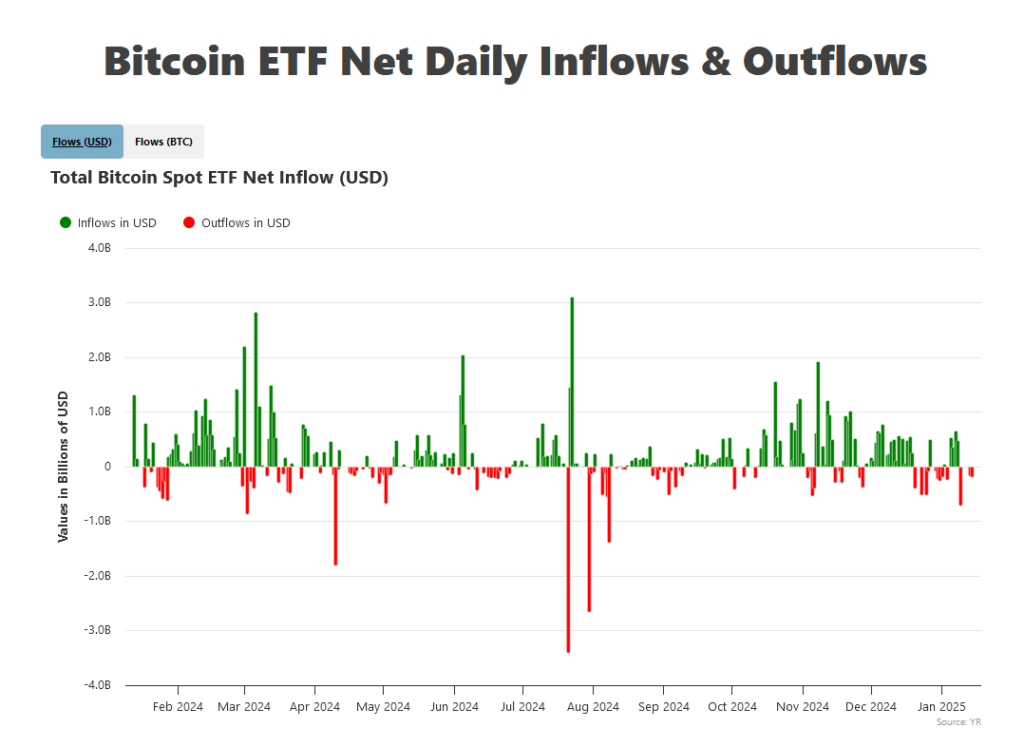
In January 2024, the U.S. Securities and Exchange Commission (SEC) made a groundbreaking decision to approve spot Bitcoin exchange-traded funds (ETFs). This marked a significant moment in cryptocurrency history, bridging the gap between traditional finance and digital assets. Over the past year, spot Bitcoin ETFs have reshaped the investment landscape, offering accessibility, liquidity, and credibility to a wider audience. This article examines their impact, the market dynamics they have created, and their role in driving Bitcoin toward mainstream adoption.

A Surge in Market Adoption

The introduction of spot Bitcoin ETFs has been a game-changer for investors. ETFs have provided a regulated and simplified avenue for exposure to the leading cryptocurrency without the need to purchase and store Bitcoin itself. This accessibility has spurred unprecedented adoption among retail and institutional investors alike.

BlackRock’s iShares Bitcoin Trust (IBIT) quickly emerged as a dominant player. It amassed over $52 billion in assets under management (AUM) by the end of 2024. This achievement underscores the fund’s popularity and highlights the growing confidence in Bitcoin as a legitimate asset class. Other ETFs, such as Fidelity’s Wise Origin Bitcoin Fund and ARK 21Shares Bitcoin ETF, also carved out significant market shares, with $19 billion and $4.3 billion in AUM respectively.

Bitcoin’s Price Surge

The approval of spot Bitcoin ETFs coincided with a remarkable bull run in Bitcoin’s price. Since January 2024, Bitcoin has more than doubled, surpassing the $100,000 mark by late 2024. Analysts attribute this growth to increased demand driven by ETF inflows and the heightened interest of institutional players. The transparency and regulatory oversight of the ETFs have alleviated many concerns that previously deterred traditional investors from entering the crypto market.

The Competitive ETF Landscape

While BlackRock’s IBIT dominated the market, other ETFs faced challenges in securing significant inflows. Factors such as brand reputation, marketing strategies, and expense ratios were critical in determining market share. Some funds struggled to differentiate themselves, illustrating the high-stakes competition in the ETF market.

The success of these products has not gone unnoticed by competitors and regulators. Discussions have emerged about expanding the ETF model to other cryptocurrencies, including Ethereum and Solana. However, these developments remain subject to regulatory scrutiny, reflecting the cautious approach adopted by the SEC.

Impact on Traditional Finance

Spot Bitcoin ETFs have played a pivotal role in bridging the worlds of cryptocurrency and traditional finance. Their integration into investment portfolios, including those of pension funds and hedge funds, signifies the growing acceptance of Bitcoin as a long-term store of value. This shift has also encouraged financial institutions to explore blockchain-based solutions, further cementing the mainstream relevance of cryptocurrencies.

Source: https://treasuries.bitbo.io/etf-flows/

The Road Ahead

As Bitcoin ETFs celebrate their first anniversary, their impact is undeniable. They have democratized access to Bitcoin, driven its price to new heights, and elevated its status within the broader financial ecosystem. However, challenges remain, including regulatory hurdles for other crypto ETFs and potential market saturation.

Looking ahead, the continued success of Bitcoin ETFs will likely depend on their ability to adapt to market demands and maintain investor confidence. With discussions around multi-crypto ETFs gaining momentum, this year could witness even greater innovation in crypto investment products.

In conclusion, the first year of spot Bitcoin ETFs has been a milestone in cryptocurrency mainstreaming. By offering a secure, accessible, and regulated way to invest in Bitcoin, these ETFs have set the stage for a future where digital assets play an integral role in global finance.

Readers’ frequently asked questions

What exactly is a spot Bitcoin ETF, and how does it differ from other Bitcoin investment options?

A spot Bitcoin ETF is a financial product that allows investors to gain exposure to Bitcoin without buying or storing the cryptocurrency directly. Unlike Bitcoin futures ETFs, which are based on contracts speculating on Bitcoin’s future price, spot Bitcoin ETFs hold actual Bitcoin as their underlying asset. This means the fund tracks the real-time market value of Bitcoin. It is a straightforward way for investors to benefit from price movements without navigating the complexities of crypto wallets or private keys. Spot Bitcoin ETFs are regulated, providing additional security and trust for investors.

Why did Bitcoin’s price rise so significantly after the approval of spot Bitcoin ETFs?

Bitcoin’s price surged following the approval of spot Bitcoin ETFs because these financial products made Bitcoin investment accessible to a broader audience. Retail investors found it easier to participate in the market without the technical challenges of direct ownership. Institutional investors, like pension funds and hedge funds, saw a more credible and regulated pathway to add Bitcoin to their portfolios. The inflows from these new participants created additional demand for Bitcoin, driving up its price. Moreover, the market viewed the SEC’s approval as a signal of legitimacy for Bitcoin as an asset class, further boosting confidence and attracting more investment.

Are there risks associated with investing in spot Bitcoin ETFs, even though they’re regulated?

Spot Bitcoin ETFs provide a safer and more convenient way to invest in Bitcoin than direct ownership, but they are not without risks. Since these ETFs are tied to the price of Bitcoin, investors remain exposed to the cryptocurrency’s volatility. Price swings can lead to significant gains but also substantial losses. Additionally, while ETFs mitigate some risks associated with storing Bitcoin, such as theft or loss of private keys, they introduce new considerations. They apply management fees and investors must rely on the ETF provider’s operational efficiency. Investors should also be aware that regulatory changes or market saturation could impact the performance of these products. As always, it’s essential to research thoroughly and consider your risk tolerance before investing.

What Is In It For You? Action Items You Might Want to Consider

Diversify Your Portfolio with Bitcoin ETFs

Consider incorporating spot Bitcoin ETFs into your investment strategy to gain exposure to Bitcoin without the complexities of direct ownership. These ETFs provide a regulated and secure avenue for trading Bitcoin. They are an excellent option for both novice and experienced traders seeking to diversify their portfolios. Start with a well-established ETF like BlackRock’s iShares Bitcoin Trust to leverage its proven market performance.

Monitor Bitcoin’s Price Trends Post-ETF Inflows

Stay attuned to Bitcoin’s price movements, as ETF inflows can create upward momentum. Use this trend to identify potential entry or exit points for your trades. Tools like technical analysis and market sentiment indicators can help you make informed decisions during periods of heightened ETF activity and market interest.

Explore the Competitive Landscape of Bitcoin ETFs

Not all Bitcoin ETFs are created equal. Analyze factors such as expense ratios, AUM, and fund reputation to choose the ETF that aligns with your financial goals. For example, if you’re looking for cost efficiency, compare expense ratios among available options. For higher liquidity and stability, focus on funds with significant market dominance, like BlackRock or Fidelity’s offerings.

Legal Notices Go Digital: How Hong Kong Is Changing the Rules for Anonymous Crypto Wallets

Hong Kong courts have set a precedent by serving tokenized legal notices to cryptocurrency wallets linked to scams.

The days of evading legal scrutiny through the anonymity of cryptocurrency may be numbered. In a landmark case, Hong Kong courts delivered tokenized legal notices directly to digital wallets involved in fraudulent schemes. This approach challenges traditional notions of legal delivery and raises questions about privacy, jurisdiction, and the evolving balance of power between decentralized systems and state enforcement.

In December 2024, Hong Kong authorities made headlines by utilizing blockchain technology to serve legal documents on wallets holding over 2.65 million USDT on the Tron network. These wallets were linked to online scams, prompting the court to take unprecedented action. Traditionally, serving legal notices requires physical or electronic delivery methods that rely on identifying the recipient. Blockchain’s inherent anonymity, however, complicates such measures, especially when dealing with unverified wallet owners.

The Mechanics of Tokenized Legal Notices

The process involves embedding legal notices directly into the blockchain. By doing so, any transaction originating from the flagged wallets automatically violates criminal law. The notices also serve to freeze the illicit assets, effectively rendering them unusable. Centralized exchanges, bound by anti-money laundering (AML) and know-your-customer (KYC) obligations, are unlikely to process transactions from these wallets, further isolating the funds.

Joshua Chu, a cybersecurity consultant at Macro Systems, explained that this method leverages the transparent and immutable nature of blockchain to enforce legal actions. “Blockchain’s public ledger ensures that these notices are visible to all, leaving no room for plausible deniability,” Chu noted.

Implications for the Crypto Community

This legal maneuver marks a significant evolution in how judicial systems address crimes involving digital assets. By targeting the wallets themselves rather than their anonymous owners, the courts sidestep the challenges of identifying individuals in a decentralized environment. However, this approach also sparks debate within the crypto community.

Critics argue that such measures could set a dangerous precedent, where governments might exploit similar mechanisms to overreach into private financial activities. Others raise concerns about jurisdictional overreach. Users can operate digital wallets from anywhere in the world which might create potential conflicts with local regulations.

Proponents, however, see this as a necessary step to combat the growing tide of crypto-related crimes. Online scams, ransomware attacks, and illicit trading schemes have plagued the industry, eroding trust and deterring mainstream adoption. Tokenized legal notices provide a mechanism for holding bad actors accountable while signaling to investors and the broader public that cryptocurrencies are not a lawless domain.

A Model for Global Adoption?

The success of Hong Kong’s initiative could pave the way for other jurisdictions to adopt similar practices. As blockchain technology becomes more ingrained in financial systems, its use in legal frameworks may grow. Countries with robust regulatory frameworks for digital assets, such as Singapore and the European Union, may look to Hong Kong’s example as a blueprint.

Nevertheless, questions remain. How will governments ensure that tokenized notices are not abused? What safeguards will they implement to protect innocent parties whose wallets they may flag mistakenly? These concerns highlight the need for transparent guidelines and international cooperation to strike a balance between enforcement and individual freedoms.

Hong Kong’s deployment of tokenized legal notices marks a turning point in the intersection of law and blockchain. By adapting traditional legal principles to fit the decentralized world, the courts have taken a bold step toward curbing crypto crime. While this approach may not be without its challenges, it offers a glimpse into a future where justice and technology work hand in hand to create a safer, more accountable digital economy.

Readers’ frequently asked questions

How does embedding legal notices in the blockchain work, and why is it effective?

When a legal notice is embedded in a blockchain, it becomes part of the public, immutable ledger that records all transactions. This means the notice is permanently accessible and visible to anyone, including the wallet owner. In the Hong Kong case, they added the legal notice as metadata to a transaction associated with the targeted wallets. This ensures that anyone attempting to use these wallets is aware of the legal restrictions, effectively freezing the assets. It’s effective because blockchain transactions are transparent and irreversible, and centralized exchanges adhering to regulations will avoid processing flagged funds, further isolating them.

Can a wallet owner simply transfer funds from the flagged wallet to avoid the freeze?

While technically possible, doing so would violate the legal order. Any subsequent transactions from a flagged wallet are considered criminal offenses, even if the wallet owner attempts to move the assets to a new wallet. Centralized exchanges are unlikely to accept these funds because they conduct anti-money laundering (AML) and know-your-customer (KYC) checks. This makes it difficult to convert flagged funds into fiat currency or move them through legitimate channels. The blockchain’s transparency ensures that such transfers are traceable, providing a trail for law enforcement to follow.

What are the privacy and ethical implications of tokenized legal notices?

The use of tokenized legal notices raises concerns about privacy and the potential misuse of this technology. Critics argue that governments could use similar methods to target individuals or groups for reasons beyond legitimate law enforcement. There’s also the risk of false positives, where wallets could be mistakenly flagged, causing inconvenience or financial harm to innocent parties. These implications underscore the need for clear regulations and oversight to prevent abuse while ensuring that blockchain technology is used responsibly to combat crime. As this method gains traction, international cooperation will be crucial to address jurisdictional conflicts and safeguard individual freedoms.

What Is In It For You? Action Items You Might Want to Consider

Stay Updated on Legal and Regulatory Changes

Keep a close watch on developments like Hong Kong’s tokenized legal notices. These initiatives signal an increasing integration of blockchain technology into regulatory frameworks. Understanding these trends can help you assess potential risks when dealing with wallets or tokens that may be subject to legal scrutiny in the future.

Vet Wallets and Transactions Thoroughly

Before interacting with any cryptocurrency wallet, especially when transferring significant funds, verify its legitimacy and ensure it hasn’t been flagged for illicit activities. Use blockchain analytics tools to check wallet histories for potential red flags, such as involvement in scams or illegal transactions, to safeguard your assets.

Engage Only with Compliant Platforms

Ensure the exchanges and platforms you use for trading adhere to strict anti-money laundering (AML) and know-your-customer (KYC) standards. Platforms that comply with global regulations are less likely to inadvertently expose you to flagged wallets, minimizing legal and financial risks while trading.

- Advertisement -

FEATURED