Home Blog Page 142

RLUSD Launch: Ripple’s New Stablecoin Puts Regulatory Trust and Global Adoption Center Stage

RLUSD stablecoin launch

Ripple Labs has officially launched RLUSD, its U.S. dollar-backed stablecoin, in a move that underscores its commitment to regulatory compliance and real-world utility in modern finance. The December 17 release comes with approval from the New York Department of Financial Services (NYDFS). NYDFS’s blessing positions RLUSD as one of the market’s most transparent and regulated stablecoins. The launch marks a critical step in Ripple’s broader strategy to integrate blockchain technology into traditional financial systems and drive global adoption.

Regulatory Trust as a Key Differentiator

The launch of RLUSD sets Ripple apart in an increasingly crowded stablecoin market. RLUSD is fully backed by U.S. dollar deposits, government bonds, and cash equivalents, ensuring its stability and reliability. NYDFS approval — considered the gold standard in U.S. regulatory oversight — strengthens RLUSD’s credibility. That is particularly valuable at a time when stablecoin issuers face increasing scrutiny from regulators.

By securing this regulatory green light, Ripple strategically places RLUSD as a viable alternative to existing stablecoins like Tether (USDT) and Circle’s USDC. Ripple’s CEO has emphasized the importance of trust and transparency. He positioned RLUSD as a solution to market concerns about the opaque nature of some stablecoin reserves.

Real-World Applications and Strategic Vision

At its core, RLUSD wants to solve real-world financial challenges. Ripple Labs aims to leverage the stablecoin’s capabilities to support:

  • Cross-Border Payments: RLUSD enables faster, more cost-efficient cross-border settlements, aligning with Ripple’s long-standing focus on modernizing international payments. This positions RLUSD as a tool for global financial inclusion, particularly in regions where traditional banking systems are slow or inaccessible.
  • Liquidity Management: Institutional players can utilize RLUSD to optimize liquidity in remittance and treasury operations. That reduces reliance on inefficient, legacy financial systems.
  • Decentralized Finance (DeFi): RLUSD serves as a stable, reliable collateral asset within DeFi ecosystems. Its regulated and transparent nature provides institutions with greater confidence in participating in blockchain-based lending, borrowing, and yield-generating platforms.

Ripple’s Chief Technology Officer has clarified that they did not design RLUSD for speculative trading but rather as a stable payment instrument and liquidity tool. This sets it apart from many digital assets that prioritize market volatility for short-term gains.

Market Reception and Strategic Implications

The market has already responded positively to the launch of RLUSD. Ripple’s native cryptocurrency, XRP, saw a significant price surge following the announcement, reflecting investor confidence in the company’s expanding ecosystem. Analysts believe RLUSD’s introduction could accelerate Ripple’s adoption among banks, financial institutions, and fintechs. It reinforces its role as a bridge between the traditional financial sector and the blockchain economy.

Ripple has further bolstered its strategic vision by strengthening its advisory board with financial heavyweights, including Raghuram Rajan, former Governor of the Reserve Bank of India, and Kenneth Montgomery, former First Vice President of the Federal Reserve Bank of Boston. Their expertise will guide Ripple’s efforts to drive RLUSD adoption while navigating complex global regulatory landscapes.

A Bridge Between Traditional and Digital Finance

Ripple’s launch of RLUSD highlights its ambition to merge traditional finance with blockchain innovation. By focusing on regulatory trust and institutional-grade infrastructure, Ripple positions RLUSD as a cornerstone for global financial transformation. As demand for reliable and transparent stablecoins grows, RLUSD’s robust framework could set new standards for stability and compliance in the evolving digital economy.

In an increasingly competitive and scrutinized financial landscape, RLUSD represents Ripple’s strategic bet on a future where blockchain technology integrates seamlessly with global financial systems. This milestone launch could pave the way for Ripple to lead the charge in the mainstream adoption of blockchain-based solutions, offering real-world utility and building trust where it matters most.

Readers’ frequently asked questions

Can I use RLUSD for personal payments or purchases, and where can I access it?

Yes, RLUSD can be used for personal payments and transfers. However, it primarily targets institutional applications like cross-border settlements and liquidity management. As of its launch, RLUSD is available on platforms such as Uphold, MoonPay, and Archax. While it’s not yet as widespread as consumer-focused stablecoins, Ripple has announced plans to expand RLUSD’s availability to major exchanges like Bitstamp, Bitso, and others. Over time, as adoption grows, it could be integrated into wallets, DeFi platforms, and merchant services, allowing broader use for personal purchases.

How does Ripple ensure RLUSD remains stable and fully backed?

Ripple maintains RLUSD’s stability by backing each token 1:1 with reserves consisting of U.S. dollars, cash equivalents, and government bonds. These reserves are regularly audited to ensure they match the total RLUSD in circulation. Unlike unregulated stablecoins, Ripple’s approval by the New York Department of Financial Services (NYDFS) means the company must comply with stringent reporting standards. That ensures transparency and accountability for its reserve management. This reduces the risk of the stablecoin losing its peg to the U.S. dollar.

How can RLUSD benefit people in countries with unstable local currencies?

RLUSD offers a stable and reliable alternative for saving and transferring value in regions with highly volatile or inflation-prone local currencies. Through RLUSD individuals can safeguard their money from devaluation and access a dollar-backed asset without needing a U.S. bank account. Additionally, RLUSD’s fast and low-cost cross-border transfer capabilities make it particularly useful for remittances. For example, families can receive stable funds without being exposed to fluctuating exchange rates or high transaction fees common in traditional banking systems.

What Is In It For You? Action Items You Might Want to Consider

Monitor XRP Price Movements for Short-Term Opportunities

With RLUSD’s launch driving increased confidence in Ripple’s ecosystem, XRP has already seen a price uptick. Keep a close eye on XRP’s price action. The market reaction to Ripple’s new stablecoin could create short-term trading opportunities. Use technical indicators like support and resistance levels to identify entry and exit points, especially if the momentum continues in the coming days.

Explore RLUSD Integration on Supported Platforms

RLUSD is already live on platforms like Uphold, MoonPay, and Archax, with plans for expansion. If you’re looking to diversify your stablecoin holdings or access liquidity tools, consider testing RLUSD on these platforms. Its regulatory backing and transparency make it a credible option for stablecoin-based trades, payments, or as collateral in DeFi applications.

Track Ripple’s Institutional Partnerships and Adoption Trends

RLUSD is positioned as a tool for institutional use cases like cross-border payments and liquidity management. Follow Ripple’s announcements regarding new partnerships with banks, payment providers, or financial institutions adopting RLUSD. Increased adoption could signal long-term growth potential for Ripple’s broader ecosystem, which could positively impact XRP and related assets.


Crypto Wallet Draining Continues: Is Your Private Key Really Safe?

Cryptocurrency wallets attack linked to LastPass breach.

Over $5.4 million disappeared from over 40 cryptocurrency wallets in a sophisticated attack that experts trace back to the 2022 LastPass breach. Hackers exploited private keys stored within encrypted vaults, exposing a chilling flaw: even seemingly secure systems are vulnerable when password strength and user practices fail. The incident has reignited a critical debate among crypto holders: How should private keys be stored, and can any method truly guarantee safety?

The 2022 LastPass Breach: A Ticking Time Bomb

In December 2022, LastPass, a widely used password management service, reported a major security breach. Hackers accessed encrypted customer vault backups, which included sensitive information such as private keys for cryptocurrency wallets. While the vault data itself remained encrypted, it was only as secure as the master passwords protecting it. Weak or reused passwords provided attackers with an opportunity to brute-force their way in.

Fast forward to late 2024: blockchain investigator ZachXBT and cybersecurity experts revealed a $5.36 million wallet-draining attack. Funds were stolen from 40 wallet addresses tied to users likely impacted by the LastPass breach. The stolen assets were rapidly converted into Ethereum (ETH) and funneled through instant crypto exchanges, making recovery virtually impossible.

This incident exposes a clear lesson: relying on third-party platforms to store private keys can be catastrophic when breaches occur. While LastPass implemented additional security measures, the damage for affected users was irreversible.

Understanding the Private Key Problem

At the heart of the issue is private key management—the linchpin of cryptocurrency ownership. Private keys are essentially the passwords that grant access to digital assets. Losing them or allowing them to be compromised equates to losing ownership over the funds.

The LastPass incident highlights a critical question: What is the safest way to store private keys? The options currently available are not without their own risks.

1. Password Managers

  • Pros: Convenient for users managing multiple accounts. Encrypted vaults add a layer of security.
  • Cons: As demonstrated by the LastPass breach, password managers are single points of failure. If vaults are compromised and master passwords are weak, attackers gain access to sensitive data.

2. Hardware Wallets (Cold Storage)

  • Pros: Hardware cryptocurrency wallets like Ledger and Trezor keep private keys offline, reducing exposure to online attack. They are widely regarded as the most secure solution for long-term storage.
  • Cons: Users must physically safeguard the device. Losing or damaging it, without a proper backup, results in permanent loss of funds.

3. Self-Custody Solutions

  • Pros: Storing private keys independently (e.g., paper wallets or offline backups) grants full control to the user and eliminates reliance on third-party systems.
  • Cons: Requires disciplined security practices. Physical theft, damage, or loss of backups can result in asset loss. Poorly managed self-custody can leave funds equally vulnerable.

Why This Matters: Crypto Security Is Your Responsibility

This recent attack serves as a stark reminder that security lapses are often human errors as much as system failures. Weak passwords, outdated vaults, and improper backups amplify risks. While technological solutions continue to evolve, cryptocurrency holders must implement best practices to protect their private keys:

  1. Use strong, unique master passwords for password managers.
  2. Regularly review and update private key storage methods.
  3. Diversify security: avoid single points of failure by combining hardware wallets and secure backups.
  4. Stay informed about breaches and move assets if security is compromised.

Conclusion: The Debate Continues

While hardware wallets remain the gold standard for private key security, convenience often tempts users to rely on cloud-based solutions like password managers. The $5.4 million theft tied to the LastPass breach underscores a sobering truth: the cost of convenience in crypto security can be devastating.

In an ecosystem where the phrase “not your keys, not your coins” reigns supreme, safeguarding private keys is non-negotiable. As blockchain adoption grows, so too will the sophistication of cyberattacks. Users must stay vigilant because, in the end, the responsibility for crypto security rests solely with them.

Missed Opportunity or Wise Move? Microsoft Says No to Bitcoin Amid Corporate Adoption Debate

Microsoft rejects Bitcoin investment proposal.

Microsoft’s decision to reject a shareholder proposal to invest in Bitcoin has reignited discussions about the role of cryptocurrencies in corporate finance. The vote, in which less than 1% of Microsoft shareholders supported the initiative, underscores the lingering divide between Bitcoin advocates and corporate skeptics. While proponents argue for Bitcoin’s potential as a hedge against inflation and a revolutionary financial asset, Microsoft’s board and shareholders prioritized financial stability over speculative gains.

The Proposal and Its Rejection

The proposal, championed by the National Center for Public Policy Research (NCPPR), urged Microsoft to evaluate the potential benefits of holding Bitcoin as a treasury reserve asset. Proponents argued that Bitcoin’s limited supply and growing institutional acceptance could provide Microsoft with a strategic advantage. However, Microsoft’s board advised shareholders to vote against the proposal, citing concerns about Bitcoin’s volatility, regulatory uncertainties, and the company’s existing robust treasury management practices. Shareholders overwhelmingly sided with the board, leading to the rejection of the proposal.

Advocacy from Bitcoin Proponents

Among the most vocal advocates for the proposal was Michael Saylor, co-founder and executive chairman of MicroStrategy. Saylor has been a leading proponent of corporate Bitcoin adoption, with his own company holding over 402,000 bitcoins as part of its treasury strategy. Saylor has consistently argued that Bitcoin offers a hedge against inflation and a store of value superior to fiat currencies. Despite his efforts to promote the benefits of Bitcoin to Microsoft and other corporations, the vote highlights the significant challenges Bitcoin faces in gaining mainstream corporate acceptance.

The Corporate Perspective

For Microsoft, the decision aligns with its commitment to financial prudence. The company’s board emphasized the importance of predictable and stable investments to ensure liquidity and operational funding. Bitcoin’s price volatility and lack of regulatory clarity were cited as key reasons for rejecting the proposal. This cautious approach reflects the broader sentiment among large corporations, many of which remain wary of integrating digital assets into their financial strategies.

Broader Implications for Bitcoin Adoption

The rejection has broader implications for the corporate adoption of cryptocurrencies. While companies like MicroStrategy and Tesla have embraced Bitcoin, the overwhelming vote against the proposal at Microsoft underscores the challenges Bitcoin faces in achieving widespread adoption among Fortune 500 companies. Regulatory concerns, price volatility, and the absence of clear guidelines for incorporating cryptocurrencies into balance sheets remain significant barriers.

A Divided Landscape

The decision has reignited debates within the financial and crypto communities. Crypto enthusiasts argue that Microsoft missed an opportunity to position itself as a forward-thinking leader in financial innovation. They point to Bitcoin’s growing adoption among institutional investors and its potential to act as a hedge against economic uncertainty. On the other hand, skeptics view Microsoft’s decision as a prudent move that prioritizes stability and aligns with shareholder interests.

Microsoft’s rejection of Bitcoin reflects the cautious stance of many large corporations toward cryptocurrency adoption. While the decision aligns with the company’s financial priorities, it also highlights the broader challenges digital assets face in gaining mainstream acceptance. As debates about Bitcoin’s role in corporate finance continue, the divide between advocates and skeptics shows no signs of narrowing. For now, Microsoft’s decision signals that traditional financial management strategies still hold sway in the corporate world.

Readers’ frequently asked questions

Why do companies like Microsoft see Bitcoin as risky when others like MicroStrategy embrace it?

The difference lies in their business models, risk tolerance, and strategic goals. Companies like MicroStrategy have built a reputation around their bold Bitcoin strategy, using it as a hedge against inflation and to position themselves as innovators in the financial space. MicroStrategy’s core operations allow for greater flexibility to take such risks. Microsoft, on the other hand, operates at a much larger scale and must prioritize financial stability to support its diverse global operations. For Microsoft, Bitcoin’s volatility, regulatory uncertainties, and unpredictable price swings pose risks that could impact liquidity and operational funding. The contrast reflects each company’s unique financial priorities and approach to risk management.

What does Microsoft’s decision mean for the future of Bitcoin in the corporate world?

Microsoft’s decision signals that corporate adoption of Bitcoin remains a divisive issue. While the decision itself won’t halt Bitcoin’s progress, it does highlight the challenges digital assets face in achieving mainstream acceptance. Large corporations are heavily influenced by shareholder interests, regulatory environments, and risk assessments. Microsoft’s rejection could dissuade other major corporations from integrating Bitcoin into their strategies, at least until regulatory frameworks are clearer and volatility decreases. However, companies already invested in Bitcoin, like Tesla and MicroStrategy, continue to pave the way, showing that there is still room for growth in corporate adoption. The future will likely depend on how well the cryptocurrency industry addresses concerns about security, regulation, and market stability.

Why is Bitcoin considered a hedge against inflation, and why doesn’t Microsoft see that as beneficial?

Bitcoin is often compared to gold because it has a capped supply of 21 million coins, which makes it resistant to inflationary pressures caused by unlimited money printing. In theory, this scarcity makes Bitcoin a valuable store of value over time, especially during economic uncertainty. However, Microsoft’s decision indicates that it doesn’t yet see Bitcoin as a reliable hedge. Unlike gold, Bitcoin’s value is highly volatile, and its price movements can be influenced by speculative trading, regulatory news, or even tweets. For Microsoft, the potential benefits of using Bitcoin as an inflation hedge are outweighed by the risks associated with its unpredictable nature. Microsoft prefers to maintain financial assets that provide stability and liquidity, which Bitcoin currently cannot guarantee.

What Is In It For You? Action Items You Might Want to Consider

Monitor Corporate Sentiment on Bitcoin

Keep a close eye on how large corporations, especially tech giants like Microsoft, approach Bitcoin. The rejection of Bitcoin as a treasury asset by Microsoft might influence broader corporate adoption trends. Stay informed about shareholder decisions, board-level discussions, and regulatory developments. Shifting sentiments in corporate finance can signal significant market movements, providing traders with early cues for strategic positioning.

Diversify Beyond Bitcoin When Investing in Crypto

Microsoft’s hesitation to adopt Bitcoin highlights the challenges posed by its volatility and regulatory uncertainties. As a trader, consider diversifying your portfolio to include other cryptocurrencies or blockchain-based assets that address specific use cases, such as stablecoins or tokens with practical utility. This approach can mitigate risks while still keeping you exposed to the broader crypto market’s growth potential.

Capitalize on Bitcoin Volatility After Market News

When high-profile companies like Microsoft reject Bitcoin, the market often reacts with short-term price fluctuations. Use these opportunities to leverage trading strategies like swing trading or scalping. Watch for immediate price dips or rebounds after such announcements, as they can provide profitable entry or exit points. Be prepared to act swiftly, but always back your moves with proper technical analysis.

Satoshis as the New Bitcoin? Simplifying Crypto for the Mainstream

Could rethinking Bitcoin’s unit structure be the key to mass adoption? A proposal to use Satoshi as the primary unit of Bitcoin transactions aims to simplify the user experience by eliminating decimals. Advocates argue that this change could make Bitcoin more accessible for everyday use. Critics, however, caution that the transition might disrupt existing systems and confuse current users. The debate highlights a growing push to make cryptocurrencies more practical for real-world applications.

The Proposal

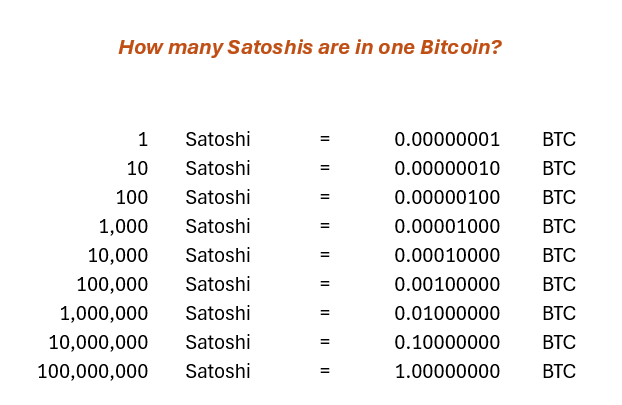
Bitcoin advocate John Carvalho has introduced a Bitcoin Improvement Proposal (BIP) to redefine the smallest unit of Bitcoin—the satoshi—as the standard for transactions. Under the current system, one Bitcoin is divisible into 100 million satoshis (sats), with transactions often displayed as fractional BTC values (e.g., 0.0001 BTC). Carvalho’s proposal suggests reversing this, where one Bitcoin equals one satoshi. For instance, a transaction now seen as 0.00010000 BTC would instead be displayed as 10,000 BTC under the new structure.

The primary goal is to make Bitcoin more intuitive by eliminating confusing decimal points. According to supporters, this shift aligns Bitcoin’s representation with traditional financial systems, where numbers are generally expressed as whole integers, easing adoption by everyday users.

How many Satoshis are in one Bitcoin? Converter table. One Bitcoin contains 100M Satoshis.

Historical Context and Comparison

This is not the first time Bitcoin’s unit structure has come under scrutiny. In 2017, developer Jimmy Song proposed BIP 176, advocating for the use of “bits” as the standard unit to address similar usability issues. However, that initiative failed to gain traction within the community.

Carvalho’s proposal revives this discussion, suggesting that framing Bitcoin transactions in whole numbers could overcome barriers that have hindered adoption.

The Debate

While the proposal has garnered interest, it also faces criticism. Skeptics argue that redefining Bitcoin’s unit structure could create significant disruptions for wallets, exchanges, and other infrastructure relying on the current system. A transition to a satoshi-based standard may also confuse users already accustomed to Bitcoin’s established terminology.

Critics additionally warn of potential risks for businesses and developers, who may need to adjust pricing, accounting, and transaction systems to accommodate the change. For Bitcoin purists, this redefinition challenges the cryptocurrency’s historical identity.

Broader Implications

The proposal reflects a growing trend within the cryptocurrency space: simplifying complex systems to make digital currencies more user-friendly. As Bitcoin’s price continues to rise, fractional values will become increasingly common in everyday transactions. By addressing these issues now, the Bitcoin community could pave the way for more seamless adoption.

Whether this proposal gains traction remains to be seen, but it underscores a critical challenge for Bitcoin: balancing innovation with stability and tradition. For now, the debate highlights the dynamic and evolving nature of the cryptocurrency space.

Readers’ frequently asked questions

What exactly is a Satoshi, and why is it important to make it the standard unit for Bitcoin transactions?

A satoshi is the smallest unit of Bitcoin, representing one hundred millionths of a single Bitcoin (0.00000001 BTC). It is crucial because as Bitcoin’s price rises, using full Bitcoins in everyday transactions becomes less practical, leading to confusing fractional values like 0.0001 BTC for small purchases. By making satoshis the standard unit, transactions can be expressed in whole numbers, such as 10,000 sats, instead of fractions. This shift could simplify the user experience, making Bitcoin easier to understand and use, especially for people unfamiliar with cryptocurrencies.

If this proposal is implemented, what happens to existing Bitcoin wallets and exchange platforms?

Implementing this proposal would require significant updates to existing wallets and exchange platforms. These systems would need to adjust how they display Bitcoin balances and transaction amounts to align with the new satoshi-based standard. For users, the change might involve updating software and adapting to the new way balances are presented. While this might create temporary confusion, developers would likely offer tools and resources to ensure a smooth transition. Importantly, the value of Bitcoin holdings would not change; it would simply be represented differently.

How does this proposal affect Bitcoin’s broader adoption as a payment system?

This proposal aims to remove a key barrier to adoption: the difficulty of understanding fractional Bitcoin transactions. By aligning Bitcoin with traditional financial systems, where amounts are typically expressed in whole numbers, the change could make Bitcoin more intuitive for everyday use, particularly for retail payments. However, broader adoption will also depend on other factors, such as regulatory clarity, improved transaction speeds, and reduced fees. While simplifying units is a step forward, it is not a standalone solution for making Bitcoin a widely accepted payment method.

What Is In It For You? Action Items You Might Want to Consider

Reevaluate Your Unit Preferences

As discussions around satoshis gain traction, consider shifting your mindset to think in satoshis rather than full Bitcoins. This perspective can help you better navigate potential changes in the market and simplify transaction calculations, particularly as Bitcoin’s value continues to rise.

Stay Informed About Wallet Updates

If the proposal to standardize satoshis moves forward, wallet providers and exchanges will likely roll out updates to reflect the new unit structure. Keep an eye on announcements from your preferred platforms to ensure you’re ready to adapt without disruptions to your trading activities.

Anticipate Behavioral Shifts in the Market

A transition to satoshis as the primary unit could influence how new traders and retail users engage with Bitcoin. Monitor market sentiment and trading volumes to spot emerging trends that could signal opportunities, especially as accessibility improves for smaller-scale investors.

From Bitcoin to Blockchain Diplomacy: El Salvador’s Bold Economic Experiment

Santa Ana Volcano, El Salvador. Volcanoes play a vital role for El Salvador in its Bitcoin strategy.

El Salvador, a nation of just over six million people, captured global attention with its audacious adoption of Bitcoin as legal tender in 2021. This experiment, spearheaded by President Nayib Bukele, has evolved into a broader strategy that extends beyond national borders. The country’s latest moves – forming partnerships with Argentina and engaging with 25 other nations – signal an ambition to establish itself as a leader in blockchain-driven diplomacy and economic innovation. At the heart of this effort is an attempt to position cryptocurrencies not only as tools for domestic economic reform but also as instruments of international collaboration.

A Strategic Partnership with Argentina

El Salvador recently signed a collaboration agreement with Argentina, focusing on digital asset technology and regulation. This partnership aims to combine Argentina’s robust blockchain ecosystem with El Salvador’s technological expertise and unique regulatory environment. The collaboration underscores the potential for cross-border cooperation to create a global framework for cryptocurrencies and digital assets.

Juan Carlos Reyes, president of El Salvador’s National Commission of Digital Assets (NCDA), emphasized the importance of shared knowledge and resources. By pooling expertise, the two nations aim to foster innovation while mitigating risks associated with crypto adoption, such as market volatility and regulatory gaps.

Talks with 25 Nations: A Blockchain Consortium in the Making?

Building on its partnership with Argentina, El Salvador has initiated discussions with over 25 nations to form similar agreements. These discussions aim to create a cohesive approach to cryptocurrency regulation and adoption. By aligning with other countries, El Salvador hopes to set the stage for a cooperative blockchain-driven future.

This initiative signals a shift from isolated national policies to collective international efforts. Proponents argue that such collaborations could pave the way for standardized regulations, increased transparency, and reduced risks in the global crypto market.

Leveraging Natural Resources: The “Rent Your Volcano” Proposal

In addition to its diplomatic efforts, El Salvador is exploring innovative ways to integrate cryptocurrency into its economy. President Bukele’s “rent your volcano” initiative proposes leasing the country’s geothermal energy – derived from its numerous volcanoes – to Bitcoin mining operations. This move capitalizes on El Salvador’s natural resources to promote sustainable energy use in the highly energy-intensive crypto-mining industry.

The proposal builds on El Salvador’s existing geothermal Bitcoin mining ventures, which have already produced tangible results. By expanding this program, the government aims to attract foreign investment while reinforcing its commitment to green energy solutions.

Geographical map of volcanoes in El Salvador.
Source: Google Maps

Balancing Risks and Rewards

Despite the promise of these initiatives, El Salvador’s crypto strategy has drawn mixed reactions. Supporters praise the country’s pioneering approach. They argue that its efforts could boost economic growth, attract foreign investment, and position El Salvador as a global leader in digital innovation.

Critics, however, caution against the inherent risks of relying heavily on Bitcoin and other cryptocurrencies. Bitcoin’s price volatility remains a significant concern, particularly as the country faces challenges in repaying International Monetary Fund (IMF) loans. Skeptics also question the feasibility of scaling crypto adoption in a country with limited financial literacy and infrastructure.

The Geopolitical Implications

El Salvador’s bold embrace of blockchain and cryptocurrency has far-reaching geopolitical implications. By using digital assets as tools of diplomacy, the country is challenging traditional economic paradigms and fostering new alliances. Its partnerships with Argentina and other nations demonstrate the potential of blockchain technology to reshape international relations.

However, the success of this strategy hinges on navigating the complex landscape of global regulation. Domestic policies must align with international standards. As El Salvador charts this uncharted territory, it serves as a case study for other nations considering similar paths.

El Salvador’s crypto experiment represents a bold gamble with the potential to redefine the role of digital assets in national and international economies. While the country has made significant strides in leveraging Bitcoin and blockchain technology, its success depends on balancing innovation with practicality. The world will be watching closely as El Salvador continues its journey from a Bitcoin pioneer to a blockchain diplomat.

Readers’ frequently asked questions

What is Bitcoin mining, and how does it work with geothermal energy in El Salvador?

Bitcoin mining is the process of using powerful computers to solve complex mathematical problems that validate and secure transactions on the Bitcoin network. These computers require large amounts of electricity to operate. In El Salvador, geothermal energy—produced from the Earth’s internal heat—is harnessed to power these mining operations. This renewable energy source is both sustainable and cost-effective, making it an ideal choice for running energy-intensive Bitcoin mining activities. El Salvador’s geothermal energy comes from its volcanic activity, giving rise to initiatives like the “rent your volcano” program.

What is a blockchain, and why is it important for these partnerships?

A blockchain is a digital ledger where transactions are recorded in a secure, transparent, and immutable manner. Each transaction is stored in a “block,” and these blocks are linked in chronological order to form a “chain.” This technology is vital for cryptocurrencies like Bitcoin because it ensures decentralized and tamper-proof operations. In the context of El Salvador’s partnerships, blockchain technology enables countries to explore new ways of managing digital assets, improving transparency, and creating secure, efficient systems for cross-border trade and collaboration.

How does El Salvador benefit economically from using Bitcoin?

El Salvador benefits from Bitcoin in several ways. By adopting Bitcoin as a legal tender, the country has attracted international attention and investment, fostering tourism and business interest in its growing crypto ecosystem. Additionally, initiatives like geothermal-powered Bitcoin mining generate revenue and create job opportunities. The government also saves on remittance fees, as citizens can send and receive money using Bitcoin wallets instead of traditional banking systems, which often charge high transfer fees. These benefits collectively contribute to diversifying El Salvador’s economy and promoting technological advancement.

What Is In It For You? Action Items You Might Want to Consider

Monitor the Impact of Global Crypto Collaborations on Regulations

El Salvador’s partnerships with Argentina and talks with 25 other nations signal a move toward standardized international crypto regulations. As a trader, stay informed about developments from these collaborations. They could influence market dynamics, taxation, and compliance requirements in different countries. Keeping an eye on regulatory trends can help you adjust your strategies to remain compliant and capitalize on emerging opportunities.

Explore Opportunities in Renewable Energy-Driven Cryptos

El Salvador’s innovative use of geothermal energy for Bitcoin mining highlights the growing trend toward sustainable crypto practices. Research cryptocurrencies and blockchain projects that prioritize green energy solutions, as they may gain increased attention and investment. Understanding this niche could help you diversify your portfolio into projects aligning with the sustainability movement.

Stay Updated on Bitcoin’s Role in El Salvador’s Economy

El Salvador’s reliance on Bitcoin as a legal tender and its economic experiments provide insights into how cryptocurrencies can integrate with national economies. Pay attention to how Bitcoin’s price movements affect El Salvador’s financial standing. This could create ripple effects in the broader crypto market. Understanding the interplay between Bitcoin and macroeconomic policies may help you anticipate market trends and make informed trading decisions.

- Advertisement -

FEATURED