Home Blog Page 156

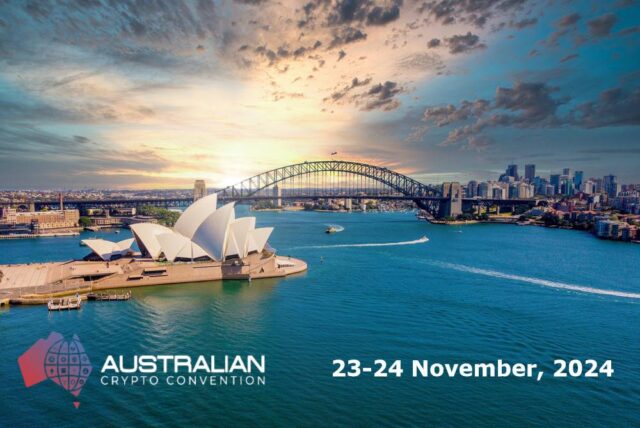
Australian Crypto Convention 2024

Get ready for Australian Crypto Convention 2024 in Sydney.

The Australian Crypto Convention (ACC) 2024 is set to be the largest crypto event in the Southern Hemisphere, taking place on November 23-24, 2024, at the International Convention Centre (ICC) in Sydney. This event will bring together over 10,000 attendees and 1,000 companies, making it a must-attend for anyone passionate about the crypto and blockchain industry.

Event Highlights

Keynote Speakers and Panels

ACC 2024 will feature a stellar lineup of keynote speakers, including industry leaders and innovators. Attendees can expect engaging discussions on the latest trends in blockchain technology, DeFi, NFTs, Web3, and more. Panels will delve into critical topics such as regulatory challenges, institutional adoption, and the future of digital assets.

  • Timothy Stebbing, Director of Dogecoin
  • Charles Hoskinson, Founder of Cardano
  • Sergej Kunz, Co-Founder of 1inch
  • Jessica Xiao, Senior Engineer at Trust Wallet
  • Andrew Bragg, Senator for NSW Australian Government
  • Maryna Kovalenko, Co-Founder of Syla
  • Michael Hanlon, CEO of Playa3ull Games
  • Robert McCracken, Ecosystem Lead at Alchemy Pay
  • Robert Waugh, CTO of Cloudtech Group
  • Drew Bradford, Chairman of Cloudtech Group
  • Ben Simpson, CEO/Founder of Collective Shift
  • Aaron Berghuber, Chief Operating Officer at Coll

Workshops and Technical Sessions

For those looking to enhance their technical expertise, ACC offers a variety of workshops and technical sessions. These sessions will cover blockchain development, smart contracts, and the integration of AI in blockchain applications. Participants will gain hands-on experience and insights from leading experts in the field.

Networking Opportunities

Networking is a key component of ACC 2024, with numerous opportunities to connect with like-minded professionals. The event will host exclusive networking lounges, meetups, and side events, providing the perfect environment to forge new partnerships and collaborations.

Innovation Zone and NFT Gallery

The Innovation Zone will showcase cutting-edge startups and their pioneering ideas, offering a platform for founders to collaborate and secure investment. Additionally, the NFT Gallery will provide an immersive experience for NFT enthusiasts, featuring interactive exhibits and real-life use cases.

Why Attend?

The Australian Crypto Convention 2024 is an essential event for anyone involved in the blockchain and cryptocurrency space. Whether you are a developer, investor, entrepreneur, or enthusiast, ACC offers valuable insights, education, and networking opportunities that are crucial for staying ahead in this dynamic industry.

As the blockchain and cryptocurrency landscape continues to evolve, events like the Australian Crypto Convention 2024 play a pivotal role in driving the industry forward. By bringing together the best and brightest minds, ACC 2024 promises to be an event that not only educates and inspires but also fosters the collaborations and innovations that will shape the future of blockchain technology.

To find out more about the Australian Crypto Convention 2024, please visit the official event website.

Crypto EXPO Milan 2024

Visit Milano for Crypto EXPO Milan 2024, 21-23 November

Crypto EXPO Milan (CEM) 2024 is set to be a landmark event in the blockchain and cryptocurrency calendar. Scheduled from November 21-23, 2024, this event promises to bring together the industry’s brightest minds and most influential figures. Held in the vibrant city of Milan, CEM aims to foster innovation, collaboration, and education within the rapidly evolving world of blockchain and decentralized finance (DeFi).

Event Highlights

Keynote Speakers and Panels

CEM 2024 will feature an impressive lineup of keynote speakers, including industry leaders, innovators, and visionaries. Attendees can look forward to insightful discussions on the latest trends and developments in blockchain technology, Web3, DeFi, NFTs, and the Metaverse. Panels will cover a wide range of topics, from regulatory challenges to the future of digital assets.

  • Peter Mariš, Chief Visionary Officer at WEXO3
  • Alessandro Brigato, CEO at Blockchain Italia3
  • Sarojini McKenna, CEO & Co-Founder at Dacoco GmbH3
  • Alexandra Overgaag, Founder/CEO at Thrilld Labs3
  • Davide Baldi, Founder & CEO at Luxochain4

Workshops and Technical Sessions

For those looking to deepen their technical knowledge, CEM offers a series of workshops and technical sessions. These hands-on sessions will provide valuable insights into blockchain development, smart contracts, and the integration of AI in blockchain applications. Participants will have the opportunity to learn from experts and gain practical skills that they can apply to their own projects.

Networking Opportunities

One of the key attractions of CEM 2024 is the unparalleled networking opportunities. With over 2,000 expected guests and more than 40 sponsors, the event will be a hub for forging new partnerships and collaborations. Whether you are a startup looking for investors or an established company seeking new business opportunities, CEM provides the perfect platform to connect with like-minded professionals.

Exclusive Parties and Gala Dinner

CEM 2024 is not just about business; it’s also about building community and having fun. Attendees can look forward to exclusive parties and a gala dinner, offering a relaxed environment to unwind and socialize. These events will provide a unique opportunity to network in a casual setting, fostering stronger relationships within the blockchain community.

Why Attend?

Crypto EXPO Milan 2024 is a must-attend event for anyone involved in the blockchain and cryptocurrency space. Whether you are a developer, investor, entrepreneur, or enthusiast, CEM offers something for everyone. The event’s focus on education, innovation, and networking makes it an invaluable experience for those looking to stay ahead in this fast-paced industry.

As the blockchain and cryptocurrency landscape evolves, events like Crypto EXPO Milan 2024 play a crucial role in driving the industry forward. By bringing together the best and brightest, CEM 2024 promises to be an event that educates, inspires, and fosters the collaborations and innovations that will shape the future of blockchain technology.

To find out more about Crypto EXPO Milan 2024, please visit the official event website.

BRICS Nations Unveil Digital Currency Push: A Bold Step Toward De-Dollarization

BRICS Pay initiative aims to reduce U.S. dollar reliance with blockchain-based payments, boosting global economic independence and cooperation.

In a significant development, the BRICS bloc – comprising Brazil, Russia, India, China, and South Africa – has set the stage for a new financial landscape, pushing forward with plans to integrate digital currencies into their economic systems. This initiative was unveiled at the BRICS Business Forum in Moscow. There, Russian President Vladimir Putin emphasized the strategic importance of digital currencies for bolstering economic independence. Central to the plan is reducing reliance on the U.S. dollar and developing alternatives to the Western-controlled SWIFT payment network. The move signals BRICS’ ambition to shift the global economic balance and create a multipolar financial world.

Pivot Away from the U.S. Dollar

The core of BRICS’ digital currency initiative is rooted in its long-term goal to de-dollarize its economic transactions. This step is part of a broader strategy to challenge the dominance of the U.S. dollar in global finance. The BRICS bloc accounts for a substantial portion of the world’s population and economic output. It has been vocal about its dissatisfaction with the dollar’s hegemony in international trade and finance. By adopting digital currencies, BRICS hopes to decrease its dependency on Western financial systems and reduce the influence of U.S.-led sanctions. These have often targeted Russia and other BRICS members.

BRICS Pay: A New Payment System

A key element of the initiative is the BRICS Pay platform, a blockchain-based payment system introduced at the forum. The platform is designed to facilitate cross-border transactions between BRICS nations, offering an alternative to SWIFT. By adopting blockchain technology, BRICS Pay aims to provide faster, more secure, and lower-cost international payments. The platform not only supports national currencies. It also sets the stage for integrating digital currencies into everyday transactions, making the bloc less dependent on Western financial infrastructure.

Both Russia and China have been at the forefront of this digital push. Russia is set to pilot its digital ruble in 2025. China has already made significant strides with its Digital Currency Electronic Payment (DCEP) initiative, a digital version of the yuan. These national digital currencies are expected to play a vital role in facilitating intra-BRICS trade, reducing transaction costs, and offering greater financial sovereignty to member states.

Geopolitical Implications and Economic Growth

The shift toward digital currencies is also framed as a means to support economic growth across BRICS nations and other developing countries. Putin emphasized that adopting digital currencies for investment projects would enable greater economic opportunities for emerging economies, often sidelined by the current global financial order.

The BRICS bloc is also exploring the creation of a stablecoin, possibly backed by China’s yuan. That could further enhance economic stability within the group and increase the use of local currencies for international trade. This potential development could mark a turning point in global financial transactions. It would reduce reliance on the U.S. dollar and promote economic cooperation among BRICS and its expanding network of partners.

The recent BRICS summit in Kazan emphasized these goals. The summit saw extensive discussions on de-dollarization and the role of digital currencies in shaping a new financial architecture. More than 30 nations expressed interest in forging closer ties with BRICS. Hence, the bloc’s influence on global economic dynamics is poised to grow significantly.

Conclusion: A New Financial Order?

The digital currency push by BRICS represents a broader geopolitical strategy aimed at reshaping the global financial order. By advancing digital currencies and blockchain, the bloc wants to establish itself as a counterweight to Western-dominated systems. With platforms like BRICS Pay and national digital currencies, BRICS can reduce U.S. dollar reliance and promote a new financial structure. That could fundamentally alter the future of international trade and investments.

The implications of this shift are profound. If successful, BRICS’ digital currency strategy could weaken the U.S. dollar’s role as the world’s primary reserve currency and accelerate the move toward a more multipolar financial system.

Readers’ frequently asked questions

How will BRICS Pay practically function as an alternative to SWIFT, and what advantages does it offer?

BRICS Pay will be a blockchain-based payment system, enabling secure and efficient cross-border transactions among BRICS nations. Unlike SWIFT, which relies on traditional banking networks and central clearing systems, BRICS Pay uses blockchain technology to create a decentralized, direct transaction pathway between financial institutions within the bloc. This decentralization means fewer intermediaries and potentially faster, lower-cost transactions. Additionally, BRICS Pay will initially support both local currencies and, in the future, stablecoins or other digital currencies developed by BRICS members. That will allow member countries to conduct trade and settle payments without converting to the U.S. dollar. The system eliminates the dollar intermediary and offers more financial independence and the flexibility to bypass restrictions imposed by Western sanctions on specific countries.

What regulatory challenges might BRICS face in implementing a unified digital currency system?

One of the significant hurdles for BRICS towards a unified digital currency system is developing a comprehensive regulatory framework. It must address each member country’s unique legal, financial, and technological environments. Harmonizing these diverse systems is complex since each BRICS nation has different regulations for financial transactions, privacy standards, and digital asset management. For instance, Russia and China already have national digital currencies in development, while countries like Brazil and India have stricter regulatory environments around digital assets. The BRICS Pay platform and any proposed BRICS-wide stablecoin will require collaborative policies to prevent issues, like cross-border fraud and illicit activities. They must ensure transparent, accountable transactions. This coordination effort may require establishing a new financial oversight body within BRICS to monitor transactions while respecting each nation’s sovereignty​.

How could the success of BRICS’ digital currency initiative impact the global financial order?

Successful implementation of a fully functional digital currency system with broad adoption amongst BRICS nations could challenge the U.S. dollar’s role as the world’s primary reserve currency, shifting the balance of financial power. This move would enable BRICS nations to conduct large amounts of trade and investment without using the dollar. That reduces their exposure to U.S. economic policies and sanctions. For developing countries outside of BRICS, the success of this initiative could present a viable alternative to the dollar-dominated financial system, offering them greater flexibility in trade and economic decisions. By popularizing digital currency systems, BRICS could also accelerate the global adoption of blockchain-based finance. This shift may push Western financial institutions to innovate to maintain their competitive edge. Such a gradual shift has the potential to transform international finance and reduce the dollar’s influence. Regional currency alliances could play a more significant role in a multipolar financial system.

What Is In It For You? Action Items You Might Want to Consider

Monitor BRICS Developments for Dollar Market Impact

With BRICS moving to adopt digital currencies, keep an eye on any significant shifts in trade or financial strategies within the bloc that could impact the dollar’s value. Changes in BRICS’ cross-border transactions—especially through the blockchain-powered BRICS Pay platform—may gradually weaken the dollar’s influence. Watching these developments can help you anticipate dollar-related fluctuations. Align your trading positions accordingly, particularly in currency pairs involving the U.S. dollar​.

Consider Blockchain and Digital Currency Assets in Emerging Markets

As BRICS countries embrace digital currency for trade, blockchain, and crypto assets associated with these markets could see increased demand. For example, investments related to digital yuan or digital ruble technologies may gain traction. Assess any news around BRICS’ cryptocurrency adoption as indicators for assets tied to blockchain infrastructure and national digital currency technology. These sectors could experience growth if the BRICS model gains momentum.

Evaluate the Long-Term Potential of Stablecoins Linked to BRICS Currencies

The BRICS bloc’s interest in a potential stablecoin, possibly backed by China’s yuan, signals a shift toward more stable digital assets insulated from U.S. monetary policies. Traders may find it worthwhile to diversify into stablecoins linked to BRICS economies. These could offer more stability and independence from traditional market influences. If a BRICS-wide stablecoin launches, consider its impact on the broader crypto and forex markets, and its potential as a hedge against dollar volatility.

Indonesian Crypto Exchanges Get Extra Time as Legal Entities Enter the Market

Indonesia crypto exchanges get more time to meet new regulations

Indonesia’s cryptocurrency regulatory body, the Commodity Futures Trading Regulatory Agency (Bappebti), has extended the deadline for crypto exchanges to comply with new licensing regulations. Initially set for October 2024, the deadline has been pushed to late November. It will allow exchanges more time to meet the Physical Crypto Asset Traders’s (PFAK) license requirements. The extension comes at a pivotal moment as Indonesia continues to enhance its regulatory framework for the crypto industry. It added a notable new provision: legal entities, including corporations and businesses, are now permitted to trade in digital assets. This marks a significant shift in the country’s approach to crypto regulation, likely to increase institutional participation in the market.

Navigating New Regulatory Requirements

The PFAK license is essential for exchanges that want to operate legally in Indonesia’s growing cryptocurrency market. The license requires exchanges to fulfill several compliance obligations, including joining the Futures Exchange and the Crypto Futures Clearing House. These measures aim to standardize and safeguard the trading environment, ensuring that exchanges adhere to strict Know Your Transaction (KYT) standards. These will help combat illicit activities such as money laundering and terrorist financing.

Oscar Darmawan, CEO of INDODAX, Indonesia’s largest crypto exchange, expressed support for the extension. He emphasized that it provides much-needed time for exchanges to meet the stringent requirements. INDODAX, among other exchanges, is in the process of obtaining full validation from Bappebti and complying with all necessary legal obligations.

Broadening Market Access: Legal Entities Join the Game

One of the most significant updates within Bappebti’s regulatory shift is the inclusion of legal entities in the crypto trading ecosystem. Previously, only individuals were allowed to trade cryptocurrencies in Indonesia. The new rules, outlined in Bappebti Regulation No. 9 of 2024, now allow businesses and institutional investors to participate in the digital asset market. This is expected to significantly broaden the scope of participation and liquidity within the market.

This regulatory change opens the door for greater institutional involvement. That could elevate Indonesia’s position as a key player in the global cryptocurrency space. Legal entities often bring higher trading volumes and capital into the market, fostering liquidity and stability. This change could attract foreign investors and potentially reshape the dynamics of Indonesia’s crypto landscape, moving it beyond a retail-centric market to one that is more institutionally driven.

Challenges and Future Outlook

While the extended deadline and the inclusion of institutional players are positive developments, crypto exchanges in Indonesia still face considerable challenges. The licensing process involves rigorous compliance standards, including agreements with local authorities like the Directorate General of Population and Civil Registration (Ditjen Dukcapil), which oversees identity verification processes. Failure to meet these requirements could result in license revocation, hindering exchanges from operating legally in Indonesia.

Bappebti’s decision to extend the deadline reflects an acknowledgment of the complexities involved in meeting these regulatory demands, as well as the fast-evolving nature of the crypto industry. With a strong regulatory framework in place, Indonesia is positioning itself to harness the benefits of a well-regulated crypto market. At the same time, it ensures investor protection and compliance with international standards.

As Indonesia continues to refine its crypto regulations, the market is set for substantial growth. It will be driven by increased institutional participation and a clearer regulatory landscape. The extended deadline provides exchanges with the opportunity to fully integrate into the regulated environment, while the inclusion of legal entities in crypto trading marks a new chapter for the industry in Indonesia. These changes are likely to transform its crypto sector into a more mature and diverse market, ready to attract institutional capital and further solidify its standing in the global digital asset space.

Readers’ frequently asked questions

What specific benefits do institutional investors bring to Indonesia’s cryptocurrency market?

Institutional investors bring several important advantages to any market, including the cryptocurrency space. In the case of Indonesia, the inclusion of legal entities such as corporations and business enterprises in crypto trading can significantly boost liquidity. With higher liquidity, market volatility tends to decrease, as institutional trades often involve larger volumes, which stabilizes price fluctuations. Furthermore, institutional investors often have a long-term investment outlook, which can contribute to a more mature and stable market. Their participation also signals credibility and may attract more capital from both domestic and international sources. This influx of capital can help develop new financial products and services. For example, crypto futures or exchange-traded funds (ETFs) could further enrich the trading ecosystem. Institutional presence can also spur innovations in security measures, compliance practices, and operational transparency, as these entities are typically subject to stringent regulations and due diligence practices in traditional finance​.

How will the extended deadline impact Indonesia’s competitiveness in the global crypto market?

The extension of the licensing deadline reflects Indonesia’s recognition of the fast-evolving nature of the crypto industry and its effort to build a modern, adaptable regulatory framework. This move could have positive implications for Indonesia’s competitiveness on the global stage. By allowing more time to meet regulatory requirements, Indonesia is ensuring that its crypto exchanges are well-prepared to handle institutional trading, which could attract more foreign investors. Moreover, regulating the market without stifling innovation positions Indonesia a crypto-friendly jurisdiction. It encourages growth while ensuring legal protections are in place. In the long term, this regulatory clarity and gradual introduction of institutional investors may increase the country’s appeal as a regional crypto hub. It could compete with markets such as Singapore and Hong Kong.

What role does the Directorate General of Population and Civil Registration (Ditjen Dukcapil) play in Indonesia’s crypto regulatory framework?

Ditjen Dukcapil plays a critical role in ensuring transparency and compliance in Indonesia’s crypto market. As part of the extended regulatory requirements, crypto exchanges must establish agreements with Ditjen Dukcapil, which oversees population data and civil registration in Indonesia. This partnership allows exchanges to implement effective Know Your Customer (KYC) and Know Your Transaction (KYT) standards. By verifying traders’ identities and ensuring their transactions comply with regulatory frameworks, Ditjen Dukcapil helps mitigate the risks of illegal activities such as fraud, money laundering, and terrorism financing. This collaboration strengthens the regulatory ecosystem as it provides secure identity verification processes. These are crucial for maintaining trust and security in both retail and institutional crypto trading.

What Is In It For You? Action Items You Might Want to Consider

Evaluate Institutional Entry Opportunities

After regulatory changes, Indonesia will allow legal entities to participate in cryptocurrency trading. Now might be the perfect time to explore opportunities in institutional-level products. If you’re trading or investing on crypto exchanges in Indonesia, assess how this shift might affect liquidity and market stability. Consider adjusting your strategies to align with potential market growth spurred by the participation of larger institutional investors. It can lead to more reliable market trends.

Stay Ahead of Compliance Developments

If you’re trading in the Indonesian market, it’s crucial to keep up-to-date with the new compliance requirements. The extended deadline for exchanges to obtain the PFAK license offers a temporary reprieve. However, you should ensure you’re using licensed platforms or those that will meet the November deadline. Non-compliant exchanges might face operational issues that could affect your trading activities. Choose platforms that demonstrate commitment to regulatory standards and prioritize transparency.

Prepare for Reduced Volatility

Institutional investors tend to stabilize markets due to the volume and nature of their trades. If you’re used to trading in a more volatile environment, prepare for changes in market behavior as institutional traders enter the scene. This might lead to tighter spreads and reduced price swings. Consider adjusting your strategies to capitalize on a more stable market environment. Also prepare for availability of new trading products aimed at institutions.

Transak Data Breach Exposes 92,000 Users: What Went Wrong in Crypto’s Security?

In a significant blow to the cryptocurrency industry, Transak, a prominent crypto on-ramp service, recently disclosed a data breach that compromised the sensitive personal information of over 92,000 users. The affected data includes names, email addresses, and phone numbers, sparking concern about the adequacy of security protocols within the sector. The breach, reportedly triggered by a security lapse involving a compromised employee laptop, raises critical questions about the robustness of cybersecurity measures in the fast-evolving digital asset space.

What Happened?

The breach at Transak came to light in October 2024 and has since been widely reported across various industry platforms. According to official statements, it impacted 1.14% of the platform’s user base – roughly 92,000 users. The company attributed the breach to an incident where an employee’s laptop was compromised outside the secure work environment. It allowed malicious actors unauthorized access to Transak’s systems and exposed the personal information of users. The incident also highlights a vulnerability in how companies handle security for remote work setups.

https://twitter.com/H4ckManac/status/1848233052876505342

Security Failures and the Ripple Effect

Transak’s partners, including the popular wallet service Trust Wallet, responded swiftly. They suspended services linked to Transak as a precautionary measure while investigations unfolded. This incident marks yet another reminder of how the crypto space, despite its cutting-edge technology, remains susceptible to traditional cybersecurity risks like phishing and social engineering attacks.

While Transak didn’t report financial data or passwords as compromised, the exposed information still poses significant risks. The perpetrators could leverage the personal data of users for phishing schemes, identity theft, or targeted attacks. Cybercriminals commonly employ these tactics after a breach. The aftermath has left many users on alert, urging them to safeguard their accounts and remain vigilant against suspicious activity.

The Industry-Wide Implications

The Transak breach is not an isolated case. It is part of a growing trend of cybersecurity issues plaguing the cryptocurrency sector. In recent years, data breaches and attacks on crypto exchanges and platforms have become more frequent, exposing the limitations of current security measures. Many of these breaches exploit weak points in infrastructure, third-party services, or human error – like the case of the compromised laptop at Transak.

Cryptocurrency platforms operate at the intersection of finance and technology, making them a high-value target for cybercriminals. As the industry continues to grow, the need for stricter security protocols becomes ever more pressing. The incident underscores the necessity of securing internal systems and also ensuring robust security practices for employees, particularly when working remotely or using personal devices.

What’s Next? The Call for Regulation and Oversight

The breach at Transak has intensified ongoing discussions about regulatory oversight in the cryptocurrency sector. Regulators have already been pushing for more stringent measures to protect users and ensure transparency in how platforms handle digital assets. This latest breach adds to the growing list of incidents that could spur more aggressive regulatory action to enforce compliance with higher cybersecurity standards.

Many experts argue that, while decentralized finance (DeFi) and blockchain technology offer groundbreaking solutions, they also present unique challenges that require new security paradigms. The industry needs to adapt rapidly. They must implement end-to-end encryption, multi-factor authentication, and decentralized identity solutions to reduce the risks of such breaches. Moreover, regulators may push for mandatory breach reporting and greater accountability from service providers.

The Future of Crypto Security

As Transak works to address the fallout from this breach, the broader industry faces a reckoning. The cryptocurrency market, though built on cutting-edge technology, must prioritize security as foundational, especially as it continues to attract more users and capital. Cybersecurity is no longer just a technical issue – it’s integral to the trust and credibility of the entire ecosystem.

The Transak incident serves as a wake-up call for crypto platforms and regulators alike. Moving forward, the sector will need to invest heavily in protecting user data. The industry must prove it can keep pace with increasingly sophisticated cyber threats.

Readers’ frequently asked questions

What specific data was exposed in the Transak breach, and how could it be misused?

The Transak data breach exposed the personal information of over 92,000 users. The compromised data includes names, email addresses, and phone numbers. While so far there are no reports of leaked financial data, passwords, or cryptocurrency-related information, the exposed data still carries significant risk. Cybercriminals could exploit this information in several ways. Phishing attacks are a major concern. Malicious actors could send fraudulent emails or messages to trick users into revealing further sensitive details, such as login credentials for crypto wallets or exchanges. Additionally, having access to phone numbers increases the possibility of targeted smishing (SMS phishing) attempts, potentially leading to identity theft. Even though users have not reported financial losses yet, they must remain cautious. They should take preventive steps, such as enabling two-factor authentication and monitor their accounts closely for any suspicious activity​.

What steps has Transak taken to address the breach and protect users going forward?

After identifying the breach, Transak immediately launched an investigation and worked to secure its systems. One of the most visible responses was the temporary suspension of services by key partners like Trust Wallet. They halted integration with Transak until further notice. This step was likely taken to ensure no further vulnerabilities existed in the affected systems, preventing additional data from being exposed. Beyond securing the compromised systems, Transak will need to improve its overall cybersecurity practices, particularly regarding employee device management. Remote work protocols and safeguarding endpoints, such as laptops, are critical in preventing future breaches. It’s expected that Transak will also need to update its internal policies around device security, possibly implementing stronger encryption, monitoring, and incident response systems. However, specific details on future preventive measures are still emerging as the investigation unfolds​.

What regulatory consequences might result from the Transak breach, and how could this incident impact the wider crypto industry?

The Transak breach adds fuel to ongoing debates around the need for more robust regulation in the cryptocurrency industry. As crypto services handle increasingly sensitive user data, regulators globally focus more on compliance with security and privacy standards. This breach may accelerate efforts to enforce tighter controls on crypto platforms. It could potentially lead to new regulations that mandate stronger security protocols, like end-to-end encryption, mandatory breach reporting, and stricter oversight on how user data is stored and protected. The incident also highlights the risk of insufficient third-party or employee security measures, which could prompt regulators to demand higher standards from service providers. The Transak breach is likely to serve as a case study for why stricter regulatory frameworks are needed, particularly as more users and capital flow into the crypto space.

What Is In It For You? Action Items You Might Want to Consider

Strengthen Your Account Security

In light of the recent Transak data breach, it’s important to revisit your account security measures. Enable two-factor authentication (2FA) across all your crypto-related platforms, including wallets and exchanges. This extra layer of security can prevent unauthorized access to your accounts even if your email or phone number has been compromised. Regularly update your passwords and avoid using the same credentials across multiple services.

Monitor for Unusual Activity

Given that personal information like email addresses and phone numbers were exposed, stay vigilant for phishing attempts or suspicious messages. Be cautious of any unexpected communications asking for sensitive information or urging you to click on links. Keep an eye on your financial accounts and crypto holdings for any unusual activity. If you’re a Transak user, consider enabling alerts on your accounts so you can respond quickly to unauthorized actions.

Stay Updated on Regulatory Changes

As this breach may prompt regulators to push for stricter cybersecurity laws in the crypto sector, traders should pay attention to any upcoming compliance requirements. This could include new regulations for platform security standards, mandatory breach reporting, or enhanced user data protection measures. By staying informed, you’ll be prepared to adjust your trading strategy or choose more secure platforms that adhere to stronger regulations.

- Advertisement -

FEATURED