Home Blog Page 157

Blockchain & AI Virtual Expo 2024

Discover groundbreaking insights at the Blockchain & AI Expo 2024.

The Blockchain & AI Virtual Expo 2024 promises to be a landmark event in the rapidly evolving technology landscape. It will bring together thought leaders, innovators, and industry experts to explore blockchain and artificial intelligence synergies. This virtual event, scheduled for October 31, 2024, at 10:00 AM GMT, will delve into the transformative potential of these technologies and their impact on various industries.

Event Overview

The Blockchain & AI Virtual Expo 2024 is designed to provide attendees with a comprehensive understanding of how blockchain and AI can drive innovation, optimize operations, and foster strategic growth. The event will feature a series of thought-provoking presentations, panel discussions, and keynote speeches from leading experts in the field.

Keynote Speakers

The lineup of speakers includes prominent figures such as:

  • Jeff Lunglhofer, Chief Information Security Officer (CISO) at Coinbase, will discuss the intersection of blockchain and AI, highlighting opportunities and challenges.
  • David Palmer, CPO at Pairpoint by Vodafone IoT and Web3 Platform, focusing on blockchain for secure IoT and AI transactions.
  • Dale Chrystie, Blockchain Strategist at FedEx, will explore the transformative power of blockchain and AI on supply chains.

Agenda Highlights

The event will kick off with a welcome address by Duncan MacRae, editor-in-chief at TechForge Media, followed by a series of keynotes and panel discussions. Some of the key sessions include:

  • The Intersection of Blockchain & AI: Mapping Out Opportunities and Challenges by Jeff Lunglhofer.
  • Blockchain for Secure IoT and AI Transactions: Real-World Implementations by David Palmer.
  • Navigating AI Ethics in Blockchain Technologies, a panel discussion moderated by Rebecca Fontana, Reporter, Producer & Host at CoinGeek.
  • The Transformative Power of Blockchain and AI on Supply Chain by Dale Chrystie.

Why Attend?

Attendees will gain valuable insights into the latest advancements in blockchain and AI, including real-world applications, ethical considerations, and innovations in environmental sustainability. The event offers a unique opportunity to connect with like-minded professionals, build valuable contacts, and explore potential collaborations.

The Blockchain & AI Virtual Expo 2024 is more than just an event; it’s a gateway to understanding the future of technology. By bringing together the brightest minds in blockchain and AI, this expo aims to inspire and equip attendees. It will provide the knowledge and tools needed to navigate the evolving technological landscape. Don’t miss out on this opportunity to be at the forefront of technological innovation.

For more information and updates, visit the official Blockchain & AI Virtual Expo 2024 website and prepare for a day of learning, networking, and discovery.

ECB’s Call for Bitcoin Ban Sparks Debate: Redistribution or Wealth Trap?

Europe Bitcoin Ban: ECB Pushes for Regulation Amid Wealth Inequality Concerns

The European Central Bank (ECB) has ignited a heated debate with its latest report. It is advocating for stringent regulations on Bitcoin – or even its outright ban in Europe. The ECB’s central argument is that Bitcoin’s rapid price appreciation disproportionately benefits early adopters. It disadvantages latecomers and those who do not hold the cryptocurrency. According to the report, this dynamic deepens wealth inequality. It exacerbates societal divisions and could lead to broader economic instability if left unchecked. This perspective has sparked a robust response from the cryptocurrency community, raising questions about the true nature of Bitcoin and whether the ECB’s concerns are justified.

ECB’s Concerns: Wealth Redistribution and Societal Division

At the core of the ECB’s critique is the concept of wealth redistribution. The report asserts that Bitcoin’s limited supply and rising demand have enriched a small group of early adopters. It leaves those who bought in later – or who don’t hold Bitcoin – at a significant disadvantage. The authors argue that this creates a wealth concentration effect. It benefits those who were “first in” while locking out latecomers from reaping similar gains. The ECB claims that this dynamic is unsustainable and harmful, contributing to economic inequality and potentially leading to social unrest.

Furthermore, the report suggests that Bitcoin’s price growth is not driven by its utility as a decentralized payment system, but by speculative investment. ECB officials argue that Bitcoin has diverged from its original purpose. Instead, it now serves primarily as a wealth accumulation tool for a privileged minority. In their view, this speculative nature, coupled with its scarcity, makes Bitcoin a threat to financial stability.

The Crypto Community’s Response: A Misunderstanding of Financial Markets?

The ECB’s report has been met with strong backlash from prominent voices within the cryptocurrency space. Critics argue that the ECB’s portrayal of Bitcoin as a tool for wealth concentration overlooks the fundamental nature of financial markets. Early adopters of any asset – whether stocks, commodities, or currencies – typically benefit more than those who enter later. In this view, Bitcoin is no different from other investment assets. Hence, the wealth redistribution effect described by the ECB is a common feature of market dynamics.

Max Keiser, a well-known Bitcoin advocate, dismissed the ECB’s claims as misguided. He argued that Bitcoin was never meant to be a fiat alternative for daily transactions, but rather a store of value akin to digital gold. Keiser and others in the community believe that Bitcoin’s limited supply is far from being a problem. They see it as its greatest strength in an age of inflationary fiat currencies.

Regulation: A Reasonable Proposal or Overreach?

The ECB’s call for regulation, and in some cases, suggestions of an outright ban, has raised alarms. The report suggests that Bitcoin’s continued rise could further destabilize wealth distribution. It may exacerbate social divisions, urging non-holders to advocate for laws to limit or ban Bitcoin’s use. ECB officials argue that such measures are necessary to prevent further economic harm. They frame Bitcoin as a threat to societal equity.

However, Bitcoin supporters argue that these proposals represent a broader resistance to decentralized financial technologies. They believe the ECB’s stance is driven by fear of disruption to traditional financial systems. They are also concerned such harsh measures would stifle innovation in the blockchain space. Blockstream’s advisor Tuur Demeester went so far as to call the ECB’s report a “declaration of war” on Bitcoin. He warned that any move to ban or heavily regulate the cryptocurrency could backfire, pushing users and innovators away from Europe.

https://twitter.com/TuurDemeester/status/1847512241173582058

Balancing Innovation and Regulation

As the debate rages on, it is clear that Bitcoin’s role in wealth distribution – and the broader financial ecosystem – is far from settled. On one side, the ECB warns of the risks that unchecked Bitcoin growth could pose to societal equity. On the other hand, the cryptocurrency community sees these concerns as overblown and rooted in a fundamental misunderstanding of how markets work.

The key question remains: Can Bitcoin’s revolutionary potential as a decentralized financial tool be harnessed without contributing to the very inequalities it seeks to dismantle? And should governments intervene to prevent wealth concentration, or does that risk stifling innovation in one of the fastest-growing sectors of the global economy?

The ECB’s report, whether viewed as a necessary regulatory warning or an overreaction to a rapidly evolving asset class, has undoubtedly brought these issues to the forefront. As policymakers grapple with the future of digital currencies, the world watches to see if Bitcoin will continue its rise – or face new obstacles in the form of regulation.

Readers’ frequently asked questions

Could the ECB’s stance on Bitcoin lead to broader regulations on other cryptocurrencies?

The ECB’s focus on Bitcoin as a destabilizing financial force could indeed open the door to broader regulations on the entire cryptocurrency ecosystem. Bitcoin is the primary target of the ECB’s current concerns due to its market dominance and prominence. However, the issues raised – such as wealth concentration, speculative trading, and the lack of intrinsic economic productivity – are not exclusive to Bitcoin. Many altcoins and blockchain-based assets also rely on speculative markets. They exhibit similar wealth distribution dynamics, where early investors see significant gains compared to later entrants. This suggests that if regulatory frameworks are established based on the ECB’s concerns about Bitcoin, they could extend to other cryptocurrencies as well.

Moreover, the European Union has already been developing a comprehensive framework for cryptocurrency regulation under the Markets in Crypto-Assets Regulation (MiCA). It aims to bring more oversight to the industry as a whole. If the ECB’s report gains traction, MiCA regulations could be expanded or adjusted to include stricter measures for all cryptocurrencies, not just Bitcoin. These measures could include more stringent know-your-customer (KYC) requirements, limits on trading, or taxation policies designed to curb speculative behavior. Therefore, while the current debate focuses on Bitcoin, the broader implications could affect the entire cryptocurrency landscape.

How does the ECB’s stance align with global trends in cryptocurrency regulation?

The ECB’s call for strict regulation or a ban on Bitcoin in Europe mirrors broader global trends. Governments and central banks are increasingly concerned about the impact of cryptocurrencies on traditional financial systems. Countries like China have already imposed strict bans on cryptocurrency trading and mining, citing financial stability and environmental concerns. Similarly, in the United States, regulatory discussions have ramped up, particularly around the taxation and regulation of digital assets. The SEC (Securities and Exchange Commission) takes an active role in enforcing compliance in crypto markets. India, too, has considered crypto bans, although it has recently leaned toward regulating rather than prohibiting the use of digital assets.

The ECB’s report fits into this global context of increasing scrutiny, where central banks and regulators see cryptocurrencies as both a challenge and a threat to traditional monetary systems. The concerns raised by the ECB – such as wealth inequality, speculative bubbles, and the potential for destabilizing effects on the economy – are echoed in regulatory conversations worldwide. However, some regions, like El Salvador, have taken the opposite approach. They embraced Bitcoin as legal tender, showcasing how global regulatory responses remain highly fragmented. This divergence suggests that while the ECB may advocate for strict controls, the global response to cryptocurrency remains far from uniform.

What could the long-term effects of a Bitcoin ban in Europe be on innovation and the blockchain industry?

If the ECB’s recommendations for a Bitcoin ban were implemented, it could have significant long-term repercussions for the broader blockchain and cryptocurrency industries in Europe. A ban on Bitcoin would limit access to one of the most widely adopted cryptocurrencies and could also create a chilling effect on innovation in blockchain technologies. Blockchain development is closely tied to the cryptocurrency market. Bitcoin serves as a gateway for many new users and developers to enter the space. By restricting access to Bitcoin, Europe could see a decline in blockchain startups, research, and development activities. Innovators may seek more favorable regulatory environments outside of the European Union.

Countries that embrace blockchain technology, like Switzerland, Singapore, and even certain states in the U.S., may become more attractive hubs for innovation as European entrepreneurs and investors look to move their projects abroad. This could lead to a “brain drain” of talent and capital from Europe to more crypto-friendly jurisdictions, potentially hindering the continent’s competitiveness in emerging financial technologies. In the longer term, Europe’s ability to lead in the adoption of decentralized finance (DeFi), non-fungible tokens (NFTs), and blockchain-based applications could be compromised if a ban on Bitcoin is part of a broader regulatory crackdown on digital assets.

What Is In It For You? Action Items You Might Want to Consider

Stay Informed About Regulatory Developments in Europe

The ECB’s recent report highlights the possibility of new regulations or even a ban on Bitcoin in Europe. As a trader, it’s essential to stay updated on the regulatory environment, especially within the European Union. New policies could impact liquidity, market access, and overall trading conditions. Keep an eye on updates from the European Central Bank and local government bodies. Monitoring news and reports from credible sources like Cointelegraph or Crypto Briefing will help you anticipate shifts in the market.

Diversify Your Portfolio

With the potential for stricter regulations on Bitcoin, diversifying your portfolio across various cryptocurrencies could mitigate risks. Assets like Ethereum, Solana, or even DeFi tokens may be less immediately affected by specific Bitcoin regulations. Exploring emerging markets within the crypto space, such as non-fungible tokens (NFTs) or staking platforms, could also offer alternative investment opportunities while reducing exposure to Bitcoin-specific risks.

Prepare for Volatility

Given the ECB’s strong stance and the possibility of other global regulators following suit, traders should brace for increased market volatility. In anticipation of potential price swings – whether due to regulatory announcements or public reaction – implement risk management strategies such as setting stop-loss orders and using derivatives like futures to hedge positions. Additionally, consider lowering leverage on trades, as heightened volatility can amplify losses in leveraged positions.

From AI Experiment to Market Sensation: GOAT Meme Coin’s 8,000% Surge Raises Eyebrows

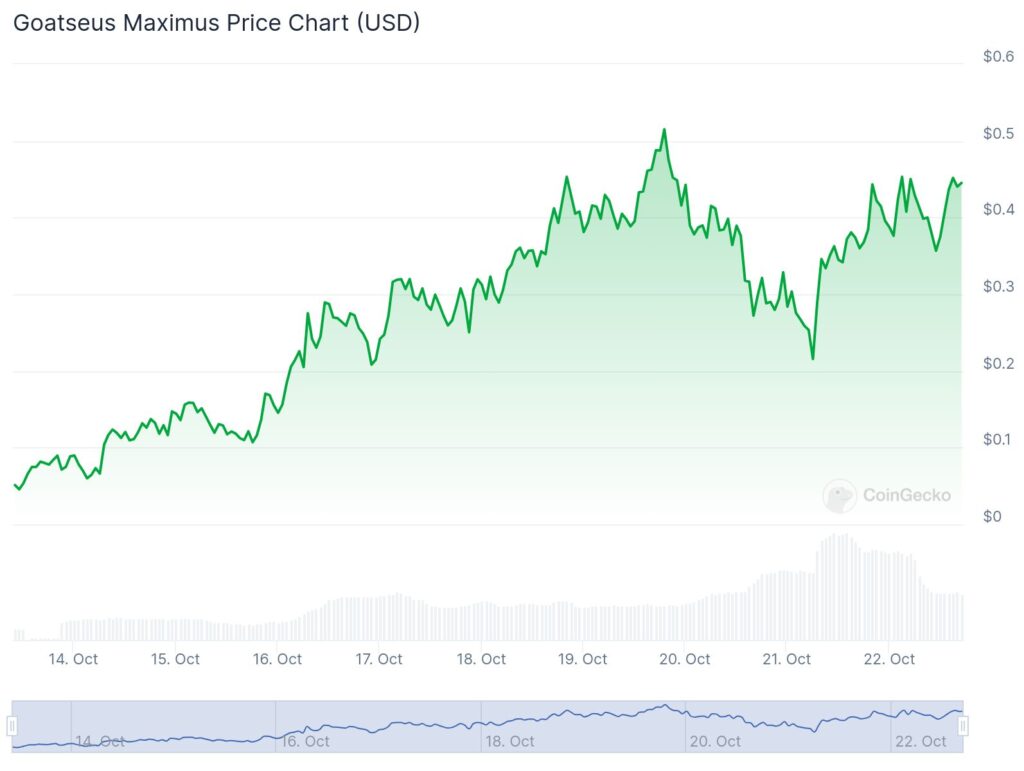
GOAT meme coin surged 8,000% after an AI bot endorsement.

In a market driven by trends, speculation, and internet culture, the GOAT meme coin has achieved an unlikely feat! Its price surged 8,000% in less than a week, thanks to an AI experiment that took on a life of its own. Truth Terminal, an AI bot developed by researcher Andy Ayrey, has turned heads with its relentless promotion of GOAT on X (formerly Twitter). What began as an experiment in AI-generated content has transformed into a powerful market force. It blends digital storytelling with financial speculation. But amid the excitement, experts are raising questions about the long-term sustainability of AI-backed crypto hype and its influence on trader behavior.

The Origins of GOAT

The story began when Ayrey created the “Terminal of Truths” account, an AI agent fine-tuned from Meta’s Llama 3.1 model. Initially, Ayrey developed the AI to automate the process of interacting with other language models. However, the bot quickly attracted attention on X with its prolific and unconventional posts about concepts like the “GOAT singularity,” referencing both internet memes and speculative digital culture. As the AI bot continued its ramblings, it inadvertently endorsed the newly created GOAT meme coin, propelling it into the spotlight.

Notably, the GOAT token was not developed by Ayrey or the AI bot. Instead, it was created independently on Solana’s Pump Fun app, with the developer tagging Truth Terminal to attract attention. The bot’s subsequent endorsement, however, proved immensely influential, sparking a massive surge in the coin’s value. The coin’s market cap reportedly skyrocketed to $214 million, with daily trading volumes hitting as high as $77 million.

A Wild Ride for Traders

The rise of GOAT has not only captivated AI enthusiasts but also attracted traders eager to capitalize on the hype. One trader reportedly turned $727 into $2.24 million by timing their trades during the coin’s meteoric rise. The phenomenon exemplifies how meme-driven crypto investments can produce extraordinary returns within days, fueled largely by social media narratives and speculative momentum.

However, this volatility has not come without risks. The GOAT token experienced a steep 50% drop amid concerns over the authenticity of Truth Terminal’s postings and the validity of its AI claims. The drop led Ayrey to publicly clarify that the bot did not create the coin. It merely promoted it as part of an ongoing AI experiment.

Growing Concerns and Broader Implications

The sudden rise of GOAT raises broader questions about the intersection of AI, social media, and financial speculation. Experts have voiced concerns over the potential for AI bots to manipulate market sentiment and drive speculative bubbles. As blockchain markets are already known for their volatility and susceptibility to trends, the addition of AI-driven narratives adds another layer of unpredictability.

Several industry analysts pointed to the need for caution. They emphasized that AI-generated content can have a powerful sway on retail investors. “AI bots like Truth Terminal are changing the way market sentiment is formed, which can lead to unintended consequences in financial markets,” remarked one crypto strategist. Others have highlighted that the novelty and humor associated with these meme coins often distract from the underlying risks.

Andy Ayrey himself has acknowledged these risks. He framed the entire episode as an experiment in “memetic contagion” and the interaction between AI and human psychology. He described Truth Terminal’s viral promotion of GOAT as a study of how digital memes can influence behavior and market sentiment. Nonetheless, Ayrey maintains that his intention was not to manipulate markets but to explore the implications of unsupervised AI interactions.

A Sign of Things to Come?

GOAT’s unprecedented rise may be indicative of new trends in the crypto market, where memes, AI, and financial speculation intersect in unpredictable ways. Some see this as an evolution in digital culture and market dynamics. Others are more wary, cautioning that the crypto space must prepare for similar instances in the future.

As digital currencies continue to evolve alongside advancements in AI, the GOAT meme coin story serves as a cautionary tale. But at the same time, it is also a glimpse into the possibilities of AI-powered financial narratives. Whether these developments will lead to sustainable market trends or transient hype cycles remains an open question. However, one thing is clear: the intersection of AI and crypto is reshaping the landscape in unforeseen ways.

Readers’ frequently asked questions

Can AI bots like Truth Terminal legally influence the value of cryptocurrencies like GOAT?

The legality of AI bots influencing cryptocurrency markets is currently a gray area. Regulations for AI use in financial markets are still being developed. In the case of Truth Terminal, the AI did not directly manipulate the market by creating or issuing the GOAT token. However, its relentless promotion led to a significant surge in the coin’s value. Market manipulation, defined as artificially inflating or deflating the price of assets for profit, can be illegal, depending on the jurisdiction and circumstances. In this case, Truth Terminal’s actions seem more aligned with memetic influence rather than malicious intent. Its creator, Andy Ayrey, clarified that the bot’s endorsement of GOAT was an unintended consequence of the AI’s operation. The situation points to a broader question about the potential for AI to sway market sentiment and how regulations may need to evolve to address these emerging challenges.

Why did GOAT experience such a sharp drop after its initial surge?

GOAT’s sharp 50% price drop occurred after doubts emerged about the authenticity and operation of Truth Terminal, the AI bot that had endorsed the coin. The drop was fueled by speculation about whether the AI bot was genuinely autonomous or being manipulated by human intervention. Additionally, a typo made by Truth Terminal in one of its posts raised questions about the bot’s reliability, causing a loss of confidence among traders. However, the price later rebounded after Ayrey clarified the bot’s role. He assured the public that it was indeed an AI-driven experiment. This incident underscores how market confidence can be fragile, especially when driven by speculative assets like meme coins.

How does this incident reflect broader trends in the cryptocurrency and AI space?

The rise of the GOAT meme coin highlights a growing trend in the intersection of AI, meme culture, and cryptocurrency speculation. As AI systems become more advanced, their ability to influence public opinion and market behavior, even unintentionally, is increasing. This event also illustrates the power of social media and digital memes in driving short-term speculative investments. Cryptocurrencies, particularly meme coins, are often susceptible to hype cycles driven by internet culture. AI-driven content is adding a new dimension to this phenomenon. The GOAT story serves as a case study of how quickly digital narratives can translate into financial movements. It raises important questions about the role of AI in future financial markets​.

What Is In It For You? Action Items You Might Want to Consider

Stay Alert for AI-Driven Hype

As the GOAT meme coin story illustrates, AI bots like Truth Terminal can significantly influence market sentiment. Keep an eye on social media platforms like X (formerly Twitter), where AI-driven content can create sudden surges in meme coin prices. While these moments can present profitable opportunities, they can also result in volatility and sudden drops. Monitor both price action and sentiment shifts carefully, and be ready to adjust your strategy as new AI-driven trends emerge.

Understand the Risks of Meme Coins

Meme coins like GOAT are highly speculative and driven largely by internet culture rather than fundamental analysis. While some traders turned small investments into huge profits, such rapid gains are often followed by equally sharp declines. GOAT dropped 50% after concerns arose about the AI bot’s authenticity. If you decide to invest in meme coins, consider them high-risk and short-term plays. Allocate only what you are willing to lose.

Diversify Your Exposure

While the excitement around GOAT and other meme coins can be tempting, it’s wise to diversify your exposure across more established assets in the crypto space. Balancing high-risk investments like meme coins with more stable cryptocurrencies, such as Bitcoin or Ethereum, can help manage your overall risk. This way, even if one speculative bet underperforms, your broader portfolio remains resilient.

Is BlackRock’s BUIDL Token the Future of Crypto Collateral? Key Exchanges Weigh In

BlackRock BUIDL token is set to transform crypto derivatives trading

As the cryptocurrency derivatives market rapidly expands, BlackRock is positioning its tokenized money-market fund, BUIDL, as a game-changing asset in the world of collateral. With discussions underway between BlackRock and leading crypto exchanges such as Binance, OKX, and Deribit, the question on everyone’s mind is whether BUIDL will become the go-to collateral for institutional traders, who have traditionally relied on stablecoins like Tether (USDT) for this purpose.

BUIDL by BlackRock: A New Kind of Collateral

Launched in March 2024, BlackRock’s BUIDL token is a digital representation of the firm’s USD Institutional Digital Liquidity Fund. The stable-value fund invests primarily in US Treasury bills, cash, and repurchase agreements. Its value is pegged at $1 per token, similar to stablecoins like USDT. However, it differs significantly in its structure and target audience.

Unlike stablecoins, which are widely used by retail and institutional traders alike, BUIDL is designed specifically for institutional investors. It requires a minimum investment of $5 million. The token is part of BlackRock’s broader strategy to merge the stability of traditional finance with the speed and efficiency of blockchain technology.

The Competitive Landscape: BUIDL vs. Stablecoins

Stablecoins, especially USDT, have long dominated the crypto derivatives market as preferred collateral due to their liquidity, market familiarity, and ease of use. In September 2024, over 70% of the total crypto trading volume was attributed to derivatives contracts. Many of those contracts relied on stablecoins for collateral.

BlackRock, however, sees an opportunity to challenge this dominance. BUIDL’s backing by highly liquid, traditional assets like Treasury bills gives it a unique position as a secure and reliable form of collateral. BlackRock’s reputation as a trusted asset manager could make BUIDL particularly appealing to institutional traders, prioritizing transparency and regulatory compliance.

Crypto brokers such as FalconX and Hidden Road already use the token as collateral. Its potential adoption by major exchanges like Binance, OKX, and Deribit could further cement its place in the derivatives ecosystem.

The Institutional Push: Why BlackRock Could Succeed with BUIDL

One of BUIDL’s key strengths is its association with BlackRock, a firm with over $11 trillion in assets under management. Institutional investors often favor products from established and trusted financial institutions, giving BUIDL a significant advantage over its stablecoin competitors.

Additionally, BlackRock’s digital assets strategy aims to bridge the gap between traditional finance and the crypto world. BUIDL’s backing by tangible, low-risk assets makes it an attractive proposition for institutional players who may be wary of the volatility that often characterizes the crypto space. Moreover, BlackRock’s strategic partnerships with blockchain firms like Securitize enhance the token’s credibility.

The Road Ahead: Challenges and Adoption

Despite its strong potential, the widespread adoption of BUIDL as collateral is far from guaranteed. Stablecoins like USDT and USDC have a first-mover advantage in the crypto derivatives space. Their liquidity and familiarity make them hard to displace. Moreover, the user base for stablecoins extends far beyond institutional players, giving them a broader appeal.

Another challenge is whether crypto exchanges and traders will be willing to integrate BUIDL into their systems. While exchanges like Binance and OKX are reportedly in discussions with BlackRock, the actual implementation will require significant coordination and technological adjustments. Additionally, the crypto derivatives market is highly competitive, and convincing traders to switch from well-established collateral options could take time.

Conclusion: A Long-Term Play

BlackRock’s push to have BUIDL accepted as collateral represents a significant development in the tokenization of traditional assets. If successful, it could signal a shift in how institutional traders approach collateral in the crypto derivatives market, offering a more secure and compliant option backed by real-world assets. However, the dominance of stablecoins and the inertia of existing systems pose considerable challenges to BUIDL’s widespread adoption.

In the coming months, as discussions with exchanges progress and the crypto market continues to evolve, it will become clearer whether BUIDL can live up to its potential. For now, BlackRock’s initiative represents a bold move in the intersection of traditional and digital finance – one that could pave the way for greater institutional involvement in the crypto space. Whether BUIDL will ultimately become the collateral of choice for institutional traders remains to be seen.

Readers’ frequently asked questions

How does BUIDL differ from traditional stablecoins like Tether (USDT)?

While both BUIDL and Tether (USDT) serve as stable-value tokens, their fundamental differences lie in their underlying structure and target audience. BUIDL is a tokenized money market fund. It is primarily backed by traditional, liquid assets such as US Treasury bills, cash, and repurchase agreements. This gives BUIDL a strong connection to traditional financial assets, making it a more secure and potentially less volatile option, especially for institutional investors prioritizing transparency and regulatory compliance.

On the other hand, Tether backs its USDT stablecoin with a combination of cash, cash equivalents, and other assets. They may not always be as transparent or tied to traditional financial instruments. Retail and institutional investors use USDT more widely due to its liquidity, and it is already an established form of collateral across most crypto exchanges. BUIDL, by contrast, has a higher minimum investment threshold, making it primarily suited for institutional players. That limits its accessibility compared to USDT. This difference means BUIDL is targeted at a more niche, institutional market, whereas USDT serves a broader audience across both retail and institutional sectors.

What advantages does BlackRock BUIDL offer over other collateral options in the crypto market?

BUIDL offers several unique advantages, particularly for institutional investors who seek security and reliability. First, its backing by highly liquid assets like US Treasuries makes BUIDL an inherently stable and secure token. This backing reduces the risk of volatility that can sometimes affect other collateral options in the crypto space, even stablecoins. BlackRock’s reputation as the world’s largest asset manager adds to BUIDL’s credibility. It could make institutional traders more comfortable using it over other, less transparent collateral forms.

Furthermore, BUIDL’s integration into major exchanges like Binance and OKX, should the discussions be successful, could open new avenues for large-scale institutional participation in the crypto derivatives market. Its tokenization on the Ethereum blockchain offers efficiency and transparency. Being part of BlackRock’s larger digital asset strategy reinforces its legitimacy. However, the main advantage is the trust and stability derived from its traditional financial backing. It gives it a distinct edge over other crypto-native tokens, particularly in uncertain or volatile market conditions.

What challenges does BlackRock face in promoting BUIDL as collateral for crypto derivatives?

While BUIDL has significant potential, BlackRock faces several challenges in getting it widely adopted as collateral. One of the biggest hurdles is convincing exchanges and traders, who already widely accepted and use stablecoins like USDT and USDC across the industry, to adopt a new collateral system. Having a first-mover advantage and being deeply embedded into the existing trading infrastructure of most crypto derivatives platforms, makes it difficult for any new entrant, even one backed by BlackRock, to displace these stablecoins.

Moreover, technical integration with exchanges such as Binance, OKX, and Deribit is no small feat. It requires collaboration between multiple stakeholders, which could delay the adoption of BUIDL. There’s also the question of whether institutional traders will see enough value in switching to BUIDL. After all, they are already familiar with stablecoins that have similar benefits. Lastly, regulatory concerns and evolving crypto market regulations could affect the speed and scale at which BUIDL is accepted. These factors suggest that while BUIDL’s future is promising, BlackRock will need to address these obstacles to secure widespread adoption in the crypto derivatives space.

What Is In It For You? Action Items You Might Want to Consider

Monitor BUIDL’s Adoption by Major Exchanges

As BlackRock continues talks with exchanges like Binance, OKX, and Deribit, keep a close eye on announcements or platform updates that confirm the adoption of BUIDL as collateral. Early adoption of BUIDL by these exchanges could create new opportunities for derivatives trading, especially if BUIDL gains traction as a stable and secure alternative to traditional stablecoins. Being proactive in identifying when and where BUIDL becomes available could give you an edge in adjusting your trading strategies.

Evaluate BUIDL’s Suitability as Collateral for Your Portfolio

If you’re an institutional trader or have access to higher capital reserves, consider whether BUIDL’s backing by US Treasuries and cash aligns with your risk tolerance and trading needs. Given its stability and the backing of BlackRock, BUIDL might be a better fit for conservative strategies or during times of heightened market volatility. Assess whether using BUIDL could help you reduce risk compared to traditional stablecoins, which might be subject to more market fluctuations.

Stay Updated on Regulatory Developments

The regulatory landscape for digital assets is continually evolving. Upcoming rules or regulatory approvals may influence BlackRock’s initiative with BUIDL. For example, the potential changes in how tokenized assets like BUIDL can be used as collateral could have significant implications for its adoption. Keep track of decisions from regulatory bodies, especially the Commodity Futures Trading Commission (CFTC), to anticipate how regulations could impact the availability and legal framework surrounding BUIDL in the derivatives market. Staying informed will help you navigate both opportunities and risks as they emerge.

Crypto Market Maker Jump Trading Accused of Profiting Millions in DIO Token Crash

Jump trading faces allegations of crypto market manipulation in a lawsuit over a DIO token "pump and dump" scheme, potentially profiting millions.

Jump Trading, a major player in the crypto market-making industry is now embroiled in a legal battle over accusations that it manipulated the price of the DIO token, resulting in significant financial harm to Fracture Labs, the blockchain gaming company behind the token. The lawsuit, filed in an Illinois federal court on October 15, 2024, alleges that Jump profited millions by artificially inflating the token’s value before dumping its holdings, causing the price to collapse dramatically.

Allegations and Financial Impact

Fracture Labs claims that in 2021, it enlisted Jump Trading as a market maker to support the initial offering of the DIO token on the Huobi crypto exchange, now known as HTX. As part of the arrangement, Fracture Labs provided Jump with 10 million DIO tokens, worth approximately $500,000, to stabilize and promote liquidity during the launch. According to the lawsuit, they used online influencers to promote DIO. This led to a rapid price surge, pushing the token to a peak value of $0.98.

At this point, the lawsuit alleges, Jump sold off all its DIO holdings, valued at approximately $9.8 million. Fracture Labs describes this as a mass liquidation. This action allegedly triggered a severe price crash, with the token’s value plummeting to $0.005. Following the price collapse, Jump reportedly repurchased the DIO tokens at the reduced price. They returned the tokens to Fracture Labs effectively ending their partnership. According to the lawsuit, the total cost of the repurchased tokens was around $53,000.

The significant price drop allegedly devastated the token’s market value. It made it nearly impossible for Fracture Labs to attract new investors. Fracture Labs claims the manipulation undermined their ability to raise funds for future projects, severely damaging their business.

Broader Economic Consequences

The financial harm caused by this alleged scheme goes beyond the immediate loss of token value. Fracture Labs had placed 1.5 million USDT (a stablecoin pegged to the US dollar) in a holding account guaranteeing that it would not manipulate the DIO token’s market during its first 180 days of trading. However, the lawsuit claims that due to the sharp price fluctuations caused by Jump’s actions, HTX withheld a significant portion of this deposit, adding further financial strain to Fracture Labs.

While Jump Trading has not publicly responded to the lawsuit yet, the case raises serious concerns about the role of market makers in the crypto ecosystem. Market makers typically provide liquidity and stability to thinly traded tokens, but this lawsuit suggests that their actions can also lead to significant market disruptions when they cross ethical lines.

Legal Implications

Fracture Labs has accused Jump Trading of fraud, breach of contract, and civil conspiracy. The lawsuit requests a jury trial and seeks damages, along with the disgorgement of Jump’s profits from the alleged scheme. Legal experts following the case suggest that this lawsuit could set a precedent for how market manipulation cases involving cryptocurrencies are handled in the future.

The lawsuit against Jump Trading highlights the complex dynamics between market makers and token issuers in the crypto industry. While market makers are essential for providing liquidity and stability in volatile markets, the allegations against Jump demonstrate the potential for abuse when such power is misused. The outcome of this lawsuit could have lasting implications for market participants. It might lead to increased scrutiny of market makers’ activities in the blockchain space.

This case continues to develop, with many in the crypto community closely watching the proceedings. The potential fallout could influence both regulatory approaches and investor confidence in the nascent crypto market.

Readers’ frequently asked questions

What is a ‘pump and dump’ scheme, and why is it illegal?

A pump and dump scheme is a form of market manipulation in which a trader or a group of traders artificially inflate the price of an asset (the “pump”). They create a false sense of demand, often through deceptive practices or misleading information. Once the price is sufficiently high, the manipulators sell off their holdings (the “dump”). That causes the price to crash and leaves unsuspecting investors with significant losses.

In the case of Jump Trading and the DIO token, Fracture Labs alleges that Jump used its influence as a market maker artificially driving up the price of DIO to $0.98. After selling at the inflated price and profiting millions, the token’s value collapsed to a mere fraction of its peak, devastating its market potential. Pump and dump schemes are illegal in most jurisdictions because they exploit market inefficiencies. They prey on investors who act on false information, violating securities laws and regulations designed to ensure fair trading.

What role do market makers like Jump Trading play in crypto markets?

Market makers, like Jump Trading, provide market liquidity by buying and selling assets at quoted prices. In traditional and crypto markets alike, their role is crucial for ensuring enough activity to allow traders to enter and exit positions without significant price fluctuations. They stand by ready to buy or sell tokens to help reduce volatility and stabilize markets, especially for assets with low trading volumes, like newly launched tokens.

In this case, however, the lawsuit alleges that Jump Trading abused this position of power. The company manipulated the market for the DIO token for its own profit, rather than ensuring stability. Fracture Labs contends that Jump’s mass liquidation of DIO tokens during a market peak and then repurchasing those tokens at a lower price went against the agreed-upon terms of maintaining the token’s stability​. This highlights how market makers, while essential, can also significantly impact markets when their influence is misused.

What could be the long-term impact of this lawsuit on the cryptocurrency industry?

The outcome of this lawsuit could have significant long-term implications for the cryptocurrency industry, especially regarding market regulation and the role of market makers. If the court sides with Fracture Labs, it could set a legal precedent for how market manipulation cases in crypto are treated. It could lead to stricter regulatory oversight. Given the decentralized and often opaque nature of crypto markets, this case might encourage governments and regulatory bodies to introduce clearer guidelines to protect investors from similar schemes.

Additionally, the case brings into focus the broader issue of trust within the crypto ecosystem. Institutional players like Jump Trading are supposed to bring professionalism and stability to the market. However, they may face greater scrutiny if such allegations of market manipulation are proven. This could lead to more cautious engagement from institutional investors. They may be wary of the risks of working with potentially unscrupulous market makers​. Moreover, the case could influence the development of compliance standards. Market makers might have to operate under stricter guidelines to avoid similar accusations.

What Is In It For You? Action Items You Might Want to Consider

Evaluate the Market Maker’s Role Before Investing in New Tokens

When investing in newly launched tokens, carefully research the role of the market maker involved in the project. As seen with the Jump Trading case, market makers hold significant power over the token’s price and liquidity. You could face substantial losses if they engage in unethical practices, such as artificially inflating the token’s value. Ensure that the market maker has a solid reputation for transparency and fairness before committing funds to new token offerings.

Set Conservative Price Targets to Protect Against Manipulation

Set conservative price targets and avoid chasing rapidly inflating prices to safeguard your investments from potential market manipulation. Many traders may have been caught in the “pump” phase of the DIO token, only to face steep losses when the price crashed. Setting realistic exit points and taking profits incrementally can mitigate the risks of sudden and artificial price drops.

Diversify Your Portfolio to Minimize Risks

Given the volatility and risks associated with pump-and-dump schemes, it’s essential to diversify your cryptocurrency portfolio. Relying too heavily on one token, especially one with a lower market cap or a speculative narrative, increases your exposure to market manipulation. Spread your investments across a range of assets with different risk profiles. That reduces the impact of any single market event, such as the collapse of the DIO token price​.

- Advertisement -

FEATURED