Home Blog Page 166

Crypto Trading Shrinks: eToro Users Left With Limited Options Amid SEC Crackdown
eToro limits crypto trading to Bitcoin, Ethereum, and Bitcoin Cash after SEC settlement, impacting U.S. users. Find out more about eToro crypto trading changes.

In a notable move that signals the tightening of regulatory control over crypto trading, eToro has agreed to a $1.5 million settlement with the U.S. Securities and Exchange Commission (SEC). As part of the settlement, eToro will sharply limit its crypto offerings in the U.S., leaving only Bitcoin (BTC), Ethereum (ETH), and Bitcoin Cash (BCH) available for trading. This action follows charges that eToro operated as an unregistered broker and clearing agency. It allowed U.S. customers to trade assets that the SEC considers securities without proper registration since 2020.

The platform will give its U.S. customers 180 days to sell or transfer any crypto assets not included in the permitted list. Although this restriction impacts only 3% of eToro users by dollar value, it highlights a growing trend of regulatory enforcement. It is forcing crypto platforms to narrow their trading services or face penalties.

A Tightening Regulatory Grip

The SEC has ramped up its scrutiny of the cryptocurrency industry in recent years. It focuses on exchanges and platforms that allow the trading of digital assets considered to be securities under U.S. law. In eToro’s case, the SEC accused the company of offering crypto assets that qualify as investment contracts or securities without registering as required under the Securities Act of 1933. While the settlement does not require eToro to admit or deny the allegations, it effectively restricts the platform’s crypto offerings to just three well-established assets.

The regulatory environment for crypto assets in the U.S. remains in flux. EToro is not the only exchange facing penalties or forced operational changes. Major exchanges like Binance and Coinbase have also been in the regulatory crosshairs, with the SEC aggressively pursuing violations related to unregistered securities trading. These actions are reshaping the landscape for crypto trading in the U.S. It limits access to a wide array of tokens, pushing exchanges toward compliance.

Impact on Users Trading Crypto on eToro

For the 3% of eToro’s U.S. users holding cryptocurrencies beyond BTC, ETH, and BCH, the platform’s new rules mean they must either sell their positions or transfer them to external wallets within the next six months. Although most users will remain unaffected by this change, reducing the assets available on eToro signals a new era of caution in crypto trading. The once-diverse offerings of crypto exchanges in the U.S. are shrinking as regulatory pressure mounts.

Yoni Assia, eToro’s co-founder and CEO, acknowledged the difficulties but emphasized the company’s commitment to adapting to evolving regulations. “This settlement allows us to move forward and focus on providing innovative and relevant products across our diversified U.S. business,” Assia stated.

User Experience and Future Implications

From a user experience perspective, the shrinking availability of tradable crypto assets on eToro could lead to frustration for U.S. customers. These users have previously enjoyed access to a broader range of cryptocurrencies. The narrowing of options may also deter new investors seeking more diverse opportunities within the digital asset space. The SEC’s actions are driven by a desire to protect investors and enforce compliance. As a result, platforms like eToro are left with little choice but to comply with the tight regulatory frameworks.

The broader implications of this case point toward a future where U.S.-based crypto traders have fewer assets to choose from, particularly on platforms that aim to remain within the boundaries of federal law. For the global crypto market, this may serve as a cautionary tale, prompting exchanges to proactively align their services with legal requirements to avoid similar penalties.

In the end, eToro’s settlement with the SEC is another example of the U.S. regulatory body’s push to regulate crypto as it would traditional financial securities, making compliance paramount for exchanges that want to operate in the U.S.

Readers’ frequently asked questions

What led the SEC to target eToro and other crypto trading platforms?

The SEC has been increasing its enforcement actions against cryptocurrency platforms in recent years as part of a broader effort to regulate digital assets like securities under U.S. federal law. In eToro’s case, the SEC accused the company of operating as an unregistered broker and clearing agency. It allowed U.S. customers to trade crypto assets that the SEC considers securities but did not adhere to proper registration processes as required by the Securities Act of 1933. The agency’s goal is to protect investors by ensuring platforms comply with securities regulations that mandate disclosure and safeguards similar to traditional financial products​. This is part of a wider trend that has also seen platforms like Binance and Coinbase facing similar scrutiny. The SEC tries to bring order to what it sees as an under-regulated market.

How will eToro’s restrictions impact its U.S. customers, and what can they do with their affected assets?

The recent settlement will significantly limit the options for U.S. users on eToro. It reduces tradable cryptocurrencies to just Bitcoin, Ethereum, and Bitcoin Cash. Users holding other digital assets will have 180 days to sell or transfer their holdings to external wallets. However, eToro has assured customers that only a small percentage (about 3%) of users are affected by these restrictions. Users will still have access to a variety of non-crypto investment options, including stocks, ETFs, and options​. For those impacted, transferring assets to an external wallet or selling within the designated time frame are the primary courses of action to avoid losing access to their non-supported cryptocurrencies.

What does this settlement mean for the future of cryptocurrency trading in the U.S.?

This settlement, along with similar regulatory actions against other platforms, suggests that the U.S. crypto landscape is undergoing significant change. The SEC is actively defining what constitutes a security in the digital asset space and demanding that platforms register accordingly. For the time being, traders in the U.S. can expect to see fewer cryptocurrencies available for trading on platforms that wish to remain compliant with U.S. laws. However, there is hope that the development of clearer regulations in the U.S., similar to those already in place in Europe and the U.K., will eventually allow platforms like eToro to expand their offerings within a legal framework​. Until that happens, crypto exchanges must tread cautiously, limiting their offerings or restructuring their businesses to align with regulatory expectations.

What Is In It For You? Action Items You Might Want to Consider

Evaluate Your Crypto Portfolio and Take Action Soon

If you’re a U.S.-based trader on eToro, now is the time to carefully assess your crypto holdings. With only Bitcoin, Ethereum, and Bitcoin Cash remaining available for trading, you’ll need to decide what to do with any other assets. You have a 180-day window to either sell those tokens or transfer them to an external wallet. Make sure you don’t leave this decision until the last minute to avoid potential issues with liquidity or external wallet compatibility​.

Consider Transferring Non-Supported Tokens to External Wallets

If you wish to hold onto cryptocurrencies no longer supported by eToro, transferring them to an external wallet is your best bet. Ensure that your chosen wallet is compatible with your assets and offers adequate security features. This option allows you to maintain ownership without being forced to sell. You also keep your assets safe until clearer U.S. regulations emerge.

Stay Informed About Regulatory Changes in the Crypto Market

As the SEC continues its enforcement actions and the regulatory environment evolves, staying updated on future rulings and platform changes will be crucial. Keep an eye on news from the SEC and your trading platforms to anticipate any new restrictions or opportunities that could impact your trading strategy. By staying proactive, you’ll be able to navigate the changing landscape of U.S. crypto regulation more effectively.


Trump’s World Liberty Financial: Bold Crypto Vision or Political Distraction?

Trump's World Liberty Financial launch sparks debate over its crypto innovation potential and political motivations just before the 2024 election.

As Donald Trump’s World Liberty Financial prepares for its high-profile launch on September 16, the project has already ignited significant debate in cryptocurrency and politics. Positioned by Trump and his family as a cutting-edge decentralized finance (DeFi) platform, the venture aims to disrupt traditional banking. It wants to push forward the use of U.S. dollar-pegged stablecoins. While the project has captured the attention of crypto enthusiasts, others question its timing – just 50 days before the 2024 U.S. presidential election – and its motivations. Is this project a genuine attempt to innovate in the crypto space or simply a politically motivated distraction?

The Vision: Decentralized Finance and U.S. Dollar Dominance

The core idea behind World Liberty Financial is to offer users a decentralized platform for borrowing, lending, and managing assets using digital currencies. According to early details released by the Trump family, the platform will leverage Ethereum’s blockchain and collaborate with the DeFi protocol Aave. Through this infrastructure, World Liberty Financial promises to provide users with digital wallets, access to lending services, and opportunities to invest in tokenized assets. One key innovation is its focus on stablecoins, pegged to the U.S. dollar. The project hopes to proliferate those throughout global finance.

Proponents within the Trump family argue that the platform will help maintain the U.S. dollar’s dominance, even in a rapidly digitizing financial landscape. By embracing decentralized finance, Trump aims to create an alternative to “slow and outdated” traditional banks, positioning the U.S. dollar as a staple of both traditional and crypto markets.

A Politically Charged Launch

While the project’s financial ambitions are significant, its timing has raised eyebrows across the political spectrum. Launching just 50 days before the 2024 U.S. presidential election, critics have suggested that World Liberty Financial may be more about political posturing than financial innovation. As Trump positions himself as a pro-crypto candidate, the project fits into his broader electoral strategy of courting the digital asset community. It is a group that has increasingly influenced political donations and policy discussions.

https://twitter.com/worldlibertyfi/status/1834367714313269324

Trump has already outlined crypto-friendly policies throughout his campaign. He promised to create clearer regulatory frameworks and push back against the Biden administration’s perceived hostility toward digital assets. By linking his political aspirations with his family’s financial ventures, Trump risks accusations of conflict of interest. Some ethics watchdogs have expressed concerns. They fear Trump could use his presidency to further enhance his family’s financial standing if elected.

Ties to Controversial Web Privacy Services

Adding to the controversy are growing concerns about World Liberty Financial’s use of a web privacy service previously linked to Russian hackers. The platform has reportedly relied on a service known for being used by cybercriminals in the past. That sparks fears about its security and integrity. Given the geopolitical implications, this connection has further complicated the public’s perception of the project. Critics suggested that it raises ethical and legal questions.

Skepticism and Security Concerns

Beyond the political dimensions, there are mounting concerns about the project’s security. In the weeks leading up to the launch, World Liberty Financial has been targeted by numerous scams and cyberattacks. Hackers managed to compromise the X (formerly Twitter) accounts of Lara Trump and Tiffany Trump, posting fraudulent links related to the project. Additionally, a fake Telegram group misled tens of thousands of users into participating in a cryptocurrency giveaway scam.

These incidents have led some within the crypto community to question the competence of the team behind World Liberty Financial. Crypto industry figures, such as venture capitalist Nic Carter, have called the project a “huge mistake”. They warned that it could damage the credibility Trump has built within the sector.

Is This a Game-Changer or a Political Distraction?

As World Liberty Financial prepares for launch, the project embodies both promise and controversy. On one hand, it aims to push the boundaries of decentralized finance and bring the U.S. dollar into the digital future. On the other, the timing, security issues, and questionable affiliations with controversial privacy services raise doubts about its true objectives.

Whether World Liberty Financial becomes a transformative platform or is remembered as a politically driven Trump venture will depend largely on its ability to deliver on its lofty goals without succumbing to further security breaches or political entanglements. The cryptocurrency world will be watching closely as the project unfolds – just as Donald Trump ramps up his campaign for the presidency.

Readers’ frequently asked questions

How realistic are the goals of World Liberty Financial in terms of its promise to maintain U.S. dollar dominance using stablecoins?

The goal of maintaining U.S. dollar dominance by using stablecoins, as proposed by World Liberty Financial, is ambitious but faces significant challenges. Stablecoins are already widely used in DeFi and broader crypto markets, particularly U.S. dollar-pegged versions like USDT and USDC. They are designed to provide stability in a highly volatile market. However, introducing a new stablecoin on World Liberty Financial would require regulatory approval and trust from users, and institutional adoption.

The success of U.S.-pegged stablecoins depends heavily on how regulators, particularly in the U.S., decide to handle stablecoin issuance and usage. The Securities and Exchange Commission (SEC) and other regulatory bodies have been critical of crypto initiatives, particularly regarding consumer protection and market manipulation risks. If Trump’s project aims to circumvent these regulations, it could face legal challenges impeding its ability to fulfill its goals. Moreover, the competition from existing stablecoin giants makes it unlikely that World Liberty Financial can single-handedly alter the global dominance of the U.S. dollar in decentralized finance.

Can World Liberty Financial overcome the security concerns related to the use of web privacy services tied to Russian hackers?

The security issues tied to the project are a significant hurdle that World Liberty Financial will have to overcome. The reliance on web privacy services previously linked to Russian hackers raises questions about whether the platform can truly be secure enough for large-scale adoption. These privacy services, while sometimes used for legitimate purposes, are also favored by cybercriminals to mask their activities. That increases the risk of security breaches.

To mitigate these risks, World Liberty Financial would need to adopt industry-leading security protocols. That includes advanced encryption methods, third-party audits, and transparent governance structures. However, given the number of scams and breaches associated with the project before its official launch, including the hacking of family members’ X accounts, the platform already faces an uphill battle in gaining user trust. The association with compromised services further complicates matters. Regulators and users are likely to scrutinize its security infrastructure much more closely​.

What are the potential ethical issues surrounding World Liberty Financial, especially if Donald Trump wins the 2024 election?

The potential ethical issues surrounding World Liberty Financial are significant, especially if Trump wins the 2024 election. There are concerns about conflicts of interest. Trump has positioned himself as a pro-crypto candidate. Hence, he advocates for policies that could directly benefit his family’s venture. Ethics watchdogs argue that if Trump enacts crypto-friendly regulations while his family operates a major DeFi platform, it could raise questions about whether his decisions are being made in the public interest or to advance his family’s business.

Additionally, the overlap between Trump’s political campaign and the launch of World Liberty Financial blurs the line between his political aspirations and private financial interests. If Trump were to implement policies that disproportionately favor cryptocurrency markets – such as reducing regulatory oversight or offering tax breaks – it could be seen as leveraging his political power for personal gain. While conflicts of interest in politics are not new, the scale and global reach of the crypto market make this situation particularly concerning for those advocating for transparency and ethical governance.

What Is In It For You? Action Items You Might Want to Consider

Monitor Regulatory Movements Closely

With Donald Trump advocating for pro-crypto regulations as part of his 2024 presidential campaign, keep an eye on U.S. regulatory developments. A favorable shift in crypto policy – especially if Trump were to win – could create a more business-friendly environment for DeFi platforms, including World Liberty Financial. This might offer new trading and investment opportunities, particularly for U.S. dollar-pegged stablecoins. Being ahead of regulatory shifts could give you an edge in positioning your portfolio.

Evaluate Security Concerns Before Investing

Security issues around World Liberty Financial, including ties to web privacy services linked to Russian hackers and the scams that have already plagued the project, raise red flags. As a trader, it’s crucial to assess the platform’s security features once launched. If these concerns are not adequately addressed, it could result in market instability and potential losses. Proceed with caution and look for credible third-party security audits before diving in.

Prepare for Potential Market Volatility

Given the politically charged nature of the project and its launch just before the U.S. election, the crypto markets could see heightened volatility, particularly around assets tied to stablecoins or U.S. political sentiment. Traders should consider hedging strategies or setting stop-loss orders to mitigate potential risks associated with unpredictable swings in the market. Trading volumes might surge due to speculation around Trump’s involvement in crypto policy. Stay alert to opportunities that arise from short-term price movements.

Fireblocks Integration to Power Binance.US’s Crypto Security and Innovation in Custody Solutions

Binance.US partners with Fireblocks to enhance crypto custody, boosting asset security, staking services, and regulatory compliance through advanced technology.

Binance.US, a major player in the U.S. cryptocurrency exchange market, has announced a strategic partnership with Fireblocks, a leading provider of digital asset security. This partnership is designed to enhance the crypto exchange’s infrastructure by integrating Fireblocks’ advanced custody and wallet technology. The move is expected to modernize Binance.US’s operations, significantly strengthening security protocols while paving the way for further innovations in asset management, staking, and trading services.

Enhancing Security in a Critical Period

Fireblocks, known for its secure wallet and custody infrastructure, will allow Binance.US to bolster its ability to safeguard its customers’ crypto assets. In the context of recent regulatory scrutiny in the U.S., the exchange wants to reassure both users and regulators of the security and compliance of its platform. Fireblocks’ platform supports hot and cold wallets and offers a higher level of safety than many existing solutions. It integrates technologies such as multi-party computation (MPC) to protect private keys from potential threats.

The partnership could not come at a more critical time for Binance.US. The exchange has faced increasing pressure from the U.S. Securities and Exchange Commission (SEC) to demonstrate greater transparency in its custody and management of user assets. By integrating Fireblocks’ infrastructure, Binance.US is responding to those regulatory concerns with enhanced safety that aligns with U.S. regulatory standards.

Driving Innovation in Staking Services

Beyond security, integrating with Fireblocks will allow Binance.US to scale its already substantial staking services. Staking is a growing trend in cryptocurrency, where users lock up their digital assets to help secure a blockchain network in exchange for rewards. Binance.US currently offers staking for over 20 tokens, making it one of the largest on-chain staking platforms in the United States.

With Fireblocks’ advanced wallet technology, Binance.US can offer users a smoother, more secure staking experience. It ensures that the assets locked in staking protocols are safe from external threats. The Fireblocks platform’s key-management system is central to enabling this scalability. It allows Binance.US to efficiently manage the staking process while minimizing security risks.

Technological Innovation at the Core

The collaboration between Binance.US and Fireblocks is also about modernizing the exchange’s entire technological infrastructure. By integrating Fireblocks, Binance.US is not only addressing immediate security concerns but also positioning itself for future growth in asset management and trading services. The new system is expected to improve operational efficiency. It will enable faster transaction processing and more secure withdrawals and deposits for users.

Fireblocks’ technology will likely serve as a foundation for further innovation within Binance.US, particularly in asset management services. By deploying an advanced key-management solution that is secure and scalable, Binance.US is positioning itself to offer more sophisticated trading tools and services in the future. It will then be able to cater to the evolving needs of a rapidly expanding market.

A Strategic Move for the Future

The partnership with Fireblocks marks a significant step forward for Binance.US, both in terms of security and technological advancement. By focusing on modernizing its infrastructure and ensuring compliance with regulatory requirements, Binance.US is laying the groundwork for a more secure and innovative trading environment. This collaboration enhances the safety of customer assets and sets the stage for future growth in staking and trading services. It reinforces Binance.US’s position as a leading exchange in the U.S. cryptocurrency market.

https://twitter.com/BinanceUS/status/1833858091265482891

As the blockchain and cryptocurrency landscape continues to evolve, the importance of secure, scalable infrastructure cannot be overstated. Binance.US’s move to integrate Fireblocks demonstrates a commitment to staying at the forefront of technological innovation while ensuring that security and regulatory compliance remain central to its operations.

Readers’ frequently asked questions

Why is Binance.US under regulatory scrutiny, and how does this partnership with Fireblocks help?

Binance.US has been facing heightened regulatory scrutiny from U.S. authorities, particularly the Securities and Exchange Commission (SEC). The SEC raised concerns over how the crypto exchange was handling customer assets and whether it was providing adequate transparency regarding its custody operations. In response, Binance.US has taken steps to reassure regulators and users that their platform complies with U.S. regulatory requirements. The partnership with Fireblocks is part of this effort. Fireblocks’ infrastructure provides enhanced security through its multi-party computation (MPC) technology, which secures private keys and prevents unauthorized access. This partnership ensures that Binance.US can meet regulatory standards while also improving the overall security of its platform​.

How does Fireblocks’ technology improve the security of digital assets on Binance.US?

Fireblocks is known for its cutting-edge digital asset security solutions, particularly in securing wallets used for both hot and cold storage of cryptocurrencies. One key aspect of Fireblocks’ technology is its use of multi-party computation (MPC). It helps secure private keys by splitting them into multiple encrypted parts. These parts are distributed across different servers, so no single point of failure exists, significantly reducing the risk of hacking or theft. By integrating this technology, Binance.US can protect user funds more effectively, enhancing the security of both stored and staked assets. This security boost is particularly important for an exchange like Binance.US. It handles large volumes of user funds and offers staking services where assets are actively locked in blockchain protocols​.

What impact will this partnership have on Binance.US’s staking services?

The partnership with Fireblocks will have a positive impact on Binance.US’s staking services by providing a more secure and scalable system for managing staked assets. Staking involves users locking their cryptocurrency holdings to support blockchain operations, such as transaction validation, in exchange for rewards. Binance.US already offers staking for over 20 tokens. Integrating Fireblocks’ advanced key-management system allows the platform to scale its staking operations more efficiently. This means that users can stake their tokens with greater peace of mind, knowing that their assets are securely managed. Additionally, the operational improvements provided by Fireblocks could lead to a more streamlined staking experience, encouraging more users to participate in staking on Binance.US.

What Is In It For You? Action Items You Might Want to Consider

Leverage Enhanced Staking Opportunities

With Binance.US now integrating Fireblocks’ secure wallet technology, the platform’s staking services are more robust than ever. Consider staking your digital assets on Binance.US to earn passive income, knowing that Fireblocks’ key-management system will safeguard your holdings. With over 20 tokens available for staking, this is a low-risk way to grow your crypto portfolio while benefiting from improved security.

Reassess Security Protocols for Your Own Holdings

Given the regulatory pressures and the emphasis on security improvements through Fireblocks, now is a good time to revisit your own asset management practices. Consider using crypto custody solutions that employ multi-party computation (MPC) or cold storage for a higher level of protection, similar to what Binance.US is now offering. Staying ahead on security can protect your assets in a volatile market.

Stay Informed on Regulatory Developments

Binance.US’s partnership with Fireblocks is a strategic move to address regulatory concerns in the U.S. Keep an eye on how the exchange continues to evolve under regulatory pressures. As the market becomes more compliant, platforms that prioritize security and regulatory alignment will likely emerge as safer choices for traders. This could impact not only your trading platform decisions but also your long-term strategies regarding asset management and investment.

Emerging Economies Dominate: India, Nigeria, and Indonesia Lead Global Crypto Adoption

Emerging Economies Lead 2024 Crypto Adoption Index

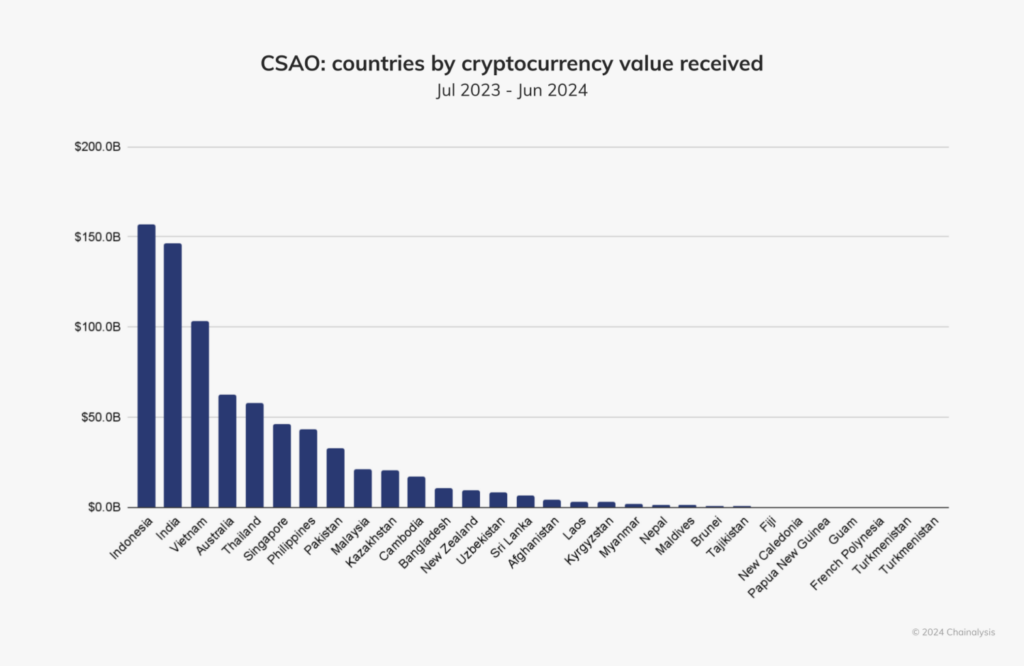
The 2024 Global Crypto Adoption Index from blockchain analytics firm Chainalysis underscores a profound shift in the world of digital currencies. Emerging markets, particularly India, Nigeria, and Indonesia, have claimed the top three spots in global cryptocurrency adoption. This reflects a growing trend of cryptocurrencies serving as critical financial tools in economies that lack traditional banking infrastructure. As these regions grapple with economic challenges like inflation, remittance costs, and limited financial inclusion, digital currencies are stepping in as alternative solutions.

India: Crypto Powerhouse Amid Regulatory Hurdles

India’s ascent to the top of the Global Crypto Adoption Index for the second consecutive year is no surprise. The country boasts a vast population with increasing access to the internet and smartphones. That makes it a fertile ground for crypto adoption. However, India’s crypto ecosystem operates under challenging conditions. The Indian government imposed a 30% tax on cryptocurrency capital gains and a 1% tax deducted at source (TDS) on all transactions. They also banned certain offshore crypto exchanges, like Binance and KuCoin. These regulations were implemented to curb speculative trading and increase regulatory oversight.

Despite these hurdles, India’s crypto adoption continues to thrive. The country’s tech-savvy population, coupled with a deep distrust in traditional financial institutions, is driving millions of Indians to explore decentralized finance (DeFi) platforms and peer-to-peer (P2P) trading. Use cases such as remittances, digital payments, and investments in stablecoins – pegged to traditional currencies – are becoming more prominent. They provide financial alternatives to people in regions with limited access to banking.

Source: Chainalysis 2024 Geography of Cryptocurrency Report

Nigeria: Overcoming Inflation and Financial Instability with Crypto

Nigeria ranks second on the index and has been a focal point for crypto innovation and adoption in Africa. The nation faces significant economic challenges, including persistent inflation and limited access to stable financial systems. Many Nigerians have turned to Bitcoin and stablecoins to hedge against inflation. They are protecting their wealth from the declining value of the local currency, the Naira.

Cryptocurrencies also play a crucial role in facilitating cross-border payments in Nigeria. Remittance fees remain high through traditional channels, so Nigerians turn to digital currencies as a faster, cheaper alternative to transfer funds abroad. This trend is emblematic of how crypto is becoming a necessity rather than a speculative investment in many lower-income countries.

Indonesia: A Crypto Growth Engine in Southeast Asia

Indonesia, which secured the third spot in the 2024 index, is another emerging market where crypto adoption is skyrocketing. As Southeast Asia’s largest economy, Indonesia is experiencing rapid digitalization. A growing number of people turn to cryptocurrencies for both remittances and investment opportunities. The use of stablecoins is especially significant in this market. They offer Indonesians a stable store of value amid concerns over inflation.

The country’s regulatory framework, though evolving, has been more supportive of crypto adoption compared to some of its global peers. This regulatory environment and the rapid expansion of Indonesia’s internet access enabled the country to position itself as a key player in the global crypto economy.

Crypto as a Lifeline in Emerging Markets

A common theme among India, Nigeria, and Indonesia is the essential role cryptocurrencies play in addressing financial problems unique to emerging economies. In wealthier nations, cryptocurrencies are often seen as speculative assets. In these lower-income countries, they serve practical purposes. They enable everyday transactions, protect against inflation, and reduce remittance costs. For many, crypto offers financial inclusion where traditional systems have failed.

Source: Chainalysis 2024 Geography of Cryptocurrency Report

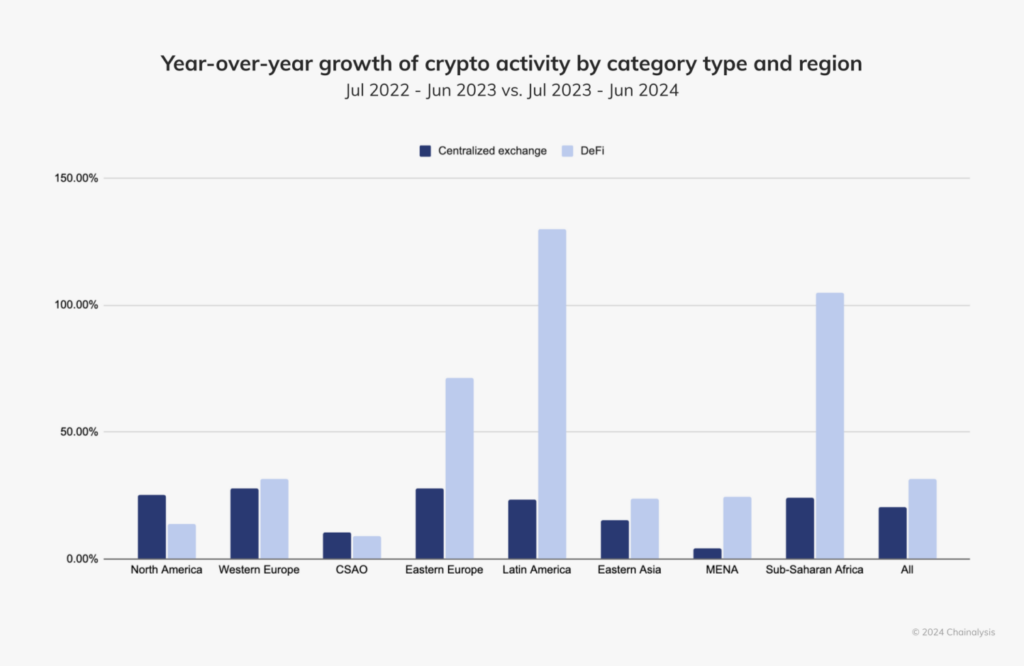
The 2024 Global Crypto Adoption Index also highlights that the trend is not limited to these three countries. Other nations in Central and Southern Asia, Sub-Saharan Africa, and Latin America are also making significant strides in crypto adoption. Seven of the top 20 countries in the index hail from Central and Southern Asia. That includes Vietnam and the Philippines, indicating a broader regional trend.

The New Crypto Frontier

As emerging economies lead the charge in cryptocurrency adoption, it’s clear that the role of digital currencies is evolving. No longer just a speculative asset, cryptocurrencies in regions like India, Nigeria, and Indonesia are becoming indispensable financial tools. In these markets, digital currencies offer solutions to real-world financial challenges, from high inflation and unstable currencies to high remittance fees and limited access to banking services. As the global economy continues to digitize, these emerging markets are proving that cryptocurrency adoption is not just a trend – it’s a financial lifeline.

Readers’ frequently asked questions

Why is cryptocurrency adoption higher in emerging economies like India, Nigeria, and Indonesia compared to wealthier nations?

Cryptocurrency adoption is particularly strong in emerging economies because these regions often face systemic challenges in their traditional financial systems. In countries like Nigeria, where inflation is rampant, and access to stable banking systems is limited, cryptocurrencies offer a viable alternative for protecting wealth. Cryptocurrencies, especially stablecoins, are seen as safer stores of value compared to volatile local currencies. Additionally, high remittance costs in countries like India and Nigeria make cryptocurrencies an attractive option for cross-border transactions. It allows people to send money to family members abroad without the high fees associated with traditional banking channels.

In contrast, in wealthier nations, traditional financial services tend to be more reliable. Therefore, cryptocurrencies are often viewed more as speculative investments rather than necessities. While crypto adoption in developed countries is growing, it’s primarily driven by investment opportunities rather than the need for everyday financial services.

How are governments in these emerging economies responding to the rise of cryptocurrency?

Governments in emerging economies have adopted a range of responses to the rise of cryptocurrencies, from stringent regulations to cautious acceptance. India, for instance, has imposed high taxes on cryptocurrency transactions – 30% on capital gains and a 1% tax deducted at source (TDS). It also banned certain foreign exchanges like Binance and KuCoin. These measures are aimed at reducing speculative trading and improving oversight, although they have not significantly dampened overall adoption. Many users have turned to decentralized finance (DeFi) platforms to avoid these restrictions.

Nigeria, while initially hesitant, has seen the government attempt to regulate the sector, primarily to curb the use of cryptocurrencies for illicit activities. However, citizens have continued to embrace cryptocurrencies for remittances and as a hedge against inflation. Indonesia, on the other hand, has been relatively more open, encouraging growth while introducing regulatory frameworks to monitor the sector. This more progressive approach has helped boost adoption rates in the country​.

What role do stablecoins and decentralized finance (DeFi) play in the growing crypto adoption in these regions?

Stablecoins and decentralized finance (DeFi) platforms play a crucial role in the widespread adoption of cryptocurrencies in emerging economies. Stablecoins, which are pegged to traditional fiat currencies, provide a much-needed solution for those in countries with high inflation or volatile currencies. In Nigeria, for example, stablecoins are often used to protect savings from the depreciating value of the local naira, while in India and Indonesia, they are used for remittances and day-to-day transactions.

DeFi platforms, meanwhile, are gaining traction as they allow users to bypass centralized financial systems that may be subject to high fees, bureaucratic delays, or government-imposed restrictions. Through these platforms, users can trade, lend, and earn interest on their crypto holdings without relying on traditional banks. In India, where crypto exchanges face high taxes and heavy regulation, DeFi offers a flexible alternative for those looking to remain active in the crypto ecosystem​.

Together, stablecoins and DeFi are enabling financial inclusion for millions who were previously underserved by traditional banking systems.

What Is In It For You? Action Items You Might Want to Consider

Explore Stablecoins for Risk Management

Given the rising use of stablecoins in emerging economies like Nigeria and Indonesia to protect against inflation, you should consider incorporating them into your portfolio. Stablecoins can provide a safe haven during volatile market conditions, especially if you trade in regions with unstable currencies. They offer a balance between staying within the crypto ecosystem while minimizing exposure to high market volatility. For example, holding USDC or USDT might give you stability without leaving the digital asset space.

Look Into Decentralized Finance (DeFi) Platforms

India’s growing use of DeFi platforms, particularly in response to strict government regulations on centralized exchanges, is a trend worth noting. DeFi offers you the ability to trade, lend, and earn interest on your holdings without the constraints of traditional financial institutions or centralized platforms. Explore lending protocols or decentralized exchanges (DEXs) like Uniswap or Aave to increase your exposure to crypto opportunities while avoiding high fees or heavy taxation.

Consider Emerging Markets for Crypto Investment

As emerging economies like India, Nigeria, and Indonesia lead global crypto adoption, it’s wise to monitor market movements in these regions. Keep an eye on local crypto trends, regulatory shifts, and how new platforms are developing in these areas. These markets offer unique opportunities, especially as they embrace crypto to solve real-world financial issues. Exploring investments or partnerships with projects based in these regions could give you early exposure to rapidly growing crypto sectors.

The Dark Side of Decentralization: Why Crypto Scams Are Becoming Harder to Stop

Crypto scams surged in 2023, costing Americans $5.6B

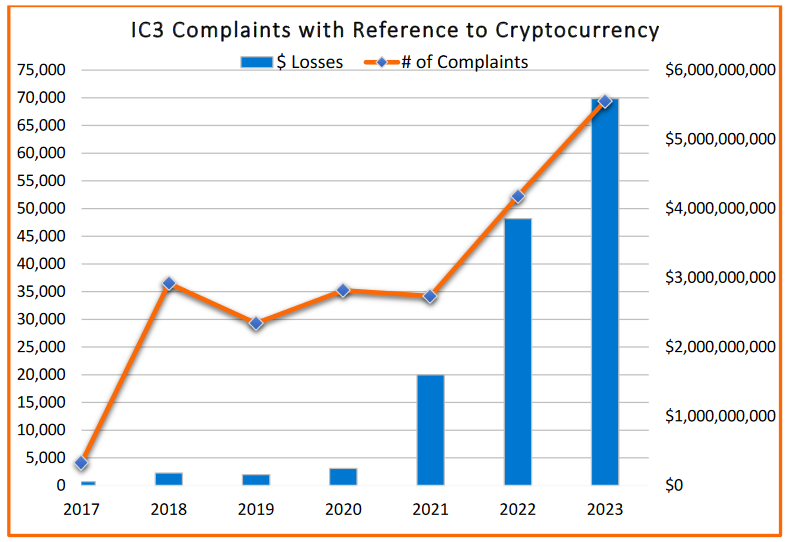
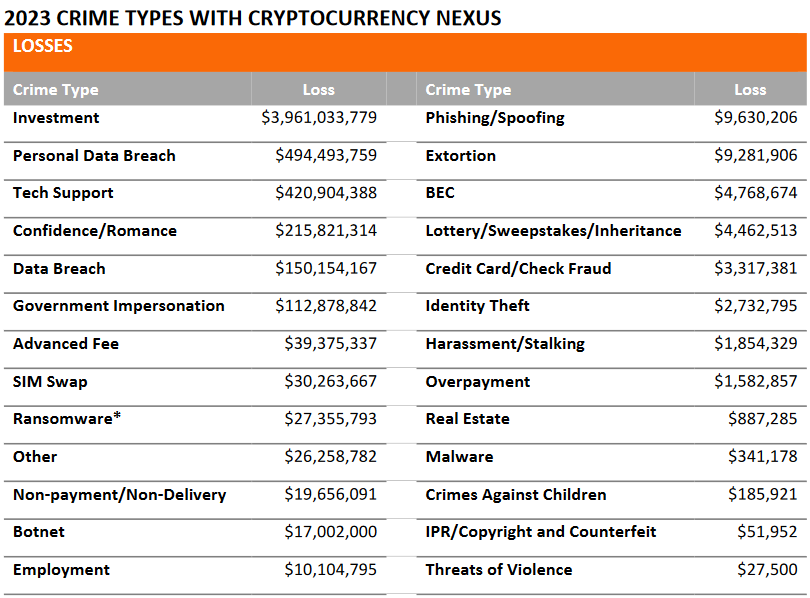
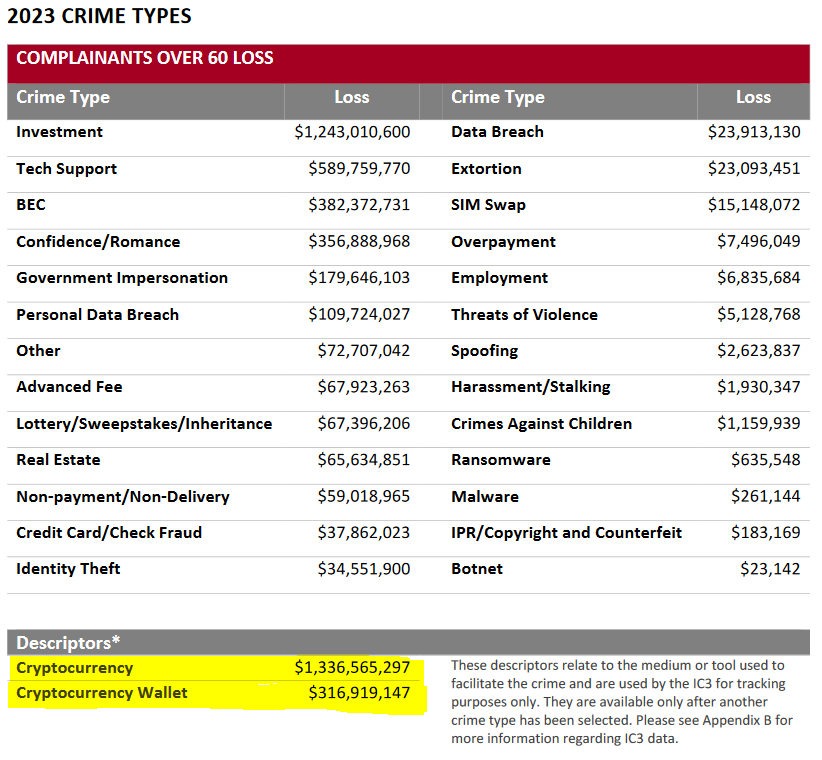
As cryptocurrencies become more mainstream, they also become a prime target for fraud. In 2023, Americans lost more than $5.6 billion in crypto scams, according to an FBI report. Investment fraud made up 71% of these losses, revealing that blockchain technology’s decentralized and anonymous nature has enabled criminals to act with near impunity. The victims, often lured through social media or dating apps, have seen their investments vanish into thin air, leaving them with little recourse. The decentralized system behind cryptocurrencies – once praised for promoting financial freedom – has now emerged as a double-edged sword, making it harder for law enforcement and regulators to tackle the growing wave of crypto-related scams.

Source: 2023 IC3 Cryptocurrency Report (www.IC3.gov)

Decentralization: A Boon and a Curse

Cryptocurrencies like Bitcoin, Ether, and other digital assets operate on decentralized networks, designed to be transparent, peer-to-peer, and independent of central authorities. This lack of central control was celebrated as a revolutionary way to transfer value without intermediaries, promising greater financial autonomy. However, the same features that make cryptocurrencies appealing to users also make them attractive to criminals.

The anonymity of blockchain transactions – where users’ identities are masked by cryptographic addresses – presents a major challenge for law enforcement. Scammers can transfer funds across borders within seconds, erasing any chance of reversing fraudulent transactions. Unlike traditional financial systems, where centralized institutions like banks can track and freeze suspicious accounts, cryptocurrencies lack these safeguards. This decentralization complicates the recovery of lost funds and reduces the traceability of fraudulent activities.

The Investment Fraud Surge

In 2023, investment fraud was by far the most common form of crypto scams, accounting for nearly $3.96 billion in losses. These schemes typically involve criminals posing as legitimate investment advisors or companies, promising extraordinary returns through cryptocurrency investments. They often allow the victims to initially withdraw small amounts, fostering trust before they persuade them to invest larger sums that ultimately disappear. “Pig butchering” scams – where fraudsters build long-term trust through social media or dating apps before draining victims’ assets – are particularly rampant.

Source: 2023 IC3 Annual Report (www.ic3.gov)

The fraudsters exploit the irreversible nature of cryptocurrency transactions. Once the funds are transferred, they cannot be retrieved, even if the fraud is discovered quickly. That is a stark contrast to traditional banking systems, where chargebacks and fraud detection mechanisms provide a level of consumer protection. Scammers also frequently deploy fake recovery services. They lure victims into paying additional money under the false promise of retrieving lost funds.

Who Are the Victims?

Although crypto scams target a wide range of demographics, older Americans are particularly vulnerable. The FBI reports that individuals over 60 lost approximately $1.6 billion to crypto fraud in 2023. This age group is often less familiar with the intricacies of digital currencies. It makes them prime targets for scammers who capitalize on their lack of knowledge. However, younger individuals, though more technologically adept, are not immune. Scammers tailor their tactics to the strengths and weaknesses of their victims.

Source: 2023 IC3 Elder Fraud Report (www.ic3.gov)

The Regulatory Challenge

For regulators and law enforcement agencies, tackling cryptocurrency fraud is an uphill battle. The decentralized architecture of blockchain technology creates jurisdictional challenges since criminals can operate across multiple countries without ever leaving their home base. Additionally, the pseudonymous nature of crypto transactions limits the ability of authorities to identify perpetrators.

Despite these challenges, global regulators and law enforcement are increasingly stepping up efforts to address the issue. The FBI’s Internet Crime Complaint Center (IC3) has intensified its focus on crypto-related fraud. However, the rapid evolution of the crypto landscape means that law enforcement must continuously adapt its strategies.

While blockchain technology has significant potential for positive disruption in areas like finance and supply chains, its decentralized, unregulated nature creates fertile ground for fraudulent schemes. With cryptocurrencies here to stay, creating legal frameworks that balance innovation and security is more pressing than ever.

The rise of cryptocurrency scams highlights the darker side of decentralization. While blockchain’s independence from centralized control has made it an exciting technological advancement, it has also fostered an environment where criminals can exploit users with relative ease. The anonymity, speed, and irreversibility of crypto transactions make it increasingly difficult for law enforcement to trace, recover, or prevent such fraud. As the use of digital assets grows, both users and regulators must grapple with the question of how to protect against these evolving threats without compromising the very freedoms that cryptocurrencies were designed to provide.

Readers’ frequently asked questions

Is it possible to recover lost cryptocurrency funds after being scammed?

Recovering lost cryptocurrency is extremely difficult due to the decentralized and anonymous nature of blockchain technology. Once a transaction is confirmed on the blockchain, it is typically irreversible, unlike traditional bank transfers where funds can sometimes be recalled or frozen. Scammers often take advantage of this by quickly moving stolen funds across different wallets and exchanges to obfuscate their origin. Some victims seek help from recovery services, but these can be scams themselves, further preying on individuals who have already been defrauded. Law enforcement, like the FBI, does make efforts to track and trace larger criminal operations. However, the success rate for recovering individual losses is low due to the international and unregulated nature of many cryptocurrency exchanges.

What can individuals do to protect themselves from falling victim to cryptocurrency scams?

The best protection against cryptocurrency scams is vigilance and skepticism, especially when approached online about investment opportunities. Avoid engaging with unsolicited offers from individuals or platforms promoting too-good-to-be-true returns. One common tactic scammers use is building trust through social media or dating platforms before pitching fraudulent investments. Additionally, it’s crucial to do thorough research before investing in any cryptocurrency or platform. Using well-established, regulated exchanges and wallets with security measures like two-factor authentication can reduce the risk of being scammed. Keeping up with trends in crypto scams, such as “pig butchering” schemes, can help individuals recognize red flags and avoid becoming a victim​.

Are governments and regulators doing anything to combat cryptocurrency fraud?

Yes, governments and regulatory bodies are increasingly aware of the need to address the rise in cryptocurrency fraud. The FBI, for instance, has been actively investigating large-scale scams and raising public awareness about the different methods criminals use to defraud people​. On a broader scale, countries like the U.S. are working toward clearer regulatory frameworks that could help prevent fraud. However, one of the major challenges regulators face is the global, decentralized nature of blockchain. Cryptocurrency transactions can span multiple countries, making it difficult for a single jurisdiction to enforce anti-fraud measures. Additionally, because many cryptocurrency platforms operate outside traditional financial systems, they may not comply with standard anti-money laundering (AML) or know-your-customer (KYC) regulations, complicating efforts to combat fraud on a global scale​. Despite these challenges, collaboration between international agencies is growing, and the regulatory environment is slowly evolving to better address these issues.

What Is In It For You? Action Items You Might Want to Consider

Diversify your research before making any investment

Always research thoroughly before committing to any cryptocurrency investment. Look beyond the enticing promises of quick profits, especially when the offer comes from unsolicited sources online or on social media. Verify the legitimacy of the platform by checking for user reviews, news coverage, or regulatory registrations. Legitimate crypto projects often have clear, verifiable roadmaps, active development communities, and transparent governance structures. Use well-established exchanges and wallets with strong reputations to minimize exposure to fraudulent schemes.

Use cold storage for long-term crypto holdings

To better protect your digital assets from scammers, consider using cold storage options like hardware wallets for long-term crypto holdings. Unlike online wallets or exchanges, cold storage keeps your assets offline and reduces the risk of them being compromised by hackers or scammers through phishing attacks. If you’re an active trader and need to keep some funds online, ensure you’re using platforms with two-factor authentication. Regularly update your security settings!

Stay informed about the latest scam trends

Crypto scams evolve as quickly as the market itself. Stay updated on the latest fraud tactics, such as “pig butchering” scams, where criminals establish relationships with victims before encouraging fraudulent investments. Follow trusted news sources and regulatory announcements to learn about emerging threats and scam types. Being proactive and knowledgeable about the risks will give you the upper hand in identifying red flags before they become costly mistakes.

- Advertisement -

FEATURED