Home Blog Page 185

Bitcoin ETF Outflows Surge Amid Market Turmoil

Bitcoin ETF outflows and BTC nosediving. Is the market turning Bearish?

Bitcoin experienced a sharp decline this week, dropping to $65,000. This significant downturn was driven by a combination of regulatory concerns and macroeconomic pressures. The cryptocurrency market faced substantial turbulence, leading to notable outflows from Bitcoin ETF, especially Fidelity’s FBTC.

Bitcoin ETF Outflows

Bitcoin ETF outflows have become a critical focus in the cryptocurrency market. This week, these outflows were particularly pronounced, contributing to the overall market decline. Investors pulled out significant funds from Bitcoin ETFs, reflecting growing unease and market instability.

Market Turmoil and Regulatory Concerns

The sharp sell-off in Bitcoin was influenced by several factors. Heightened regulatory scrutiny has created uncertainty, affecting investor confidence. Additionally, macroeconomic pressures such as persistent inflation and geopolitical tensions have further exacerbated the situation.

Bitcoin’s decline to $65,000 was accompanied by substantial outflows from Bitcoin ETFs. Fidelity’s FBTC led these outflows with over $226 million withdrawn. This movement underscores the increasing caution among investors regarding cryptocurrency investments.

Impact on Altcoins and Leveraged Positions

The market turbulence didn’t spare altcoins. Many experienced significant losses, with Ether (ETH) dropping by 8%. The sudden downturn led to over $400 million in liquidations of leveraged positions in Bitcoin and other cryptocurrencies.

Major exchanges like Binance and OKX saw the highest volumes of liquidations. Within 24 hours, total liquidations reached $860 million, affecting nearly 271,000 traders. This highlights the broader impact of Bitcoin ETF outflows on the entire cryptocurrency market.

Technical Indicators and Market Sentiment

Technical indicators for Bitcoin have turned bearish. The 50-day simple moving average at $64,870 now acts as critical support. Rising U.S. Treasury yields and a stronger dollar have added pressure, making it challenging for Bitcoin to regain upward momentum.

The moving average convergence divergence (MACD) indicator has also turned negative. This indicates a potential continuation of the downtrend. Market sentiment remains cautious, with analysts closely monitoring these indicators.

Broader Economic Factors

The downturn in the cryptocurrency market coincided with a dip in U.S. stock markets. New data showing accelerated inflation further dashed hopes for Federal Reserve rate cuts. JPMorgan Chase CEO Jamie Dimon highlighted the challenges posed by persistent inflation and quantitative tightening efforts.

These economic factors have a profound impact on risk assets, including cryptocurrencies. Investors are increasingly wary of these broader economic trends, which influence Bitcoin ETF outflows and overall market stability.

Summary of the Week’s Events

This week, Bitcoin’s drop to $65,000 was marked by significant Bitcoin ETF outflows, especially from Fidelity’s FBTC. Regulatory concerns and macroeconomic pressures played key roles in driving this decline. The market turmoil affected not only Bitcoin but also altcoins and leveraged positions across major exchanges. Technical indicators suggest a bearish trend, with economic factors adding to the uncertainty. As investors navigate this challenging period, the focus remains on how these factors will shape the future of cryptocurrency investments.

Bitcoin ETF outflows have significantly impacted the cryptocurrency market this week. The sharp decline in Bitcoin’s price, driven by regulatory and economic pressures, highlights the volatility and vulnerability of digital assets. As the market continues to react to these challenges, investors must stay informed and cautious.

Whistleblower Payments and Influencer Loans: Unveiling FTX’s Controversial Moves

FTX Whistleblower payments and influencer loans reveal deeper issues in its bankruptcy case and ongoing legal challenges.

FTX’s bankruptcy saga took another twist. Recent reports uncovered that the exchange paid over $25 million in hush money to whistleblowers. Additionally, millions were loaned to an Australian influencer to avoid litigation. These revelations, coupled with asset sales and a substantial tax settlement, paint a complex picture of FTX’s efforts to manage its financial obligations while navigating a turbulent legal landscape.

FTX Whistleblower Payments

In a bombshell report, a court-appointed examiner revealed over $25 million in FTX hush money payments to whistleblowers before its collapse in November 2022. Robert J. Cleary and the law firm Quinn Emanuel Urquhart & Sullivan led the investigation. They found that these payments were made to silence complaints of systemic misconduct within the company. These allegations included misleading investors, commingling customer funds, market manipulation, insider trading, and failing to implement proper anti-money laundering controls.

Joseph Bankman, a Stanford Law School professor and father of FTX’s co-founder Sam Bankman-Fried, reportedly played a role in resolving some of these whistleblower complaints. This involvement has added another layer of controversy to the already complex legal battles surrounding FTX.

Influencer Loans and Asset Sales

In addition to the whistleblower payments, it was revealed that FTX loaned millions to an Australian influencer. This happened in an attempt to avoid potential litigation. The move was part of FTX’s broader strategy to manage its financial and legal challenges as it sought to repay creditors and navigate bankruptcy proceedings.

To raise funds, FTX also completed the sale of $2.6 billion worth of Solana tokens. These asset sales are critical for the company as it attempts to meet its obligations and repay creditors in full. The sale and liquidation of assets like Solana tokens highlight FTX’s aggressive efforts to recover from its financial turmoil.

Impact and Ongoing Legal Challenges

The fallout from FTX’s collapse has been significant, affecting the broader cryptocurrency market and leading to substantial legal repercussions. Sam Bankman-Fried, the former CEO of FTX, was found guilty of multiple counts of fraud and conspiracy. It resulted in a 25-year prison sentence and an order to pay $11 billion in forfeiture. Despite these measures, the complexities of FTX’s financial practices and legal entanglements continue to unfold. They offer a critical perspective on the exchange’s controversial strategies.

These revelations underscore the challenges FTX faces as it seeks to resolve its bankruptcy and repay its creditors. The combination of hush money payments, loans to avoid litigation, and asset liquidations paints a picture of a company in turmoil. It struggles to navigate a myriad of legal and financial obstacles.

As FTX continues to unravel, the company’s controversial financial practices will remain under scrutiny. This includes those significant whistleblower payments and loans to influencers. The cryptocurrency community and regulators will be closely watching how these revelations impact FTX’s efforts to recover and repay its creditors.

McLaren Leverages Blockchain Technology to Enhance Racing Performance

McLaren intigrating blockchain technology to enhance race performance

McLaren Racing, renowned for its innovation in Formula 1 and beyond, is pushing the boundaries of technology once again. This time, the prestigious automaker has embarked on a groundbreaking initiative to integrate blockchain technology into its GT4 racing series. This move aims to elevate performance metrics but also to revolutionize the way data is managed and analyzed in professional motorsports.

McLaren’s Blockchain Integration Initiative

In a strategic partnership with Minima, McLaren has deployed blockchain technology to create the world’s first on-chain race data logger for its GT4 supercar fleet. This implementation at the Spa-Francorchamps circuit signifies a significant leap forward in the quest for real-time, secure, and immutable data collection in racing environments. By harnessing Minima’s L1 blockchain, McLaren ensures that every piece of race data—from lap times to engine diagnostics—is securely logged and readily accessible for analysis.

Benefits of Blockchain in Motorsports

The adoption of blockchain in motorsports brings forth multifaceted advantages. Firstly, it enhances data accuracy by eliminating the possibility of tampering or human error. This provides teams with precise insights into car performance and driver behavior. Secondly, blockchain’s decentralized nature ensures data transparency, allowing stakeholders and fans alike to access authenticated race statistics in real-time. Such transparency fosters trust and integrity within the racing community, reinforcing McLaren’s commitment to excellence.

Driving Innovation Beyond the Track

Beyond its immediate applications in racing, McLaren’s blockchain integration sets a precedent for technological innovation across industries. The robustness and security of blockchain technology can potentially extend to other high-performance sectors such as aerospace, healthcare, and finance, where data integrity and transparency are critical. This initiative underscores McLaren’s role as a pioneer in motorsports and as a catalyst for technological advancement on a global scale.

Future Prospects and Conclusion

Looking ahead, McLaren plans to expand its blockchain initiatives. They are exploring further applications that could reshape the future of racing and beyond. As blockchain continues to evolve, its integration into motorsports represents a pivotal moment in the intersection of technology and sports. By leveraging blockchain, McLaren not only enhances its racing performance but also drives innovation that transcends traditional boundaries.

McLaren adopting blockchain technology in its GT4 racing series marks a significant milestone in the world of motorsports. This strategic move elevates performance metrics and data security but also positions McLaren at the forefront of technological innovation in professional racing. As blockchain continues to prove its value across various industries, McLaren’s initiative serves as a testament to the transformative power of technology in enhancing competitiveness and transparency in sports.

Can the Terraform Labs Settlement Turn the Tide in Ripple vs. SEC?

Ripple vs SEC Terraform labs settlement
Judge using gavel in court, close-up

The recent settlement between Terraform Labs and the U.S. Securities and Exchange Commission (SEC) has ignited speculation about its potential ramifications for Ripple and its ongoing legal struggle. As Ripple contests a formidable $2 billion fine from the SEC, the Terraform Labs case introduces a new precedent that could sway the final outcome.

Unpacking the Ripple-SEC Dispute

Ripple Labs finds itself entrenched in a fierce legal dispute with the SEC, which accuses the company of conducting an unregistered securities offering through its sales of XRP. Ripple vehemently disputes the SEC’s demand for nearly $2 billion in penalties, arguing that such a sanction lacks proportionality and legal grounding.

Analyzing the Terraform Labs Settlement

In a recent development, Terraform Labs opted to settle with the SEC for a substantially reduced sum compared to the SEC’s demands from Ripple. Terraform Labs faced similar allegations of unauthorized securities sales. This settlement has sparked debates over its potential implications for Ripple’s penalties.

Ripple’s Legal Defense

Ripple’s legal team asserts that the settlement reached by Terraform Labs underscores the SEC’s inconsistent approach to penalty enforcement. Ripple contends that any fine imposed should align with the Terraform Labs settlement, which did not surpass $500 million. Ripple advocates for a modest $10 million penalty, arguing against the SEC’s purportedly excessive $2 billion claim, which lacks precedent.

Ripple contests penalty suggested by the SEC following Terraform Labs settlement

Assessing Legal Precedents and Comparisons

The Terraform Labs settlement highlights a stark contrast in penalty outcomes despite allegations mirroring those against Ripple. This disparity bolsters Ripple’s argument that the SEC’s enforcement tactics are erratic and punitive. Ripple’s defense team posits this as evidence of regulatory overreach, urging the court to consider a more judicious penalty.

Potential Industry Impact

The outcome of Ripple’s legal battle holds profound implications for the broader cryptocurrency sector. A favorable ruling for Ripple could establish a benchmark for regulating and penalizing digital assets in the future. Conversely, a verdict favoring the SEC might herald stricter regulatory regimes and heightened penalties across the blockchain industry.

Ripple’s Adaptations and Compliance Efforts

In response to the SEC’s allegations, Ripple has initiated strategic adjustments to its operational protocols. The company has revamped its XRP sales strategies to ensure full compliance with regulatory standards and has taken proactive steps to align with legal requirements. These measures underscore Ripple’s steadfast commitment to upholding the law and mitigating future legal risks.

Looking Forward

As Ripple’s legal battle against the SEC unfolds, the settlement involving Terraform Labs assumes critical significance. Ripple’s plea for a moderated penalty, drawing parallels from the Terraform Labs case, underscores the imperative for consistent regulatory practices. The eventual outcome will not only shape Ripple’s future but also establish vital legal precedents impacting cryptocurrency regulation.

The Ripple-SEC litigation stands as a pivotal juncture for the blockchain industry. With the Terraform Labs settlement potentially serving as a turning point, the verdict in this case could define essential legal benchmarks. The cryptocurrency community eagerly awaits the court’s decision, which promises enduring implications for the governance of digital assets in the United States and beyond.

SEC Settles with Terraform Labs for $4.6B in Landmark Cryptocurrency Case

SEC vs Terraform Labs $4.5B Landmark Settlement

The U.S. Securities and Exchange Commission (SEC) reached a historic settlement with Terraform Labs. A federal judge approved the $4.5 billion agreement, concluding a lengthy investigation into allegations of securities fraud involving Terraform Labs and its co-founder, Do Kwon. It underscores the growing scrutiny and regulatory enforcement actions within the burgeoning digital asset sector.

Understanding the Settlement

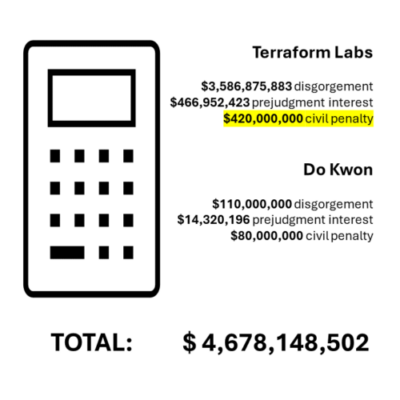
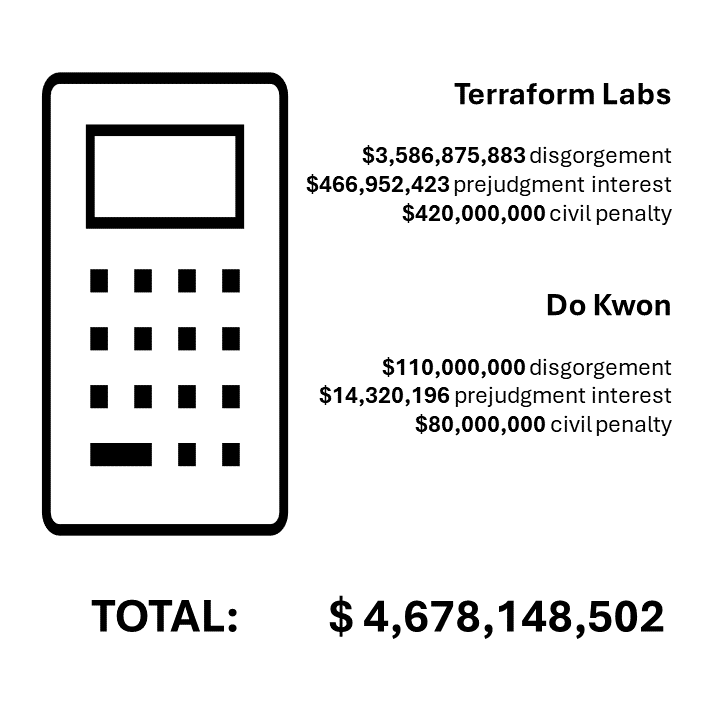
Terraform Labs, known for its prominent role in the decentralized finance (DeFi) space, agreed to pay the SEC $4.6 billion to resolve accusations of misconduct related to its cryptocurrency offerings. The SEC alleged that Terraform Labs misled investors by failing to disclose pertinent information and violating securities laws. This settlement is one of the largest in SEC history, signaling a robust response to perceived infractions in the crypto industry.

Terraform Labs Settlement with the SEC Total numbers

Key Allegations and Implications

Central to the SEC’s case were allegations that Terraform Labs and Do Kwon engaged in practices that constituted securities fraud. The commission argued that the company misled investors about the nature of its digital assets and the risks associated with investing in them. Such allegations have broader implications for investor protection and regulatory oversight in the evolving landscape of blockchain technology and cryptocurrencies.

Financial Impact and Future Outlook

The $4.5 billion settlement amount, while substantial, may pose significant financial challenges for Terraform Labs. Reports speculate on the potential dissolution of the company following the settlement. It highlights the severe consequences of regulatory non-compliance in the crypto sector. Moreover, the resolution of this case sets a precedent for future regulatory actions. This underscores the importance of transparency and compliance within digital asset markets.

Community and Market Reaction

The settlement elicits varied responses from stakeholders within the cryptocurrency community and financial markets. Some view it as a necessary step toward ensuring market integrity and investor confidence. Others raise concerns about the regulatory burden on innovative fintech enterprises. Analysts and industry experts continue to debate the long-term ramifications of such regulatory measures on the growth and development of decentralized financial platforms.

The SEC’s $4.5 billion settlement with Terraform Labs represents a landmark event for regulatory oversight of digital assets. It highlights the imperative for companies operating in the crypto space to adhere rigorously to securities laws and maintain transparency with investors. As the blockchain market continues to evolve, stakeholders will closely monitor how regulatory frameworks adapt to accommodate technological innovation while safeguarding investor interests.

This settlement serves as a pivotal case study in the ongoing dialogue surrounding the regulation of cryptocurrencies. It influences future practices and policies within the global financial ecosystem.

- Advertisement -

FEATURED