Home Blog Page 201

Are Stablecoins Safe? New Zealand’s Top Banker Says No

Are stablecoins safe? The governor of New Zealand's Reserve Bank, Adrian Orr, says No.

Stablecoins are a particular type of cryptocurrency that aims to retain a steady value by pegging their value to another asset, such as gold or the US dollar. Even though stablecoins are proposed to be safe, some people question their reliability. Recently, Adrian Orr, the governor of the Reserve Bank of New Zealand (RBNZ), gave a strong warning about the potential hazards and limitations of stablecoins.

What are the problems with stablecoins?

According to Orr, stablecoins are “the biggest misnomers” and “oxymorons” in the crypto space. He said that stablecoins are not stable at all. They rather depend on the balance sheet of the issuer or the custodian of the underlying assets. If the issuer or the custodian faced any financial or legal troubles, the stablecoin holders could lose their money or access to their funds.

“Stablecoins are not stable. They’re only as good as the balance sheet of the person offering that stablecoin.”

Adrian Orr, Governor of the Reserve Bank of New Zealand

Orr argued that stablecoins are not a substitute for central bank-issued, government-backed fiat money. He emphasized that fiat money is the best kind of money due to its low and stable inflation rate. It can be used as a means of exchange, a store of value, and a unit of account. In contrast, he stated that Bitcoin, the most popular cryptocurrency, fails to meet these criteria. It had other purposes but not as money.

What are the implications of Orr’s remarks?

Orr’s comments reflect a growing concern among central bankers and regulators regarding the impact of stablecoins and other cryptocurrencies on the global financial system. Some experts worry stablecoins could threaten the monetary sovereignty and stability of nations, particularly if they become widely adopted and used for cross-border payments and remittances. Stablecoins could also enable money laundering, tax evasion, and other illicit activities, which would undermine the authorities’ efforts to protect consumers and include them financially.

According to Orr, the Reserve Bank of New Zealand (RBNZ) has no plans to introduce its own digital currency anytime soon, unlike some other central banks exploring or developing their own central bank digital currencies (CBDCs). Orr stated that the RBNZ is not in a hurry to create a digital version of the New Zealand dollar. The focus is to improve the existing payment systems and ensure their resilience and efficiency.

What are the perspectives of other experts?

Not everyone in the crypto industry and the academic world shares Orr’s views on stablecoins. Some experts point out several benefits over fiat money, such as lower transaction costs, faster settlement times, and greater transparency and auditability. Additionally, some people argue that stablecoins can act as a hedge against inflation and currency devaluation. They can also provide greater financial access and inclusion for those who are unbanked or underbanked.

Stablecoins have gained popularity as a reliable form of cryptocurrency. However, even supporters of their use acknowledge the risks and challenges involved in using and regulating them. Stablecoins must have adequate reserves and safeguards to ensure their stability and security. They must also comply with relevant laws and standards to prevent fraud and abuse. Experts recommend classifying and regulating stablecoins according to their different features and functions. They must be subject to oversight and supervision by the appropriate authorities.

Stablecoins are a topic of controversy and complexity within the crypto world. There is no consensus on whether they are safe or not. Some consider them a promising innovation that could potentially enhance the efficiency and inclusivity of the financial system. Others see them as a potential threat that could destabilize the monetary order and enable illicit activities. The debate is likely to continue as more stablecoins emerge and evolve and more central banks and regulators weigh in on their implications and regulations.

Read more: NZDD Stablecoin Launch: Transforming New Zealand Finance

New York Attorney General Amends Lawsuit Against Gemini, Genesis and DCG

State of New York expands lawsuit against Gemini, Genesis, DCG

The cryptocurrency industry is experiencing a development in the legal landscape as the New York Attorney General’s office amends its lawsuit against well-known blockchain companies Gemini, Genesis, and Digital Currency Group (DCG). This update comes after a settlement between the Attorney General and Genesis, marking an important moment in the ongoing legal battle surrounding allegations of fraud in the crypto space. Let’s explore the details of this lawsuit and its implications for the cryptocurrency community.

Genesis. Lawsuit Update

After investigation and legal proceedings over several months the New York Attorney General’s office recently settled with Genesis, a subsidiary of DCG. The settlement requires Genesis to cease operations in New York. This development takes place amidst increased scrutiny of the Gemini Earn program, which was a collaborative effort between Gemini and Genesis. However, with this settlement reached, the Attorney General’s office has expanded its lawsuit against Gemini, Genesis, and DCG. It presented additional evidence of investor losses exceeding $3 billion.

Fraud. Impact on Investors

The main focus of the lawsuit centers around claims that Gemini, Genesis, and DCG misled investors regarding the safety and profitability of the Gemini Earn program. Investors were promised returns on their cryptocurrency deposits but faced substantial losses when the program failed to deliver as promised. According to the Attorney general’s office, this alleged fraud affected over 230,000 investors. It demonstrates the far-reaching consequences of deceptive practices within the crypto industry.

Implications for the Cryptocurrency Community

The amended lawsuit and settlement with Genesis highlight a pressing need for increased regulatory oversight. Measures are needed to safeguard investors in the cryptocurrency market. As digital assets gain mainstream acceptance, regulatory authorities are intensifying their scrutiny of industry players. This is to ensure compliance with existing laws and regulations. The outcome of this lawsuit could establish a precedent for legal actions against companies operating in the crypto space. This would shape the regulatory landscape for years to come.

In conclusion, the updated lawsuit filed by the New York Attorney General against Gemini, Genesis, and DCG represents a pivotal moment in the ongoing legal battle surrounding alleged fraud within the cryptocurrency industry.
The Genesis settlement is a step
towards holding people accountable. The expanded lawsuit emphasizes just how much investors have lost and why we need stronger regulations. As this legal situation continues, those involved in the community will be paying close attention to how it will impact the future of digital asset regulation.

Read more: Genesis Global Capital sues exchange platform Gemini

MicroStrategy – The Driving Force Behind Bitcoin Surge

Why MicroStrategy keeps buying Bitcoin

In the ever-evolving landscape of cryptocurrency, one company stands out for its relentless pursuit of Bitcoin: MicroStrategy. With each passing month, headlines announce yet another purchase of the world’s most popular cryptocurrency by this business intelligence giant. But who is MicroStrategy, and why do they keep buying BTC?

Who is MicroStrategy?

Established over three decades ago, MicroStrategy initially focused on business intelligence software. However, in 2020, under the leadership of CEO Michael Saylor, the company embarked on a transformative journey into the realm of cryptocurrency.

MicroStrategy’s Bitcoin Buying Spree

Since its inaugural Bitcoin purchase in 2020, MicroStrategy has consistently added to its Bitcoin holdings. As of February 2024, the company boasts an impressive 190,000 BTC in its portfolio. This accumulation, spanning over three and a half years, has solidified MicroStrategy’s position as one of the largest institutional investors in the cryptocurrency market.

The Rationale Behind MicroStrategy’s Bitcoin Strategy

MicroStrategy’s CEO, Michael Saylor, champions Bitcoin as a superior store of value and a hedge against inflation. He believes that Bitcoin’s long-term potential outweighs the risks associated with traditional assets. Saylor’s bullish outlook on Bitcoin has guided MicroStrategy’s investment strategy, leading to substantial returns for the company.

Value and Timeline of Investments

MicroStrategy’s Bitcoin purchases have been both strategic and substantial. The company’s initial purchase of 21,454 BTC in August 2020 for $250 million marked the beginning of its Bitcoin accumulation journey. Since then, MicroStrategy has continued to invest in Bitcoin, with each subsequent purchase contributing to the company’s growing portfolio. As of February 2024, MicroStrategy’s Bitcoin holdings are valued at over $9 billion, representing a significant unrealized profit of approximately $3.2 billion on its initial investments.

The Role of Bitcoin in MicroStrategy’s Future

Beyond its investment potential, MicroStrategy sees Bitcoin as more than just a financial asset. Saylor has referred to the company as a “Bitcoin development company,” indicating a broader vision for integrating Bitcoin into its business operations. MicroStrategy aims to leverage Bitcoin’s underlying technology and ecosystem to drive innovation and growth in the digital economy.

Challenges and Opportunities

Despite its success, MicroStrategy’s Bitcoin strategy is not without challenges. The volatile nature of the cryptocurrency market and regulatory uncertainty pose risks to the company’s investments. However, MicroStrategy remains undeterred, continuing to advocate for Bitcoin’s adoption and integration into traditional finance.

MicroStrategy’s bold foray into Bitcoin has reshaped the landscape of institutional investing in cryptocurrency. With its unwavering commitment to Bitcoin and visionary leadership, MicroStrategy is poised to continue shaping the future of finance in the digital age.

Read more: Where Bitcoin Is Going in 2024 and Beyond

Bitcoin Mining Profitable After Halving?

As the halving event approaches, many question whether Bitcoin mining will remain profitable after halving.

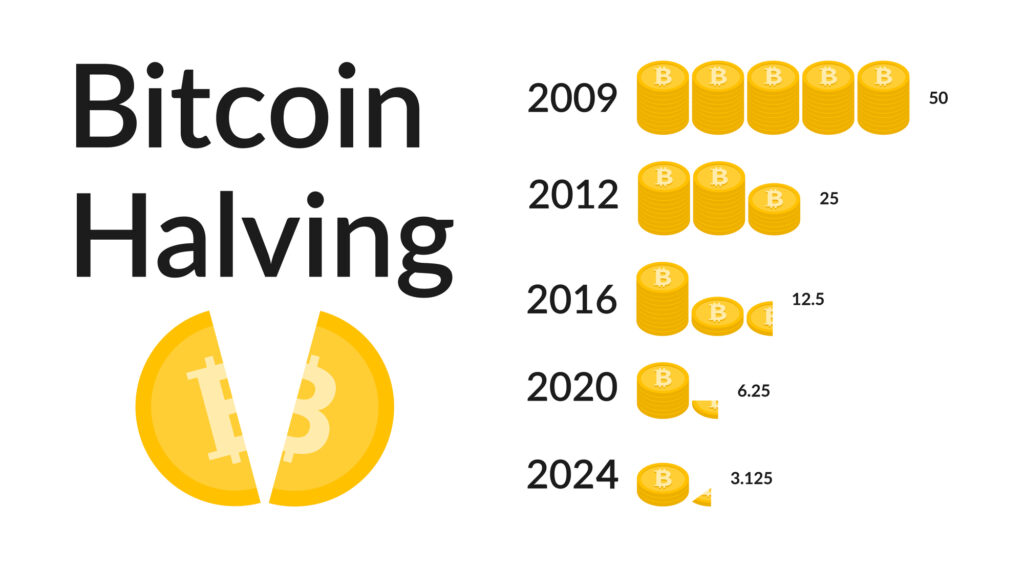
Bitcoin mining, a fundamental process in the cryptocurrency ecosystem, involves validating transactions and minting new bitcoins. Central to this process is the concept of halving, where the mining reward is reduced by half at regular intervals. This phenomenon has a profound impact on the profitability of Bitcoin mining operations.

The upcoming halving, scheduled for April 2024, is poised to decrease mining rewards from 6.25 to 3.125 bitcoins per block. This reduction directly affects miners, who will receive fewer bitcoins for their efforts. The question arises: will Bitcoin mining remain profitable after halving?

The next Bitcoin halving event is expected to occur in April 2024.

Understanding the Post-Halving Landscape

Post-halving profitability hinges on a multitude of factors, with Bitcoin’s price being of paramount importance. The halving event reduces the supply of new bitcoins, potentially driving prices upwards due to increased scarcity. However, market sentiment, regulatory developments, and technological advancements also play significant roles in shaping Bitcoin’s price trajectory.

Mining difficulty, another crucial factor, adjusts every 2016 blocks to maintain a consistent block time. This adjustment reflects the overall competitiveness within the mining network and directly impacts miners’ profitability. Higher mining difficulty translates to increased competition, potentially squeezing profit margins for individual miners.

The Indirect Effects of Halving on Mining Operations

Halving not only directly impacts mining rewards but also indirectly affects mining difficulty and hash rate. Post-halving, miners operating at high electricity costs with outdated equipment may find their operations no longer profitable. Consequently, some miners may opt to sell their equipment, switch to alternative cryptocurrencies, or cease operations altogether.

Conversely, forward-thinking miners may seize the opportunity presented by the halving to invest in more efficient mining equipment or secure affordable energy sources. By doing so, they can bolster their hash rate and remain competitive in the post-halving landscape.

Long-term Strategies for Sustained Profitability

In navigating the challenges posed by halving, miners must adopt long-term strategies to ensure sustained profitability. Scaling up and diversifying operations can help increase the hash rate and revenue streams. Additionally, investing in innovative technologies and upgrading equipment can enhance efficiency and reduce operational costs.

Collaborating with other miners through mining pools can also provide benefits such as increased security and stability. However, miners must carefully weigh the trade-offs, as joining a mining pool may entail reduced individual earnings.

Navigating the Post-Halving Era

While halving marks a significant milestone in the Bitcoin ecosystem, its impact on mining profitability is multifaceted. Miners must remain vigilant and adapt to the evolving landscape by implementing strategic measures to ensure sustained profitability. By leveraging technological advancements, collaborating with peers, and staying informed about market dynamics, miners can confidently navigate the post-halving era.

In summary, while halving poses challenges to Bitcoin mining profitability, it also presents opportunities for innovation and growth. By embracing change and adopting forward-thinking strategies, miners can thrive in the dynamic and ever-evolving world of cryptocurrency mining.

Read more: Where Bitcoin Is Going in 2024 and Beyond

Ledger CEO Pascal Gauthier Explores Challenges and Future of Crypto Self-Custody

Ledger CEO Pascal Gauthier talks about challenges and Future of Crypto Self-Custody

Pascal Gauthier, the CEO of Ledger, addressed the audience at Blockchain Life 2023, delving into the puzzling discrepancy between the widespread adoption of cryptocurrencies and the comparatively low usage of hardware wallets, such as Ledger’s. Despite the growing interest in crypto, Ledger’s user base stands at 5 million, a mere 1% of the market.

Self-Custody’s Significance

Gauthier emphasized the importance of self-custody in the crypto space and expressed concern over the current centralized market, revealing that most of the 500 million crypto users are on exchanges rather than utilizing self-custody solutions. He urged the audience to consider the fundamental purpose of crypto – to be a decentralized and self-custodial peer-to-peer payment network.

Market Insights

Breaking down the numbers, Gauthier highlighted that Ledger protects 20% of all cryptocurrencies and 35% of all NFTs, serving around 5 million customers. However, he acknowledged the difficulty in accurately gauging user numbers due to the challenges of conducting business intelligence on blockchain.

Centralization Challenges

The Ledger CEO addressed the need for the industry to tackle the centralization issue and promote self-custody, stressing that the forthcoming influx of users, potentially driven by the rise of ETFs, poses a significant challenge. He urged the industry to solve the user experience (UX) and user interface (UI) problems associated with self-custody.

Vision for the Future

The talk shifted towards Ledger’s vision for the future, emphasizing a shift from technology-centric to product and experience-focused solutions. Gauthier argued that the industry, largely shaped by developers, needs to prioritize designing products and experiences that make technology subordinate. He pointed out that current technologies like account abstraction and MPC are important but stressed that they are not products.


Join Blockchain Life 2024 – Dubai


Ledger’s Efforts

Gauthier shared Ledger’s efforts in this direction, offering Ledger.com as a platform to purchase self-custodial devices. He discussed the need for a radical change in UX/UI, particularly in the on-boarding phase. He cited the challenge of convincing users to embrace self-custody, attributing it to trust issues related to handling 24 words.

Addressing Challenges

The Ledger CEO hinted at Ledger’s new offering, Ledger Recover, as a solution to the 24 words problem. He acknowledged that the industry needs to collectively address this challenge to facilitate the on-boarding of millions of users into self-custody.

In conclusion, Gauthier stressed the importance of making self-custody a seamless part of users’ everyday lives, envisioning a future where securing digital assets is intuitive, easy, and integral to users’ digital experiences. As the industry anticipates potential mass adoption with the advent of ETFs, addressing UX/UI challenges and building trust in self-custody remain key priorities for Ledger and the crypto community at large.

- Advertisement -

FEATURED