Home Blog Page 204

Binance Under Fire – Victims of Hamas Terror Sue for Alleged Complicity

Lawsuit alleges Binance complicit in Hamas Terror

In a groundbreaking legal development, victims of the Hamas terror attack on Israel are taking legal action against Binance, the world’s leading cryptocurrency exchange. Judith Raanan and her daughter Natalie, who was held hostage during the assault on October 7, along with the families of two men killed in the attack, are filing a lawsuit. They allege that Binance facilitated terrorism by providing a funding mechanism for Hamas.

Background – Accusations against Binance

A lawsuit was filed in the Southern District of New York, alleging that between 2017 and 2023, Binance processed fund transfers for the Hamas terrorist group in an unlawful manner. The filing claims that Binance acted as a financing tool for Hamas. It deliberately concealed its activities from regulatory bodies in the United States. These allegations come in the wake of an investigation into compliance and criminal activities, which led to Binance admitting guilt for violating anti-money laundering regulations and agreeing to pay a $4 billion settlement to the U.S. Treasury Department.

Connecting Binance to Financing Terrorism

The legal team representing the victims argues that Binance took extreme measures to protect users linked to terrorist organizations. This particularly applied to those considered “VIP” users, generating significant profits for the exchange. This lawsuit brings up concerns regarding the responsibility of cryptocurrency exchanges in preventing illegal activities. It calls for a review of regulatory supervision.

Binances Response and Legal Consequences

At present, Binance has not provided any response to the allegations mentioned in the lawsuit. Nevertheless, this legal action adds to the difficulties that the cryptocurrency giant is already facing. The ongoing scrutiny from regulators and their admission of guilt for violating sanctions and anti-money laundering laws have significantly damaged Binance’s reputation.

The Wider Implications for Cryptocurrency Platforms

This case brings attention to the accountability of cryptocurrency exchanges concerning their involvement in facilitating activities, particularly regarding financing terrorism. It urges an examination of the preventive measures implemented by these platforms to ensure that their services are not exploited by malicious individuals.

Regulatory Landscape and Ethical Standards within the Industry

While this lawsuit against Binance represents a step forward, navigating the legal path ahead will be complex. Previous cases have shown that, even if successful, obtaining compensation from entities like terror organizations or state sponsors can be challenging. The victims and their families are seeking restitution not only from Binance but also from the governments of Iran and Syria further complicating the legal matters.

The Future – Legal Complexity and Its Impact

As the legal dispute progresses, the case against Binance can potentially be a turning point in regulating cryptocurrency exchanges. It emphasizes the importance of having oversight and accountability measures in place to prevent these platforms from unknowingly facilitating illegal activities, especially those linked to terrorism.

In the changing world of cryptocurrency, this lawsuit against Binance raises significant ethical questions. What are the industry’s responsibilities and its role in ensuring global security?

A Pivotal Moment for Crypto Regulation

This legal action against Binance goes beyond being a challenge for one platform. It serves as a critical test for the entire cryptocurrency industry. The outcome is likely to shape frameworks and establish ethical standards expected from exchanges operating within this domain.

In their pursuit of justice, victims of the Hamas attack are seeking accountability from Binance and are also addressing wider systemic issues within the cryptocurrency industry. As this battle intensifies, people worldwide observe closely. In light of global security concerns the result could establish a precedent for responsible operations of cryptocurrency platforms.


Crypto Expo Europe 2024: Navigating the Future of Blockchain

Crypto Expo Europe 2024 is scheduled for 3-4 March 2024 in Bucharest, Romania

As the crypto landscape continues to evolve, Crypto Expo Europe 2024 emerges as a pivotal gathering for industry players, enthusiasts, and curious minds alike. Set against the backdrop of Bucharest, Romania, this event promises insights, connections, and a deeper understanding of the blockchain revolution.

Why Attend?

Knowledge Exchange

At Crypto Expo Europe, knowledge flows freely. Attendees can engage in discussions, attend seminars, and participate in workshops led by experts. Whether you’re a seasoned professional or a newcomer, the event offers a chance to learn about the latest trends, regulatory developments, and technological breakthroughs.

Networking Opportunities

The crypto community thrives on collaboration. Here, you’ll meet visionaries, developers, investors, and thought leaders. Conversations at coffee breaks or during panel sessions can lead to partnerships, investment opportunities, and innovative projects.

Insights from Industry Leaders

The speaker lineup includes influential figures who share their experiences and predictions. From legal experts to tech innovators, these talks provide valuable context for understanding the crypto ecosystem.

Exploration of Cutting-Edge Solutions

The expo area buzzes with activity. Explore booths showcasing DeFi platforms, NFT projects, and blockchain solutions. Witness firsthand how technology is reshaping finance, supply chains, and digital identity.

Regulatory Clarity

As governments grapple with crypto regulations, staying informed is crucial. Crypto Expo Europe hosts discussions on compliance, security, and the evolving legal landscape. Gain insights into how the industry adapts to changing norms.

Community Building

Beyond business, this event fosters a sense of community. Attendees share a passion for decentralization, financial inclusion, and disruptive technologies. Forge connections that extend beyond the conference halls.

Crypto Expo Europe 2024 isn’t just about transactions; it’s about transformation. Consider participating to explore the future of blockchain, connect with like-minded individuals, and contribute to the ongoing dialogue that shapes our digital world.

For more details and registration, visit the official Crypto Expo Europe website.

US Energy Department Initiates Emergency Review to Quantify Crypto Mining Environmental Impact

Crypto Mining Environmental Impact Emergency probe in the US

In a proactive move to address the surging concerns surrounding the environmental impact of crypto mining, the United States Department of Energy (DOE) has declared an “emergency” review. The initiative coincides with the recent rally in Bitcoin prices. It aims to comprehensively assess the energy consumption patterns of crypto mining activities within the country.

Understanding the Emergency Review

Starting next week, the US Energy Information Administration (EIA), acting as the statistical agency of the DOE, will launch a six-month provisional survey. This survey mandates cryptocurrency mining companies to provide detailed information regarding their energy consumption. The primary objectives include understanding the evolving energy demand for crypto mining, pinpointing areas of high growth, and quantifying the sources of electricity powering these operations. The emergency review follows an unprecedented surge in Bitcoin prices, increasing by approximately 50% in the last three months. This surge has raised concerns that it might incentivize a considerable uptick in crypto mining activity, subsequently intensifying electricity consumption.

https://twitter.com/EIAgov/status/1752740768651866455

Public Engagement and Regulatory Landscape

In addition to data collection from crypto miners, the DOE is set to seek public comments on the energy consumption of cryptocurrency miners. This move underscores the US government’s commitment to gaining a comprehensive understanding of the crypto mining industry and its environmental impact. Lawmakers have been increasingly vocal about the need to regulate the industry. President Joe Biden proposes a 30% incremental tax on crypto miners’ electricity costs to curb excessive mining activity.

Global Energy Consumption and Environmental Implications

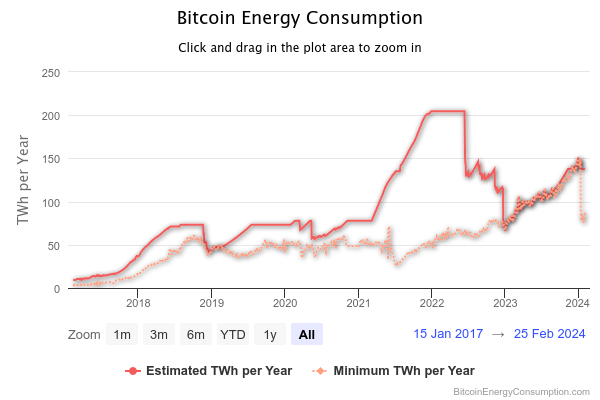
Data from Cambridge University’s Bitcoin Electricity Consumption Index indicates that global Bitcoin miners consumed an estimated 121.13 terawatt-hours of electricity in 2022. That surpassed all-time highs since data collection began. The DOE’s survey aims to shed light on how the cryptocurrency mining industry’s energy consumption impacts the US energy infrastructure. It is expected to contribute valuable insights into this rapidly evolving sector.

Bitcoin Energy Consumption Index by digiconomist.net

The emergency review by the US Department of Energy marks a crucial juncture for the cryptocurrency industry in the United States. As the DOE gathers data on energy consumption, the outcome of this initiative could significantly shape the regulatory landscape for Bitcoin mining. It may also influence broader debates on the intersection of digital currencies, energy consumption, and environmental stewardship.

End of the Line – FTX Drops Revival Efforts

FTX No comeback after bankruptcy. The failed crypto exchange abandoned revival plans.

The FTX bankruptcy saga takes a pivotal turn. The once-prominent cryptocurrency exchange has officially abandoned its efforts to revive operations. The decision comes after months of negotiations with potential investors, ultimately leading to a daunting realization—the costs and risks of resurrecting the platform were deemed too high.

FTX’s Troubled Journey and Founder’s Conviction

Founded by Sam Bankman-Fried, FTX faced a turbulent journey that culminated in its closure in late 2022. Bankman-Fried, convicted on fraud charges related to his operation of FTX, handed over control to insolvency specialists. The recent court hearing in Wilmington, Delaware, delivered the final blow to any hopes of FTX’s resurgence.

Full Repayment to Customers Amidst Controversy

While FTX vows to repay its customers and creditors in full, controversies surround the methodology. The repayment process will be based on cryptocurrency prices from November 2022. The decision was met with discontent from customers who argue they are being shortchanged. Cryptocurrency values surged significantly since the platform’s collapse.

Legalities and Customer Concerns

During the court hearing, US Bankruptcy Judge John Dorsey ruled that each claim’s size would be determined based on what the customer was owed on the day FTX filed for bankruptcy protection. This ruling, while adhering to U.S. bankruptcy law, has fueled dissatisfaction among customers expecting compensation based on current market values.

What Lies Ahead for FTX?

The focus now shifts to the liquidation of FTX’s assets. They aim at repaying customers whose cryptocurrency deposits were frozen during the platform’s bankruptcy filing. With over $7 billion in recovered assets, FTX faces the daunting task. It must investigate numerous customer claims, a process that may extend the timeline for repayments.

End of an Era for FTX

In the aftermath of FTX’s downfall, questions linger about the broader implications for the cryptocurrency industry. The once-vibrant exchange has now become a cautionary tale. It highlights the importance of transparency, governance, and responsible leadership in the evolving landscape of digital assets.

As FTX embraces liquidation over resurrection, the cryptocurrency community watches closely. They reflect on the challenges and lessons learned from the demise of a platform that was once a key player in the crypto space. The fallout from FTX’s closure reverberates across the industry. It serves as a stark reminder of the risks inherent in the volatile world of digital currencies.

Read more: FTX Crypto Bankruptcy – New Probe in Progress

Visa Crypto Withdrawal Revolution: Seamlessly Converting Crypto to Fiat in 145 Countries

In an unprecedented move for the cryptocurrency world, global payment giant Visa has partnered with Transak, a leading payment infrastructure provider, to introduce Visa Crypto withdrawal services in over 145 countries. This collaboration signifies a significant leap towards making cryptocurrencies more accessible and usable on a global scale.

Visa Direct Facilitates Real-Time Crypto-to-Fiat Transactions

Visa, a trailblazer in digital payments, is harnessing its Visa Direct capabilities to empower users to seamlessly convert their crypto holdings into local fiat currencies. This strategic collaboration with Transak introduces a swift and secure process. It allows users in more than 145 countries to withdraw their cryptocurrencies directly to Visa debit cards.

Yanilsa Gonzalez-Ore, North America Head of Visa Direct and Global Ecosystem Readiness, expressed the transformative impact of the collaboration. “By enabling real-time card withdrawals through Visa Direct, Transak is delivering a faster, simpler, and more connected experience for its users,” she said. This innovation makes it easier for users to convert crypto balances into fiat, spendable at over 130 million merchant locations worldwide where Visa is accepted.

Transak’s Role in Revolutionizing Crypto Off-Ramps

Transak, known for its API-driven solutions in the crypto and NFT space, has played a pivotal role in facilitating this revolutionary partnership. The company boasts a robust infrastructure and supports over 40 cryptocurrencies. This ensures a diverse range of options for users looking to convert their digital assets into fiat.

Sami Start, Co-founder and CEO of Transak, emphasized the user-centric approach of the collaboration. He stated that users “no longer have to walk the treacherous path of compliance uncertainty or face risks of fraud.” Transak is backed by reputable venture capitalists like ConsenSys and Animoca Brands. It aims to provide a seamless and secure off-ramp for crypto users globally.

Swift Transactions and Global Accessibility

One of the standout features of Visa Direct is its ability to process transactions in nearly 30 minutes or less. It is a stark contrast to conventional banking practices that often take several days. Visa’s speed and efficiency, combined with Transak’s extensive global reach, enable users in 145 countries to swiftly convert their crypto holdings into fiat without relying on centralized exchanges.

This collaboration is particularly noteworthy as it bridges the gap between traditional finance and the crypto world. It brings crypto-to-fiat conversion to the fingertips of millions globally. As crypto adoption continues to surge, such initiatives contribute to the mainstream acceptance and utilization of digital assets.

Looking Ahead: A New Dawn for Crypto Off-Ramps

The partnership between Visa and Transak is a clear indication of the growing importance of cryptocurrencies in the global financial landscape. As the crypto market matures, collaborations between traditional financial institutions and innovative crypto infrastructure providers pave the way for a more interconnected and accessible financial ecosystem.

The Visa and Transak collaboration represents a significant milestone in the evolution of crypto-to-fiat transactions, marked by the introduction of Visa Crypto withdrawal services. Real-time card withdrawals and global accessibility meet the needs of existing crypto enthusiasts. This partnership opens doors for millions of potential users to explore the world of digital assets.

Read more: Raiffeisen Integrates Bitpanda for Crypto Trading: European First

- Advertisement -

FEATURED