Home Blog Page 203

Celsius Crypto Lender Exits Bankruptcy and Shifts to Bitcoin Mining

After bankruptcy Celsius shifts from crypto lender to bitcoin miner.

Former crypto lending giant Celsius successfully completed its bankruptcy process. It announced its new business model as a bitcoin mining company. The company faced legal and regulatory hurdles after the market crash in 2022, but managed to repay its creditors and reinvent itself.

Bankruptcy Exit and Distribution Plan

Celsius Network, a former crypto lending platform that filed for Chapter 11 bankruptcy in July 2022, successfully emerged from the restructuring process. It announced its transition to a new company focused on bitcoin mining.

A New York court approved the company’s exit from bankruptcy on Nov. 9, 2023, after receiving overwhelming support from about 98% of its creditors. The reorganization plan includes the distribution of more than $3 billion worth of cryptocurrency and fiat currency to the creditors. It will also create a new entity called Ionic Digital Inc., a bitcoin mining company managed by Hut 8 and headed by Matt Prusak.

Celsius said it increased the amount of crypto available for distribution to creditors by around $250 million through converting altcoins to BTC or ETH and through previous settlements. PayPal and Coinbase will make the distribution. Celsius will also shut down its mobile and web applications by Feb. 28, 2024.

Shift to Bitcoin Mining

The company’s shift to bitcoin mining came after the U.S. Securities and Exchange Commission (SEC) gave feedback on certain aspects of the original plan, which also involved staking. Celsius said it intends to apply to register the shares of Ionic Digital as a publicly traded company. They are confident that the mining business has significant earnings potential moving forward.

Legal and Regulatory Challenges

Celsius’s bankruptcy process was marred by legal and regulatory challenges. That included fraud allegations against its former CEO Alex Mashinsky, who resigned in September 2022. He was arrested for allegedly manipulating the price of the CEL token. Mashinsky denied the charges and was released on a $40 million bond. His trial is scheduled for September 2024.

Celsius also settled with the U.S. Department of Justice, the Commodity Futures Trading Commission, and the New York Attorney General for a total of $4.7 billion. David Barse and Alan Carr, members of the special board committee that steered the bankruptcy, said they managed to secure the platform’s cryptocurrency, negotiate a deal with creditors, reorganize the part of the company that could continue, and establish a litigation trust.

A Cautionary Tale for the Crypto Industry

Celsius was one of the largest crypto lending platforms in the industry, with over 1 million users and $17 billion in assets under management at its peak. The company offered high-interest rates on deposits of various cryptocurrencies, as well as loans and rewards in its native CEL token. However, the company faced liquidity issues and regulatory scrutiny after the market crash in May 2022. That triggered a massive sell-off of CEL and a halt of withdrawals.

Celsius’s bankruptcy and reorganization is a cautionary tale for the crypto industry. It shows the risks and challenges of operating a lending platform in a volatile and uncertain market. It also demonstrates the resilience and innovation of the crypto community, as Celsius managed to exit bankruptcy and reinvent itself as a bitcoin mining company.

Read more: FTX bankruptcy – No Comeback, Full Repayment Promised
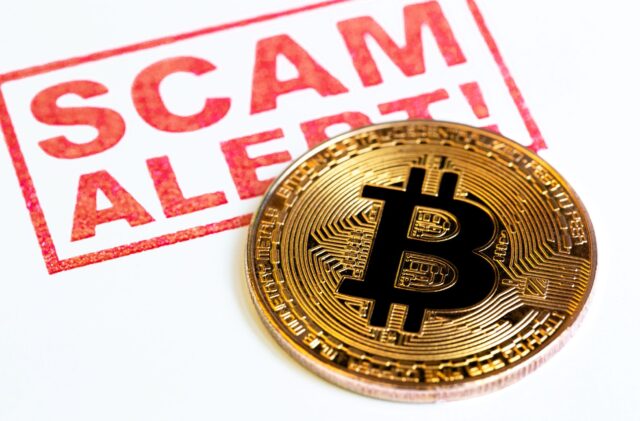
Founder of American Bitcoin Academy Faces Multi Million Dollar Fraud Case

American Bitcoin Academy Fraud Exposed

Brian Sewell, the founder of the American Bitcoin Academy, is now under scrutiny by the U.S. Securities and Exchange Commission (SEC) for his alleged involvement in a fraudulent scheme. The SEC claims that Sewell, along with his company Rockwell Capital Management, deceived students who had enrolled in his cryptocurrency trading course, resulting in a substantial loss of $1.2 million for them.

The Deceptive Scheme Unveiled

According to the SEC investigation, from 2018 to mid-2019, Sewell purportedly urged hundreds of students enrolled in the American Bitcoin Academy to invest their money into the Rockwell Fund. He promised them significant returns by utilizing advanced technologies, like artificial intelligence and crypto trading strategies. However, it appears that things were not as they seemed.

False Promises and Bitcoin Losses

The SEC filed a complaint against Sewell for failing to deliver on his promises of launching the fund and implementing advanced trading strategies. Instead, it is claimed that he kept investors’ funds in Bitcoin without informing them about this decision. Regrettably, these Bitcoin holdings were reportedly lost due to a hacking incident affecting Sewell’s wallet.

Gurbir S. Grewal, the Director of the SEC’s Division of Enforcement, emphasized the seriousness of the situation. He alleges that Sewell deceived students by making claims about investment opportunities in his supposed crypto hedge fund. One of these claims was that his investment strategies were guided by his “artificial intelligence” and “machine learning” technology even though neither the technology nor the fund actually existed.

Settlement and Penalties

To resolve the SEC’s charges both, Sewell and Rockwell Capital Management, have agreed to settle the case. However, they did not admit or deny the allegations. As part of the settlement terms, Sewell will face a penalty of $223,229. Rockwell Capital Management will be required to disgorge and pay prejudgement interest totaling $1,602,089.

Lessons Learned

This case serves as a warning to investors to be cautious when considering cryptocurrency and online trading opportunities. It emphasizes the importance of conducting proper research before making any investments. Be wary of investment opportunities that promise high returns through advanced technologies. The SEC is committed to holding those accountable who use attention-grabbing technologies for nefarious purposes, as demonstrated by this enforcement action.

In light of the efforts by the SEC to combat fraudulent activities in the cryptocurrency industry, the recent case of Bitcoin Academy fraud is a clear reminder for investors to stay alert and skeptical. This incident highlights the significance of conducting research and verification before investing in any online cryptocurrency courses or schemes. It further underscores the role played by the SEC in protecting investors from deceptive practices.

FTX Exchange Hack Resolved? Unveiling the Trio Behind the $400 Million Crypto Heist

Trio charged in FTX Exchange Hack.

The aftermath of FTX’s bankruptcy filing was marked by a series of unanswered questions surrounding the disappearance of hundreds of millions of dollars in crypto. Now, the U.S. Department of Justice charged three individuals with orchestrating a SIM-swapping scheme. It targeted FTX and other victims in a conspiracy spanning from March 2021 to April 2023.

The SIM-Swapping Conspiracy

The 18-page indictment filed in D.C. court outlines the operation of the SIM-swapping ring. It accuses the trio – Robert Powell, Carter Rohn, and Emily Hernandez – of conspiracy to commit wire fraud and identity theft. Their illicit activities targeted fifty victims. The most significant heist occurred on November 11, 2022, when $400 million vanished from an unidentified company, reportedly FTX. The attackers gained access to an FTX employee through AT&T, facilitating the unauthorized transfer of crypto funds.

FTX’s Darkest Hour

The charges bring resolution to one of the most perplexing aspects of the FTX saga, providing clarity on the fate of the missing funds during the exchange’s darkest hour. The orchestrated SIM-swapping attack coincided with FTX‘s bankruptcy filing, creating chaos and leaving the crypto community in suspense.

Sam Bankman-Fried’s Legal Battle

FTX founder Sam Bankman-Fried, convicted of fraud in late 2023, had distanced himself from the hack, speculating it could have been an inside job. However, the recent charges indicate a different narrative, with external actors executing a carefully planned SIM-swapping conspiracy.

In the evolving landscape of cryptocurrency, the resolution of the FTX Exchange hack adds a new chapter to the narrative. The alleged perpetrators, now facing legal consequences, bring a semblance of closure to the crypto community. As the legal proceedings unfold, the revelations surrounding the SIM-swapping attack highlight the need for enhanced security measures within the crypto industry.

The recent charges filed by the U.S. Department of Justice unveil a SIM-swapping conspiracy behind the $400 million FTX Exchange hack. The orchestrated attack coincided with FTX’s bankruptcy filing, offering resolution to the mystery surrounding the missing funds. As legal proceedings progress, the crypto community watches closely, emphasizing the importance of robust security measures in the face of evolving cyber threats.

Read more: FTX bankruptcy – No Comeback, Full Repayment Promised

Genesis Settles SEC Lawsuit and Seeks Approval for $1.6 Billion GBTC Share Sale in Bankruptcy Wind-Down

Bankrupt Genesis settles with SEC, seeks $1.6 Billion GBTC share sale

In a major development, Genesis Global, the bankrupt crypto lending unit of Digital Currency Group (DCG), has reached a $21 million settlement with the U.S. Securities and Exchange Commission (SEC). This settlement is contingent on Genesis fully repaying its customers during its ongoing bankruptcy proceedings. The agreement enables the crypto lender to avoid lengthy legal battles and concentrate on its financial commitments.

Genesis Bankruptcy and SEC Settlement

The SEC sued financial services company Genesis over its lending program called Gemini Earn, which is no longer operational. The lawsuit accused Genesis of conducting an unregistered securities offering. The SEC’s complaint alleged that Genesis, in partnership with Gemini Trust Company, unlawfully sold securities to U.S. retail investors through the Gemini Earn program from February 2021 to November 2022.

The settlement does not require Genesis to admit any wrongdoing. However, it mandates a fine of $21 million, which will only be enforced if creditors are repaid. This resolution will enable Genesis to prioritize customer repayment during its bankruptcy proceedings, providing clarity and potential closure to a chapter of legal uncertainty.

Genesis Seeks Approval for $1.6 Billion GBTC Share Sale

As part of its bankruptcy wind-down, Genesis made a strategic move, filing a motion to sell trust assets worth around $1.6 billion. To obtain approval, the company has approached the U.S. Bankruptcy Court for the Southern District of New York. The assets include shares in Grayscale Bitcoin Trust (GBTC), Grayscale Ethereum Trust (ETHE), and Grayscale Ethereum Classic Trust (ETCG).

The urgency behind this motion is driven by the desire to mitigate risks associated with potential fluctuations in the underlying asset prices, namely Bitcoin (BTC), Ethereum (ETH), and Ethereum Classic (ETC). Genesis aims to maximize funds available for distribution to creditors by liquidating these trust assets.

Implications and Future Prospects

Genesis has taken a proactive approach in settling with the SEC and seeking approval for the sale of trust assets. This demonstrates their commitment to navigating the bankruptcy proceedings efficiently. The outcome of these initiatives will have a significant impact on the cryptocurrency industry, especially given the substantial role that Genesis played in the market..

Investors, creditors, and industry observers will be closely watching the developments. This is especially true as the U.S. Bankruptcy Court evaluates and could possibly approve the proposed $1.6 billion GBTC share sale. The cryptocurrency community is waiting for further clarity on how these actions will shape the future of Genesis and its impact on the broader digital asset landscape.

In the ever-evolving world of cryptocurrency, Genesis Global’s settlement with the SEC and the subsequent motion to sell trust assets mark crucial milestones. As the industry grapples with regulatory scrutiny and the challenges associated with bankruptcies, Genesis’ strategic decisions underscore the importance of adaptability and transparent resolution in navigating complex legal landscapes. The outcomes will undoubtedly reverberate across the crypto space. It will influence market dynamics and shape perceptions of regulatory compliance within the industry.

Read more: Genesis Global Capital sues exchange platform Gemini

Digital Asset Summit 2024 – London

Digital Asset Summit London scheduled 18 - 20 March 2024

Digital Asset Summit 2024 – London, scheduled for March 18-20, 2024, is a premier event in the digital assets and blockchain industry. This event is a must-attend for anyone interested in the intersection of traditional finance and the rapidly evolving world of digital assets.

Why You Should Go!

Expert-Led Panel Discussions and Fireside Chats

The event will feature expert-led panel discussions and fireside chats. It will provide attendees with insights into the crypto and digital asset regulatory environments from policymakers and experts.

Networking Opportunities

With representation from 750 institutions and 1200 attendees, the Digital Asset Summit provides unparalleled networking opportunities. Attendees can connect with leaders from traditional finance and the crypto industry.

https://twitter.com/blockworksDAS/status/1752379453123010963

Insights from Industry Leaders

The event will feature prominent individuals like Tyrone Lobban, Head of Onyx Digital Assets & Blockchain Launch at Onyx by J.P. Morgan, Julia Demidova, Head of CBDC Strategy and Product at FIS, and Waqar Chaudry, Executive Director, Innovation and Digital Assets Product, Financing & Securities Services at Standard Chartered. Learning from these industry leaders will provide attendees with valuable insights and knowledge.

Comprehensive Coverage

The event covers all aspects of digital assets, including Bitcoin Catalysts: The Halving & Spot ETF, A View from the Buy Side, RWAs, Tokenization & Stablecoins, Global Regulatory Frameworks, Institutional Infrastructure: Banking & Payments, and The Macro Case for Digital Assets.

Digital Asset Summit 2024 – London is more than just an event; it’s an opportunity to delve deep into the world of digital assets and traditional finance. Whether you’re a finance professional, investor, or a curious explorer, this event is worth considering. It’s not just about being part of the event; it’s about being part of the future.

For more details, visit the official Digital Asset Summit website.

- Advertisement -

FEATURED