Home Blog Page 206

Brighter Days – Oppenheimer Upgrades Coinbase Stock

Sentiments can shift quickly in the ever-evolving landscape of cryptocurrency investments. Coinbase ($COIN) found itself in a pickle recently after JP Morgan decided to downgrade COIN. While other analysts also turned bearish or remained neutral, the recent move by Oppenheimer caught the attention of the crypto community.

Coinbase Crypto Stock Gets a Boost

In a surprising turn of events, Oppenheimer, a prominent investment brokerage and bank, upgraded Coinbase’s stock rating from Perform to Outperform. This upgrade comes with a fresh price target set at $160 per share. This reflects a notable optimism regarding the future performance of the top US-based crypto exchange platform.

Factors Driving Optimism

Owen Lau, the analyst behind Oppenheimer’s positive outlook, points to several factors that could contribute to Coinbase’s success in the coming months. Lau anticipates that Coinbase could prevail in its legal battle with the U.S. Securities and Exchange Commission (SEC) or, at the very least, see the court dismiss part of the complaint.

Additionally, Lau highlights the potential impact of interest rate hikes, Bitcoin’s upcoming halving event in April, and the increasing adoption of digital assets. These factors, according to Oppenheimer, could propel Coinbase’s stock to outperform expectations.

Navigating Regulatory Challenges

While the optimism is palpable, it’s essential to acknowledge the challenges $COIN faces, particularly in the regulatory arena. The ongoing lawsuit with the SEC, initiated in June 2023, adds a layer of uncertainty. Lau emphasizes that regulatory uncertainties in the United States contribute to the volatility surrounding Coinbase. It is noteworthy that the company adheres to clearer regulations in other jurisdictions.

Short-Term Volatility and Business Diversification

Addressing recent market events, Lau acknowledges the short-term volatility surrounding Coinbase’s stock. This is partly influenced by the sell-the-news reaction following the approval of spot Bitcoin ETFs by the SEC. Lau suggests that the exchange’s stock might experience a temporary downturn. His consideration arises from the rapid increase in both Coinbase’s stock and Bitcoin prices leading up to the ETF approval.

However, Lau also sheds light on Coinbase’s efforts to diversify its revenue streams. Approximately 50% of the company’s revenue in the third quarter of the previous year came from non-trading activities. That includes interest income, blockchain income, staking revenue, and custody revenue. This strategic move aims to reduce dependence on volatile trading alone.

Long-Term Benefits of Bitcoin ETFs

Despite short-term concerns, Lau believes that the introduction of Bitcoin ETFs could be a net positive for Coinbase in the long run. These ETFs are expected to attract new investors, supporting higher Bitcoin prices and increased trading volume. This would ultimately benefit Coinbase’s overall performance.

In a market where opinions fluctuate, Oppenheimer’s optimistic stance on Coinbase’s prospects provides a ray of hope for investors. As the crypto community awaits the resolution of regulatory challenges and monitors market developments, Coinbase’s strategic moves and its resilience in the face of uncertainties position it as a significant player in the crypto space.

In conclusion, while some may adopt a cautious approach due to the inherent risks in the crypto market, Oppenheimer’s confidence in Coinbase’s potential paints a different picture. As the industry evolves, Coinbase’s ability to navigate challenges and capitalize on emerging opportunities will likely determine its trajectory in the dynamic world of cryptocurrencies.

Read more: JP Morgan Downgrades Coinbase

FTX Crypto Bankruptcy – New Probe in Progress

In a surprising turn of events, the failed FTX cryptocurrency exchange has been thrust into a new chapter of uncertainty. A federal appeals court recently ordered an independent examination into the bankruptcy proceedings. This raised critical questions about the fate of frozen funds and the implications for investors navigating the volatile crypto landscape.

Unraveling the FTX Crypto Bankruptcy Saga

The FTX exchange, once a prominent player in the cryptocurrency market, declared bankruptcy in November 2022, sending shock-waves through the industry. Founder Sam Bankman-Fried’s conviction on criminal charges added to the tumult. Now, a federal appeals court has mandated an external probe into the collapse. This development brings fresh challenges and opportunities, especially for crypto investors eagerly awaiting the resolution of the FTX bankruptcy saga.

FTX’s Troubles Intensify – The Need for an Independent Examination

Amid concerns of widespread fraud preceding the exchange’s collapse, a U.S. bankruptcy trustee sought an independent examination. The goal is to scrutinize FTX’s financial affairs and unearth potential mismanagement. The recent ruling by the Third Circuit Court of Appeals in Philadelphia overturned a prior decision. The judged emphasized the necessity of an external perspective to ensure transparency and protect the interests of investors.

Implications for Investors – Navigating Frozen Funds and Uncertainty

For investors whose funds are still entangled in the aftermath of FTX’s collapse, the prospect of an independent examination raises both hope and uncertainty. The court’s decision implies a potential deeper dive into the circumstances leading to the downfall. It is expected to shed light on issues like the alleged misappropriation of customer assets and the role of key players in the exchange.

What the Investigation Might Uncover – Potential Crypto Market Risks

The court’s focus on FTX’s development of the exchange token FTT and its collaboration with quantitative trading desk Alameda Research signals a broader exploration into industry practices. This scrutiny may not only unveil the extent of FTX’s actions. It could also alert investors to undisclosed credit risks in other cryptocurrency companies. The investigation’s findings could have far-reaching implications for the evolving and volatile crypto market.

Navigating the Path Forward – The Judge’s Stipulations

Recognizing the potential costs and duration of the examination, Judge John Dorsey has imposed limitations to ensure a swift resolution. The probe is expected to conclude within 45 days, offering a summary of its findings. This strategic move aims to balance the need for a thorough investigation with the urgency of providing clarity to investors whose assets remain frozen in the FTX debacle.

As the FTX cryptocurrency exchange faces heightened scrutiny through this independent examination, investors find themselves at a pivotal juncture. The unfolding chapters of the FTX bankruptcy saga not only impact those directly involved but also send ripples across the broader crypto landscape. As we await the results of the investigation, one thing remains clear – the implications of this legal battle will reverberate through the crypto community. It will shape how investors approach risk and transparency in digital assets in the future.

Read more: Did Failed FTX Crash Bitcoin?

Who Is Calling the Shots at JP Morgan?

CrispyBull Crypto News Video Post Cover Image
CrispyBull Crypto News Magazine Video Post Cover

When it comes to the question “who is calling the shots at JP Morgan”, JP Morgan finds itself in a paradoxical situation due to the recent approval of spot Bitcoin ETFs by the U.S. Securities and Exchange Commission.

This approval marks a new era for cryptocurrency investments. Interestingly, while the bank actively participates as an authorized participant in BlackRock’s Bitcoin ETF, there is a noticeable contrast with CEO Jamie Dimon’s consistent public criticism of Bitcoin. Dimon has labeled it as a tool for illicit activities. This apparent discord between Dimon’s negative stance on Bitcoin and the bank’s significant role in the cryptocurrency market raises questions about his future at JP Morgan.

Some skeptics speculate about hidden motives behind the bank’s involvement. With the approval of spot Bitcoin ETFs and increasing scrutiny on Dimon’s credibility, JP Morgan faces additional complexities due to the evolving dynamics between traditional finance and the crypto space during this transformative period for cryptocurrencies.

Will Ripple XRP Explode in 2024?

CrispyBull Crypto News Video Post Cover Image
CrispyBull Crypto News Magazine Video Post Cover

After Ripple’s recent legal victory against the U.S. Securities and Exchange Commission (SEC), there is growing interest in the potential success of XRP (Ripple), the digital token native to the Ripple network.

Although XRP experienced a 35% decrease in value (USDT/XRP) due to recent market challenges, long term traders are still optimistic about its bullish prospects. Respected cryptocurrency analysts like Captain Faibik and Patrick Riley have made positive predictions, envisioning XRP reaching $25 $30 and $22 respectively during the next upward trend.

Crypto analyst Ben Armstrong highlights XRP as a leading contender for the 2024 2025 market. He cites factors such as Ripple’s experienced management team, strong sales and marketing strategies, utility and robust community support for XRP.

Despite concerns regarding XRP’s imbalanced token distribution, with 50% of the coin controlled by Ripple, analysts maintain hope for its future expansion and adoption, particularly within the context of central bank digital currencies (CBDCs).

US Treasury’s Plea for Swift Crypto Regulation

In the fast-evolving landscape of cryptocurrency, the United States Department of the Treasury sounded a clarion call to lawmakers, urging swift action on crypto regulation. This push comes amidst growing concerns about illicit activities, terrorism financing, and the need to adapt to the changing nature of financial transactions in the digital age.

US Crypto Regulation: A Crucial Imperative

As the crypto industry gains momentum, Deputy Secretary of the Treasury, Wally Adeyemo, presented a compelling case for extended powers. The US Treasury proposes a set of common-sense recommendations to expand authorities and tools, aiming to combat illicit actors in the digital asset space. Adeyemo emphasizes the necessity of updating authorities that have not seen revisions in decades, highlighting the adaptive strategies employed by terrorist groups, such as Hamas.

Tackling Terrorism and Illicit Finance

One key aspect of the Treasury’s proposal is the call for a new secondary sanctions tool against exchanges supporting terrorism. This tool, if granted, would not only sever a firm’s ties to the US financial system. It would also expose entities engaging with sanctioned organizations to a similar fate. Adeyemo asserts that these measures are crucial to curb the exploitation of cryptocurrencies by terrorists and other illicit actors, ensuring the robustness of the financial system.

Extraterritorial Jurisdiction and Stablecoins

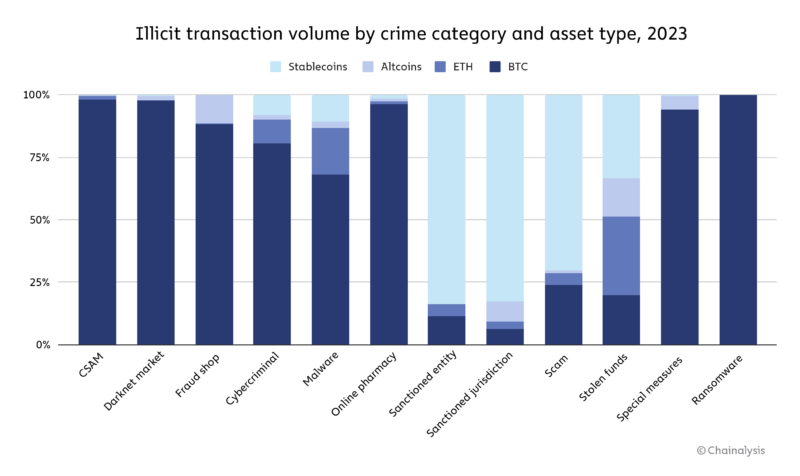
The proposal also delves into the extraterritorial jurisdiction over stablecoins, singling out major players like Tether. By explicitly authorizing the Office of Foreign Assets Control (OFAC) to exercise jurisdiction over transactions in stablecoins, the Treasury aims to extend its oversight beyond traditional USD transactions. Adeyemo emphasizes the need for non-US stablecoin issuers to implement procedures preventing terrorists from abusing their platforms.

Source: Chainalysis 2024 report

FinCEN’s Proposed Rule on Crypto Mixers

The Financial Crimes Enforcement Network (FinCEN) has also entered the fray. It proposed a rule to increase transparency around cryptocurrency mixers and target the anonymity provided by these software tools. If approved, financial firms will be mandated to report transactions suspected to involve crypto mixers. This move underscores the heightened scrutiny on crypto’s role in financing activities of groups like Hamas, bringing the need for comprehensive regulation to the forefront.

Urgency Backed by President Biden

The urgency for crypto regulation has garnered support at the highest levels. President Biden endorsed efforts to address the risks and benefits of digital assets. A 2022 executive order outlined a comprehensive strategy, emphasizing consumer protection, financial stability, and national security concerns related to cryptocurrencies. Treasury Assistant Secretary Graham Steele reinforces the existing robust regulatory framework and the need for stringent enforcement to ensure protection for users and adherence to regulatory principles.

In conclusion, the call for swift action on US crypto regulation echoes the dynamic nature of the digital asset landscape. The Treasury’s proposals and FinCEN’s initiatives signal a commitment to adapt regulatory frameworks to address emerging challenges. As stakeholders navigate these changes, a delicate balance must be struck. Foster responsible innovation without compromising the integrity of financial systems. The evolving crypto landscape demands a proactive approach. The proposed regulations aim to lay the groundwork for a secure and thriving digital financial ecosystem.

Read more: Crypto Crime 2023 – Chainalysis Report

- Advertisement -

FEATURED