Home Blog Page 207

Crypto Crime 2023 – Chainalysis Report

Understanding the latest trends in crypto crime is crucial for investors, enthusiasts, and regulators alike. Chainalysis, a prominent blockchain analysis firm, has recently released its comprehensive report on crypto crime trends for the year 2023. Let’s delve into the key findings and insights that shape the narrative of illicit activities in the crypto space.

Decrypting the Numbers

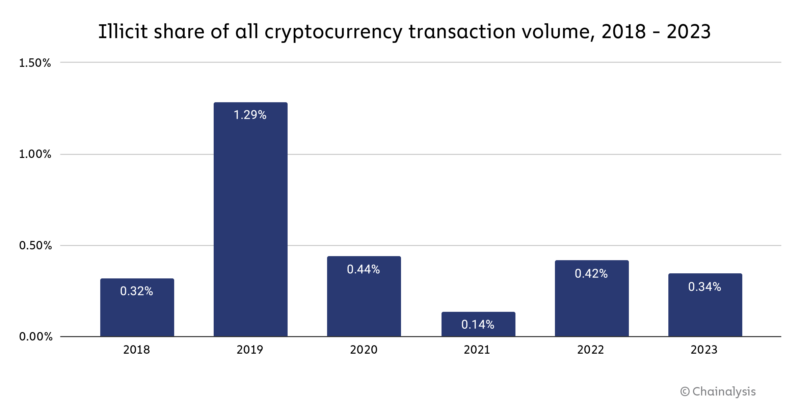
The Chainalysis report for 2023 reveals a significant downturn in illicit activities, with stolen cryptocurrency accounting for 0.34% of total on-chain transactions, totaling $24.2 billion. This marks a noteworthy decrease from the 2022 figures, showcasing a more secure crypto environment. However, it is essential to recognize the fluid nature of these statistics as the crypto landscape continues to evolve.
Shift in Crypto Preferences – Stablecoins on the Rise

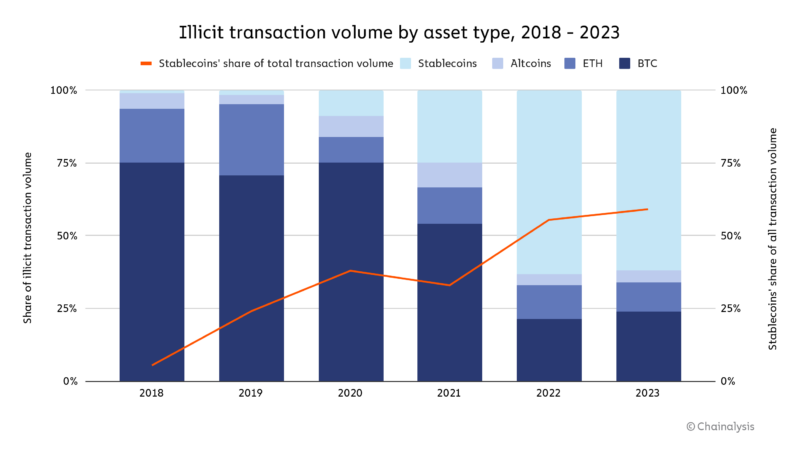
One of the most striking revelations from the Chainalysis report is the discernible shift in the crypto preferences of cybercriminals. Traditionally dominated by Bitcoin, which owed its prominence to high liquidity, the landscape has witnessed a seismic change. Stablecoins have now claimed the throne, representing an astonishing 70% of the total illicit transaction volume. This substantial increase in the use of stablecoins by bad actors underscores their adaptability in exploiting the crypto space’s nuances. It serves as a stark reminder of the need for continuous vigilance and innovative security measures within the crypto community.
Ransomware and Darknet Activities on the Upswing

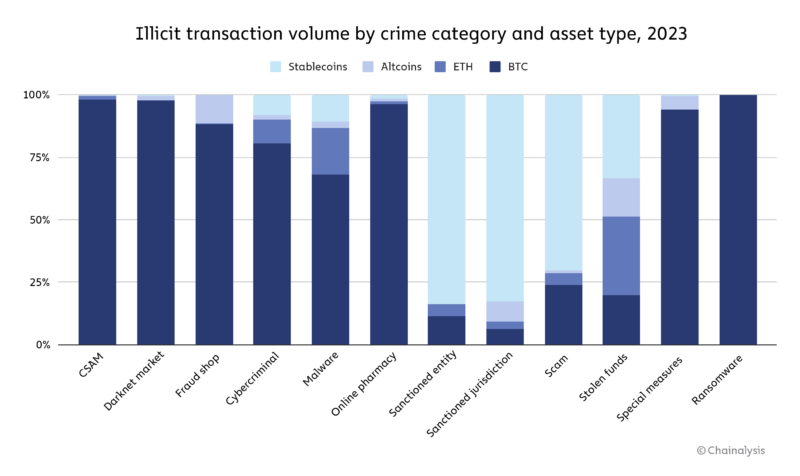
Despite an overall decrease in crypto crime, certain activities experienced a surge. Ransomware attacks and darknet market transactions saw significant revenue increases compared to the previous year. The report suggests that ransomware threat actors have adapted to organizations’ cybersecurity improvements, highlighting the persistent challenges faced by the crypto community.

Sanctions-Related Transactions – A Growing Concern

Chainalysis identified a concerning trend related to sanctioned entities, attributing $14.9 billion (61.5% of all illicit transaction volume) to transactions involving entities under sanctions. This underscores the need for effective regulatory measures and international cooperation to curb illicit financial activities using cryptocurrencies.
Looking Ahead – Uncertainties and Optimism

As we navigate the complex realm of crypto crime, it is crucial to acknowledge the uncertainties that lie ahead. The decrease in illicit activities is a positive sign, potentially indicating improved security measures, especially within decentralized finance (DeFi) protocols. However, the ever-changing tactics of cybercriminals remind us that constant vigilance and innovation are necessary to stay one step ahead.

In conclusion, Chainalysis’ Crypto Crime Report for 2023 paints a nuanced picture of the crypto landscape. While there is a tangible decrease in certain illicit activities, new challenges and trends emerge. Investors, regulators, and crypto enthusiasts must stay informed and collaborate to foster a secure and thriving crypto ecosystem.

Read more: How North Korea Steals Crypto

Nexo’s $3B Lawsuit: Crypto Lender Takes on Bulgaria

Nexo Crypto Lender is grabbing attention by filing a groundbreaking $3 billion arbitration claim against Bulgaria. The company, a prominent player in cryptocurrency lending, alleges reputational and financial damages arising from a terminated criminal investigation. This lawsuit, submitted to the International Center for Settlement of Investment Disputes (ICSID), underscores Nexo’s determination but also signifies a notable stride in the relationship between the crypto sector and conventional legal frameworks.

Background

The conflict began in January 2023 when Bulgarian authorities initiated a wide-reaching investigation into Nexo. This involved raids on the company’s offices and serious charges against its founders, including money laundering and computer fraud. The case was dropped in December due to insufficient evidence. Nexo now claims irreversible damage to its brand and missed business opportunities.

Nexo’s Claims

According to a press release, Nexo alleges that Bulgaria’s investigation was a “politically motivated attack” that caused reputational harm. The lost opportunities include a potential U.S. stock market listing and a soccer sponsorship deal. The crypto lender states that the actions of the Bulgarian government resulted in substantial financial damage and eroded shareholder value.

Legal Action and Compensation

Represented by the U.S. law firm Pillsbury Winthrop Shaw Pittman LLP, the crypto lender filed a $3 billion arbitration claim. Nexo seeks compensation for the damages it attributes to the investigation. The company claims it was on the verge of participating in a funding round and an initial public offering on a major U.S. stock exchange with an estimated valuation between $8 billion and $12 billion.

Implications for the Crypto Industry

This legal battle between Nexo and Bulgaria is unprecedented in the crypto world. It sets a significant precedent for how countries handle regulatory and legal challenges posed by the crypto industry. Nexo’s decision to seek compensation for a dropped investigation is a notable move in an industry often grappling with regulatory uncertainties.

Nexo’s $3 billion lawsuit against Bulgaria reflects the growing complexity of the relationship between the crypto sector and traditional legal systems. As the case unfolds, it may shape how countries approach investigations into cryptocurrency-related activities. The outcome could influence the industry’s perception of legal challenges. It may well prompt a reevaluation of the risks associated with regulatory uncertainties.

Read more: Full Throttle On The Path To Crypto Regulation

JP Morgan Downgrades Coinbase

Against the backdrop of the recent turbulence in the crypto market, JP Morgan, a major investment bank, downgraded the stock rating of Coinbase, a leading cryptocurrency exchange. Falling prices and the unimpressive performance of newly launched spot Bitcoin exchange-traded funds (ETFs) marked the path leading to the decision.

JP Morgan, headed by its outspoken CEO Jamie Dimon, known for his critical stance on Bitcoin and the broader crypto industry, shifted Coinbase’s stock rating from ‘Neutral’ to ‘Underweight’ due to concerns about the future of the crypto market. Dimon, a notable critic of Bitcoin, has previously expressed skepticism about the digital asset, referring to it as primarily used for illegal activities.

Why JP Morgan Downgraded $COIN

This downgrade reflects the bank’s overall pessimism about the impact of spot Bitcoin ETFs, recently approved by the U.S. Securities and Exchange Commission (SEC), on the crypto market. Despite initial enthusiasm and a surge in Bitcoin prices above $48,000, the actual capital inflows into these ETFs have been deemed “underwhelming” by JP Morgan.

The recent drop in Bitcoin’s value below $40,000 triggered a series of market reactions. Analysts foresee further declines in the prices of various crypto assets. JP Morgan expressed disappointment in the performance of spot Bitcoin ETFs, citing a mismatch between industry expectations and actual capital rotations into these investment vehicles. The bank believes the initial hype surrounding the ETF launches did not translate into significant market movements.

With lower Bitcoin prices, reduced trading volumes, and uninspiring flows into new ETFs, the revenue opportunities for crypto trading platforms, including Coinbase, are expected to shrink. This decline in ancillary revenue opportunities has contributed to the ‘Underweight’ rating.

The Fallout for Coinbase

Following the downgrade, Coinbase’s stock has experienced a 27% decline over the past 30 days, trading at $123.99 at the time of reporting. This dip raises questions about the platform’s resilience amid market uncertainties. Investors are closely watching as the crypto market continues to undergo a contraction, with Bitcoin currently trading at $39,987.

JP Morgan’s downgrade of Coinbase stock underscores the challenges and uncertainties facing the crypto market. While industry players anticipated a boost from approving the spot Bitcoin ETFs, the reality has fallen short of expectations. The downgrade reflects concerns about the broader implications for crypto assets, trading volumes, and the revenue potential of leading platforms like Coinbase. As the crypto market navigates through this period of volatility, investors and enthusiasts alike will be closely monitoring further developments and potential shifts in market sentiment.

Read more: Coinbase After Bitcoin ETFs

Did Failed FTX Crash Bitcoin?

In recent days, the cryptocurrency market has experienced significant turbulence, with Bitcoin (BTC) dropping to a seven-week low below $40,000. This downturn coincides with the approval and subsequent trading of spot Bitcoin exchange-traded funds (ETFs), marking a departure from the initial excitement surrounding this development.

FTX Bitcoin ETF Sell-Off Sparks Market Concerns

The spotlight is now on the failed cryptocurrency exchange FTX. In the midst of its bankruptcy proceeding it reportedly sold nearly $1 billion worth of shares in Grayscale’s Bitcoin Trust (GBTC) after its conversion into a spot ETF. This move raised questions about the role of FTX in triggering a market-wide bloodbath, prompting analysts to delve into the intricacies of the sell-off.

FTX’s bankruptcy estate liquidated its entire 22 million GBTC shares, contributing to a cascade of selling pressure. The sell-off, coupled with additional outflows from institutional investors and Grayscale’s own movement of $1.3 billion to Coinbase, fueled concerns about the sustainability of the current market conditions.

https://twitter.com/seth_fin/status/1749782011219263880

Bitcoin’s Volatility Post-ETF Approval

Bitcoin’s recent volatility has left many investors puzzled, especially considering the high expectations surrounding the SEC’s approval of spot Bitcoin ETFs. Despite initial optimism, the cryptocurrency has not only failed to maintain its upward momentum but has also experienced a decline of approximately 20% since reaching nearly $49,000 at the start of ETF trading.

Analysts anticipated a retracement of gains. They pointed to historical patterns where significant crypto events, such as the IPO of Coinbase, were followed by similar slumps. However, the extent of the sell-off has raised eyebrows and intensified discussions around the potential influence of FTX’s actions.

Grayscale Bitcoin Trust (GBTC) and Market Sentiment

Grayscale’s GBTC, historically a key player in the cryptocurrency market, now finds itself at the center of attention. The fund’s daily outflows of up to $500 million have contributed significantly to the $2.8 billion total reduction since the SEC green lit spot Bitcoin ETFs.

Market sentiment, as gauged by Santiment’s social trends data, indicates a notable dip amid increased social activity. While “sell” mentions have risen, there is a growing inclination among market participants to “buy the dip.” This dichotomy in sentiment reflects the uncertainty and mixed reactions within the crypto community.

Evaluating the Impact on Bitcoin and Altcoins

Bitcoin’s drop below the crucial $40,000 support threshold has sent shockwaves through the entire cryptocurrency market. The bearish pressure has extended to major altcoins, with Ethereum (ETH) experiencing a 4.11% drop to $2,307. The ongoing market downturn raises questions about the resilience of cryptocurrencies against traditional stocks, which have been surging to record highs.

Navigating the Uncertainty

Bitcoin faces its most significant correction post-ETF approval and the role of FTX in intensifying the sell-off cannot be ignored. The market’s resilience will be tested in the coming days. Investors grapple with uncertainty and attempt to discern whether the current downturn is a temporary setback or a more prolonged correction.

In the ever-evolving landscape of cryptocurrency, understanding the interplay of factors like FTX’s sell-off, institutional movements, and market sentiment becomes crucial. As the crypto community watches closely, the overarching question remains: Did the failed FTX exacerbate the crypto market’s current woes, or is it merely a symptom of larger market dynamics?

Read more: Bullish Harmony – Bitcoin and S&P 500 Ride High Together

Binance Takes On The SEC

In a legal showdown in a courtroom in Washington D.C., Federal Judge Amy Berman Jackson intensely scrutinized Binance, the world’s largest cryptocurrency exchange. Binance sought to dismiss the high-profile lawsuit filed against it by the U.S. Securities and Exchange Commission (SEC). This courtroom drama comes hot on the heels of a similar clash between Coinbase and the SEC. Both exchanges pursue parallel legal arguments challenging the authority of the SEC.

The Complexities of the Legal Matter

The legal dispute between Binance and the SEC has become a focal point for the crypto industry, reflecting a broader trend of increased regulatory scrutiny on cryptocurrency exchanges. Last week, Coinbase also found itself in a similar legal battle with the SEC. It highlights the growing tension between regulators and major crypto platforms.

SEC Allegations Against Binance

In June last year, the SEC accuses Binance, its then-CEO Changpeng Zhao, and its U.S. Division of multiple violations. The allegations include artificially inflating trading volumes, diverting customer funds, failing to restrict U.S. customers, and providing misleading information about market surveillance controls.

Coinbase – A Battle in Parallel

Coinbase, another major cryptocurrency exchange, is currently embroiled in its own legal dispute with the SEC. The regulatory body has levied accusations against Coinbase alleging the offering of unregistered securities and involvement in fraudulent activities. There are similarities between these two cases beyond the allegations themselves. Both exchanges question the jurisdiction and authority of the SEC over crypto assets.

Legal Arguments – Contesting the SEC’s Jurisdiction

Echoing the Coinbase team, Binance’s legal representatives argue that the SEC lacks the authority to regulate certain crypto assets because they do not meet the criteria for being classified as investment contracts. At the core of this argument lies an examination of whether individuals are engaging in investment contracts with common enterprises with the expectation of a profit – a pivotal aspect evaluated through a U.S. Supreme Court case related to the Securities Act of 1933.

The SEC vehemently defended its regulatory authority. It argued that most crypto assets fall within its jurisdiction and are subject to the established rules and regulations. The agency emphasized the flexibility of the legal test for determining securities. It stated that there is “no bright line” and highlighting the need for a nuanced approach.

Major Questions Doctrine – A Common Link

Both Binance and Coinbase invoked what is known as the major questions doctrine, suggesting that the SEC is exceeding its regulatory boundaries without explicit authorization from Congress. However, the judges in both cases have shown doubt about this argument, raising questions about its relevance.

Implications for the Crypto Industry

The outcomes of these battles are extremely important for the entire cryptocurrency industry. They could set precedents for how crypto assets will be treated and regulated in the United States. As Binance and Coinbase navigate the complexities of these cases, the crypto community eagerly awaits the decisions that will shape the regulatory landscape.

In the changing world of cryptocurrency regulation, Binance’s clash with the SEC along with Coinbase’s parallel legal battle highlights the challenges faced by major exchanges. The resistance against regulation and the pursuit of clarity within regulatory frameworks are themes that resonate throughout the industry. Members of the community closely observe these legal dramas as they unfold, realizing their widespread implications for market dynamics and regulations.

Read more: Regulatory Showdown – Coinbase Challenges SEC’s Jurisdiction


What is the Major Questions Doctrine?

The Major Questions Doctrine is a legal principle derived from a Supreme Court ruling that asserts federal agencies cannot regulate without specific authorization from Congress on issues of major economic or political significance. It establishes that certain important policy decisions should be made by elected representatives rather than administrative agencies.

- Advertisement -

FEATURED