Home Blog Page 210

Indian Crypto Exchanges Poised for Growth Amid Offshore Ban

India Bans Offshore Crypto Exchanges

In a significant move, the Indian government recently took action to block access to foreign cryptocurrency exchanges’ web platforms, including prominent names such as Binance, KuCoin and OKX. This step was prompted by concerns over money laundering and has had a ripple effect on India’s crypto landscape. It raises questions about the future of exchanges within the country. The key question now is; Can Indian crypto exchanges benefit from their government’s decision to ban offshore platforms?

The Changing Landscape

The Financial Intelligence Unit (FIU) of the Finance Ministry played a pivotal role in this crackdown. It issued notices to nine foreign crypto exchanges for failing to comply with Indian regulations. The ban does not only restrict access to these platforms; it also poses challenges for approximately $4 billion worth of investments made by Indian users in offshore exchanges. These regulatory actions are expected to drive growth in domestic crypto exchanges as users seek secure alternatives.

Read more: Cracking the Whip: India’s Bold Move in Crypto Regulation

Incentives and Strategies

Indian crypto exchanges have been quick to seize this opportunity by introducing incentives aimed at attracting users who have funds stuck on banned platforms. Prominent players in the industry including CoinDCX, BuyUcoin and WazirX are taking steps to ease the transition of users’ assets by offering fee waivers, zero fee transfers, and bonuses. CoinDCX has even allocated $1 million to support investors during this period. Their efforts have yielded results with a 2000% surge in new inflows within the first week following the notices from the FIU.

Industry Response and User Sentiment

As the ban comes into effect there is a mixture of confusion and concern within India’s crypto community. With assets on offshore wallets now in limbo, users are searching for reliable alternatives that comply with regulatory standards. Indian exchanges have positioned themselves as secure options,  actively engaging with users throughout the transition process. This proactive approach has led to an increase in registrations and trading volumes indicating a positive response from the local crypto market.

The FIU’s Global Impact

The notices issued by the FIU highlight their commitment to address gaps in the space due to illegal operations and non-compliance concerns. The impact extends beyond India’s borders as global crypto exchanges like Binance face challenges responding to allegations of operating without permits. This move aligns with a trend of increased scrutiny and regulation within the global cryptocurrency industry.

Remaining Positive Amidst Challenges

Although the ban has caused uncertainty, for cryptocurrency investors the industry maintains an optimistic outlook on the potential advantages for local exchanges. These exchanges aim to establish themselves as trustworthy platforms by adhering to requirements, which will attract both new and returning users. The industry and regulatory bodies are collaborating to address the challenges associated with this transition, including tax implications.

In summary, the government’s decision to block access to offshore crypto exchanges set in motion a transformative phase in the country’s crypto scene. As Indian exchanges position themselves as secure alternatives the industry is witnessing a paradigm shift. The incentives provided by these platforms along with regulatory clarity indicate a path for the growth of India’s cryptocurrency ecosystem. In the coming weeks further developments can be expected as users navigate this transition while making decisions in line with evolving regulations.

Crypto Controversy: BlackRock vs. JPMorgan – Dueling Visions

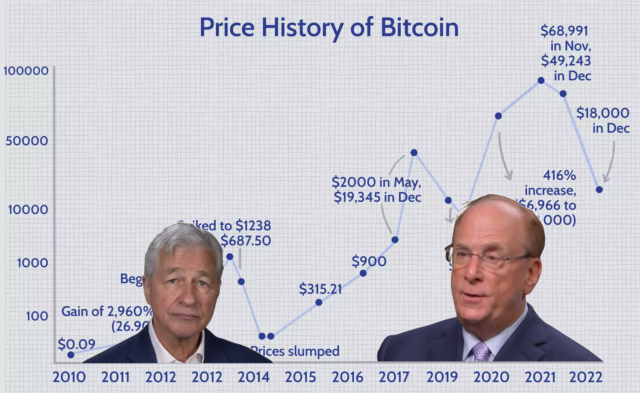
In the ever-evolving landscape of cryptocurrencies, two financial titans have emerged with starkly contrasting views. BlackRock’s CEO, Larry Fink, and JPMorgan’s Jamie Dimon, both influential figures in the finance world, present a fascinating study in the divergence of opinions on the future of digital assets. As crypto skeptics continue to weigh in on the viability of cryptocurrencies, the battle between these two heavyweights captures the essence of an industry at a crossroads.

Larry Fink: Navigating the Digital Frontier

Larry Fink, the visionary behind BlackRock, the world’s largest asset manager, has made waves with his cautiously optimistic stance on cryptocurrencies. While admitting to sharing some sentiments with Jamie Dimon, Fink sees beyond the volatility of Bitcoin, envisioning a digitized currency and blockchain revolution. His recent endorsement of blockchain’s potential and BlackRock’s venture into cryptocurrency investments reflect a forward-thinking approach that contrasts sharply with traditional skepticism.

Jamie Dimon: A Vocal Critic

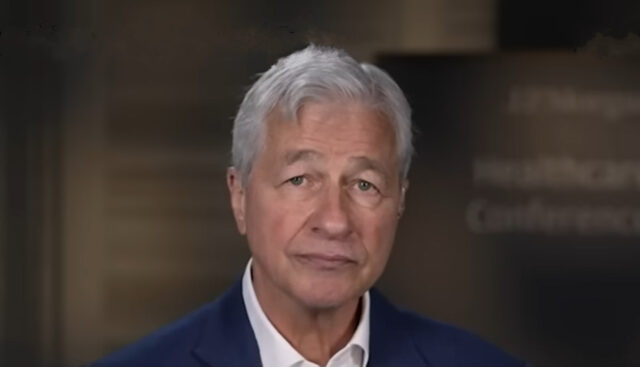
On the flip side, Jamie Dimon, CEO of JPMorgan Chase, remains a vocal critic of cryptocurrencies, notably Bitcoin. Dimon’s unyielding skepticism was recently reaffirmed during a Senate hearing where he went so far as to suggest banning crypto. Despite his personal reservations, JPMorgan’s strategic involvement in BlackRock’s spot Bitcoin ETF raises eyebrows, showcasing a nuanced relationship between personal opinions and corporate strategies.

Read more: Who Is Calling the Shots at JP Morgan? Jamie Dimon Or …?

The Duel Unfolds: Impact on the Crypto Market

This clash of perspectives between Fink and Dimon extends beyond personal beliefs, influencing market sentiment and investor confidence. The crypto skeptics’ debate reverberates through the industry, prompting questions about the authenticity of Dimon’s anti-crypto stance while actively participating in crypto-related ventures. Investors now face the challenge of deciphering the true motivations behind these contrasting viewpoints.

Crypto Skeptics: A Blessing in Disguise?

Contrary to traditional wisdom, skepticism from major players like Dimon may serve as a catalyst for market growth. Santiment’s data analytics suggest that when a majority of traders express skepticism, it often precedes a bullish trend. This paradoxical relationship between crypto skeptics and market performance highlights the unpredictable nature of the digital asset space.

The Path Forward: Navigating Uncertainty

As the crypto market continues to mature, the clash of perspectives between Larry Fink and Jamie Dimon underscores the industry’s dynamic nature. Investors and enthusiasts must navigate this uncertainty, understanding that the dichotomy between optimism and skepticism is an integral part of the crypto journey. The coming months will likely shed light on whether Fink’s bullish outlook or Dimon’s cautious skepticism will have a more profound impact on the market.

In the battle of crypto titans, Larry Fink and Jamie Dimon stand at the forefront, representing opposing views on the future of digital assets. As the crypto skeptics’ debate unfolds, the market watches keenly, poised for the next chapter in this ongoing narrative. Whether the skeptics inadvertently fuel a crypto surge or the cautious approach prevails, one thing remains certain – the crypto landscape is anything but predictable, and its evolution will continue to shape the future of finance.

CrispyBull News Recap for The Week Started on Jan 8th 2024

CrispyBull news recap
news recap of published articles for the week started on Jan 8th 2024

Join us at Crispy Bull Crypto Corner for the latest cryptocurrency news, featuring Bitcoin’s journey to new all-time highs, JP Morgan’s internal debate on Bitcoin, and the U.S. SEC’s approval of spot Bitcoin ETFs. Dive into the future of crypto investments with our in-depth analysis.

SEC Gave Its Nod to Spot Bitcoin ETFs – What’s Next?

The world of cryptocurrencies is abuzz with excitement as the U.S. Securities and Exchange Commission (SEC) has finally approved spot Bitcoin exchange-traded funds (ETFs). This significant decision, which has been years in the making, sets the stage for a new era in digital asset trading. In this article, we explore the implications of the SECs approval. Delve into what it means for the future of cryptocurrency.

Spot Bitcoin ETFs – Unleashing The Bulls

Following this approval by the SEC, there has been an upsurge in enthusiasm within the cryptocurrency market propelling Bitcoin to $49,000 per token – its highest value in almost two years. The 11 approved spot Bitcoin ETFs are now traded on exchanges such as NYSE, Nasdaq and Cboe. Notably popular cryptocurrencies, like Ethereum, Solana, Cardano, XRP, and Avalanche have also experienced gains exceeding 10% within 24 hours.

Read more: Spot Bitcoin ETFs Approved

What’s Driving the Frenzy?

The approval of spot Bitcoin ETFs marks a turning point as it provides investors with a regulated entryway into the crypto space. With financial institutions overseeing assets worth over $100 trillion showing interest in Bitcoin as an investment the potential influx of capital could be substantial. Analysts are expecting substantial investments within the first 24 to 48 hours, with some even predicting record-breaking flows amounting to billions of dollars – which would be an unprecedented achievement in the ETF sector.

Nevertheless, amidst this excitement, some skeptics raise concerns about the ability of these large-scale ETFs to seamlessly integrate into the Bitcoin market especially considering the volatility during the first days of trading. Could there be challenges in acquiring the necessary amount of Bitcoin due to the rush to invest in these ETFs?

The Ripple Effect on Altcoins: Ethereum Takes the Lead

While Bitcoin continues to grab attention Ethereum and other altcoins have emerged as beneficiaries following the approval of ETFs. The price of Ethereum has witnessed a surge surpassing $2,600 and market analysts predict that it will outperform Bitcoin in Q1 2024. Related tokens like Polygon, Chainlink and Uniswap have also experienced increases in value indicating a positive sentiment within the Ethereum ecosystem.

As spot Bitcoin ETFs got the green light by the SEC, anticipation for spot Ethereum ETFs is gaining momentum. Major players such as BlackRock, Invesco, and Grayscale applied for spot Ethereum ETFs. We can expect decisions to be made starting in May. This shift towards Ethereum indicates a changing narrative and a potential shift in the cryptocurrency market.

BlackRock CEO Larry Finks Support for Ethereum ETF

In a twist, BlackRock CEO Larry Fink has expressed his support for an Ethereum ETF highlighting its role in the tokenization process. Fink sees tokenization as a means to address issues related to money laundering and corruption. His endorsement adds fuel to speculation about Ethereum ETFs.

I see value in having an Ethereum ETF.

Larry Fink, BlackRock CEO

Looking Ahead – Whats Coming Next?

With the saga of the spot Bitcoin ETF approval coming to a close, attention now turns to the future. Will spot Ethereum ETFs follow suit? What does this mean for the regulatory landscape of cryptocurrencies? While the SEC’s favorable stance on Bitcoin and Ethereum opens doors for possible approvals uncertainties still remain.

As investors—both institutional and retail—absorb the impact of the SEC’s decision they are left contemplating their moves. The race to launch spot Bitcoin ETFs characterized by fee reductions and intense competition raises questions, about whether all proposed ETFs are truly ready.

In summary, the recent approval of spot Bitcoin ETFs represents a milestone in the world of cryptocurrencies. It does not only impact Bitcoin itself but also influences other digital currencies and sparks discussions about the possibility of approving spot Ethereum ETFs. The endorsement from Larry Fink suggests a broader trend towards tokenization.

However, as investors navigate through these territories some uncertainties lie ahead. While the cryptocurrency market celebrates this achievement it must also be prepared for challenges and changes. The evolving position of the SEC sets the stage for a period in cryptocurrency history, where each approval and endorsement reshapes the landscape. Stay tuned as we explore the thrilling and unpredictable world of crypto.

Who Is Calling the Shots at JP Morgan? Jamie Dimon Or …?

The recent approval of spot Bitcoin ETFs by the U.S. Securities and Exchange Commission (SEC) has sent shockwaves through the cryptocurrency market, signifying a significant step toward mainstream investment adoption. However, amidst this groundbreaking development, a curious dichotomy unfolds at JP Morgan, one of the largest U.S. banks and a key player in the spot Bitcoin ETF saga.

Spot Bitcoin ETFs: A Game-Changer for the Crypto Market

The approval of spot Bitcoin ETFs is a game-changer, heralding an era where investors can gain exposure to Bitcoin’s price movements without direct ownership of the digital asset. This green light from the SEC has ignited optimism among crypto enthusiasts, providing an easy path for broader participation in the digital asset space.

JP Morgan’s involvement in BlackRock’s spot Bitcoin ETF further amplifies the significance of this development. As an authorized participant, JP Morgan plays a pivotal role in creating and redeeming shares, contributing to the ETF’s liquidity and stability. Yet, the narrative takes a surprising turn as the bank’s CEO, Jamie Dimon, remains an ardent critic of Bitcoin.

Dimon’s Vocal Criticism Persists: A Clash of Views

Jamie Dimon’s criticism of Bitcoin is far from new. He has consistently expressed skepticism about cryptocurrency, portraying it as a tool for criminals, tax evaders, and participants in illicit activities. Despite the growing acceptance of cryptocurrencies in mainstream finance, Dimon’s stance remains unyielding, as evident in his recent statements.

I’ve always said that Bitcoin doesn’t have value. And I don’t care what people do with Bitcoin but I would point out the actual use cases are sex trafficking, tax avoidance, anti-money laundering, terrorism financing. It’s not people’s buying and selling bitcoin. There is no value to you to it if you’re buying and selling bitcoin.

Jamie Dimon, CEO of JP Morgan, Fox Business Interview, 1/9/2024

As the market eagerly welcomes the spot Bitcoin ETF surge, Dimon’s public disapproval staunchly constrasts JP Morgan’s strategic position as an official trading partner for BlackRock’s ETF. This apparent discord between the CEO’s rhetoric and the bank’s active participation in the cryptocurrency market raises pertinent questions about Dimon’s role and future at JP Morgan.

Unveiling Hypocrisy: The Divergence of Words and Actions

The contradiction between Jamie Dimon’s public condemnation of Bitcoin and JP Morgan’s deep dive into the spot Bitcoin ETF market has not gone unnoticed. Skeptics argue that Dimon’s outspoken language against Bitcoin may be a mere smokescreen, concealing the bank’s more profound interests and ambitions in the lucrative crypto sector.

JP Morgan’s active involvement in the cryptocurrency market, facilitating the trading of spot Bitcoin ETFs, challenges the conventional expectations associated with Dimon’s anti-Bitcoin sentiments. The apparent hypocrisy raises concerns among industry observers, prompting speculation about the real motivations driving JP Morgan’s participation in the evolving crypto landscape.

The Dilemma Intensifies Amidst Approval: Dimon’s Credibility on the Line?

With the approval of spot Bitcoin ETFs for trading, the predicament surrounding Jamie Dimon’s conflicting stance on Bitcoin deepens. The concerns about his credibility take center stage as the cryptocurrency community closely examines JP Morgan’s dual role in the market.

The disparity between Dimon’s public resistance to Bitcoin and JP Morgan’s proactive engagement in the crypto sector introduces intricacies to the CEO’s position. Industry observers ponder whether JP Morgan’s increasing embrace of cryptocurrencies could impact Dimon’s established leadership at the banking giant.

Conclusion: Navigating the Complex Landscape

In navigating the complex landscape shaped by the spot Bitcoin ETF surge, Jamie Dimon’s role at JP Morgan faces increased scrutiny. As the CEO maintains his critical stance on Bitcoin, the bank’s active participation in the cryptocurrency market demands a closer examination of the underlying motivations and the evolving dynamics between traditional finance and the crypto space.

The broader implications of Dimon’s seemingly contradictory position unfold against the backdrop of a transformative period for cryptocurrencies. The clash of views within JP Morgan introduces an extra layer of complexity to the ever-evolving narrative, leaving both the crypto community and traditional finance observers eagerly watching the developments that may unfold in the coming months.

- Advertisement -

FEATURED