Home Blog Page 27

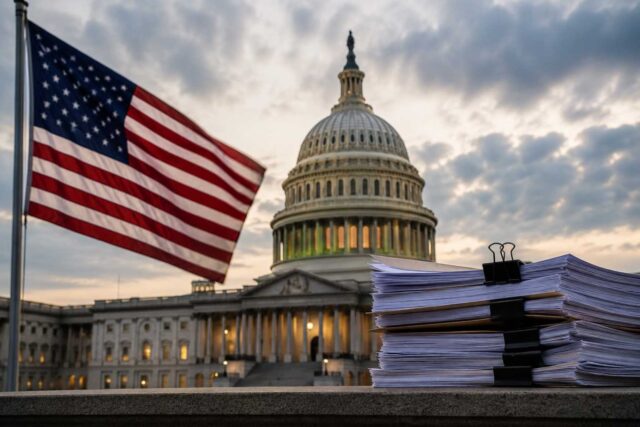
Senate Banking Committee Braces for High-Stakes CLARITY Act Markup
TL;DR

  • The Senate Banking Committee is preparing to debate more than 100 proposed amendments ahead of the CLARITY Act markup hearing.
  • Most amendments were filed by committee members already involved in negotiations over stablecoin rules, DeFi liability, and enforcement authority.
  • The markup process will determine which revisions become part of the Senate’s broader crypto market structure legislation.

The Senate Banking Committee is heading into one of the most important crypto policy hearings in years after lawmakers submitted more than 100 proposed amendments ahead of the May 14 markup of the CLARITY Act.

While headlines have framed the amendment count as a sign of chaos, the process is more structured than it may appear. Senator Elizabeth Warren alone accounts for more than 40 of the filed amendments. This concentration reflects how much Democratic engagement on this bill is channeled through a single, organized legislative strategy instead of scattered individual objections. Most of the remaining proposed changes were filed by senators already participating in negotiations inside the banking committee, not by the full Senate.

Much of the debate now centers on how the proposed amendments could reshape stablecoin regulation, DeFi protections, and federal enforcement standards. The hearing will determine which revisions become part of the committee-approved version of the crypto market structure bill before it can move toward a broader Senate debate.

What the markup process actually means

A markup hearing is effectively the committee’s editing phase for legislation. Senators will debate the CLARITY Act section by section, introduce revisions and vote on selected amendments. Ultimately, they will decide whether the legislation should advance.

At this stage, the process is controlled primarily by members of the Senate Banking Committee. That means senators including Tim Scott, Elizabeth Warren, Cynthia Lummis, Thom Tillis, Bill Hagerty, Mark Warner, and Angela Alsobrooks are among the lawmakers directly shaping the bill.

Many of the filed proposals are technical adjustments, negotiated compromises, or political messaging amendments. They are not attempts to completely rewrite the legislation. They are intended specifically for the committee markup process itself, not for the Senate floor.

Why lawmakers filed so many amendments to the CLARITY Act

The large amendment count reflects unresolved negotiations around several controversial parts of the bill.

One of the biggest disputes involves stablecoin rewards. Hence, several of the most important amendments focus on tightening and clarifying the compromise language.

The current draft bans passive yield on idle stablecoin balances. Traditional financial institutions have warned that these bank deposit-style rewards could pull customers away from savings accounts. At the same time, the bill still preserves room for activity-based rewards tied to transactions or active use.

That is the specific legal line that determines whether products like Coinbase’s customer rewards program survive under the new framework. Senators have filed competing amendments to tighten or loosen that restriction. But critics on both sides question whether the distinction is workable in practice.

Lawmakers are also debating how decentralized finance platforms should be treated under federal law. The current bill text includes explicit protections for open-source software developers and node operators. These would shield them from securities liability for activities related purely to software development. Some senators want to strengthen those protections further. Others are pushing for stronger liability standards for protocol operators who exercise meaningful control over DeFi platforms.

Anti-money laundering requirements have become another major point of negotiation. The updated bill expands expectations around customer identification, suspicious activity monitoring, and sanctions compliance for crypto intermediaries.

Which amendments are likely to matter most

Not all proposed amendments will receive equal attention during the CLARITY Act markup hearing.

Committee leadership typically decides which amendments are formally debated, bundled into larger packages, or quietly withdrawn before votes occur. In many cases, senators file multiple versions of compromise language as negotiations continue behind closed doors.

Some proposals are considered serious bipartisan negotiations. Others are designed mainly to create political pressure or force recorded votes.

Ethics and banking amendments draw the most attention

Among the most closely watched proposals are amendments tied to ethics rules and potential conflicts involving public officials connected to digital asset businesses. The bill already contains language explicitly barring members of Congress and senior executive branch officials from issuing digital assets while in public service. Democratic lawmakers have pushed for additional disclosure standards and stricter restrictions tied to crypto ownership and commercial involvement.

Senator Jack Reed has filed an amendment that would go further still. He proposes to ban cryptocurrency from being used as legal tender entirely, including to pay taxes. While unlikely to pass in its current form, the amendment could force a recorded vote on the question of crypto’s broader role in the financial system.

The divide between the banking industry and crypto firms became clearer on May 9, when the American Bankers Association, the Bank Policy Institute, and the Independent Community Bankers of America jointly rejected the Tillis-Alsobrooks stablecoin compromise. The groups argued that the proposal still failed to prevent crypto firms from offering interest-like products. The rejection came just days before the markup, making the first amendment vote on stablecoin yield language a direct test of whether the banking lobby can fracture the CLARITY Act’s working majority.

Enforcement provisions remain another flashpoint

Another group of proposals centers on enforcement authority. Some senators want stronger Treasury and Justice Department tools tied to sanctions evasion, ransomware investigations, and illicit finance concerns involving decentralized platforms.

What happens after the committee vote

If the Banking Committee approves the bill, the revised version will advance to the full Senate for further debate.

At that stage, additional amendments could still be introduced by senators outside the committee. However, the markup hearing is widely viewed as the most important filtering stage. It determines the core structure of the legislation before leadership attempts a broader floor vote.

The outcome may also reveal whether lawmakers are close to forming a durable bipartisan coalition around crypto market structure legislation. How senators ultimately reshape the CLARITY Act during markup could determine whether Senate leadership can preserve support on both sides of the aisle through floor debate.

Even if the committee advances the bill, negotiations over stablecoin regulation, ethics provisions, and enforcement authority are likely to continue as the Senate moves closer to a full chamber debate later this year.

The outcome of the stablecoin yield amendments will be the clearest early signal. If the Tillis-Alsobrooks compromise survives intact, the bill has a credible path forward. If it is stripped or substantially weakened by a banking-aligned amendment, the crypto industry’s support could unravel. And with it, the broader legislative track for 2026.

Charles Schwab Opens Direct Bitcoin and Ethereum Trading Access

TL;DR

  • Charles Schwab has started a phased rollout of direct Bitcoin and Ethereum trading for selected U.S. retail clients.
  • Schwab Crypto integrates spot crypto trading into the firm’s existing brokerage platforms, including thinkorswim and Schwab Mobile.
  • The launch signals continued expansion of retail crypto access among major traditional financial firms.

Charles Schwab has started rolling out direct Bitcoin and Ethereum trading to selected retail clients in the United States. The move marks a notable expansion of crypto access at one of the country’s largest brokerage firms.

The phased launch of Schwab Crypto allows eligible users to trade the two largest cryptocurrencies alongside traditional investments. The service is available through Schwab.com, Schwab Mobile, and thinkorswim. That gives clients access through platforms they may already use for stocks, funds, and other assets.

A phased launch for retail clients

The rollout is not open to all Schwab clients immediately. The company said access is subject to eligibility, availability, and approval. The launch will begin in phases.

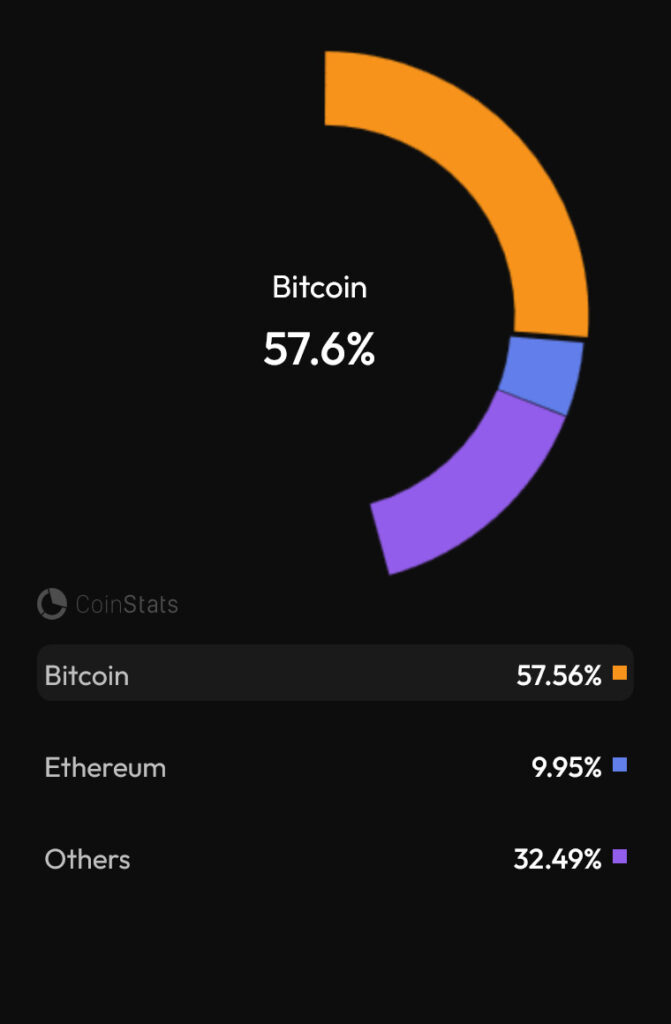
At launch, the trading product supports Bitcoin and Ethereum only. Charles Schwab said the two assets together represent about three-quarters of total crypto market capitalization. That helps explain why the firm is starting with the most established digital assets rather than a wider list of tokens.

The move gives Schwab clients a more direct route into crypto markets. Until now, users could access digital assets mainly through products such as spot crypto exchange-traded products, futures, options on spot crypto ETPs, and crypto-linked funds.

Source: https://coinstats.app/btc-dominance/

How the trading product works

Schwab Crypto uses a separate account offered by Charles Schwab Premier Bank. The account is linked to the client’s broader Schwab relationship. The bank will serve as custodian for client digital assets. That means it is responsible for safekeeping and record-keeping.

Paxos will provide sub-custody and trade execution services. Schwab described Paxos as a regulated blockchain infrastructure provider that works with financial institutions. The structure gives Paxos a central role in crypto custody and execution.

The product charges 75 basis points on the dollar value of each trade. That means a client trading $1,000 worth of crypto would pay $7.50 in fees. Market movement and spreads may increase total trading costs.

Availability remains limited

The launch comes with clear geographic restrictions. Schwab noted the service is available in U.S. states except New York and Louisiana. It is also unavailable in U.S. territories and international jurisdictions.

The firm also emphasized risk disclosures. Cryptocurrencies held through the product are not FDIC insured and are not SIPC protected. The brokerage warned the assets are not deposits and may lose value. It emphasized that crypto investing carries the risk of total loss of principal invested.

This matters for retail users who may be more familiar with protections tied to traditional brokerage products. Direct crypto ownership carries a different risk profile, even when offered through a major financial brand.

Why the launch matters

Charles Schwab rolling out direct crypto trading on its platform adds another major traditional finance institution to the spot trading market. The move could increase competition with crypto-native exchanges and other brokerage firms expanding digital asset access.

The timing is also important. Spot Bitcoin and Ethereum products have already made crypto more accessible through exchange-traded structures. Direct trading now gives investors ownership exposure inside a familiar brokerage environment.

For Schwab, the launch may help retain clients who want to manage more of their financial activity in one place. For the broader market, it signals that large financial firms are still building crypto services. At the same time, those firms continue to move carefully around custody, eligibility, and risk disclosures.

What comes next

Charles Schwab says it plans to add more cryptocurrencies over time, along with transfer capabilities for deposits and withdrawals. That would allow clients who already hold digital assets elsewhere to move them into the Schwab ecosystem.

For now, Schwab Crypto remains a limited rollout centered on Bitcoin and Ethereum. Its broader impact will depend on how quickly access expands, whether more assets are added, and how retail clients respond to trading crypto through a traditional brokerage platform.

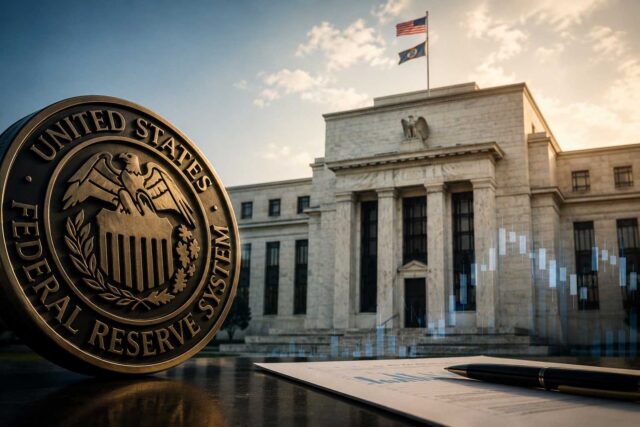
Senate Confirms Kevin Warsh to Fed Board Before Key Chair Vote

TL;DR

  • The U.S. Senate confirmed Kevin Warsh to the Federal Reserve Board of Governors in a 51-45 vote, but a separate confirmation is still required for the Fed chair role.
  • Jerome Powell’s term as Fed chair expires on May 15, though he may continue serving on the Board after the leadership transition.
  • Markets and crypto firms are closely watching whether Warsh could influence interest rates, banking access, and future crypto regulation.

The U.S. Senate has confirmed Kevin Warsh to the Federal Reserve Board of Governors, moving the former central bank official one step closer to potentially becoming the next Federal Reserve chair.

The Senate approved Warsh in a 51-45 vote on May 12, filling a vacant seat on the Fed’s Board of Governors. However, the vote did not formally confirm him as chair of the central bank. That position requires a separate Senate confirmation process.

Senators immediately moved to limit debate on Warsh’s separate nomination as Fed chair. The move set up a confirmation vote expected Wednesday. Jerome Powell’s current four-year term as Fed chair is scheduled to expire on May 15.

Separate process for the Fed chair role

The distinction between governor and chair has become a major point of confusion following the Senate vote.

Federal Reserve chairs must first serve on the Board of Governors. They then require separate Senate confirmation to lead the institution.

Powell’s chairmanship may end this week, but his underlying term as a Fed governor extends beyond 2026. That means he could remain on the Board afterward.

Kevin Warsh’s confirmation to the Fed Board therefore represents the first stage of a broader leadership transition rather than the final appointment itself.

Warsh previously served as a Fed governor from 2006 to 2011 during the global financial crisis. Since leaving the central bank, he has remained active in monetary policy debates and has criticized aspects of the Federal Reserve’s post-pandemic strategy.

Only one Democrat, Senator John Fetterman of Pennsylvania, voted with Republicans to confirm Warsh.

Vacancy tied to Kugler resignation

Questions also emerged after the vote regarding how Warsh could join the Board given that all governor seats were widely believed to be occupied.

The vacancy traces back to former Fed Governor Adriana Kugler, who resigned effective August 8, 2025. Her term had originally been scheduled to expire in January 2026.

Stephen Miran had been confirmed to serve the remainder of Kugler’s term, which expired in January 2026. He remained on the Board until a successor was confirmed. Warsh is now taking over that seat following Senate approval.

That means Warsh is not replacing Powell as a governor. Instead, he is entering the Board separately while positioning himself to potentially assume the chairmanship afterward.

The Kevin Warsh Fed Board transition is unfolding during a politically sensitive period for U.S. monetary policy. President Donald Trump has repeatedly pushed the Federal Reserve to lower interest rates amid concerns about slowing economic growth.

Markets focus on future policy direction

Investors are now closely monitoring whether Warsh’s leadership could signal broader changes in Federal Reserve policy.

Warsh has previously argued that the central bank should maintain a smaller balance sheet and communicate policy decisions more clearly. He has also criticized prolonged emergency-style monetary measures introduced after the pandemic-era economic shock.

At the same time, economists remain divided over whether a Warsh-led Fed would face stronger political influence from the White House. Some analysts believe closer alignment between the administration and the central bank could increase market volatility if inflation pressures remain elevated.

Others argue that a leadership change may produce a more flexible approach toward economic growth and financial conditions. Investors are also watching whether Warsh could support a more accommodative path for interest rates if economic growth weakens further.

Crypto sector watches Fed transition

The Federal Reserve leadership reshuffle is also attracting attention from the cryptocurrency industry.

Warsh has disclosed investments connected to blockchain and digital asset-related firms, though reports indicate he plans to divest several holdings if he eventually becomes Fed chair.

The Federal Reserve heavily influences how banks interact with crypto businesses. That includes custody rules, payment access, and dollar settlement systems.

The transition could also influence the future direction of U.S. crypto regulation as lawmakers debate stablecoin and digital asset legislation.

For now, Warsh’s Senate confirmation only places him on the Board of Governors. Whether he ultimately becomes the next Federal Reserve chair will depend on a separate Fed Chair vote expected within days.

Circle Raises $222M for Arc Blockchain in Major Institutional Presale

TL;DR

  • Circle raised $222 million through a token presale for its Arc blockchain, led by Andreessen Horowitz, at a reported $3 billion valuation.
  • Arc is a public Layer-1 blockchain designed for stablecoin payments and tokenized financial applications using USDC as its gas token.
  • The project’s public testnet is already live, with Circle targeting a mainnet launch in 2026.

Circle has raised $222 million through a token presale for Arc, its public Layer-1 blockchain focused on stablecoin payments and tokenized finance. The transaction valued the project at approximately $3 billion and marked one of the largest blockchain infrastructure financings announced this year.

Andreessen Horowitz led the presale with a reported $75 million investment. Other participants included BlackRock, Apollo, Intercontinental Exchange, SBI Group, Janus Henderson Investors, Standard Chartered Ventures, General Catalyst, Marshall Wace, ARK Invest, IDG Capital, Haun Ventures, and Bullish.

The Arc blockchain presale also stands out because Circle structured the transaction around ecosystem tokens. The company did not use a traditional equity funding round.

Several reports described the transaction as the first token presale conducted by a publicly listed crypto company, highlighting how digital asset firms are experimenting with alternative capital formation models.

Arc Expands Circle Beyond Stablecoin Issuance

Circle is primarily known as the issuer of the USDC stablecoin, one of the largest dollar-backed digital assets. Arc represents a broader effort by the company to move beyond stablecoin issuance and establish a position in the blockchain infrastructure layer itself.

The network is designed as a public Layer-1 blockchain focused on financial applications, payments, and tokenized assets. Many blockchains rely on volatile native crypto assets for transaction fees. Arc instead uses USDC as its gas token, tying transaction costs more directly to the U.S. dollar.

Circle’s Arc blockchain is compatible with the Ethereum Virtual Machine, supporting Ethereum-based smart contracts and developer tools. Circle has additionally promoted sub-second transaction finality as a core feature aimed at settlement efficiency and payment use cases.

Arc enters a growing category of blockchain networks targeting institutional users. At the same time, the network maintains public blockchain accessibility.

Financial firms have increasingly explored blockchain infrastructure for areas such as tokenized securities, collateral management, payments, and cross-border settlement.

Public Testnet Is Already Live

Arc has already entered its testing phase ahead of a planned mainnet launch in 2026. Circle launched the blockchain’s public testnet in October 2025 with participation from more than 100 organizations spanning fintech, digital assets, and traditional financial services.

According to Circle, it used the testnet to evaluate applications connected to lending, foreign exchange, capital markets, and global settlement. The company has framed the network as infrastructure capable of supporting high-throughput financial activity while remaining compatible with existing blockchain development tools.

The public testnet moved Arc beyond the conceptual stage. It also shifted the project into active ecosystem development ahead of mainnet deployment.

While institutional backing can provide early credibility, long-term adoption will likely depend on developer participation, network activity, and whether financial firms choose to deploy applications directly on the chain after launch.

Competition in the sector also remains significant. Arc enters a market already populated by Ethereum-focused scaling networks, tokenization platforms, and institution-oriented blockchain ecosystems competing to become infrastructure providers for digital finance.

Circle Reports Stronger Quarterly Results

The token presale announcement arrived alongside Circle’s Q1 2026 earnings release. The company reported revenue and reserve income of $694 million, representing 20% year-over-year growth, while adjusted EBITDA increased 24% to $151 million.

Although revenue came in below analyst expectations of roughly $715 million, the results still reflected continued growth in USDC activity and reserve-related income. Circle reported $77 billion in USDC circulation at the end of the quarter alongside $21.5 trillion in quarterly onchain transaction volume.

The Arc blockchain initiative gives Circle direct exposure to infrastructure tied to stablecoins and tokenized finance. That expands its strategy beyond revenue generated primarily through USDC issuance.

That strategy could become increasingly important as financial institutions continue exploring blockchain-based settlement systems and programmable digital assets.

For now, the $222 million Arc token presale signals continued institutional appetite for blockchain infrastructure projects tied to stablecoins and regulated financial applications. The next phase for Circle will likely focus on converting early investor support and testnet participation into sustained network activity ahead of Arc’s planned mainnet rollout in 2026.

Bithumb Moves Into Vietnam Through SSI Digital Partnership

TL;DR

  • Bithumb signed a partnership with SSI Digital to explore launching a regulated crypto exchange in Vietnam.
  • The agreement comes as Vietnam advances a five-year pilot program for licensed digital asset trading platforms.
  • The partnership could give Bithumb an early position in one of Southeast Asia’s fastest-growing crypto markets.

South Korea’s second-largest crypto exchange, Bithumb, is expanding its regional ambitions through a new partnership with Vietnam-based SSI Digital. The move that could position the company inside one of Southeast Asia’s emerging regulated digital asset markets.

The agreement focuses on developing a cryptocurrency exchange in Vietnam. According to multiple reports, the memorandum of understanding was signed on March 2, 2026 at SSI’s Hanoi branch office. Bithumb announced the partnership publicly only on May 7.

Bithumb’s Vietnam initiative reflects growing competition among global crypto firms seeking access to markets that are beginning to formalize digital asset regulation after years of operating in legal gray zones.

SSI Digital is a subsidiary of SSI Securities Corporation, Vietnam’s largest securities company by capital scale. The partnership will combine Bithumb’s exchange technology and operational experience with SSI Digital’s understanding of Vietnam’s financial market and regulatory environment.

Vietnam Emerges as Strategic Crypto Market

Vietnam has become one of the most closely watched crypto markets in Asia. Retail adoption is high and younger investors are strongly interested in digital assets. However, much of the activity has historically taken place through offshore exchanges because the country lacked a clear licensing framework for local operators.

That situation appears to be changing.

Vietnamese policymakers have recently increased efforts to establish a regulated structure for digital asset businesses. Reports indicate that authorities are preparing pilot programs and licensing pathways aimed at bringing crypto trading activity under domestic oversight.

For foreign exchanges, entering the market directly may not be straightforward. Local partnership structures are becoming increasingly important as governments across Asia tighten rules around ownership, compliance, and investor protection.

Bithumb’s decision to work with SSI Digital suggests the company sees regulatory alignment as critical for long-term expansion rather than relying solely on offshore access.

Regional Competition Among Crypto Exchanges Intensifies

The partnership also highlights broader competitive pressure among Asian crypto exchanges.

South Korean trading platforms have faced slowing domestic growth and stricter compliance requirements in recent years. Expanding into neighboring markets could provide new user growth opportunities, especially in countries where crypto adoption remains strong.

At the same time, regional governments are moving at different speeds on regulation. Singapore and Hong Kong have already established licensing systems, while markets such as Vietnam are still shaping their frameworks.

The Bithumb Vietnam partnership may therefore represent an early positioning strategy ahead of formal licensing approvals. By establishing relationships before regulations are fully finalized, exchanges may gain an operational advantage once legal pathways open.

Several reports also noted that the partnership currently centers on cooperation and exchange development plans rather than an immediate exchange launch. Details about timelines, licensing approvals, platform structure, or supported assets have not yet been publicly disclosed.

Regulatory Uncertainty Still Remains

Despite the announcement, major questions remain around how Vietnam’s crypto framework will ultimately operate.

Vietnam approved a five-year pilot program for cryptocurrency exchanges in September 2025, signaling a shift toward regulated domestic digital asset trading. However, the market is still in a transitional phase. Authorities are working through licensing approvals, operational standards, custody requirements, capital rules, and investor protection measures that could shape how exchanges ultimately operate.

That uncertainty means partnerships like this are partly strategic bets on future regulatory clarity.

Still, the involvement of SSI Digital could provide credibility within Vietnam’s financial sector. After all, traditional brokerage-linked firms may be viewed more favorably by regulators compared with purely offshore crypto businesses.

The deal also signals that established crypto exchanges continue searching for expansion opportunities in Asia even as compliance costs rise globally.

What Comes Next

The next phase for the partnership will likely depend on Vietnam’s progress toward implementing its pilot exchange framework and defining licensing requirements for digital asset operators.

If regulations move forward as expected, Bithumb Vietnam could become one of the earlier examples of a foreign exchange operator entering the Vietnamese market through a locally aligned structure.

For now, the agreement primarily signals intent rather than a confirmed launch. However, it underscores how Southeast Asia remains a major strategic focus for crypto firms looking for new growth markets as regulation gradually matures across the region.

- Advertisement -

FEATURED