Home Blog Page 43

Beyond Crypto: MEXC COO Vugar Usi on Infinite Trading Opportunities | NBX Warsaw 2026

Vugar Usi, COO of MEXC
Screenshot

MEXC COO Vugar Usi shares his perspective from the Next Block Expo in Warsaw 2026 on the rapidly evolving landscape of digital finance. The core trend in the industry is now moving beyond traditional crypto to offer infinite opportunities across diverse markets. By integrating MT5, US stocks, prediction markets, and commodities like gold and petroleum, MEXC is enabling its 40 million users to trade any market condition with zero fees, turning standard wins into “win-wins”.

Trade everything with zero fees on MEXC

Drift exploit shifts focus to cause and attribution

TL;DR

  • Analysts investigating the cause of the Drift Protocol hack linked the exploit to North Korean-affiliated groups.
  • Early analysis suggests similarities to the 2025 Bybit breach, including potential multisig or privileged access compromise.
  • Attribution and exact exploit mechanics remain unconfirmed pending a full postmortem from Drift.

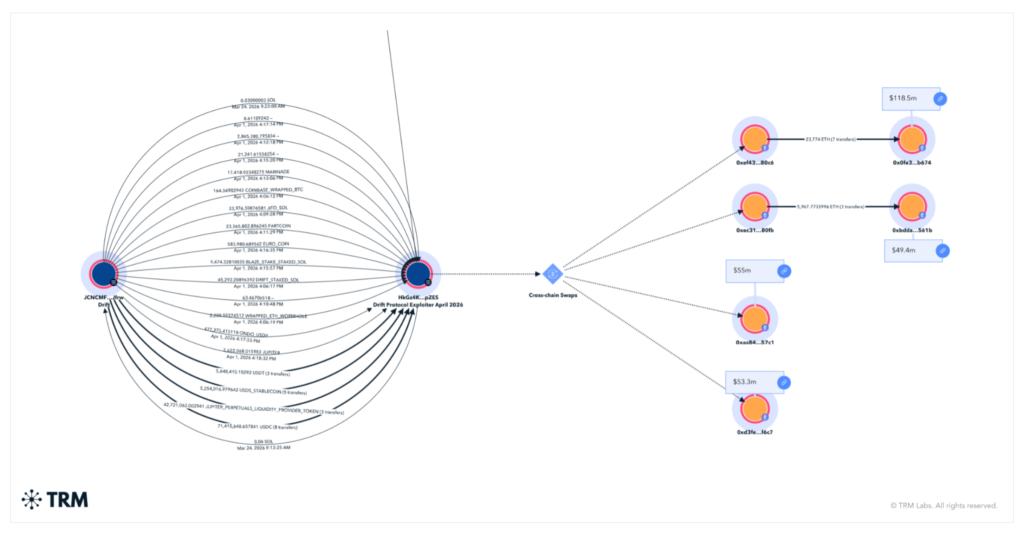
The investigation into the causes of the Drift Protocol hack has shifted toward attribution and attack structure. Blockchain analytics firms, including TRM Labs and Elliptic, have linked the exploit to North Korean-affiliated hacking groups. The incident saw hundreds of millions drained from the Solana-based platform. It is now being analyzed not just as an isolated breach but as part of a broader pattern of state-linked crypto attacks.

Drift has not yet released a full technical breakdown. External investigators point to coordinated behavior consistent with previous high-profile exploits. These include rapid fund movement, cross-chain transfers, and structured laundering patterns often associated with advanced threat actors.

Cybersecurity analysis from TRM Labs and Elliptic suggests the attackers may be tied to North Korean groups. These groups are known for targeting crypto platforms. They have been linked to multiple large-scale hacks in recent years. Their activity often focuses on DeFi protocols and centralized exchanges.

The attribution is based on transaction patterns, wallet clustering, and behavioral similarities observed in prior incidents. However, this assessment remains probabilistic. Drift has not officially confirmed responsibility at this stage.

For readers, this distinction matters. Attribution in crypto exploits often relies on forensic analysis rather than direct identification. Conclusions can evolve as more data becomes available.

Parallels to last year’s Bybit hack

Analysts are examining the cause of the Drift Protocol hack by comparing it to the 2025 Bybit breach. That incident involved a significant compromise of internal controls. Security researchers and industry executives have pointed to structural similarities between the two incidents. This includes commentary cited by TRM Labs and other analysts.

One recurring theory is the use of a multisig or privileged access vulnerability. In this scenario, attackers gain control over critical administrative functions. They do not rely on a simple smart contract bug — the attack surface shifts from code-level flaws to operational security weaknesses.

The comparison is notable. The Bybit hack showed how attackers could bypass standard safeguards. They did this by targeting governance or signing mechanisms. Early analysis suggests Drift may have faced a similar vector. This has not been officially confirmed.

https://twitter.com/elliptic/status/2039710830523011576

Attack execution suggests prolonged preparation

Further analysis from TRM Labs indicates the exploit may not have been opportunistic. It may have been carefully staged. Investigators suggest the attackers could have spent weeks positioning themselves within the system. The drain itself was then executed in a short time window.

This pattern aligns with previous large-scale crypto breaches. Attackers establish access gradually. They test system responses. They then execute the main exploit rapidly to minimize detection and intervention.

If confirmed, this would reinforce the view that the Drift incident was not simply a technical failure. It may reflect a broader security breakdown involving monitoring, access controls, or internal safeguards.

Industry implications extend beyond Drift

The Drift Protocol hack is likely to have wider implications, particularly as its cause raises concerns about how crypto platforms approach security. This is especially true for privileged access and cross-chain infrastructure. The incident has already prompted renewed discussion about multisig protections, real-time monitoring, and response coordination across ecosystems.

It also raises questions about the limits of existing defenses against well-resourced attackers. Even when vulnerabilities are not visible at the smart contract level, operational weaknesses can still expose large pools of capital.

Until Drift releases a detailed postmortem, much of the analysis will remain provisional. However, the emerging picture, supported by firms such as Elliptic and TRM Labs, points to a sophisticated attack. It may share characteristics with previous state-linked exploits rather than a simple isolated failure.

Bithumb Delays IPO Plans Beyond 2028 as Compliance Demands Increase

TL;DR

  • Bithumb has delayed its public listing timeline to after 2028 following an internal review.
  • Regulatory pressure and stricter compliance requirements are key factors behind the postponement.
  • The move signals a shift toward long-term positioning rather than near-term market entry.

Bithumb has pushed back its long-anticipated public listing, with its IPO now expected to take place after 2028. The revised timeline marks a significant shift from earlier plans that targeted a 2025 debut. The updated plan reflects a more cautious approach as the exchange navigates regulatory scrutiny and changing market dynamics.

The delay follows an internal review of listing conditions and broader industry trends. While the company had previously taken steps to prepare for a public offering, including restructuring its business, current conditions appear to have altered its near-term strategy.

Strategic Reset After Earlier IPO Momentum

Bithumb had been positioning itself for a public listing through a series of corporate changes, including plans to separate its core exchange operations from non-core business units. That restructuring was widely seen as a preparatory step to improve transparency and operational focus ahead of an IPO.

At the time, the exchange was also exploring different listing venues, including a domestic offering in South Korea and the possibility of a U.S. listing. A Nasdaq debut had been considered as part of a broader effort to expand its global footprint and attract international investors.

However, the revised timeline suggests that these ambitions are now being recalibrated. Rather than rushing to market, the company appears to be prioritizing stability and compliance.

Bithumb Public Listing Faces Regulatory Constraints

The delay in Bithumb’s public listing comes amid intensifying regulatory oversight in South Korea’s crypto sector. Authorities have continued to tighten requirements around anti-money laundering controls, customer verification, and exchange licensing.

Bithumb has previously faced scrutiny over compliance practices, including issues tied to Know Your Customer procedures and broader operational oversight. These factors are likely to play a role in the company’s decision to delay its listing. After all, regulators demand higher standards from crypto platforms seeking public market access.

Beyond South Korea, a potential international listing would introduce additional layers of regulatory complexity. A U.S. listing, for example, would require alignment with securities laws and disclosure standards that are often more stringent than domestic requirements.

Market Conditions Add Further Uncertainty

In addition to regulatory pressure, broader crypto market conditions have contributed to the decision to postpone. The digital asset sector remains sensitive to macroeconomic shifts, liquidity cycles, and investor sentiment, all of which can influence IPO timing and valuation.

While the exchange reported strong financial performance in the previous cycle, including a sharp increase in profitability, sustaining that momentum in a more volatile environment is less certain. Delaying the public listing may allow Bithumb to seek a more favorable market window and potentially stronger valuation.

The crypto exchange IPO landscape has also evolved, with fewer high-profile listings in recent periods compared to earlier market cycles. This shift may further reinforce a wait-and-see approach.

Long-Term Positioning Over Short-Term Listing

The updated timeline indicates that Bithumb is placing greater emphasis on long-term positioning rather than immediate market entry. By extending its IPO horizon, the crypto exchange may gain time to strengthen internal controls, adapt to regulatory expectations, and refine its business model.

This approach could also help rebuild investor confidence, particularly given past compliance concerns. A more measured path to public markets may ultimately support a more stable debut when conditions improve.

Outlook

Delaying Bithumb’s public offering underscores a broader trend in the crypto industry, where exchanges are increasingly balancing growth ambitions with regulatory realities. While the company’s global listing goals remain intact, the timeline now reflects a more cautious and adaptive strategy.

Whether Bithumb can align its operations with evolving regulatory frameworks and capitalize on future market cycles will determine the success of its eventual public debut. For now, the focus has shifted from acceleration to preparation.

Arturas Svirskis on Solving Growth and Licensing Challenges for Crypto Companies | Hexagon Ventures Group at NBX Warsaw

Arturas Svirskis, founder of Hexagon Ventures Group, shares expert insights from Next Block Expo Warsaw on navigating the crypto and fintech landscape. As a boutique venture studio, Hexagon provides capital, growth strategies, and advisory for startups across Europe, MENA, and Africa.

Key Expertise:

  • Compliance: MiCA and CASP licensing.
  • Operations: Exchange and wallet setup.
  • Growth: User acquisition and strategic partnerships.
  • Capital: Strategic fundraising and active management support.

Find Arturas Svirskis or Hexagon Ventures Group on LinkedIn to connect.

Drift Protocol Says ‘Active Attack’ as Suspicious Outflows Top $270M

TL;DR

  • Drift Protocol halted activity after detecting an active attack with over $270M in suspicious outflows.
  • Loss estimates range from $200M to $285M, with no confirmed final figure or exploit method.
  • The incident triggered a sharp DRIFT token drop and raised questions about cross-chain response systems.

Drift Protocol halted deposits and withdrawals after reporting unusual activity. The situation later escalated into what the team described as an active attack. This added fresh pressure to Solana’s DeFi sector as losses were still being assessed on April 2, 2026. The Drift Protocol hack quickly became one of the biggest crypto security incidents of the year. Public estimates range from more than $200 million to roughly $285 million.

The platform first warned users on April 1, 2026, not to deposit funds. It said the alert was not an April Fools’ joke. It later confirmed that deposits and withdrawals had been suspended. The team coordinated with security firms, bridges, and exchanges to contain the incident. As of the latest public updates, Drift had not published a full postmortem. It also had not confirmed a final loss figure.

Loss estimates remain unsettled

A key issue in the early coverage is that the damage estimate is still moving. Early alerts pointed to a possible nine-figure exploit. Later assessments placed the suspected losses closer to $270-$285 million.

That means the cleanest framing is not to lock in one exact number too early. What is confirmed is that Drift publicly acknowledged an active attack. Outside observers also traced very large outflows from the protocol during the incident. On-chain tracking linked the transfers to a wallet beginning with HkGz4K. The protocol itself has not fully validated every public claim at the time of writing.

Market fallout hits DRIFT

The market response was immediate. The DRIFT token fell sharply after the attack became public. Some estimates put the decline at more than 40%, depending on the measurement window. That drop reflects both the direct shock of the incident and investor concern over how much of the protocol’s liquidity and user confidence can be restored.

For retail readers, the price move matters because token declines often signal broader uncertainty. It is not just the fear due to one stolen wallet. When a major DeFi platform freezes core functions during a crisis, traders start pricing in legal, technical, and reputational damage. This often happens before the full facts are available. That pattern has played out repeatedly across past crypto exploits. Drift now appears to be facing the same pressure.

Response questions widen beyond Drift

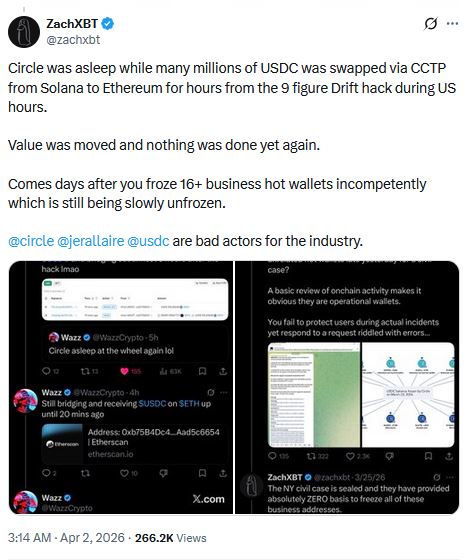
The Drift Protocol hack has also widened into a second debate about how crypto infrastructure firms respond once stolen funds begin moving across chains. Blockchain investigator ZachXBT criticized Circle, arguing that millions in USDC moved from Solana to Ethereum for hours without intervention.

That criticism may keep the story alive even after the exploit itself is better understood. In practice, the issue is no longer only whether Drift’s defenses failed. It also includes whether major service providers moved fast enough once the attack was visible on-chain. This could shift attention from a single protocol breach to a wider discussion about the limits of real-time containment in decentralized finance.

What comes next

The next phase will depend on Drift’s forensic update, including whether the team can identify the exploit path, confirm the final loss amount, and explain what funds, if any, may be recoverable.

The exact exploit mechanism remains unconfirmed by Drift Protocol as of April 2, 2026. Preliminary on-chain analyses from firms like PeckShield and SlowMist point to compromised admin/multisig privileges, possibly via key leak or social engineering, allowing rapid vault drains, though these details await official verification.

Until then, the Drift Protocol hack stands as a reminder that even well-known DeFi platforms remain exposed to sudden operational shocks. Early reporting in fast-moving crypto incidents often mixes confirmed facts with still-unverified estimates.

- Advertisement -

FEATURED