Home Blog Page 62

Coincheck’s 3iQ Acquisition Signals a Shift Beyond Crypto Trading

TL;DR

  • The Coincheck 3iQ acquisition reflects a strategic shift away from pure exchange trading toward regulated crypto asset management.
  • By acquiring a Canadian digital asset manager, Coincheck gains institutional product infrastructure it would be difficult and slow to build internally.
  • The deal highlights a broader industry trend in which crypto exchanges move up the stack to control product design and long-term capital distribution.

The Coincheck 3iQ acquisition is not the kind of deal that turns on valuation mechanics alone. Announced as an all-stock transaction valued at roughly $112 million, the agreement positions Coincheck Group to acquire 3iQ and expand beyond exchange-based crypto trading. While early coverage focused on deal size and timing, the more consequential question is what this move signals about how crypto businesses are evolving.

Why Exchange-Only Models Are Under Pressure

For crypto exchanges, structural pressure has been building for years. Retail trading volumes remain highly cyclical, fee competition has intensified, and regulatory compliance costs continue to rise across major jurisdictions. These forces leave exchanges exposed to market swings and limit revenue stability when activity slows.

As a result, growth is no longer just about onboarding more traders. It increasingly depends on capturing longer-duration capital and developing business lines that are less sensitive to daily market sentiment.

Moving Up the Stack: From Trading to Products

This is where the shift toward crypto asset management becomes relevant. Unlike exchange trading, asset management relies on assets held over time rather than transaction frequency. Fees are tied to capital allocation decisions, not constant user activity. That makes the model structurally more stable and better aligned with institutional behavior.

The Coincheck 3iQ acquisition reflects this logic. Instead of competing solely on execution and liquidity, Coincheck is moving closer to the product layer, where crypto exposure is packaged, managed, and distributed in forms institutions are more comfortable using.

What 3iQ Adds That Coincheck Did Not Have

As a 3iQ digital asset manager, the firm has focused on building regulated crypto investment structures within Canada’s financial framework. Its core competency is not retail user acquisition but product design, regulatory engagement, and institutional distribution.

These capabilities are difficult to replicate organically. Licensing requirements, regulator relationships, and product approval timelines create meaningful barriers to entry. Acquiring an established platform allows Coincheck Group to bypass years of groundwork and immediately operate within a regulated asset-management environment.

Why Canada Matters in This Strategy

Canada has emerged as an early proving ground for regulated crypto investment products. It offers clearer pathways than some larger markets while retaining credibility with institutional allocators. For Coincheck, acquiring a Canadian firm provides a North American foothold without starting from zero.

This geographic element reinforces the broader strategy. Japan already represents one of the most tightly regulated crypto markets globally. Pairing that experience with Canadian product infrastructure allows Coincheck to operate across jurisdictions where regulatory clarity is becoming a competitive advantage.

A Broader Industry Pattern Is Taking Shape

The Coincheck 3iQ acquisition fits into a wider trend across the crypto industry. Exchanges are converging with asset managers, custodians, and product issuers as they seek to control more of the value chain. Owning the product layer means shaping how crypto exposure is delivered, rather than merely facilitating trades once demand appears.

This convergence reflects a maturing market. As institutional crypto products gain traction, platforms that combine trading infrastructure with regulated product distribution may position themselves better than those reliant on transactional revenue alone.

Positioning for Crypto’s Next Phase

Rather than focusing solely on trading volume, Coincheck Group is signaling that future growth will depend on how crypto exposure is structured and managed for institutional investors. Acquiring a regulated asset manager moves the company closer to that objective. However, the financial impact will only become clear over time.

The deal underscores a broader shift in crypto’s evolution: value is increasingly migrating away from raw market access and toward the systems that package, manage, and distribute exposure. For exchanges facing tightening margins and rising regulatory costs, that shift is becoming difficult to ignore.


Colombia Formalizes Crypto Tax Reporting for Exchanges

TL;DR

  • Colombia has introduced a dedicated crypto reporting regime under Resolution 000240, requiring exchanges to report user and transaction data to tax authorities starting with the 2026 tax year.
  • The rules implement the OECD’s Crypto-Asset Reporting Framework (CARF), adding a parallel reporting system for crypto alongside existing tax transparency regimes.
  • The change strengthens DIAN’s ability to verify crypto-related tax declarations without restricting trading or introducing new crypto-specific taxes.

Colombia’s tax authority, DIAN, has implemented Resolution 000240, establishing a formal reporting regime for crypto exchanges and service providers operating in the country. The new rules require platforms to report user and transaction data to tax authorities, bringing Colombia’s crypto reporting rules in line with international transparency standards developed for digital assets.

The framework is based on the OECD’s Crypto-Asset Reporting Framework (CARF) and represents the first systematic third-party crypto reporting system in Colombia. The move implements commitments Colombia assumed as an OECD member. At the same time, it also marks a significant operational change. Until now, Colombia‘s crypto tax reporting relied primarily on self-declaration by taxpayers rather than exchange-level data.

A dedicated crypto reporting regime rooted in OECD commitments

Colombia’s adoption of crypto reporting obligations follows its participation in OECD tax transparency initiatives. These initiatives seek to extend information-reporting standards beyond traditional banking into emerging asset classes. Under this approach, tax authorities no longer treat crypto assets as an informational blind spot.

CARF operates alongside existing regimes such as the Common Reporting Standard (CRS), which applies to banks and other financial institutions. It does not replace CRS. Instead, this crypto reporting framework applies similar principles to crypto markets, including customer identification, transaction tracking, and standardized disclosures to tax authorities.

In practice, intermediaries report structured data to DIAN. They can then use the data for domestic enforcement and, where applicable, share it with other jurisdictions under existing information-exchange agreements.

What crypto exchanges in Colombia are now required to report

Resolution 000240 introduces new reporting obligations for crypto exchanges in Colombia, aligning their compliance responsibilities more closely with those applied to traditional financial intermediaries. Platforms operating locally or serving Colombian residents must identify users, monitor relevant crypto transactions and balances, and submit standardized disclosures to DIAN.

The reporting scope typically includes widely used assets such as Bitcoin, Ether, and stablecoins. Reporting applies starting with the 2026 tax year, with submissions due by the last business day of May. Platforms must submit filings primarily in XML formats aligned with DIAN’s technical specifications.

Penalties for non-compliance are broadly similar to existing tax information-reporting sanctions. They may include fines based on the value of unreported operations. Some guidance references thresholds tied to higher-value activity. The core objective of crypto exchange reporting is to ensure transactions are visible to Colombia’s tax authorities through third-party data.

What this changes for enforcement—and what it does not

The new reporting regime does not ban crypto trading, restrict access to self-custody wallets, or introduce new crypto-specific taxes. Colombian taxpayers were already required to declare crypto holdings and gains under existing tax law.

What changes is enforcement capability. With Colombia crypto reporting rules now in place, DIAN crypto reporting will be based on data received directly from exchanges. This allows the authority to cross-check taxpayer declarations against reported account and transaction information, strengthening audit and compliance oversight.

Self-custody wallets and decentralized protocols are not reporting entities under the current framework. However, when users interact with centralized platforms, those transactions may generate reportable data that falls within DIAN exchange disclosure requirements.

Part of a broader global shift toward crypto tax transparency

Colombia’s move mirrors developments in other jurisdictions adopting CARF crypto reporting frameworks to address tax transparency gaps. Rather than signaling a hostile turn against digital assets, the policy reflects regulatory normalization. Crypto activity is being integrated into existing reporting architectures that already govern traditional financial markets.

Seen in that context, the shift is implementation, not escalation. Under Colombia’s OECD-aligned crypto rules, the market remains open, but platforms face new reporting obligations, and DIAN receives more data to verify tax filings.

Zcash Developer Exit Triggers Governance Questions and Sharp ZEC Sell-Off

TL;DR

  • The full team of Zcash developers employed by Electric Coin Company leave after a governance dispute with the Bootstrap board.
  • ZEC fell double digits as markets priced in execution and coordination risk, despite no technical failure or protocol disruption.
  • Zcash remains operational and open-source, but unresolved questions around governance, funding, and roadmap ownership now shape investor confidence.

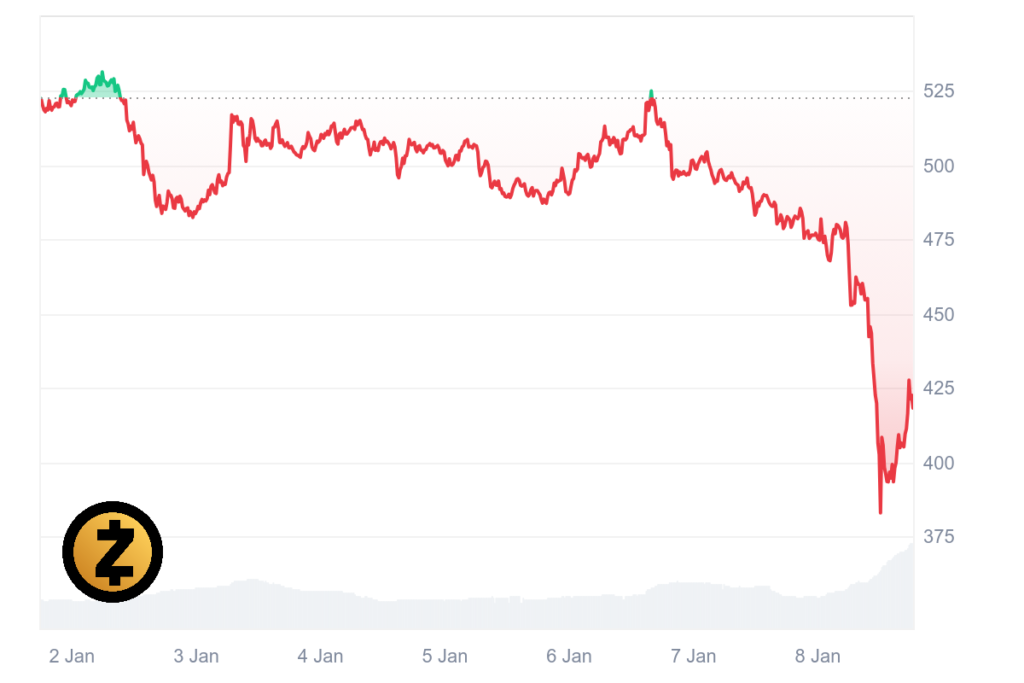
Zcash’s developer exit has shaken confidence in one of crypto’s longest-running privacy projects. ZEC moved sharply lower as investors reacted to sudden governance uncertainty. The entire Zcash development team employed by Electric Coin Company (ECC), a key contributor to Zcash, departed following a dispute with the Bootstrap board. The situation has raised fresh questions about how the project is governed and who controls its future direction.

ZEC fell double digits shortly after the news broke. The ZEC price drop reflected concerns about execution risk rather than any immediate technical failure of the network.

What happened

The dispute unfolded during an internal restructuring process involving ECC and Bootstrap. Bootstrap is the nonprofit entity responsible for oversight of ECC’s operations. According to public statements, Bootstrap moved to assert greater authority over strategy and organizational decisions. The board cited its fiduciary responsibilities as a nonprofit.

ECC leadership and developers pushed back. They argued that the restructuring altered the balance between responsibility and authority. As discussions broke down, the entire Zcash development team opted to leave together. This brought ECC’s role as the project’s primary development shop to an abrupt halt.

This zcash developer exit was not triggered by a security incident, funding shortfall, or code failure. Instead, it stemmed from disagreements over governance and control during Zcash restructuring. At the center of the dispute was how decisions would be made going forward.

Competing narratives

Former ECC chief executive Josh Swihart described the situation as a case of constructive discharge. The term is used when working conditions change so materially that continuing employment becomes untenable. In his framing, ECC retained responsibility for delivering results. At the same time, it lost meaningful autonomy over how it could achieve those results.

From this perspective, the governance dispute at Zcash centered on control. Developers believed the evolving oversight structure prevented them from executing effectively. Expectations, however, remained unchanged.

Bootstrap has offered a different explanation. The board has emphasized that nonprofit governance requirements and legal obligations were driving its actions. According to this view, oversight changes were necessary to protect assets and ensure compliance. The board also pointed to accountability requirements within Zcash’s nonprofit structure.

Neither side has alleged misconduct. The conflict instead reflects a structural tension between a nonprofit board and a developer organization. That organization had been operating with startup-style expectations.

Immediate market reaction

Markets responded swiftly. ZEC’s price dropped due to fears that the sudden loss of a coordinated core team could delay development milestones. Traders also focused on the risk that future upgrades could become harder to coordinate.

The market reaction mirrors past episodes across crypto. In those cases, governance shocks rather than protocol flaws triggered sharp repricing. Even when networks continue to operate normally, investors tend to discount assets when leadership clarity vanishes.

In Zcash’s case, the sell-off appeared driven by risk repricing rather than panic. Trading volumes spiked as the news spread across major venues.

Source: CoinMarketCap

What did not change

Despite the headlines, Zcash itself continues to function. The protocol remains live, and transactions are processing normally. No vulnerabilities have been reported.

Zcash’s codebase is open-source. Development can continue even outside a single corporate structure. Importantly, this was an organizational rupture rather than a technical one. The Electric Coin Company may no longer house the core developers, but the departure did not affect the network itself.

What happens next

The departing developers have indicated plans to form a new entity where they want to continue working on privacy-focused technology. How closely that work will align with Zcash going forward remains an open question.

Several uncertainties remain unresolved. Who maintains the primary Zcash roadmap? How will the network fund future development? What role, if any, will the Bootstrap board play in coordinating contributors? These questions will shape whether confidence can be restored after Zcash developers leave ECC.

Governance as the real stress test

The zcash developer exit underscores how governance, not cryptography, has become the primary risk variable for mature blockchain projects. Hybrid models that combine nonprofit oversight with centralized development teams can function smoothly. Problems emerge when authority and accountability drift out of alignment.

Whether this episode becomes a temporary disruption or a lasting governance crisis for Zcash will depend on how quickly they clarify roles and rebuild coordination. For now, the market is watching governance rather than code.

Readers’ frequently asked questions

Who is responsible for maintaining Zcash after the developer exit?

Zcash remains an open-source project, meaning any qualified contributors can work on the codebase. However, it is currently unclear which organization or group will take primary responsibility for coordinating development, reviewing upgrades, and maintaining a unified roadmap for Zcash.

Does the developer exit affect the security or operation of the Zcash network?

No. The Zcash network continues to operate normally, with blocks processing and transactions settling as expected. The developer exit did not involve a security breach, protocol flaw, or emergency network action.

Can Zcash still receive upgrades without Electric Coin Company’s development team?

Yes, upgrades are still possible because Zcash’s code is open-source. That said, major protocol changes typically require coordination, funding, and community alignment, which may be more difficult until governance and leadership roles are clearly defined.

What’s in it for you? Action items you might want to consider

Track governance updates before reacting to price moves

Short-term price volatility reflects governance uncertainty rather than protocol failure. Waiting for clarity from Bootstrap and former ECC developers may provide a better signal than reacting to market swings alone.

Differentiate network stability from execution risk

Zcash continues to operate normally, but leadership and coordination questions could affect future development. Evaluating these risks separately can help avoid overestimating immediate technical threats.

Watch for signals from any newly formed developer entity

If the former ECC development team launches a new organization, its funding model, contributor access, and stated relationship with Zcash will be important indicators of long-term project direction.

Wyoming’s Stablecoin Isn’t Really a Stablecoin

TL;DR

  • Wyoming’s FRNT is being labeled a stablecoin, but it functions more like a state-run system for holding and moving public cash.
  • The token is issued under state law. The reserve income will flow to public education rather than to private issuers or token holders.
  • By combining on-chain settlement with government-controlled reserves, Wyoming has created a hybrid instrument that sits between stablecoins and money market funds.

Wyoming’s latest blockchain headline calls it the first state-backed stablecoin. That label is convenient, but it obscures what the state has actually built. The Frontier Stable Token, commonly referred to as FRNT, is not a consumer payment token. It is much rather a state-level experiment in how the government holds, moves, and monetizes public cash. Framed narrowly, it is a state-issued stablecoin. Structurally, it is something more unusual.

At its core, the launch is not about retail adoption or competing with existing dollar tokens. It is about Wyoming asserting direct control over how public money circulates in a digital environment.

What Wyoming Actually Built

FRNT is issued under state authority and backed by cash and short-duration U.S. Treasury securities. Unlike private issuers, the state is not operating through corporate terms of service but through statutory mandate and public oversight. Wyoming’s FRNT is distributed as a transferable on-chain asset, with initial access routed through existing crypto-market infrastructure.

This setup places the asset in familiar territory for crypto markets, but the issuer does not behave like a fintech company. There is no growth strategy focused on trading pairs, incentives, or liquidity mining. The state-backed stablecoin label reflects who stands behind the reserves, not how the token will circulate day to day.

The design choices suggest the primary audience is not retail users, but Wyoming itself.

Wyoming’s authority to issue FRNT comes from the Wyoming Stable Token Act of 2023, which explicitly authorizes the state to create and operate a dollar-backed digital token. The Wyoming Stable Token Commission issues and administers the token. It also oversees minting, redemption, and compliance under the statute. Franklin Templeton manages the reserve assets backing FRNT. It handles the cash and short-duration Treasury portfolio without controlling issuance or receiving reserve income. FRNT is issued natively on Solana, but holds the structure to allow for broader, multi-chain access through bridging infrastructure. Public access is routed through Kraken. The exchange acts as a regulated distribution venue rather than an issuer or policy gatekeeper.

These details matter because they anchor FRNT in statute, governance, and operational clarity. This is not a pilot running on executive discretion or a public–private fintech partnership. It is state-operated monetary infrastructure.

Why Wyoming Didn’t Just Use Banks

States already earn interest on public funds. They do it through commercial banks, treasury programs, and external fund managers. So the obvious question is why a Wyoming needs this stablecoin at all.

The answer lies in control rather than yield. Traditional routes fragment public cash management into separate systems for holding funds, generating interest, settling payments, and reporting balances. Each layer introduces intermediaries, delays, and opaque fee structures. Banks earn spread on idle public money, while states accept negotiated rates and limited visibility.

By issuing a public stablecoin, Wyoming collapses those functions into a single instrument. The same asset can hold value, move it, and settle transactions with immediate finality. This is best understood as tokenized public cash, not a retail payment product. The blockchain component is the rail, not the headline feature.

The Yield Detail That Changes the Classification

The most consequential design choice is what happens to the income generated by the reserves. Wyoming FRNT is backed by assets that produce yield. However, that yield does not flow to token holders. Instead, the yield benefits the Wyoming School Foundation Fund.

This makes FRNT a yield-sequestered instrument. Economically, it generates income. Functionally, holders do not receive it. From the state’s perspective, this is public money tokenization with a clear beneficiary: the public treasury.

That single decision reshapes how the asset should be classified.

Stablecoin vs Money Market Fund

The simplest way to understand the structure is through a stablecoin vs money market fund comparison. Private stablecoins are designed to maintain a peg while allowing issuers to retain reserve income. Money market funds, by contrast, pass yield directly to investors under strict regulatory frameworks.

FRNT does neither. It shares reserve characteristics with government money market products but distributes income like a public finance tool. Calling it a state-issued stablecoin is accurate in a narrow sense, but incomplete in practice. It behaves as a hybrid: transferable like a stablecoin, structured like a cash-equivalent fund, and economically aligned with public rather than private beneficiaries.

This hybrid status is not accidental. It allows Wyoming to modernize cash management without crossing into regulated investment territory for users.

Why This Hybrid Matters

Understanding FRNT as a stablecoin alone misses why regulators and banks are paying attention. The significance lies in what the model demonstrates. A state can issue a digital asset backed by Treasuries, retain the economic upside for public use, and operate outside traditional banking rails without promising yield to holders.

This is not a DeFi experiment and not a consumer play. It is an infrastructure test that quietly questions how much of public finance must rely on private intermediaries.

The Quiet Precedent

In absolute terms, the scale of FRNT is modest. As a state-backed stablecoin, it will have a limited impact on the markets in the immediate future. But the structure is replicable. Other jurisdictions could adopt similar frameworks to reduce dependence on banks for settlement and cash management while keeping economic benefits within public institutions.

That possibility, more than transaction volume or token distribution, is what gives the project weight.

What Wyoming Really Launched

Describing FRNT as a stablecoin is accurate, but incomplete. Wyoming did not tokenize the dollar to enter crypto markets. It tokenized public cash to regain control over how the state holds, moves, and monetizes money. In doing so, it created an asset that sits between stablecoins and money market funds, and in that uncomfortable middle ground, it set a precedent most coverage has barely acknowledged.

Readers’ frequently asked questions

Who can buy FRNT and how is it accessed?

FRNT is available for public purchase by individuals and institutions through regulated intermediaries. Wyoming does not operate a direct retail portal. Access is provided via platforms such as Kraken, which handle onboarding, compliance, and transaction execution.

How can FRNT be redeemed back into U.S. dollars?

FRNT is redeemable at par value through approved channels under rules set by the Wyoming Stable Token Commission. In practice, redemption is handled operationally through intermediaries rather than directly through a state-run retail process.

How is transparency and oversight maintained once FRNT is in circulation?

The Wyoming Stable Token Act sets reporting and oversight requirements covering issuance, reserves, and operations. The statute defines disclosures and verification processes. It’s not left to discretionary reporting by a private issuer.

What Is In It For You? Action items you might want to consider

Read the Wyoming Stable Token Act of 2023 and the Wyoming Stable Token Commission materials to confirm issuance and redemption rules, disclosures, and oversight requirements before treating FRNT as a cash-equivalent instrument.

Check your access path before funding

If you plan to buy or redeem FRNT, confirm which regulated venue you will use and review onboarding, eligibility, fees, and the practical steps for transfers and redemption.

Treat it as infrastructure, not yield

If you are evaluating FRNT for operations such as treasury management or settlement, document your intended use and map custody, transfer limits, and risk controls before moving meaningful size.

Why the US Crypto Market Structure Bill Keeps Slipping

Satirical illustration of US lawmakers dancing limbo as crypto CEOs watch nervously, symbolizing stalled negotiations over crypto market structure legislation.

TL;DR

  • US crypto market structure legislation is moving procedurally, but unresolved disputes over regulatory authority, DeFi scope, and ethics continue to slow final agreement.
  • A planned January markup signals progress in process, not passage, as lawmakers avoid locking in decisions ahead of the midterms.
  • With core issues still unsettled, realistic timelines for passage and implementation now extend toward 2027–2029.

Just weeks ago, messaging around US crypto legislation suggested the finish line was in sight. Lawmakers briefed industry leaders, and working groups met behind closed doors. Public comments hinted that a long-awaited framework was close to completion. That narrative has since shifted. Analysts at TD Cowen now point to passage drifting toward 2027, with full implementation potentially stretching to 2029. The sudden reset has put the delay of the crypto market structure legislation back at the center of the debate. It has also raised questions about what actually changed between December optimism and January caution.

Rather than signaling collapse, the shift reflects a familiar pattern in Washington. Progress in tone is often followed by restraint once unresolved issues resurface. The evolving timeline shows how easily momentum slows when the process moves faster than substance.

What a January Markup Actually Signals

The current focal point is a planned Senate committee markup on January 15, 2026. Markups are often framed as the next decisive step. In reality, a markup is procedural progress, not a commitment to passage. Committees can debate text and propose amendments. They can also leave core disputes unresolved. This is why we can expect this Senate crypto bill markup to generate headlines without guaranteeing a floor vote or a finalized law.

In that context, delaying the crypto market structure legislation reflects risk management more than dysfunction. Markup allows lawmakers to demonstrate engagement without binding decisions. It keeps industry stakeholders involved and reassures markets that talks are ongoing. At the same time, it preserves flexibility if political or policy risks intensify. That makes markup an attractive interim step as concerns about delays in US crypto regulation remain unresolved.

The Substance Still Blocking the Finish Line

Despite months of drafting, several substantive issues continue to prevent closure. These are not minor technicalities. They are structural questions that determine how crypto markets would operate under federal law. Together, they explain the persistent delay in passing the crypto market structure legislation, despite procedural milestones moving forward.

Jurisdictional clarity: SEC vs CFTC

One unresolved pillar is the SEC CFTC jurisdiction dispute. Lawmakers have yet to fully agree on how authority should be divided between the two agencies. The disagreement is most visible around spot markets and token classification. Any allocation of power creates institutional winners and losers. That makes compromise difficult. Analysts argue that locking in jurisdictional boundaries ahead of midterm elections carries political risk, which encourages delay rather than resolution.

DeFi definitions and accountability

A second challenge lies in defining what “decentralized” means in law. DeFi protocols do not fit neatly into traditional regulatory categories. This raises questions about who bears responsibility when no clear intermediary exists. Vague definitions invite enforcement by interpretation. Precise language risks excluding or capturing entire categories of activity. This tension helps explain the continued delay in passing the legislation, despite multiple rounds of revisions.

Ethics and conflict-of-interest provisions

A third obstacle involves ethics provisions in crypto regulation. Reports indicate that disagreement over conflict-of-interest language has emerged as a late-stage sticking point. Such provisions are politically sensitive. Removing them invites criticism. Strengthening them increases near-term exposure for lawmakers. Delaying effective dates becomes a way to keep ethics language intact while reducing immediate impact. That dynamic further extends the timeline.

Why Process Advances While Substance Stalls

Taken together, these unresolved issues explain the disconnect between procedural movement and legislative closure. The delay in crypto market structure legislation resembles a rational equilibrium. Process can advance without forcing decisions on jurisdiction, DeFi scope, or ethics. Markup absorbs pressure from industry and markets. It also buys time for lawmakers to weigh trade-offs behind the scenes.

As midterms approach, appetite for irreversible choices declines. Floor votes create clear records and political risk. Continued negotiation does not. In this environment, delay is not accidental. It is the predictable outcome of unresolved substance paired with a cautious legislative calendar shaped by broader dynamics delaying US crypto regulation.

What the 2027–2029 Timeline Really Implies

Recent TD Cowen projections of a 2027 passage window and 2029 implementation have sharpened focus on timing. Instead of a short delay, the road to the crypto market structure legilation now increasingly resembles a multi-year arc. This 2027-2029 timeline isn’t simple pessimism. It already accounts for potential reintroduction in a new Congress, extended rulemaking, and the risk of legal challenges once rules are finalized.

Even if lawmakers agree on text, implementation would still take time. Agencies would need to draft and enforce regulations. That process has historically stretched well beyond passage. In that sense, the timeline to a final market structure legislation approved by the House and the Senate now signals deferred impact rather than imminent change.

Clarity Deferred, Not Abandoned

The market structure effort is not collapsing. It is also not closing. But the delay in this crypto market structure legislation highlights how unresolved power questions, definitional boundaries, and ethics provisions still outweigh procedural momentum. Until those issues are settled, clarity will remain a promise tied to future calendars rather than current law. For now, uncertainty in US crypto regulation continues to shape the policy landscape.

Readers’ frequently asked questions

What legislative stage has the crypto market structure bill reached so far?

The U.S. House of Representatives has passed the legislation as the CLARITY Act and sent it to the U.S. Senate. In the Senate, the Senate Banking Committee and the Senate Agriculture Committee are reviewing the bill and preparing potential revisions. A committee markup has been scheduled for mid-January 2026, but the Senate has not yet agreed to advance the House-passed version in its current form.

What does it mean that the Senate is not advancing the House-passed version?

It means the bill cannot become law in its current form. The Senate may revise the text through committee markup, propose amendments, or decline to bring it to a floor vote. Until both chambers pass the same version of the legislation, it cannot be sent to the president for signature.

What happens to the legislation if it is not passed before the end of this Congress?

If the bill is not finalized before the current Congress ends in January 2027, it expires automatically. Any future effort would require reintroducing the legislation in the next Congress, reopening committee review and negotiations rather than continuing from the current draft.

What’s in it for you? Action items you might want to consider

Monitor Senate committee actions, not headline timelines

Public messaging around momentum can change quickly, but meaningful progress appears in committee markups, amendments, and recorded votes. Tracking formal Senate actions provides a clearer signal than relying on optimistic timelines or political statements.

Plan for continued regulatory uncertainty in the US

Until the Senate passes a final version of the legislation, existing regulatory frameworks and enforcement practices remain in effect. Businesses, developers, and investors should continue operating under current rules rather than assuming near-term regulatory changes.

Account for longer planning horizons

With passage and implementation potentially extending beyond the current congressional term, compliance planning, product launches, and market-entry decisions may need to factor in prolonged uncertainty rather than imminent regulatory clarity.

- Advertisement -

FEATURED