Home Blog Page 72

Trademark ≠ Bank: What MrBeast Must Clear Before His “MrBeast Bank” Dream Becomes Real

TL;DR

  • MrBeast bank rumors stem from an October 2025 USPTO trademark that lists banking, lending, and crypto services, not an actual license.
  • The filing outlines a MrBeast financial app concept; real banking or crypto app operations would still need partners and regulatory approval.
  • The move spotlights the broader rise of influencer banking and creator fintech where online fame meets financial compliance challenges.

On October 13, 2025, Beast Holdings LLC, the parent company of Jimmy Donaldson’s online empire, filed a USPTO trademark for “MrBeast Financial.” The application describes a mobile platform for banking, lending, investing, payments, and crypto exchange functions. The move immediately triggered speculation that the world’s most-watched YouTuber is building a MrBeast bank.

Yet a trademark, even one this ambitious, is only a legal placeholder. Turning it into a functioning financial platform requires real partners, real licenses, and months of regulatory sign-off.

What the Filing Actually Covers

The trademark lists a broad menu of services: credit and debit cards, micro-loans, investment tools, and even crypto-wallet and DEX-style capabilities. In other words, a proposed MrBeast financial app that blends a digital bank with an exchange. News outlets from Newsweek to Business Insider verified the description directly from the filing, confirming that the document sketches a fintech super-app on paper.

But paper is where most intent-to-use filings stay unless the company can navigate a maze of U.S. financial regulation. So what is MrBeast Financial exactly? At this stage, it’s a concept brand. A name reservation signaling that the creator wants a seat at the fintech table.

A Trademark Is Not a Launch

Filing a trademark does not authorize anyone to operate a MrBeast bank app or issue accounts. Under U.S. law, a trademark applicant must later submit “proof of use” before it’s enforceable, but a trademark never substitutes for a banking charter or money-transmitter license. For context, even startups like Chime and Revolut spent years working through partner banks before offering FDIC-insured services. MrBeast’s filing marks intent, not approval.

Inside the Pitch Deck Clues

Earlier in 2025, Business Insider reported that Donaldson’s team circulated a pitch deck under the working name MrBeast Finance. That presentation outlined credit cards, personal loans, insurance, and a crypto on-ramp, to be delivered through white-label fintech partners, firms already holding the necessary licenses. Such a model lets creators launch branded finance products while offloading regulatory burdens to back-end providers. It’s a proven playbook in creator-led commerce: the brand owns the audience; the partner owns the compliance.

The Regulatory Reality Check

Transforming a trademark into a real-world bank or MrBeast crypto app involves four heavy-lift steps:

  • Banking Partnerships – MrBeast Financial would need a bank of record to handle deposits and card issuance under FDIC oversight.
  • Crypto Licensing – Operating any exchange or wallet requires money-transmitter licenses in many U.S. states or a BitLicense in New York.
  • Compliance and KYC/AML – Every customer must be verified against OFAC and anti-fraud lists; outsourcing these checks still incurs significant costs.
  • Custody and DEX Risk – Providing a decentralized-exchange feature could raise securities and commodities law issues depending on design and assets offered; MSB registration alone is insufficient to address all legal risks.

Each layer introduces its own regulators and liabilities. Filing a trademark is the easiest step in that ladder.

Audience and Consumer Protection Concerns

Skeptical voices have raised questions about how a MrBeast crypto bank app might target a youthful audience already prone to high-risk financial behavior. U.S. rules enforced by the FTC and CFPB treat influencer promotions of credit or investment products as advertisements subject to truth-in-lending, disclosure, and UDAAP standards. If a MrBeast-branded micro-loan or debit card ever launches, regulators will closely examine whether minors are being enticed into debt.

This conversation sits within the broader rise of influencer banking, where online personalities blur entertainment and financial advice. Transparency, adult-supervised marketing, will matter as much as technical compliance.

What to Watch Next

  • USPTO Docket Updates – acceptance, office actions, or withdrawal of the application.
  • Corporate Moves – formation of a fintech subsidiary or new domain registrations.
  • Partnership Reveals – any alignment with licensed banks or custodians.
  • Beta Launch or Waitlist – an actual app or registration page would signal the project’s seriousness.

Closing Takeaway

The filing for MrBeast Financial services highlights how top creators are expanding into fintech, lured by recurring revenue and brand loyalty. Yet trademarks don’t move money. Before fans can open accounts in a MrBeast bank, Donaldson’s team must pass the same regulatory gauntlet as every other startup. Influencers may disrupt finance, but finance still answers to regulators. As the lines between content and capital blur, creator fintech ventures like this will test how much trust an online persona can carry into the real economy.


Canada Sets Federal Guardrails for Stablecoins — and Ties Them to Its Open-Banking Push

TL;DR

  • In its 2025 budget, Canada lays the groundwork for stablecoin regulation, proposing a framework with 1:1 reserves and Bank of Canada oversight.
  • The plan connects stablecoin regulation to the Open Banking Canada framework to modernize retail payments.
  • If enacted, these rules could integrate fiat-backed stablecoins into Canada’s regulated payment infrastructure.

Canada’s 2025 Federal Budget takes a decisive step toward regulating fiat-backed stablecoins through a new national framework overseen by the Bank of Canada. The proposal links stablecoin rules with the country’s open-banking reforms, aiming to modernize retail payments while tightening consumer protection. For Ottawa, it’s not just about stablecoin regulation. It’s about building a safer, more competitive digital-finance system that can stand alongside those in the U.S. and Europe.

Canada’s First National Crypto-Payments Framework

Through its 2025 budget, Ottawa has proposed Canada’s first stablecoin framework, setting rules for fiat-backed stablecoins and integrating them into the country’s broader payments modernization plan. The government presents the policy as both a financial-stability measure and a catalyst for innovation under its digital-finance roadmap. It mirrors recent U.S. and U.K. initiatives, signaling that Canada aims to catch up with global peers on crypto-asset supervision.

What the Federal Budget Proposes

The proposed stablecoin framework establishes federal standards for issuers that wish to operate within Canada. However, only fiat-backed stablecoins will qualify, and each must maintain stablecoin reserves 1:1 in high-quality liquid assets. Holders must be able to redeem at par on demand.

The Bank of Canada will oversee compliance with reserve and reporting requirements under a federal supervisory framework, ensuring transparency and risk management. Ottawa plans to amend the Retail Payment Activities Act (RPAA) to include stablecoin service providers under its jurisdiction, giving regulators tools to monitor payments stability and enforce standards. Legislation to implement these measures is expected later in 2025, followed by public consultations.

Oversight and Consumer Protections

Under Bank of Canada oversight, issuers will face scrutiny comparable to payment system operators. Consequently, supervisors will verify that reserves remain fully backed and segregated from corporate funds. Redemption delays or opaque accounting could prompt enforcement actions.

The framework also embeds privacy, anti-money-laundering, and cybersecurity requirements, echoing existing financial-sector norms. Algorithmic or unbacked tokens will remain outside the perimeter of Canadian stablecoin law, focusing regulation strictly on redeemable, asset-backed instruments.

The Open-Banking Connection

The 2025 budget positions Canada’s stablecoin framework as part of a wider effort to modernize retail payments through its Open Banking framework. The government plans to finalize data-sharing standards by 2027, allowing consumers to authorize banks and fintechs to exchange financial data securely.

In this vision, regulated stablecoins could operate alongside traditional payment networks, leveraging API-based rails. Updates to the RPAA will clarify how such tokens can settle transactions in real time, while Bank of Canada oversight ensures interoperability and consumer protection.

Industry and Market Implications

Fintech and crypto-payment firms have welcomed the prospect of regulatory clarity. A defined stablecoin framework could grant them bank-grade credibility and open doors to mainstream adoption. Although compliance costs and licensing requirements may limit smaller entrants.

For larger providers, stablecoin licensing under the new model could pave the way for participation in regulated payment systems and cross-border remittance services. Market analysts note that Canada’s approach aligns with global best practices established in the U.S., U.K., and under the EU MiCA rules.

Broader Context and What Comes Next

Beyond stablecoins, the 2025 budget outlines investments in AI governance, digital ID, and fintech supervision, forming a cohesive digital-economy agenda. Draft legislation for Canada’s stablecoin regulation is expected later in 2025, followed by consultations extending into 2026.

If enacted, the Canadian stablecoin law would mark a turning point in North American policy alignment. Canada, long cautious about crypto regulation, now positions itself as an emerging leader in payments innovation and regulatory modernization through the Open Banking Canada framework.

Readers’ frequently asked questions

Who will be eligible to issue regulated stablecoins in Canada?

Eligible entities must meet federal licensing standards, such as Canadian-incorporated financial institutions, trust companies, or payment service providers registered under the Retail Payment Activities Act (RPAA). Foreign issuers may participate if they establish a compliant Canadian subsidiary and meet identical reserve, reporting, and audit obligations.

How will the new rules affect stablecoins already circulating in Canada?

Existing fiat-backed stablecoins will not automatically qualify. Issuers must apply for authorization, maintain segregated 1:1 reserves, and provide at-par redemption for Canadian users. Non-compliant coins will likely be restricted from integration with regulated payment systems.

What role does the Bank of Canada play in enforcing these regulations?

The Bank of Canada will supervise reserve management, disclosures, and redemption practices, and coordinate with the Department of Finance and the Financial Consumer Agency of Canada (FCAC) for consumer protection and consistent enforcement.

What is in it for you? Action items you might want to consider

Review your exposure to Canadian payment or fintech assets

If you operate or invest in payment infrastructure, fintech, or digital-asset services, assess how the proposed stablecoin framework and open-banking reform might impact licensing or compliance obligations.

Watch for upcoming public consultations in 2025

The federal government will seek feedback before finalizing Canada’s stablecoin regulation and the Open Banking Framework. Participating in these consultations can help shape operational standards for the industry.

Evaluate potential partnership opportunities

As Canada integrates regulated stablecoins into its payment systems, early collaboration between banks, fintechs, and blockchain companies could position you ahead of competitors once the framework becomes law.

Inside ICBA’s Case Against Coinbase’s Trust Charter — and Why Coinbase Calls It Protectionism

Legal clerk typing a letter on an old fashioned typewriter with ICBA logo, screaming as he drafts his letter to the OCC.

TL;DR

  • Coinbase Trust Charter faces resistance from U.S. banking groups, led by the ICBA, which warns the OCC against lowering chartering standards.
  • Coinbase’s legal chief Paul Grewal calls the opposition “protectionism,” arguing banks are shielding their turf from crypto competition.
  • The OCC’s decision will set a precedent for how digital-asset firms can obtain federal trust bank status.

Coinbase’s bid for a national trust bank charter has ignited a new flashpoint between crypto firms and traditional banking lobbies. While Coinbase Chief Legal Officer Paul Grewal accuses U.S. bank groups of “protectionism,” the Independent Community Bankers of America (ICBA) claims its objection is rooted in prudential facts, not fear of competition. The exchange’s Coinbase Trust Charter application has drawn a formal pushback that goes well beyond rhetoric.

What Coinbase Is Applying For

Coinbase National Trust Company has applied to the Office of the Comptroller of the Currency (OCC) for a national trust bank charter. This type of charter allows an institution to act as a fiduciary, hold client assets, and offer custody or trust services without taking retail deposits or issuing loans. If approved, Coinbase would operate under a single federal regulatory framework instead of multiple state-level trust licenses, improving efficiency for large-scale institutional custody operations.

A national trust bank charter also provides a degree of federal preemption over certain state regulations, but may still require coordination with state authorities depending on the nature of specific fiduciary services. The designation would align Coinbase with previous OCC-chartered digital asset trusts, including Anchorage Digital Bank N.A., which remains operational under ongoing supervision, and Protego Trust Bank, though its conditional charter lapsed in 2023 after it failed to commence operations within the OCC’s required timeframe.

The ICBA’s Letter — Three Core Arguments

The ICBA’s letter to the OCC centers on three claims: risk management, profitability, and resolution planning. Together they paint a picture of a firm that, in ICBA’s view, has not yet earned bank-grade status.

  1. Risk Management and Governance: The ICBA questions whether Coinbase can maintain controls comparable to regulated banks. It highlights crypto volatility and custody risk as potential weak spots. The group also points to the exchange’s complex corporate structure and possible conflicts between its trading and trust operations.
  2. Profitability and Business-Model Resilience: The letter argues that Coinbase’s revenue is too dependent on transaction cycles. Past downturns and legal expenses, it says, show that the company has not proved it can remain profitable under stress. Bank chartering standards require evidence of sustained earnings, not market-driven spikes.
  3. Resolution Planning and Consumer Protection: The ICBA claims the applicant lacks a credible plan for an orderly wind-down should it fail. It raises concerns about data security and consumer losses if on-chain operations malfunction. “The OCC must not lower chartering standards to accommodate unproven crypto business models,” the letter warns.

The tone is procedural, not political, though its implications are politically charged. If the OCC agrees, the decision could set a precedent that limits future crypto entrants.

Coinbase’s Response — “Protectionism in Plain Sight”

Coinbase fired back immediately. Grewal called the ICBA’s filing “a smokescreen for protectionism,” arguing that community banks want to shield their turf rather than uphold prudence. He said crypto companies already meet many of the same compliance requirements and should be judged on merit. “It’s another case of bank lobbyists trying to dig regulatory moats to protect their own,” he wrote on X.

Grewal also noted that Coinbase and other licensed entities have operated safely under state charters for years. He framed the OCC crypto charter debate as a competition issue rather than a risk one: “Same rules, not special rules.” To Coinbase, the ICBA’s tone resembles a guild defending its members from innovation.

Who Actually Decides — The OCC’s Role

The OCC is the sole authority that can approve or deny the Coinbase Trust Charter. Groups like ICBA and the Bank Policy Institute (BPI) may submit letters and lobby officials, but they have no formal power to block the application. The agency reviews each submission for capital adequacy, governance, compliance track record, and viability. Political pressure, however, can delay approvals or add conditions.

Past cases show how cautious the OCC has become. Anchorage Digital won its trust charter in 2021 but later faced supervisory actions for anti-money-laundering gaps. That episode made the regulator wary of granting more crypto charters without bank-level controls.

The Broader Context — A Battle for Regulatory Turf

The ICBA’s campaign fits a larger pattern of banks vs. crypto over market access. Community banks fear federal charters could let digital-asset firms bypass state oversight and compete for custody revenues. Crypto companies counter that the status quo rewards incumbents and stifles innovation. The OCC sits in the middle, tasked with encouraging innovation without watering down safety and soundness standards.

For Coinbase, winning the charter would mean more credibility with institutional clients and a path to bank-level services. For its critics, it would blur the line between regulated finance and speculative crypto activity. Each side accuses the other of distorting regulation to its own advantage.

What Comes Next

The OCC has not set a timeline for its decision. Regulators could approve the application with conditions, request additional data, or deny it outright. Either way, the result will define how far crypto companies can move into banking territory without crossing supervisory red lines. Coinbase says it is ready to meet any requirement “consistent with the highest bank-grade standards.”

Closing Takeaway

The ICBA’s brief reads like a supervisory memo; Coinbase’s rebuttal reads like an antitrust argument. Between them lies a deeper question for the OCC: can a crypto firm ever satisfy traditional bank yardsticks without losing what makes it crypto? The answer to that question, and to the Coinbase Trust Charter application, will shape how finance evolves from here.

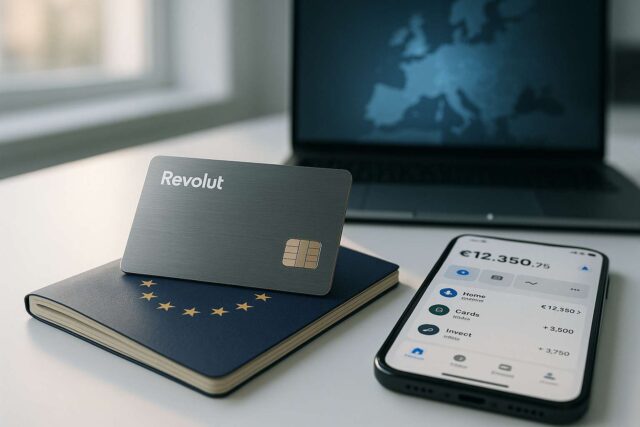
Revolut’s MiCA License Pushes It Closer to Becoming Europe’s First Unified Financial Super-App

TL;DR

  • Revolut MiCA license grants EU-wide authorization through Cyprus’s CySEC.
  • Crypto becomes a regulated core service with 280+ tokens and zero-fee staking.
  • MiCA sets the stage for Revolut to emerge as Europe’s first financial super-app.

When Revolut’s MiCA license was announced in late October 2025, most outlets treated it as another regulatory headline. Yet it marks a deeper structural shift in how finance will operate across Europe. By securing approval from CySEC (Cyprus Securities and Exchange Commission), a regulator known for its robust but efficient oversight, Revolut now holds a single passport under MiCA. This approval allows it to offer regulated crypto services in all 30 EEA markets.
As a result, the license places the London-born fintech among a small group of firms legally permitted to combine banking, payments, and digital-asset trading within one regulated ecosystem. It therefore sets the stage for a new era of financial integration in Europe.

What Revolut’s MiCA License Really Changes

Before MiCA, Revolut managed its crypto services through local VASP registrations, such as in Lithuania. Each license brought additional paperwork and limited cross-border flexibility. The new CySEC authorization replaces that patchwork with a single Europe-wide regulatory passport. It simplifies compliance and makes service delivery consistent across the bloc.

Under MiCA, Revolut must segregate customer assets, maintain transparent disclosures, and apply strict custody rules. These obligations move its compliance framework close to that of licensed exchanges. While Revolut is not a traditional bank, this structure effectively turns it into a hybrid financial provider. It can now combine deposit accounts, payment cards, and token trading under one coherent regulatory roof.

From Experiment to Regulated Product Vertical

Revolut launched its Crypto 2.0 rollout alongside the MiCA approval. It now offers more than 280 tokens, zero-fee staking, and 1:1 stablecoin conversions. These features are no longer experimental add-ons. Instead, they form a fully regulated product vertical inside Revolut’s European entity. Users can now manage crypto portfolios next to stock investments and multi-currency accounts within a single app. Consequently, this blending of fiat and digital assets moves Revolut closer to functioning as a crypto bank in practice, even if it remains a fintech by name.

MiCA and the Fintech–Crypto Convergence

Europe’s regulatory framework is quietly driving the fintech–crypto convergence. MiCA provides the foundation for digital assets and has been fully applied since late 2024. Meanwhile, PSD3 and the Payment Services Package, now in advanced legislative stages, aim to modernize fiat infrastructure. Together, these regulatory pillars allow companies like Revolut to merge services that were once legally siloed under a coherent and unified rulebook.

In contrast, the United States still struggles with fragmented oversight across multiple agencies, resulting in regulatory uncertainty. Therefore, Revolut’s proactive approach to early compliance gives it a clear advantage over crypto exchanges still adapting to MiCA. As a result, the company stands at the forefront of Europe’s new phase of integrated retail finance.

How Revolut’s CySEC License Creates an Edge Over Exchanges

Crypto-native firms such as Kraken, Bitstamp, and Coinbase Europe face the opposite challenge. They must add banking features like payment cards, fiat transfers, and savings tools, areas where fintechs already excel. Revolut, with more than 40 million users, starts from the consumer finance side. Through its CySEC MiCA license, it now has legal clearance to scale regulated crypto services across the EEA.

Meanwhile, Kraken’s KRAK app shows that exchanges are moving in the same direction. However, Revolut’s integrated ecosystem and stronger compliance give it a broader reach and user trust in Europe. Exchanges may still lead in liquidity and crypto-market depth. Even so, Revolut already operates as a regulated fintech–crypto hybrid.

Europe’s Rulebook for the New Crypto Super-Apps

Since the end of 2024, MiCA has applied to all Crypto-Asset Service Providers. This makes Europe the first region where multi-asset apps can function under one clear legal framework. Revolut’s choice to base its crypto operations in Cyprus highlights the island’s growing role as the gateway for Europe’s new crypto super-apps. CySEC already supervises several upcoming licensees. Yet Revolut’s mix of scale, user experience, and regulatory breadth makes it the prime example of how MiCA can bridge fintech and digital finance in practice.

What Comes Next

Revolut’s MiCA license in Cyprus now positions it to expand further. The company can introduce staking-as-a-service, improved custodial tools, and potentially a Revolut-issued stablecoin once MiCA Title III for Electronic Money Token issuers is fully implemented.
In addition, Revolut could scale its Crypto for Business to support cross-border settlements, further narrowing the gap between payment processors and exchanges.

Other European fintechs, such as N26, Bunq, and Wise, are likely to follow. Ultimately, MiCA enables any firm that unites fiat and tokens to shape the next decade of European retail finance.

Revolut’s MiCA license is far from old news. Instead, it forms the foundation of Europe’s financial super-app era. For the first time, a single platform can legally and seamlessly host euros, stocks, and crypto side by side within a unified compliance framework. While crypto exchanges continue to compete on liquidity and expertise, Revolut’s regulatory distribution advantage gives it a significant head start. It’s positioning itself as a default gateway to Europe’s new, interconnected financial future.

Ultimately, Europe’s financial ecosystem will evolve through both collaboration and competition, as fintechs and exchanges each leverage their strengths to serve diverse user needs.

Readers’ frequently asked questions

Who supervises Revolut’s crypto operations under its MiCA license?

Revolut’s MiCA authorization was issued by the Cyprus Securities and Exchange Commission (CySEC). CySEC is the primary supervisory authority and coordinates with other EU regulators through MiCA’s passporting framework.

Does the MiCA license change how customer assets are safeguarded?

Yes. MiCA requires customer assets to be segregated from company funds and held under approved custody arrangements, with standardized disclosures and internal controls to strengthen user protection.

Can users outside the EEA access these MiCA-regulated services?

No. MiCA applies only within the European Economic Area. Revolut’s MiCA license covers EEA countries and does not extend to jurisdictions like the UK or Switzerland, which follow separate local authorizations.

What is in it for you? Action items you might want to consider

Check if your country falls under Revolut’s MiCA coverage

MiCA applies only within the European Economic Area (EEA). Confirm that your Revolut account is registered in an eligible EEA country to benefit from its regulated crypto services.

Review Revolut’s updated crypto terms and disclosures

Under MiCA, Revolut must provide standardized risk and custody information. Review the updated terms in the app or on the company’s website to understand how your assets are segregated and protected.

Verify custody arrangements for digital assets

MiCA requires licensed providers to hold customer funds and tokens with approved custodians. Check Revolut’s compliance documentation or help center to confirm where and how your assets are stored.

Ripple Palisade Acquisition Locks In Full-Stack Institutional Custody and Payments

Ripple’s $4B Palisade acquisition visualized as a shopping spree. Ripple bag filled with symbols of custody, payments, and trading deals.

TL;DR

  • Ripple acquires Palisade Financial SAS, a France-licensed custody firm (AMF registration E2023-082), to strengthen its institutional crypto infrastructure.
  • The deal extends Ripple’s 2025 $4 billion investment spree, adding regulated custody to its payments and trading platforms.
  • Palisade’s French license gives Ripple immediate EU market access ahead of MiCA’s full enforcement, expanding its regulated footprint across the U.S. and Europe.

Ripple has finalized yet another acquisition, adding the wallet-as-a-service custody provider Palisade to its growing suite of institutional crypto solutions. The move strengthens Ripple’s position in institutional custody and extends its payments and trading infrastructure into a fully integrated stack for corporates, fintechs, and crypto-native firms.

From payments to prime trading

The acquisition marks another step in Ripple’s shift from pure payments processor to regulated financial infrastructure group. Palisade’s wallet-management software and secure custody APIs will plug directly into the Ripple payments platform. This will enable enterprises to move and store digital assets within a single ecosystem. Together with Ripple Prime, the company’s recently launched U.S. OTC brokerage, the integration completes a three-layer model: Payments → Custody → Trading, designed to serve the real-time settlement and liquidity needs of institutional clients.

Palisade, founded in the U.K., specializes in multi-asset wallet orchestration and key-management systems for banks and digital-asset service providers. Ripple said the deal will allow customers to choose between self-custody and managed-custody options through a single interface.

A $4 billion investment streak

Ripple’s Palisade acquisition caps an aggressive 2025 buying spree that has already cost the company roughly $4 billion in disclosed and estimated transactions. Earlier deals included Hidden Road (prime brokerage, ≈ $1.25 billion), Rail (stablecoin infrastructure, ≈ $200 million), and GTreasury (corporate treasury platform, ≈ $1 billion). With Palisade added to the mix, analysts now refer to the group collectively as Ripple’s “institutional four.”

According to multiple industry reports, these investments signal Ripple’s decisive strategy to internalize every piece of infrastructure needed for large-scale digital-asset operations, from issuance and payments to custody and trading. For Ripple, each deal widens its regulatory perimeter and deepens its enterprise moat.

Building a regulated footprint in Europe

Palisade brings a crucial licensing advantage. The firm operates under a French digital-asset custody license issued by the Autorité des marchés financiers (AMF). Hence, Ripple can offer fully regulated custody services across Europe. This license complements Ripple Prime’s U.S. registration and establishes a strong foundation for dual-region compliance. That’s a critical feature for corporate treasurers managing multi-jurisdictional asset flows.

With a London headquarters and French authorization, Palisade acts as Ripple’s bridgehead for European institutional clients seeking compliant storage and settlement solutions. The acquisition enhances Ripple’s ability to provide real-time payment and custody services in euros and other local currencies, building on the EU’s Markets in Crypto-Assets (MiCA) framework, which has been legally in effect since late 2024.

Why custody matters now

Demand for enterprise digital-asset custody has surged as tokenization projects and spot-ETF inflows push institutions to hold crypto on balance sheets. Custody now sits at the center of every major infrastructure strategy, from Fireblocks and Anchorage Digital to Galaxy Digital. Ripple’s latest move brings it into direct competition with these incumbents.

What differentiates Ripple is its integrated architecture. By combining settlement rails, liquidity management, and custody technology, Ripple promises lower friction for banks and corporates moving between fiat and tokenized assets. The Ripple Palisade acquisition reinforces this value proposition by tightening operational control across every transaction layer.

Integration outlook

Ripple plans to merge Palisade’s infrastructure into Ripple Custody by early 2026, followed by unified dashboards connecting the Ripple Payments Platform, custody, and the Ripple Prime trading platform. The company says new APIs will eventually allow fintechs and treasury systems to plug directly into Ripple’s network for instant, compliant asset transfers.

This roadmap aligns with Ripple’s broader goal: transition from transactional revenue to infrastructure economics. Earn recurring fees on custody, settlement, and liquidity provisioning rather than one-off payment volumes.

Institutional positioning and competitive edge

As global financial institutions ramp up pilots for tokenized deposits and real-world-asset programs, Ripple’s infrastructure focus appears well-timed. In fact, its multi-jurisdictional compliance, bank-grade custody, and high-speed payment stack present an appealing turnkey alternative to fragmented service providers.

Market observers note that few crypto firms possess comparable regulatory breadth: U.S. registration through Prime, EU authorization via Palisade, and strategic stablecoin rails through Rail’s RLUSD infrastructure. Each layer reinforces the others, creating a self-contained loop for institutional capital flows.

Closing view

Ripple’s Palisade acquisition underscores how far the company has evolved since its legal battles with U.S. regulators. With four major deals in a single year and billions committed to infrastructure, Ripple is cementing itself as a regulated bridge between traditional finance and on-chain liquidity.

By integrating custody, payments, and trading under one roof, Ripple is no longer just facilitating blockchain transfers. It’s building the rails for the next generation of institutional money movement.

Readers’ frequently asked questions

What services will Ripple gain from the Palisade acquisition?

Ripple will acquire Palisade’s wallet-as-a-service and institutional custody infrastructure. This allows Ripple to expand its offerings beyond payments to include secure digital-asset storage, key management, and API-based integrations for fintechs, corporates, and financial institutions.

How does Palisade’s French AMF license benefit Ripple?

Palisade is licensed by France’s Autorité des marchés financiers (AMF) as a Digital Asset Service Provider (registration no. E2023-082). This gives Ripple immediate access to a regulated European custody framework, aligning with the EU’s MiCA rules and enabling fully compliant crypto-asset services across Europe.

Why is regulatory coverage so important for Ripple’s institutional clients?

Institutional investors can only use custody and payment providers operating under clear regulatory oversight. By combining U.S. and French licences, Ripple can offer compliant services to banks, fintechs, and corporations on both sides of the Atlantic, reducing onboarding and audit friction.

What is in it for you? Action items you might want to consider

Follow Ripple’s expansion into everyday crypto services

Ripple isn’t just about cross-border payments anymore. With the Palisade acquisition, it’s moving into secure storage of digital assets. Keep an eye on how Ripple transforms from a payments company into a full-service crypto provider.

Learn why regulation matters for crypto safety

Palisade is officially licensed in France to safeguard digital assets. That means Ripple’s new custody services must follow strict European rules. Understanding what “regulated custody” means helps readers see why trust and compliance are becoming central to crypto’s future.

Watch how big players shape the next phase of crypto adoption

Ripple’s deal is part of a trend where established firms are building regulated infrastructure for the crypto industry. Following these moves can give readers an early look at how crypto services may soon resemble traditional banking, just faster and more global.

- Advertisement -

FEATURED