Home Blog Page 71

CFTC to Approve Leveraged Spot Crypto Trading — What It Means for U.S. Traders

TL;DR

  • The CFTC is preparing to approve leveraged spot crypto trading on registered U.S. exchanges.
  • The plan would let traders take margin positions in real Bitcoin or Ether under federal supervision for the first time.
  • Only federally regulated platforms like Cboe Digital or Coinbase Derivatives will qualify, not offshore exchanges.

The United States may be days away from its first federally supervised market for leveraged spot crypto trading. After months of industry speculation, the Commodity Futures Trading Commission (CFTC) is preparing to let registered exchanges offer margin-based spot trades in Bitcoin and Ether under its direct oversight. The change could bring legal leverage back onshore and close one of the biggest regulatory gaps in digital asset trading.

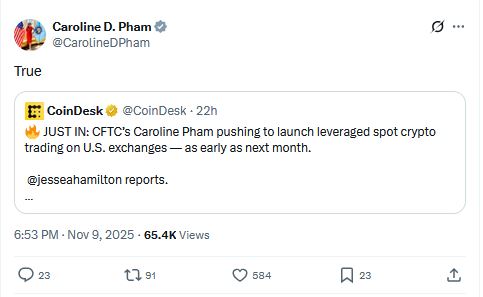
Until now, American traders wanting leverage had to turn to offshore exchanges or unregulated derivatives. CFTC Acting Chair Caroline Pham says that is about to change. The agency’s plan would give U.S.-registered venues, such as Cboe Digital or Coinbase Derivatives, the green light to list spot crypto pairs with limited margin, all within the existing Commodity Exchange Act framework.

That development sets the stage for a new chapter in the evolution of regulated crypto markets, one where margin trading can exist inside, not outside, federal law.

The CFTC’s new playbook

Headlines say the Commodity Futures Trading Commission is ready to “greenlight leveraged spot crypto trading.” That doesn’t mean new coins or instant approvals. Instead, it means the CFTC is using its existing powers under the Commodity Exchange Act to let registered U.S. exchanges offer margin-based spot trades in crypto commodities such as Bitcoin and Ether.

Acting Chair Caroline Pham confirmed that several CFTC-registered platforms are working with staff to finalize compliance rules. If all goes smoothly, the first trades could appear within weeks. As a result, this would mark the biggest expansion of U.S. crypto market access since futures launched on CME in 2017.
What the CFTC actually announced

The move follows a joint SEC–CFTC staff statement in September 2025 that clarified one key point: federally registered exchanges are not prohibited from facilitating certain spot commodity products. Therefore, the CFTC is now taking that signal further. It is transforming it into an actionable framework for leveraged spot crypto trading.

Importantly, this is not a law passed by Congress or a full Commission vote. It’s a staff-supervised pathway that uses powers already in place to oversee retail commodity transactions. In contrast with previous ambiguity, this approach gives exchanges a clear compliance route.

What is leveraged spot crypto trading?

In normal spot trading, a buyer pays in full and receives the asset immediately. In futures trading, the buyer agrees to deliver later, using margin and daily settlement.

Leveraged spot crypto trading sits in between. You trade the actual asset (Bitcoin, not a contract) but use borrowed funds for a larger position. The key difference is custody and “actual delivery.” Under CFTC rules, the exchange must deliver the crypto to the trader’s account within a short window, typically 28 days.

This delivery requirement keeps these transactions under CFTC jurisdiction and prevents the shadow leverage that plagued offshore markets. As a result, traders gain margin access without leaving the federal safety net.

Which exchanges could list it

Only CFTC-registered Designated Contract Markets (DCMs) can offer leveraged spot trading. That group includes Cboe Digital, Coinbase Derivatives, LedgerX, Bitnomial, and CME Group.

Each venue already meets federal standards for margining, capital, and reporting. Therefore, the change lies in the product scope: they’ll be able to list spot BTC/USD or ETH/USD pairs with limited leverage instead of just derivatives.

Coinbase.com, Kraken, and Crypto.com already let users trade spot crypto, but they operate under state money-transmitter licenses, not CFTC supervision. Meanwhile, the new framework would finally move this activity into the federal perimeter, with segregated customer funds, monitored trades and explicitly capped leverage.

The authority comes from Section 2(c)(2)(D) of the Commodity Exchange Act, which covers retail commodity transactions that use margin or leverage. Those transactions fall under CFTC oversight unless the asset is delivered in full and immediately. By tightening how “actual delivery” works for crypto, the agency can bring margin-based spot trades into its regulated markets without new legislation.

This approach is cautious but creative. It effectively repurposes a 1930s commodity statute to regulate digital assets in 2025, a practical example of regulatory adaptation.

What leveraged spot means for U.S. retail traders

For everyday traders, the impact could be substantial.

  • Legal leverage — You could take small-margin positions in BTC or ETH without using offshore exchanges.
  • Segregated custody — Client crypto must be held apart from exchange funds.
  • Lower counterparty risk — Platforms face CFTC audits and capital requirements.
  • Moderate leverage limits — Likely 2–5× for retail, not 50× as seen offshore.
  • Stronger recourse — Disputes fall under U.S. federal enforcement, not foreign arbitration.

In short, traders gain more protection and less chaos. Therefore, the reform aligns retail access with institutional safeguards.

Why this matters for the broader market

Leveraged spot crypto trading could pull liquidity back to the U.S. and narrow the gap between regulated and offshore volumes. For example, institutions that avoided foreign platforms may re-enter once products trade under federal rules. It also creates a blueprint for federally supervised crypto trading, where custody, margin, and disclosure follow the same standards used for other commodities.

Furthermore, for policymakers, it’s proof that the CFTC can manage crypto risk without new legislation. This is likely going to influence upcoming debates in Congress.

When will leveraged crypto trading launch in the U.S.?

Acting Chair Pham said participating exchanges are finalizing control frameworks now. Each must update its rulebook, file a product specification, and prove it can perform “actual delivery.” If the filings pass internal review, pilot programs could start before year-end 2025.

As a result, the timeline depends on industry readiness, not politics. However, it shows real momentum.

Closing thought

For years, U.S. traders had two choices: trade crypto spot on state-licensed apps or chase leverage on offshore platforms. CFTC-approved leveraged spot crypto trading could finally merge those worlds. Legal margin exposure, real asset delivery, and federal protection in one marketplace. In conclusion, if it works, the U.S. may reclaim the crypto volume it once exported in search of leverage.

Readers’ frequently asked questions

Which exchanges are eligible to offer leveraged spot crypto trading?

Only federally registered Designated Contract Markets (DCMs) such as Cboe Digital, Coinbase Derivatives, LedgerX, Bitnomial, and CME Group qualify. These exchanges already operate under CFTC licenses and would need to file new product specifications before offering leveraged spot trades.

What level of leverage is allowed under CFTC rules?

Leverage limits for retail traders are expected to remain low under existing CFTC standards. The agency allows margin trading only when positions meet strict capital and delivery requirements. High-multiple leverage, like that offered on offshore exchanges, is not permitted.

How is leveraged spot crypto trading different from regular spot or futures trading?

In regular spot trading, buyers pay in full and receive immediate delivery. Futures involve contracts settled later. Leveraged spot crypto trading combines both elements — traders buy the actual asset using limited margin, and the exchange must complete delivery within a set timeframe under CFTC supervision.

What is in it for you? Action items you might want to consider

Verify your trading platform’s regulatory status

Before engaging in any leveraged spot crypto trading, check whether the exchange is a CFTC-registered Designated Contract Market (DCM) or merely a state-licensed money transmitter. Only federally registered venues will be authorized to offer margin-based spot products.

Understand leverage limits and collateral rules

The CFTC applies strict capital and delivery requirements for retail margin trading. Review your platform’s collateral policies and ensure you understand the difference between legal leverage under CFTC rules and excessive leverage offered offshore.

Follow official CFTC communications for implementation updates

There is no fixed launch date yet. To avoid misinformation, monitor CFTC.gov and verified exchange announcements for updates on approved products and trading conditions.

Is Ledger Preparing for an IPO? Here’s Why It Would Make Sense

Ledger hardware wallet on wood background next to a stack of golden Bitcoin coins.

Rumors are swirling that Ledger, the French crypto security company best known for its Nano and Stax hardware wallets, may be preparing for a New York IPO. Multiple outlets cite unnamed sources claiming that Ledger is exploring a U.S. stock market listing or an alternative fundraising round.

The company has not confirmed any such plans, and no filing has been made with the U.S. Securities and Exchange Commission. Still, the reports, based on leaks to the Financial Times, have sparked discussion about whether an IPO is likely and why it would make strategic sense at this stage of the market cycle.

Crypto Security Demand Has Never Been Higher

A Ledger IPO would come at a time when crypto security is once again at the center of investor attention. In 2025 alone, global crypto thefts have exceeded $22 billion, pushing both retail and institutional users toward secure self-custody options.

Ledger’s crypto hardware wallet lineup has become the industry standard, with the Nano X and Stax models seeing record sales. The company has also broadened its ecosystem through Ledger Live. This software platform enables direct token management and staking from within the device. Combined, these elements make Ledger one of the few profitable infrastructure players in a still-volatile crypto industry.

Why a Ledger IPO Would Make Sense

Even if the current reports are speculative, the timing of a Ledger IPO would be logical. The crypto market has stabilized after a prolonged bear phase, and institutional investors are returning to digital assets as an emerging asset class.

Listing in the United States would give Ledger access to deeper capital markets and stronger liquidity compared to European exchanges. It would also align the company with global peers like Coinbase and Robinhood, which have shown that crypto-related equities can perform when markets recover.

From a branding perspective, a New York listing would signal maturity, transforming Ledger from a private tech brand into a public market leader. For a European firm, that’s a major credibility leap in front of investors, regulators, and enterprise clients.

Fundraising Remains a Viable Alternative

Still, is Ledger going public? For now, the company appears to be keeping its options open. Sources suggest that Ledger management is also considering a fundraising round, potentially bringing in new private investors before any IPO decision is made.

Private financing would allow Ledger to maintain strategic flexibility and avoid the heavy disclosure requirements and market scrutiny that come with a public listing. Depending on market conditions, this hybrid approach, raising capital first, listing later, might offer the best of both worlds.

Possible Valuation and Timeline

Reports referencing the Financial Times mention a potential IPO valuation of around $3 billion, based on Ledger’s recent revenue growth and profitability metrics. That figure would place Ledger among the top-valued blockchain infrastructure companies in Europe.

Industry insiders have also circulated Ledger IPO 2026 rumors, but no official roadmap or timeline has been confirmed. Given the company’s past capital raises, most recently a $380 million Series C in 2021, any move to public markets would likely follow further revenue expansion or a new product cycle.

Challenges Ahead

A Ledger IPO would not come without risk. The SEC’s regulatory climate toward crypto companies remains unpredictable, and any offering would require careful structuring to meet compliance standards. Moreover, public markets demand transparency and quarterly performance updates. Such factors can constrain innovation cycles for a hardware and software company operating in a fast-moving industry.

However, Ledger’s strong balance sheet, recurring revenues, and diversified product mix could offset those pressures. Investors increasingly view crypto security companies as essential infrastructure rather than speculative bets.

Bottom Line

The speculation around a Ledger IPO may still be just that, speculation. But the reasoning behind it is sound. Ledger is profitable, globally recognized, and positioned at the intersection of security, hardware, and decentralized finance.

Whether through a New York listing or a new fundraising round, the company’s next move will likely reinforce its status as a leading crypto security brand in a market rediscovering its appetite for trusted infrastructure.

Even if an IPO doesn’t materialize soon, the fact that such a move is being discussed at all shows how far the crypto industry has come since its post-2022 downturn.

Readers’ frequently asked questions

Where can investors confirm if Ledger has officially filed for an IPO in the United States?

Verified filings appear on the U.S. Securities and Exchange Commission’s EDGAR database. Search for “Ledger” under recent Form S-1 or F-1 registrations to see whether an official IPO application exists.

Which authority oversees the approval of a New York stock market listing?

IPOs on the New York Stock Exchange or Nasdaq require authorization from the U.S. Securities and Exchange Commission (SEC) and the respective exchange’s listing committee before trading can begin.

How can the public access Ledger’s company financials once an IPO filing becomes available?

Once a registration statement is submitted, Ledger’s audited financial reports and risk disclosures become publicly accessible through the SEC’s EDGAR portal and are typically summarized in major financial media.

What Is In It For You? Action items you might want to consider

Track SEC filings for a Ledger IPO

If you monitor crypto equity opportunities, check the U.S. SEC’s EDGAR database for new Form S-1 or F-1 entries under “Ledger.” This is the first verifiable signal that an IPO process has formally begun.

Compare crypto-security valuations against public peers

Benchmark Ledger’s implied valuation versus listed peers in adjacent segments (e.g., Coinbase, Robinhood, cybersecurity hardware/software). This helps assess how markets price security-focused digital-asset firms.

Monitor institutional flows into crypto infrastructure equities

Keep an eye on fund allocation reports and ETF holdings that include custody, wallet, or blockchain-infrastructure names. Rising allocations indicate stronger demand for this equity theme.

A Softer SEC Meets a Frozen Senate: How Washington’s Crypto Pivot Stalled in Procedure

TL;DR

  • The Senate’s crypto market structure bill, a companion to the House-passed Digital Asset Market Clarity Act of 2025 (H.R. 3633), remains stuck as a record government shutdown freezes committee work.
  • Paul Atkins, confirmed as SEC Chair in April 2025, has shifted the agency toward an innovation-first, cooperative stance on digital assets.
  • Regulatory thaw meets legislative freeze — delaying U.S. crypto reform well into 2026.

The United States was closer than ever to defining a legal framework for digital assets. The House had passed the Digital Asset Market Clarity Act, the SEC had softened its stance under new leadership, and bipartisan momentum seemed real. Then the government shut down. And, Washington’s long-awaited crypto breakthrough froze in place.

The irony of progress lost

Washington is experiencing a strange split. The Senate’s crypto market structure bill, the chamber’s version of the Digital Asset Market Clarity Act, was meant to deliver the first comprehensive digital-asset regulation framework. Yet, it has ground to a halt amid the longest government shutdown in U.S. history. Hearings are canceled and markups delayed. Even bipartisan negotiators admit that nothing meaningful will move until Congress reopens for business.

At the same time, the SEC crypto regulation landscape is softening. Paul Atkins was confirmed and sworn in as SEC Chair in April 2025. Since then, the agency has moved away from high-profile enforcement actions and begun drafting a more industry-friendly digital-asset framework. Regulators are signaling cooperation, just as lawmakers lose the capacity to legislate.

A thaw inside the SEC

Atkins has become the face of a major shift in tone. After years of adversarial oversight, the SEC now speaks about “clarity, not crackdown.” The agency even dismissed several enforcement cases involving Coinbase and Uniswap, began pilot programs for compliant token offerings, and opened consultations for decentralized-finance sandboxes.

The chair’s message is pragmatic: innovation and investor protection can coexist. The SEC digital-asset framework under his leadership proposes clear rules of the road without criminalizing experimentation. In short, the regulator once blamed for blocking progress is now urging Congress to catch up.

Where the Senate got stuck

The optimism inside the agency, however, contrasts sharply with paralysis on Capitol Hill. The crypto market structure bill, modeled on the House’s Clarity Act, remains trapped in committee revisions.

Lawmakers are divided on who should oversee most tokens: the CFTC or the SEC. That turf battle remains a core issue. Senators also disagree on the stablecoin interest clause, a leftover from the summer’s stablecoin statute that restricts yield-bearing tokens. Editing that single paragraph has stalled the entire markup process.

Even routine work has frozen. Staff briefings were postponed when the shutdown extended beyond 30 days, and procedural deadlines keep slipping. The result is a Senate crypto bill delay that could push reform well into 2026.

The missed window

For once, Washington’s mood had aligned with market expectations. A pro-innovation SEC Chair confirmed by the Senate, moderate voices in both parties, and a House-approved framework offered a rare opening for balanced reform. Yet procedural politics closed that window before a single Senate vote could be cast.

Industry executives who lobbied for clarity now face more limbo. The crypto legislation delay sustains uncertainty around custody, listing standards, and disclosure duties. Even as crypto regulation edges toward modernization at the U.S. agency level, Congress sadly remains the choke point.

What comes next

Once the shutdown ends, committees will need weeks to rebuild calendars and re-negotiate draft language. Realistically, the next window for progress is early 2026. Until then, the SEC plans to advance limited rule-making under existing authority, continuing the pilot programs that Atkins considers a bridge to full legislation.

For investors and builders, that means adapting to a half-reformed environment: a cooperative regulator without a completed statute. How the government shutdown affects crypto legislation may be temporary, but the cost of lost momentum could linger for years. Unless Congress revives and advances the Senate crypto bill, the United States will head into 2026 with a friendlier SEC but no unifying law; a thawed regulator facing a frozen legislature.

Readers’ frequently asked questions

What is the Digital Asset Market Clarity Act of 2025 (H.R. 3633)?

It is the House-passed framework for digital-asset oversight. The Senate’s companion crypto market structure bill aims to align regulatory authority between the SEC and CFTC and to define which assets are treated as digital commodities or securities.

What happens to the Clarity Act while the Senate is stalled?

The bill remains in committee until Congress reconvenes. During the government shutdown, no markups or votes can occur, so the Senate version cannot advance to the floor. After the shutdown, lawmakers must resume markup or reintroduce the text for it to progress.

How does the SEC’s new stance under Paul Atkins affect the Clarity Act’s goals?

It lowers enforcement pressure and supports innovation via limited rulemakings and pilot programs, but it does not replace legislation. Statutory clarity still depends on Congress passing the crypto market structure bill in both chambers, which would formalize roles for the SEC and CFTC.

What Is In It for You? Action items you might want to consider

Track post-shutdown hearings

Once Congress reconvenes, monitor the Senate Banking and Agriculture Committees for updates on the Senate crypto bill. Early scheduling notices will indicate whether the Clarity Act companion is being revived or rewritten.

Watch SEC pilot initiatives

The Paul Atkins SEC is advancing limited digital-asset pilot programs that could preview future compliance standards. Businesses can use these to anticipate what full legislation may require later.

Review jurisdiction exposure

Exchanges and custodians operating in multiple markets should reassess how overlapping CFTC vs SEC oversight could affect reporting, listing, or custody obligations once the crypto market structure bill eventually passes.

ARK’s Bitcoin Forecast Falls to $1.2 M as Stablecoins Reshape Its Role

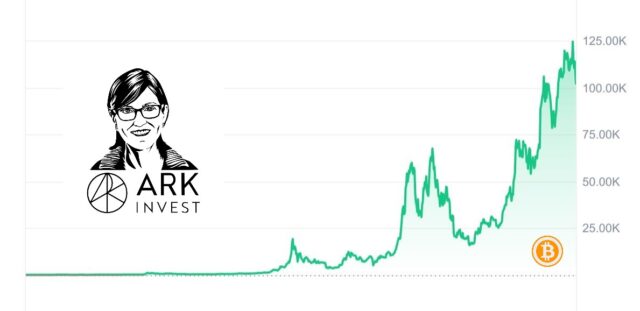
When Cathie Wood dropped her Bitcoin price target from $1.5 million to $1.2 million for 2030, headlines rushed to interpret it as a warning sign. The revision, announced in ARK Invest’s latest update, cited stablecoin adoption in emerging markets as the key reason for a more conservative outlook.

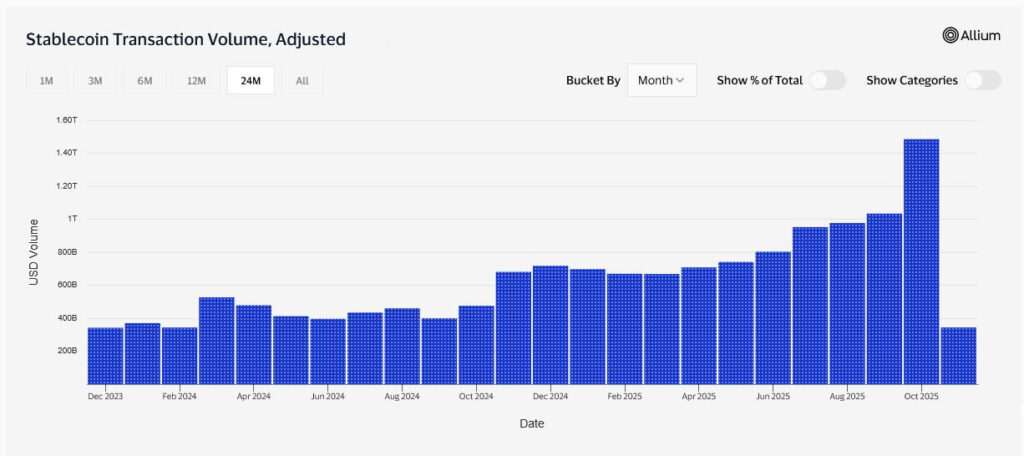
Mainstream outlets framed the move as a sign that stablecoins are eating Bitcoin’s lunch. But the data tells a more nuanced story. In 2025 alone, stablecoins processed over $8.9 trillion in on-chain volume, an 83% increase year-over-year. What’s happening isn’t a displacement; it’s a redistribution of monetary velocity across crypto’s layered economy.

For ARK and other institutional investors tracking the ARK Invest Bitcoin forecast, this shift reflects a maturing market where stablecoins dominate crypto payments in emerging markets. At the same time, Bitcoin consolidates its position as the foundational settlement asset. Crucially, Wood remains bullish, expecting approximately 1,600% appreciation from current levels even with the lowered target. The move highlights a recalibration, not a rejection, and faith in Bitcoin’s long-term potential remains.

The Media’s Surface Narrative

After Wood remarked that stablecoins are “usurping” Bitcoin’s role in day-to-day transactions, most coverage adopted a predictable framing: “Stablecoins Displace Bitcoin in Payments,” “Stablecoins Eating Bitcoin’s Lunch,” and similar takes. For instance, headlines on major finance platforms echoed fears of Bitcoin losing relevance to faster stablecoins.

This framing oversimplifies a complex relationship. The stablecoins vs Bitcoin narrative assumes a zero-sum contest between two assets competing for the same use cases. But in reality, they serve different functions within the same digital monetary system. Stablecoins thrive on transactional velocity, while Bitcoin underpins the system’s liquidity, network security, and reserve status. For readers asking why Cathie Wood cut the Bitcoin price target, the answer isn’t rivalry. It’s model recalibration. Stablecoins now absorb the high-frequency payment layer that ARK’s earlier Bitcoin 2030 prediction attributed to BTC itself.

The Overlooked Mechanism: Bitcoin as the Settlement Layer

Here’s what most analyses missed: stablecoins still depend on Bitcoin as the settlement layer. Whether issued on Ethereum, Solana, or Tron, stablecoins remain tied to Bitcoin’s deep liquidity and exchange infrastructure. BTC remains the dominant trading pair across exchanges and an essential component of custodial reserves. Tether’s rising Bitcoin reserves clearly underscore how stablecoin issuers themselves lean on BTC as a store of value.

Cross-chain bridges, Taproot Assets, and experimental Lightning-compatible stablecoins increasingly route transactions through Bitcoin’s network. Even as value moves in USDT or USDC, those settlements often loop through BTC liquidity pools. Many analysts would agree, “Every stablecoin transfer touching crypto liquidity eventually touches Bitcoin.” This feedback loop is accelerating innovation. Developers are already testing Bitcoin-backed stablecoins on the Lightning Network, closing the gap between BTC’s store-of-value base and the stable transaction layer above it.

ARK’s Revision: Reflection of Ecosystem Maturity

Seen through this lens, ARK’s downgrade to a $1.2 million ceiling looks less like a retreat and more like a recognition of ecosystem maturity. Cathie Wood reducing her Bitcoin price target explicitly reflects the portion of transactional velocity now handled by stablecoins rather than direct BTC transfers.

That doesn’t make Bitcoin weaker; it makes it more specialized. The ARK Invest Bitcoin forecast still positions BTC as the apex store of value in a digital economy increasingly powered by tokenized fiat. Meanwhile, Bitcoin institutional adoption through ETFs and corporate treasuries continues to expand. This reinforces its monetary premium even as stablecoins absorb microtransactional roles. In ARK’s model, the lost “velocity” translates into a $300K delta, not an existential downgrade. It marks a more mature valuation model that reflects crypto’s layered financial architecture.

Source: visaonchainanalytics.com/transactions

Regulation and Ecosystem Integration

A second driver behind this structural shift is regulation. Frameworks like MiCA in Europe, the upcoming U.S. stablecoin bill, and new Asian licensing regimes are giving legitimacy to stablecoins while hardwiring them into traditional financial systems. Under these new regimes, reserve transparency and collateral composition matter more than ever.

Bitcoin’s liquidity depth and pristine collateral quality make it a benchmark asset for regulated stablecoin reserves. Regulatory clarity is widely seen as linking stablecoin ecosystems even more tightly to Bitcoin’s reserve role. In short, stablecoin regulation like MiCA isn’t separating stablecoins from Bitcoin. It’s institutionalizing their connection instead. Both now move together through the same compliance channels that govern cross-border payments and crypto payments in emerging markets.

What Comes Next: Growth, Layer 2, and Stablecoin Infrastructure

Looking ahead, Bitcoin’s technological expansion is set to accelerate. Bitcoin Layer 2 adoption via Lightning, Ark, and rollup-like protocols is creating faster settlement rails capable of hosting synthetic or pegged assets. Projects developing Bitcoin-backed stablecoins are already exploring hybrid models where USD-denominated balances are secured by BTC collateral.

These instruments could merge the transactional speed of stablecoins with the security and neutrality of Bitcoin. Emerging protocols are experimenting with Bitcoin-native stablecoins and synthetic assets that blend stablecoin transactional advantages with Bitcoin’s settlement finality and security. If successful, this evolution would bring ARK’s Bitcoin 2030 prediction full circle: the monetary layer Wood envisioned may reappear within Bitcoin’s own scaling stack, rather than on competing blockchains.

Closing Thought

For investors tracking the Cathie Wood Bitcoin price target, the real takeaway isn’t that Bitcoin lost its dominance. It’s that Bitcoin’s role is shifting upward, from being money itself to being the monetary infrastructure of a tokenized world. Stablecoins aren’t Bitcoin’s competition. They’re its acceleration layer!

Readers’ frequently asked questions

What is the difference between a stablecoin and Bitcoin?

Stablecoins are digital tokens pegged to a stable asset like the U.S. dollar or euro, designed to maintain a fixed value. Bitcoin, by contrast, has a variable market price and is used as a decentralized store of value and investment asset rather than a price-stable medium of exchange.

Why are stablecoins important in emerging markets?

In countries with volatile currencies or limited banking access, stablecoins provide an easier way to hold digital dollars and transfer value across borders. They help users avoid local inflation and make cross-border transactions faster and cheaper than traditional remittance channels.

How can everyday users safely hold or transfer stablecoins?

Stablecoins can be stored in digital wallets compatible with their underlying blockchain (like Ethereum or Tron). To reduce risk, users should choose issuers that publish audited reserve reports and only use reputable exchanges or regulated platforms for transfers.

What Is In It For You? Action items you might want to consider

Review your exposure to stablecoins and Bitcoin

If you use stablecoins for payments or savings, assess how they fit alongside Bitcoin in your portfolio. Both assets play different roles. Stablecoins for short-term stability, Bitcoin for long-term value growth.

Use regulated and transparent stablecoin issuers

When holding or transferring stablecoins, choose providers that publish regular reserve attestations and comply with recognized frameworks such as MiCA or U.S. licensing standards.

Follow Bitcoin’s Layer-2 ecosystem development

Watch upcoming protocols like Lightning, Ark, and Taproot Assets. They could enable faster, cheaper stablecoin transfers directly on Bitcoin’s infrastructure, potentially changing how users move value across networks.

What the Elixir deUSD collapse Reveals About synthetic stablecoin risk and counterparty exposure in DeFi

TL;DR

  • The Elixir deUSD collapse followed a Stream Finance loss of $93 million that froze withdrawals and wrecked its xUSD stablecoin.
  • Investigators traced roughly $284 million in cross-protocol exposure, showing how quickly DeFi contagion can spread through synthetic-asset loops.
  • The case underscores growing synthetic stablecoin risk, from hidden counterparty dependence to fragile yield-backed designs.

The Elixir deUSD collapse has become one of DeFi’s most telling stress tests of 2025. When Stream Finance disclosed a $93 million loss, it didn’t just wipe out a single stablecoin. It exposed how deeply intertwined synthetic assets and lending protocols are. What followed was a scramble to contain losses, restore redemptions, and rethink how “decentralized” stability really works.

What Triggered the Elixir deUSD collapse

A $93 million blow-up at Stream Finance rippled through DeFi last week, wiping out its xUSD peg and forcing Elixir Protocol to retire its own synthetic dollar, deUSD. Stream’s external fund manager admitted to a massive loss after mismanaging off-chain positions, prompting the platform to halt withdrawals. That freeze instantly stranded Elixir’s collateral, roughly $68 million in USDC, about 65 percent of deUSD’s backing, and made redemption impossible.

Elixir moved fast to stop minting and begin a controlled unwind. According to team statements, nearly 80 percent of holders have already been made whole or snapshotted for repayment. The incident did more than sink a single stablecoin. It showed how a supposedly decentralized asset can depend entirely on the health of one counterparty.

How the Loop Worked

Unlike fiat-backed tokens such as USDC, synthetic stablecoins rely on on-chain collateral and yield strategies to mimic the dollar’s value. Both Stream Finance and Elixir Protocol fit this model, blending on-chain mechanics with off-chain exposure. Stream issued xUSD, backed by yield-bearing assets and liquidity pools. Elixir then deployed a large portion of its deUSD collateral into those same pools to earn returns.

In effect, Elixir was lending to Stream, whose tokens were later used as collateral elsewhere, creating a loop of synthetic value with little real-asset buffer. When Stream froze withdrawals, that loop snapped. xUSD tumbled 70–80 percent, and deUSD lost its peg within hours. The panic pushed investigators to trace a wider web of risk.

The Numbers That Unraveled the Peg

On-chain analysts identified roughly $284 million in interconnected DeFi positions tied to Stream Finance across Euler, Morpho, Gearbox, and Silo. These exposures included direct loans and liquidity pools backed by xUSD or other Stream-issued derivatives. As those tokens plunged, the value of entire vaults dropped below liability thresholds, triggering liquidations and additional losses.

The cascade was a textbook case of DeFi counterparty exposure hidden beneath inter-protocol integrations. It wasn’t a hack or rug pull. It was over-concentration disguised as decentralization.

When Synthetic Stability Becomes DeFi contagion

The Stream Finance loss sent shock waves through yield aggregators and lending markets that used xUSD as collateral. Token prices fell across related protocols, and some vaults temporarily paused withdrawals to prevent bank-run-style liquidations.

Because many protocols shared liquidity channels and oracle feeds, one project’s failure bled into others, the pure definition of DeFi contagion. Modern DeFi ecosystems now behave less like isolated smart contracts and more like interlinked financial networks with no lender of last resort. A single counterparty failure can destabilize several “stable” assets at once.

What the deUSD Collapse Reveals About Synthetic Stablecoin Risk

The Elixir deUSD collapse demonstrates why algorithmic and synthetic models still struggle for credibility. Despite complex collateral structures, they depend on market confidence and clear risk limits. But both vanish in crisis. Unlike fiat-backed tokens such as USDC or PYUSD, synthetic stablecoins rely on other DeFi positions for value, making them highly sensitive to chain reactions when one node fails.

Developers and investors are now calling for stronger safeguards:

  • Real-time proof of reserves or collateral composition
  • Exposure caps to single protocols
  • On-chain insurance modules to absorb counterparty defaults

Until such measures are adopted, synthetic stablecoin risk will remain the unpriced variable in DeFi’s supposedly stable layer.

The deUSD Redemption Process and Aftermath

Elixir has halted all minting and opened a claims portal for remaining holders. Its snapshot captured eligible balances as of the day redemptions paused, and the team says funds will be settled as Stream assets unwind. For most users, that means waiting for off-chain recoveries, a slow reminder that yield in DeFi often carries credit risk.

Whether Elixir builds another stablecoin remains uncertain. Stream Finance’s outlook is even murkier, with no timeline for reopening withdrawals or restoring xUSD liquidity.

Lessons for Investors and Builders

The deUSD collapse shows why due diligence in DeFi cannot stop at smart-contract audits. Users must ask not only what backs a stablecoin but also where that backing sits. A synthetic dollar is only as strong as its least transparent counterparty.

For builders, the message is clear: diversify counterparties, disclose real-time reserves, and prepare for the next liquidity crunch before it hits. The Elixir deUSD collapse may fade from headlines, but its lesson will remain. Even in a trust-minimized world, hidden trust chains still exist, and they can break faster than any peg.

Readers’ frequently asked questions

How does a synthetic stablecoin differ from a fiat-backed stablecoin?

A synthetic stablecoin uses on-chain collateral and algorithmic mechanisms to maintain its value, rather than holding cash or cash equivalents in reserve. Fiat-backed stablecoins like USDC or PYUSD are supported by fiat deposits, while synthetic versions rely on crypto collateral or lending positions that can fluctuate in value.

What risks do investors face when using synthetic stablecoins?

Synthetic stablecoins introduce counterparty and smart-contract risk. Because their collateral can depend on third-party protocols or off-chain funds, a loss or freeze in one platform may trigger cascading effects across interconnected assets and markets.

How can DeFi users minimize exposure to future collapses?

Diversify across multiple stablecoins, verify collateral sources and concentration, and favor protocols with live proof-of-reserves and clear disclosure. Monitor audit reports and official status pages to spot early warning signs such as halted withdrawals or shrinking liquidity.

What Is In It For You? Action items you might want to consider

Reassess your stablecoin exposure

Check where your tokens generate yield and what collateral supports them. Even “decentralized” stablecoins can rely on a single protocol’s solvency.

Prioritize transparency and diversification

Choose platforms that publish live proof of reserves and distribute collateral across several counterparties. Spreading exposure reduces the risk of losing funds in a single protocol failure.

Stay alert to contagion signals

When one lending or yield protocol halts withdrawals, related stablecoins may soon follow. Monitoring cross-protocol activity on-chain can give early warnings before pegs break or redemptions close.

- Advertisement -

FEATURED