Home Blog Page 79

Binance Bans 600 Accounts in Crackdown on Unauthorized Trading Tools

A high-detail 3:2 editorial illustration showing a digital security command center inside Binance headquarters, with analysts monitoring holographic screens displaying alerts about unauthorized trading tools. The scene symbolizes Binance bans 600 accounts to reinforce platform compliance and fair trading integrity.

Binance bans 600 accounts linked to the use of unauthorized third-party tools. This step marks a new phase in its ongoing crackdown on automation abuse and unfair trading practices. The exchange confirmed that the enforcement followed the discovery of users exploiting its Alpha Program to gain an unfair advantage. The Alpha Program is an invite-only testing environment for upcoming trading features.

The action represents one of Binance’s most visible compliance moves this year as the company steps up efforts to protect users and maintain market integrity.

Why Binance Banned 600 Accounts: Unauthorized Tools and Fairness Concerns

According to Binance’s internal review, the banned users relied on unauthorized scripts, bots, and plug-ins that allowed them to bypass normal trading limits or automate reward collection. These tools were not approved by Binance and violated its terms of use.

The issue emerged during the Alpha Program, which offers select users early access to test new features. Some participants reportedly used external programs to manipulate system behavior, such as front-running, mass-clicking airdrops, and data scraping. Binance said that such behavior compromises the platform’s promise of equal access and fair competition.

Inside the Enforcement Action

Binance confirmed that it had banned over 600 accounts permanently after a detailed technical investigation. In several cases, the exchange also clawed back airdrop rewards earned through unfair methods.

Affected users have already been notified, and their appeals were rejected based on clear evidence of third-party interference. Binance explained that this decision fits within its zero-tolerance policy against cheating or manipulation. The exchange also noted that it had upgraded its detection tools to prevent similar abuses.

An internal note on Binance’s compliance policy described the step as essential to protecting legitimate retail traders and maintaining long-term trust.

Binance’s Official Statement: A Push for Security and Transparency

In its official post on Binance Square, the exchange reminded users that any use of unauthorized trading tools is strictly prohibited. Binance said it continues to improve its monitoring systems with advanced crypto bot detection algorithms to flag suspicious automation activity in real time.

The company is also reviewing participation rules for its experimental programs to improve accountability and transparency. Binance explained that these measures show its ongoing effort to create a secure and fair crypto trading environment.

Community Reporting and the $50 Bounty Program

Alongside the bans, Binance introduced a bounty program that rewards users with $50 in crypto for credible reports of unauthorized tool use or Alpha Program abuse. The initiative aims to make platform safety a shared responsibility among users.

By encouraging community oversight, Binance hopes to reduce the risks of automation abuse while rewarding proactive security participation. The exchange described the program as part of a broader effort to strengthen user safety and community engagement.

Reactions Across the Crypto Community

The crackdown drew mixed reactions among traders and observers. Supporters praised Binance for enforcing stricter fairness standards, noting that automation abuse undermines the credibility of airdrop campaigns and trading programs.

Some users, however, argued that not all violators knew their tools breached Binance’s rules. Still, analysts viewed the move as a compliance milestone, showing Binance’s intent to align internal enforcement with global expectations for regulated exchanges.

Broader Implications for the Crypto Industry

The Binance crackdown mirrors a growing trend among major exchanges to eliminate bot farms and unauthorized automation. As trading algorithms and incentive campaigns grow more complex, keeping participation fair has become a top compliance concern.

Other leading exchanges have started implementing similar monitoring systems to protect retail users and ensure transparency. Binance’s enforcement sets a clear example of how compliance and fairness can work together to strengthen trust in crypto trading.

With this sweeping action, Binance bans 600 accounts to confirm its stance as a security-driven exchange. By punishing Alpha Program abuse and rewarding whistleblowers, the company aims to build stronger user trust and fairer market conditions.

As global rules tighten, Binance’s proactive approach may help define how crypto platforms maintain integrity in an increasingly automated market.

Readers’ frequently asked questions

Why did Binance ban 600 accounts?

Binance banned these accounts after detecting the use of unauthorized third-party tools that violated its platform rules. These tools gave users unfair advantages in activities such as trading and airdrop participation, which breached Binance’s fair play and compliance standards.

What counts as an unauthorized trading tool on Binance?

Unauthorized tools include any third-party software, scripts, or bots that automate actions such as trading, order execution, or airdrop farming without Binance’s approval. Only official Binance APIs and verified integrations are permitted for trading automation.

Can banned users appeal or recover their accounts?

No. Binance confirmed that affected users were notified directly and permanently banned. The exchange’s investigation provided clear technical evidence of rule violations, and account reinstatement is not available for these cases.

What Is In It For You? Action items you might want to consider

Audit your use of automation and third-party tools

If you use scripts, plug-ins, or APIs to assist your Binance trading, verify that they comply with Binance’s official API documentation. Unverified automation can trigger permanent bans even if not used maliciously.

Monitor Binance compliance updates and Alpha Program policies

Binance frequently adjusts its enforcement and testing policies. Keep track of updates on Binance Square or in official posts to stay compliant and understand eligibility for future testing programs.

Report suspicious trading behavior or automation abuse

Take advantage of Binance’s $50 bounty program by reporting suspected use of unauthorized tools or bot activity. Verified reports strengthen overall market fairness and may qualify for a crypto reward.


Japan Opens the Door for Banks in Crypto — While Moving to Ban Insider Trading

Japan’s financial district blends Bitcoin visuals and legal symbols to depict banks preparing for regulated crypto trading under the new insider trading ban. Illustration.

Japan’s Financial Services Agency (FSA) is preparing a two-track reform that could reshape the country’s digital-asset landscape. The regulator plans to let Japan’s banks gain Bitcoin exposure for the first time. Banks would be able to buy, hold, and trade cryptocurrencies under strict supervision.

At the same time, Japanese lawmakers are advancing a ban on crypto insider trading that could take effect by 2026. Together, these initiatives mark the country’s biggest policy shift since crypto exchanges were first licensed in 2017.

Background: From Restriction to Reform

Since 2020, the FSA has allowed banks to work only through licensed crypto exchanges. That restriction was meant to protect retail investors after a series of high-profile breaches.

Now the regulator is rethinking its approach. Japan counts more than 12 million crypto trading accounts, and institutional demand keeps growing. The goal is to build a framework where traditional banks can handle digital assets safely within a regulated environment.

Reform #1 — Allowing Banks to Hold and Trade Bitcoin

The first reform centers on market access. Under the new proposal, Japan’s banks could expand into Bitcoin trading, buying and holding leading digital assets such as Bitcoin and Ethereum.

The FSA is also considering whether banks or their subsidiaries could register as licensed crypto-exchange operators.

Safeguards would mirror those used in securities markets. These include capital and liquidity requirements, asset segregation, and clear custody rules.

For banks, the change opens new revenue streams from custody, brokerage, and integrated trading services. At the same time, it gives clients confidence through regulated oversight.

Reform #2 — Banning Crypto Insider Trading

In parallel, the government is preparing a legal amendment to extend the Financial Instruments and Exchange Act (FIEA) to crypto. The plan aims to introduce a comprehensive crypto insider trading ban that criminalizes trading based on non-public information, such as token listings or upcoming exchange integrations.

The bill is expected to reach the Diet by 2026. Once passed, it would empower the Securities and Exchange Surveillance Commission (SESC) to investigate misconduct and impose penalties.

This move brings crypto-market conduct closer to traditional securities standards as institutional participation expands.

Liberalization with Oversight

The FSA’s strategy combines opportunity with restraint. Allowing Japan’s banks to participate in Bitcoin markets adds institutional credibility and liquidity.Through the crypto insider trading ban Japan ensures that this openness comes with accountability.

Officials describe the framework as controlled openness: innovation under stricter rules rather than deregulation.

Regional Context and Global Impact

Japan’s reforms arrive amid regional competition. Hong Kong and Singapore already permit limited bank-level crypto services. Tokyo wants to match that pace while maintaining its reputation for investor protection.

Analysts believe that once Japanese banks begin trading or offering custody, other G7 regulators may follow the same model.

Implications for Banks and the Crypto Industry

  • Banks in Japan gain a regulated pathway to participate in Bitcoin markets, expand custody offerings, and attract younger retail clients.
  • Exchanges could see new partnerships or mergers as financial groups enter the space.
  • Investors benefit from better protection, clearer rules, and transparent institutions.

This alignment between access and oversight could redefine how Japan’s financial system engages with digital assets.

What Happens Next

The FSA plans to release a draft outline later in 2025, followed by a consultation process and a Diet vote in 2026. Implementation will depend on feedback from banking associations and the Japan Virtual and Crypto Assets Exchange Association (JVCEA).

Observers expect phased adoption. First custodial services, then full trading authorization once conduct rules are finalized.

Japan’s new crypto strategy reflects a pragmatic balance. The FSA intends to let Japan’s banks deepen their involvement in Bitcoin within a controlled framework, while enforcing a strong crypto insider trading ban to protect investors.

If both reforms proceed as planned, Japan will pair institutional access with integrity, setting a benchmark for how traditional finance and blockchain can coexist responsibly.

Readers’ frequently asked questions

Which law will include Japan’s crypto insider trading rules?

The Financial Instruments and Exchange Act (FIEA) will be amended to include provisions against crypto insider trading. The amendment will give Japan’s Financial Services Agency and the Securities and Exchange Surveillance Commission clear authority to investigate and penalize misconduct in digital-asset markets.

Are Japanese banks currently allowed to trade or hold Bitcoin?

No. At present, banks in Japan cannot directly hold or trade cryptocurrencies. They can only offer crypto exposure through partnerships with licensed exchanges. The FSA’s ongoing review could change this rule, but no permission has been granted yet.

What agency regulates cryptocurrencies and exchanges in Japan?

The Financial Services Agency oversees Japan’s crypto framework, licensing and supervising exchanges under the JVCEA self-regulatory system. It also drafts and enforces national rules for banks and securities firms dealing with digital assets.

What Is In It For You? Action items you might want to consider

Track bank disclosures on Bitcoin services

Monitor Japanese banks’ investor relations pages and service announcements for updates on Bitcoin custody, brokerage, or exchange-affiliate registrations. Compare fees, custody arrangements, and eligibility requirements before choosing a provider.

Prepare for conduct rules around market-sensitive information

Review internal policies to prevent trading on non-public information (e.g., token listings, exchange integrations). Establish blackout periods, approval workflows, and record-keeping that align with FIEA-style insider-trading controls.

Use regulated venues and verify licensing

When gaining Bitcoin exposure, prioritize regulated channels. Verify that any exchange or bank affiliate is properly licensed under Japan’s framework (JVCEA/FSA) and that client assets are segregated with clear custody terms.

Senate Democrats Seek Policy Reset with Crypto Leaders After DeFi Backlash

Lawmakers and crypto executives meet at Capitol Hill to attend Senate Democrats crypto meeting. Editorial illustration.

On October 22, 2025, Senate Democrats led by Kirsten Gillibrand will host a closed-door crypto meeting in Washington, D.C., with top industry executives.
The goal is to rebuild trust and restart negotiations on U.S. crypto market structure legislation. The initiative comes after a DeFi regulation draft leaked in early October 2025 sparked widespread industry backlash.

The senate democrats’ crypto meeting marks the first coordinated engagement between lawmakers and leading crypto firms since the controversy that froze bipartisan cooperation earlier this month.

A Closed-Door Meeting to Revive Market Structure Talks

The senate democrats’ crypto meeting will bring together CEOs and policy chiefs from Coinbase, Ripple, Chainlink, Uniswap, Circle, Galaxy, Kraken, and other major firms.
Hosted by Sen. Kirsten Gillibrand, co-sponsor of the Lummis–Gillibrand bill, the roundtable seeks to re-energize stalled work on crypto market structure legislation. The framework would define how digital assets are classified and which agency, the SEC or the CFTC, has oversight authority.

The House already advanced its version of the bill, known as FIT21. However, it has languished in the Senate amid partisan divisions. Democrats now appear eager to re-enter the conversation before the 2026 election cycle crowds out policymaking entirely.

The DeFi Draft That Froze Dialogue

The immediate trigger for this policy reset was the leaked DeFi draft that appeared in early October 2025 in various media outlets.
The proposal would have required DeFi front-ends, liquidity providers, and even non-custodial wallet developers to perform KYC and AML checks.
Industry groups called it “technically impossible and politically tone-deaf.” The backlash was swift and united. Developers, exchanges, and think-tanks warned that the language could criminalize open-source software and drive innovation offshore.

The fallout left Democratic lawmakers isolated from industry stakeholders and derailed months of progress toward a negotiated framework on DeFi regulation. By convening this roundtable, Senate leaders are signaling a willingness to listen and revise their approach.

Gillibrand’s Bid to Rebuild Trust

For Kirsten Gillibrand, the meeting doubles as a reputational repair project. Although she wasn’t directly involved in drafting the controversial DeFi paper, her office absorbed much of the criticism. After all, she is the most visible Democratic voice on crypto.


Gillibrand’s earlier bipartisan initiative with Sen. Cynthia Lummis, the Lummis–Gillibrand Responsible Financial Innovation Act, had made her a credible bridge between both parties. The DeFi episode jeopardized that status.
Hosting this roundtable allows her to reclaim leadership in shaping crypto policy in Washington. It also demonstrates that Democrats are not anti-innovation but rather seeking clarity and consumer protection.

Inside the Agenda: Stablecoins, Oversight, and Market Rules

This is what the list of key topics reportedly looks like:

  • Clarifying SEC vs CFTC oversight in token classification.
  • Revisiting stablecoin rules, including reserve disclosure and payment-use approvals.
  • Defining boundaries for DeFi oversight without stifling open protocols.
  • Improving cross-agency coordination on tax and compliance.

No formal draft is expected to emerge from this session. Instead, the senate democrats designed the meeting as a crypto policy reset. They aim to open channels for future technical consultations and restore dialogue between policymakers and innovators.

Industry Expectations and Skepticism

While the industry welcomes a more open tone, expectations remain low. Executives are approaching the event as a listening session, not a negotiation. They will likely push for market-structure clarity, stronger safe-harbor provisions, and recognition that decentralized protocols cannot be regulated like traditional intermediaries.

Some participants fear the meeting could serve more as political optics than substantive progress. That risk grows if no follow-up process appears. Still, many view any dialogue as an improvement over weeks of silence following the DeFi draft backlash.

What Happens Next

Following the meeting, Senate staff are expected to prepare an internal summary for cross-party review. If talks remain productive, Gillibrand could seek to re-table portions of the RFIA bill later in Q4 2025. It could merge its market-structure provisions with a separate stablecoin framework already under review.

Whether this marks a genuine reset or merely a temporary ceasefire will depend on how both sides act after the cameras are off.
For now, the senate democrats’ crypto meeting stands as a crucial step toward mending Washington’s fractured relationship with the digital-asset industry. It’s testing whether cooperation can still shape future crypto market structure legislation in the United States.

Readers’ frequently asked questions

What is FIT21?

FIT21 is the U.S. House bill “Financial Innovation and Technology for the 21st Century Act” (H.R. 4763). It sets a federal framework for digital assets, allocating key responsibilities between the SEC and CFTC, including CFTC oversight of “digital commodities” on functional, decentralized blockchains and coordinated SEC/CFTC rulemaking for listings and delistings. The House passed FIT21 on May 22, 2024. :contentReference[oaicite:1]{index=1}

What is the Lummis–Gillibrand Responsible Financial Innovation Act (RFIA)?

RFIA is a bipartisan Senate proposal led by Sens. Cynthia Lummis and Kirsten Gillibrand. It provides a comprehensive digital-asset framework, including common definitions, consumer protections, tax treatment (e.g., a small de-minimis exemption), and rules for payment stablecoins (e.g., 1:1 redeemability and full reserves). :contentReference[oaicite:2]{index=2}

What does “crypto market-structure legislation” mean?

It refers to laws that define how digital assets are categorized and which regulators oversee them, plus registration and conduct rules for trading venues and intermediaries. In current U.S. proposals, the SEC handles securities-like tokens while the CFTC oversees digital-commodity trading, with new categories for platforms dealing in restricted digital assets. :contentReference[oaicite:3]{index=3}

What Is In It For You? Action items you might want to consider

Track the actual bills referenced

Open and bookmark the official pages for FIT21 (H.R. 4763) on Congress.gov and the Lummis–Gillibrand RFIA on the Senators’ sites. Use these sources to follow amendments, summaries, and vote actions.

Subscribe to Senate committee calendars

Set email or RSS alerts for the Senate Banking, Housing, and Urban Affairs Committee and the Senate Agriculture, Nutrition, and Forestry Committee. You’ll receive notices for hearings, roundtables, and agendas tied to SEC/CFTC oversight.

Verify your platform’s policy disclosures

Visit your exchange or wallet’s legal/compliance or transparency page (e.g., Coinbase, Kraken, Circle, Uniswap Foundation). Confirm any posted updates on KYC/AML, listing standards, or stablecoin reserve disclosures and adjust your account settings/documentation accordingly.

North Korean Hackers Use Blockchain to Hide Crypto-Stealing Malware

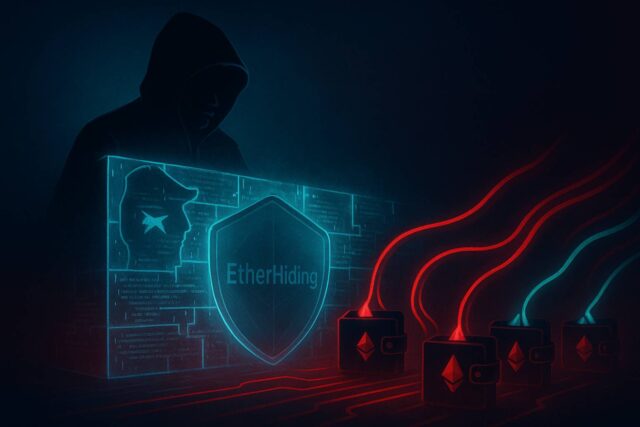
Illustration of North Korean hackers using the EtherHiding technique to hide crypto-stealing malware within blockchain smart contracts, shown as glowing data streams breaching a digital blockchain wall.

Google’s Mandiant division has uncovered a new campaign where North Korean hackers use blockchain technology to hide and distribute crypto malware. The technique, known as EtherHiding, allows attackers to store malicious code inside smart contracts on public blockchains like Ethereum and Binance Smart Chain.

According to the Google Mandiant report, this marks the first time a nation-state group has used blockchain networks as part of an active cyberattack. Once the code is on the blockchain, it stays there. You cannot remove or block it. Unfortunately, hackers found a permanent place to host and update their malware.

What Is EtherHiding?

EtherHiding first appeared among cybercriminals in 2023 but has now reached a new level. Instead of hiding malware on ordinary servers or phishing sites, attackers place parts of it inside blockchain smart contracts.

These smart contracts are bits of code that run on decentralized networks like Ethereum. Because they are stored across thousands of computers, blockchain data cannot be erased or altered. This is the concept of immutable blockchains.

For hackers, this makes an ideal hiding place. Once uploaded, the malicious script remains permanently accessible, even if cybersecurity teams shut down the original websites or servers used in the attack.

Who’s Behind the Attack

Google attributes the operation to a North Korean group identified as UNC5342. The same cluster has been linked to the “Contagious Interview” campaign, which targeted crypto developers and exchange employees with fake job offers.

UNC5342’s goal, like many of Pyongyang’s cyber units, is financial theft and espionage. By embedding malware into smart contracts, the group avoids detection while maintaining full control of its attack infrastructure.

The report notes that this North Korea cyberattack uses multiple layers of deception, including legitimate-looking documents and web links. Once opened, they silently connect to the blockchain to retrieve hidden instructions.

How the Attack Works

In simple terms, the smart contract exploit functions as a secret delivery system.

  1. The victim downloads what appears to be a normal file or job document.
  2. That file includes a short script that reaches out to the blockchain.
  3. The script reads data from a malicious Ethereum smart contract or the BNB Smart Chain, where the hackers have hidden new payloads.
  4. These payloads install the real malware onto the victim’s device.

Once active, the malware performs crypto wallet theft, targeting applications like MetaMask or Phantom to steal stored keys and passwords. It can also capture screenshots, collect system data, and download additional tools directly from the blockchain.

Because this process uses read-only blockchain calls, attackers don’t need to pay high transaction fees or interact with centralized servers. It’s cheap, quiet, and almost impossible to trace.

Why It’s So Hard to Stop

Traditional cybersecurity systems block malicious domains or shut down infected servers. But in this case, there’s nothing to take offline.

The blockchain is decentralized, meaning it exists on thousands of machines worldwide. Once malicious code is embedded, it’s immutable. Nobody can delete it, not even the network itself.

Mandiant researchers found that the hackers updated their smart contract payloads for as little as $1.37 per change. That means they can quickly alter their code, switch between blockchains, and stay one step ahead of defenders. This evolution highlights how north korean hackers’ crypto malware operations now exploit blockchain resilience as a defensive shield against removal.

This kind of decentralized malware uses the same features that make blockchain technology resilient, ie. transparency, redundancy, and permanence, but for criminal purposes.

What’s at Stake for Crypto Users

The danger isn’t limited to developers or cybersecurity professionals. Anyone who uses crypto wallets, browser extensions, or decentralized apps could become a target.

If you interact with a compromised website or open a phishing document, the blockchain malware could quietly activate in your browser and begin collecting data. Once your wallet keys or credentials are stolen, your assets can be drained instantly, and recovery is nearly impossible.

The campaign also poses a risk for crypto exchanges and DeFi platforms, since attackers often impersonate partners or applicants to infiltrate internal systems. It’s a reminder that crypto security now extends far beyond protecting tokens; it includes defending the infrastructure itself.

How to Stay Safe

  • Be skeptical of unsolicited job offers or collaborations, especially those asking you to open files or code samples.
  • Install browser extensions and wallet updates only from official sources.
  • Use antivirus and browser isolation tools that detect suspicious scripts running in the background.
  • Monitor wallet permissions and revoke access to unknown decentralized apps.
  • For companies, monitor blockchain API calls for unusual behavior that could indicate malicious smart contract access.

Building crypto security awareness across teams is now just as important as keeping funds in cold storage.

What Experts Expect Next

The Mandiant threat analysis suggests that EtherHiding could soon spread beyond North Korea’s operations. The method is inexpensive, resilient, and adaptable — making it appealing to other hacker groups.

Because the blockchain-based attack uses standard smart contracts, even legitimate on-chain tools can unknowingly host malicious code. Researchers warn that new detection systems will be needed to scan for hidden data inside contracts, not just external phishing links.

In short, the North Korea cyberattack may have opened the door to an entirely new class of decentralized threats.

The discovery of EtherHiding highlights how quickly north korean hackers crypto malware tactics are evolving. By turning the blockchain into a weapon, they’ve blurred the line between financial innovation and cyberwarfare.

As blockchain technology continues to spread, defenders will have to adapt — not just to protect coins, but to secure the very networks that power the digital economy.

Readers’ frequently asked questions

Could the EtherHiding technique be used for purposes other than stealing crypto?

Yes. Although first seen in crypto theft campaigns, the same method could be adapted to hide ransomware instructions, espionage tooling, or even disinformation payloads. Any operation that benefits from permanent, censorship-resistant hosting could leverage public blockchains in a similar way.

Why is EtherHiding hard for antivirus or threat-detection tools to identify?

Traditional defenses scan files, websites, and network endpoints, but they rarely inspect data fetched from smart contracts. Because EtherHiding retrieves instructions via legitimate blockchain API calls, the traffic often looks normal. Reliable detection requires monitoring smart-contract read calls and unusual on-chain query patterns—capabilities most tools don’t yet have by default.

How does this change the cybersecurity industry’s view of the blockchain itself?

It reframes the blockchain from a purely financial rail into a resilient command-and-control layer. That shift is driving work on “on-chain threat intelligence”: tagging malicious contracts, building scanners for hidden data in smart contracts, and integrating blockchain telemetry into SOC workflows alongside domain and IP reputation feeds.

What Is In It For You? Action items you might want to consider

Keep your crypto tools clean and up to date

Use only official wallet apps and browser extensions such as MetaMask or Phantom. Remove any you no longer use and check for updates regularly. Outdated or imitation extensions are the easiest way for hidden malware to reach your funds.

If someone sends you a document or link claiming to be a job offer, partnership, or crypto opportunity, double-check the sender before opening it. Many EtherHiding attacks begin with fake recruiting messages or shared code that secretly installs malware.

Add an extra layer of protection to your accounts

Enable two-factor authentication on exchanges and wallets, and keep your recovery phrases offline. Consider moving larger balances to a hardware wallet that never connects to the internet—it’s immune to browser-based malware.

Ripple GTreasury Acquisition Marks $1B Move Into Corporate Treasury Management

Ripple GTreasury acquisition illustrated as a futuristic liquidity engine, showing XRP and RLUSD flows symbolizing blockchain integration into corporate treasury systems.

Ripple has completed a $1 billion acquisition of GTreasury, a U.S.-based corporate treasury management platform. The deal is Ripple’s largest to date and signals a decisive step beyond blockchain payments. With this move, the company positions itself as a new force in enterprise liquidity and treasury management, linking traditional finance with blockchain infrastructure.

Why Ripple Targets Corporate Treasury

The corporate treasury sector is changing fast. Companies now demand real-time settlement and stronger liquidity visibility. Legacy systems such as SWIFT or ACH often slow down cash movement and leave treasurers with fragmented data.

Ripple’s entry into this market reflects a global push toward blockchain-enabled liquidity. The goal is faster settlements, lower costs, and continuous visibility across accounts worldwide.

What GTreasury Brings to Ripple

Founded in Chicago, GTreasury supports more than 800 multinational clients. Its SaaS platform provides cash forecasting, liquidity planning, and risk management. The system also integrates with major banks and enterprise resource-planning tools.

By acquiring GTreasury, Ripple gains direct access to the enterprise finance ecosystem and its established client base. It also creates a path to introduce blockchain-based liquidity inside large corporations that still rely on traditional treasury providers such as FIS, Kyriba, and SAP Treasury.

How XRP and RLUSD Fit Into GTreasury’s Infrastructure

Ripple will embed its XRP Ledger (XRPL) and RLUSD stablecoin into GTreasury’s platform. Together they create a hybrid system for real-time, tokenized liquidity.

The XRP Ledger acts as a settlement layer, enabling instant inter-company transfers and on-demand liquidity between subsidiaries and banking partners. It replaces slow payment corridors with near-instant transactions.

Meanwhile, RLUSD, Ripple’s regulated U.S.-dollar stablecoin, becomes the liquidity instrument for overnight settlements and digital cash positions. Treasurers can use RLUSD for cross-border payments or short-term investments while keeping accounting transparent and compliant.

These tools allow enterprises to manage both fiat and digital assets in real time. They merge traditional treasury workflows with blockchain efficiency.

Ripple’s Expansion Into Enterprise Liquidity

The acquisition transforms Ripple from a payments firm into a full-scale enterprise finance provider. It follows a wider trend in fintech where companies combine tokenized liquidity solutions with corporate finance systems.

Ripple’s CEO Brad Garlinghouse called the deal “a step toward connecting every corner of enterprise finance through blockchain transparency and instant liquidity.”

By combining GTreasury’s analytics and connectivity with Ripple’s blockchain settlement tools, Ripple could compete directly with established treasury providers while offering faster and more transparent liquidity management.

Market Impact and Institutional Outlook

Analysts see this as Ripple’s bid to deepen institutional adoption of blockchain finance. Integrating the XRP Ledger and RLUSD stablecoin into GTreasury’s ecosystem could accelerate the use of tokenized cash equivalents among Fortune 500 companies.

The deal also highlights the growing overlap between decentralized and traditional finance. As Ripple enters a space long dominated by legacy providers, it brings blockchain-native speed and traceability.

In time, RLUSD could become a standard tool for corporate liquidity, turning Ripple into both a liquidity provider and a compliance partner for global businesses.

The Ripple GTreasury acquisition is more than a $1 billion deal; it marks a redefinition of Ripple’s role in global finance. By embedding XRP Ledger settlement and RLUSD liquidity into GTreasury’s infrastructure, Ripple moves closer to uniting corporate treasury management with blockchain innovation.

What started as a blockchain payments company may soon become the backbone of real-time enterprise liquidity worldwide.

Readers’ frequently asked questions

How will GTreasury’s platform benefit from Ripple’s XRP Ledger integration?

GTreasury will gain blockchain-based settlement capabilities through the XRP Ledger, allowing corporate clients to move funds between accounts or subsidiaries in real time. This reduces reliance on traditional banking rails like SWIFT and improves visibility into global cash positions.

What role will RLUSD play in corporate treasury operations?

RLUSD will serve as a regulated U.S. dollar stablecoin for liquidity management, settlements, and short-term cash positions. Corporate treasurers can use it as a stable, blockchain-based alternative to holding idle fiat balances while ensuring compliance and transparency.

Does the acquisition mean corporations will start using XRP directly?

Not necessarily. XRP will power the underlying settlement network, but most enterprises will interact with the technology through GTreasury’s interface. XRP enables liquidity and cross-border transfers, while RLUSD will handle day-to-day transactions and balances.

What Is In It For You? Action items you might want to consider

Map pilot use-cases and ROI for XRPL/RLUSD

Shortlist one or two treasury workflows, such as intercompany transfers, cross-border AP/AR, or cash pooling, to pilot via GTreasury with XRPL and RLUSD. Set baseline KPIs for settlement time, fees, FX spread, and reconciliation time to quantify impact.

Prepare policy and controls for stablecoin operations

Align finance, tax, and audit on RLUSD accounting treatment, wallet custodianship, approval limits, and reconciliation procedures. Draft a pilot SOP with de-minimis exposure limits, segregation of duties, and a rollback plan.

Verify connectivity and sandbox readiness

Confirm ERP and bank connectors for GTreasury with XRPL/RLUSD flows, whitelist counterparties, and open a sandbox. Run a week of test transactions between two subsidiaries and track success metrics and migration criteria.

- Advertisement -

FEATURED