
Home Blog Page 85

Kraken IPO 2026: Exchange Secures $500M and Eyes $20B Valuation

A giant Kraken tentacle rising from a bright ocean and wrapping around a futuristic stock exchange building with glowing digital tickers, symbolizing valuation growth ahead of the Kraken's potential public listing.

Kraken has completed a $500 million funding round at a $15 billion valuation, moving closer to its long-anticipated potential 2026 public listing. The raise marks one of the largest capital injections into a crypto exchange this year and positions the company to scale operations as it prepares for a public debut. Reports also indicate that Kraken is in advanced discussions with a strategic investor to add another $200–$300 million, potentially lifting its valuation to $20 billion.

From Planned Raise to Execution

Back in July, the $500 million round was still framed as a plan. Now, that plan has been executed, confirming market appetite for regulated exchange equity. The closed deal establishes a clear baseline: it values the exchange at $15 billion. At the same time, Bloomberg revealed that the Kraken management is exploring further pre-IPO funding for the crypto exchange, which could reprice the company closer to $20 billion ahead of a 2026 public listing.

Confirmed Facts vs. Ongoing Talks

The Kraken funding round is a completed transaction: $500 million in new capital, backed by major institutional investors. The second leg of the story, discussions with a Kraken strategic investor at a higher valuation, remains ongoing. Distinguishing between these two events is essential. The former is a matter of record; the latter is still subject to negotiation and market conditions.

Why the Valuation Step Matters

Locking in $15 billion now shows stability, while potential $20 billion talks highlight momentum. This dual-track valuation strategy strengthens Kraken’s bargaining power with future IPO underwriters. It also helps the company calibrate share pricing when it eventually enters the market. For investors, the step-up suggests rising confidence in exchange business models. It comes at a time when the broader crypto IPO market outlook is only beginning to recover from a two-year slump.

Operational and Strategic Backdrop

Kraken’s leadership has been reshaping the company to be IPO-ready. Co-CEO Arjun Sethi has focused on efficiency and stronger compliance. The firm is also expanding into derivatives and international markets. Past acquisitions, such as NinjaTrader, deepen its product offering and support its pitch as a diversified revenue generator. These moves strengthen Kraken’s IPO plans and explain why investors are betting on a higher valuation.

Market Context and Investor Sentiment

Institutional capital is slowly re-engaging with exchanges after the reputational fallout of 2022. Coinbase’s steady performance as a public company has shown that demand exists when governance is strong and revenues are diversified. In this light, Kraken’s $500 million raise sends a strong signal. Despite volatility, investors still see value in owning a piece of the infrastructure that powers the digital asset economy.

Risks and Watchpoints

Despite the optimism, risks remain. The IPO window in 2026 will depend on macro conditions, interest rates, and investor risk appetite. Regulatory pressures, particularly in the United States, continue to loom over crypto exchanges. Like its peers, Kraken relies heavily on trading volume for revenue, making its valuation sensitive to swings in digital asset prices.

What Comes Next

All eyes will now be on whether Kraken finalizes its follow-on investment at a $20B valuation. If confirmed, that would reshape expectations for a Kraken IPO in 2026 and potentially set a new benchmark for crypto equity offerings. Investors will also be watching for early signs of an S-1 filing and the lineup of underwriters that will shepherd the exchange into public markets. For now, Kraken has achieved a milestone: securing fresh capital, reinforcing its balance sheet, and keeping its plans for a public listing firmly on track.

Readers’ frequently asked questions

How does a pre-IPO funding round affect retail investors who may want to buy shares later?

Pre-IPO funding rounds are typically limited to institutional and accredited investors. While these early participants may secure a better entry price, retail investors usually only gain access once the IPO launches on a public exchange. The valuation set in pre-IPO rounds, however, often influences the IPO price range.

What steps must Kraken complete before officially filing for a potential 2026 IPO?

Kraken will need to prepare audited financial statements, finalize its choice of underwriters, and submit an S-1 registration statement to the U.S. Securities and Exchange Commission. The SEC will then review the filing before the shares can be offered publicly.

How does Kraken’s planned IPO compare with Coinbase’s public listing?

Coinbase went public in April 2021 via direct listing, whereas Kraken is preparing a traditional IPO with underwriters. This means Kraken’s process will likely involve a roadshow to court institutional investors, potentially making its debut less volatile than Coinbase’s initial trading day.

What Is In It For You? Action items you might want to consider.

Track the valuation signals

Monitor whether Kraken secures the additional $200–$300 million at a $20B valuation, as this will influence IPO pricing expectations.

Watch for the S-1 filing

The official SEC filing will provide insight into Kraken’s revenue streams, compliance posture, and risks — all essential for evaluating IPO participation.

Compare IPO models

Study how Kraken’s traditional IPO structure differs from Coinbase’s direct listing, as this will shape market behavior and potential volatility on debut.
Tokenized Sterling Deposits: UK Banks Test a Safer Path for Digital Payments

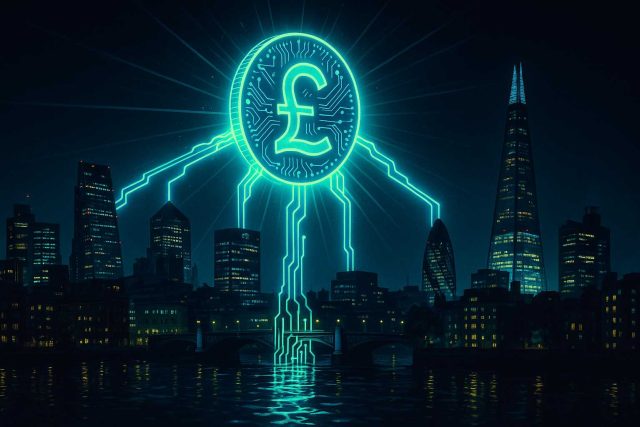
Glowing digital pound coin above London skyline at night, with neon blockchain beams linking UK banks, symbolizing tokenized sterling deposits pilot.

UK Finance has launched a landmark pilot for tokenized sterling deposits, bringing six of the country’s largest banks into the first live trial of programmable bank money. Participating banks are Barclays, HSBC, Lloyds Banking Group, NatWest, Nationwide, and Santander. Running through mid-2026, the initiative will test whether digital deposits can streamline marketplace transactions, mortgage processes, and wholesale settlement. The project is being described as the most ambitious UK banks blockchain pilot to date. It reflects the Bank of England’s support for tokenised deposits as a safer alternative to privately issued stablecoins.

Why the Bank of England Prefers Tokenised Deposits

Governor Andrew Bailey has urged banks to focus on deposit tokenisation rather than stablecoin development. His reasoning is clear: deposits stay within the prudential banking framework, backed by the same protections as traditional accounts. Stablecoin regulation is not expected until late 2026. In the meantime, tokenized deposits remain the central bank’s preferred route for innovation in digital payments in the UK. Some policymakers even describe them as a digital pound alternative, designed to deliver many of the same benefits as a CBDC while preserving the role of commercial banks.

Payments Innovation Meets Programmability

The trial’s first use case is online marketplaces. With tokenized sterling deposits, funds can be held in escrow and released only when goods are delivered. This reduces fraud risks and gives consumers more confidence when shopping online. A second application is remortgaging. Programmable payments can automate settlement and lower the risk of conveyancing fraud. In practice, this is about embedding remortgaging digital payments into banking infrastructure. Together, these use cases show how programmable payments UK can go beyond speed to address long-standing risks in financial services.

Tokenised Deposits vs Stablecoins

For policymakers, the distinction between tokenised deposits and stablecoins is crucial. Deposits remain liabilities of regulated banks. They are redeemable at par and integrated with deposit insurance. Stablecoins, by contrast, raise questions about backing, redemption, and systemic stability. This debate over tokenised money vs stablecoin models is shaping how regulators view the future of digital payments. Supporters argue that tokenized sterling deposits provide a way to preserve the singleness of money while keeping innovation within the banking system.

Shared Infrastructure and Industry Standards

The pilot runs on a shared ledger built by Quant. This infrastructure builds on earlier experiments with the Regulated Liability Network. It allows multiple banks to issue and settle UK Finance tokenised sterling deposits on a common platform. Privacy and governance standards are also part of the design. By using a single framework, banks hope to show that programmability can scale without fragmenting the monetary system. Quant has said the project demonstrates how Quant Network UK deposits could serve as a model for other jurisdictions. As part of this work, the infrastructure is also testing how tokenized deposits can integrate with the UK’s existing payment rails.

HSBC’s Parallel Expansion

At the same time, individual banks are moving ahead with their own solutions. HSBC tokenized deposits are already live in Hong Kong, Singapore, the UK, and Luxembourg. The service supports GBP, EUR, and USD. It lets corporate clients move liquidity instantly across borders, even outside normal cut-off hours. This suggests a path where domestic pilots and corporate treasury services can reinforce each other. Analysts also note the potential for wholesale settlement blockchain applications, especially in digital bond markets. For HSBC, extending tokenized sterling deposits to corporate clients is also a way to showcase the practical benefits of the broader UK Finance pilot.

Looking Ahead to 2026

The UK Finance pilot will run until mid-2026. Success will be measured by improvements in fraud reduction, payment efficiency, and settlement speed. By the time the FCA’s stablecoin rulebook arrives, UK banks and regulators will have hard data on the viability of tokenized deposits. If the results are positive, tokenised deposits could become the foundation for smarter payments, corporate liquidity management, and digital asset settlement. This would mark a decisive step in Britain’s digital money strategy, showing how UK banks testing blockchain for payments can shape the future of finance.

Readers’ frequently asked questions

How will businesses and consumers be able to access tokenized sterling deposits once the pilot ends?

At the pilot stage, only the participating banks and selected partners are involved. If the model proves successful, banks are expected to integrate tokenized deposits into their existing mobile banking apps and online portals, so customers won’t need separate wallets or new accounts.

What safeguards are in place if something goes wrong with a tokenized deposit transaction?

Because tokenized sterling deposits are still commercial bank money, they remain covered by the same protections as regular deposits, including the Financial Services Compensation Scheme (FSCS) for retail customers up to £85,000. Dispute resolution and fraud investigation procedures also continue to follow existing banking standards.

Could tokenized deposits be used for cross-border payments in the future?

Yes. While the UK pilot focuses on domestic use cases, HSBC and other banks are already testing tokenized deposits for cross-border liquidity. If standards align, tokenized deposits could provide a faster and cheaper alternative to SWIFT transfers by settling funds directly on shared ledgers across countries.

What Is In It For You? Action items you might want to consider

Follow your bank’s updates

If you’re a customer of Barclays, HSBC, Lloyds, NatWest, Nationwide, or Santander, watch for announcements on how the pilot might expand to retail or business clients.

Assess digital payment readiness

Businesses should review their current online payment flows, especially in marketplaces or mortgage processing, to see where programmable money could reduce risks.

Track cross-border developments

Companies handling international payments may benefit from monitoring HSBC’s tokenized deposit service, which already supports GBP, EUR, and USD across multiple regions.

Bitcoin Price Drop Explained: Why It Happened and What’s Next

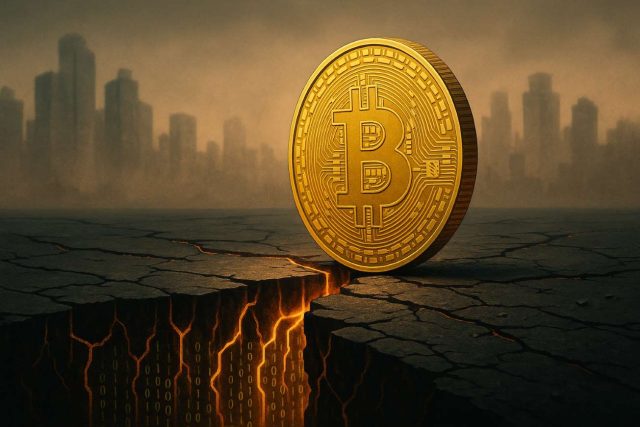
Golden Bitcoin coin balancing on a cracked digital floor with glowing binary code underneath, symbolizing a Bitcoin price drop and market uncertainty.

Bitcoin today slipped below $112,000, sparking concern among many newcomers to crypto. This price drop followed weeks of modest growth, leaving casual investors wondering: Why is Bitcoin falling now?

While the move looks sharp on the chart, it’s part of the usual ups and downs of Bitcoin, a digital asset known for its volatility. Let’s break down what’s behind the latest slide and what it could mean going forward.

Why Is Bitcoin Falling? The Immediate Cause

The simplest explanation is that many traders were betting too aggressively on Bitcoin’s rise by using borrowed money — a practice called leverage. When Bitcoin dipped slightly, those leveraged bets were automatically closed, forcing a wave of sales.

Think of it like a row of dominoes: one tips over, and suddenly the whole line falls. This chain reaction added to the selling pressure, creating the latest crypto market volatility.

The Bigger Picture: Economy and Politics

Beyond trading mechanics, larger forces are at play:

  • Inflation and Bitcoin: Investors are bracing for new inflation data in the U.S. If numbers stay high, the Federal Reserve may keep interest rates elevated. Higher rates usually push people toward safer assets, away from riskier ones like Bitcoin.
  • Government shutdown and markets: Political gridlock in Washington has raised fears of a U.S. government shutdown. Such events make investors nervous across all markets, and Bitcoin often moves in line with this broader mood.

In short, uncertainty in the economy makes people cautious. Bitcoin feels that pressure.

Bitcoin Price Drop and Technical Roadblocks

Bitcoin also faced trouble breaking past $113,500, which traders saw as an important barrier. When it couldn’t push through, some investors chose to sell and lock in profits.

For beginners, imagine Bitcoin’s price like a car trying to break the speed limit. Without enough momentum, it slows down instead of accelerating.

The Outlook: Will Bitcoin Recover in 2025?

So what’s next for the world’s biggest cryptocurrency?

  • Short term: Expect ups and downs as September wraps up. A large set of financial contracts called “options” is about to expire. This often adds turbulence.
  • Medium term: There’s potential for growth as more Bitcoin ETFs (exchange-traded funds) get approved. These products make it easier for both institutions and everyday investors to put money into Bitcoin. Big companies are also continuing to buy. These institutional investors in Bitcoin provide long-term support for the market.
  • Long term: Many experts remain bullish. Some, like Coinbase’s CEO, even see Bitcoin reaching $1 million by 2030. That’s ambitious, but the Bitcoin long-term outlook rests on one clear fact. There will only ever be 21 million coins. Scarcity makes it valuable in the eyes of many investors.

What This Means for You

If you’re new to crypto, it’s normal to wonder: Should I buy Bitcoin now? The answer depends on your risk tolerance. Bitcoin is still a high-risk, high-reward asset, meaning it can swing sharply in either direction.

For beginners, the safest approach may not be quick trading but rather staying informed, understanding the risks, and only investing what you can afford to lose. If you’re asking whether Bitcoin is still a good investment or whether Bitcoin is safe for beginners, remember that patience and knowledge are as important as timing.

This recent Bitcoin price drop and crash explained: it was triggered by over-leveraged bets, mixed with economic uncertainty and political tension.

While the near term looks choppy, the Bitcoin price prediction 2025 remains tied to regulation, adoption, and institutional interest. The bigger picture? Bitcoin continues to evolve from a niche experiment into a mainstream financial asset.

For Bitcoin news for beginners, the key takeaway is simple: stay curious, keep learning, and remember that Bitcoin’s story is still unfolding.

Readers’ frequently asked questions

How often does Bitcoin experience price drops like this?

Bitcoin has a history of frequent ups and downs. On average, it experiences several sharp moves every month, though not all are as large as the most recent decline. Volatility is a normal part of how Bitcoin trades.

Does Bitcoin trade 24/7 or only during stock market hours?

Unlike stocks, Bitcoin trades 24 hours a day, seven days a week, including weekends and holidays. This constant activity means price changes can happen at any time, even outside traditional market hours.

Where can I check the current Bitcoin price?

The Bitcoin price is available on most cryptocurrency exchanges and financial news sites. It updates in real time because Bitcoin trades globally without pause.

What Is In It For You? Action items you might want to consider

Track Bitcoin’s trading hours

Since Bitcoin trades 24/7, set alerts or check prices at different times of day to understand when the biggest moves tend to happen.

Compare price sources

Use at least two different reliable platforms to check Bitcoin’s price. Small differences can exist between exchanges, and comparing helps ensure accuracy.

Understand transaction costs

If you plan to buy or sell, review the fees charged by your chosen exchange or platform. Costs vary and can affect your returns more than you expect.

FTX Recovery Trust Sues Genesis Digital Assets to Claw Back $1.15B in Alleged Fraudulent Transfers

Editorial illustration of a courtroom flooded with binary code and swirling dollar bills around Bitcoin mining rigs, symbolizing the FTX Recovery Trust $1.15B lawsuit against Genesis Digital Assets in Delaware bankruptcy court.

The FTX Recovery Trust has filed an adversary complaint in the U.S. Bankruptcy Court for the District of Delaware. It seeks to recover roughly $1.15 billion tied to Genesis Digital Assets (GDA). The Trust argues the money came from FTX.com customer deposits that were routed through Alameda Research during 2021–2022.

The suit names GDA and co-founders Rashit Makhat and Marco Krohn. According to the filing, the Trust received “far less than reasonably equivalent value” for the purchases. It says the deals involved inflated share prices and hundreds of millions paid directly to the founders. This newest FTX lawsuit underscores how recovery efforts are reaching beyond lenders into equity investments.

The clawback theory — and its hurdles

The complaint is built on a fraudulent transfer theory under bankruptcy law and Delaware’s Uniform Fraudulent Transfer Act. The Recovery Trust says misappropriated FTX customer funds were used to buy overvalued equity and founder shares.

It argues these transactions are avoidable and recoverable for the estate. A win would expand the pool of funds available for FTX creditor recoveries. Still, the Trust must prove the transfers meet legal standards for fraud. The adversary proceeding in Delaware bankruptcy court will test whether the defendants can rely on good faith and value defenses to shield the transfers.

Flow of funds and “ignored red flags”

The complaint says Sam Bankman-Fried directed Alameda Research to buy into GDA even as FTX and Alameda were insolvent. The Trust claims it paid “off-market” prices at a time when Kazakhstan’s energy shortages and delays in U.S. buildouts created major risks for the miner.

It also points to unaudited financials and other diligence gaps. In total, the Trust says $550.9 million went directly to the co-founders, allowing them to cash out while FTX customer funds were at risk.

Kazakhstan’s energy crunch and mining risk

One of the central risks was Kazakhstan’s fragile power grid. After China banned crypto mining in 2021, thousands of miners relocated to Kazakhstan. The sudden demand strained the national grid, causing electricity shortages and government-imposed mining curtailments.

Because GDA ran a large share of its operations in the country, it was deeply exposed to these risks. The government even introduced higher tariffs for miners and considered limiting new projects.

The lawsuit argues that these well-publicized problems in Kazakhstan’s Bitcoin mining industry should have reduced GDA’s valuation. Instead, FTX’s funds — funneled through Alameda Research — were used to buy shares at premium prices, ignoring the energy risks that undermined the miner’s business model. That makes the investments look even more reckless in hindsight.

How it differs from the Genesis Global settlement

In 2023, the court approved a $175 million settlement between FTX and Genesis Global Trading, a separate DCG affiliate. That case dealt with lending exposures.

This new lawsuit targets Genesis Digital Assets, the Bitcoin miner. The dispute focuses on equity investment decisions rather than intercompany lending. It makes the case as much about SBF’s investment choices as about clawing back estate assets.

What it could mean for creditors

The FTX Recovery Trust has already started distributions, with more scheduled later this year. A successful recovery against GDA would increase funds available for FTX creditors.

But adversary proceedings can be slow. If the case drags on, legal costs could rise, and creditor timelines could stretch. For now, creditors have another possible source of recovery as the Delaware bankruptcy court begins setting deadlines.

Why miners and investors should watch

Beyond the immediate recovery push, the lawsuit raises questions about miner valuations. The filing’s language about “insane” prices and overlooked risks could cool the secondary market for miner shares.

Future equity rounds may require tighter terms, audited financials, and greater scrutiny of energy supply risks. If the Trust succeeds, miners and their investors may face a new normal in financing conditions.

Readers’ frequently asked questions

What is an adversary proceeding in bankruptcy court?

An adversary proceeding is a separate lawsuit filed within a bankruptcy case. It allows the bankruptcy estate to pursue claims such as clawbacks, fraudulent transfers, or contract disputes. These cases follow standard litigation procedures but are overseen by the bankruptcy judge.

How are clawback lawsuits typically resolved in U.S. bankruptcy cases?

Clawback suits can end through settlement, dismissal, or trial. In many high-profile bankruptcies, settlements are common because they reduce legal costs and accelerate distributions to creditors. However, if no agreement is reached, the court decides whether the transfers must be returned.

What happens if Genesis Digital Assets cannot repay the claimed amount?

If the court rules in favor of the FTX Recovery Trust but Genesis Digital Assets lacks the funds to cover the judgment, the estate may pursue asset sales, restructuring, or negotiate partial settlements. Creditors could still receive less than the full claim depending on what is recoverable.

What Is In It For You? Action items you might want to consider

Monitor court filings in Delaware

Track updates on the adversary proceeding docket to see whether Genesis Digital Assets contests the clawback claims or pursues an early settlement.

Reassess exposure to miner equities

If you hold or are considering investments in Bitcoin mining firms, review their regional energy dependencies and financing terms. The case highlights how operational risks can directly affect valuations.

Follow creditor distribution updates

Keep an eye on FTX creditor communications. Any recovery from Genesis Digital Assets could affect payout schedules and percentages for claimants.

Kazakhstan’s EVO Stablecoin Blends Solana Speed with Mastercard Payments

Kazakhstan EVO (KZTE) stablecoin visual showing a tenge coin over a high-throughput blockchain grid and global payment motif with Baiterek Tower in background.

Kazakhstan has launched the EVO stablecoin (KZTE). The tenge-backed digital currency merges Solana’s high-speed blockchain with Mastercard’s global payment rails. It is designed for real-world use cases such as retail purchases and cross-border payments. Kazakhstan‘s EVO is also one of the first attempts by a nation to integrate a regulated stablecoin with public blockchain infrastructure and private-sector financial partners.

The Technology Behind EVO

At the core of the project is Solana, chosen for its scalability and low transaction costs. The network enables near-instant settlement at a fraction of traditional fees, making it one of the fastest Solana stablecoin frameworks to date. By pairing this capability with Mastercard crypto payment integration, Kazakhstan aims to make the stablecoin usable in both local shops and international transactions.

Unlike many experimental tokens that remain confined to crypto ecosystems, EVO is being tested in everyday environments. Pilot programs cover retail purchases inside Kazakhstan, online commerce, and international transfers. This is a practical example of how a tenge-backed stablecoin can operate at scale and demonstrate Mastercard blockchain payments in real-world commerce.

Regulatory and Policy Significance

What sets EVO apart is its regulatory status. While many countries are experimenting with central bank digital currencies (CBDCs), Kazakhstan took a different path: a government-backed stablecoin on Solana.

This model keeps the flexibility of private blockchain innovation while operating under national oversight. The arrangement effectively creates a state-backed stablecoin that blends innovation with compliance. By working with Mastercard, regulators also ensure the system integrates smoothly with the global financial infrastructure. Besides, it reflects Kazakhstan’s broader crypto regulation strategy.

Kazakhstan’s Strategic Goals

Beyond payments, EVO is part of a broader effort to turn Kazakhstan into a regional blockchain and fintech hub. The government has supported crypto mining and digital asset investment in recent years. This new project signals a shift toward regulated financial products with mass-market applications.

Positioned between Europe and Asia, Kazakhstan hopes the EVO stablecoin will strengthen its standing as a pioneer in digital currency innovation. Its ambitions echo those of jurisdictions like Singapore and the UAE, which are competing to attract fintech investment. The Kazakhstan Solana partnership also underscores the government’s intent to work with global players to fast-track adoption.

Global Implications

The EVO pilot could influence international debates about stablecoins versus CBDCs. For policymakers, it provides a working case study of how a national stablecoin can coexist with banking systems while relying on open-source blockchain technology.

If successful, Kazakhstan’s model may encourage other governments to explore regulated stablecoins on public blockchains as an alternative to central bank-issued tokens. With Solana and Mastercard backing the initiative, the project has the potential to accelerate cross-border adoption of digital money. International observers already describe the Kazakhstan Mastercard stablecoin pilot as a project with global relevance.

Kazakhstan’s EVO stablecoin (KZTE) is more than just another crypto experiment. By combining Solana’s scalability, Mastercard’s reach, and government oversight, it bridges the gap between blockchain innovation and the traditional financial system. If the pilot gains traction, Kazakhstan could become a global reference point for national stablecoin adoption with real-world utility.

Readers’ frequently asked questions

Who issues KZTE, and where is it live right now?

Licensed pilot participants (Intebix and Eurasian Bank) issue KZTE (EVO) within Kazakhstan’s Digital Assets Regulatory Sandbox, with Solana providing the blockchain infrastructure and Mastercard supporting payment connectivity. It is currently live within the sandbox pilot rather than a nationwide retail rollout.

How can users acquire or redeem KZTE, and what wallets work?

During the pilot, the issuing institutions will handle onboarding and access, applying their own compliance processes as needed. KZTE follows the Solana Program Library (SPL) Token standard; therefore, it should work with standard Solana wallets that support SPL assets. Network fees follow Solana’s low-cost transaction model. Public, consumer-facing redemption steps may be phased in as the pilot expands.

What can KZTE be used for today, and when does Mastercard connectivity matter?

In the sandbox, KZTE targets everyday payments, online commerce, and cross-border transfers within defined pilot parameters. Mastercard’s role is to integrate stablecoin functionality with global payment channels, enabling broader interoperability over time rather than instant, universal card acceptance at launch.

What Is In It For You? Action items you might want to consider

Verify pilot access and custody

Confirm eligibility with Intebix/Eurasian Bank for onboarding, KYC, and any wallet whitelisting required during the sandbox phase. Clarify whether KZTE balances are held in bank custody or self-custodied via SPL wallets, and document applicable transaction limits.

Map on/off-ramps and FX costs

Estimate end-to-end costs for moving value across KZT ↔ KZTE ↔ USDC/EUR rails. Include Solana network fees, bank transfer fees, FX spreads, and issuer redemption charges. Execute a small test transfer to validate timing, fees, and potential slippage.

Monitor rollout milestones and interoperability

Track official updates on merchant pilots, cross-border corridors, and Mastercard connectivity (virtual cards, PSP integrations, settlement windows). Set alerts for changes in Kazakhstan’s crypto or stablecoin regulation that may affect issuance, redemption, or reporting obligations.

- Advertisement -

FEATURED