Home Blog Page 86

UXLINK Hacker Gets Hacked: $2B Token Minting Scandal Takes a Bizarre Turn
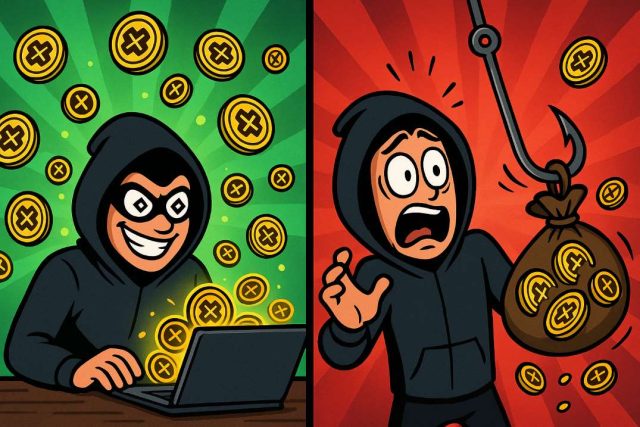
Cartoon-style meme of a hacker minting UXLINK tokens on one side and losing them to a phishing hook on the other, symbolizing the ironic UXLINK hack aftermath.

The crypto world is used to dramatic hacks, but few stories spiral into such strange territory as the recent UXLINK hack. Attackers exploited a flaw in the project’s multisig controls to mint billions in tokens. Then, in an ironic twist, the attacker became a victim themselves, losing much of the stolen haul to a phishing scam. The result is a bizarre saga that has left traders, exchanges, and the broader community caught between disbelief and ridicule.

The Multisig Breach That Sparked It All

UXLINK, a Web3 social protocol, experienced a collapse of its governance system when attackers compromised its multisig wallet. This enabled them to mint more than $2 billion worth of CRUX tokens, far exceeding the project’s intended supply. While the headline number shocked the industry, analysts estimate the actual realized losses were closer to $11–48 million, depending on token liquidity and sell-offs.

Market Fallout and Exchange Warnings

The market reaction was swift. The UXLINK token price fell by over 70%, wiping out months of gains. Major exchanges such as Upbit issued trading warnings, and others flagged the project as high-risk to protect users. Confidence in UXLINK evaporated overnight. As a result, discussions quickly shifted from concern to skepticism over whether the project could recover.

The Twist: Hacker Becomes the Hacked

If the exploit wasn’t strange enough, the attacker soon faced an even stranger twist. In what many called crypto karma, the wallet that drained UXLINK later fell victim to a phishing attack. A large portion of the stolen tokens disappeared.

The irony hasn’t gone unnoticed. Lookonchain commented: “Interestingly, the hacker who attacked $UXLINK was targeted by a phishing attack and lost 542M $UXLINK($48M).”

Community reaction was swift and merciless. Memes flooded social media, mocking both UXLINK’s flawed defenses and the hacker’s own lack of awareness. What began as one of the largest minting exploits in recent memory turned into a comedy of errors.

Lessons From the Chaos

The UXLINK breach highlights deeper problems in the DeFi security landscape. Multisig wallets, long seen as safeguards against unilateral exploits, once again proved vulnerable to poor governance and errors. At the same time, the fact that even the hacker fell for basic phishing tactics shows how trust in Web3 systems remains fragile. For investors, the message is clear: no protocol is too big, too decentralized, or too well-funded to avoid catastrophic mistakes.

The UXLINK hack will be remembered not just for the billions in tokens minted or the millions in market losses. It will also be remembered for the sheer absurdity of its aftermath. In the end, both the project and the attacker lost — one to compromised governance, the other to a scam as old as the internet. The episode is a stark reminder that in crypto, the line between victim and villain can blur faster than the market can crash.

Readers’ frequently asked questions

No. The exploit targeted UXLINK’s multisig wallet and token minting mechanism, not individual user wallets. Losses came from the dilution and collapse of the project’s token value rather than direct theft from holders.

Yes, but with restrictions. While trading continues on some exchanges, major platforms such as Upbit have issued risk warnings. Liquidity remains low and volatility is high, making the token extremely risky to trade.

Have authorities or regulators made any statements about the incident?

As of now, there have been no formal statements from regulators regarding the UXLINK hack. Industry observers note that such cases often highlight the lack of regulatory oversight in DeFi security breaches.

What Is In It For You? Action items you might want to consider

Keep track of any governance changes, audits, or community proposals announced by the project. These moves will indicate whether UXLINK has a realistic chance of regaining credibility.

Reassess risk exposure to high-volatility tokens

The UXLINK hack and its aftermath show how quickly token values can collapse after security breaches. Traders should review positions in lesser-known or unaudited DeFi tokens and adjust exposure accordingly.

Strengthen personal security against phishing attacks

The irony of the hacker being phished underscores how vulnerable even seasoned crypto users can be. Investors should review wallet hygiene, avoid unverified links, and use hardware wallets or multisig for extra protection.

France, Italy, and Austria Challenge MiCA Rollout, Triggering EU Power Struggle Over Crypto Oversight

EU map with beams from France, Italy and Austria converging on a digital passport over Brussels, symbolizing MiCA regulation and ESMA oversight.

The EU’s landmark MiCA regulation was designed to unify the EU crypto market, but cracks are already showing. France’s AMF, backed by Italy’s CONSOB and Austria’s FMA, has warned it may block crypto passporting if stricter oversight is not introduced. This marks a bold stance in France’s crypto regulation and exposes a brewing power struggle over who should police digital assets: national regulators or the EU’s central authority, ESMA.

What MiCA Promised

When it came into force, the MiCA regulation was hailed as the world’s first comprehensive crypto framework. Its core promise was harmonization. Crypto firms authorized in one EU country could use that license to operate across the bloc. This “passporting” model aimed to replace the patchwork of national regimes and create a single EU crypto market.

But the French AMF argues the promise is faltering. While rules are uniform on paper, enforcement is still handled by national authorities. That, they say, leaves room for uneven standards and undermines the idea of EU crypto harmonization.

France’s “Atomic Weapon” Threat

French regulator AMF President Marie-Anne Barbat-Layani described the option to block cross-border recognition of licenses as an “atomic weapon.” Headlines in several outlets summarized it as France threatens to block MiCA, a move that could fracture the EU’s single market.

The concern is that firms may secure approvals in jurisdictions with weaker scrutiny and still gain access to investors across Europe. This reflects the broader AMF crypto stance, which has long emphasized strict oversight.

The AMF says this puts investor protection in crypto at risk and could expose the financial system to cyber vulnerabilities. Italy’s CONSOB and Austria’s FMA echoed these concerns. Together, they are pressing for urgent reforms.

Fault Lines in EU Supervision

The controversy highlights the tension between a uniform EU regulatory framework and fragmented implementation. Smaller states such as Malta, Lithuania, and Cyprus have been accused of enabling regulatory shopping in crypto. These jurisdictions often attract firms with lighter oversight and faster licensing.

For example, some countries issue an EU crypto license in weeks, while others take months. The result is uneven standards despite a shared rulebook.

Similar challenges have plagued EU financial law before. Banking under CRD IV and investment services under MiFID II both saw uneven national enforcement, despite being based on uniform directives.

What the Trio Wants

France, Italy, and Austria are calling for sweeping changes to strengthen the MiCA regulation:

  • ESMA oversight of the largest crypto-asset service providers (CASPs), removing supervision from national regulators.
  • Mandatory cybersecurity audits for crypto firms before authorization or renewal.
  • A centralized EU whitepaper repository for new tokens.
  • Stricter controls on EU intermediaries that route client orders to non-MiCA offshore platforms.

They argue that these steps are vital for investor safety and market stability. Supporters say enhanced ESMA oversight would reduce fragmentation and strengthen trust in the single market.

Pushback and Counterarguments

Not all EU countries are convinced. Jurisdictions that benefit from lighter regimes, such as Malta and Lithuania, warn that strict measures could hurt competitiveness. Industry voices also argue that expanding ESMA’s role may create regulatory bottlenecks.

Still, the warnings from Paris, Rome, and Vienna carry weight. Italy’s CONSOB crypto regulation has often aligned with France in pushing for tougher standards. The Austrian FMA crypto regulation also emphasizes investor safety.

Market and Political Implications

If France follows through on its threat to block passporting, the EU crypto market could fragment. Investors and companies would face uncertainty over which licenses are truly valid across borders.

At the same time, the pressure increases momentum for Brussels to expand EU digital assets regulation. ESMA’s potential role in supervising major firms signals that the bloc may accelerate toward stronger, EU-level control.

France’s challenge to the MiCA regulation is more than a technical dispute. It is a test of whether the EU can deliver on the promise of a unified digital-asset framework. By pushing for ESMA authority and stricter safeguards, Paris and its allies highlight deep concerns about uneven enforcement and weak investor protection in crypto.

The coming months will show whether Europe strengthens MiCA into a robust regime or risks seeing its single-market vision splinter under regulatory strain.

Readers’ frequently asked questions

Can France legally block a MiCA passport granted by another EU country?

Yes, but only in narrow, risk-based situations. MiCA’s passport is meant to work EU-wide, but a host regulator (e.g., France’s AMF) can take precautionary, proportionate, time-limited measures if it sees serious investor-protection or market-integrity risks. The host must notify the home regulator and EU bodies (including ESMA) and seek a coordinated resolution. It is not a blanket revocation EU-wide; it restricts the local use of that passport pending remediation.

If ESMA gets direct supervision of major CASPs, what actually changes for firms?

One lead supervisor for big players, more consistent enforcement, and higher baseline controls (governance, IT/cyber, outsourcing, incident reporting). Expect independent cybersecurity audits, tighter documentation, and possibly longer authorization/renewal timelines, but clearer EU-level expectations and less jurisdiction shopping.

I’m a customer of a passported exchange. What should I do if its passport is contested in my country?

Follow the firm’s official notices and your regulator’s updates. Verify withdrawal options, reduce exposure to complex products during uncertainty, and download account statements/tax reports. Keep some liquidity with a provider licensed in your home country or one with a strong compliance history, and avoid opening new positions until the status is clarified.

What Is In It For You? Action items you might want to consider

Actions for EU crypto users

Verify your provider’s legal entity and passport status in your country via the national register. Test a small withdrawal and download recent statements now rather than during a dispute. Until the license status is clearly recognized, avoid opening new leveraged or derivative positions, and keep a second, locally licensed venue as a fallback for liquidity.

Prep for CASPs and fintechs applying under MiCA

Commission an independent cybersecurity audit and document incident response, outsourcing, and any routing to non-EU venues. Prepare customer-notice templates for a “passport contested” scenario and rehearse the workflow. Reassess the choice of home regulator, since speed gains can be offset by host-country challenges, and assemble a whitepaper dossier in case filings are centralized at the EU level.

Steps for investors and analysts

Track signals on ESMA oversight and any host-country interventions that could affect market access. Stress-test on- and off-ramps, staking, and derivatives in case a venue is restricted. Tilt exposure toward providers with strong compliance records and price a higher risk premium for firms licensed in jurisdictions that are more likely to face passporting disputes.

Tether’s USAT Stablecoin: U.S. Launch Signals New Era Backed by Billion-Dollar Profits

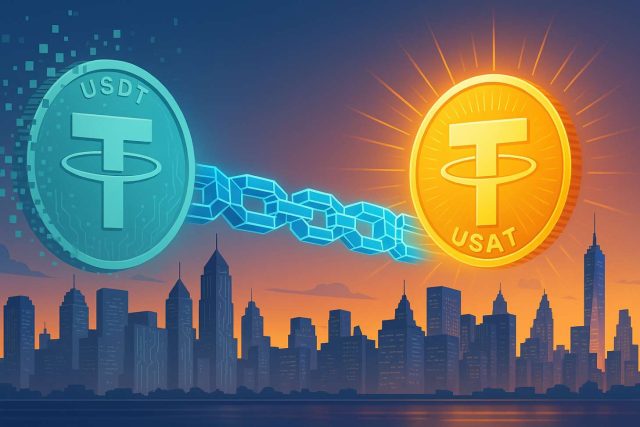
Editorial illustration of a symbolic handover from Tether’s USDT to the new USAT stablecoin. A fading USDT coin dissolves on the left, while a glowing USAT coin emerges on the right, connected by a blockchain bridge. The background shows a modern U.S. city skyline, representing Tether’s shift to the regulated American market.

Tether has unveiled USAT, a new regulated stablecoin designed for the U.S. market, marking the company’s most significant strategic pivot since the global rise of USDT. The token is structured to comply with the GENIUS Act and broader U.S. stablecoin regulation, with Anchorage Digital handling issuance and Cantor Fitzgerald safeguarding reserves. To lead the project, Tether appointed Bo Hines, a former White House digital assets adviser, as CEO of the U.S. subsidiary. The move sets Tether up for a direct clash with Circle’s USDC, the current leader among onshore stablecoins.

Why USAT, Why Now

For years, Tether stablecoin USDT dominated global markets but faced mounting scrutiny, especially in Europe under the EU’s MiCA framework. By contrast, the U.S. has introduced clearer guardrails through the GENIUS Act, creating a fresh opening. USAT allows Tether to pivot from being the outsider to competing onshore under American rules. Executives, led by CEO Paolo Ardoino, are now pitching Tether not just as a liquidity engine but as a compliant, responsible player in the U.S. ecosystem. The involvement of Anchorage Digital and Cantor Fitzgerald reserves is central to that message, signaling institutional-grade oversight.

The Power Behind the Push — Tether’s Profits

Part of what makes this pivot possible is Tether’s profitability. High interest rates on U.S. Treasuries have delivered billions in quarterly returns. This places Tether in the league of mid-sized American banks in terms of earnings power. The company can bankroll expansion without relying on an IPO or outside investors. While Circle has taken the public company route, Tether insists it will remain a private company, keeping control in the hands of its small group of owners.

Beyond Stablecoins — Tether as an Investor

The USAT launch is just one piece of a larger Tether investment strategy. The company is now one of the largest corporate holders of Bitcoin. It also allocates reserves to gold and real estate.

Tether has purchased land and invested in renewable energy projects to support Bitcoin mining and infrastructure in emerging markets. As a result, its diversification strengthens reserves, hedges risks, and builds long-term resilience beyond dollar-linked assets.

Supply Games: Burn and Mint Moves

In the days surrounding the USAT rollout, Tether conducted a $1 billion USDT burn, presenting it as a sign of supply discipline and reserve management. Almost simultaneously, it executed a $1 billion USDT mint on Ethereum to meet liquidity demand. This dual move shows the tension between optics and operations. While Tether highlights its restraint, demand-driven issuance continues to expand supply where markets need it most.

Political Firepower

Alongside financial and technical moves, Tether is also playing a political game. The hiring of Bo Hines connects the company to Washington, ensuring that someone with policy and regulatory experience leads the U.S. stablecoin division. In addition, reports point to Tether funding pro-crypto PACs to support advocacy efforts on Capitol Hill. Together, these steps suggest Tether is preparing to fight for influence over how future stablecoin regulation in the U.S. will take shape.

Market Stakes

The launch of USAT raises the competitive stakes. Circle USDC currently dominates the regulated U.S. market, while Tether’s offshore USDT still commands global liquidity. However, if Tether can establish trust with regulators and win adoption for USAT, it could control both sides of the market: the world’s largest offshore stablecoin and a strong, compliant onshore counterpart. For traders, institutions, and policymakers, this shift would fundamentally alter the balance of stablecoin market share. In this scenario, Tether stablecoin offerings would span both offshore and regulated onshore markets.

Outlook

Tether’s USAT is more than just a new token: it is a statement of intent. With billions in profits from Treasuries, diversified holdings in Bitcoin and hard assets, and growing political influence, Tether is positioning itself as a permanent fixture in American finance. The challenge now is whether U.S. regulators and institutions will accept a company that once thrived outside the system as a credible, compliant leader inside it. The launch of USAT marks the beginning of that test.

Readers’ frequently asked questions

How will USAT be different from Tether’s existing USDT stablecoin?

USAT is designed specifically for the U.S. market and complies with federal rules under the GENIUS Act. Unlike USDT, which is issued offshore, USAT will be issued through Anchorage Digital and backed by reserves custodied with Cantor Fitzgerald to meet regulatory requirements. Once the new regulations take effect, USDT will no longer be accessible to U.S. customers on regulated platforms, making USAT the only Tether stablecoin available domestically.

When is USAT expected to launch for public use?

Tether announced USAT on September 12, 2025, and executives indicated that the stablecoin should go live before the end of 2025. The timeline depends on finalizing regulatory and banking arrangements.

What does Tether’s profitability mean for users of USAT?

Tether’s large profits from U.S. Treasuries give it a financial cushion to support new ventures. For users, this means the company has the resources to maintain reserves and expand services without relying on outside capital. It also reduces the risk that sudden funding needs could disrupt the stablecoin’s backing.

What Is In It For You? Action items you might want to consider

Prepare for USDT’s phase-out in the U.S.

If you trade or hold USDT on regulated platforms, be aware that it will no longer be available once federal rules take effect. Plan to transition holdings into USAT or another compliant stablecoin.

Watch the institutional adoption of USAT.

Track announcements from exchanges, payment processors, and fintechs. Their pace of integration will be the clearest signal of how quickly USAT gains traction against Circle’s USDC.

Monitor Tether’s diversification moves.

Keep an eye on Tether’s investments in Bitcoin, gold, and energy projects. These decisions affect its balance sheet strength and could impact confidence in USAT’s long-term stability.

Santander’s Openbank Crypto Launch Begins in Germany, Spain Next

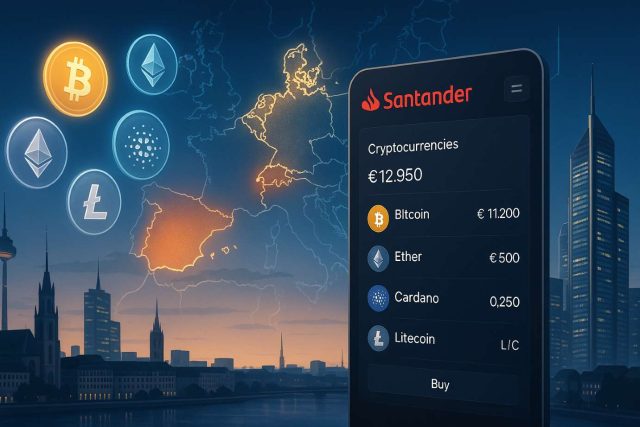
editorial illustration of Santander’s digital bank Openbank launching crypto trading in Europe. Futuristic interface with Bitcoin, Ether, Cardano, Litecoin, and Polygon icons hovering above a digital screen, Germany highlighted on a glowing Europe map with Spain next in line.

Banco Santander’s digital subsidiary, Openbank, has taken its first step into retail crypto trading. Santander’s Openbank crypto service is now live for clients in Germany and will expand into Spain in the coming weeks. Digital assets are integrated directly into the bank’s mobile app, showing how mainstream financial institutions are moving to meet growing demand for crypto in a regulated environment.

Santander’s Digital Arm Moves Into Crypto

Openbank, Santander’s fully online bank, is known for blending traditional services with digital-first convenience. By adding cryptocurrency trading to its product suite, the bank positions itself at the intersection of fintech and traditional finance. Introducing digital assets through Openbank provides a safe entry point into crypto for Santander’s European retail customers. This expansion is also part of Santander’s broader crypto services strategy for retail banking.

What Customers Can Expect

The new service supports five cryptocurrencies at launch: Bitcoin, Ether, Litecoin, Polygon, and Cardano. Trading is handled directly inside the Openbank app, alongside investments in funds, ETFs, and stocks. Clients pay a 1.49% fee per transaction with a minimum of €1, while custody is offered free of charge. Santander also plans to expand its token selection and add crypto-to-crypto conversions in future updates. Including Cardano and Polygon in the Santander Openbank crypto launch highlights the bank’s intent to go beyond Bitcoin and Ether.

Why the Santander Openbank Crypto Launch Matters for Europe

For years, retail crypto trading in Europe has largely been the domain of exchanges and neobanks. Santander’s move changes that equation. By embedding digital assets in a bank-owned platform, Openbank lowers barriers for everyday clients. Many prefer the security and familiarity of a regulated institution. This shift aligns with wider fintech trends, where users expect access to both traditional and digital investments in one place.

Regulation as the Foundation

A key enabler of the rollout is the EU’s Markets in Crypto-Assets (MiCA) regulation. It offers banks a clear framework to integrate crypto services. Santander highlights investor protection and compliance as central to Openbank’s design. With MiCA allowing regulatory passporting, Openbank can expand its crypto services across Europe, provided local approvals are granted.

Competing With Fintechs and Exchanges

Openbank’s crypto entry places it in direct competition with platforms like Revolut, Coinbase, and Binance. Its 1.49% trading fee is higher than many exchange offerings. Still, the appeal lies in convenience, regulatory safeguards, and integration with existing accounts.

The comparison of Revolut vs Santander crypto fees shows a clear gap. Revolut can be cheaper for premium users. Santander’s Openbank, however, offers the advantage of bank-backed crypto trading under MiCA rules.

The Coinbase vs Openbank crypto comparison highlights another trade-off. Coinbase offers lower fees, while Openbank provides stronger regulatory assurance.

Asset Choices and Market Impact

The decision to include Cardano and Polygon alongside Bitcoin and Ether shows a strategy that goes beyond the market leaders. Crypto analysts expect that Cardano’s listing in the Santander Openbank crypto launch will increase visibility for ADA in Europe. The same is true for Polygon’s MATIC token. This selection reflects Santander’s intent to make Openbank a comprehensive gateway to the digital asset market, not just a Bitcoin on-ramp.

The launch of crypto trading by Santander’s Openbank marks a milestone in Europe’s financial landscape. By combining the trust of a major bank with the flexibility of a digital platform, the Santander Openbank crypto rollout is pushing digital assets further into the financial mainstream. Germany is the starting point, Spain is next, and with MiCA regulation smoothing the path, wider European expansion looks inevitable.

Readers’ frequently asked questions

What fees apply to crypto trading on Santander’s Openbank?

Openbank charges a 1.49% fee per transaction with a minimum of €1. There are no custody or holding fees for keeping your digital assets within the bank’s platform.

Can I transfer my crypto out of Openbank to an external wallet?

No. At launch, the service only supports buying, selling, and holding crypto within the Openbank app. Transfers to external wallets are not available, though Santander has signaled that additional features may be added in the future.

When will Openbank’s crypto service expand beyond Germany and Spain?

The rollout in Germany is live, and Spain is expected to follow shortly. Wider European expansion will depend on regulatory approvals under the EU’s MiCA framework, which enables banks to passport crypto services across member states.

What Is In It For You? Action items you might want to consider

Compare Openbank’s crypto fees with other platforms

If you’re based in Germany or Spain, check how Openbank’s 1.49% fee compares with Revolut, Coinbase, or Binance. For small trades, the cost may not differ much, but frequent traders could save significantly elsewhere.

Evaluate the benefits of a bank-backed service

Consider whether the added trust, MiCA compliance, and direct banking integration offset the higher trading fees. For newcomers to crypto, the security of using a bank may outweigh cost differences.

Track Openbank’s expansion across Europe

Spain will be next, but MiCA passporting could bring this service to other EU countries soon. Monitoring which markets Santander’s Openbank enters first can help crypto traders anticipate local opportunities and competition.

Gemini and SEC Reach “Resolution in Principle” to End Earn Lawsuit

illustration of a New York federal courthouse with scales of justice blended into the Gemini logo, digital ledger patterns in the background, symbolizing the SEC settlement over the Gemini Earn program, 16:9, editorial style.

Gemini and the U.S. Securities and Exchange Commission (SEC) told a New York federal court they’ve reached a resolution in principle to settle the regulator’s lawsuit over the Gemini Earn program. The tentative deal, as disclosed in a joint filing, is subject to approval by the SEC. The parties must submit the final settlement papers by December 15, 2025.

The development marks a turning point for the high-profile Gemini Earn settlement. If approved, it could close out one of the most closely watched crypto lending cases of the past two years.

Background: From Earn to Enforcement

The SEC filed its lawsuit against Gemini in January 2023. Regulators alleged that Gemini and its partner Genesis Global Capital conducted an unregistered securities offering through the Earn program. Customers lent crypto assets to Genesis in exchange for yield. Gemini acted as the program’s facilitator.

The Earn program failed after Genesis’s liquidity crisis. Its collapse triggered a broader wave of enforcement and litigation across the digital asset lending sector.

How We Got Here: Parallel Settlements

In parallel, Genesis faced its own regulatory pressure. The company reached an SEC settlement in 2024, agreeing to pay $21 million depending on creditor distributions. That resolution, along with a separate settlement with the New York Attorney General, helped unlock repayments to affected customers.

By mid-2025, more than $2 billion in crypto had been distributed back to Earn users through the Genesis bankruptcy. Gemini reported that approximately 97% of customer assets had already been restored in kind.

The Significance of “Resolution in Principle”

In U.S. litigation, a resolution in principle means the parties have agreed on the framework of a deal. The Commission still needs to approve final details, including any financial penalties or compliance undertakings.

The filing sets December 15, 2025, as the deadline for formalizing the agreement. This gives regulators and the exchange time to finalize terms.

Broader Enforcement and Market Context

The Gemini case is part of a wider wave of crypto enforcement actions against lending platforms that thrived during the bull run of 2021–2022. Celsius, BlockFi, and Genesis all became flashpoints in debates over crypto regulation and consumer protection.

These disputes are now being resolved mainly through settlements rather than trials. The trend shows that regulators and companies are choosing to close legacy matters with negotiated outcomes—another reminder of how the industry is working through the last cycle’s crypto lending case backlog.

Implications for Gemini

For Gemini, the Gemini Earn settlement removes a major legal overhang as the company expands following its public listing earlier this month. The SEC lawsuit had raised questions about Gemini’s compliance posture and long-term prospects in the U.S. market.

The final terms remain undisclosed. Any financial penalties or compliance commitments will become clear once the Commission signs off. Even so, clearing this hurdle would strengthen Gemini’s position compared to rivals still facing regulatory uncertainty.

What It Means for Customers and Investors

For retail users, much of the damage from the Earn collapse has already been addressed through the Genesis bankruptcy. That process has returned billions in crypto to affected customers. The settlement with the SEC does not directly alter those repayments. However, it adds regulatory closure to the saga.

For investors, the deal underscores that high-profile crypto lending cases are nearing their end. This may help clear the path for a more stable market environment as new crypto regulation frameworks are debated in Congress and abroad.

To finalize the Gemini Earn settlement, the SEC must approve the terms in December. Until then, uncertainty remains over the precise conditions of the deal.

Still, the agreement signals the approaching end of one of the longest-running battles between a major crypto exchange and U.S. regulators. It may also mark the conclusion of the SEC’s early enforcement cycle against lending products, setting the stage for the next chapter in digital asset oversight.

Readers’ frequently asked questions

Does this settlement mean Gemini Earn customers will receive additional repayments?

No. The settlement with the SEC does not directly change customer repayments. Those distributions are being handled through the Genesis bankruptcy process, which has already returned most assets in kind to Earn users.

Does the settlement change how crypto lending will be regulated in the U.S.?

Yes, indirectly. By treating Earn as an unregistered securities offering, the SEC reinforces its stance that most yield products must register or comply with securities law. This sets a clearer precedent for how it will handle similar products.

How does this case affect future crypto lending products in the U.S.?

The resolution signals that regulators view prior lending programs as unregistered securities offerings. Any future yield or lending products in the U.S. will likely need to register with the SEC or fit within an approved regulatory framework to avoid similar lawsuits.

What Is In It For You? Action items you might want to consider

Track Gemini’s compliance and product roadmap after settlement

If finalized, the settlement will likely shape Gemini’s ability to launch new products in the U.S. Investors should monitor whether Gemini shifts focus to regulated offerings or expands internationally.

Watch how regulators treat future yield products

The SEC’s stance that Earn was an unregistered securities offering sets a precedent. Traders and institutions should be cautious with any new high-yield or lending platforms that don’t clearly fit within U.S. securities law.

Monitor broader crypto lending case closures

With Genesis, BlockFi, and now Gemini moving toward resolution, this enforcement cycle is nearing its end. Market participants should watch how the closure of these cases influences institutional confidence and liquidity flows into the sector.

- Advertisement -

FEATURED