Home Blog Page 89

Venus Protocol Hack Forces Platform Suspension After $27M Phishing Scam on BNB Chain

Phishing hook made of digital code stealing cryptocurrency tokens from a glowing BNB Chain network grid, symbolizing the $27M Venus Protocol hack and DeFi security risks.

Venus Protocol has suspended operations after suffering a $27 million hack in what appears to be a phishing scam. Most reports point to a compromised whale wallet. Others suggest the event may have been a smart contract compromise or even a trader’s mistake. The uncertainty highlights how fragile DeFi security remains, with risks coming from both human and technical weaknesses.

Background: What Is Venus Protocol?

Venus Protocol is a leading lending and borrowing platform on the BNB Chain. It allows users to deposit collateral and borrow assets in return. With billions of dollars in transaction volume, Venus has long been a cornerstone of Binance’s DeFi ecosystem. Its sudden shutdown following the Venus Protocol hack shows that even established platforms remain vulnerable.

The $27 Million Incident

The breach occurred on September 2, 2025. An attacker siphoned roughly $27 million in assets. Security firm Cyvers confirmed abnormal activity that drained the whale’s wallet. After the attack, Venus Protocol halted operations to prevent further losses. The decision sparked concern among investors and traders who relied on the platform.

Conflicting Explanations: Phishing or Exploit?

The leading explanation points to a phishing scam. A whale may have been tricked into signing malicious transactions that gave attackers access to funds. This type of attack has become increasingly common across DeFi.

Not all reports agree. Some outlets suggested the incident may have involved a smart contract compromise. Others, citing Cyvers’ analysis, pointed to a possible user mistake. One trader reportedly lost close to $30 million in a mishandled transaction.

The contradictory accounts leave open the possibility that the Venus Protocol phishing story is only part of a broader vulnerability.

https://twitter.com/CyversAlerts/status/1962814582579183709

Platform Response

In response to the BNB Chain hack, Venus Protocol suspended deposits and withdrawals. The team has not confirmed the exact cause of the breach. However, it promised to strengthen protections and restore user confidence. For now, activity on the platform remains frozen.

Wider Lessons for DeFi Security

The Venus Protocol hack highlights the overlapping risks in decentralized finance:

  • DeFi exploits that target code flaws.
  • Phishing attacks that trick users into handing over access.
  • Human error when managing private keys or approvals.

DeFi platforms cannot rely only on audited smart contracts. User education, stronger wallet safeguards, and layered defense systems are just as critical. As the sector grows, ongoing DeFi security risks continue to erode trust and pressure the industry to improve standards.

The Venus Protocol hack caused a $27 million loss and forced one of BNB Chain’s largest DeFi platforms to suspend activity. A phishing scam appears to be the most likely cause. Yet speculation about a smart contract compromise or trader error shows how murky crypto forensics can be. Regardless of the root cause, the outcome is the same: another major blow to DeFi credibility and another reminder that the sector urgently needs stronger defenses.

Uniswap v4 Hook Bunni Hack: Precision Bug Exposes $8M in Vulnerabilities

Editorial illustration of a cracked rabbit figurine symbolizing the Bunni hack, leaking digital stablecoins and code fragments, with fractured hook shapes in the background to represent the Uniswap v4 exploit.

The Bunni hack drained millions from the Uniswap v4-based protocol, shaking the DeFi sector once again. Attackers exploited a precision bug in Bunni’s smart contract logic. They siphoned off between $2.3 million and $8.4 million across Ethereum and Unichain. The precision bug exploit shows how small errors in smart contract math can turn into devastating security incidents. It also raises questions about the readiness of Uniswap v4 hooks for wider adoption.

What Happened

The Bunni hack began when attackers found a flaw in the way Bunni’s contracts handled precision in token calculations. By manipulating the bug, they drained stablecoin liquidity pools and destabilized the protocol.

Reports on the total losses vary, with estimates ranging from about $2.3 million in stablecoins to as high as $8 million. The difference depends on whether calculations include losses across both Ethereum and the Unichain exploit.

Why the Precision Bug Matters

The attack centered on a precision bug that skewed token calculations. In DeFi, where smart contracts manage billions of dollars, even a small error can create major risks.

This is not the first time smart contract vulnerabilities, tied to math or decimal handling, have caused losses. Past incidents include overflow errors and decimal mismanagement. These mistakes show how precision issues can trigger systemic failures. The Bunni case now ranks alongside other Uniswap v4 hack concerns. It raises doubts about whether the new architecture has been tested enough.

Impact on Bunni and Its Users

For Bunni’s liquidity providers, the fallout is severe. The Bunni Uniswap exploit drained stablecoins and tokens from pools. Providers now face unrecoverable losses.

At the time of reporting, official updates from the Bunni team remain limited. There is still no clear path to reimbursement. For individual users, the incident proves again that funds locked in unaudited or lightly tested protocols carry high risk.

Security Lessons for DeFi

The Bunni case highlights broader DeFi security risks linked to deploying on experimental infrastructure like Uniswap v4 hooks. Hooks expand the flexibility of decentralized exchanges. But their novelty also increases the chance of overlooked smart contract vulnerabilities.

Experts argue that more rigorous audits and stronger verification methods are needed. Live testing environments would help developers find flaws before launch. The Ethereum DeFi hack reinforces the urgency of raising standards across the ecosystem.

Market and Ecosystem Reactions

The $8M DeFi hack has fueled new doubts about Uniswap’s v4 framework. Some projects may delay adoption of hooks, fearing similar attacks.

At the same time, the incident adds to a growing list of exploits targeting early-stage protocols. Developers and investors alike are now asking if DeFi innovation is moving faster than the industry can secure it.

The Bunni hack is a textbook reminder that precision matters in DeFi. A small coding flaw in a Uniswap v4 hook created millions in stolen assets. Liquidity providers and developers are now left to deal with the aftermath.

As the sector continues to evolve, stronger audits, better testing, and greater caution will be essential. Only then can DeFi withstand the constant threat of exploitation.

Crypto Hacks in August 2025: $163M Stolen as Phishing Scams Rise

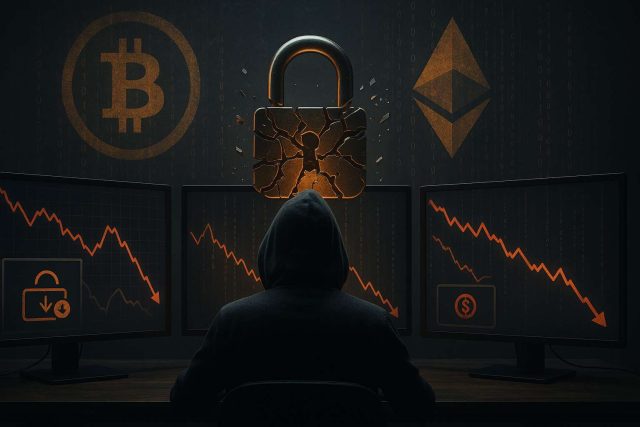
Editorial illustration of a hooded hacker in front of glowing computer screens with a shattered digital lock, Bitcoin and Ethereum symbols dissolving into code, symbolizing August 2025 crypto hacks, $91M Bitcoin heist, and BtcTurk breach.

August 2025 was another brutal month for digital asset security. According to PeckShield, crypto hacks in August 2025 resulted in approximately $163 million in losses across 16 incidents, jumping 15% compared to July. The month was defined by a record-setting $91M Bitcoin heist carried out through social engineering. It was followed by a BtcTurk hack that reignited concerns over the vulnerabilities of centralized exchanges.

August Crypto Hacks 2025: Breakdown of Major Incidents

The single biggest theft in August involved 783 BTC, worth $91 million, stolen via a support impersonation scam. The attackers tricked victims into handing over wallet access and quickly laundered the funds through Wasabi. The scale of this Bitcoin heist makes it one of the largest individual thefts of the year so far.

The month also saw a major crypto exchange hack at BtcTurk, which lost between $48 million and $50 million in a multi-chain hot-wallet breach. The exchange briefly suspended withdrawals and deposits following the incident. The case reminded investors that even large exchanges remain exposed.

  • Odin.fun: ~$7M liquidity pool exploit.
  • BetterBank.io: ~$5M reward mint manipulation.
  • CrediX Finance: ~$4.5M drained before the team vanished, raising suspicions of an exit scam.

Together, these cases paint a picture of crypto hack statistics where no corner of the industry, DeFi protocols, centralized exchanges, or retail users, is safe.

Phishing Scams and the Human Factor

While smart contract audits and DeFi security have improved, attackers are shifting their efforts toward crypto phishing scams. The $91M Bitcoin hack was not the result of a technical vulnerability. It was a carefully orchestrated social engineering play.

This reflects a broader industry weakness: the human layer is now the weakest link. Code is stronger than ever. People are not. Fake support agents, phishing websites, and malicious signature requests are now more effective than contract exploits. The data suggests that user education and operational security are just as critical as code reviews.

Exchange Risks Back in the Spotlight

The BtcTurk hack in August 2025 underscores the lingering risks of crypto exchanges being hacked. Centralized exchanges hold large amounts of user funds in hot wallets. This creates single points of failure.

Unlike DeFi exploits, which are often visible and dissected by the community in real time, exchange breaches tend to be opaque. Public details are scarce, and responses are often delayed. For traders and investors, the renewed wave of CEX hacks is a reminder that custody choices matter as much as market conditions.

The Bigger Picture: Crypto Hack Statistics 2025

The losses in August bring the 2025 year-to-date tally to around $2.47 billion, already surpassing 2024 totals. Reports from CertiK and Infosecurity confirm that phishing, insider threats, and North Korea crypto hacks are fueling the 2025 surge.

Another alarming trend is the speed of laundering. Security firms note that stolen funds can be moved and hidden in under three minutes. That speed makes it nearly impossible for exchanges or investigators to react in time.

Overall, this year’s crypto hack statistics reveal a clear trend: fewer smart contract bugs, more behavioral exploitation, and centralized vulnerabilities.

Looking ahead, the risks are unlikely to subside. Security analysts warn that crypto phishing scams could escalate further in the remainder of 2025 as attackers refine their tactics. Analysts also expect fresh attacks on bridges and exchanges.

Hackers will retain the upper hand unless the industry strengthens user education, automates incident response, and improves AML controls.

The message from August is clear: crypto hacks in 2025 were driven less by broken code and more by broken trust. With nearly $2.5B already lost this year, the industry faces a race to adapt faster than its adversaries.

Readers’ frequently asked questions

How long does it typically take for stolen crypto to be laundered after a hack?

Security firms report that in 2025, laundering can be completed in under three minutes, making it nearly impossible for investigators or exchanges to react in time.

Were user funds on BtcTurk permanently lost in the August 2025 hack?

BtcTurk confirmed that affected assets were stolen from hot wallets, but the exchange has not announced permanent losses for users. Platforms often cover losses through reserves or insurance, though official reimbursement details are pending.

What steps can retail investors take to reduce exposure to phishing scams?

Investors should never share wallet credentials with “support staff,” verify URLs before connecting wallets, use hardware wallets for large balances, and enable multi-factor authentication wherever possible.

What Is In It For You? Action items you might want to consider

Strengthen your personal defenses against phishing

Phishing and social engineering scams now drive the majority of crypto losses. Always verify support contacts, double-check website URLs, and use hardware wallets for long-term storage.

Diversify custody beyond centralized exchanges

The BtcTurk breach shows that exchanges remain targets. Spread funds across self-custody options and multiple platforms to reduce single points of failure.

Monitor security reports and alerts

Follow updates from firms like PeckShield and CertiK to stay aware of current attack trends. Timely information can help you recognize red flags before they impact your portfolio.

WLFI Launch Meets September Token Unlocks: $4.5B Supply Test for Crypto Markets

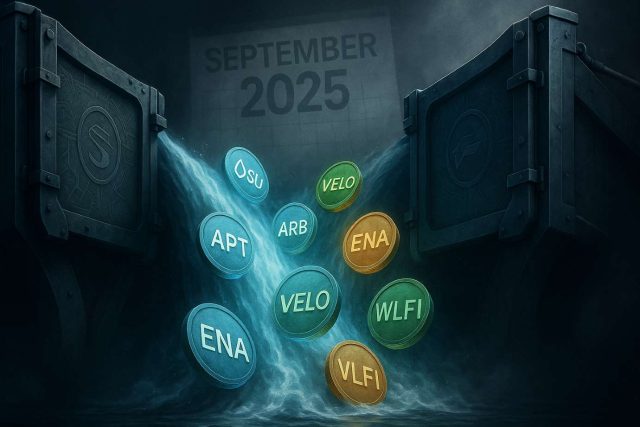
Editorial illustration of crypto floodgates opening to release tokens like SUI, Aptos, Arbitrum, Velo, Ethena, and WLFI, symbolizing $4.5B in September token unlocks 2025.

September 2025 is shaping up to be one of the most pivotal months for token supply in recent memory. At the center of the action is the WLFI token launch, scheduled for September 1. It lands just as the market braces for nearly $4.5–$4.7 billion in September token unlocks across dozens of projects.

The timing is no coincidence. WLFI’s debut comes with a governance-driven unlock model that sets it apart. However, it also enters a market already cautious about new supply. Traders now face the double challenge of digesting both WLFI’s rollout and the broader unlock calendar.

WLFI Spotlight: September 1 Launch and Unlock

WLFI will become tradable and transferable at 12:00 UTC on September 1. Early backers can unlock 20% of their allocations immediately through the project’s Lockbox system. The remaining 80% will be subject to a future governance vote.

This design gives the community direct influence over supply timing. It’s a notable departure from the fixed vesting schedules commonly applied across crypto projects.

In the run-up to launch, WLFI token unlock mechanics drew attention after reports of wallet hiccups for some presale participants. At the same time, WLFI perpetual contracts began trading on select derivatives platforms. This gave a glimpse of market appetite ahead of the spot debut.

Unlike most projects, WLFI’s unlock cadence is inseparable from its political narrative. Backed by Trump-linked figures, WLFI positions itself not just as another DeFi token. It also serves as a symbolic governance experiment in a regulated landscape.

September Token Unlock Season: The Big Picture

WLFI may be grabbing headlines, but it is only one part of the September 2025 token unlocks story. Across the month, nearly $4.5–$4.7 billion worth of vested tokens will hit circulation.

  • Cliff unlocks: ≈ $1.17B released in lump sums.
  • Linear unlocks: ≈ $3.36B gradually distributed.

This token unlock schedule spans dozens of projects, from major L1s to emerging DeFi names. Analysts note that this September’s crypto token unlocks could become one of the most consequential supply waves since early 2022.

Key movers by size:

  • Sui token unlock September 2025 — ≈ $153M
  • Fasttoken (FTN) — ≈ $90M
  • Aptos token unlock September 2025 — ≈ $49–50M
  • Arbitrum unlock schedule — ≈ $48M
  • Ethena token unlock September 2025 — ≈ $108–109M in Week 1
  • Immutable (IMX), Sei (SEI), Starknet (STRK), and others add mid-size flows
  • Velo token unlock September 20 — ≈ 3B tokens, ~13.6% of supply

The numbers are large enough that even seasoned traders expect supply pressure to become a recurring theme throughout the month.

Weekly Flashpoints to Watch

  • Week 1 (Sep 1–7): WLFI debut + Ethena token unlock ($108–109M). Smaller unlocks from IOTA, HONEY, and others.
  • Week 2 (Sep 11): Aptos unlock with ≈11.3M APT tokens entering circulation.
  • Week 3 (Sep 20): Velo unlock September 20. With 3B tokens, it’s one of the largest single-project events this year.
  • All month: Linear unlock flows from Sui, Arbitrum, and Fasttoken.

For traders, these dates serve as natural volatility checkpoints.

What Makes WLFI Different?

Most projects follow pre-set vesting contracts. WLFI instead hands the unlock decision back to token holders. Eighty percent of presale allocations remain locked until a governance vote.

This approach tests investor patience. It also makes WLFI a high-profile experiment. Can governance-driven tokenomics dampen sell pressure? Or will political ties and market hype accelerate volatility?

By contrast, projects like Aptos, Sui, and Arbitrum continue to release tokens according to predictable schedules. Traders can model supply more easily in those cases.

Implications for Traders and Investors

  • Liquidity crunch potential: With over $4.5B entering circulation, altcoin markets could see pressure, particularly in thinly traded pairs.
  • Rotation risk: WLFI’s narrative may siphon liquidity away from other unlock projects.
  • Volatility spikes: Events like the Aptos token unlock and Velo token unlock are likely to drive short-term swings.
  • Token unlock risks: Investors must weigh hype against dilution, particularly for mid-cap projects with limited liquidity.
  • Institutional view: Large unlocks can serve both as risks and as strategic entry points for institutions looking to buy discounted tokens.

The WLFI token launch on September 1 is more than a debut. It’s a stress test for both governance-driven tokenomics and broader market liquidity. With nearly $4.5B in token unlocks lined up for September 2025, traders will need to balance short-term hype with structural supply risks.

Whether WLFI’s governance model proves resilient or not, September’s crypto unlock events are set to define the next phase of market volatility.

Readers’ frequently asked questions

How can traders find reliable information on upcoming token unlocks?

Most major unlocks are tracked on dedicated dashboards like TokenUnlocks.app, Cryptorank, or CoinMarketCal. These platforms publish schedules, dollar-value estimates, and percentage of supply unlocked for each project.

What are common strategies traders use during large unlock months?

Traders often hedge exposure with derivatives, rotate into assets with lighter unlock schedules, or look for discounted entry points after unlock-related sell pressure. Institutional desks sometimes view heavy unlocks as accumulation opportunities if fundamentals remain intact.

Are governance-based unlocks like WLFI’s common in crypto?

They are rare. Most projects rely on fixed vesting contracts coded into smart contracts. WLFI’s model, where a community vote determines when 80% of tokens are released, is unusual and will serve as a case study for whether governance can balance investor incentives.

What Is In It For You? Action items you might want to consider

Monitor liquidity around key unlock dates

Set alerts for September 1 (WLFI), September 11 (Aptos), and September 20 (Velo). These dates are likely to bring volatility spikes, making them useful entry or exit points depending on your strategy.

Track governance outcomes for WLFI

Follow WLFI’s community channels and governance updates. The vote that decides when the remaining 80% of tokens unlock could create new market-moving events beyond September 1.

Use unlock dashboards to manage exposure

Check platforms like TokenUnlocks.app or CoinMarketCal to track real-time unlock data. Staying updated helps traders anticipate dilution pressure or plan accumulation around discounted assets.

Roman Storm’s Mixed Verdict Keeps Tornado Cash Trial Alive Weeks Later

Editorial illustration of a courtroom with a scale of justice showing computer code on one side and a money bag with chains on the other, symbolizing the Tornado Cash trial and Roman Storm conviction over developer liability and illicit finance.

Weeks after the Tornado Cash trial delivered a mixed verdict, the crypto industry is still parsing the consequences of Roman Storm’s conviction. A federal jury convicted co-founder Roman Storm of conspiring to operate an unlicensed money-transmitting business. However, the jury deadlocked on the more serious money laundering charges and sanctions violations. That outcome left prosecutors weighing whether to retry the unresolved counts. Storm’s sentencing remains unscheduled, adding to the uncertainty.

The result has left both legal experts and the decentralized finance (DeFi) community confronting a larger question. What does this Roman Storm conviction mean for developers who publish open-source code?

The Tornado Cash verdict followed nearly a month of testimony in New York. Jurors agreed that Storm conspired to run an unlicensed money-transmitting operation. They could not, however, reach consensus on allegations of laundering illicit funds or violating U.S. sanctions enforcement requirements.

The result was officially labeled a hung jury on those charges, which triggered a partial mistrial. Storm now faces a statutory maximum of five years in prison on the conviction. Sentencing guidelines, however, may lead to a lower recommendation.

He remains free on a $2 million bond while prosecutors consider whether to retry the unresolved counts. For now, both the sentencing timeline and the possibility of another trial hang over the case. Legal observers note that the Roman Storm conviction continues to fuel debate weeks after the trial concluded.

Industry Reflection: Developer Liability in the Spotlight

Beyond the legal uncertainty, the bigger shockwaves stem from the precedent the case could set. Weeks later, many in the crypto industry are still unsettled. They view the outcome as a dangerous precedent for crypto developer liability. The phrase has become a rallying cry across forums and commentary, highlighting fears that individual coders may now be treated like financial intermediaries.

Privacy advocates argue the guilty verdict effectively criminalizes open-source developer risk. If someone else’s misuse of code you wrote can lead to prosecution for a financial crime, the chilling effect on innovation could be profound. Several industry voices compared the situation to earlier fights over encryption exports or the liability of file-sharing platforms such as Napster.

Some commentators went further, calling the case regulatory overreach. “If developers can be held liable for how code is used, then the entire open-source ecosystem is at risk,” one DeFi analyst noted. The verdict has also reignited debate about DeFi regulation. Critics warn that unclear rules could discourage legitimate developers from building privacy-focused protocols. In this light, the crypto developer liability issue has become one of the defining legacies of the case.

Privacy vs. Compliance: The Core Tension

The debate underscores a long-standing tension between financial privacy and regulatory compliance. Crypto privacy tools like Tornado Cash allow users to obscure their transactions. Advocates argue that this is a fundamental right in the digital age.

Prosecutors presented a different perspective. They argued that Tornado Cash knowingly enabled billions of dollars in illicit transfers, including funds tied to the North Korea Lazarus Group. In their view, they didn’t prosecute Storm for writing code. Instead, the jury convicted him for operating a service that facilitated criminal transactions in violation of sanctions.

The Department of Justice emphasized that “writing code is not a crime.” However, it insisted Storm crossed the line by knowingly transmitting unlawful funds through his platform.

Looking Ahead: A Precedent Still in Flux

Two weeks after the Roman Storm conviction, the case remains unresolved on multiple fronts. Will prosecutors pursue a retrial on the hung money laundering charges? How will the sentencing guidelines shape Storm’s penalty? And perhaps most significantly, will appellate courts revisit the deeper question of where to draw the line between open-source code precedent and criminal conduct?

For developers, exchanges, and DeFi protocols, the message is already clear. The Tornado Cash trial marks a landmark moment in how U.S. law approaches decentralized systems. The mixed verdict has not settled the debate. Instead, it has ensured that the industry will be grappling with its implications for months, if not years, to come. The controversy surrounding crypto developer liability means this trial’s influence will extend far beyond the courtroom.

Readers’ frequently asked questions

What happens to the charges where the jury couldn’t agree?

Those counts, money laundering and sanctions violations, ended in a partial mistrial. Prosecutors may retry them in a new proceeding, but they have not announced a decision yet.

What sentence could Roman Storm face following his conviction?

The conviction carries a statutory maximum of five years in prison. The actual sentence will depend on federal guidelines and the judge’s assessment. A sentencing date has not been set.

Why does this verdict matter for crypto developers?

It elevates concerns about developer liability. Many fear that publishing open-source code could be treated like operating a financial service if authorities argue the software enables unlawful activity, potentially chilling DeFi innovation.

What Is In It For You? Action items you might want to consider

Track updates on potential retrial and sentencing

Keep an eye on whether prosecutors decide to retry the money laundering and sanctions charges. The outcome could affect how developer liability cases are prosecuted in the future.

If you are a developer or project maintainer, review how this case may influence legal exposure. Consider consulting resources or legal experts on compliance obligations for publishing or operating open-source tools in DeFi.

Monitor regulatory responses to privacy tools

Authorities have highlighted Tornado Cash’s link to illicit finance, including the Lazarus Group. Follow how regulators frame policies around mixers and privacy tools, since this may impact both developers and platforms that integrate them.

- Advertisement -

FEATURED