Home Blog Page 90

American Bitcoin’s Nasdaq Debut Blends Politics and Wall Street Ambitions
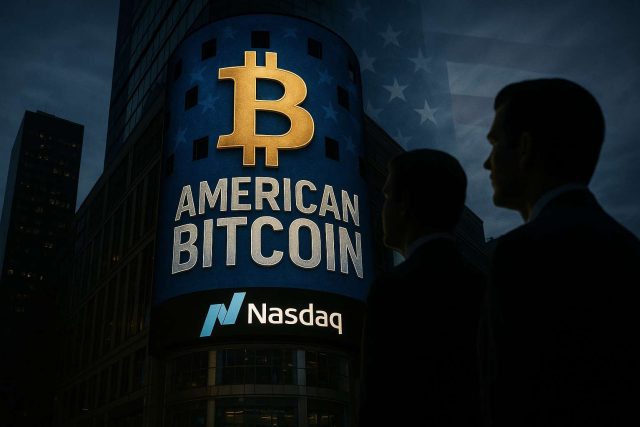
Nasdaq building in New York displaying American Bitcoin logo with Bitcoin symbol, illustrating Trump-backed American Bitcoin Nasdaq listing through Gryphon Digital Mining merger.

The American Bitcoin Nasdaq listing, backed by Donald Trump’s sons, is set for September through a $6.4 billion all-stock merger with Gryphon Digital Mining. The debut will place the company among the most valuable crypto miners on Wall Street. It also highlights how politics and finance are becoming increasingly entangled in the digital asset space.

The Deal Structure

The merger with Gryphon Digital Mining gives the combined entity a valuation of about $6.4 billion. That puts it in line with some of the largest Bitcoin miners already on Nasdaq, including Marathon Digital and Riot Platforms. The American Bitcoin Nasdaq listing is an all-stock transaction, but analysts say it resembles earlier SPAC-style crypto deals that rose quickly on investor hype before losing momentum. If completed, the deal would make American Bitcoin one of the sector’s most visible names.

Trump Sons’ Role and Political Implications

Donald Trump’s sons are not taking executive roles, but their financial backing has raised the profile of American Bitcoin far beyond a typical mining firm. The family’s wider crypto connections, from NFT ventures to policy talk around digital assets, have ensured that this debut is seen as both a political story and a financial milestone.

Critics warn that the Trump link risks politicizing the firm’s market entry. Supporters argue that the name recognition may help Bitcoin mining stocks attract mainstream attention. The debate surrounding this American Bitcoin Nasdaq listing illustrates how Bitcoin mining politics are increasingly influencing market narratives.

Industry Trend: Miners Rush to Public Markets

American Bitcoin’s plan fits a broader pattern: miners are moving to Wall Street for growth capital. Marathon, Riot, and Core Scientific are already among the largest Nasdaq-listed miners, raising funds and building trust through public status. For many companies, a listing is the ultimate signal of legitimacy. The American Bitcoin Nasdaq listing continues this trend, showing that miners still see Wall Street as vital for expansion.

Wall Street Meets Crypto

The debut also reflects how Wall Street is warming to crypto-linked firms. By buying shares in miners, investors gain indirect Bitcoin exposure without holding tokens. Asset managers see crypto mining stocks as a bridge between traditional finance and digital assets. The American Bitcoin Nasdaq listing adds another high-profile example of that bridge.

Market and Investor Reactions

Reactions so far are mixed. Optimists point to the $6.4 billion valuation as evidence of Bitcoin’s renewed strength and the scale of the merged company. Others recall that many crypto IPOs and SPAC deals stumbled after initial excitement faded. Whether this American Bitcoin Nasdaq listing can hold investor interest may depend on the company proving it has strengths beyond political ties.

Risks and Uncertainties

The debut comes at a time of rising regulatory pressure. U.S. agencies are debating the regulation of Bitcoin mining, particularly regarding energy use and environmental impact. The Trump connection brings extra political attention, which could increase that pressure.

Past SPAC crypto deals are another warning sign. Many saw valuations collapse once market hype cooled. Crypto mining firms also face cyclical risks: falling Bitcoin prices, rising power costs, and the effects of halvings. American Bitcoin will need to show that it can weather these cycles, not just ride the momentum of its listing.

The American Bitcoin Nasdaq listing is more than just another miner going public. It is a high-profile event at the crossroads of politics and finance. Whether Wall Street sees it as a milestone in crypto adoption or a politically charged gamble will shape its long-term impact.

Readers’ frequently asked questions

Will existing Gryphon Digital Mining shareholders receive shares in American Bitcoin?

Yes. The merger is structured as an all-stock transaction. Gryphon shareholders will exchange their holdings for shares in the combined company, which will trade on Nasdaq under the American Bitcoin name.

Does the American Bitcoin Nasdaq listing give investors direct exposure to Bitcoin?

No. Purchasing American Bitcoin stock provides exposure to a Bitcoin mining business, not direct ownership of Bitcoin. Performance may correlate with Bitcoin prices, but shareholders do not hold the cryptocurrency itself.

What regulatory challenges could affect American Bitcoin after the listing?

U.S. oversight of Bitcoin mining is intensifying, particularly around energy use, environmental impact, and financial disclosures. New requirements or restrictions could affect profitability and investor sentiment.

What Is In It For You? Action items you might want to consider

Monitor the progress of the American Bitcoin Nasdaq listing

Stay updated on merger approvals and the confirmed trading date, as timing shifts could impact investment decisions.

Compare American Bitcoin’s valuation with other Nasdaq-listed miners

Evaluate how the $6.4 billion valuation aligns with peers such as Marathon Digital, Riot Platforms, and Core Scientific to understand relative market positioning.

Watch for regulatory updates on Bitcoin mining

Track new rules on energy use, environmental impact, and financial disclosures, as they could directly affect profitability and stock performance.
Crypto Coalition Warns Senate: Protect Developers or Risk Losing U.S. Blockchain Innovation

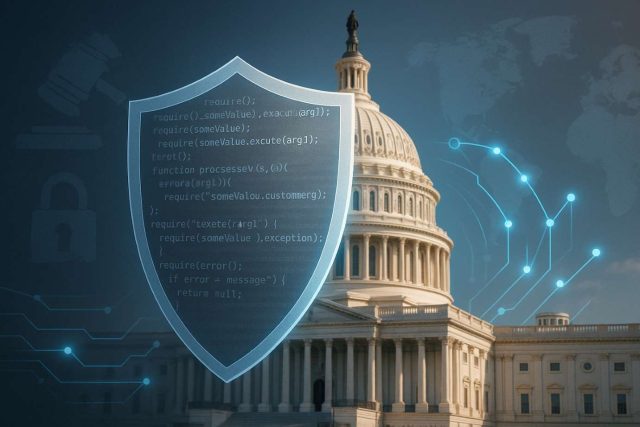
U.S. Capitol with a translucent code shield and subtle circuitry, illustrating the Senate crypto bill debate over developer protections and U.S. innovation.

A coalition of more than 100 crypto firms, including Uniswap, a16z, Coinbase, and the DeFi Education Fund, has issued a stark warning to the U.S. Senate. They argue that without clear DeFi developer protections, America risks losing its leadership in blockchain innovation. The demand comes as lawmakers debate a sweeping Senate crypto bill. Industry leaders insist that unless safeguards are written into law, developers will either stop building or move their work overseas.

Why Developer Protections Are on the Line

The urgency stems from the recent Tornado Cash conviction of Roman Storm. A federal jury found him guilty of operating an unlicensed money-transmitting business, though he was acquitted of sanctions violations. The case has alarmed the crypto community. It set a precedent suggesting that open-source coders can be held liable for how their software is misused. If that interpretation holds, no DeFi developers in the United States are safe.

For the industry, blockchain developer protections are more than a request. They are essential to ensure that writing code is not criminalized.

Crypto Industry Coalition Pushes Back

The crypto industry coalition that signed the letter to Senate leadership represents some of the sector’s most influential players. Their message is unified: the market structure bill must include explicit safeguards for open-source work.

Industry advocates point to the Clarity Act, introduced earlier in the House, as a blueprint for reform. The bill would ensure that open-source developers’ liability is limited when their code is used by bad actors. According to the coalition, these measures are critical if the U.S. is to maintain its role as a hub for crypto innovation.

Senate Crypto Bill Faces Resistance

Despite the pressure campaign, resistance in the Senate remains strong. Key lawmakers, including Sen. Mark Warner, argue that broad exemptions would weaken anti-money laundering enforcement. Warner has also warned that exemptions could create new national security risks. He has emphasized that DeFi platforms must face the same crypto regulation obligations as traditional financial institutions.

This debate captures the political tension at the heart of the issue. Should the U.S. prioritize developer protections to safeguard blockchain innovation, or tighten oversight to prevent illicit finance?

What’s at Stake for U.S. Blockchain Innovation

For the coalition, the stakes are clear. If Congress fails to act, the U.S. risks pushing crypto lobbying efforts, talent, and capital to Europe or Asia. Both regions are already building more permissive frameworks.

Some firms warn that without DeFi developer protections, America will not just lose coders. It could also lose startups, venture funding, and entire networks of US crypto innovation.

Conclusion – A Red Line for the Industry

As negotiations over the Senate crypto bill continue, the industry’s position has hardened. Developer protections are being drawn as a red line. More than 100 firms have pledged to fight for them until the final draft.

Whether Congress listens will determine if the U.S. remains at the forefront of decentralized finance or if the next wave of DeFi developers chooses to build elsewhere.

Readers’ frequently asked questions

What would “developer protections” actually cover, and what would they not cover?

They are intended to clarify that writing and publishing open-source code (or maintaining non-custodial, permissionless protocols without control over user funds) does not, by itself, make a developer a money transmitter or financial intermediary. They would not shield anyone who takes custody of user assets, sets transaction terms, or operates a centralized service with control over funds or users.

Would these protections exempt DeFi front-ends, validators, sequencers, or relayers from AML/KYC rules?

No. If an entity operates a service that exerts meaningful control, such as custody, fee setting, user onboarding, order-flow/MEV decisions, or compliance gating, existing AML/KYC and other financial services obligations can still apply. The requested carve-outs target code authorship, not the ongoing operation of financial services.

Does anything change for developers today, and how can teams reduce risk while Congress debates?

Nothing changes until legislation passes; current enforcement and case law still apply. To reduce risk, meanwhile, avoid custody and direct control over user funds, keep protocol operations as non-custodial as possible, separate code publication from any financial operations, document governance processes, and obtain specialized legal counsel before launching interfaces or revenue-sharing mechanisms. If you run a front-end or operations entity, assume applicable compliance duties remain in force.

What Is In It For You? Action items you might want to consider

Make sure you can still reach your crypto if an app changes

Keep accounts on two well-known, licensed exchanges you trust and complete KYC on both, so you always have a fallback. Back up your wallet’s recovery phrase on paper and store it offline (no screenshots). Do a small test withdrawal now to practice the steps before any news-driven rush.

Set basic alerts so headlines don’t blindside you

Create simple news or price alerts for terms like developer protections, Senate crypto bill, Tornado Cash, and Mark Warner. Follow a few reliable sources—your exchange’s status page and one major crypto news site are enough. When alerts hit, re-check your positions and consider dialing down leverage if volatility jumps.

Use safer day-to-day habits

Prefer established apps and exchanges until there’s more clarity. Turn on app-based 2FA, keep devices updated, and avoid links from DMs or pop-ups. Before using any app, ask yourself: Do I hold a recovery phrase? If not, it’s probably custodial—understand the trade-offs.

Trump Media Crypto.com Deal: $6.42B Digital Asset Treasury Launch Sends CRO Surging

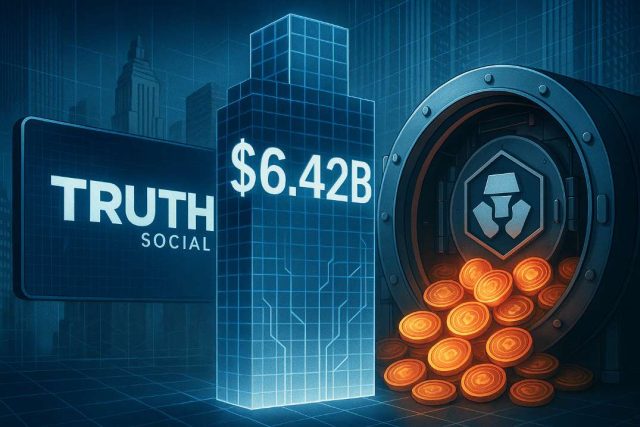
Editorial illustration of the Trump Media Crypto.com deal showing a digital asset treasury vault filled with CRO tokens, symbolizing the $6.42B partnership and Cronos institutional adoption.

Trump Media & Technology Group (TMTG), the parent of Truth Social, has announced $6.42 billion partnership deal with Crypto.com to create a new digital asset treasury. The two companies will form what they describe as the world’s largest publicly traded CRO treasury company, with Yorkville Advisors backing the structure.

The market reacted immediately. CRO token prices jumped more than 20% after the news.

The move raises questions about TMTG’s business case. Despite trading at a multi-billion-dollar market cap, the company has generated limited revenues from Truth Social. The pivot into crypto finance may be an attempt to justify a valuation that digital media alone has struggled to sustain.

Inside the Trump Media Crypto.com Deal

Trump Media and Crypto.com will channel a mix of equity commitments, cash, and token allocations into the new venture. Reports suggest about $1 billion in CRO will be part of the reserves, alongside warrants and a multi-billion equity line. Yorkville Acquisition Corp, already familiar with Trump-linked financing, will help structure the inflows.

The company is pitched not just as a balance sheet move but as a corporate-scale crypto treasury. It will manage reserves, provide liquidity, and position CRO as a platform token for Truth Social. That would make Trump Media one of the first U.S.-listed firms to operate a crypto-native treasury system of this size.

Why Trump Media Needs a New Narrative

TMTG’s challenge is clear. Truth Social has not delivered revenues strong enough to support its high valuation. Analysts warn that, as a standalone media platform, it is unlikely to close that gap.

The Trump Media Crypto.com deal is designed to provide a new growth narrative. The company wants investors to see it as a hybrid of media and digital finance instead of judging it only on user numbers and ad revenue. The alignment also fits President Donald Trump’s pro-crypto policy stance, which has become a key part of his political platform.

What Happens to the CRO Tokens

A key question is how the Trump Media Crypto.com venture will actually deploy its CRO holdings. Unlike retail investors who simply buy and hold, a treasury operation has several options:

  • Reserves: CRO can back the firm’s digital asset reserves.
  • Liquidity: As the native token of Cronos, CRO can be used to supply liquidity across applications.
  • Staking: CRO can be staked to earn yield, creating a recurring revenue stream.
  • Integration: By making CRO a Truth Social platform token, user activity could tie directly into the Cronos ecosystem.

These functions support the Cronos 2025 roadmap, which targets institutional adoption. But without transparency, critics may see the move as financial engineering designed to boost CRO’s price.

The Risk-Reward Equation

For Trump Media, the upside is diversification. For Crypto.com, it means visibility in the U.S. and a chance to show Cronos as a tool for institutional finance.

But the risks are substantial:

  • Financial exposure: Concentrating billions in CRO adds volatility risk.
  • Reputation: Tying itself to Trump Media may hurt Crypto.com’s image, even though U.S. regulators have recently taken a friendlier stance.
  • Execution: Running a crypto treasury at this scale requires regulatory clarity, transparent reporting, and careful handling of lock-up periods tied to token allocations.

Some observers already frame the partnership as less about corporate finance and more as a political crypto strategy connected to Trump’s wider ambitions.

Market and Industry Response

Crypto traders welcomed the news, sending CRO higher and driving volumes across exchanges. Analysts, however, were cautious. While price action was strong, they warned that the long-term fundamentals remain uncertain.

Commentators drew parallels with corporate treasury experiments like MicroStrategy’s Bitcoin play. Yet they stressed that this combination, a SPAC-listed media firm under ticker MCGA and a global crypto exchange, is unlike anything seen before.

The Trump Media Crypto.com deal is a bold experiment at the intersection of politics, media, and finance. For Trump Media, it offers a chance to justify its valuation with a new line of business. Crypto.com gets a showcase for Cronos’ institutional ambitions, though with political baggage attached.

For investors, the Trump Media Crypto.com deal may become a test case for how Cronos institutional adoption develops. The venture could evolve into a genuine crypto treasury services provider. Or we may, one day, remember it as an ambitious attempt to prop up a token’s value. The key test will be how transparently the firm manages its CRO reserves in the months ahead.

Readers’ frequently asked questions

What exactly is a digital asset treasury company?

A digital asset treasury company manages cryptocurrency holdings much like a traditional corporate treasury manages cash, bonds, or foreign exchange reserves. Instead of simply holding tokens on a balance sheet, it oversees how those assets are allocated, secured, and potentially monetized. This can include providing liquidity to markets, staking tokens to generate yield, and maintaining reserves to back operations or future financing needs. In the case of Trump Media and Crypto.com, the aim is to formalize CRO and other assets into a structured, publicly traded vehicle. Investors can then evaluate this company alongside more traditional corporate treasuries.

What role does Yorkville Advisors play in the deal?

Yorkville Advisors is not just a financial backer but a structural partner in this deal. The firm specializes in structured financing for public companies. It is not the first time that Yorkville involves itself in transactions tied to Trump Media. In this case, Yorkville is expected to provide cash injections, manage the equity line, and oversee the warrants that make up part of the $6.42 billion financing package. Their role is critical because it ensures liquidity and capital availability. At the same time, it also gives the treasury firm a degree of flexibility in how it raises or deploys funds. Without Yorkville’s participation, it would be much harder for Trump Media to transform a token-based partnership into a structured, multi-billion-dollar corporate initiative.

Is this the first time a U.S.-listed company has built a crypto treasury of this scale?

Yes. While other firms like MicroStrategy have acquired billions of dollars’ worth of Bitcoin, those were balance-sheet investments rather than purpose-built treasury structures. The Trump Media Crypto.com partnership is unique because it creates a stand-alone, corporate-grade treasury entity tied directly to a publicly traded company’s stock (NASDAQ: DJT). This makes it the first publicly traded CRO treasury at such a scale. Furthermore, it ties the performance of a media company, a global crypto exchange, and a blockchain token together in one venture. For investors, this represents both an unprecedented opportunity and an unprecedented risk, since the model has no direct historical parallel in U.S. capital markets.

What Is In It For You? Action items you might want to consider

Track how the CRO treasury is structured and disclosed

Investors should watch for detailed filings on how much of the $6.42 billion is actually held in CRO versus other assets. Transparency will signal whether this is a sustainable treasury model or simply a market-moving headline.

Monitor regulatory signals around political crypto ventures

The partnership ties a U.S.-listed company to a volatile token and a polarizing political figure. Traders should keep an eye on whether regulators respond with new guidance on tokenized treasuries or politically linked crypto finance.

Evaluate CRO’s role in Truth Social’s ecosystem

If CRO becomes integrated as a platform token for Truth Social, it could drive new demand and user adoption. But it also concentrates risk. Watching for product rollouts and user incentives tied to CRO will help gauge whether this is more than a balance-sheet strategy.

$620M in Token Unlocks: Sui, Jupiter, and Optimism Lead This Week’s Wave

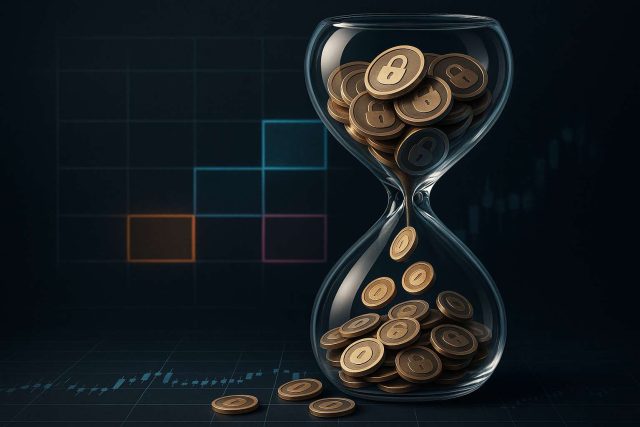
Glass hourglass pouring tokens onto a market grid with three late-August dates highlighted—editorial visual of this week’s $620M token unlocks (Sui, Jupiter, Optimism).

The final week of August is shaping up to be a busy one for the crypto markets. More than $620M in token unlocks will take place between 25 and 31 August 2025. Major events include cliff unlocks from Sui, Jupiter, Optimism, and Kamino, alongside continuous releases from Solana, Worldcoin, Dogecoin, and other projects. Token release schedules are pre-set and widely tracked. Still, traders are bracing for potential crypto market volatility as circulating supplies expand.

Sui Token Unlock Adds $159M to Circulating Supply

The largest event of the week comes from Sui, with 44 million tokens worth around $159 million scheduled for release. Much of the allocation stems from early investor vesting schedules and team distributions. Supporters see the unlock as a step toward deeper liquidity and long-term growth. Skeptics, however, warn of near-term sell pressure if newly released tokens reach the market quickly.

Jupiter Token Unlock on 28 August

Jupiter (JUP), a leading Solana-based DEX aggregator, will release 53.47 million tokens on 28 August, valued at roughly $27 million. This cliff unlock represents about 1.8% of its supply and is expected to increase available liquidity within the Solana ecosystem. Market watchers will be closely monitoring whether the added supply causes a short-term dip or merely smooths out trading activity.

Optimism Token Unlock Scheduled for 31 August

The Ethereum Layer 2 project Optimism will see a release of 31.3 million tokens, worth around $24 million, on 31 August. Allocations are earmarked for governance, investors, and ecosystem development. As one of the most closely followed Layer 2 tokens, the Optimism token unlock could serve as a barometer. Traders will be watching to see how markets digest increased supply in a project with a large, active community.

Kamino Token Unlock Adds $14M to Supply on 30 August

Another notable event is the Kamino token unlock on 30 August, which will release 229 million tokens—valued at around $14 million. This represents a significant 6–7% increase in supply. Given Kamino’s smaller market capitalization, traders expect sharper price swings compared to more liquid projects. This unlock is one of the largest relative supply increases of the week.

Other Notable Altcoin Unlocks

Several mid-tier projects, including Huma Finance (HUMA), Venom (VENOM), Sophon (SOPH), AltLayer (ALT), Sahara AI (SAHARA), and Renzo (REZ), will also release tokens this week, each in the $6–10 million range. While smaller in absolute value, these events can create outsized effects in low-liquidity environments. For niche traders, they remain important to track.

Continuous Linear Unlocks: Solana and More

Beyond cliff events, several major projects are undergoing linear unlocks that steadily add to supply throughout the week. The most significant is the Solana token unlock, which will add about $102 million worth of tokens in gradual increments. Other projects, including Worldcoin, Dogecoin, TAO, Polkadot, AVAX, TIA, ENS, ETHFI, and JTO, will each see daily releases worth over $1 million. These steady unlocks tend to have a softer market impact. Combined with cliff unlocks, however, they add meaningful liquidity to the market.

Market Impact: Sell Pressure or Opportunity?

In total, this week’s altcoin unlocks will push more than $620M in token unlocks into circulation. Historically, such events have produced mixed outcomes. On the bearish side, sudden supply increases can trigger sell pressure in crypto markets, especially for tokens with smaller trading volumes. On the other hand, since unlocks are pre-scheduled and widely anticipated, much of the impact may already be priced in. In some cases, added liquidity can even attract new participants. The scale of this week’s releases makes it a critical test of market resilience.

What Traders Should Watch

Key dates to monitor are 28 August (Jupiter), 30 August (Kamino), and 31 August (Optimism). Cliff unlocks on those days may cause sharper market moves. Traders should also keep an eye on Sui’s $159M release, the largest of the week, and the continuous drip from the Solana token unlock. Volume spikes, order book depth, and sentiment around these unlocks will likely determine whether the events prove bearish or benign.

The last week of August brings a packed token unlock calendar, headlined by Sui, Jupiter, Optimism, and Kamino, alongside steady releases from Solana and other altcoins. While these crypto token unlocks present risks of short-term volatility, they also create opportunities for traders looking to capitalize on liquidity shifts. Whether they drive markets lower or simply strengthen trading activity, this week’s unlocks will be a decisive factor shaping sentiment as August closes.

Readers’ frequently asked questions

What’s the difference between “cliff” and “linear” unlocks?

Cliff unlocks release a lump sum at a single moment (e.g., Sui, Jupiter, Optimism, Kamino this week). Linear unlocks drip tokens gradually over a period (e.g., Solana and others), which tends to smooth market impact. Both raise the circulating supply; cliffs often concentrate short-term volatility around the event time.

Do unlocks always make prices fall?

No. Reactions depend on liquidity, how concentrated recipients are, broader market conditions, and whether the event was already priced in. Some unlocks coincide with dips; others pass quietly or even deepen market liquidity. Watch order-book depth, volumes, and funding rates around the schedule.

Who receives the unlocked tokens, and can they sell them immediately?

Recipients typically include teams, early investors, treasuries, and incentive programs. Some allocations require claim transactions or follow internal/treasury policies or OTC arrangements. Retail holders don’t receive these unless they’re part of public incentive distributions. Selling depends on recipient’s discretion and any applicable restrictions.

What Is In It For You? Action items you might want to consider

Set event-driven alerts and trade plans

Create a calendar and price alerts for JUP (Aug 28), KMNO (Aug 30), and OP (Aug 31), and flag the larger SUI release. Define your entry/exit levels, invalidation, and position sizes before the unlock window. Monitor the 1–2 hours into the event and the 24 hours after for volatility spikes.

Track on-chain and exchange inflows

Watch labeled team/treasury wallets and known investor addresses for transfers into exchanges around the altcoin unlocks. Rising exchange deposits and funding-rate flips often precede short-term sell pressure. If inflows jump, tighten risk (reduce leverage, narrow targets) or wait for confirmation before entries.

Manage liquidity risk and hedge exposure

For thinner markets (e.g., KMNO), use limit orders, wider slippage tolerances with care, and smaller clips. Consider short-dated hedges (options or perps) into the event if you must hold spot. Prefer TWAP/DCA for entries on bigger names (SUI, OP, JUP) and set hard stops to avoid cascading moves.

AUSTRAC Orders Binance Audit Amid Global Scrutiny of AML Compliance

Editorial illustration of Binance headquarters under an AUSTRAC audit, with a magnifying glass featuring the AUSTRAC seal highlighting compliance checks and AML oversight.

Australia’s financial crime regulator, AUSTRAC, has ordered an audit of Binance. It directed the exchange’s local arm to appoint an independent external auditor. The decision stems from “serious concerns,” and AUSTRAC’s Binance audit will test anti-money laundering (AML) and counter-terrorism financing (CTF) systems.

AUSTRAC’s Order Explained

The regulator said the audit will focus on the adequacy of Binance’s systems for transaction monitoring, customer due diligence, and overall risk management. Such orders are rare and reflect the seriousness of the Australian authorities’ concerns over Binance’s AML protocols.

Under the directive, AUSTRAC must approve the external auditor that Binance selects. Findings will be delivered directly to the regulator. The process will show whether Binance Australia complies with the standards required to operate in the country’s financial ecosystem.

Binance’s Response

In a statement, Binance said it acknowledges AUSTRAC’s order and will cooperate fully with the audit. The exchange reiterated its public commitment to transparency and compliance, saying it continues to strengthen internal systems to meet regulatory expectations. Binance has stressed that maintaining compliance in Australia is a priority as the industry adapts to tougher oversight.

Global Regulatory Scrutiny Intensifies

The move from Australia comes as part of a broader wave of regulatory scrutiny worldwide. Authorities in the United States, the United Kingdom, and the European Union have launched investigations into Binance or imposed restrictions on the exchange in recent years. They often cited similar gaps in compliance practices.

This latest step highlights how AUSTRAC’s crypto regulation is aligning with international standards. For regulators, ensuring stronger oversight of exchanges has become a key strategy in curbing risks of illicit finance. For Binance, the AML investigation in Australia adds another challenge to an already crowded global compliance agenda.

Industry and Market Implications

Analysts say AUSTRAC’s action sends a clear message: Australia is unwilling to tolerate weaknesses in AML frameworks, especially as crypto laundering cases in Australia continue to draw political and regulatory attention.

The Binance directive may also pressure competitors to review their own systems. Tighter crypto exchange compliance could become a new industry norm, as exchanges anticipate similar demands from regulators.

What Comes Next

The independent auditor will submit the report directly to AUSTRAC, with findings expected to inform the regulator’s next steps. If the process uncovers significant shortcomings, Binance could face fines, restrictions, or even risk to its local operating permissions.

The results of the Binance audit are likely to reverberate beyond Australia, influencing how other regulators approach the exchange. For AUSTRAC, the Binance case represents both a domestic compliance test and part of the larger global trend of heightened oversight.

AUSTRAC’s decision to force an independent audit underscores the regulator’s zero-tolerance stance toward weak AML controls. For Binance, already under international pressure, the review represents another pivotal moment. Whether the exchange can prove its compliance in Australia will determine not only its future in the Australian market but also how global regulators perceive its efforts to meet rising standards in crypto exchange compliance.

Readers’ frequently asked questions

How long does an AUSTRAC-ordered audit usually take?

While timelines vary, AUSTRAC directions generally require reports to be delivered within 180 days of the order.

Will Binance users in Australia be affected?

No immediate changes have been announced for users. Trading and withdrawals remain available throughout the audit period and AUSTRAC has not ordered service suspensions.

Does AUSTRAC publish the audit findings?

No, AUSTRAC does not typically release full audit reports publicly. However, the regulator may issue updates or further directions if compliance issues are confirmed.

What Is In It For You? Action items you might want to consider

Monitor the outcome of AUSTRAC’s Binance audit

Traders and investors should follow updates from AUSTRAC closely, as the findings may influence Binance’s ability to operate in Australia and affect market confidence.

Review exchange compliance before choosing platforms

Given the growing emphasis on anti-money laundering oversight, users may want to prioritize exchanges with strong, transparent compliance records when managing their crypto holdings.

Track regulatory signals across global markets

AUSTRAC’s move reflects a broader international trend of stricter oversight. Market participants should watch how regulators in other jurisdictions respond, as it could shape global trading conditions.

- Advertisement -

FEATURED