Home Blog Page 91

Kanye West’s YZY Token Crash: $3B Hype Ends in Pain for Retail Investors

Editorial illustration of Kanye West’s YZY token crash showing a cracked YZY coin falling apart, a price chart plunging after a $3B spike, glowing wallets symbolizing insider profits, and shadowy retail investors left empty-handed.

When Kanye West launched his YZY token on Solana, the hype was instant, but so was the crash. Within minutes, the new coin’s market cap ballooned to nearly $3 billion. Kanye’s celebrity influence in crypto and the broader meme coin frenzy on Solana fueled the surge. But only hours later, the token collapsed by more than 90%. A small cluster of wallets extracted more than $24 million in profits, fueling accusations that the launch followed a pump-and-dump pattern.

The Pump: Celebrity Hype and Meme Coin Mania

Kanye West’s name alone was enough to ignite a stampede of speculative buying. On Solana, where meme coins have exploded in popularity, traders rushed in hoping to replicate the success of Dogecoin or PEPE. The YZY coin quickly became one of the most talked-about launches of the year. But it had no clear fundamentals or roadmap.

This wasn’t the first time celebrity crypto coins generated short-lived excitement. From Floyd Mayweather’s ICO endorsements to Kim Kardashian’s token promotions, hype has often driven temporary surges. With YZY, the hype reached new levels, but there was no stability to support lasting growth.

The Dump: Insider Profits and the Rapid Crash

Behind the scenes, blockchain sleuths uncovered a very different story. Around 12 to 13 wallets accumulated large positions before the peak. They sold into the frenzy as new buyers piled in. These insiders collectively took away more than $24 million. Meanwhile, the price of the YZY token collapsed by over 90% in hours.

For many observers, this resembled a textbook crypto pump-and-dump. Blockchain investigators even linked some of the activity to sniping bots targeting the YZY token on Solana. Whether Kanye’s team was directly involved or not, the outcome was the same. Insiders profited, while ordinary buyers were left holding depreciated tokens.

Impact on Retail Investors

Thousands of retail investors, many of them Kanye fans, bought at inflated prices. Instead, they ended up victims of a classic cycle: insiders dumped early, and latecomers held the bag. This left Kanye West YZY token investors with steep losses.

The fallout shows how dangerous it is to chase celebrity-backed crypto. Meme coins often rely solely on hype for value. When that hype fades, or when insiders cash out, retail investors are left exposed.

The Risks of Celebrity-Backed Crypto

The YZY token crash is part of a wider pattern. Risks tied to celebrity-backed crypto have become a recurring theme. From music stars to athletes, many promoted projects that later collapsed. This has fueled accusations of misleading promotion and growing regulatory concern.

In the case of YZY, the rapid rise and fall underscore the dangers of treating celebrity status as a substitute for legitimacy. Regulators have already warned that celebrity crypto coins can mislead ordinary investors, especially when projects lack transparency about token allocation or insider holdings.

Lessons for Investors

  • Treat hype-driven launches with extreme caution, especially when tied to celebrities.
  • Watch for insider trading in crypto on-chain, as concentrated wallets often spell danger.
  • Remember that meme coins and celebrity-backed crypto are among the riskiest bets in the market.

The YZY token crash was more than a headline-making stunt. It was a case study in how quickly meme coin crashes unfold. The sequence was familiar: a celebrity name fueled the pump, insiders executed the dump, and retail investors took the losses. Whether Kanye West was directly involved or not, the damage is real. The incident reinforces why caution is essential in a market where hype can eclipse fundamentals overnight.

Readers’ frequently asked questions

Was the YZY token officially launched by Kanye West himself?

Yes. Unlike fake Kanye coins that circulated earlier, the YZY token was promoted as an official launch tied to his Yeezy brand. However, it remains unclear how directly involved Kanye was in the trading and token allocation.

What role did “sniping bots” play in the YZY crash?

Sniping bots are automated trading programs that buy tokens the moment liquidity is added to a pool, often before regular users can react. In the YZY case, blockchain analysis suggests bots and insiders were able to secure large allocations early, making it easier to dump into retail demand.

Can investors recover their money after a token crash like this?

In most cases, no. Losses from pump-and-dump style crashes are final unless regulators step in, which is rare in decentralized meme coin launches. Investors may only learn from the event and watch for red flags in future projects.

What Is In It For You? Action items you might want to consider

Be cautious with celebrity-backed tokens

Celebrity endorsement doesn’t guarantee legitimacy. Before buying into hype-driven projects like YZY, research whether the token has real utility or is purely speculative.

Learn how trading bots and insiders operate

Understanding tools like sniping bots can help you recognize when a launch may be skewed in favor of insiders. If wallets accumulate large positions instantly, it’s usually a red flag.

Set limits to manage your risk

If you choose to trade meme coins, never commit more than you can afford to lose. Use stop-loss tools and exit strategies to avoid being trapped in sudden crashes.

Tariffs Push U.S. Bitcoin Mining Into Survival Mode Amid Global Supply Chain Shakeup

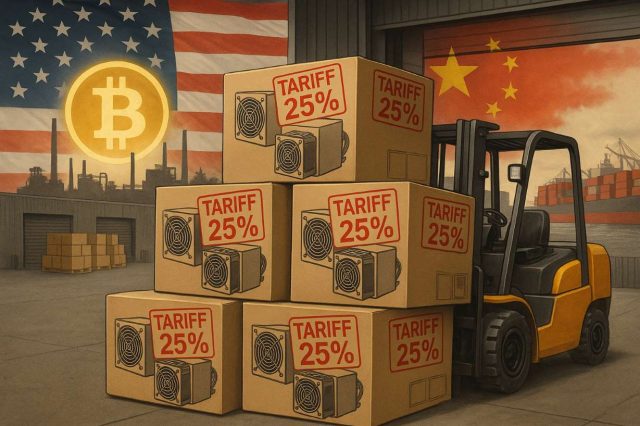
Photo-realistic editorial illustration. Boxed Bitcoin mining rigs with “Tariff 25%” customs tags at a port, forklift moving equipment, U.S. and Chinese flags in the background with a glowing Bitcoin symbol.

Trump’s new tariffs on Chinese-made Bitcoin mining rigs have sent shockwaves through the industry. With duties now exceeding 20%, the cost of importing rigs has surged, forcing U.S. Bitcoin miners into a high-stakes scramble. Emergency shipments, rushed orders, and spiraling expenses are reshaping the landscape. For some, the tariffs may prove fatal; for others, they mark an opportunity to consolidate power. Globally, the trade war has exposed just how dependent Bitcoin mining remains on Asian supply chains.

Rising Costs and Industry Strain

The new tariffs directly target imported mining rigs, pushing up equipment prices and squeezing already thin margins. Bitcoin mining costs have risen sharply, with smaller operators warning that profitability is slipping out of reach. For U.S. Bitcoin miners operating on older-generation hardware, the economics are especially dire.

Despite Bitcoin’s hashrate hitting record highs, the economics of mining in the U.S. are becoming increasingly difficult. Miners now face higher import duties, rising electricity bills, and intense competition, leaving little room for error. For some, replacing outdated Bitcoin mining rigs has become prohibitively expensive due to Trump’s tariffs, locking them out of the next cycle of growth.

Survival of the Biggest: Winners and Losers

In this environment, scale is everything. Large, well-capitalized firms are seizing the moment to expand. American Bitcoin, Bitdeer, and Riot Platforms have all announced multimillion-dollar rig purchases, securing thousands of new ASIC machines despite the tariffs and rising mining costs. Some deals run into the billions, underlining the confidence of firms with deep pockets.

For smaller miners, the picture is far less optimistic. Many lack access to the financing needed to absorb tariff-driven cost hikes. Some have already paused expansion plans, while others warn of looming shutdowns if margins remain under pressure. The result is clear: tariffs are accelerating industry consolidation, ensuring that the biggest players thrive while weaker competitors are squeezed out. For U.S. Bitcoin miners without institutional backing, the survival odds are shrinking by the month.

Global Chess Move: Supply Chains Under Pressure

The tariff shock has also highlighted a deeper truth: the U.S. mining industry depends heavily on Asian manufacturing. The most critical components of a Bitcoin mining rig — ASIC chips, printed circuit boards, and power systems — are overwhelmingly produced in Taiwan, South Korea, and China.

In response, manufacturers like Bitmain and Bitdeer are setting up U.S.-based facilities, aiming to assemble mining rigs domestically and bypass tariffs. But these factories will not make the silicon itself. At best, they will serve as assembly hubs, fed by a stream of imported components. Bitmain’s first U.S. factory is expected to begin operations in 2026, but until then, “Made in America” rigs will still rely on foreign chips. Even if more U.S. chip manufacturing capacity comes online, full independence from Asia remains unlikely in the near term.

Geopolitical Stakes

For Washington, the tariffs are part of a broader U.S.–China trade war. By raising barriers on imported rigs, the administration hopes to reduce America’s dependence on Chinese technology and encourage local production. But the reality is more complex. ASIC fabrication remains concentrated in Asia, and U.S. supply chains cannot yet replicate this expertise.

Meanwhile, the global Bitcoin network continues to grow. Other regions with cheaper electricity and fewer trade frictions may capture a larger share of the hashrate if U.S. miners falter. In that sense, Trump’s Bitcoin tariffs are more than just an economic policy — they are a geopolitical chess move with uncertain outcomes.

Outlook: A Fragile Balance

In the short term, U.S. miners face rising operational liabilities, bidding wars for rigs, and difficult financing conditions. For many operators, rising Bitcoin mining costs may determine whether they can survive the next halving cycle.

Over the medium term, large firms may emerge stronger, reshaping the mining landscape through consolidation. In the longer term, the question is whether the U.S. can realistically build a domestic supply chain that reduces reliance on Asia. Even if U.S. Bitcoin miners gain access to cheaper financing and better electricity contracts, they cannot escape the fact that most Bitcoin mining rigs are still manufactured abroad and subject to tariffs.

The answer is far from clear. Until the U.S. can fabricate advanced chips domestically, complete independence will remain out of reach. The tariffs may succeed in reshaping the Bitcoin mining industry, but they also risk weakening U.S. competitiveness on the global stage.

Trump’s tariffs on Bitcoin mining equipment are both a shock and a gamble. They have raised costs, exposed vulnerabilities, and forced miners to adapt under pressure. Larger companies see opportunity, while smaller ones face extinction. Globally, the measures highlight America’s limited leverage in the supply chains that underpin Bitcoin itself. For U.S. Bitcoin miners, the future will depend not only on energy prices and equipment upgrades but also on how well the country can build resilience into its own production base. The outcome will determine whether tariffs make U.S. Bitcoin mining stronger — or leave it on the sidelines of the global network.

Readers’ frequently asked questions

Do the tariffs apply only to fully assembled Bitcoin mining rigs, or also to imported parts?

The tariffs cover both finished rigs and numerous key components, including ASIC boards and power supplies. This means even miners relying on U.S. assembly plants could still face higher costs if critical parts are imported.

When will U.S.-based factories like Bitmain’s or Bitdeer’s actually start producing rigs?

Bitmain has announced plans to begin assembly in the U.S. in 2026, while Bitdeer has already expanded smaller-scale operations. Until these facilities reach full capacity, most rigs or their core components will still come from Asia.

How could these tariffs affect hosting fees for U.S. miners?

Hosting providers often pass on equipment and operational costs to their clients. As tariffs raise the cost of mining rigs, U.S.-based hosting contracts could also become more expensive, impacting smaller Bitcoin miners who lease capacity instead of owning facilities outright.

What Is In It For You? Action items you might want to consider

Monitor shifts in mining rig pricing and hosting contracts

If you’re investing in or operating mining equipment, keep track of how tariffs affect both hardware prices and hosting fees. This can help you decide whether to buy rigs now, wait for U.S.-made units, or adjust your hosting strategy.

Evaluate the financial health of U.S. mining firms

Smaller miners may struggle under rising costs, while larger operators could strengthen their position. Traders and investors should review balance sheets and expansion plans to gauge which firms might emerge stronger from the tariff era.

Track U.S. manufacturing developments

Follow announcements from Bitmain, Bitdeer, and other manufacturers building facilities in the U.S. The timeline of when these plants begin production will be crucial in determining when, or if, the U.S. can reduce dependence on Asian supply chains.

Kyrgyzstan Protests UK Sanctions on $9.3B Crypto Network Tied to Russia, Appeals to Trump and Starmer

Photo-realistic editorial illustration showing a split between London and Bishkek, with UK and Kyrgyz flags, sanction documents, and a broken blockchain chain of ruble symbols representing the $9.3B crypto network targeted by UK sanctions.

The government of Kyrgyzstan has condemned the UK’s latest crypto sanctions, targeting its Capital Bank and several affiliated digital asset companies, accused of helping Russia bypass financial restrictions. At the center of the allegations is a $9.3B crypto network. British officials say it facilitated payments through ruble-pegged stablecoins and other blockchain channels.

Kyrgyz President Sadyr Japarov denounced the measures as unjust. He argued they punish the country’s fragile banking system rather than combat illicit flows. He has formally appealed to both U.S. President Donald Trump and UK Prime Minister Keir Starmer, urging them to reconsider the Kyrgyzstan sanctions that have escalated diplomatic tensions.

Why the UK Imposed Sanctions

The UK Treasury announced the designations this week. It stated that Capital Bank sanctions and the blacklisting of associated crypto firms are intended to disrupt financial pipelines used to evade sanctions on Russia.

According to the British government, the targeted entities enabled transactions for sanctioned Russian businesses. They provided ruble liquidity through blockchain-based payment systems.

One focal point is the role of ruble-pegged stablecoins, which allegedly served as digital instruments for cross-border settlements between Russia and its trading partners. By operating outside of conventional banking, these tokens provided Moscow with alternative financial rails. Western sanctions have largely cut off its access to global markets.

UK officials framed the action as part of a wider campaign against sanctions evasion networks operating out of Kyrgyzstan. They warned that crypto infrastructure is becoming a preferred tool for Russian entities.

Kyrgyzstan Pushes Back

President Japarov has sharply criticized the sanctions, portraying them as an attack on Kyrgyz sovereignty. In his statement, the Kyrgyz President Sadyr Japarov insisted that local financial institutions operate independently. He argued they should not be held responsible for geopolitical disputes.

Framing the measures as discriminatory, he argued that the sanctions imposed by the U.S. and UK on Kyrgyzstan risk destabilizing the domestic economy. He also warned that they undermine regional cooperation. The government has said that cutting off Capital Bank’s international access will ripple across Kyrgyz businesses and households who depend on cross-border transactions.

Officials in Bishkek also stressed that the Capital Bank sanctions could undermine confidence in the financial system. They warned that this may push more activity into informal markets.

Inside the $9.3B Crypto Network

The alleged $9.3B crypto network at the center of the dispute illustrates how blockchain tools have become critical to financial flows between Russia and its allies. Investigators claim Kyrgyz exchanges and fintech startups provided liquidity services for ruble settlements. These services supported cross-border trade despite Western restrictions.

Stablecoins pegged to the Russian ruble played a central role. They enabled instant transfers outside the SWIFT system. This mechanism allowed sanctioned Russian firms to maintain trade links while avoiding detection.

Analysts also point to Russia’s use of cryptocurrencies for money laundering, converting digital assets into fiat to hide the origins of funds before they enter traditional banking channels. British regulators described these platforms as core elements of efforts to evade sanctions on Russia. They said this was why the UK’s crypto sanctions had to extend beyond Russia’s borders.

Broader Implications for Central Asia

The sanctions raise difficult questions for the region. On one hand, the West argues that the Capital Bank sanctions and broader designations are necessary to close loopholes in the global financial system. On the other hand, Kyrgyz leaders contend that these restrictions could destabilize their banking sector. They warn that it may also push more activity into the shadows.

For Russia, the episode demonstrates the growing reliance on digital assets to sustain trade under economic isolation. For Kyrgyzstan, analysts note that the restrictions may accelerate local adoption of cryptocurrencies. Businesses and individuals are already seeking workarounds.

This paradox shows the double effect of Western sanctions in Central Asia. They weaken formal institutions but also strengthen the appeal of decentralized finance.

Observers say the sanctions on Kyrgyzstan could serve as a precedent for future measures against other Central Asian states. They argue it signals a shift in Western enforcement strategies.

The Geopolitics of Sanctions and Crypto

The clash between Kyrgyz authorities and Western governments highlights two competing narratives. From London and Washington, the UK crypto sanctions represent a decisive move to prevent Russia from evading sanctions via digital assets. From Bishkek, they are seen as an overreach that punishes a small economy caught in the crossfire of great power politics.

Whether the measures will meaningfully curb Russia’s financial channels remains to be seen. But the dispute has already exposed a new front in global sanctions enforcement; one where banks, stablecoins, and blockchain rails converge. For Kyrgyzstan, the outcome may shape not only its diplomatic standing but also the future trajectory of its financial sector.

Readers’ frequently asked questions

Which Kyrgyz banks and crypto companies are directly affected by the sanctions?

The UK specifically sanctioned Capital Bank, which is majority-owned by Kyrgyz state interests, along with several Kyrgyz crypto firms tied to cross-border payment processing. According to official releases, these companies allegedly operated settlement services and stablecoin platforms that provided ruble liquidity to sanctioned Russian businesses. This means both traditional banking and blockchain firms in Kyrgyzstan are now restricted from accessing UK-linked financial channels.

How exactly do ruble-pegged stablecoins help Russia bypass sanctions?

Ruble-pegged stablecoins mirror the value of the Russian ruble on blockchain networks. Instead of going through the SWIFT system, Russian businesses can transfer these tokens directly to trading partners, who then convert them back into local currency. Because the transfers happen peer-to-peer and outside traditional banks, regulators have fewer points of control to block or monitor them. This mechanism makes it possible to move large sums internationally while sidestepping restrictions on Russia’s conventional banking sector.

Will the sanctions affect ordinary Kyrgyz citizens, especially those relying on remittances?

Yes, there is a potential knock-on effect. Capital Bank has been involved in processing remittances, which are a lifeline for many Kyrgyz households. If international partners restrict transactions with the bank, remittances sent from abroad may become slower, more expensive, or shift to informal channels. Some analysts warn that this could push everyday users toward cryptocurrency-based transfers as an alternative, which may further increase crypto adoption in Kyrgyzstan.

What Is In It For You? Action items you might want to consider

Track the stability of Kyrgyz banks and payment channels

If you rely on cross-border payments in Central Asia, monitor how sanctions against Capital Bank affect transaction flows. Remittance costs and settlement times could change rapidly.

Watch the regulatory stance on ruble-pegged stablecoins

Western enforcement against ruble-linked digital tokens signals tougher scrutiny ahead. Traders and compliance officers should be cautious with stablecoin exposure tied to sanctioned jurisdictions.

Evaluate alternative remittance and payment options

With sanctions potentially disrupting Kyrgyzstan’s banking system, crypto-based transfers or regional fintech platforms may grow in use. Stay alert to new providers and changing fee structures.

SoFi Becomes First U.S. Bank to Use Bitcoin’s Lightning for Remittances

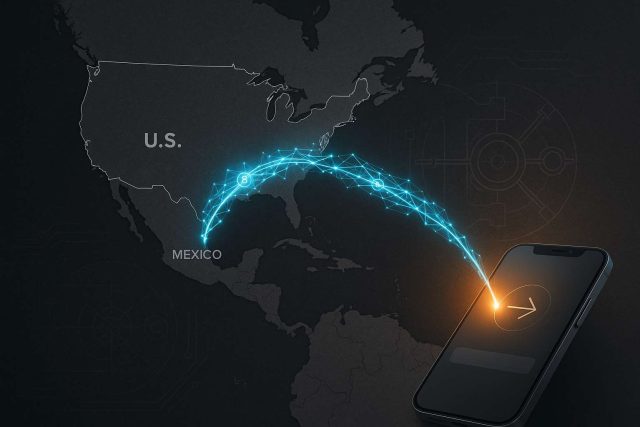
Editorial map of SoFi Bitcoin Lightning remittances from the U.S. to Mexico. Electric-blue node arc to a warm amber payout over Mexico, with a smartphone transfer UI in the foreground.

SoFi has broken new ground by becoming the first U.S. bank to use Bitcoin’s Lightning Network for remittances. In partnership with Lightspark, the digital finance company is launching blockchain-enabled cross-border payments, starting with the busy U.S.–Mexico corridor. The launch is a major step forward in banking innovation and directly challenges the dominance of legacy remittance providers, like Western Union and SWIFT.

Why this matters for banking

For years, most banks have viewed blockchain technology from a distance, testing it only in limited pilots or research initiatives. SoFi is now moving beyond experimentation to live deployment. Through the SoFi Lightspark partnership, the bank is embedding Lightning payments into its infrastructure, making it the first regulated U.S. institution to process U.S. bank Bitcoin payments at scale.

This signals a turning point. Unlike fintech startups that build new rails outside the banking system, SoFi shows that U.S. banks can deliver Bitcoin payments under a regulatory framework, combining blockchain efficiency with established compliance standards. The SoFi Lightspark partnership illustrates how banks can collaborate with specialized firms to modernize their payments stack.

The initial focus: U.S.–Mexico remittances

The first use case is one of the most important in the world: the U.S.–Mexico remittance corridor. In 2024, migrant workers sent nearly $60 billion back to Mexico, according to World Bank data. That figure makes it one of the largest cross-border remittance flows globally.

For customers, however, the process is costly and often frustrating. Transfers through money-transfer operators can cost up to 6–8% of the amount sent. Settlement can take several days, and recipients may face long lines or additional fees at pick-up locations.

By integrating Lightning, SoFi aims to cut these pain points in cross-border payments. With Bitcoin remittances to Mexico, customers could see faster settlement, reduced costs, and greater transparency, all while using a familiar banking interface rather than a separate crypto wallet. If successful, SoFi could set a new standard for pricing and speed in the corridor through these Bitcoin remittances.

How Lightning Network changes the equation

The Lightning Network is a scaling layer built on Bitcoin. It allows payments to be routed “off-chain” through a mesh of payment channels before final settlement on the Bitcoin blockchain. For banks, this means they can achieve near-instant payments with negligible fees, while still benefiting from the security and transparency of Bitcoin’s base layer.

SoFi is branding this integration as part of the SoFi Lightning Network rollout, wrapping Lightning’s technical speed with bank-grade compliance and customer support. For users, the experience will look like a standard transfer. Behind the scenes, Lightning routes the payment in seconds, cutting out intermediaries and reducing operational costs.

This also strengthens the case for broader adoption of Bitcoin Lightning. By having a regulated bank commit to the technology, Lightning is moving from a tool of crypto-native companies to an essential component of mainstream financial infrastructure.

The challenge to legacy remittance systems

Entrenched players long dominated the global remittance industry. Western Union, MoneyGram, and networks like SWIFT have built worldwide coverage, but the cost structure is heavy. Every transfer typically passes through several intermediaries, banks, payment processors, and local agents, each taking a fee.

That model leaves plenty of room for disruption. By transferring money on a blockchain, SoFi can bypass several layers of this chain, reducing costs for both senders and receivers. If SoFi consistently delivers instant settlement and competitive pricing, it could force incumbents to adjust.

  • Legacy networks: 1–3 days, 4–8% cost.
  • Lightning-enabled transfers: seconds, fractions of a cent in network fees (plus banking markup).

For an industry handling more than $600 billion annually, the implications are enormous. SoFi is effectively testing whether a bank can achieve the same reach as remittance giants but with lower friction. If SoFi Bitcoin remittances gain traction, that shift could ripple across global markets.

Banking innovation meets crypto adoption

SoFi’s entry into Lightning is important not just for its customers but for the industry at large. As a regulated bank, SoFi operates under U.S. federal banking rules. Its rollout proves that blockchain-based transfers can be implemented without discarding compliance requirements like KYC, AML checks, and consumer disclosures.

This contrasts with crypto-native startups, which often face regulatory pushback. With SoFi’s international remittances moving onto Bitcoin rails, the message to the market is that digital assets can evolve from speculative instruments into financial infrastructure.

For Bitcoin advocates, it is a validation of the Lightning Network. Each successful integration like this expands liquidity and routing capacity, further accelerating Bitcoin Lightning adoption across both fintech and banking sectors. If SoFi’s new international payments succeed in Mexico, additional corridors could follow.

Challenges and open questions

  • Scalability: Can Lightning handle the high volume of global corridors beyond Mexico without congestion?
  • Regulation: Will U.S. and international regulators require new rules for banks routing payments over open blockchain networks?
  • Consumer trust: Will everyday customers trust Lightning-based transfers when legacy remittance brands are deeply entrenched in communities worldwide?

SoFi will also face competition from both fintech startups already using blockchain and traditional providers who may accelerate modernization if threatened.

With its Lightspark partnership, SoFi has placed itself at the center of a potential remittance shake-up. Cross-border transactions with Bitcoin are no longer just a concept; they are a live product in one of the world’s busiest payment corridors. The SoFi Lightning Network integration is both a milestone in banking innovation and a direct challenge to legacy systems that have long dominated international transfers.

If the model succeeds, it could push other U.S. banks to follow, reshaping how global payments are handled and confirming that Bitcoin is not only an asset class but an essential part of tomorrow’s financial infrastructure. In that sense, SoFi’s international payments may become a blueprint for the next era of cross-border banking.

Readers’ frequently asked questions

Does the recipient need a Bitcoin wallet or a SoFi account?

No. SoFi says the app converts U.S. dollars to bitcoin in real time, routes the payment over Lightning, then converts it back to local currency and deposits it straight into the recipient’s bank account. The recipient doesn’t need a crypto wallet or the SoFi app.

When and where does this launch, and how do I access it?

The service will launch later this year, starting with Mexico, and expand to more countries in phases. It will be available 24/7 in the SoFi app for Checking & Savings members, with a waitlist open for early access.

How are fees and exchange rates shown? Will I be exposed to bitcoin volatility?

SoFi states total costs will be below the current national average and that both fees and the FX rate are shown upfront before you send. Because the USD→BTC→local currency conversions happen in real time, neither sender nor recipient holds bitcoin during the transfer, which minimizes price exposure.

What Is In It For You? Action items you might want to consider

Benchmark cost & speed vs. legacy providers

Price out the same $100–$500 transfer to Mexico via SoFi, Western Union, MoneyGram, and Wise. Compare all-in fees (including FX spread), quoted delivery time, weekend/holiday availability, and refund policies. Run a small live test at peak and off-peak hours to validate real settlement times and the end-to-end recipient experience.

Set up a pilot and an operational runbook

Join the waitlist, enable the feature in the SoFi app when available, and document a repeatable flow: onboarding/KYC, transfer limits, recipient onboarding, error handling, and reconciliation. Define success metrics (cost per $100 sent, median delivery time, failure rate) and a fallback path if a Lightning route fails.

Track corridor expansion, compliance, and APIs

Set alerts for new corridors beyond U.S.–Mexico, changes in fee schedules, and app updates. If you manage cross-border payouts, ask about business features: per-transfer/weekly limits, audit logs, recipient verification, and potential API access (via SoFi or Lightspark) for bulk disbursements.

Why It Took a Year to Pin the Lykke Hack on Lazarus Group

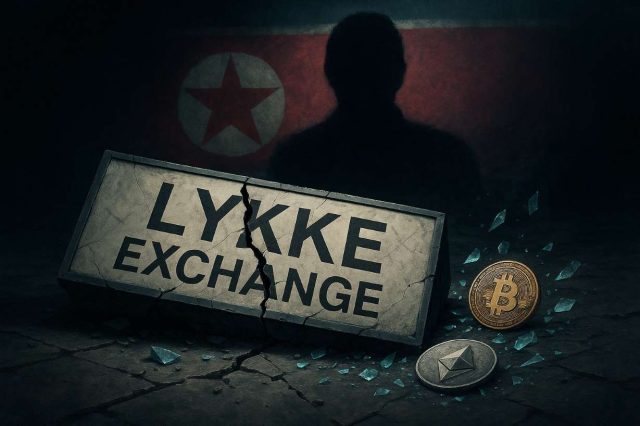
Editorial illustration of the collapsed Lykke Exchange, with a broken sign on the ground, Bitcoin and Ethereum fragments scattered like glass, and a shadowy North Korean figure symbolizing the Lazarus Group hack.

When the Lykke hack was first reported in June 2024, the damage seemed immediate: about 158 BTC and 2,161 ETH, worth roughly $23 million, vanished from the UK-based Lykke exchange. Withdrawals and trading were frozen, and the platform quickly spiraled into insolvency. However, the identity of the attackers remained officially unconfirmed for over a year.

Only in August 2025 did the UK Treasury’s Office of Financial Sanctions Implementation (OFSI) formally attribute the theft to North Korea’s Lazarus Group. The prolonged delay highlights the complexity of crypto laundering and why it is often slow and contentious to attribute these hacks when state-sponsored actors are involved.

The Laundering Playbook: How Lazarus Hid the Trail

The Lazarus Group is infamous for moving stolen digital assets through a web of crypto laundering channels. The Lykke case showed how sophisticated these tactics have become:

  • Token conversions: Ethereum from the hack was swapped into DAI stablecoins using decentralized finance (DeFi) protocols.
  • Wallet splitting: Bitcoin was dispersed across multiple wallets to scatter traces and break up transaction flows.
  • Crypto mixers: The group relied on services such as Tornado Cash, which remain central to their laundering strategy despite sanctions.
  • Decentralized exchanges laundering: Without a central authority, DEX platforms provided another layer of obfuscation, making forensic tracking far more difficult.

Whitestream analysts eventually reconstructed the flows. They discovered that the stolen funds had passed through entities notorious for ignoring anti-money-laundering controls. This confirmed long-held suspicions about Lazarus’ tactics.

Why Attribution Took Over a Year

Attributing a Lazarus crypto hack is not as simple as following the money. In the case of the Lykke hack, several factors dragged the process out:

  • Forensic complexity: Multi-hop transfers, cross-chain swaps, and mixer use obscured patterns that investigators had to painstakingly reconstruct.
  • International coordination: Attributing the hack required the UK Treasury to collaborate with external forensic firms and international agencies, ensuring the claim could stand up to scrutiny.
  • Independent verification: OFSI waited until Whitestream and other analysts confirmed the laundering methods before going public.
  • Skepticism in cybersecurity circles: Some experts argued the evidence was not conclusive, pushing regulators to hold off until they built a stronger case.

This caution reflects the stakes. Accusing a nation-state group like the Lazarus Group has political as well as legal consequences. It also shows why attributing these incidents remains one of the hardest challenges in digital forensics.

The Lykke exchange collapse illustrates the devastating ripple effects of crypto hacks. By March 2025, more than 70 users had filed claims totaling about £5.7 million. The courts ordered Lykke into liquidation, appointing Interpath Advisory to manage any asset recovery.

Founder Richard Olsen declared bankruptcy in January 2025 and is under criminal investigation in Switzerland related to the platform’s downfall. Customers, meanwhile, have to wait in line with little chance of full reimbursement.

Broader Implications

The Lykke case highlights the widening gap between sophisticated crypto hacks and the regulatory protections available to smaller exchanges. It underscores three key lessons:

  1. Crypto laundering tactics are evolving faster than compliance systems. Crypto mixers, token swaps, and DEXs make it harder to trace funds in real time.
  2. Attributing hacks is slow by necessity. To avoid missteps, regulators require corroboration across multiple investigative bodies.
  3. Victims often pay the price. By the time attribution is made, platforms like Lykke are already defunct, and customer losses remain unresolved.

The Lykke hack shows that in the contest between crypto criminals and regulators, time favors the attacker. The Lazarus Group successfully laundered millions and avoided attribution for more than a year, buying cover through a maze of wallets, mixers, and decentralized exchanges. By the time investigators caught up, the Lykke exchange had already collapsed, destroying customer trust and wiping out the platform.

For regulators, exchanges, and users, the message is clear: securing digital assets requires not just stronger defenses. It requires faster, globally coordinated responses to hacks. Otherwise, groups like Lazarus will continue to exploit the lag between theft and accountability.

For victims, time is money — and in crypto, both can vanish overnight.

Readers’ frequently asked questions

Why do hackers like Lazarus target smaller exchanges such as Lykke?

Smaller exchanges often lack the same compliance staff and advanced security systems as large global platforms. This makes them easier targets for groups that rely on fast-moving thefts and laundering before law enforcement can react.

What happens to stolen crypto once it is laundered through mixers and DeFi platforms?

Once assets are obscured, hackers typically convert them into stablecoins or fiat via over-the-counter brokers and unregulated exchanges. These funds can then be used to finance state operations or reinvested in further illicit activity.

Can authorities freeze or recover stolen assets once attribution is made?

Authorities can issue sanctions and request wallet blacklisting through major exchanges, but recovery is rare. Once funds have been converted and moved through decentralized platforms, tracing becomes much harder and actual restitution to victims is unlikely.

What Is In It For You? Action items you might want to consider

Stay cautious when using smaller exchanges

The Lykke collapse shows how quickly a mid-tier platform can go under after a hack. If you trade or hold assets, prioritize exchanges with robust licensing and security audits.

Groups like Lazarus often recycle their laundering methods — token swaps, Tornado Cash, DEX activity. Keeping track of these patterns can help traders and analysts anticipate risk in markets exposed to suspicious flows.

Diversify custody and use self-storage options

Dependence on custodial exchanges increases exposure to hacks. Consider spreading assets across multiple platforms and using hardware or non-custodial wallets for long-term holdings.

- Advertisement -

FEATURED