Home Blog Page 100

Circle and OKX Join Forces to Expand USDC Access, Zero-Fee Conversions, and Global Liquidity

Circle OKX partnership visual showing executives shaking hands in front of a glowing USDC coin with a world map and financial icons, symbolizing zero-fee conversions and global stablecoin access.

In a strategic move that could reshape the stablecoin landscape, Circle and OKX have announced a major partnership to expand USDC access through direct integrations and fee-free infrastructure. The Circle OKX partnership introduces zero-fee USDC conversion with U.S. dollars for more than 60 million users worldwide. That marks a significant milestone in global stablecoin adoption.

The Partnership in Focus

Through this collaboration, Circle’s infrastructure is being directly integrated into the OKX exchange and OKX Wallet. This allows users to seamlessly mint and redeem USDC via connected bank accounts, enabling fiat-to-crypto conversion at zero cost. The move strengthens the stablecoin infrastructure supporting USDC liquidity on one of the largest global exchanges.

Circle emphasized that the initiative will enhance user experience by removing the friction and fees commonly associated with stablecoin usage. It also aligns with Circle’s broader USDC strategy to expand access to regulated stablecoins across diverse markets.

Why It Matters for End Users

The partnership opens the door to frictionless digital dollar access for OKX users in over 190 countries. Whether for trading, payments, or saving, USDC is now easier to acquire and convert within the OKX Wallet ecosystem.

This zero-fee model positions OKX as a leading crypto fiat onramp. It gives users a simple and transparent method to convert between dollars and USDC. It also boosts the utility of the digital dollar by reducing the cost barrier for global users, especially in emerging markets.

A Strategic Push in the Stablecoin Arena

The deal also signals Circle’s intent to challenge USDT’s dominance in the stablecoin market. Leveraging OKX’s massive user base and compliant exchange operations positions USDC as a trustworthy alternative amid rising scrutiny of less transparent competitors.

This is part of a broader stablecoin competition in which Circle is clearly aiming to offer a more transparent and regulated digital dollar solution. In the ongoing USDC vs USDT narrative, this partnership strengthens Circle’s position in the global liquidity race.

Regulatory Context and Global Implications

The timing of this initiative coincides with the growing implementation of the EU’s MiCA framework, which sets new standards for stablecoin regulation. The Circle OKX partnership directly aligns with these global efforts to create regulated stablecoin infrastructure.

Circle’s status as a compliant stablecoin issuer, licensed in both the U.S. and EU, strengthens the legitimacy of this move. OKX’s participation ensures that the fiat-to-crypto conversion process adheres to regulatory standards, potentially setting a template for future exchange-stablecoin integrations.

The Bigger Picture

Beyond user benefits and regulatory alignment, this partnership reflects Circle’s broader ambition to create a secure, scalable digital dollar infrastructure for the internet age. OKX is not new to strategic alliances. Its recent collaboration with Mastercard on end-to-end stablecoin capabilities signals a broader institutional push.

Together, Circle and OKX are shaping the future of compliant, liquid, and globally accessible stablecoin systems. For institutional investors, fintech developers, and everyday users, the implications are far-reaching.

The Circle OKX partnership is more than a product update; it’s a signal of maturity in the stablecoin space. With zero-fee USDC conversion, seamless OKX Wallet integration, and regulatory foresight, USDC is rapidly evolving from a trading instrument into a globally trusted digital dollar. As Circle and OKX lead the way in compliant stablecoin services, the crypto-financial ecosystem takes another step closer to mainstream adoption.

Readers’ frequently asked questions

What are the benefits of zero-fee USDC conversion on OKX?

Users can seamlessly convert between U.S. dollars and USDC without paying conversion fees. This reduces transaction costs, increases access to digital dollars, and simplifies on-ramping and off-ramping through the OKX Wallet and exchange.

How does this partnership affect stablecoin regulation?

The partnership aligns with MiCA and other regulatory efforts by integrating Circle’s compliant USDC infrastructure into a major exchange. It strengthens the case for transparent, regulated stablecoin systems as the industry standard.

Is this a competitive move against Tether?

Yes. Circle’s integration with OKX is widely seen as a strategic move to challenge USDT’s dominance by offering a more transparent and regulation-friendly stablecoin experience to a global user base.

What Is In It For You? Action items you might want to consider

Explore zero-fee USDC conversion on OKX

If you’re an active trader or stablecoin user, take advantage of OKX’s new infrastructure to convert between USDC and U.S. dollars without fees. This is especially valuable for high-frequency users or those managing cross-border payments.

Evaluate regulatory-compliant stablecoin options

If you operate in a jurisdiction with evolving crypto regulations (e.g., EU, Singapore, UAE), consider shifting toward regulated stablecoins like USDC. This partnership highlights how compliance-ready tokens are gaining infrastructure support.

Track Circle’s competitive positioning in the stablecoin space

If you’re a market analyst, investor, or protocol developer, monitor how Circle leverages partnerships like this to compete with Tether and shape institutional stablecoin adoption.

New Zealand Shuts Down Crypto ATMs and Caps Transfers in Sweeping Anti-Money Laundering Crackdown

A banned cryptocurrency ATM in front of New Zealand’s Beehive Parliament building at dusk, symbolizing the country’s 2025 crypto ATM shutdown and $5,000 transfer cap in an anti-money laundering crackdown.

In a decisive move to combat illicit finance, New Zealand has enacted a nationwide ban on cryptocurrency ATMs and introduced a NZD 5,000 cap on crypto transfers. The regulations, part of a broader anti-money laundering crackdown, signal a new phase in the country’s crypto policy as it seeks to tighten control over decentralized financial activity.

The Financial Markets Authority (FMA), in collaboration with New Zealand Police, announced the reforms as necessary to reduce anonymity in crypto transactions and bring digital assets under stricter regulatory oversight.

What’s Changing: NZD 5,000 Cap and Crypto ATM Shutdown

The centerpiece of the new regulation is twofold: a complete crypto ATM shutdown across New Zealand, and the implementation of a NZD 5,000 limit on individual crypto transactions. According to the FMA, the measures aim at disrupting laundering operations that rely on small, repeated transfers or anonymous cash-to-crypto exchanges.

This new limit on crypto transactions in New Zealand targets anonymous activity. Officials say the current infrastructure violates AML best practices. The cap applies to both domestic and international transactions and is expected to be enforced via crypto service providers registered with the FMA.

The ATM ban will take effect in Q3 2025, with unregistered operators facing fines and potential criminal charges.

Why the Crackdown? FMA Targets AML Risk

Authorities warn of rising cryptocurrency AML compliance failures. Physical kiosks that bypass KYC are especially concerning.

Authorities pointed out that crypto ATMs are being exploited to facilitate anonymous cash-to-crypto transactions. They bypass standard customer checks, posing a risk for money laundering. Regulators say the ATM ban aims to mitigate this risk while allowing room for compliant financial innovation.

The move follows FATF crypto guidelines. These emphasize risk-based supervision and transparency. As part of a wider digital asset crackdown, New Zealand aims to limit anonymous usage while maintaining access for compliant users.

Industry Reaction: Disruption and Privacy Concerns

The response from the crypto sector has been mixed. Some exchanges support AML improvements, while others warn that the new crypto regulation in New Zealand may harm retail adoption.

Smaller operators say the crypto ATM ban cuts off access for first-time users in New Zealand. They fear this will push adoption toward offshore platforms. Digital rights groups also criticized the measures as an expansion of financial surveillance, claiming they erode user privacy without targeting actual bad actors.

The policy shift has also sparked debate over privacy and crypto regulation, with civil liberties advocates raising questions about due process and proportionality.

How New Zealand’s Approach Compares Globally

New Zealand now joins a growing list of countries taking aggressive steps toward crypto market regulation. Singapore has already restricted retail access to certain digital assets. The UK recently proposed mandatory registration for crypto wallet providers.

Analysts see the move as part of a global trend toward international crypto oversight and the institutionalization of crypto compliance. While some nations are exploring innovation sandboxes and pilot programs, others, like New Zealand, are opting for stricter enforcement from the outset.

New Zealand’s regulatory shift may influence future policy decisions in other common-law jurisdictions that are weighing how to handle crypto oversight.

Impact on Users and the Crypto Market

Retail users will feel the effects most immediately. The NZD 5,000 crypto cap limits the size of trades and transfers. It particularly impacts those using crypto for remittances or cross-border payments.

Some predict users will move to peer-to-peer (P2P) platforms. Others expect a rise in unregulated OTC activity. DeFi enthusiasts warn that the rules could restrict participation in new protocols. They argue that restrictions on fiat on-ramps are making it harder to access decentralized finance platforms.

The new rules could significantly affect crypto exchanges, especially smaller platforms struggling with rising compliance costs. Smaller firms may be forced out of the market entirely. This is especially concerning for firms that rely on local fiat gateways to onboard users.

What’s Next: Enforcement and Future Rules

The FMA will publish more compliance guidelines in the coming weeks. Enforcement begins in Q3 2025, with a grace period for registered ATM providers.

Industry insiders anticipate further reforms targeting rules for crypto transfers, including mandatory source-of-funds disclosures and enhanced reporting thresholds.

As crypto law enforcement is evolving, this likely won’t be the final word.

Legal challenges are rumored. They may come from licensed operators who applied and passed approval under older frameworks. The battle between financial security and individual freedom is likely just beginning.

New Zealand’s crypto ATM ban and transaction cap mark a turning point in its approach to digital finance. While regulators aim to align with international standards and close money-laundering loopholes, critics argue the move may limit innovation and personal autonomy.

As the dust settles, all eyes will be on how enforcement unfolds and whether other moderate jurisdictions will follow suit or take a more measured path.

Readers’ frequently asked questions

Are crypto ATMs in New Zealand still operational?

No. New Zealand’s nationwide crypto ATM ban takes effect in Q3 2025. ATM operators must shut down services or face penalties under the updated crypto law enforcement guidelines.

What is the maximum amount I can transfer using crypto in New Zealand?

The current limit is NZD 5,000 per transaction. This crypto transaction limit in New Zealand applies to both domestic and cross-border transfers and is enforced by registered service providers.

How does this affect P2P and decentralized platforms?

While the regulations target regulated intermediaries, users of P2P platforms and DeFi tools may face tighter scrutiny on fiat onramps. Decentralized finance restrictions may indirectly affect how users convert crypto to local currency.

What Is In It For You? Action items you might want to consider

Monitor compliance deadlines for crypto ATM shutdowns in New Zealand

If you’re a crypto service provider or ATM operator, track the Q3 2025 enforcement timeline and ensure you meet FMA requirements. Operating after the deadline may result in fines or criminal charges under updated crypto law enforcement rules.

Reassess transaction strategies under the NZD 5,000 crypto cap

Retail traders and cross-border users should evaluate how the new crypto transaction limit in New Zealand affects remittance flows, trading activity, and wallet configurations.

Explore alternative fiat on-ramps and decentralized platforms

As decentralized finance restrictions increase in scope, users and businesses may need to rely on P2P platforms or offshore conversion services to maintain liquidity and access. Research options early to avoid disruption.

FTX Freezes $500M in Creditor Payouts Across 49 Nations Amid Legal, Regulatory, and Political Turmoil

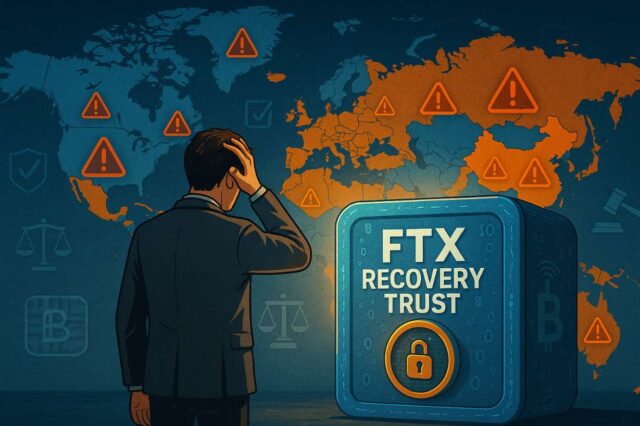
A concerned man stands before a glowing digital vault labeled “FTX Recovery Trust,” with a world map behind him highlighting 49 crypto-restricted jurisdictions like China and Russia in orange, marked by warning icons, symbolizing the $500M FTX creditor payout freeze.

The FTX Recovery Trust has frozen more than $500 million in creditor payouts across 49 countries. The Trust cited regulatory and legal compliance concerns. The affected jurisdictions, ranging from China and Russia to parts of Africa and the Middle East, have been flagged as crypto-restricted, either due to outright bans or insufficient regulatory clarity. The freeze has sparked a surge of legal and political backlash, particularly from Chinese FTX creditors. It also raised questions about the future of cross-border crypto payouts in cases of insolvent exchanges.

A Regulatory Minefield

At the heart of the FTX creditor payout freeze lies a complex mesh of compliance obligations. The FTX Recovery Trust stated that it cannot process claims in countries that lack adequate KYC or AML safeguards, or where crypto is outright banned. This includes a wide array of crypto-restricted jurisdictions, many of which are also subject to U.S. or international sanctions.

Jurisdictions impacted include not only China and Russia, but also Iran, Syria, Afghanistan, Belarus, and several African nations. According to the Trust, proceeding with payouts in these regions would risk violating international compliance standards. It might even break the law in some cases. The Trust has also flagged risks of violating sanctions by transacting in crypto markets of sanctioned countries, further complicating the legal landscape for repayment.

The situation underscores a critical paradox in crypto’s evolution: while the industry prides itself on borderless finance, insolvency proceedings like these must operate squarely within national legal frameworks. FTX’s administrators insist that halting repayments in these areas is a legal necessity, not an optional policy.

Global Backlash from Frozen Creditors

While FTX frames the freeze as a compliance-driven safeguard, the move has not gone unchallenged, particularly in China. More than 500 Chinese FTX creditors have formally contested the decision. They allege discrimination and a lack of transparency in how jurisdictions were selected.

Many of these creditors argue that they complied with platform requirements when initially depositing funds. But now they face blocked crypto repayments through no fault of their own. The lack of a detailed timeline or appeals process compounds their frustrations.

The backlash has also spread beyond China. In countries like Nigeria, Venezuela, and Lebanon, where crypto often serves as a hedge against inflation or currency controls, claimants have voiced concern that crypto compliance risks are being weaponized to avoid repayment obligations. The situation also highlights broader creditor repayment challenges in cases where regulatory uncertainty clouds entitlement and enforcement.

Some commentators warn that the freeze may have geopolitical consequences, especially in countries already skeptical of U.S.-led financial norms. Others see it as a harbinger of increasing fragmentation in the global crypto regulation ecosystem.

FTX has taken the freeze a step further by seeking court approval for the payout freeze in affected regions. The FTX Recovery Trust argues that this step is critical to avoid future litigation. It wants to establish a legal basis for excluding claims tied to sanctioned jurisdictions or jurisdictions with ambiguous legal frameworks for crypto.

The case could set a significant precedent for future crypto bankruptcy proceedings, especially for cross-border platforms entangled in regulatory disputes. If courts approve FTX’s position, it may grant distressed crypto firms broader authority to withhold payments based on regulatory obstacles in crypto compliance, even without explicit legislative guidance.

Legal experts are divided. Some see the move as a prudent effort to respect international law and reduce liability. Others argue it opens the door to arbitrary exclusion of creditors, especially those in politically disadvantaged regions.

What It Means for Crypto Users

For retail users, the situation highlights an uncomfortable truth: where you live increasingly determines whether you’ll recover funds from failed platforms. International crypto compliance becomes central to platform operations. Therefore, users in restrictive or sanctioned jurisdictions face a higher risk of FTX claims being frozen outright.

Platforms navigating crypto insolvency will likely follow FTX’s playbook. They will prioritize jurisdictions with clear legal frameworks and freeze claims in countries with enforcement uncertainty. This puts the burden on users to understand the legal status of crypto in their home countries.

For policymakers, the freeze reinforces the need for coherent global standards. Without them, crypto’s promise of borderless finance may remain subject to fragmented laws and unequal outcomes.

The FTX creditor payout freeze exposes the fragile intersection of crypto innovation, legal frameworks, and geopolitical tension. While the Recovery Trust’s decision to freeze $500 million in repayments may be legally justifiable, it has ignited fierce backlash from creditors in crypto-restricted jurisdictions, most vocally in China.

As courts deliberate on FTX’s request for legal approval, the broader industry watches closely. Will this mark a shift toward hardened jurisdictional barriers in crypto finance? Or, is it a wake-up call to harmonize regulations across borders? Either way, the outcome will shape how the next wave of crypto bankruptcy proceedings is handled.

Readers’ frequently asked questions

What does the FTX creditor payout freeze mean for users in crypto-restricted jurisdictions?

If you’re located in one of the 49 affected countries—such as China, Russia, or other crypto-restricted jurisdictions—your claim is currently frozen. The FTX Recovery Trust has paused over $500 million in payouts due to legal and compliance concerns tied to international crypto laws and sanctions. Until court approval is granted or regulatory clarity improves, these claims remain on hold.

Can Chinese FTX creditors or others from sanctioned countries expect any repayments?

At this stage, there’s no guarantee. Although hundreds of Chinese FTX creditors have already filed legal challenges, the Trust maintains that crypto claims tied to sanctioned countries risk breaching AML laws and global compliance standards. Court rulings in the coming months will determine whether these frozen claims can be legally processed.

How will court approval for the payout freeze affect global crypto regulation?

If the court upholds FTX’s request, it could set a precedent for future crypto bankruptcy proceedings. Platforms may gain broader authority to deny repayments based on regulatory risk, particularly in sanctioned or high-risk jurisdictions. This would mark a major shift in how international crypto compliance influences insolvency cases and creditor protections.

What Is In It For You? Action items you might want to consider

Assess your jurisdiction’s crypto compliance risk

If you’re a creditor awaiting funds from FTX or any other collapsed platform, check whether your country is considered a crypto-restricted jurisdiction. Regulatory bans, sanctions, or unclear compliance rules could directly affect your ability to recover funds.

Monitor court rulings that shape crypto bankruptcy proceedings

The legal outcome of FTX’s request for a payout freeze will likely influence how future crypto bankruptcies handle international claims. Follow updates closely if you’re exposed to platforms with global user bases.

Plan proactively if operating in sanctioned or high-risk regions

Crypto founders, investors, and creditors in sanctioned or high-risk jurisdictions should consider the long-term impact of jurisdictional exclusions. Work with legal counsel to understand the evolving implications of international crypto compliance.

BBVA Rolls Out Crypto Services Nationwide and Advises Clients to Allocate Bitcoin and Ether

BBVA leads a futuristic crypto race on a digital track, sprinting ahead of trailing competitors toward glowing Bitcoin and Ethereum symbols under a MiCA regulation banner in a blockchain-lit stadium.

In a major development for regulated crypto trading in Europe, BBVA has launched its full-scale crypto services in Spain. It is now the first major Spanish bank to offer retail access to Bitcoin and Ether trading and custody. This marks a significant evolution from the bank’s initial pilot phase following regulatory approval earlier this year.

The rollout opens the doors to millions of retail customers seeking exposure to digital assets through a secure and compliant platform. It also signals a strategic shift: BBVA is now actively advising its wealth management clients to allocate a portion of their portfolios to cryptocurrencies. Few legacy institutions have embraced this step.

Full Retail Rollout of BBVA Crypto Services in Spain

BBVA’s new offering allows Spanish customers to trade and store Bitcoin and Ethereum directly within the bank’s mobile app. This follows approval by Spain’s securities regulator, the CNMV, in line with the EU’s MiCA crypto regulation. MiCA establishes a unified framework for digital asset services across member states.

The launch represents a full Spanish bank crypto launch under the new MiCA regime. It distinguishes BBVA from peers that have yet to enter the space. With this move, the bank has operationalized both BBVA Bitcoin trading and BBVA Ethereum custody for its retail users. Unlike exchanges, users benefit from regulated crypto trading within a trusted banking environment.

Retail customers must initiate trades themselves. BBVA’s secure infrastructure integrates fiat and crypto into one seamless app experience.

This integration positions BBVA as the most advanced player among traditional Spanish banks in terms of crypto adoption in Spain and regulatory readiness.

Strategic Crypto Advisory Services for BBVA Wealth Clients in Spain

In a separate but highly significant step, BBVA has begun offering tailored investment guidance to high-net-worth customers. According to reports, the bank is advising private banking clients to allocate 3% to 7% of their portfolios to Bitcoin and Ether. Recommendations depend on individual risk profiles and investment objectives.

This involvement marks a shift from passive facilitation to active promotion. Many banks remain focused on tokenized products or limited trading access. BBVA, on the other hand, is embracing crypto portfolio allocation as a formal wealth management strategy.

The bank has also indicated plans to expand its offering beyond BTC and ETH later this year. Additional digital assets may be introduced under the MiCA framework.

This move represents a formal Bitcoin investment strategy offered through a traditional institution. BBVA wealth clients now have access to digital asset options as part of their broader portfolios. It also signals a new chapter for Ethereum in banking.

By acting as both platform provider and strategic advisor, BBVA is challenging the idea that crypto belongs only to fintechs and decentralized platforms.

BBVA’s Competitive Edge in Regulated Crypto Trading and Services in Spain

BBVA’s dual role, retail service provider and investment advisor, puts it in direct competition with crypto-native platforms like Coinbase, Kraken, and Binance. Those platforms offer a wider range of assets and DeFi services. BBVA’s strength lies in regulated crypto trading, institutional-grade custody, and compliance.

Crucially, BBVA maintains control over customer assets through direct custody. It does not rely on third-party wallet providers. This gives risk-conscious investors more confidence in the platform.

Many exchanges have faced scrutiny over solvency, asset transparency, or compliance failures. BBVA’s entry into the space provides a much-needed institutional alternative.

Regulatory Environment and Institutional Adoption

BBVA’s crypto expansion would not be possible without the clarity provided by the MiCA crypto regulation. MiCA sets unified standards across the EU for transparency, consumer protection, and anti-money laundering compliance.

For Spain, BBVA’s move solidifies its leadership in regulated crypto trading. It also serves as a blueprint for other banks navigating the post-MiCA environment. The launch is expected to pressure other financial institutions to follow suit, or risk falling behind.

What It Means for Investors and the Broader Industry

The rollout of BBVA crypto services is more than a technical milestone. It represents a cultural shift in the relationship between banks and blockchain. For everyday users, it offers a safe and familiar entry point into Bitcoin and Ethereum. There’s no need to navigate complex wallets or offshore exchanges.

For investors, the bank’s support for crypto portfolio allocation adds legitimacy to digital assets. BBVA’s approach makes crypto part of a long-term investment strategy.

At a time when the crypto industry is gaining financial and regulatory relevance, BBVA shows how traditional banks can successfully bridge the gap.

BBVA crypto services are no longer theoretical. With a nationwide rollout for retail clients and tailored advice for BBVA wealth clients, the bank is redefining how digital assets fit within regulated finance. By combining accessibility with institutional insight, BBVA positions itself at the forefront of mainstream crypto adoption.

As crypto matures under clearer rules, BBVA’s approach may become the standard for banks looking to compete in a digital financial ecosystem.

Readers’ frequently asked questions

Can I buy Bitcoin and Ethereum directly from my BBVA account in Spain?

Yes. As of July 2025, BBVA offers integrated crypto services that allow adult retail clients in Spain to buy, sell, and store Bitcoin and Ethereum directly through the BBVA mobile banking app. These services are fully regulated under the MiCA crypto framework and operate with BBVA’s internal custody infrastructure. No external wallets or exchanges are required.

Does BBVA provide investment advice for Bitcoin and Ethereum?

BBVA does not offer investment advice to general retail users. However, the bank’s private banking division does advise high-net-worth clients on digital asset exposure. Wealth managers may recommend allocating between 3% and 7% of a portfolio to Bitcoin and Ethereum, depending on the client’s risk profile and financial goals.

Is BBVA’s crypto trading service considered regulated in the European Union?

Yes. BBVA’s crypto platform complies with the European Union’s MiCA crypto regulation, which sets unified rules for transparency, consumer protection, and anti-money laundering. The bank is fully authorized by Spain’s CNMV to offer Bitcoin and Ethereum trading and custody services as part of its regulated banking operations.

What Is In It For You? Action items you might want to consider

Track how BBVA’s crypto services evolve beyond Bitcoin and Ethereum

Now that BBVA offers regulated BTC and ETH trading, it may expand to other cryptoassets under MiCA later this year. Investors should monitor updates to see if additional coins become available through institutional channels.

Evaluate whether BBVA’s platform fits your crypto custody strategy

If you prioritize security and regulation over asset variety and yield opportunities, BBVA’s in-app trading and custody might be a good fit. Compare their infrastructure and fee model with existing centralized exchanges and self-custody wallets.

Watch how other Spanish and EU banks respond to BBVA’s move

BBVA’s rollout may set a precedent in traditional finance. Traders and fintech watchers should look for signals of competitive responses or policy adjustments from other banks under MiCA regulations.

$140M Stolen from Brazil’s Central Bank Reserve Accounts – Crypto Used to Launder the Loot

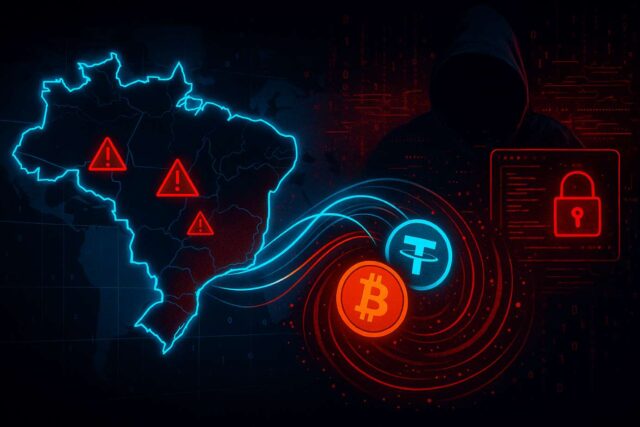
Illustration of a cyberattack on Brazil with Bitcoin and USDT symbols used for laundering, representing the Brazil Central Bank hack.

Hackers have executed a $140 million bank heist, siphoning funds from Brazil’s Central Bank reserve accounts by exploiting a breach in the software provider’s systems. Authorities confirmed that while the Central Bank’s core systems remained intact, attackers gained access through a compromised third-party vendor linked to Brazil’s PIX payment system. The Brazil Central Bank hack quickly attracted global attention. Laundering the stolen funds through Bitcoin and USDT has sparked new debate on the threats posed by crypto laundering and digital financial crime.

Anatomy of the Brazil Central Bank Hack

How It Happened

The cybersecurity incident did not originate within the Central Bank’s internal infrastructure. Instead, attackers breached a contractor’s system by exploiting a third-party fintech vulnerability. Investigators suspect the use of stolen credentials or insider bribery to facilitate the intrusion. Once inside, the perpetrators targeted systems connected to Brazil’s national reserve operations processed via the real-time PIX payment system.

Timeline and Discovery

The breach was discovered soon after abnormal transaction patterns were detected. Although the exact timeline remains unclear, it’s believed the operation lasted several hours. Despite rapid containment measures by both the Central Bank and the compromised vendor, the funds had already been extracted by the time authorities intervened.

The Crypto Laundering Trail

Bitcoin and USDT as Tools of Obfuscation

After securing the stolen funds, the attackers quickly converted them into Bitcoin and USDT, initiating an elaborate crypto laundering operation. This included the use of crypto mixer tools, cross-chain swaps, and routing transactions through both centralized and decentralized exchanges. These tactics are consistent with previous incidents involving Bitcoin and USDT laundering. Bad actors exploit the anonymity of digital currencies to mask criminal proceeds.

Challenges in Tracing Digital Assets

Despite blockchain’s transparency, digital asset laundering presents major obstacles to law enforcement. Sophisticated obfuscation techniques, such as mixing services and real-time token swaps, make tracking funds across chains exceptionally difficult. Some assets were reportedly transferred through exchanges in regions with weak compliance enforcement. This has increased the risk of money laundering via crypto and made recovery efforts significantly more difficult.

Regulatory Alarm Bells and Systemic Risk

PIX Vulnerability Under Scrutiny

Although the core PIX payment system wasn’t directly compromised, the attackers’ ability to exploit connected vendors has amplified concerns about system integrity. The government is now facing pressure to overhaul its vendor vetting process. It must also review how deeply they integrate into state-run infrastructure. The situation illustrates the broader real-time payment system risk emerging when third-party access points are poorly secured.

The Role of Crypto in Modern Financial Crime

This case adds to growing concerns about the misuse of digital currencies in fraud and theft. The observed Bitcoin laundering reflects a global trend. Stolen assets are rapidly converted to crypto and moved beyond traditional regulatory reach. While blockchain analytics firms assist in post-incident tracing, real-time prevention remains elusive without broader international cooperation.

Central Bank’s Response

The Brazilian Central Bank confirmed that the breach stemmed from a third-party provider and not its own systems. It has since launched a comprehensive investigation in coordination with law enforcement, cybersecurity experts, and international partners. Discussions around stronger vendor governance and crypto regulation in Brazil are already underway. The proposed measures aim at tightening access and enhancing risk controls.

Global Context: Crypto’s Growing Role in Cyber Heists

Brazil’s experience is not unique. Similar attacks, including those on the Ronin Bridge and Euler Finance, demonstrate how digital assets are increasingly leveraged in large-scale thefts. The evolution of cryptocurrency-enabled crime has outpaced the enforcement capabilities of many regulators and platforms.

With this $140 million bank heist, Brazil joins a growing list of nations confronting the realities of a rapidly digitizing financial crime landscape. Cryptocurrencies offer unmatched speed and reach, making them an ideal escape route for modern cybercriminals.

The Brazil Central Bank hack highlights a critical weak point in today’s financial infrastructure: the exposure created by insufficiently monitored third-party service providers. This third-party fintech vulnerability allowed access not just to systems, but to state-managed capital itself. Coupled with the proven ease of laundering Bitcoin and USDT, the event underscores the urgent need for stronger oversight, regulatory modernization, and global coordination.

Until the infrastructure supporting crypto evolves alongside its adoption, digital assets will remain both a revolutionary tool and a potent risk vector for financial institutions worldwide.

Readers’ Frequently Asked Questions

How does Brazil’s cybercrime response compare to other major economies?

Brazil has made significant progress in cybercrime enforcement, especially through its federal police cyber division. However, compared to jurisdictions like the U.S. or the EU, which often have dedicated financial cybercrime units and real-time coordination with global exchanges, Brazil’s response capacity is still evolving. This incident may push Brazil toward adopting more proactive, internationalized frameworks.

What are crypto mixer tools, and why are they controversial?

Crypto mixer tools are services that break the link between sender and receiver addresses by pooling and redistributing cryptocurrencies, making transaction origins harder to trace. While legitimate users resort to mixers for enhanced privacy, hackers and money launderers frequently exploit them, leading to regulatory crackdowns and bans in several countries.

Can exchanges freeze stolen crypto once alerted?

Yes, in theory. Centralized exchanges can freeze funds if flagged in time and if local regulations permit it. However, delays in detection, jurisdictional boundaries, and the use of decentralized platforms or privacy coins often prevent effective asset recovery. Many stolen assets can move through a mix of custodial and non-custodial channels within hours.

What Is In It For You? Action Items to Consider

Monitor how regulatory frameworks evolve in Brazil post-breach

If you’re involved in crypto compliance, fintech, or institutional finance, track how Brazilian regulators respond to this event, especially in areas like third-party vendor audits, exchange oversight, and KYC/AML tightening.

Evaluate your exposure to third-party fintech services

Crypto platforms, payment processors, and financial apps should reassess the level of access granted to embedded vendors and middleware providers. This incident shows how indirect access can result in direct risk.

Security analysts and forensic investigators should note the tools and routes used in this case, particularly mixer services, Layer 2 bridges, and cross-chain transactions, as these methods are becoming standard in large-scale digital thefts.

- Advertisement -

FEATURED