
Home Blog Page 101

Tokenized Stock Trading Goes Mainstream: Gate.io’s Xstocks Disrupt Traditional Markets

Finance and global financial markets concept world map at background stock market chart and forex data. 3d rendering

In a move that may redefine how global investors engage with equities, Gate.io has launched Xstocks, a dedicated trading section that enables users to buy and sell tokenized stock trading assets around the clock. It brings together the credibility of traditional finance with the always-on flexibility of blockchain.

With 24/7 stock trading of tokenized shares like Apple, Tesla, and Amazon using USDT, Xstocks introduces a borderless, nonstop equity market tailored for crypto-native users.

What Is Gate.io Xstocks?

Xstocks is Gate.io’s answer to long-standing calls for real-world asset exposure within crypto trading environments. Consequently, the platform allows users to trade tokenized stocks directly from their crypto wallets. These assets represent actual shares in publicly traded companies, such as Microsoft, Nvidia, or Alphabet.

What sets Xstocks apart is its continuous access. Unlike traditional markets with fixed hours, Xstocks operates 24/7, giving users the ability to trade any time, including weekends and holidays.

Transactions are denominated in USDT, allowing users to bypass the complexities of fiat banking. In fact, it pioneers stock trading with USDT as a viable, mainstream option.

How the Tokenization Model Works

Every tokenized share on Xstocks is backed 1:1 by a corresponding real-world stock. Licensed financial institutions, operating in compliant jurisdictions, hold these assets in custody. To sum it up, Gate.io does not create synthetic price representations but provides direct, asset-backed exposure.

These real-stock backed tokens are issued through regulated partners and can be bought, held, or sold seamlessly on the platform. Because of this approach, users gain exposure to blockchain-based equities without giving up the legal and financial protections associated with traditional brokers.

Why It Disrupts Traditional Markets

Gate.io’s Xstocks is more than a new product: it’s a strategic attempt to rethink capital markets. Xstocks combines decentralized trading models with fully backed real-world assets. Undeniably, this form of crypto stock trading challenges legacy brokerages and financial gatekeepers.

This has significant implications for global investors. In markets where access to U.S. equities is restricted or impractical, crypto users can now gain exposure to major stocks using only USDT and a Gate.io account.

No intermediaries. No closing bells. No banking hours. Just round-the-clock access to global equity exposure.

Gate.io’s Strategic Positioning

The launch of Xstocks aligns with Gate.io’s long-term mission to integrate regulated financial assets into blockchain infrastructure. It also reflects a growing trend in the digital asset sector toward tokenized stock trading and real-world asset tokenization.

Gate.io is positioning itself at the forefront of this movement. What’s more, its platform could serve as a map for other crypto trading platforms seeking to bridge the gap between decentralized technology and institutional-grade financial services.

Addressing Regulatory and Security Concerns

One of the core concerns surrounding crypto stock trading has been regulatory uncertainty. Gate.io takes a proactive stance here, working with licensed custodians and limiting trading availability to legally compliant jurisdictions.

By framing Xstocks as a regulated tokenized asset offering rather than a gray-market derivative product, the platform is insulating itself from many of the legal pitfalls that plagued earlier attempts at stock trading with USDT.

Transparency, custodial accountability, and regulatory alignment are all central to Gate.io’s model.

Broader Implications for the Future of Finance

The introduction of Xstocks has broader ramifications than just one exchange’s new feature set. It signals a real shift toward the democratization of equity access, one that doesn’t rely on legacy infrastructure or regional banking systems.

As more platforms explore blockchain-based equities, retail users could see improved liquidity, broader asset availability, and fewer gatekeeping institutions standing in the way.

It also pressures traditional brokers to innovate. The success of Gate.io’s approach may spark a wave of regulated tokenized assets that serve both crypto-native investors and traditional institutions.

Tokenized stock trading is no longer theoretical. With the launch of Xstocks, Gate.io has proven that it’s possible to offer compliant, asset-backed equities on a blockchain platform, accessible 24/7 to anyone holding USDT.

This is more than a feature rollout. It’s a clear mark for where finance is heading: real assets, on-chain, in real time.

As tokenized finance matures, Gate.io’s Xstocks stands out as a bold and timely innovation. The line between Wall Street and Web3 just got thinner.

Readers’ Frequently Asked Questions

Can I use Xstocks without verifying my identity on Gate.io?

No. While the platform offers decentralized-style access and USDT settlement, Gate.io requires identity verification (KYC) for all users trading regulated tokenized assets like Xstocks. This is necessary to comply with jurisdictional requirements and custodial regulations.

Do Xstocks pay dividends like traditional shares?

Not at this stage. Xstocks provide price exposure to the underlying assets but do not currently offer dividend payouts. Gate.io may explore dividend mechanisms in the future, but for now, users should treat Xstocks as non-dividend-bearing instruments.

What happens to my Xstocks if the real-world market is closed?

Xstocks continue to trade 24/7, even when the underlying stock market is closed. However, prices may reflect off-market demand and could diverge slightly from official closing prices. Gate.io relies on external pricing oracles and market makers to maintain fair pricing during these periods.

What Is In It For You? Action Items You Might Want to Consider

Monitor the rollout of tokenized equities on competing platforms

If you’re a trader or investor, watch how Binance, Kraken, and other major exchanges respond to Gate.io’s move. The success of Xstocks could trigger a wave of real-asset listings across crypto platforms. Early adoption might offer arbitrage opportunities and first-mover advantages.

Evaluate portfolio diversification through tokenized stocks

Traditional investors entering crypto, or crypto users seeking exposure to equities, should consider how tokenized stocks can balance risk. If your portfolio is overly exposed to native tokens or DeFi assets, adding tokenized blue-chip stocks via USDT could serve as a hedge.

Investigate regulatory guidance on asset-backed tokens in your jurisdiction

Legal treatment of tokenized equities varies widely. Therefore, users and fintech builders alike should follow developments in regions like the EU, UAE, Singapore, and the U.S., where emerging frameworks may determine the future of compliant tokenized finance.
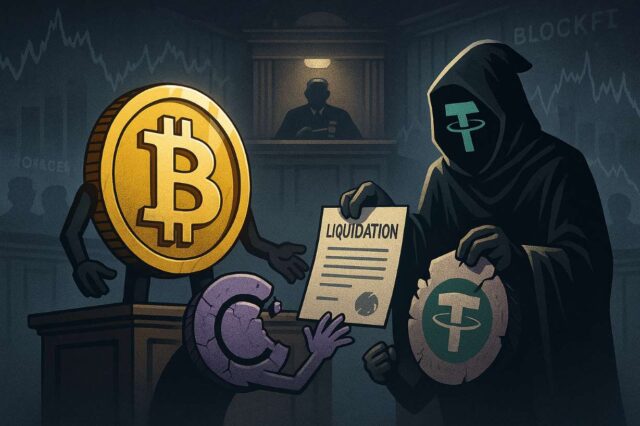

Celsius Cleared to Sue Tether Over $4.7B BTC Liquidation in Landmark Bankruptcy Case

Illustration of the Celsius Tether lawsuit, showing a Bitcoin symbol on a courtroom witness stand as a hooded Tether figure presents a liquidation document. A crumbling Celsius logo reaches toward the Bitcoin, symbolizing the $4.7B dispute over BTC liquidation. Background includes ghosted charts and logos of failed crypto lenders like BlockFi, evoking the broader crypto bankruptcy context.

In a pivotal legal development for the crypto industry, a U.S. bankruptcy judge has ruled that Celsius Network may proceed with its $4.7 billion lawsuit against Tether. The Celsius Tether lawsuit, centering around Tether liquidating 40,000 BTC in the days before Celsius’s collapse, could set new standards for how digital assets and creditor claims are handled in crypto bankruptcy cases.

The court’s decision to deny Tether’s motion to dismiss marks a turning point in Celsius’ bankruptcy proceedings. It adds a new chapter to the growing list of high-stakes crypto legal battles.

The Celsius Tether Lawsuit at a Glance

Celsius Network filed for Chapter 11 bankruptcy in July 2022. The company had already halted withdrawals and faced severe liquidity issues.

Celsius alleges that Tether executed an unauthorized 40,000 BTC sale just days before the bankruptcy filing. It claims this sale was an avoidable transfer under bankruptcy law that gave Tether unfair priority over other creditors.

The lender also accuses Tether of breach of contract and unjust enrichment. According to Celsius, this move deprived the estate of critical assets needed to repay users and creditors.

Tether argued that the transaction was legally valid and contractually authorized. However, the judge ruled that the case deserved full examination in court. As a result, the Celsius Tether lawsuit will move forward.

At the heart of this dispute is how U.S. law handles preferential treatment in insolvency. Certain transactions made shortly before a bankruptcy filing can be reversed if deemed avoidable transfers.

The judge found enough substance in Celsius’s argument to allow further proceedings. The size and timing of the BTC sale raised serious questions about creditor fairness.

This ruling could reshape how courts approach digital asset transfers during bankruptcy. It also reinforces the need for clearer standards in bankruptcy law, referring to crypto.

Collateral Liquidation Under Scrutiny

The 40,000 BTC in question had been posted as collateral by Celsius. The issue is not whether the collateral existed, but how it was liquidated.

Celsius claims Tether’s liquidation circumvented equitable treatment of creditors. This move may have disadvantaged other stakeholders in the process.

Crypto collateral arrangements operate outside traditional financial norms. The Celsius bankruptcy case exposed serious gaps in how these arrangements are handled during insolvency.

If Celsius wins, courts may tighten interpretations of crypto collateral rules. That would affect how lenders and borrowers structure contracts across the industry.

Legal experts note that this case highlights a legal grey area. Smart contracts, off-chain agreements, and insolvency codes don’t always align.

Broader Industry Implications

This stablecoin lawsuit comes amid the fallout from the 2022 crypto lending collapse. The failures of firms like BlockFi, Voyager, and Celsius exposed major flaws in the lending system.

Tether, the world’s largest stablecoin issuer, faces more than just legal exposure. Its reputation and risk model are now under scrutiny.

Tether losing this legal battle could trigger other lawsuits or lead to new regulations. If similar liquidations occurred elsewhere, other firms might face legal action too.

If Celsius wins, it could set a precedent. Bankrupt firms may gain the legal basis to recover funds from stronger counterparties.

What Comes Next

The Celsius Tether lawsuit will now proceed to trial. During discovery, both sides will present evidence about how the liquidation unfolded.

This marks an important update in the Celsius bankruptcy case. The industry now knows that one of crypto’s biggest post-crash lawsuits will move forward.

Key questions include:

  • Did Tether act within its rights, or did it front-run Celsius’s insolvency?
  • Could other creditors file similar claims?
  • Will the case increase regulatory pressure on stablecoins?

The legal fight could last for months, or even years. The consequences will shape how crypto firms manage collateral, counterparties, and creditor relationships.

The judge’s decision isn’t just about $4.7 billion. It’s about defining the rules of accountability in the digital asset world.

This case may accomplish what legislation has not. It could force legal clarity into crypto’s most chaotic corners.

As the battle over the 40,000 BTC sale unfolds, we are watching as the verdict could set the tone for crypto insolvency governance for years to come.

Readers’ frequently asked questions

If Celsius wins the case against Tether, will creditors receive a greater amount of money back?

Potentially, yes. If the court rules in favor of Celsius and orders Tether to return the value of the 40,000 BTC, those funds would be added to the bankruptcy estate. That could increase the amount available for creditor distributions, though the timeline and legal fees may reduce the net recovery.

Does this case mean that liquidating crypto collateral before bankruptcy is always illegal?

No. Not all pre-bankruptcy liquidations are avoidable. The court will consider whether Tether’s actions gave it an unfair advantage over other creditors and whether Celsius had legal grounds to challenge the sale. The outcome may clarify when such transactions cross legal boundaries.

Could this Celsius Tether lawsuit impact stablecoin regulations?

Yes. If Celsius wins, regulators may revisit how stablecoin issuers interact with distressed counterparties. It could prompt new rules on collateral management, transparency, and the role of stablecoins in lending and liquidation frameworks.

What Is In It For You? Action items you might want to consider

If you’re involved in crypto lending or trading, pay close attention to how the court handles collateral liquidation in the Celsius Tether lawsuit. The ruling may influence how future contracts are drafted and enforced.

Review counterparty risk in stablecoin deals

This lawsuit raises red flags about how stablecoin issuers like Tether behave in distressed situations. Institutional investors and DeFi platforms should re-evaluate exposure and risk modeling when working with centralized stablecoins.

Track bankruptcy clawback precedents in crypto

Legal outcomes here could guide future efforts by bankrupt crypto firms to reclaim funds. Lawyers, fund managers, and creditors should track whether this case sets a precedent for retroactive asset recovery.

BITCOIN PACIFIC 2025

Image of Melbourne skyline. Melbourne will be the venue for Bitcoin Pacific 2025

Bitcoin Pacific 2025 heads to Melbourne this September. The one-day conference will bring together policymakers, legal experts, investors, builders, and developers to explore how the Asia-Pacific region is balancing regulation and innovation and what that means for the future of Bitcoin in the area.

Key Themes and Topics at the Bitcoin Pacific 2025

Bitcoin Adoption Across Asia-Pacific

Understand the factors driving or hindering Bitcoin adoption in countries such as Vietnam, Philippines, China, Japan, Singapore, Australia, New Zealand, etc. Bitcoin Pacific 2025 will highlight real-world Bitcoin use cases across varied economies and countries.

Financial Sovereignty

What does Bitcoin as a tool for individual and national financial sovereignty look like in the Asia-Pacific? Bitcoin Pacific 2025 will explore how the region uses Bitcoin as a tool for personal empowerment and economic inclusion, especially in regions with volatile currencies, capital controls, or underbanked populations.

Policy Regulation and Challenges

Hear from policy-makers, regulators, investors, and Bitcoin advocates on matters of compliance, taxation, licensing, and cross-border activity.

Who Should Attend Bitcoin Pacific 2025?

The event is tailored for:

  • Investors and fund managers seeking to understand the landscape in emerging and existing markets.
  • Developers and product teams building Bitcoin infrastructure and applications across Asia-Pacific.
  • Policy makers and legal professionals seeking clarity on cross-border Bitcoin regulation and market dynamics.
  • Educators, researchers, and journalists covering digital assets and economic transformation.
  • Entrepreneurs and start-ups driving Bitcoin innovation in payments, etc.
  • Bitcoin users and traders looking to understand and accelerate grassroots adoption in Asia-Pacific.
  • Curious newcomers wanting to understand Bitcoin and its future.

Why Attend?

Bitcoin Pacific 2025 is a Bitcoin-only event centred on the unique challenges, opportunities, and advancements happening in the Asia-Pacific region. With thousands of thought leaders, innovators, and experts attending, this gathering provides a rare opportunity to learn, engage, and interact in person with the regional Bitcoin ecosystem.

Venue and Registration

Bitcoin Pacific 2025 will be held on 25 September 2025 in Melbourne, Australia. Final venue details, speaker announcements, and ticketing information will follow soon. Stay tuned for updates on the Bitcoin Pacific official website and social media channels.

Bitcoin Pacific 2025 is where ideas meet action. Whether you are an investor, developer, policymaker, or Bitcoin enthusiast, this event offers a unique opportunity to connect with the region’s leading voices and shape the future of Bitcoin in Asia-Pacific and beyond. Don’t miss your chance to be part of this defining moment.

Deutsche Bank-Backed Venture to Launch Germany’s First Regulated Euro Stablecoin

Glowing euro coin emerging from a high-tech vault, symbolizing BaFin-approved MiCA-compliant stablecoin by AllUnity, backed by Deutsche Bank.

In a milestone for institutional crypto adoption, AllUnity, a joint venture backed by Deutsche Bank’s asset manager DWS, Galaxy Digital, and Flow Traders, has received approval from BaFin to launch a regulated euro stablecoin. The token will be issued under the EU’s MiCA regulation, making it one of the first MiCA-compliant stablecoins authorized by a Tier-1 financial regulator in Europe. The AllUnity stablecoin is expected to set a benchmark for euro-denominated digital assets issued within the Eurozone with full regulatory oversight.

A Timeline: How AllUnity Came to Life

2023 – Early Vision and Strategic Planning

Reports emerged in 2023 that DWS, Deutsche Bank’s investment arm, was exploring the tokenized finance sector. Around mid-year, DWS confirmed it was working with digital asset firm Galaxy Digital on a new joint venture to explore a regulated euro stablecoin. Flow Traders, a Dutch market maker with crypto expertise, joined shortly after.

The venture, later named AllUnity, set out to bridge traditional finance and blockchain. Its goal was to create a stablecoin trusted by banks, asset managers, and regulated institutions.

2024 – Laying Down Compliance and Infrastructure

In 2024, AllUnity built its technology and compliance stack, which included custody, risk, and issuance systems. The venture aligned its structure with the Markets in Crypto-Assets (MiCA) regulation.

AllUnity received its MiCA stablecoin license following a full regulatory review. The assessment confirmed that its framework met the EU’s highest compliance standards. By year-end, internal audits were complete, and consequently, the firm submitted its filing to BaFin.

2025 – Regulatory Approval Achieved

On July 2, 2025, BaFin finally granted formal approval for AllUnity to issue its euro stablecoin. The token is expected to launch by late 2025. It will serve wholesale crypto settlement, institutional trading, and on-chain finance use cases rather than retail transactions.

What Makes AllUnity’s Stablecoin Stand Out?

AllUnity’s euro stablecoin differs from others in several ways:

  • Regulated in Germany: This is the first euro stablecoin explicitly approved by BaFin.
  • Institutional Backing: With Deutsche Bank crypto ambitions, Galaxy Digital’s infrastructure, and Flow Traders’ liquidity, AllUnity combines traditional and digital finance expertise.
  • Purpose-Built for Institutions: Unlike retail-focused stablecoins, AllUnity targets tokenized settlement, cross-border payments, and regulated asset transfers.
  • Full MiCA Compliance: The stablecoin meets all criteria laid out in the MiCA regulation, including transparency and risk controls.

Implications for the European Crypto Market

AllUnity’s BaFin-approved euro stablecoin could reshape how Europe approaches regulated digital assets. After all, it proves that MiCA-compliant tokens can come from banks, not just crypto startups.

The move may push competitors to pursue their own stablecoin approval in Germany or other MiCA-compliant jurisdictions. These include countries like France, Finland, or the Netherlands. Analysts believe AllUnity may anchor a wider euro-denominated tokenized finance ecosystem, especially if it connects with on-chain financial tools or EVM-compatible chains.

Market Reception and Road Ahead

Industry experts see this as a turning point. “Institutional investors have long demanded a regulated euro stablecoin with full legal clarity,” said a fintech partner in Frankfurt. “With Deutsche Bank involved, this isn’t just regulatory—this is strategic.”

The focus on wholesale crypto settlement hints at broader goals. These could include CBDC interoperability or even interbank blockchain clearing, if supporting infrastructure evolves.

AllUnity’s BaFin approval is more than just a regulatory milestone. It marks a shift in how institutional crypto is developing in Europe. The venture blends bank-level trust with crypto innovation.

By launching the first regulated euro stablecoin in Germany with full BaFin approval, AllUnity sets a new benchmark. It could define the future of euro-backed digital assets in MiCA’s framework.

Readers’ frequently asked questions

Who will be able to use the AllUnity stablecoin?

The AllUnity stablecoin is designed for institutional users only. It will serve regulated financial entities such as banks, asset managers, and settlement platforms, not retail consumers.

What does BaFin’s approval mean under the MiCA regulation?

BaFin’s approval confirms that the stablecoin meets the EU’s MiCA regulatory framework for reserve-backed digital assets. It also establishes a precedent for issuing euro-denominated stablecoins under strict compliance conditions.

How will the AllUnity stablecoin be used in practice?

It will be integrated into wholesale financial markets, supporting real-time settlement of tokenized assets, cross-border payments, and blockchain-based clearing between regulated institutions.

What Is In It For You? Action items you might want to consider

Monitor AllUnity’s stablecoin integration with institutional settlement platforms

If you work in finance or infrastructure, track announcements related to AllUnity’s rollout. Pay special attention to integrations with clearinghouses, custodians, and tokenized asset platforms across the EU.

Evaluate MiCA-aligned opportunities in euro-denominated stablecoins

With BaFin’s approval setting a precedent, similar regulatory paths may open in other EU jurisdictions. Fintech startups and asset managers should assess whether launching or partnering with MiCA-compliant stablecoin issuers aligns with their regional strategy.

Analyze the impact on cross-border payments and tokenized asset flows

The arrival of a regulated euro stablecoin could reshape wholesale settlement and reduce friction in European finance. Corporate treasurers and digital asset managers should model how this affects their liquidity planning, cross-border payment rails, or on-chain fund transfers.

Liberland’s July 3 Blockchain Election: A Digital Democracy in a Micro-nation Struggling for Recognition

A photo-realistic illustration of Liberland’s July 3 blockchain election, featuring a glowing digital ballot box with cryptocurrency tokens rising from it, a man in silhouette standing beside a waving Liberland flag, and a misty Danube River marking the disputed border between Croatia and Serbia.

In an era where blockchain is rapidly redefining finance, identity, and governance, one micro-nation is pushing the envelope even further. On July 3, 2025, Liberland, a self-declared country on a sliver of land between Croatia and Serbia, will hold its next blockchain-powered election. This will be the latest in a series of elections aiming at legitimizing blockchain-based democratic models.

Editor’s Note – July 5, 2025: We updated this article to reflect the official results of Liberland’s July 3, 2025 blockchain election. Jump to the update.

At the center of this initiative is Justin Sun. His leadership in Liberland, as Prime Minister, places him squarely at the heart of this political experiment. As the micro-nation prepares for another round of blockchain voting, the world is watching, not necessarily to validate the results, but to understand whether Liberland’s digital experiment has any practical relevance for crypto governance.

What Is Liberland?

Czech libertarian activist Vít Jedlička proclaimed Liberland in 2015 on a 7 km² parcel of disputed territory known as Gornja Siga, located on the western bank of the Danube River between Croatia and Serbia. The land sits in a border dispute zone that emerged after the breakup of Yugoslavia. Serbia maintains the Danube as the international border. Croatia insists on historical cadastral lines that technically exclude the area from its territory. However, Croatia actively controls the land and has repeatedly arrested Liberland activists for trying to settle there. It asserts that the territory is not terra nullius but part of a broader unresolved border negotiation.

A map of Liberland, The territory known as Gornja Siga (about 7 km²) is located on the western bank of the Danube River, between Croatia and Serbia. The two countries are disagreeing on the precise border since the breakup of Yugoslavia.
Source: free-cities.org

Governance futurists and digital sovereignty advocates watch Liberland’s process closely, as it is one of the few real-world examples of micro-nation elections. It operates under a libertarian ideology: voluntary taxes, minimal government interference, no gun control, and full economic freedom. It has no official infrastructure, no permanent residents, and has yet to establish relationships with other sovereign nations. Still, it claims over 1,000 active citizens and nearly 800,000 applications for citizenship, all managed through blockchain-based systems.

How Blockchain Voting Works in Liberland

The upcoming Liberland election will run entirely through blockchain voting systems, using digital tokens both as credentials and as a voting mechanism. The system promises blockchain transparency, with every vote recorded immutably, publicly, and without the need for traditional oversight.

Votes are weighted based on Merits, a blockchain-based contribution score. Only those who have voluntarily paid taxes or contributed to the system earned voting rights, emphasizing Liberland’s ideology of decentralized governance and self-responsibility.

While still rudimentary, the blockchain technology behind these elections demonstrates how crypto governance could disrupt traditional democratic institutions. It removes intermediaries and introduces tamper-proof verification mechanisms. Liberland’s electoral process also showcases the potential for blockchain security in elections, particularly in regions where institutional trust is low.

Justin Sun’s Involvement: Visionary or Opportunist?

When Liberland’s Congress elected Justin Sun Prime Minister in late 2024, it raised eyebrows across the crypto world. Sun is a crypto billionaire, known for founding the TRON blockchain, his high-profile acquisitions (BitTorrent, Poloniex), and legal troubles, including accusations of market manipulation and fraud.

His involvement in Liberland is not merely symbolic. Sun has used the position to lobby for recognition, expand Liberland’s global profile, and deepen its alignment with the crypto industry. He is actively shaping crypto governance ideals. His critics argue that Justin Sun’s crypto ambitions may outweigh his diplomatic motives. They say he is using Liberland as a testbed for unregulated financial engineering.

Can Blockchain Democracy Work?

The concept of blockchain democracy, where citizens vote, make laws, and participate in governance via blockchain platforms, is appealing, especially to libertarians and technocrats. Liberland presents a rare real-world example of this model in action.

  • Decentralized governance eliminates centralized corruption.
  • Immutable ledgers provide unmatched election security.
  • Citizens are digitally empowered through smart contracts and transparent systems.

But there are glaring limitations:

  • Liberland has no physical schools, hospitals, or infrastructure.
  • Its population is largely virtual.
  • Blockchain voting systems assume digital literacy and access.
  • There is no defense, trade policy, or diplomatic legitimacy.

Blockchain democracy in Liberland exists in a vacuum. It is unburdened by the need to provide public goods or enforce laws.

Recent reports have highlighted the growing entanglement between Liberland, crypto billionaires, and political actors, most notably the Trump family. Investigations allege that Sun’s investments in U.S.-based crypto ventures may have bought him access to U.S. political circles. Liberland acts as a diplomatic cover for those ambitions.

Legal experts warn that Sun, as a de facto foreign leader, could trigger Emoluments Clause violations. This would occur if U.S. officials benefit financially from ties to Liberland. If the micro-nation gains even informal recognition, it could create a jurisdiction rich in loopholes similar to offshore tax havens.

This paints a troubling picture. Blockchain governance, in the wrong hands, can be weaponized not for democracy but for deregulated self-interest.

A Glimpse into the Future or a Libertarian Fantasy?

Liberland’s upcoming blockchain election is not just a quirky experiment; it’s a test case. It explores whether decentralized, crypto-based governance can function without the pillars of traditional statehood: borders, institutions, and public accountability.

For blockchain advocates, Liberland offers a proof of concept for a new form of blockchain democracy and digital sovereignty. For critics, it’s a crypto utopia built on contradictions. A nation without people, a democracy without services, a government without governance.

The July 3 blockchain election in Liberland may not reshape global politics, but it will challenge our understanding of what a nation is, what governance can be, and how blockchain for democracy may play a role in the future of crypto governance.

Whether Liberland becomes a model or a cautionary tale, one thing is clear: the intersection of crypto, governance, and sovereignty is no longer theoretical. It’s unfolding, in real time, on the blockchain, and in a forested patch of land no one else wanted.

Post-Election Update: What Happened on July 3

Liberland’s blockchain election on July 3, 2025, was completed in a matter of seconds; literally. The micronation’s digital voting system processed ballots instantly, highlighting what its leadership describes as a “flawless” demonstration of blockchain-enabled governance. However, the process continues to draw criticism for its lack of transparency: no individual vote counts, turnout data, or detailed results have been made public.

The new Congress roster suggests continuity over change. Justin Sun remains in place as Prime Minister, reaffirmed by Congress rather than by a visible public vote. Other elected or returning members include Evan Luthra, Jillian Godsi, Ivan Pernar, and Dorian Štern Vukotić. They are all known figures in crypto or libertarian political circles. The election reinforced Liberland’s commitment to fast, token-based digital democracy, though it left observers with familiar concerns: Is this governance innovation or just a symbolic exercise?

While the execution was undeniably fast, the opacity of Liberland’s on-chain voting continues to raise questions about accountability, inclusivity, and real-world relevance.

- Advertisement -

FEATURED