Home Blog Page 105

Mining the Motherland: How Russia Legalized and Curtailed Bitcoin Mining

A photo-realistic image of a large industrial Bitcoin mining facility in Russia in a snowy Siberian landscape. Rows of mining rigs glow faintly behind a steel-mesh security fence, with plumes of vapor rising from the cooling units. In the distance, power lines stretch toward a hydroelectric plant framed by pine-covered hills and twilight skies. The atmosphere conveys regulated industrial scale and cold efficiency.

In early 2022, mining Bitcoin in Russia teetered on the edge of illegality. The Central Bank wanted it banned. Yet by 2024, Bitcoin mining wasn’t just legal in Russia, it had become a state-regulated industrial activity. The shift wasn’t ideological; it was strategic. Facing sanctions and a de-dollarizing world, Russia embraced mining to monetize energy and bypass the global financial system. But legalization came with limits.

From Prohibition to Policy Shift

During 2021 and 2022, the Central Bank of Russia (CBR) pushed for a nationwide ban on Bitcoin mining. Officials warned of capital flight, volatility, and money laundering. Local governments resisted. In regions like Irkutsk and Krasnoyarsk, where power is cheap, mining had already flourished informally.

The geopolitical context changed everything. After the invasion of Ukraine, sanctions tightened. Russia’s access to foreign capital collapsed. The Kremlin saw an opportunity in its energy reserves and growing hash rate. Bitcoin mining became a pathway to monetize energy while bypassing traditional export channels.

Legalization in 2024: What Changed

In 2024, an amendment to the Digital Financial Assets law formally legalized mining. The law classified miners as “energy-intensive industrial operators.” It imposed registration, taxation, and energy usage reporting.

To operate legally, miners must:

  • Register with the Federal Tax Service
  • Disclose electricity usage and site details
  • Sell mined Bitcoin only through foreign platforms
  • Avoid selling crypto within Russia

The result: Bitcoin mining became legal in Russia, but only within a narrow, export-oriented framework. Profits could flow, but not stay domestic.

The Energy Equation

Energy policy is central to the mining strategy. Russia has surplus hydro and nuclear power, especially in Siberia. Bitcoin mining lets the state turn stranded electricity into export revenue.

It labeled several regions “crypto-friendly.” These include Irkutsk, Buryatia, and parts of the Far East. There, miners benefit from cheap electricity, simplified inspections, and local licensing support.

Outside these areas, mining is restricted. Residential users face higher power rates. Unauthorized setups risk disconnection and inspection.

Regulatory Constraints and Enforcement

Russia’s Bitcoin mining model is tightly controlled. This is not a free-market system. Multiple agencies oversee it, including Rosfinmonitoring and the Federal Tax Service.

Miners must report earnings and use foreign wallet addresses. Ruble payouts are banned. Authorities carry out surprise inspections and energy audits. Fines and equipment seizures are common penalties for violations.

The goal is clear: encourage regulated mining, but prevent domestic crypto circulation.

Political and Strategic Dimensions

The strategy behind legalizing Bitcoin mining is geopolitical, as Russia aims to:

  • Convert excess electricity into exportable digital assets
  • Reduce reliance on U.S. financial infrastructure
  • Support BRICS-aligned trade through alternative payment systems

Even so, the policy landscape is fractured. The Ministry of Energy wants broader access to support local economies. The Central Bank fears capital leakage and sanctions risks. As a result, implementation is uneven; liberal in words, cautious in practice.

A Mixed Result: Boom and Brake

The outcomes are mixed. Some regions, like Irkutsk, experienced a mining boom. Over 1 gigawatt of capacity was added in 2024.

Others saw regulatory gridlock. Local authorities applied rules inconsistently. Foreign investors hesitated, wary of unpredictable enforcement. Chinese and Kazakh firms have largely avoided major expansion into Russia.

So far, Bitcoin mining remains a high-potential but tightly governed sector in Russia.

Conclusion

Russia legalized Bitcoin mining in 2024. But this wasn’t a step toward decentralization—it was a bid for controlled innovation. Miners can operate legally, but only under government-defined conditions.

Energy is cheap, but access is limited. Regulation is real, and oversight is strict. Bitcoin mining serves Russia’s national interests, but not open markets.

Its future will depend on how far the state is willing to loosen its grip in pursuit of profit.

Coming Next

In Part 6 of our series, we look at the blurred line between private crypto initiatives and state-backed infrastructure:
“Public Tools, State Hands: Russia’s Quasi-Governmental Crypto Platforms”


Caroline Pham’s Parting Message: No Easy Street in CFTC Crypto Regulation as Power Vacuum Looms

A photo-realistic image of a U.S. federal hearing room with vacant commissioner chairs and nameplates, including one labeled Caroline Pham, symbolizing the leadership vacuum in CFTC crypto regulation; a semi-transparent digital asset chart hovers in the foreground, representing unfinished oversight.

As Acting Chair Caroline Pham prepares to exit the U.S. Commodity Futures Trading Commission, her message to the crypto industry is unmistakably firm: “There is no easy street for anybody.” Pham has doubled down on strict crypto oversight in what appears to be a defining final act. She underscores the seriousness of CFTC crypto regulation, even as the agency faces a mass leadership departure. With several commissioners resigning and Brian Quintenz awaiting Senate confirmation, the CFTC is on the verge of a power vacuum. This comes at a time when digital asset firms are demanding regulatory clarity.

Though often viewed as Republican-aligned, Caroline Pham has consistently pushed back against the idea that the digital asset industry deserves leniency. She has positioned the CFTC as a firm enforcer of market integrity. Her message, now amplified across major media outlets, reads as both a warning to the industry and a final declaration of principle. Her departure marks a significant shift as the agency enters a period of transition.

CFTC Leadership Crisis: Commissioner Departures Threaten Rulemaking

Pham’s departure is part of a broader exodus from the CFTC. Commissioners Christy Goldsmith Romero, Summer Mersinger, and Kristin Johnson have also announced plans to resign. This could leave the five-seat commission with only one or two active members. The resulting CFTC leadership vacuum puts crypto rulemaking in jeopardy.

Under CFTC rules, a quorum is required to approve new regulations formally. Without a full slate of commissioners, initiatives tied to digital asset regulation may be delayed or derailed entirely. These include the CLARITY Act crypto proposal and the proposed FIT21 crypto regulation framework. The political balance of the commission adds complexity to future appointments. No more than three commissioners may belong to the same political party.

With multiple seats still unfilled, the CFTC could remain short-staffed through late 2025.

What Is FIT21?

FIT21, or the Financial Innovation and Technology for the 21st Century Act, is a landmark U.S. House bill passed in 2024 that creates a regulatory framework for digital assets. It:

  • Assigns oversight of digital commodities (like Bitcoin and decentralized tokens) to the CFTC
  • Gives the SEC authority over tokens that function like securities
  • Requires exchanges and issuers to register and comply with consumer protection rules

FIT21 is pending in the Senate and serves as a foundational template for future crypto legislation.

What Is the CLARITY Act?

The CLARITY Act (short for Digital Asset Market Clarity Act) was introduced in 2025 to refine and expand upon FIT21. It:

  • Clarifies how digital assets are classified as commodities or securities
  • Provides provisional registration paths for crypto platforms
  • Extends CFTC jurisdiction to emerging areas like DeFi and stablecoins

Still under committee review, the CLARITY Act aims to resolve jurisdictional uncertainty between the SEC and CFTC.

Enforcement Continues Without Full Commission

Despite these vacancies, the CFTC’s crypto enforcement efforts remain operational. The agency’s enforcement division continues to pursue cases against major entities such as Binance and Falcon Labs. Unlike rulemaking, which requires commissioner votes, enforcement actions can proceed under delegated authority.

Pham emphasized that while policymaking may slow, enforcement will not. “Crypto firms must understand that the lack of a full commission does not equate to a free pass,” she noted. This approach, known as regulation by enforcement, reflects the CFTC’s role as a watchdog in a fragmented digital asset landscape.

Brian Quintenz Confirmation Could Reset Crypto Rulemaking

The next phase of CFTC leadership may rest with Brian Quintenz. He is a former commissioner and venture capital advisor who awaits Senate confirmation to become the new Chairman. In June, Quintenz appeared before the Senate Agriculture Committee. He fielded questions about his crypto holdings, ethics commitments, and regulatory views.

The committee confirmation process for Brian Quintenz has drawn national attention. Supporters see him as a market-friendly voice. They believe he could streamline crypto rulemaking and clarify the agency’s role in digital asset oversight. Critics, including several Democratic senators, have raised conflict-of-interest concerns. These stem from his prior work with crypto-focused firms like a16z. Nonetheless, his confirmation would mark a pivotal shift in the CFTC crypto regulation agenda.

What’s Next for U.S. Crypto Regulation: Legislative Deadlock and Leadership Gaps

While the enforcement engine remains active, broader progress on crypto rulemaking in 2025 faces obstacles. Key legislative proposals, such as the CLARITY Act crypto bill, GENIUS Act, FIT21 crypto regulation, and the now-stalled DCCPA regulation, require alignment between Congress, the CFTC, and the executive branch.

The ongoing CFTC vs SEC jurisdiction debate complicates the picture further. The lack of cohesive federal direction leaves crypto firms navigating a patchwork of guidance and enforcement risk. Industry participants remain in limbo as Congress debates digital asset legislation and the White House considers new nominations.

Conclusion: As Pham Exits, Crypto’s Regulatory Path Remains Murky

Caroline Pham’s final weeks as Acting Chair are marked by contradiction. She has issued a firm call for crypto oversight while leading an agency on the brink of a leadership void. With a diminished commission, legislative uncertainty, and an unconfirmed successor, the CFTC enters a precarious chapter.

As the landscape of CFTC crypto regulation shifts from Pham’s enforcement-heavy legacy to an uncertain future, firms should brace for continued unpredictability. There may be no easy crypto street ahead, but the gridlock in Washington, not just the rhetoric, may define the next phase of U.S. digital asset policy.

Readers’ frequently asked questions

What happens to crypto regulation when the CFTC lacks enough commissioners?

When the CFTC operates with only one or two commissioners, it cannot approve new rules or policies. However, the agency’s staff can still carry out investigations and enforcement actions against companies that violate existing regulations.

Who is responsible for enforcing crypto laws in the U.S.? The CFTC or the SEC?

The CFTC oversees digital assets classified as commodities, like Bitcoin, while the SEC regulates crypto assets considered securities. Jurisdiction is still being debated in Congress, and overlapping authority often creates confusion for crypto businesses.

Does the CFTC still investigate and penalize crypto firms even with fewer leaders in place?

Yes. The CFTC’s enforcement division has delegated authority to investigate and bring actions against firms that break the rules. The agency continues to prosecute cases involving fraud, unregistered trading platforms, and market manipulation.

What Is In It For You? Action items you might want to consider

Monitor the confirmation status of Brian Quintenz

Follow developments in the U.S. Senate. Quintenz’s confirmation as CFTC Chair will directly impact future crypto rulemaking timelines and regulatory tone.

Prepare for regulatory ambiguity in the short term

Crypto firms should be aware that regulatory clarity may not improve until commissioner vacancies are filled and major legislative proposals, like the CLARITY Act or FIT21, gain traction.

Review enforcement risks in light of the CFTC’s ongoing activity

Despite leadership gaps, the CFTC is actively pursuing enforcement. Ensure compliance with existing standards and monitor new case filings to anticipate enforcement trends.

Crypto Trading in Russia: What’s Legal, What’s Not

Photo-realistic illustration of a secure financial office in Moscow with a frosted-glass door marked by a digital asset icon and a biometric scanner, symbolizing restricted access to crypto trading in Russia.

Crypto markets are expanding rapidly, but in Russia, access is tightly controlled. Citizens and institutions face a complex web of permissions, prohibitions, and classifications. As of 2025, crypto trading in Russia is legal, but only within a strict legal and regulatory framework built to serve national priorities.

Russia’s legal approach to crypto is anchored in the 2020 law “On Digital Financial Assets” (DFA). It defines two distinct classes:

  • Digital Financial Assets (DFAs): Tokenized instruments like bonds or equities, issued and traded through licensed platforms.
  • Digital Currency: Decentralized cryptocurrencies like Bitcoin, recognized as property but not as legal tender.

Under this framework, individuals and institutions can legally own cryptocurrency, but can’t use it for domestic payments. Token issuance is permitted, but only through licensed entities. Mining is legal if operators comply with energy and tax laws.

Cross-border payments using crypto are allowed within government pilot programs. However, trading crypto on licensed platforms is restricted to “super-qualified” investors. Promoting crypto to the general public or operating an unlicensed exchange remains illegal.

Investor Tiers: Who Can Trade?

Access to legal crypto markets in Russia depends on investor classification. While the Central Bank distinguishes between retail and qualified investors, it allows access to crypto products only to a narrow group, designated as super-qualified.

Super-qualified investors can legally trade DFAs and crypto-linked instruments. To qualify, individuals must meet high thresholds in capital, income, or financial certification. Institutions must hold regulatory licenses or accreditations. Certification typically involves passing an exam or obtaining status through a licensed brokerage.

This group includes banks, investment firms, and high-net-worth individuals. They can access structured products like Bitcoin-linked bonds and tokenized assets on licensed platforms.

Retail investors remain shut out. They cannot register on licensed platforms or participate in digital asset offerings. While the restriction is intended to reduce consumer risk, it also reinforces a two-tiered system that limits public participation in digital finance.

The Role of Licensed Platforms and Institutional Access

Only a handful of licensed institutions operate legally in Russia’s digital asset space. These include Sberbank, Atomyze, Lighthouse, and the National Settlement Depository (NSD). All are under the regulatory umbrella of the Central Bank of Russia.

These platforms don’t offer open crypto trading. Instead, they support DFA issuance, settlement, and custody for institutional clients. Products include tokenized bonds, structured notes, and commodities-backed assets. These platforms use private or permissioned blockchains, limiting outside participation.

Ruble-denominated crypto pairs are rare. Most use cases are geared toward institutional applications or cross-border finance, such as tokenized settlements with BRICS countries or digital export invoicing. This model aligns digital finance with state interests rather than with retail market demands.

Surveillance and Enforcement

Two key institutions, Rosfinmonitoring and the Central Bank, aggressively monitor Russia’s crypto space. They are responsible for enforcement and ensuring compliance with anti-money laundering (AML) and know-your-customer (KYC) laws.

Any legal participant must register, verify identity, and comply with reporting obligations. Blockchain surveillance tools are used to monitor asset flows, detect suspicious activity, and enforce sanctions compliance.

Since 2022, enforcement has surged. Users caught accessing foreign exchanges via VPN risk fines or account blocking. Promoting crypto investments on social media is punishable under anti-extremism or fraud laws. The state’s approach treats unauthorized crypto access as both an economic and national security threat.

Policy is slowly evolving, but remains centered on state control. In 2024, discussions began around granting limited access to retail investors. Proposed reforms include sandbox regimes, investor education programs, and stricter product labeling.

The idea of a state-run crypto exchange has gained momentum. Officials argue it could consolidate oversight and prevent capital flight. Such a platform would likely exclude open cryptocurrencies but support DFA trading and ruble-based stablecoins.

Internationally, Russia is tying its digital asset strategy to multipolar financial integration. It has held talks with BRICS partners to establish shared tokenized clearing systems. Efforts are also underway to launch a ruble-backed stablecoin for trade with sanctioned allies.

Despite these developments, full crypto liberalization is unlikely. The state’s strategy is clear: enable innovation without surrendering control.

Crypto trading in Russia is no longer a gray zone, but access is highly selective. Institutions and certified individuals can participate legally. Retail users remain locked out. Innovation is permitted, but only through licensed channels serving state objectives.

What emerges is a tightly controlled financial frontier. It is built on blockchain rails, but governed like a central bank vault. For now, Russia’s crypto ecosystem remains an institutional walled garden.

Coming Next

In Part 5 of our series, we examine how Russia turned mining into a strategic asset:
“Mining the Motherland: How Russia Legalized and Curtailed Bitcoin Mining”

Ripple-SEC File Final Motion Ahead of June 16 Deadline

A photo-realistic illustration of a courtroom scene representing the Ripple SEC lawsuit shows a female judge reading legal documents under a digital clock marked June 16, as silhouetted Ripple and SEC representatives face her. Subtle crypto symbols, including the XRP logo, appear in the setting, emphasizing the legal and financial-tech context.

Ripple and the U.S. Securities and Exchange Commission (SEC) are taking one last shot at ending their years-long legal dispute. On June 13, both parties filed a joint motion proposing a $102.6 million settlement to bring the Ripple SEC lawsuit to a close. With a final ruling expected by June 16, all eyes are now on Judge Analisa Torres. Her decision could mark the end of one of the crypto industry’s most significant legal battles.

What Sparked the Ripple vs. SEC Lawsuit?

The SEC first sued Ripple Labs in December 2020. The agency alleged the company had conducted an unregistered securities offering by selling XRP tokens. According to the SEC, XRP qualified as a security under U.S. law.

Ripple disagreed. It claimed XRP was a digital asset, similar to Bitcoin or Ethereum. The legal battle unfolded over nearly five years and involved multiple court phases. Both sides saw partial victories along the way. In a notable 2023 ruling, Judge Torres found that Ripple’s programmatic sales of XRP did not violate securities laws. However, questions around institutional sales remained unresolved.

The Proposed Settlement: What’s on the Table

Ripple and the SEC now want the court to approve a $102.6 million resolution. The proposed structure includes:

  • $25 million as a civil fine to the U.S. Treasury,
  • $75 million set aside for investor restitution,
  • $2.6 million in interest.

The legal argument hinges on Rule 60(b) of the Federal Rules of Civil Procedure. This rule allows courts to modify a judgment when “extraordinary circumstances” apply. The parties argue that the drawn-out nature of the litigation and its evolving posture warrant reconsideration of the unresolved penalty.

The Strategic Timing

The June 16 deadline is more than symbolic. Both sides are aiming to avoid further delays, reputational damage, and costly appeals.

Ripple has long sought to remove the regulatory cloud hanging over its operations. The SEC, meanwhile, is under pressure to show progress in its enforcement actions. The proposed deal may serve both parties by preventing further market uncertainty. It also clears the path for Ripple to resume expansion and partnership efforts without legal overhang.

Judge Torres’ Role and the June 16 Decision

Judge Analisa Torres has presided over the case since it began. Her 2023 partial ruling provided clarity on certain XRP sales, but not all.

Now she must decide whether the joint motion qualifies under Rule 60(b). Some legal experts believe she may approve the deal, viewing it as a pragmatic resolution. Others caution that she could reject it if she believes it undermines standard appellate processes. A rejection would prolong the lawsuit and possibly reopen contentious issues.

Market Reaction and XRP Price Speculation

The crypto markets have reacted with measured caution. As of June 13, XRP is trading around $2.15, with intraday movement between $2.09 and $2.25. The filing of the joint motion has not triggered any sharp price movement, suggesting that traders may be waiting for Judge Torres’ final ruling before making directional bets.

Analysts note that previous legal milestones in the Ripple case have caused brief rallies, but these gains have often reversed quickly. Going forward, XRP’s price action will likely depend less on speculation and more on the clarity, tone, and timing of the court’s final decision.

The legal community remains divided. Some attorneys see Rule 60(b) as an acceptable path for complex cases like this. They argue the proposed settlement offers a balance between accountability and closure.

Others raise concerns about precedent. “If the court accepts this,” one securities lawyer told BraveNewCoin, “we’ll see every crypto defendant try the same strategy.” Critics fear it could open the door to negotiated penalties that bypass full judicial scrutiny.

The Ripple SEC lawsuit has become a defining test of how U.S. securities law applies to digital assets. This proposed settlement could finally close the chapter — but only if Judge Torres agrees.

With the June 16 decision fast approaching, the outcome could have wide-reaching effects. The ruling won’t just impact Ripple and XRP holders. It could shape how the SEC handles crypto enforcement for years to come.

Readers’ frequently asked questions

What happens if Judge Torres rejects the Ripple SEC settlement motion?

If Judge Torres rejects the joint motion filed under Rule 60(b), the unresolved parts of the Ripple SEC lawsuit may return to litigation. This would likely delay resolution for several more months and potentially lead to appeals.

What is the current XRP price trend as the Ripple SEC lawsuit nears resolution?

As of June 13, XRP is trading around $2.15, with intraday movement between $2.09 and $2.25. The joint motion filing has not resulted in significant price shifts, indicating that the market is holding steady while awaiting the court’s decision. Analysts suggest that future price movement will largely depend on the clarity and finality of Judge Torres’ ruling.

Why is Ripple using Rule 60(b) to settle the XRP lawsuit now?

Rule 60(b) allows courts to revise prior judgments under “extraordinary circumstances.” Ripple and the SEC argue that this prolonged legal battle and its evolving nature justify closing the case with a new motion and a $102.6M penalty structure.

What Is In It For You? Action items you might want to consider

Track the June 16 court ruling in the Ripple SEC lawsuit

If you hold XRP or follow regulatory precedent in crypto, the June 16 decision will likely set a tone for how similar lawsuits unfold. Monitor Judge Torres’ ruling for implications on crypto enforcement strategy.

Review your XRP exposure ahead of court resolution

Given recent XRP price volatility around lawsuit developments, traders may want to reassess their short-term risk tolerance before the ruling is announced.

Understand how Rule 60(b) might affect future crypto lawsuits

Legal analysts are watching this case closely because it could set a precedent. If the Ripple SEC joint motion is approved, other crypto firms may try to use the same legal pathway in settlement negotiations.

Ukraine’s Bitcoin Bet: Lawmakers Push to Add Crypto to National Reserves Amid War Economy

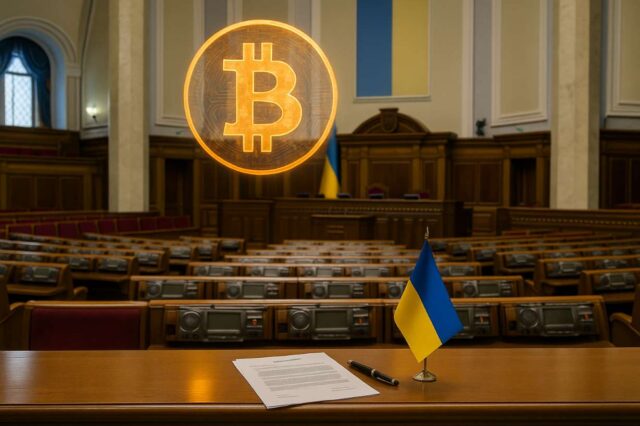
A photo-realistic 3:2 image of Ukraine’s parliamentary chamber with a Ukrainian flag, official legislative document, and a glowing Bitcoin symbol above the speaker’s podium, illustrating the Ukraine Bitcoin reserve bill proposal.

Ukraine is taking a bold step toward integrating Bitcoin into its financial system. A new bill submitted by Ukrainian lawmakers proposes the inclusion of digital assets, chiefly Bitcoin, into the country’s official foreign exchange reserves. If passed, the legislation would empower the National Bank of Ukraine to manage these assets directly, opening the door to a Ukrainian Bitcoin reserve as a strategic hedge amid ongoing geopolitical and economic instability.

A Legislative First: Bill Seeks to Add Virtual Assets to State Reserves

The newly introduced Ukraine crypto bill aims to redefine how the country manages its reserves. It would allow the central bank to acquire and hold virtual assets, including Bitcoin and potentially other major cryptocurrencies. Spearheaded by a group of reformist lawmakers, the legislation outlines the legal mechanisms for integrating digital assets into Ukraine’s financial infrastructure.

The bill defines Bitcoin and similar tokens as “virtual assets with monetary value”. It proposes their management under the existing monetary framework. The bill’s authors argue that this step would modernize Ukraine’s fiscal policy, creating a resilient economic buffer against traditional fiat currency volatility.

Strategic Resilience in a Wartime Economy

The country is under constant financial strain due to the ongoing war with Russia. Therefore, Ukraine’s government actively seeks ways to stabilize its economy and diversify its financial toolkit. The Ukraine Bitcoin reserve proposal reflects a broader search for alternatives to dollar- or euro-dominated instruments.

Facing rising inflation, a shrinking tax base, and reliance on external funding, the bill signals a desire to protect national wealth through scarce, decentralized assets. Supporters liken Bitcoin to digital gold: a hedge against fiat depreciation, especially in economies exposed to geopolitical shocks.

This isn’t just a financial decision; it’s a signal. A Ukrainian Bitcoin reserve would place the country alongside the few nations exploring Bitcoin as a sovereign store of value, projecting both resilience and innovation.

Central Bank’s Role: From Fiat Custodian to Crypto Custodian

Under the draft law, the National Bank of Ukraine (NBU) would be authorized to manage, store, and potentially deploy digital assets like Bitcoin as part of the national reserves. The proposed framework would also require the NBU to establish secure custody protocols, valuation methods, and liquidity measures specific to volatile crypto markets.

The initiative marks a significant shift in central bank crypto policy. It expands the NBU’s traditional role from managing fiat and gold to navigating the complexities of decentralized digital assets. While the central bank has not yet issued a formal comment on the proposal, sources suggest internal consultations are already underway with both domestic and international experts.

Expert Warnings: Between Visionary Reform and Financial Risk

Not everyone is convinced. Financial analysts have raised red flags over the proposal, pointing to the Bitcoin macroeconomic risk profile. Critics warn that crypto’s volatility, lack of regulatory harmonization, and susceptibility to manipulation make it a poor fit for conservative national reserve strategies.

Others express concern over potential IMF pushback. Ukraine’s economic recovery plans rely heavily on international partnerships. Embracing unregulated digital assets could raise questions about long-term fiscal discipline.

Still, advocates argue that the crypto legislation in Ukraine is part of a natural evolution. It aligns the country with fintech trends and signals to global investors that Ukraine is open to innovation, even during wartime.

Global Context: Ukraine Among Early Movers in Crypto-Reserve Policy

If adopted, the virtual asset reserve bill would place Ukraine in a small but growing group of states exploring Bitcoin in national reserves. El Salvador remains the most prominent example, though its approach has drawn mixed reviews. The Central African Republic has also ventured into this space, with limited success.

Ukraine, however, brings a different backdrop. It’s known for its tech-savvy human capital and pre-existing crypto regulations. And the war economy forces creative monetary strategies. Hence, the country legalized crypto exchanges and accepts Bitcoin donations during the war. These moves underscore a pattern of proactive engagement with the sector.

What Comes Next: Legislative Roadmap and Market Impact

The bill will now undergo committee review and parliamentary debate. If approved, it would trigger a set of regulatory follow-ups involving the NBU, the Ministry of Finance, and possibly international stakeholders.

The outcome could reshape Ukraine’s financial profile, either as a digital pioneer or as a cautionary tale. Whether the Ukrainian Bitcoin reserve becomes a stable instrument or a volatile experiment will depend on implementation details, market timing, and geopolitical context.

Ukraine’s crypto reserve proposal is more than a legislative experiment. It’s a reflection of the national survival strategy under extreme conditions. The effort to establish a Ukrainian Bitcoin reserve embodies both the country’s forward-thinking resilience and the precarious nature of betting on volatile assets during times of war. Whether this move cements Ukraine’s place as a crypto-forward state or adds complexity to its recovery remains to be seen. However, one thing is certain: the world is watching.

Readers’ frequently asked questions

Does the bill specify which cryptocurrencies Ukraine can hold in its reserves?

No. The current draft refers broadly to “virtual assets” with monetary value. While Bitcoin is expected to be the primary focus, the legislation does not explicitly name specific cryptocurrencies.

What is the timeline for the bill’s review and possible implementation?

The bill must undergo committee review and parliamentary debate before a vote. If approved, implementation would depend on the central bank’s readiness and the development of accompanying regulations. No official timeline has been announced.

Is Ukraine the first country to hold Bitcoin in reserves?

No. El Salvador and the Central African Republic have previously explored or implemented similar measures. However, Ukraine would be the first to do so in the context of an active war economy with established crypto regulations.

What Is In It For You? Action items you might want to consider

Monitor Ukraine’s central bank guidance

If you are a fund manager, policymaker, or institutional trader, watch for updates from the National Bank of Ukraine. Learn how it plans to operationalize crypto asset reserves, including custody and valuation frameworks.

Evaluate Bitcoin’s use in sovereign reserves

Ukraine’s move could set a precedent. Analysts and crypto treasury managers should examine how Bitcoin’s role in national reserve management might evolve. Will similar initiatives emerge in other high-risk economies?

Assess political and IMF responses

Keep an eye on how international organizations, including the IMF and EU partners, respond to Ukraine’s crypto strategy. Their stance may influence the bill’s final design or viability.

- Advertisement -

FEATURED