Home Blog Page 106

Sberbank’s Strategic Play: Bonds, Bitcoin, and Market Liquidity

Photo-realistic illustration of a Bitcoin coin, bond certificate, and fountain pen on a marble desk at sunset, with Sberbank’s glass tower reflecting financial charts and the Kremlin in the background—symbolizing institutional crypto adoption in Russia.

The Central Bank of Russia is still cautious. But Sberbank is moving fast. In June 2025, the bank launched its first Sberbank Bitcoin bonds, a milestone for institutional crypto access in Russia. With plans to act as a liquidity provider for regulated platforms, Sberbank is not just adapting – it is leading the country’s crypto-financial transformation.

Sberbank’s Role in the Russian Financial System

Sberbank is a cornerstone of Russia’s economy. It serves over 100 million clients and operates with close ties to the state. Over the last decade, it has led the push into financial technology. Projects include blockchain platforms, tokenized assets, and a dedicated innovation unit, Sberbank Blockchain Lab.

In 2022, the Central Bank granted Sberbank a license to issue digital financial assets. This was one of the first such approvals in the country. It laid the groundwork for the bank’s crypto-linked offerings.

Bitcoin-Linked Structured Bonds

On June 2, 2025, Sberbank launched structured bonds tied to Bitcoin and the USD/RUB exchange rate. These are offered only to “super-qualified” investors, under rules set by Russian regulators.

The bond structure is conservative by design:

  • Principal is protected. Investors avoid losses if Bitcoin drops.
  • Variable yield. Returns increase if Bitcoin gains value.

This setup lets institutions earn crypto-related returns without holding digital assets. It’s aligned with Russia’s cautious but advancing crypto policy.

Operating Within Regulation

Sberbank’s product follows the law. It operates under the Central Bank’s “experimental legal regime.” This limited-access framework supports innovation within tight limits, keeping retail exposure out of reach.

Partnerships with infrastructure providers like the Moscow Exchange ensure all activity is anchored in the state-regulated financial system. This isn’t crypto outside the system – it’s crypto domesticated.

Sberbank as Market Maker for Digital Assets

Beyond product innovation, Sberbank plans to become a market maker for Russia’s regulated digital asset platforms. That means providing liquidity, facilitating trades, and ensuring orderly markets.

This aligns with the broader state strategy:

  • Create a parallel financial ecosystem outside of Western control.
  • Ensure liquidity and confidence in newly emerging crypto markets.
  • Keep state-owned institutions at the center of that infrastructure.

Sberbank is not just building products. It’s building the rails they’ll run on.

Strategic Goals

Sberbank’s actions serve several strategic goals:

  • Defend market leadership in the age of decentralized finance.
  • Reduce dollar reliance by promoting local digital instruments.
  • Serve elite investors with higher-yield, structured products.
  • Support sovereignty by building crypto infrastructure under Russian control.

This strategy mirrors Russia’s geopolitical goals, blending financial modernization with control.

Global Implications

The launch of Sberbank Bitcoin bonds sends a clear message. Even a sanctioned, state-owned bank can move ahead in crypto. This is no longer fringe; it’s financial infrastructure.

But challenges remain:

  • Will private or international firms get access to the same tools?
  • Can this model scale without global participation?
  • Is this innovation, or centralization in disguise?

Russia’s crypto model may soon become a case study for other governments.

Conclusion

Sberbank is no longer just a bank. It is a central force in Russia’s evolving crypto landscape. With the launch of Sberbank Bitcoin bonds and plans to provide liquidity across digital markets, it is actively constructing the future of finance on the government’s terms.

Where the Central Bank hesitates, Sberbank builds. Its dual role as product innovator and infrastructure provider puts it at the core of Russia’s hybrid financial model; part traditional, part digital, all tightly controlled.

Coming Next

In Part 4 of the series, we explore the legal terrain behind user access:
“Crypto Trading in Russia: What’s Legal, What’s Not?”

Deutsche Bank and Ant International Join Forces as Stablecoin Ambitions Rise

Photo-realistic illustration of two business professionals shaking hands outside Deutsche Bank headquarters, symbolizing a fintech partnership, with a digital euro stablecoin symbol and global payment network overlay, illustrating Deutsche Bank stablecoin collaboration with Ant International.

Deutsche Bank is stepping up its digital finance strategy with a dual-track move that could reshape how traditional banks engage with blockchain innovation. The German banking heavyweight is exploring the launch of a euro-denominated stablecoin. At the same time, it has announced a strategic partnership with Ant International, the fintech affiliate of Alibaba. This alliance aims to provide integrated cross-border payment solutions to global merchants, signaling a broader pivot toward tokenized financial infrastructure.

Stablecoin Strategy in the Making

At the core of Deutsche Bank’s digital ambitions is a critical decision. The bank is weighing two options: launching a proprietary stablecoin or joining a consortium-led initiative focused on tokenized deposits. This exploration comes amid growing client demand and a clearer global regulatory landscape.

Although technical details remain undisclosed, reports suggest that any potential stablecoin would be euro-pegged and backed by fiat reserves. It would likely align with the EU’s Markets in Crypto-Assets Regulation (MiCA). Use cases could include real-time settlements, programmable payments, and improved corporate treasury operations.

Strategic Alliance with Ant International

Shortly before news of its stablecoin ambitions surfaced, Deutsche Bank revealed a new partnership with Ant International. The collaboration is designed to enhance cross-border payment services for international merchants. It will leverage Ant’s extensive payment network and Deutsche Bank’s global financial infrastructure.

While the partnership announcement did not mention stablecoins, the alignment is clear. Both companies aim to modernize outdated payment systems, and a regulated, blockchain-based settlement layer would fit naturally into this effort.

Deutsche Bank, which manages high-volume corporate payments across Europe and Asia, could use access to Ant’s merchant ecosystem to pilot digital assets. A euro stablecoin tailored for B2B transactions could complement this integration.

Navigating a Complex Regulatory Terrain

This move comes as regulators worldwide formalize rules around stablecoins and tokenized deposits. The MiCA framework has now taken effect across the European Union. Meanwhile, innovation sandboxes in Hong Kong and Dubai are also gaining traction.

Unlike early stablecoin experiments, Deutsche Bank’s initiative would operate within regulated, audit-ready frameworks. Whether through its own issuance or a consortium approach, the bank is preparing to meet both compliance demands and market needs.

Notably, other traditional banks have already moved into this space. JPMorgan introduced JPM Coin, while Société Générale launched a euro-based token under French regulatory approval. Deutsche Bank’s entrance signals that eurozone financial leaders are ready to participate more actively.

Implications for TradFi and Merchant Services

If Deutsche Bank proceeds, its stablecoin could have wide-ranging effects. A euro-backed token from a traditional institution, integrated with Ant International’s global reach, could become a key liquidity rail. This would benefit B2B remittances, merchant settlements, and global trade flows.

More broadly, it highlights how legacy banks are evolving. They are no longer just observers of blockchain finance but are becoming key players in its development.

By combining licensed financial systems with the flexibility of decentralized technologies, Deutsche Bank and Ant International may help define the next era of trusted digital money.

Readers’ frequently asked questions

What has Deutsche Bank confirmed about its stablecoin plans?

Deutsche Bank has confirmed it is exploring two options: launching its own euro-denominated stablecoin or joining an industry-led tokenized deposit initiative. No final product has been announced.

What is the purpose of Deutsche Bank’s partnership with Ant International?

The partnership focuses on delivering integrated cross-border payment solutions for global merchants. It combines Deutsche Bank’s global infrastructure with Ant’s fintech capabilities.

Which regulation applies to stablecoin projects in the EU?

Stablecoin projects in the European Union are regulated under the Markets in Crypto-Assets Regulation (MiCA), which requires reserve backing, operational transparency, and regulatory registration.

What Is In It For You? Action items you might want to consider

Track Deutsche Bank’s integration into tokenized finance ecosystems

Follow how Deutsche Bank engages with consortium-based digital asset platforms or pursues its own stablecoin. This could impact future enterprise payment standards and custody models.

Evaluate cross-border B2B opportunities through fintech-bank alliances

Deutsche Bank’s partnership with Ant International highlights a growing trend of fintech-bank integration. Businesses engaged in international trade should watch how this affects transaction speed, fees, and compliance.

Monitor euro-denominated stablecoin development under MiCA

As Deutsche Bank explores stablecoin issuance under MiCA, traders and payment providers should assess implications for regulated euro-backed digital assets across the EU.

Dollarizing by Download: How Tether Became Bolivia’s Lifeline

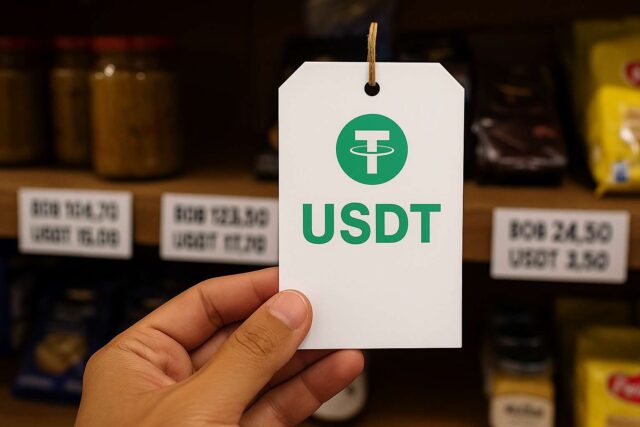
A close-up of a USDT price tag held in front of store shelves in a Bolivian shop, illustrating Bolivia stablecoin dollarization amid economic crisis.

When Tether’s CEO, Paolo Ardoino, posted a photo of goods priced in USDT at a Bolivian airport duty-free shop, it looked like a crypto marketing stunt. But behind the polished shelf lies a deeper truth. In Bolivia, the national currency is collapsing, inflation is climbing, and citizens are turning to stablecoins; out of necessity, not speculation.

https://twitter.com/paoloardoino/status/1931357900808589393

As the economy deteriorates, stablecoin dollarization in Bolivia is no longer hypothetical. Tether (USDT) is quietly becoming the functional currency of choice. What began as a workaround is now shaping how people store value, transact, and survive.

The Boliviano Is Breaking Down

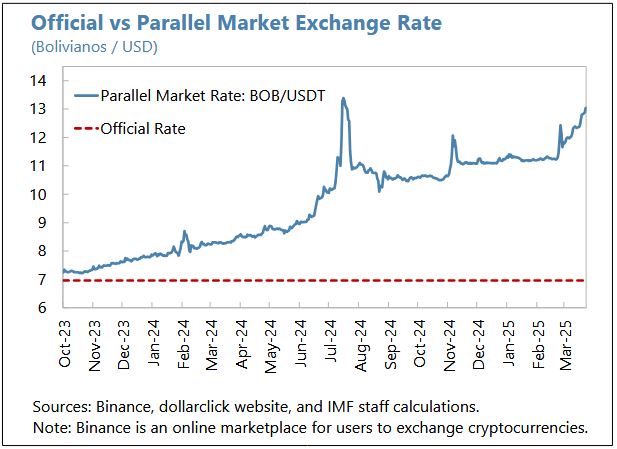
Bolivia is facing a severe economic crisis. Inflation reached 15% year-over-year in early 2025. The black-market rate for U.S. dollars is more than 80% higher than the official rate. Confidence in the Boliviano has evaporated.

Source: IMF Country Report No. 25/116

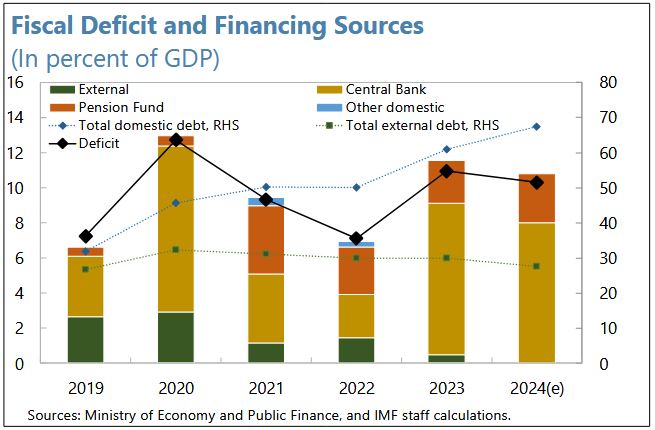
The country’s foreign reserves are almost gone. Public debt now stands at 95% of GDP, with deficits over 10% annually. The government is covering these gaps by printing money. Gas exports have collapsed, and Bolivia is now importing fuel, often without enough dollars to pay.

Source: IMF Country Report No. 25/116

Crypto Moves from Fringe to Everyday

In June 2024, Bolivia lifted its long-standing crypto ban. By October, Banco Bisa launched a USDT custody platform. Users can legally buy, hold, and send stablecoins using a licensed interface. Crypto is now integrated into traditional banking.

Adoption began slowly. But by early 2025, even the state oil firm, YPFB, had started using USDT to import fuel. Though the move was later reversed, it showed something important: crypto was useful, even at the highest levels of government.

At the same time, everyday Bolivians were turning to Tether. Informal merchants and shopkeepers started using it. With the Boliviano losing value and physical dollars scarce, USDT became the next best option.

Stablecoin Dollarization Without a Policy

Bolivia has not officially dollarized. But in practice, citizens are doing it themselves, with smartphones and crypto wallets.

Tether’s appearance at an airport shop may seem symbolic. Yet it mirrors what’s happening across border towns, cities, and informal markets. More businesses are pricing goods in USDT. More consumers are using it to protect their income.

This trend mirrors developments in countries like Argentina and Venezuela, where stablecoins have become a trusted hedge against currency collapse. The difference in Bolivia is speed: stablecoin dollarization unfolded in just a matter of months, with USDT moving from fringe asset to functional currency.

The numbers tell the story. Monthly trading volume via Banco Bisa now exceeds $15 million. Wallet apps like Binance and WhiteBIT have doubled their download rates in the past year. Over 250,000 Bolivians now hold digital assets, mostly stablecoins.

A Lifeboat, Not a Revolution

Most Bolivians aren’t buying crypto for ideological reasons. They are doing it because it works. USDT offers price stability, fast transfers, and functions like a digital dollar in a country that desperately needs one.

When food and fuel are harder to find, crypto becomes a tool. It helps families preserve their savings, bypass unstable banks, and trade in something they can trust. In Bolivia, crypto is not a revolution. It’s a lifeboat.

This shift wasn’t planned. It wasn’t driven by lawmakers. It happened because people needed a way to survive. And in that, it became powerful.

Pushback from the State

The Bolivian government is uneasy. In May 2025, it banned YPFB from using crypto for energy payments. Officials cited fears of losing monetary control and undermining the Boliviano.

But the timing was telling. The ban came just weeks after the government had authorized the same activity. This back-and-forth highlights the tension. Citizens want functionality. The state wants control.

And as crypto use grows, so will this conflict.

A Warning – and a Roadmap

Bolivia is one of the first countries to undergo informal dollarization via stablecoins. But it may not be the last. In other fragile economies, where inflation is high and reserves are low, this could be the future.

What Bolivia shows is simple: dollarization no longer needs a policy. It needs a wallet app.

Those price tags in USDT weren’t just clever marketing. They were a signal. They showed that Bolivia’s national currency has lost its role. Trust has moved to the blockchain.

In a broken economy, trust becomes the currency. And today, in Bolivia, that currency is Tether.

Readers’ frequently asked questions

Yes. Since June 2024, the Central Bank of Bolivia has allowed regulated financial institutions to offer crypto services. USDT is not legal tender, but individuals can hold and transact it through licensed channels like Banco Bisa.

Can I pay in USDT at regular shops in Bolivia?

There is no official mandate requiring merchants to accept USDT, but anecdotal evidence suggests growing informal acceptance, particularly in border towns, urban centers, and duty-free outlets.

What does stablecoin dollarization mean in practice?

It refers to the informal use of stablecoins like USDT as a substitute for the national currency. In Bolivia, this means people are storing value, quoting prices, and settling transactions in stablecoins instead of the boliviano or physical USD.

What Is In It For You? Action items you might want to consider

Monitor stablecoin policy reactions in Latin America

Bolivia’s case could influence how other emerging markets approach crypto in inflationary environments. Watch for regulatory shifts in Argentina, Peru, and Paraguay.

Track merchant acceptance of USDT in Bolivia

Keep an eye on whether more Bolivian retailers display prices in USDT. This can signal deeper informal dollarization and opportunities for wallet providers and fintech startups.

Evaluate risk vs. functionality in stablecoin use

Stablecoins offer convenience but exist in a gray zone in many jurisdictions. Users and businesses in Bolivia and similar economies should assess regulatory risk, custody options, and platform reliability.

The Central Bank vs. the Market: Who’s Steering Russia’s Crypto Direction?

Photo-realistic illustration of a serious Russian central bank official seated in a modern boardroom, with Bitcoin and Ruble symbols on a digital screen and the Kremlin faintly visible through the window, illustrating the Central Bank of Russia's cautious crypto stance.

As Russia embraces digital finance, one institution stands at the center of a growing divide: the Central Bank of Russia (CBR). While the government legalizes crypto mining and state-owned banks experiment with Bitcoin products, the CBR remains cautious. It promotes strict oversight, advances its own central bank digital currency (CBDC), and resists broad access to cryptocurrencies.

The issue is no longer whether crypto belongs in Russia. It’s about who controls how it’s used.

The CBR’s Original Position: Total Rejection

In 2021, the CBR proposed a complete ban on cryptocurrency activities. It saw crypto as a threat to financial stability and monetary policy. Concerns included capital flight, illicit transactions, and market volatility. The proposal targeted mining, trading, and ownership alike.

This hardline approach clashed with the Ministry of Finance. While the CBR pushed for prohibition, the Finance Ministry advocated regulation. Their disagreement stalled action. But it also revealed a deeper divide within Russia’s financial leadership.

The Digital Ruble: Controlled Innovation

Though hostile to crypto, the CBR advanced the digital ruble as a state-backed alternative. It positioned the CBDC as a tool for control and oversight.

The central bank’s goals were clear:

  • Preserve control over monetary policy
  • Enable government-level transaction tracking
  • Build payment rails independent of foreign systems

Pilot tests began in 2023 and expanded in 2024. Still, public interest was modest. Most curiosity centered on Bitcoin and stablecoins, not the centrally controlled ruble.

Forced Adaptation: Crypto as a Sanctions Tool

Russia’s invasion of Ukraine in 2022 brought sweeping sanctions. Banks lost SWIFT access. Reserves were frozen. Payment routes collapsed. In that moment, crypto went from threat to necessity.

By 2024, the CBR allowed crypto mining and cross-border payments. But the move came with restrictions. It was framed as part of a limited “experimental regime.” Only “super-qualified investors” could participate.

The bank made space for crypto. But it did so reluctantly.

Current Stance: Cautious Regulator or Reluctant Participant?

Today, the CBR supports a fragmented system.

Allowed:

  • Crypto mining
  • International trade using digital assets
  • Access for high-net-worth investors

Restricted:

  • Retail crypto use
  • Domestic crypto payments
  • Stablecoin issuance

The CBR remains wary. It warns about DeFi risks and market manipulation. Its public stance emphasizes investor protection and system stability. Even as others open the door, the CBR keeps it half shut.

Institutional Tensions: CBR vs. Ministry of Finance vs. Sberbank

Russia’s crypto framework is shaped by three main forces:

  • CBR: Defensive, slow-moving, focused on control
  • Ministry of Finance: Open to innovation and pragmatic regulation
  • Sberbank: Bold, product-driven, and eager to lead adoption

The Ministry and Sberbank promote growth. The CBR acts as referee. It grants approvals carefully and enforces narrow boundaries.

Strategic Implications

The Central Bank of Russia may never support crypto openly. But its regulatory power is decisive. Licensing, enforcement, and digital ruble strategy will shape the industry’s direction.

Russia walks a fine line between innovation and state control. The CBR’s grip will determine which side it lands on.

Conclusion

The Central Bank of Russia’s crypto policy has shifted. It no longer blocks all use, but it doesn’t fully support it either. Mining is legal. Bitcoin-linked products are emerging. But the CBR is cautious and deliberate.

Russia’s crypto future depends on how far its central bank is willing to yield. The rules are changing, but the referee still holds the whistle.

Coming Next

In Part 3 of this series, we shift focus to Russia’s largest financial institution:
“Sberbank’s Strategic Play: Bonds, Bitcoin, and Market Liquidity”

Circle’s $25B Surge: How the IPO Reignited Crypto Market Confidence

Traders celebrate on the NYSE floor as CRCL leads a Circle stock surge, with green tickers displaying strong post-IPO gains and rising crypto market confidence.

After a well-hyped but uncertain lead-up, Circle’s debut on the New York Stock Exchange has turned into one of the most surprising crypto market wins of 2025. Within two trading days of its IPO, the Circle stock surge sent the company’s valuation soaring past $25 billion. That’s more than triple its initial target of $6.7 billion.

While many saw the IPO as a much-needed liquidity event for the USDC issuer, its explosive performance has redefined how investors are pricing the future of regulated stablecoins and crypto-native financial infrastructure.

From $6.7B to $25B: The Surge Explained

Circle’s stock opened with a 168.5% gain on its first day of trading. By the second day, it had climbed another 44.7%, propelling the company’s market cap to nearly $25 billion. That’s a remarkable turn from its original IPO pricing, which had been relatively modest given recent crypto market volatility.

The Circle stock surge surprised many market watchers, especially those who had written off stablecoin issuers as regulatory targets rather than growth assets. Trading volumes spiked as institutional investors jumped in, betting that Circle’s compliance-first approach to USDC would pay off in the long term.

Ripple Effects Across the Crypto Stock Landscape

Circle’s blockbuster listing had an immediate spillover effect on other public crypto companies. Coinbase, a stakeholder in Circle and USDC’s primary exchange partner, saw its shares climb in tandem. Other crypto-exposed firms, including MicroStrategy and Marathon Digital, posted double-digit gains amid renewed bullishness on the sector.

For a market still recovering from the reputational fallout of 2022–2023, the IPO wasn’t just a win for Circle. It was a broader signal of crypto market confidence. Investors appear to be recalibrating their outlook on firms that have regulatory clarity and enterprise-level infrastructure.

Stablecoins Gain New Legitimacy

Circle’s NYSE listing marks the first successful public listing of a major stablecoin issuer. The performance validates, at least in the short term, a model of transparency, dollar reserves, and U.S. regulatory engagement. In contrast to offshore competitors like Tether, Circle’s pitch to regulators has always been one of compliance-first financial integration.

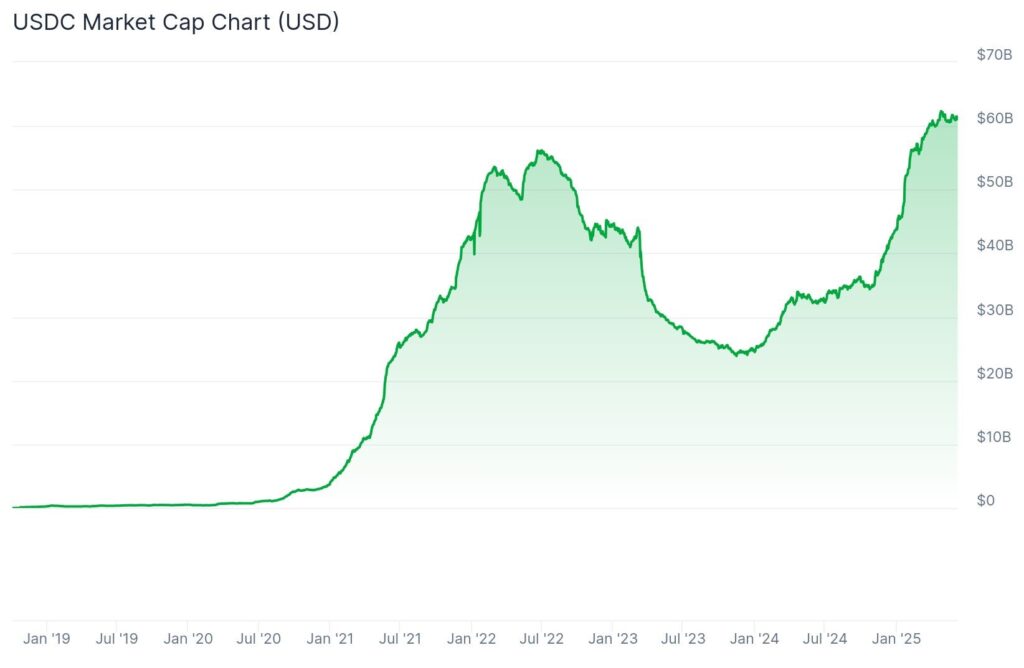
The stock surge has placed Circle’s USDC in a new strategic position. While its market cap is still below its 2022 peak, the IPO gives Circle new capital to reinvest in product development and policy engagement. It also boosts the visibility of stablecoin regulation as a mainstream policy issue in financial markets.

Source: coingecko.com

What Comes Next for Circle, and for the Industry?

Circle’s newfound war chest raises questions about what comes next. Expansion into payments, cross-border finance, or enterprise blockchain infrastructure is likely. There’s also speculation about future public crypto companies following suit, especially those involved in tokenization, trading, or custody.

Whether Circle’s success can be replicated remains unclear, but it’s already changing the conversation. The IPO has put a spotlight on investor appetite for compliant digital asset businesses. It may well reignite discussions around mergers and acquisitions that had previously stalled.

The Circle stock surge has redefined what success looks like for crypto firms entering public markets. With a $25 billion valuation now in play and institutional sentiment shifting, Circle’s IPO has become a milestone. For the company and the broader maturation of the crypto industry. Regulated digital asset companies may finally be ready for prime time – and the market is listening.

Readers’ frequently asked questions

Why did Circle’s stock price surge so dramatically after the IPO?

The sharp price movement was driven by investor optimism about Circle’s regulatory position, the perceived stability of USDC, and the company’s role in compliant crypto infrastructure. Strong demand for exposure to crypto firms with regulatory clarity helped drive the rally.

How does this affect USDC users and holders?

While the stock surge doesn’t directly change how USDC functions, it strengthens Circle’s financial position and credibility. That could lead to more institutional integrations and user confidence in the stablecoin’s long-term reliability.

Where can I track Circle’s stock performance going forward?

Circle trades on the New York Stock Exchange under the ticker symbol CRCL. Investors can follow its stock performance through financial platforms, brokerage apps, or directly on the NYSE website.

What Is In It For You? Action Items You Might Want to Consider

Monitor how Circle uses its IPO capital

Watch for announcements about new products, global expansion, or lobbying initiatives. Circle’s financial strength post-IPO could influence stablecoin development and regulatory negotiations.

Assess changing sentiment toward public crypto companies

Circle’s performance may mark a turning point in how investors evaluate crypto stocks. Keep an eye on trading volumes and price movements of other listed firms like Coinbase and MicroStrategy.

Stay informed on upcoming stablecoin regulation

As Circle gains visibility, U.S. and international regulators may sharpen their focus on the stablecoin space. Traders, developers, and fintech operators should follow related policy developments closely.

- Advertisement -

FEATURED