
Home Blog Page 108

CertiK May Report Reveals Crypto Social Engineering as Top Threat in 2025
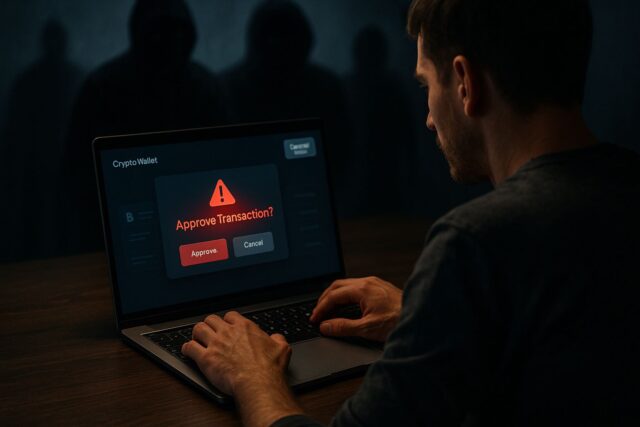
A man sits at a desk in low light, staring at a laptop screen displaying a suspicious crypto wallet approval request. Hooded figures loom in the background, symbolizing the threat of crypto social engineering attacks.

Despite improved wallet security tools and smarter phishing detection, crypto losses have reached $2.1 billion in 2025, according to CertiK’s May 2025 crypto report. The most revealing insight isn’t about broken code; it’s about broken trust. Increasingly, crypto social engineering is proving to be a more effective attack vector than smart contract bugs or technical flaws. Hackers no longer need to breach protocols when they can simply trick users into giving up access voluntarily.

The Shift: From Code to Cognition

While phishing emails and fake websites have declined thanks to better detection systems, human error crypto hacks are climbing. CertiK highlights a wave of psychological crypto scams that bypass security tools by targeting users directly. These attacks rely on fake support channels, deceptive wallet approval prompts, and impersonation tactics that exploit attention lapses and trust.

More importantly, these attacks don’t require any technical breach. In many cases, no code is broken, but assets disappear instantly. CertiK warns that even thoroughly audited systems are helpless if users sign a malicious transaction or trust the wrong interface.

DeFi’s Open Doors to Exploitation

May’s CertiK report also confirms that DeFi remains the most exploited area. This month alone, $302 million was lost, largely due to flash loan attacks and oracle manipulation. These exploits are technically complex but often succeed because users don’t fully understand the protocols they’re using – a problem rooted not just in design, but in behavior.

To make matters worse, these attacks often go unnoticed until it’s too late. In contrast to traditional phishing, these threats prey on complexity and confusion. Without clear guidance or centralized support, many DeFi users are vulnerable to making critical mistakes. In its report, CertiK describes this as an extension of the blockchain human factor, where users, not systems, are the weakest link.

https://twitter.com/CertiKAlert/status/1929523667391639631

The Limits of Traditional Defenses

Improvements in scam prevention tools have reduced some risks. Browser wallets now alert users to suspicious approvals, and community bots can flag malicious tokens in real time. But crypto social engineering evolves quickly. Hackers mimic influencers, fake entire Discord communities, and create nearly identical dApps designed to mislead.

Even as DeFi platforms become more secure technically, psychological crypto scams are growing more sophisticated. They don’t require code manipulation. They only need one user to click too fast or trust too easily.

Behavioral Security: The Missing Layer

To close the gap, experts are urging a stronger focus on behavioral defenses. That means better interface design, more intuitive user flows, and smart friction points that warn users before executing sensitive actions.

  • Embedded risk alerts in wallet interfaces
  • Standardized transaction previews
  • Interactive approval walkthroughs
  • Scenarios that train users to spot crypto social engineering in action

CertiK also advocates for better user education and more accessible auditing tools to reduce the risk of human error crypto hacks. Without these, even the most secure protocol is one poor decision away from compromise.

The Real Vulnerability Isn’t the Code

The 2025 crypto landscape is making something painfully clear: the enemy isn’t always a hacker exploiting a bug — it’s the mirror. Losses today are more often caused by the blockchain human factor, where psychology, not software, determines risk.

The final takeaway from the latest CertiK report is blunt: audits can secure code, but only awareness, education, and thoughtful UX can protect users from themselves. To move forward, crypto must protect not just the system, but the person using it.

Readers’ frequently asked questions

Are there tools that help detect or block social engineering scams in crypto?

Yes. Some browser extensions and wallet integrations now flag suspicious smart contracts or phishing attempts in real time. Tools like Wallet Guard, ScamSniffer, and browser-based anti-phishing plugins can add an extra layer of behavioral protection.

How can I know if I’ve already fallen victim to a crypto social engineering attack?

If you’ve approved an unknown transaction, signed a wallet prompt from an unverified source, or interacted with a fake support channel, your assets may be at risk. Review your wallet activity, use approval management tools like Revoke.cash, and immediately revoke permissions you don’t recognize.

How can I protect myself from psychological crypto scams?

Stay alert to unsolicited messages, double-check URLs and wallet prompts, use browser security extensions, and never approve unknown smart contract interactions. Education, skepticism, and slow, deliberate actions are your best defense.

What Is In It For You? Action items you might want to consider

Audit your approval history in Web3 wallets

Check tools like Revoke.cash to review and remove unnecessary token or contract approvals you may have signed in the past. This minimizes risk from lingering permissions.

Train yourself to recognize common crypto social engineering tactics

Follow cybersecurity guides and test yourself using scam simulation tools or community-driven safety resources. Knowing what to expect is the first line of defense.

Prioritize behavioral security in tool selection

Use wallets and DeFi interfaces that offer clear transaction previews, permission alerts, and anti-phishing warnings. Favor platforms that are designed with human error in mind, not just code security.

From Meme Chaos to Crypto Empire: Pump.fun Aims for $1B Raise with 420M Tokens and a $4B Vision

A vibrant digital illustration of a futuristic crypto carnival booth labeled "Launchpad," where a smiling robot tosses glowing PUMP tokens marked "420.69" into the air. In the background, a storm cloud shaped like a legal gavel looms over a neon-lit Solana-style cityscape, symbolizing Pump.fun's $1B token launch amid legal scrutiny.

Pump.fun, the viral Solana-based launchpad that turned chaotic meme culture into on-chain financial engineering, is preparing for its boldest move yet: a $1 billion token raise that would give the platform a projected $4 billion valuation. Known for its frictionless, permissionless token creation model and absurdist branding, Pump.fun now seeks to evolve into a fully tokenized platform with the release of its native PUMP token. This shift comes as legal scrutiny intensifies, with the platform facing multiple class-action lawsuits over alleged securities fraud.

What Is Pump.fun and How Did It Work Until Now?

Pump.fun emerged as a decentralized crypto token launch platform built on Solana. It allows anyone to launch a meme coin in minutes, with no coding skills or approvals required. The platform automates liquidity provisioning and pricing using a bonding curve model. Early buyers get cheaper entry points, and token prices rise as demand increases.

Until now, Pump.fun operated without a native token. It generated revenue through protocol fees but lacked a governance or reward mechanism. Despite that, the platform exploded in popularity, launching over 11 million tokens and becoming a go-to for Solana meme token creators.

By simplifying token creation and capitalizing on viral momentum, Pump.fun built a decentralized meme coin ecosystem without issuing a token of its own.

Inside the $1 Billion Token Launch

The upcoming PUMP token launch marks a strategic transition. Pump.fun will issue 420.69 million PUMP tokens and aims to raise $1 billion through this initial coin offering (ICO). This $1B ICO crypto campaign will value the project at $4 billion.

The tokens will be distributed across community airdrops, influencer campaigns, and team allocations. A treasury will manage the remaining supply, likely through a multi-signature wallet. Reportedly, leading Web3 venture capital firm Standard Crypto is backing the platform. While the exact utility of the PUMP token is still unfolding, we should expect it to play a central role in governance, rewards, and access to future features.

Why Now? From Viral App to Token Economy

Pump.fun’s timing is deliberate. The platform has ridden the wave of Solana’s meme coin boom, alongside tokens like $WIF, $BODEN, and $BONK. The platform built its user base and brand well ahead and positioned itself to capture more value through tokenization.

By introducing its own token, Pump.fun is transforming from a utility-first DApp into a token-powered Web3 launchpad project. The tokenized meme economy it helped ignite is now becoming its primary business model. Through PUMP, the platform can reward loyal users, attract fresh liquidity, and reinforce its place in the Solana ecosystem.

Despite its success, Pump.fun is under mounting legal pressure. Two class-action lawsuits are pending in the Southern District of New York. Plaintiffs argue that Pump.fun enabled the sale of unregistered securities through tokens like PNUT, FWOG, and GRIFFAIN. The lawsuits claim the platform is effectively a joint issuer of these assets.

Operated by Baton Corporation Ltd., Pump.fun is also accused of facilitating pump-and-dump schemes and failing to implement basic investor protections. The legal challenge worsened after law firms involved in the cases discovered tokens mocking their clients and attorneys on the platform, raising allegations of intimidation and bad-faith behavior.

If U.S. courts classify tokens launched via Pump.fun as securities, the entire decentralized meme token model may face regulatory upheaval.

Pump.fun’s Gamble: Parody, Profits, and Precedent

Pump.fun has always existed at the intersection of parody and profit. Its brand is a meme, but its numbers are real: hundreds of millions in fees, a billion-dollar raise, and a growing investor base. As it introduces a native token, the platform must now answer whether meme-fueled crypto projects can scale responsibly.

The PUMP token represents more than just capitalization, it marks a formal entry into a regulated digital economy. That transition may draw further attention from regulators already skeptical of decentralized finance.

Pump.fun’s gamble is clear: formalize its meme-powered empire without losing the viral magic that made it famous. Whether that strategy leads to sustainable growth or legal precedent remains to be seen.

Readers’ frequently asked questions

Does Pump.fun currently require KYC or investor verification for token creators?

No. As of June 2025, Pump.fun does not implement Know Your Customer (KYC) checks or age verification for users launching tokens. The class-action lawsuits raised this lack of investor screening as one of the issues.

If courts determine that tokens launched on Pump.fun (including PUMP itself) are securities, it could expose U.S.-based participants to compliance risks. The legal outcome may also impact future trading or the availability of the token on regulated platforms.

Is the $1B raise already completed or still upcoming?

The raise is still upcoming. The PUMP token launch and its $1B target have been announced but not finalized. The project has confirmed investor interest, including support from Standard Crypto.

What Is In It For You? Action items you might want to consider

Monitor the launch structure of PUMP tokens

Pay attention to how the PUMP token is distributed, whether through public sale, airdrop, or private allocations, and what governance or utility functions are promised.

Evaluate risk exposure before participating

If you’re based in a jurisdiction with active securities regulation (like the U.S.), consider the legal risks tied to meme coin projects and unregistered token sales before participating in PUMP-related offerings.

Follow updates in the two class-action lawsuits filed against Pump.fun. These cases could reshape the legal definition of meme tokens and influence the future of Solana-based launchpads.

WazirX’s Rebrand to Zensui Raises Eyebrows as User Access Remains Frozen

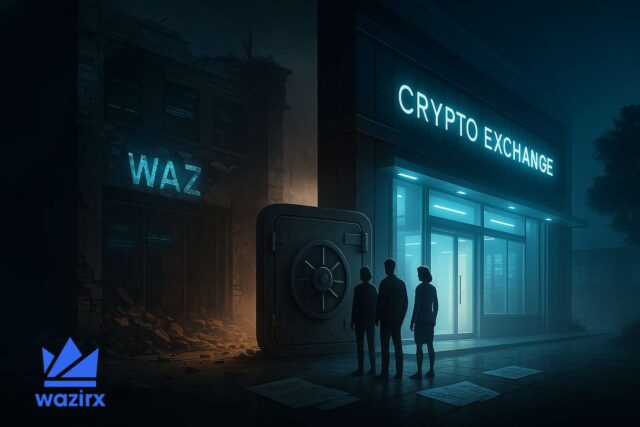
Digital illustration symbolizing the WazirX rebrand to Zensui, showing a split scene with a crumbling exchange on one side and a modern crypto exchange on the other. Three silhouetted users stand in front of a locked vault door, representing frozen accounts amid legal delays.

Editor’s Note – June 4, 2025: This article has been updated following the Singapore court’s rejection of the WazirX restructuring plan. Jump to the update.

WazirX is now Zensui. The platform has a new name, a new jurisdiction, and a public narrative of renewal. But for thousands of users still unable to trade or withdraw, the rebrand offers no relief. Until the court lifts the moratorium, the relaunch remains out of reach.

The road to Zensui began with a crisis. In July 2024, WazirX suffered a major cyberattack that disrupted operations and led to a sweeping restructuring effort. To stabilize, the exchange’s parent company, Zettai Pte Ltd, filed a Scheme of Arrangement in the Singapore High Court, seeking protection and creditor approval.

In March 2025, the company secured overwhelming support: more than 90% of voting creditors backed the restructuring plan. A key milestone, but not the final hurdle.

As the case moved through Singapore’s legal system, a court-imposed moratorium on user payouts and trading was granted, and the court has since extended it multiple times. As of now, it remains in effect until June 6, 2025.

Zensui: A New Name, A New Jurisdiction

On June 1, 2025, WazirX officially announced its rebrand to Zensui and its relocation from Singapore to Panama, citing the country’s crypto-friendly regulatory stance. The move was framed as a clean slate: a way to distance the platform from past operational baggage and offer a modernized, independent exchange.

Yet the announcement timing, just days before the expected court decision, struck some as premature. Critics argue that core user issues remain unresolved while the name and jurisdiction have changed.

Users Still Locked Out

Despite progress on paper, WazirX users still cannot access their funds or trade. The Singapore court’s extended moratorium continues to prevent withdrawals, deposits, and platform activity.

This has caused increasing frustration among retail investors, particularly as the broader crypto market shows signs of recovery. With trading volumes rising globally, many feel they are being unfairly sidelined at a crucial moment.

Calls to lift the moratorium ahead of the bull market have grown louder, but the court has so far remained cautious.

The BitGo Spotlight – But What Happened to Zodia?

As part of its relaunch strategy, Zensui has highlighted a new custodial partnership with BitGo, emphasizing its commitment to institutional-grade security. BitGo’s involvement was reiterated in the June 1 rebrand announcement and appears to be central to Zensui’s post-recovery identity.

But one name was conspicuously absent: Zodia Custody. In March 2025, WazirX had also announced a partnership with Zodia, yet recent statements have excluded it entirely. There has been no official comment from either party about the status of that collaboration.

The selective focus on BitGo has sparked speculation that the Zodia deal may have stalled, or that it was more promotional than practical from the start.

June 6: Decision Day

All eyes are now on the Singapore High Court’s June 6 hearing. A favorable ruling could finally lift the moratorium and allow Zensui to resume full operations under its new identity. An unfavorable outcome would prolong the freeze and further erode user confidence.

For users still waiting to access their funds, the question isn’t whether Zensui has changed; it’s whether that change actually matters.

Update: Singapore Court Rejects WaxirX Restructuring Plan, Zensui Relocation Confirmed

On June 4, 2025, the Singapore High Court formally rejected WazirX’s proposed restructuring plan, citing procedural inconsistencies and undisclosed intentions to relocate operations to Panama. The decision invalidates months of legal proceedings and puts the future of user compensation in question.

Just hours after the ruling, the company, already rebranded as Zensui, announced it would fully exit Singapore and operate solely under Panamanian jurisdiction. While Zensui claimed the move had been planned independently of the court outcome, media reports indicate the relocation was already in motion before the ruling.

The court’s rejection also casts doubt on the previously proposed recovery token scheme and creditor settlement roadmap. Although Zensui has expressed intent to appeal, the abrupt shift in jurisdiction has sparked renewed concerns over transparency, enforceability, and user trust.

For users still waiting to regain access to their assets, the hope of a structured legal recovery under Singapore’s oversight now appears unlikely.

Readers’ frequently asked questions

Can I withdraw my crypto or funds from Zensui right now?

No. Withdrawals, deposits, and trading remain suspended due to a legal moratorium imposed by the Singapore High Court. This restriction is still in effect as of June 2025.

When will the platform reopen for trading?

The Singapore High Court is scheduled to rule on the restructuring plan on June 6, 2025. The platform can only resume operations if the court approves the plan and lifts the moratorium.

Do I need to take any action as a user before the court decision?

No immediate action is required from users. If the court approves the relaunch, Zensui must provide further instructions through official channels.

What Is In It For You? Action Items You Might Want to Consider

Track the June 6 court decision closely

The Singapore High Court’s upcoming ruling will determine if users regain access to funds. Mark the date and monitor official Zensui (formerly WazirX) communications.

Evaluate the BitGo custody narrative critically

While BitGo is a reputable partner, real user benefit depends on how the exchange implements custody. Keep an eye out for details on how they will secure your assets once trading resumes.

Reassess your position before re-engaging

If and when Zensui resumes operations, consider whether trust has been sufficiently restored before depositing new funds or resuming trading activity.

Dubai Approves Ripple’s RLUSD: Stablecoin to Power Real Estate and Finance in DIFC

Digital illustration of Dubai’s DIFC skyline at sunset featuring the Burj Khalifa, with a small RLUSD stablecoin symbol in the lower right corner, representing crypto adoption.

Dubai has officially approved Ripple’s RLUSD stablecoin for use within the Dubai International Financial Centre (DIFC). This marks a significant milestone in the city’s broader blockchain strategy. The green light from the Dubai Financial Services Authority (DFSA) places RLUSD among a limited group of crypto assets recognized under the DIFC’s regulated framework. The approval highlights the RLUSD stablecoin’s emerging role in tokenizing real estate and enterprise-level financial services.

Ripple RLUSD, launched in December 2024, is a fully backed, transparent stablecoin built on both the XRP Ledger and Ethereum. Its regulatory recognition in Dubai enables Ripple to begin deploying RLUSD in institutional finance applications and smart contract-driven real estate markets. This aligns with Dubai’s long-standing ambition to become a global crypto hub by fostering compliant innovation.

RLUSD Gains Traction in Dubai’s Regulated Crypto Ecosystem

With this latest DFSA approval, RLUSD joins a select group of tokens authorized for use in the DIFC. The DIFC is a special economic zone governed by English common law. The move reinforces Ripple’s stablecoin ambitions and aligns with Dubai’s broader crypto regulatory approval regime. The DFSA has been actively expanding its framework to accommodate asset-backed tokens with verifiable reserves and transparency. Ripple stated that RLUSD will meet these criteria.

This approval builds on Ripple’s deepening engagement in the region. In August 2024, Ripple partnered with the Dubai International Financial Centre Innovation Hub. The partnership aims to accelerate blockchain development and digital asset adoption across the UAE. This collaboration, alongside Ripple’s existing regional office within the DIFC, positioned the company to proactively align its products with Dubai’s regulatory and institutional ecosystem. It prepared the groundwork for RLUSD’s smooth regulatory entry.

This development also reflects Ripple’s broader Middle East expansion. While RLUSD remains in its early adoption phase, the company has confirmed the token will be fully backed 1:1 by cash and equivalents. With Dubai’s early regulatory endorsement, RLUSD may now serve as a foundation for cross-border payments and enterprise-grade blockchain applications in the region.

Tokenization of Real Estate on the Horizon

One of the most significant real-world applications for the RLUSD stablecoin in Dubai lies in real estate tokenization. Reports indicate that Dubai’s Land Department is actively working with blockchain companies to enable digital property transactions and smart contract-based ownership transfers. The presence of a DFSA-approved enterprise stablecoin like RLUSD could spur this transition by providing a compliant on-chain settlement layer.

Sources suggest pilot programs related to tokenized property sales and automated leasing agreements within the DIFC may soon use RLUSD. These initiatives align with Dubai’s vision for a more efficient, digitally governed economy powered by blockchain-based infrastructure.

Ripple’s Global Strategy Embraces Regulatory-First Markets

The Ripple stablecoin Dubai approval complements the company’s recent efforts to reposition itself as an enterprise blockchain provider. By focusing on regulated markets, Ripple appears to adapt its product offerings to jurisdictions encouraging financial innovation within legal boundaries. RLUSD is expected to serve both institutional liquidity needs and emerging use cases in tokenized capital markets.

This recognition also solidifies Dubai’s position as a leading destination for regulated crypto ventures. Unlike other jurisdictions where stablecoins often operate in legal grey zones, the DIFC crypto regulation offers legal clarity that appeals to global firms like Ripple.

A Gateway for RLUSD to Scale Internationally

The RLUSD stablecoin now stands at the intersection of regulatory clarity and technological application. With DFSA approval in hand, Ripple positioned itself well to use Dubai as a launchpad for the broader roll-out of its enterprise-grade token. Whether in real estate tokenization, B2B settlements, or sovereign collaborations, RLUSD is poised to play a central role in Ripple’s international expansion.

As Dubai continues implementing its blockchain strategy, RLUSD’s integration into DIFC’s legal and economic ecosystem may serve as a model for future stablecoin approvals elsewhere.

Readers’ frequently asked questions

Who regulates crypto tokens and stablecoins like RLUSD in Dubai?

The Dubai Financial Services Authority (DFSA) regulates crypto tokens in the Dubai International Financial Centre (DIFC). The DFSA oversees financial activity within the DIFC under a framework based on English common law.

Can individuals use RLUSD for everyday transactions in Dubai?

As of now, DFSA has approved RLUSD for use within the DIFC under its regulatory regime. This approval focuses on institutional and enterprise applications. There is no indication that it will extend for consumer use in retail settings.

What criteria must a stablecoin meet to gain DFSA recognition?

The DFSA recognizes stablecoins that meet specific requirements, including full asset backing, clear auditability, and operational transparency. The DFSA maintains a list of recognized crypto tokens that meet its standards.

What Is In It For You? Action items you might want to consider

Track RLUSD integration into enterprise platforms

If you follow developments in tokenized finance or are an enterprise user, monitor how RLUSD is rolled out in DIFC pilot programs, especially in real estate and B2B payments.

Evaluate jurisdictional opportunities for regulated stablecoins

RLUSD’s approval in Dubai may set a precedent for other financial hubs. Traders and fintech founders should watch for similar regulatory frameworks in markets such as Singapore or Hong Kong.

Monitor Ripple’s strategic expansion in the Middle East

Ripple is increasingly aligning with pro-crypto regulatory jurisdictions. RLUSD’s deployment may provide insight into Ripple’s broader roadmap for institutional finance and sovereign partnerships.

COINFEST ASIA 2025

Nuanu Creative City Bali is the breathtaking venue for COINFEST ASIA 2025.

Coinfest Asia returns this August with its most ambitious edition yet. The two-day event is centered around the “Full Moon,” symbolizing renewed optimism in the Web3 space. This year’s event will bring together a global crowd of 10,000+ founders, builders, investors, institutions, and creators for bold conversations, breakthrough ideas, and unforgettable moments.

Why Attend Coinfest Asia 2025?

With Southeast Asia seeing record crypto adoption and Indonesia alone counting over 20 million crypto users in 2024, the region is no longer just following the trend but setting it. Coinfest Asia 2025 is your chance to dive into this dynamic ecosystem and meet the minds shaping its future, whether you’re a seasoned investor, a developer eager to push the boundaries of decentralized tech, or simply curious about the future of digital assets.

Key Themes and Highlights

Coinfest Asia 2025 embraces the theme “Full Moon,” representing the renewed optimism of the Web3 space as the post-halving momentum kicks in and the crypto industry braces for a bullish new era. The 2025 edition introduces a new format with several new activities:

  • Web3 Accelerator for Institutions – In partnership with Saison Capital, BRI Ventures, and Coinvestasi, Coinfest Asia 2025 will host the final showcase of a global accelerator program focused on real-world asset tokenization. This initiative follows the launch of Project Wira, which highlights a potential US$88B market opportunity for asset tokenization in Indonesia.
  • Interactive Tournaments – Attendees can participate in various tournaments, including e-sports, paintball, board games, and metaverse competitions.
  • Hackathons – Witness developers and tech leaders join forces to solve real-world challenges with Web3, prototyping new ideas in an open, collaborative setting.
  • Live Trading Competitions – Be part of a live crypto trading battle where top traders compete in real time, combining strategy and market insights for prizes and leaderboard recognition.

Speakers and Panelists at the Coinfest Asia 2025

Coinfest Asia 2025 will feature a lineup of global leaders in the web3 space, including:

  • Alex Svanevik, CEO of Nansen
  • Tessa Wijaya, COO and CO Founder Xendit
  • Yat Siu, Co-Founder and Executive Chairman of Animoca Brands
  • Phillip Pon, CEO of Emurgo
  • Mega Septiandara, Governance Lead at dYdX Foundation
  • Kenneth Shek, Head of Strategy at Moca Network
  • Ella Qiang, Head of APAC, Berachain
  • Eowyn Chen, CEO of Trust Wallet
  • Amanda Cassatt, Founder and CEO of Serotonin
  • Saad Ahmed, Head of Asia Pacific at Gemini
  • Victor Ji, Co-Founder of Manta Network
  • Wei Zhou, CEO of Coins.ph
  • Alice Kim, Director of Fintech and Payments at HBAR Foundation

Venue and Registration

Coinfest Asia 2025 will be held at Nuanu Creative City, Bali’s creative and cultural hub. The event will start on August 21st, 2025, and run to August 22nd, 2025. Early bird tickets are available on the official Coinfest Asia website, with options for VIP, general admission, and group.

Whether you’re a seasoned investor, a developer eager to push the boundaries of decentralized tech, or simply curious about the future of digital assets, Coinfest Asia 2025 offers opportunities to learn, connect, and participate in the ecosystem directly. For information on how to purchase your tickets, speaker updates, etc, visit their official website.

- Advertisement -

FEATURED