Home Blog Page 109

Paris Saint-Germain Adds Bitcoin to Treasury in Historic First for Football
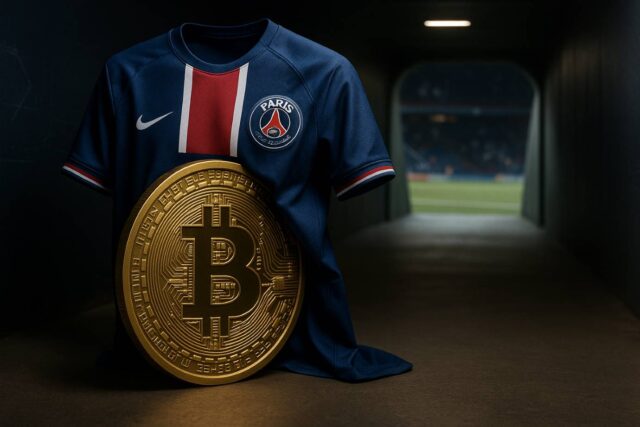
Paris Saint-Germain football jersey draped over a large golden Bitcoin coin in a stadium tunnel, symbolizing PSG Bitcoin treasury strategy.

Paris Saint-Germain has become the first elite football club to add Bitcoin to its treasury, marking a turning point in the integration of blockchain technology within professional sports. While many clubs have explored crypto through fan tokens, PSG’s move goes a step further. It placed Bitcoin, the world’s most valuable digital asset, on its balance sheet. The announcement, timed around the Champions League Final, positions PSG as a first mover in crypto-backed treasury strategy among global football clubs.

A Treasury Play, Not Just a Token Gimmick

During the Bitcoin 2025 Conference in Las Vegas, PSG confirmed that it has been accumulating Bitcoin and now holds a BTC treasury reserve. While they didn’t disclose the exact size of the reserve, sources suggest the club began purchasing Bitcoin in 2024. The move is unprecedented in the football world and aligns PSG with a growing number of corporations, such as Tesla and MicroStrategy, that have added BTC to their financial reserves as a hedge against fiat volatility.

The club timed the announcement to coincide with its appearance in the 2025 UEFA Champions League Final. This allowed PSG to capitalize on global media attention and amplify its message. It’s not just about hype; PSG is signaling a serious financial commitment to digital assets.

From Fan Tokens to Financial Strategy

PSG has been an early adopter in the crypto space, launching the $PSG Fan Token in partnership with Socios.com back in 2020. The token, built on the Chiliz blockchain, lets fans vote in polls, earn VIP rewards, and access club experiences. Until now, the club focused its blockchain activity on fan engagement.

Now, PSG is shifting from fan engagement tools to a Bitcoin-based financial strategy. This move shows how digital assets are moving from the periphery to the core of sports finance.

Market Impact and Token Dynamics

The announcement had immediate market consequences. The $PSG Fan Token, which had already seen volatility during the Champions League campaign, initially surged on the news of the Bitcoin treasury but then retreated. This matches patterns seen in other fan token cycles where prices rise on hype and fall after results.

This reflects the “buy the rumor, sell the news” effect, well known in both crypto and traditional markets. Past research, such as during the 2022 World Cup, shows that fan tokens often rally ahead of major matches and drop after the games, regardless of the outcome.

PSG’s Web3 Vision Beyond the Hype

More than just a one-time investment, PSG’s adoption of Bitcoin fits into a broader Web3 strategy. Club representatives have said they aim to explore blockchain solutions that improve transparency, digital collectibles, and fan engagement. Holding Bitcoin is a foundational step that could support future efforts such as NFT ticketing, decentralized voting, or tokenized merchandise.

This makes PSG not just a football club with a crypto sponsor, but a sports organization building its own digital infrastructure.

The Bigger Picture: Football Meets Finance 2.0

PSG’s Bitcoin treasury sets a new standard in professional sports. Other clubs like Barcelona, Juventus, and Manchester City have issued fan tokens, too. However, none have committed to holding Bitcoin or other digital assets in their treasury.

For the crypto industry, this validates the idea that Bitcoin is not just speculative – it’s becoming a legitimate asset class. For football, it redefines what it means to be a modern, global club.

By merging engagement tools with long-term Bitcoin strategy, PSG is turning crypto adoption from a trend into a structural shift. Other clubs, leagues, and federations will likely be watching closely.

Readers’ frequently asked questions

What does it mean that PSG holds Bitcoin in its treasury?

It means Paris Saint-Germain has purchased and is holding Bitcoin as part of its financial reserves. This is similar to how companies or institutions keep assets like cash, gold, or stocks on their balance sheets.

Is Bitcoin the same as the PSG Fan Token?

No. Bitcoin is a decentralized cryptocurrency used globally and held as a financial asset. The PSG Fan Token is a club-specific digital token used for fan engagement, such as voting in club polls or accessing exclusive rewards.

How can a football club hold Bitcoin?

Like any business or organization, a football club can open a digital wallet or work with a custodian to securely store Bitcoin. The BTC appears as part of its financial records, similar to how cash or investments are recorded.

What is in it for you? Action items you might want to consider

Track Fan Token Behavior Around Events

Fan token prices tend to rise before major events and drop afterward. If you’re trading tokens like $PSG, use these windows strategically.

Watch for Institutional BTC Adoption in Sports

PSG’s treasury move could mark the beginning of a new trend. Monitor whether other clubs or leagues begin to explore Bitcoin or other crypto reserves.

Separate Utility from Speculation

If you’re holding $PSG tokens, remember they’re built for engagement, not investment. Don’t confuse short-term market pumps with long-term value.
FTX Commences $5 Billion Creditor Repayment in Stablecoins

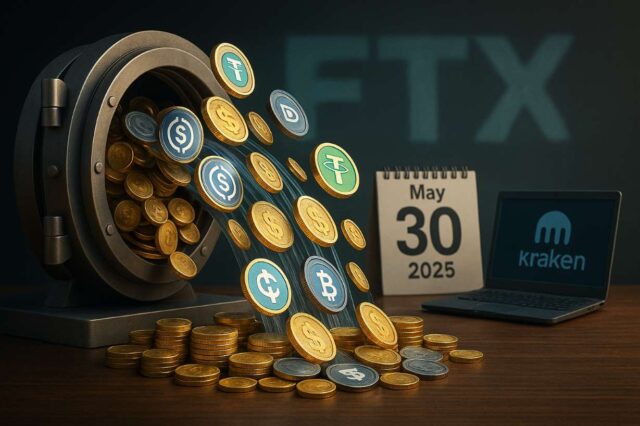
Open digital vault releasing USDC and USDT coins with Kraken terminal and May 30, 2025 calendar, symbolizing FTX stablecoin creditor payout.

After months of anticipation, the FTX Recovery Trust has initiated the second major creditor repayment phase. More than $5 billion in stablecoins began distribution on May 30, 2025, making it one of the largest repayments in crypto bankruptcy history. This marks a critical step toward resolving claims tied to the exchange’s 2022 collapse.

This time, payments are made entirely in stablecoins, including USDC and USDT, giving creditors immediate access to liquid assets.

Structured Repayments Backed by Key Custodians

Kraken and BitGo, two trusted crypto custodians selected for their regulatory strength and infrastructure, handle the FTX creditor payout. Both began releasing funds on May 30, ensuring accurate and secure disbursement.

Repayments vary across creditor classes, based on the value of assets as of November 11, 2022, the date FTX filed for bankruptcy. The payout structure is as follows:

  • Dotcom Customer Entitlement Claims – 72%
  • US Customer Entitlement Claims – 54%
  • Convenience Claims – 120%
  • General Unsecured Claims – 61%
  • Digital Asset Loan Claims – 61%

These figures were approved as part of the Chapter 11 plan and reflect negotiations finalized earlier this year.

Exclusions Based on Jurisdictional Barriers

Not all creditors will receive payments. Regulatory and legal restrictions exclude users from over 160 countries. Affected regions include Egypt, Iran, Russia, Greenland, Pakistan, and others.

According to the FTX Recovery Trust, accounts tied to these jurisdictions remain frozen. Payouts are on hold pending further clarification from legal authorities.

Market Liquidity and Crypto Recovery Hopes

This $5 billion distribution introduces a significant injection of stablecoin liquidity into the market. Analysts estimate that the payout accounts for more than 2% of the total stablecoin supply.

Industry watchers believe this liquidity could revive trading volumes, especially in altcoins, as many retail creditors now have spendable funds. Although markets remained relatively calm over the weekend, trading desks are bracing for increased activity in the coming days.

Mixed Reactions: Relief vs. Resentment

Despite the scale of the repayment, not all FTX creditors are pleased. Critics argue that using 2022 asset prices for valuation shortchanges users.

For example, Bitcoin was trading below $17,000 at the time of bankruptcy. Today, it trades above $65,000. This discrepancy means many creditors are recovering far less than the current value of their original holdings.

Some legal representatives are exploring whether they can challenge these payout calculations under existing bankruptcy statutes.

What Comes Next?

This second repayment round is significant, but it doesn’t close the case. Trustees are still pursuing asset recovery and clawbacks tied to venture investments and other FTX holdings.

A third distribution phase may begin later in 2025, though the trust has not disclosed any specifics yet. Legal proceedings involving former executives, including Sam Bankman-Fried, also remain active in U.S. courts.

Final Thoughts

FTX’s $5 billion stablecoin repayment shows that a measured, professional resolution can follow even one of the industry’s most catastrophic collapses. Using stablecoins and secure custodians like Kraken and BitGo, the FTX Recovery Trust has managed to restore part of what was lost.

However, the continued exclusion of certain users and the use of outdated asset prices serve as reminders that recovery, while substantial, is still far from complete.

Readers’ frequently asked questions

How do I know if my repayment has been processed yet?

You can check your repayment status by logging into the FTX Claims Portal or the platform (e.g., Kraken or BitGo) assigned to your payout. Eligible users received emails with distribution details. If you haven’t received one, ensure your claim was verified and that you’re not in an excluded jurisdiction.

Why are repayments based on November 2022 prices?

Under U.S. bankruptcy law, asset values are typically frozen at the time of filing. FTX filed for Chapter 11 protection on November 11, 2022. Creditors are being repaid based on the value of their assets at that time, not current market prices.

Can excluded creditors still receive repayment in the future?

Possibly. The repayment currently excludes creditors in sanctioned or high-risk jurisdictions due to compliance restrictions. However, the FTX Recovery Trust has stated that these accounts remain frozen, not forfeited, pending legal developments or jurisdictional changes.

What is in it for you? Action items you might want to consider

1. Review your claim class and payout percentage

Check which category your claim falls into (e.g., Dotcom, US, Convenience) and confirm that your repayment aligns with the announced percentage for that class.

2. Plan for the market impact of increased stablecoin liquidity

Be aware that $5B in new stablecoins may affect short-term price action, especially in altcoins. Adjust your trading strategy accordingly.

3. Monitor upcoming announcements about the third payout round

The FTX Recovery Trust may announce a third distribution phase later in 2025. Stay informed to act quickly when they release the timeline and eligibility details.

SharpLink’s Ethereum Play Sends Stock Soaring After $425M PIPE Announcement

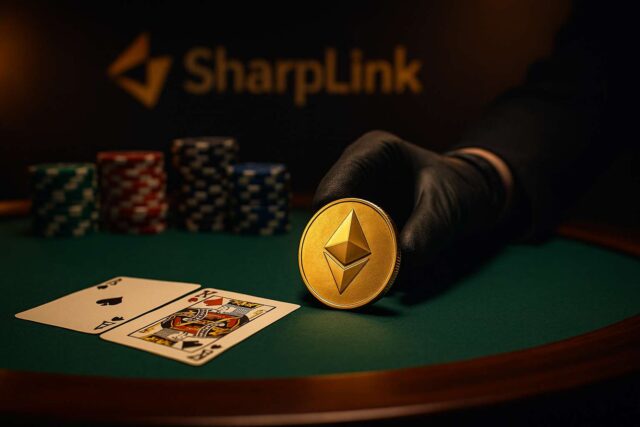
A gold Ethereum coin is pushed forward on a green poker table by a gloved hand, flanked by playing cards and stacked chips, with the SharpLink logo subtly visible in the background; symbolizing SharpLink’s $1B Ethereum treasury move.

SharpLink Gaming is making headlines after announcing a bold $1 billion strategy to convert its corporate treasury into Ethereum (ETH). Investors quickly took notice. The move, which includes a confirmed $425 million private placement (PIPE), a fundraising method where shares are sold directly to institutional investors, sent SharpLink’s stock surging. Many are already comparing it to MicroStrategy’s famous Bitcoin accumulation plan.

Adding further weight to the initiative, Ethereum co-founder Joseph Lubin has been appointed Chairman of SharpLink’s Board. This signals a strong strategic alignment with the Ethereum ecosystem. The combination of high-profile leadership and a nine-figure ETH bet has sparked bullish momentum for both SharpLink and Ethereum’s broader corporate adoption narrative.

A $1B Ethereum Treasury Bet, Kicking Off with $425M PIPE

SharpLink filed a shelf registration with the U.S. Securities and Exchange Commission (SEC) for a $1 billion stock offering. Shelf registrations allow companies to register securities for future issuance. The first step in this plan: a $425 million PIPE financing deal, already secured.

Unlike typical capital raises for growth or operations, SharpLink earmarked this funding almost entirely to acquire Ethereum for its balance sheet. The company is shifting away from its core gaming focus, at least from a treasury perspective, and taking a bold position in crypto.

Market Reaction: Stock Price Surges on the News

The market reacted quickly. SharpLink’s stock price jumped, and trading volumes soared. The size of the Ethereum play and its potential precedent attracted both institutional and retail investors.

Analysts immediately drew comparisons to MicroStrategy’s early Bitcoin strategy. But SharpLink is taking a different path: betting on Ethereum over Bitcoin. This is the first publicly traded company to do so at scale. The message is clear: ETH is entering the treasury-grade asset class.

Lubin Joins the Board: A Strategic Power Move

The appointment of Joseph Lubin, co-founder of Ethereum and CEO of ConsenSys, is more than symbolic. It represents a strategic deepening of SharpLink’s connection to the Ethereum ecosystem.

His presence on the board adds credibility and technical oversight. It also reassures investors that the Ethereum treasury plan is grounded in expertise, not hype. Nearly every media outlet reporting on the announcement framed Lubin’s involvement as a serious vote of confidence.

Why Ethereum? Beyond Bitcoin for Treasury Reserves

So why ETH?

Ethereum offers more than just a store of value. It powers decentralized finance (DeFi), smart contracts, tokenized assets, and much of Web3. Unlike Bitcoin, which functions mostly as digital gold, Ethereum supports programmable value, a key feature for future corporate use.

SharpLink’s move suggests that Ethereum’s versatility, upgrade roadmap, and large developer base make it an attractive long-term treasury asset.

Ethereum’s Growing Role in Corporate Strategy

This announcement is part of a broader trend. Companies like Tesla, Square, and MicroStrategy pioneered Bitcoin adoption in corporate treasuries. But SharpLink is the first to center its treasury strategy on Ethereum.

It may spark a shift in how companies view crypto holdings. As the Ethereum ecosystem matures and regulatory clarity improves, ETH could begin to share Bitcoin’s status as a treasury reserve asset.

Investor Sentiment: A Bullish Pulse

Investor sentiment has been notably positive. Analysts are calling this “Ethereum’s MicroStrategy moment.” Across social platforms and investor forums, sentiment spiked. The idea that a public company would prioritize ETH this aggressively is being seen as a landmark moment.

ETH also saw a short-term price lift and an increase in trading activity. As with Bitcoin in 2020, corporate buy-in may act as a confidence signal for the market.

Risk Factors: Volatility and Regulation

However, this strategy is not without risks.

Ethereum remains volatile. Acquiring hundreds of millions in crypto exposes SharpLink to significant market swings. Additionally, regulators are still evolving their approach to corporate crypto holdings. SEC scrutiny and accounting standards could affect how companies report and tax ETH.

Execution risk also looms. SharpLink must time its Ethereum purchases strategically and manage treasury exposure carefully.

Conclusion: Ethereum Finds a Corporate Champion

SharpLink’s strategic pivot is bold and possibly historic. With $425 million already secured, a $1 billion acquisition roadmap laid out, and Ethereum’s co-founder Joseph Lubin in the boardroom, the company is sending a clear signal: Ethereum is ready for the corporate treasury spotlight.

If successful, SharpLink’s move may inspire a new wave of Ethereum-based treasury strategies and reshape how institutions think about crypto diversification.

Readers’ frequently asked questions

SharpLink believes Ethereum offers greater long-term utility than Bitcoin. Beyond acting as a store of value, ETH supports smart contracts, DeFi applications, and Web3 infrastructure, making it a programmable asset with broader strategic use.

PIPE stands for “Private Investment in Public Equity.” It allows companies to raise capital quickly by selling shares directly to institutional investors. SharpLink used this method to secure $425 million swiftly to initiate its Ethereum acquisition.

A shelf registration allows a company to register a large amount of securities in advance, so it can sell portions over time without filing separate registration statements for each issuance. SharpLink filed one to enable flexibility in raising up to $1 billion for its Ethereum treasury strategy, starting with the $425 million PIPE deal.

What’s in It for You? Action Items You Might Want to Consider

Watch ETH Price Movements

SharpLink’s large-scale ETH acquisition could influence short-term price volatility. Monitor accumulation patterns and price responses as their treasury plan rolls out.

Evaluate Corporate Adoption Signals

Use SharpLink’s pivot as a case study. If more firms follow suit with Ethereum-focused strategies, it could mark a shift in crypto treasury standards.

Reassess Portfolio Allocation

If you’re holding ETH or considering it, SharpLink’s treasury strategy may reinforce long-term confidence in Ethereum as an institutional-grade asset. Consider your exposure in light of this development.

G GATE CONFERENCE 2025

Tbilisi will host the G Gate Conference 2025

This June, Tbilisi becomes the epicentre of affiliate marketing innovation as G GATE CONF 2025 gathers over 2,500 professionals from the affiliate, iGaming, fintech, crypto, and digital marketing sectors. The two-day event will also host 150+ companies, 40+ interactive and entertainment zones, and a rich lineup of 20+ speakers, promising insightful discussions, hands-on experiences, and unparalleled networking opportunities.

Why Attend the G GATE CONFERENCE 2025?

G GATE CONF transcends the typical conference format by integrating interactive elements that cater to various facets of affiliate marketing. Here is what attendees can expect at this year’s event:

  • Real-Time Media Buying Tournament– Witness 16 teams compete live on Facebook with Nutra offers.
  • PITCH Competition – A start-up contest designed to help newcomers enter the affiliate business. The winner receives investment and full-scale support to launch their own project.
  • Various Networking Touchpoints – Over 40 interactive and entertainment zones. G GATE CONF 2025 features numerous spaces designed specifically for networking;
    • The open-air area between pavilions with comfortable seating and refreshments
    • Dedicated speed networking zones where you can meet multiple potential partners quickly
    • Interactive zones that spark natural conversations through shared activities
    • Coffee points are strategically placed throughout the venue
    • A press zone for media interviews and coverage
  • Diverse Industry Focus– Delve into key verticals, including iGaming, fintech, crypto, sweepstakes, Nutra, etc. Whether you’re a seasoned media buyer, an SEO expert, or exploring new affiliate opportunities, there’s tailored content for you.
  • Expert-Led Discussions– More than 20 speaker presentations from industry professionals sharing their insights on PPC, SEO, industry trends, and opportunities.
  • Exhibitions – Over 50 exhibitor booths, each with staff ready to answer your questions and explain their offerings.
  • G GATE AWARDS -Celebrate excellence in affiliate marketing across 15 categories during a gala dinner on June 28th.

Who Should Attend?

The G GATE CONFERENCE 2025 is for:

  • Media Buyers and Traffic Specialists
  • Affiliate Program Owners and Advertisers
  • Service Providers
  • Beginners and Career Switchers
  • Investors and Business Developers

Event Details

G GATE CONF 2025 will take place at Expo Georgia, Tbilisi’s main exhibition venue, on June 28 and 29, 2025. Tickets are available in four tiers: G-CONF Ticket, G-Member Ticket, ULTIMA Ticket, and LEGEND Ticket, which offers the ultimate conference experience, including a ticket to the G GATE AWARDS.  

For more information and to register, visit the official G GATE CONF website.

Santander’s Stablecoin Move: Retail Crypto Meets Regulation in Europe’s TradFi Shift

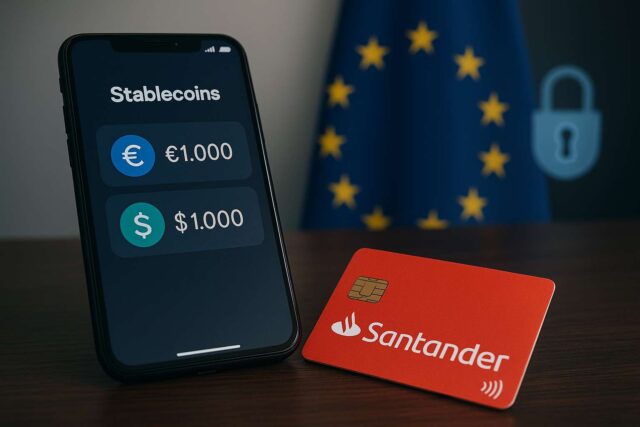
Smartphone displaying euro and dollar stablecoin balances next to a Santander debit card, with EU flag in background symbolizing MiCA-compliant crypto access.

Banco Santander, Spain’s largest bank, is preparing to issue a fiat-backed stablecoin, potentially pegged to both the euro and the U.S. dollar, in a major push to integrate digital currencies into its mainstream financial services. The initiative is currently in its pilot phase via the bank’s digital subsidiary, Openbank. With this move, Santander becomes one of the first European banks aiming to offer regulated crypto services directly to retail users.

This development reflects a broader trend among traditional financial institutions, or TradFi players, who are working to catch up with the pace of crypto innovation. It also marks a strategic use of regulatory momentum. With the European Union’s MiCA framework now in force, banks finally have a unified legal path to issue stablecoins within a clear regulatory environment.

MiCA as Catalyst: Europe’s Regulatory Opening

For years, regulatory uncertainty deterred banks from launching crypto initiatives. That changed with the arrival of MiCA, the EU’s landmark crypto regulation. Unlike the fragmented policies seen in the United States, MiCA provides a unified legal framework across the bloc. Santander is reportedly taking advantage of this by pursuing licenses through Openbank, its digital banking arm.

MiCA makes it easier for established financial institutions to enter the digital asset market. It allows regulated firms to issue stablecoins while meeting transparency and consumer protection requirements.

Stablecoin Strategy: Euro and Dollar Pegs in Development

Santander’s stablecoin strategy reportedly includes both euro- and dollar-pegged tokens, though no official launch date has been set. The initial focus will be on testing these tokens in controlled environments. The stablecoins will be fully backed by fiat reserves, complying with MiCA’s rules for asset-backed tokens.

Beyond simple digital payments, Santander may integrate these stablecoins into its broader financial services. Use cases could include cross-border transfers, faster settlements, and building blocks for future tokenized assets.

Retail Focus: Stablecoins for the Everyday User

A standout feature of Santander’s approach is its focus on retail crypto access. While most banks have limited blockchain pilots to institutional use, Santander plans to offer stablecoin services to everyday customers through Openbank.

This could involve digital wallets, fiat-to-stablecoin conversion tools, and even spending capabilities within Santander’s mobile apps. Users would gain exposure to crypto-backed payment options, without leaving the safety net of a regulated institution.

TradFi Enters the Arena: A Global Trend

Santander joins a growing list of traditional banks exploring the stablecoin space. JPMorgan has already launched JPM Coin for wholesale clients. PayPal rolled out its PYUSD stablecoin for retail users in the U.S. Meanwhile, France’s Societe Generale has issued its own Ethereum-based stablecoin for corporate payments.

Santander’s move shows that traditional finance and decentralized finance, DeFi, are beginning to overlap. Banks are now adopting blockchain infrastructure to offer services that mirror, and even rival, those built by crypto-native firms.

Market Implications: Challenging the Status Quo

The entry of a major bank like Santander could reshape a market long dominated by crypto-native issuers. Tether (USDT) remains the most widely used stablecoin, but it faces regulatory challenges, especially in Europe. Some platforms have delisted it due to MiCA non-compliance and limited transparency about its reserves.

In contrast, Circle, the issuer of USDC and EURC, has built a reputation for transparency and regulatory alignment. The company publishes regular reserve attestations, uses conservative backing (cash and short-term U.S. Treasuries), and is actively working to comply with MiCA. It has already registered with France’s financial authority.

Santander’s entry doesn’t displace Circle, but it adds pressure to the market. By offering stablecoins through a regulated bank with an existing customer base, Santander could accelerate the shift toward bank-issued digital currencies. Its role as a trusted financial institution may resonate especially well with European users.

What Comes Next

Santander’s stablecoin project remains in its early stages. However, with Openbank pursuing MiCA licenses and technical foundations being laid, a full launch could happen in late 2025 or early 2026. If successful, it may inspire other European banks to follow suit.

As regulation stabilizes and TradFi embraces blockchain tools, stablecoins may evolve from crypto-market utilities into everyday banking instruments.

Readers’ frequently asked questions

What makes Santander’s stablecoin initiative different from crypto-native stablecoins like USDC or USDT?

Santander’s stablecoins would be issued by a regulated European bank and fully aligned with MiCA rules from the outset. Unlike USDT, which has faced criticism over transparency and reserve management, and unlike USDC, which is issued by a private fintech firm, Santander’s tokens would carry the institutional trust and regulatory oversight expected from a traditional bank.

Are these stablecoins only for Santander customers?

At launch, access may be limited to Santander or Openbank users in eligible jurisdictions. However, depending on regulatory approval and market reception, wider access could follow, potentially via partnerships with other banks or platforms across the EU.

How might this affect the ECB’s digital euro plans?

While the digital euro is still in development, Santander’s euro-backed stablecoin could act as a private-sector complement. It might serve retail users sooner and with more flexible features, while the ECB focuses on public infrastructure. However, regulatory coordination will be essential to avoid overlap or confusion.

What is in it for you? Action items you might want to consider

Watch MiCA license approvals

Track whether Santander and Openbank successfully receive MiCA licenses. Approval would signal that Europe’s regulatory door is fully open for bank-issued stablecoins—potentially boosting the credibility of similar projects.

Evaluate the shift in stablecoin trust layers

If Santander launches a euro or dollar stablecoin, compare its adoption and spread against USDC and USDT. A move toward bank-issued tokens may shift how traders assess “safe” stablecoin collateral in DeFi or CeFi platforms.

Explore cross-border arbitrage or yield

Santander’s stablecoins could unlock eurozone-specific DeFi or payment rails. Traders might find new opportunities in arbitrage, on-chain FX trading, or regulated yield products that accept MiCA-compliant tokens.

- Advertisement -

FEATURED