Home Blog Page 110

VivoPower Bets Big on XRP: $121M Treasury Move Signals Corporate Shift
Photo-realistic image of a corporate boardroom with XRP logo on a digital screen, symbolizing VivoPower’s XRP treasury strategy and institutional crypto adoption.

Nasdaq-listed VivoPower is shaking up corporate crypto strategy by allocating $121 million toward an XRP-focused treasury. Such an unprecedented move could redefine digital asset management in the boardroom. The company’s bold pivot toward Ripple’s digital token signals an emerging trend of crypto integration into traditional finance, even as XRP’s price shows little immediate reaction.

A Strategic Shift: Inside the VivoPower XRP Treasury Plan

VivoPower has unveiled a digital asset treasury strategy centered entirely on XRP, backed by a $121 million private placement deal. The funding is expected to be used to acquire and hold XRP as a core treasury asset. This marks the first time a publicly listed company has initiated a treasury model focused exclusively on Ripple’s token.

The investment is supported by a Saudi royal family member, lending the initiative a layer of geopolitical weight. VivoPower has framed the move as part of a broader long-term XRP investment strategy. The goal is to future-proof its financial reserves through asset diversification and alignment with blockchain-based infrastructure.

So far, Bitcoin has been the go-to treasury asset for most corporate adopters. But this move signals the possible emergence of XRP as a contender for institutional portfolios. If successful, the strategy could catalyze wider XRP corporate adoption, particularly among companies seeking alternatives to dollar-denominated reserves.

Muted Market Reaction Despite the $121 Million XRP Fund

Despite the scale of the announcement, the XRP market response has been underwhelming. The token’s price has remained largely flat, suggesting a disconnect between institutional developments and immediate investor sentiment.

This tepid XRP price reaction reflects a broader dynamic in the crypto space. Strategic asset accumulation is increasingly diverging from short-term market speculation. The $121 million XRP fund is substantial. Still, it represents a relatively small share of XRP’s total liquidity and trading volume.
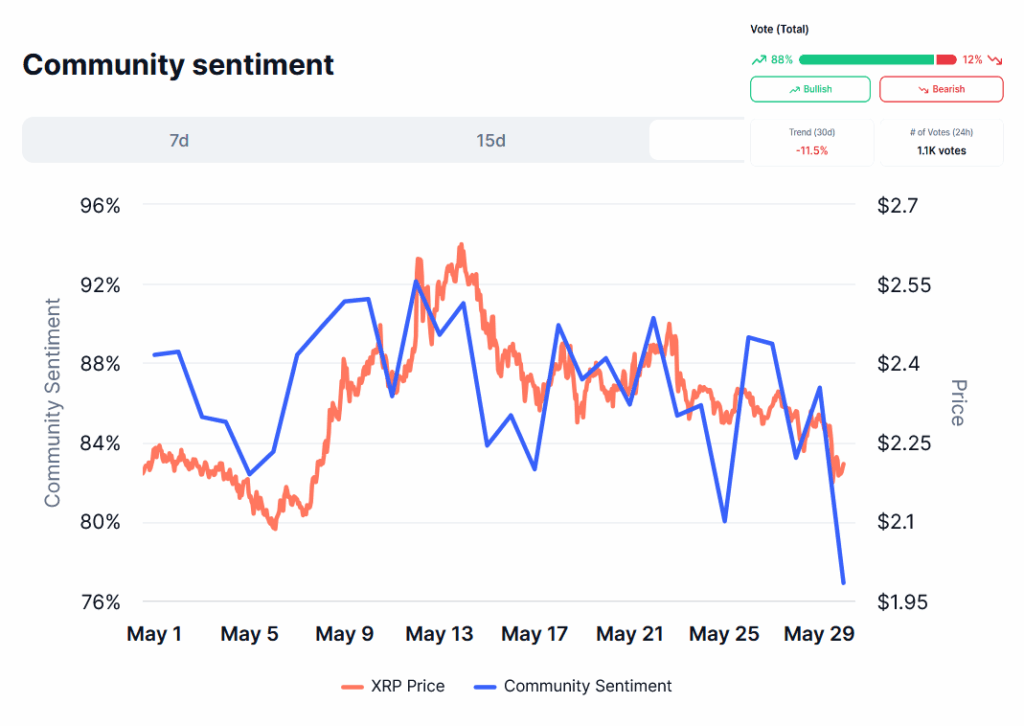
Source: CoinMarketCap.com

The regulatory backdrop may also be a factor. XRP continues to face legal and crypto policy challenges in certain jurisdictions, which could be dampening the enthusiasm of speculative traders despite the long-term strategic value implied by the treasury move.

Institutional Capital and Strategic Timing

The timing of the announcement coincides with the increasing involvement of Middle Eastern capital in the digital asset space. The Saudi prince’s backing of the project suggests a broader geopolitical calculus, one in which XRP could serve as a tool for cross-border finance, asset sovereignty, or monetary diversification.

By aligning with XRP at this moment, VivoPower is not only investing in a token. It is making a strategic play at the intersection of financial innovation and international positioning. The move stands as a case study in how corporate and sovereign interests may increasingly converge around blockchain-based assets.

Conclusion: A Calculated Bet on XRP’s Future

VivoPower’s $121 million XRP treasury marks a bold and calculated shift in corporate finance. The market has yet to reflect the significance of this move. However, the growing confidence in Ripple’s infrastructure and token utility seems undeniable.

As the first public company to commit this scale of funding to an XRP crypto treasury model, VivoPower is positioning itself at the frontier of XRP corporate adoption. If successful, this XRP investment strategy could set a new standard for digital asset reserves, one that merges traditional finance with the promise of blockchain innovation.

Readers’ frequently asked questions

Why would a company choose XRP over Bitcoin or stablecoins for its treasury?

XRP offers fast transaction speeds, low fees, and integration with Ripple’s cross-border payment infrastructure. For companies prioritizing utility over store-of-value status, XRP may offer operational advantages, though it comes with higher regulatory and reputational risks.

What risks does a company face when holding XRP in its treasury?

Risks include regulatory uncertainty, price volatility, and limited liquidity compared to more widely adopted assets like Bitcoin. Companies must also consider accounting complexities and potential scrutiny from shareholders and regulators.

How does an XRP treasury model compare to using stablecoins or Bitcoin for reserves?

Stablecoins offer lower volatility and ease of settlement, while Bitcoin is widely accepted as a digital store of value. XRP sits between the two: it’s faster and cheaper for transactions but carries more regulatory baggage. Choosing XRP reflects a strategic bet on Ripple’s ecosystem and future market integration.

What Is In It For You? Action Items You Might Want to Consider

Track institutional moves involving alternative tokens

Bitcoin isn’t the only crypto catching the attention of corporations. Keep an eye on XRP and similar assets making their way into treasury models.

The success of VivoPower’s strategy hinges partly on XRP’s regulatory clarity. Stay informed on court rulings and SEC positions that could influence adoption.

Evaluate long-term investment strategies beyond short-term price movement

The muted market reaction doesn’t necessarily invalidate XRP’s potential. Use this as a case study for balancing price speculation with fundamental adoption signals.

Global Blockchain Show Riyadh 2025

Riyadh skyline at night, Riyadh hosts The Global Blockchain Show in June 2025.

The third edition of the Global Blockchain Show will take place on June 23-24, 2025, in Riyadh, Saudi Arabia. It will bring together over 5,000 attendees, including 200+ industry experts, 300+ investors, and 250+ media representatives, to discuss advancements in blockchain technology and its applications across industries.

Who You’ll Meet at The Global Blockchain Show Riyadh 2025

  • Innovators and developers looking to contribute to Web3 infrastructure.
  • Investors and VCs looking to back the most promising blockchain start-ups.
  • Enterprise leaders – Decision-makers from private and government entities exploring bespoke blockchain integrations.
  • Educators and advocates dedicated to crypto literacy, financial inclusion, and the decentralization ethos.
  • Curious explorers- Anyone eager to grasp what Web3 means for their careers, businesses, or digital lives.

What to Expect

  • Expert-Led Discussions – Over 200 speakers will take to the stage, covering topics such as DeFi, NFTs, Web3 applications, and regulatory frameworks.
  • Start-up Pitch Competitions and Hackathons – Witness early-stage start-ups present their groundbreaking ideas to a panel of industry leaders and the global blockchain community.
  • Next Level Networking – Meet and engage with 5000+ attendees, including policymakers, entrepreneurs, and technologists.
  • Live Demos and Exhibitions – A chance to explore the latest blockchain solutions and technologies through live demonstrations and interactive exhibits.

Why Riyadh?

Saudi Arabia’s commitment to digital innovation, exemplified by initiatives like WASA (Web3 Alliance of Saudi Arabia), positions its capital, Riyadh, as a burgeoning hub for blockchain investments.

Saudi Arabia has introduced several initiatives to drive Web3 adoption in the country as part of Vision 2030. That also includes WASA, a network of blockchain and digital innovation leaders promoting Web3 integration. Other notable initiatives include:

  • CODE– A platform designed to support developers, founders, and tech entrepreneurs building blockchain solutions, offering funding, infrastructure, and mentorship.
  • The Capital Market Authority (CMA) Blockchain Push – A government organization overseeing and supervising the development and regulation of the capital market in the country.
  • NEOM’s XVRS Metaverse –A virtual metaverse enabling virtual exploration of the city.

Event Highlights

Dates: June 23–24, 2025
Location: Riyadh, Saudi Arabia
Organized by: VAP Group, powered by Times Of Blockchain
Attendees: 5,000+ delegates, 200+ speakers, 300+ companies, 250+ media representatives
Ticket Options: Delegate Pass, VIP Pass

For details on participation, speaker, or sponsorship opportunities, visit their website.

Circle’s $6.7B IPO Revival: A Second Chance for the USDC Issuer

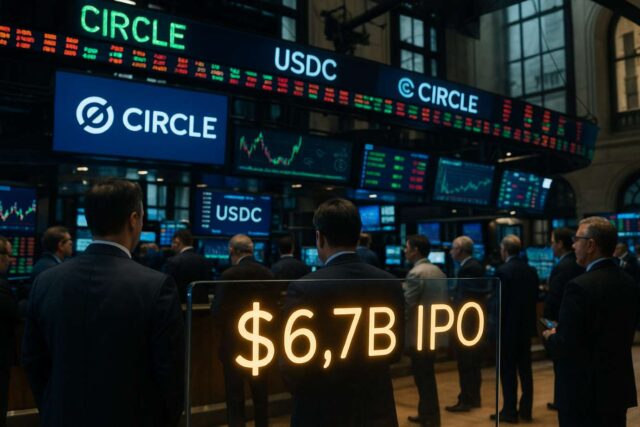
Traders observe digital tickers and monitors on the New York Stock Exchange floor during the Circle IPO listing, with USDC and $6.7B IPO graphics displayed.

Two years after its high-profile SPAC merger fell apart, the Circle IPO is officially back on track; this time via a traditional listing. The USDC issuer has filed to go public on the New York Stock Exchange, targeting a $6.7 billion valuation and aiming to raise $624 million through the share sale. The move signals a recalibrated attempt to anchor stablecoins in the U.S. financial mainstream and reclaim lost momentum after a period of retreat.

From SPAC Failure to Wall Street Debut

In 2021, Circle announced a merger with Concord Acquisition Corp, an SPAC deal that would have valued the firm at $9 billion. However, that agreement unraveled in late 2022 amid regulatory delays and shifting crypto market conditions. Circle quietly withdrew from the spotlight, shelving its ambitions—until now.

The newly filed Circle IPO outlines a leaner offering: 21.2 million shares that could raise $624 million. While the IPO proceeds are modest relative to the overall $6.7 billion valuation, they represent a significant capital injection. More importantly, they mark a renewed push to bring Circle stablecoin operations under public scrutiny.

The listing will include dual-class shares, a structure that grants insiders greater voting power. This detail has drawn comparisons to Facebook’s IPO and sparked some governance concerns.

Stablecoin Strategy in a Post-Terra Era

Circle’s revival comes as the stablecoin sector fights for credibility. Since TerraUSD’s collapse in 2022, scrutiny over reserve backing and systemic risk has intensified. USDC, backed by U.S. dollar reserves and Treasury assets, has retained its position as the second-largest stablecoin, with a supply of roughly $32 billion as of May 2025. That figure, however, is down sharply from its peak of over $55 billion.

The Circle NYSE filing presents the IPO as a milestone that could fortify USDC’s legitimacy. In an environment of tightening stablecoin regulation, going public may be as much about transparency as it is about raising funds.

Strategic Allies and Market Appetite

Investor demand for the Circle IPO appears robust. According to reports, the offering is already “multiple times oversubscribed,” indicating strong market interest. The IPO also brings renewed attention to Circle’s institutional backers, including Coinbase and Goldman Sachs. These relationships deepen the connection between Wall Street and the crypto ecosystem.

The Coinbase Circle IPO link is particularly notable. Coinbase not only holds a strategic stake in Circle but also plays a role in USDC’s ecosystem. Meanwhile, Goldman Sachs crypto investments underscore growing traditional finance interest in digital payment infrastructure.

IPO or Exit? Rumors of Acquisition Talks

While Circle publicly moves forward with its IPO, some reports suggest the company may have explored other strategic options earlier this year. The USDC issuer was reportedly approached with acquisition offers, including from major players in the crypto industry such as Ripple and Coinbase. The company has not publicly addressed these rumors, and the talks were never confirmed. Still, the timing of the Circle IPO raises questions about whether the move is aimed at strengthening its market position or gaining leverage for future negotiations.

The Circle IPO represents more than a capital raise, it’s a second chance for the USDC issuer to prove its relevance and resilience in a maturing crypto landscape. With a $6.7 billion valuation goal and strategic Wall Street backing, Circle is betting that public accountability will translate into long-term credibility. If successful, the Circle stablecoin strategy could set a precedent for future stablecoin IPO efforts amid intensifying regulatory scrutiny.

Readers’ frequently asked questions

How does Circle’s IPO affect USDC holders?

While the IPO doesn’t change how USDC operates directly, going public may increase transparency around Circle’s reserves, audits, and financial health, potentially boosting trust in USDC.

What risks come with Circle’s dual-class share structure?

A dual-class setup gives founders and early investors outsized voting power, limiting the influence of public shareholders. Some investors see this as a governance risk, especially if strategic decisions become controversial.

Could Circle still be acquired after the IPO?

An IPO doesn’t prevent acquisition, but it becomes more expensive and visible. If a buyer like Ripple or Coinbase remains interested, any future deal would require shareholder approval and public disclosure.

What Is In It For You? Action Items You Might Want to Consider

Track the Circle IPO listing date and investor disclosures

If you’re interested in the evolution of regulated stablecoins, monitor the official Circle IPO filings and listing updates on the NYSE. These documents can reveal insights about revenue streams, token economics, and risk factors.

Evaluate USDC’s market position post-IPO

Keep an eye on how the IPO affects USDC adoption across exchanges and DeFi platforms. Public accountability could boost confidence or expose new vulnerabilities.

Watch for regulatory responses to Circle’s listing

The Circle IPO may influence how U.S. regulators approach stablecoins going forward. Traders should monitor any changes in legislation or enforcement that could affect USDC or similar assets.

From Meme Stock to Bitcoin Whale: GameStop Makes $513M Crypto Bet

GameStop Bitcoin purchase visual showing office desk with Bitcoin coin, treasury documents, and screen displaying 4,710 BTC and price chart.

GameStop is back in the spotlight—not for short squeezes, but for scooping up thousands of Bitcoin in a headline-grabbing move. With a $513 million investment, the GameStop Bitcoin purchase marks a bold step into the world of digital assets and treasury diversification.

According to the company’s official press release, GameStop acquired exactly 4,710 BTC in May 2025. This makes it one of the largest public corporate holders of Bitcoin to date. The GameStop BTC acquisition puts the company alongside major Bitcoin-holding firms like MicroStrategy and Tesla.

Bitcoin Enters the GameStop Treasury

The move is part of a broader GameStop treasury strategy. It aims to reposition the company in a rapidly evolving financial landscape. The Bitcoin purchase, disclosed via BusinessWire and GameStop’s investor portal, was financed using existing cash reserves. It reflects growing corporate interest in digital asset holdings as part of long-term value preservation.

GameStop stated that it will hold its Bitcoin in cold storage, adhering to best practices for asset security. The company did not specify if more purchases would follow. However, market watchers were quick to interpret the move as a long-term commitment to blockchain-based finance.

Markets React to the $513 Million Gamble

News of the GameStop Bitcoin purchase triggered an immediate market response. Shares of GME surged more than 10% in pre-market trading and gained momentum throughout the day. Analysts saw the purchase as a confidence signal. GameStop is evolving beyond its retail roots and embracing new asset classes.

Bitcoin’s market performance has remained relatively strong in recent quarters. That adds context to GameStop’s strategic buy. The timing suggests the company is not simply chasing a trend. It aims to establish a long-term presence in digital assets.

From Meme Stock to Digital Icon

Once known primarily for its role in the 2021 meme stock saga, GameStop is now being discussed as a digital-era asset allocator. The 4,710 BTC GameStop acquisition could help redefine the company’s narrative. It is shifting from nostalgia-fueled stock rallies to serious participation in the emerging digital finance ecosystem.

Critics argue that GameStop’s core business still faces challenges. Others, however, see this crypto pivot as a calculated bet on future value. As more corporations consider adding Bitcoin to their balance sheets, GameStop’s move will likely be studied as a milestone in Bitcoin corporate adoption.

What Comes Next?

GameStop’s crypto move raises questions. Will other traditional companies follow suit? The trend of adding Bitcoin to corporate reserves isn’t new. But this particular acquisition, executed during a relatively stable phase in the crypto market, makes the case especially notable.

Whether the move delivers long-term benefits remains to be seen. But one thing is clear: the GameStop Bitcoin purchase has reenergized both retail and institutional interest. As part of a broader Bitcoin balance sheet strategy, the acquisition may help reposition GameStop in the digital economy. It could mark the next evolution of the meme stock saga into a new kind of corporate crypto story.

What Is In It For You? Action Items You Might Want to Consider

GameStop’s entry into Bitcoin may trigger a second wave of corporate adoption. Traders should track treasury announcements from other listed firms for potential market-moving signals.

Reassess exposure to GME and BTC correlation

GME stock responded positively to the news. If this crypto allocation trend continues, GME’s stock may start showing increased sensitivity to Bitcoin price movements, offering arbitrage or hedging opportunities.

Evaluate portfolio allocation strategies

GameStop’s move supports the narrative of Bitcoin as a balance sheet asset. Traders and long-term investors might consider whether similar treasury-style strategies could apply to their own diversified holdings.

Readers’ frequently asked questions

What does it mean that GameStop is holding Bitcoin in cold storage?

Cold storage refers to keeping Bitcoin completely offline, using hardware wallets or secured physical devices. This method prevents online hacking attempts and is considered the safest way to store large crypto holdings.

Can companies legally buy Bitcoin for their balance sheet?

Yes. In many jurisdictions, including the U.S., publicly traded companies like GameStop can purchase Bitcoin and record it as a treasury reserve asset. These purchases must be disclosed to investors, typically through financial filings or press releases.

Does owning Bitcoin affect how a company like GameStop is valued?

It can. Bitcoin holdings may influence investor sentiment, especially if the value of the crypto fluctuates significantly. Some investors may see it as a smart hedge, while others view it as risky depending on market conditions.

Kalshi’s Embrace of Solana Signals a Shift Towards Crypto-Native Prediction Markets

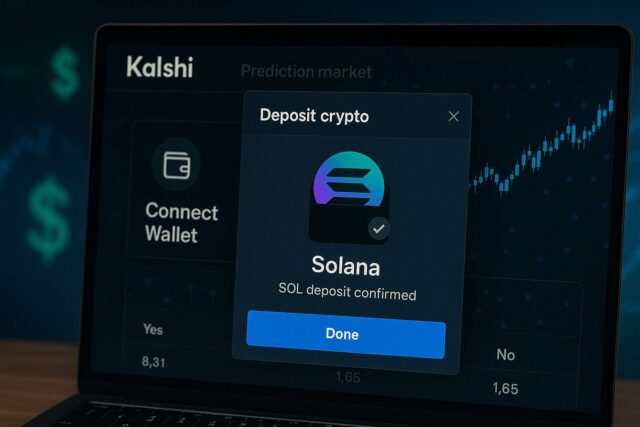
Close-up of Kalshi's prediction market interface confirming a Solana (SOL) crypto deposit, showcasing Zero Hash integration and fast blockchain funding.

Kalshi, a CFTC-regulated prediction market, has expanded its crypto deposits offering by enabling Solana (SOL) as a funding method. This move positions Kalshi more competitively within the increasingly crypto-savvy space, marking a deliberate shift toward capturing the attention of blockchain-native users and staking a claim alongside decentralized platforms like Polymarket.

The integration of Solana is not Kalshi’s first foray into digital assets. The platform had previously enabled deposits via Bitcoin and USDC, making this the third cryptocurrency now supported. All digital asset transactions are processed through Zero Hash, a crypto infrastructure provider that handles custody, conversion, and compliance on behalf of Kalshi. This partnership ensures that while deposits are crypto-based, all trading remains settled in U.S. dollars, in line with Kalshi’s regulatory obligations.

Fast, Cost-Efficient Funding for Prediction Markets

The choice of Solana is rooted in its technological strengths. Solana offers low transaction fees and near-instant confirmation times, features that improve the deposit experience for users. By integrating Solana, Kalshi aims to streamline onboarding for crypto-native users who are accustomed to fast, inexpensive blockchain operations.

Unlike Bitcoin, which often suffers from higher fees and slower processing times, Solana can offer confirmation in seconds at a fraction of a cent per transaction. This is especially appealing for traders operating on prediction markets, where timing and cost-efficiency can impact participation. The new feature enables direct wallet funding, enhancing ease of access for crypto users.

Competing with Polymarket and Decentralized Alternatives

The addition of Solana also places Kalshi in more direct competition with Polymarket, a popular decentralized prediction platform that already accepts various cryptocurrencies. While Polymarket operates in a regulatory gray zone due to its decentralized nature, Kalshi’s CFTC-regulated status appeals to users seeking legal clarity and consumer protections. With the crypto market maturing, Kalshi’s hybrid model, combining regulated infrastructure with blockchain-based funding, is emerging as a compelling middle ground.

The move to support Solana is likely to attract users looking for an alternative to centralized exchanges or unregulated platforms. By offering a compliant way to participate in prediction markets using crypto, Kalshi differentiates itself in a crowded field.

Broader Implications for Solana and Kalshi

For the Solana ecosystem, this integration is another signal of institutional interest. Integrations like Kalshi’s could increase Solana’s liquidity and transactional utility, pushing the asset further into mainstream adoption. Solana’s growing footprint in finance, spanning DeFi, NFT infrastructure, and now regulated prediction markets, strengthens its position as more than just a fast Layer 1 chain.

For Kalshi, the adoption of Solana may set a precedent for further crypto integration. With the infrastructure provided by Zero Hash, the platform is well-positioned to expand its crypto offerings while maintaining compliance. This could unlock new user demographics and help Kalshi stay relevant as crypto-finance hybrids become more common.

Kalshi’s integration of Solana deposits marks more than a simple expansion of funding options. It reflects a broader trend toward blending regulated finance with blockchain accessibility. As more users demand faster, cheaper, and crypto-friendly services in financial platforms, Kalshi’s strategic alignment with Solana and Zero Hash gives it a competitive edge in the prediction market space. This evolution not only benefits traders but also reinforces Solana’s growing importance in the financial applications of blockchain technology.

Readers’ frequently asked questions

How do I deposit Solana on Kalshi?

To deposit Solana (SOL) on Kalshi, users must connect a wallet and initiate a transfer to a Kalshi-provided address. The deposit is processed through Zero Hash, which converts the crypto to U.S. dollars for trading on the platform.

Is Kalshi a regulated prediction market?

Yes. Kalshi is regulated by the U.S. Commodity Futures Trading Commission (CFTC), which oversees its prediction market offerings and ensures compliance with financial regulations.

Why did Kalshi choose Solana over other cryptos?

Kalshi added Solana because of its fast transaction speeds and minimal fees. These features improve the user experience compared to older networks like Bitcoin, making Solana ideal for efficient deposit processing.

What Is In It For You? Action Items You Might Want to Consider

Take advantage of Solana’s speed

If you’re already active in the crypto space, using SOL to fund your Kalshi account can get you into the market faster, with fewer delays and lower costs.

Explore Kalshi’s hybrid model

Use this opportunity to test how a regulated platform integrates crypto funding while maintaining dollar-denominated markets. It may offer the best of both worlds.

Monitor Solana’s institutional use cases

Kalshi’s support for SOL adds another brick in Solana’s adoption story. Traders may want to track how such integrations affect SOL’s liquidity and valuation.

- Advertisement -

FEATURED