Home Blog Page 112

U.S. Senate Edges Closer to Regulating $250B Stablecoin Market with GENIUS Act

The Senate advances the GENIUS Act to full debate.

The U.S. Senate has taken a significant step toward comprehensive stablecoin regulation, advancing the GENIUS Act through a key procedural vote on May 19. The cloture vote marked a critical milestone in what could become the country’s first unified framework for overseeing the booming stablecoin market in the U.S., currently estimated at over $250 billion.

The bipartisan bill, formally titled the Guarding Against Emerging Non-Issuer Unauthorized Stablecoins Act, seeks to regulate stablecoin issuers, outline operational standards, and assign oversight responsibilities between state and federal authorities. The legislation has gained support from both Republican and Democratic lawmakers. Its final passage, though, remains uncertain due to mounting political resistance.

What the GENIUS Act Proposes

At the heart of the GENIUS Act is a dual-licensing framework. The bill allows nonbank stablecoin issuers to be licensed either at the state level or by a new federal regime supervised by the Federal Reserve. This approach attempts to strike a balance between enabling financial innovation and ensuring systemic safeguards.

Under the bill, the Federal Reserve would have enhanced authority over nonbank issuers, particularly those deemed systemically important. At the same time, state regulators would maintain the right to license and oversee smaller or regionally based entities. This compromise has sparked debate among lawmakers and industry stakeholders. Many are concerned about the balance of power in state vs. federal crypto regulation.

While proponents view the Act as a pragmatic step forward, critics warn of potential ramifications. Some fear it could centralize too much control at the federal level. Others believe it allows regulatory fragmentation if state licensing dominates.

Senate Divided Despite Procedural Win

The cloture vote on the stablecoin legislation passed with bipartisan support. The crypto bill will now proceed to a full debate in the Senate. Still, some Senate Democrats have reversed earlier support. Several lawmakers have expressed unease with provisions that limit the Federal Reserve’s stablecoin authority. They also see gaps in consumer protection.

This shift in position threatens the bill’s momentum. Opposition centers on fears that the Fed’s role in digital asset supervision could be weakened if states are allowed too much autonomy. Nonetheless, backers of the bill argue that the GENIUS Act provides a much-needed regulatory baseline without stifling innovation.

Industry Response and Implications

The crypto industry has responded with cautious optimism. Many stakeholders see the GENIUS Act as the most viable attempt yet to address crypto regulation in 2025. The framework would clarify the regulators’ roles and responsibilities and offer more predictable conditions for stablecoin issuers and investors alike.

However, unresolved jurisdictional issues remain. The bill’s complex structure could also delay effective implementation. Some fear it could open doors for regulatory arbitrage if states adopt diverging licensing standards, undermining the goal of unified digital currency oversight.

What’s Next for the GENIUS Act?

The next stage is a full Senate vote, which could be scheduled in the coming weeks. The outcome will hinge on whether Democratic concerns can be addressed without alienating Republican supporters. Both chambers of Congress are under increasing pressure to act on digital asset legislation ahead of the 2025 election cycle.

If enacted, the GENIUS Act could serve as a legislative template for future regulation of other crypto assets beyond stablecoins. For now, however, the bill’s future remains uncertain.

The coming days will determine whether the U.S. finally embraces a coherent policy for overseeing the expanding stablecoin market, or whether partisan rifts will derail the country’s most ambitious attempt yet at U.S. stablecoin legislation.

Readers’ frequently asked questions

What is a stablecoin?

A stablecoin is a type of cryptocurrency designed to maintain a stable value. It is usually backed 1:1 by a reserve asset like the U.S. dollar. Traders and investors often use stablecoins to move money in and out of crypto markets without relying on traditional banks.

What does the GENIUS Act try to do?

The GENIUS Act is a proposed U.S. law that would create rules for stablecoin issuers. It allows companies to apply for either a state or federal license, depending on their size and structure. The goal is to make stablecoins safer to use while giving regulators more oversight.

How could this affect my use of stablecoins?

If the law passes, it could change which stablecoins are allowed in the U.S. and how they are backed or managed. Some stablecoins may be required to follow stricter rules. This could affect their availability on exchanges or how quickly you can transfer funds.

What Is In It For You? Action Items You Might Want to Consider

Prepare for Volatility Around Legislative Milestones

As the GENIUS Act progresses toward a final Senate vote, watch for market volatility or sentiment shifts in crypto assets linked to U.S. regulatory headlines. Consider short-term positioning accordingly.

Review Your Stablecoin Exposure

If you’re trading with stablecoins heavily tied to U.S. markets, monitor developments around the GENIUS Act. Regulatory shifts could affect issuers’ ability to operate or the liquidity of certain tokens.

Monitor Fed vs. State Oversight Impact

The regulatory structure proposed in the bill may create differences between state-licensed and federally regulated stablecoin issuers. Stay updated on which licenses your preferred platforms and tokens operate under.
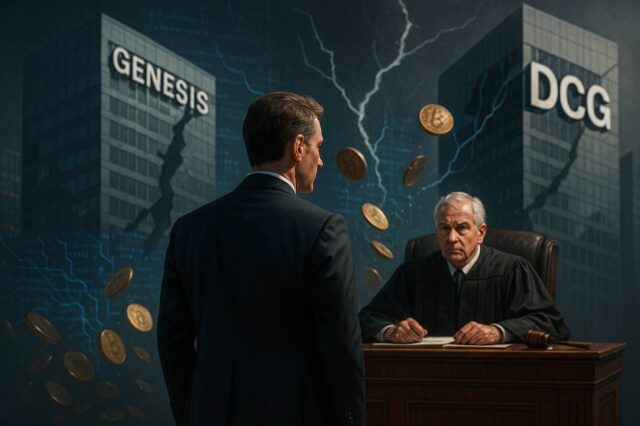

Genesis Sues DCG and Barry Silbert for $3.3B in Fraudulent Transfers

Genesis files lawsuit against DCG

Genesis Global Capital has filed two major lawsuits against its parent company, Digital Currency Group (DCG), and its founder, Barry Silbert, seeking to recover over $3.3 billion in disputed loans, asset transfers, and alleged misrepresentations. Filed in two separate courts, the U.S. Bankruptcy Court for the Southern District of New York and the Delaware Chancery Court, the Genesis DCG lawsuit claims the defendants orchestrated a long-running scheme to delay repayments, mislead customers, and conceal Genesis’s insolvency.

These legal actions mark a critical development in Genesis’s ongoing Chapter 11 crypto proceedings. Scrutiny intensifies over corporate governance inside one of the crypto industry’s most influential conglomerates.

Two Lawsuits, Two Legal Angles

The first lawsuit, filed in the Southern District of New York bankruptcy court, aims to recover more than $1.6 billion in transfers. Genesis claims they were improperly funneled to DCG and its affiliates while the company was insolvent. These transfers include:

  • $448 million to DCG
  • $136 million to DCG International
  • $101 million to HQ Enhanced Yield Fund
  • $34 million in tax payments made on behalf of DCG

Genesis alleges that these outflows provided no legitimate benefit to the lender and were intended to shield assets from creditors.

The second case, filed in the Delaware Chancery Court, targets DCG, Barry Silbert, and other insiders for alleged breaches of fiduciary duty, fraudulent misrepresentation, and unjust enrichment. The suit claims that DCG misled customers and counterparties through a misinformation campaign designed to maintain confidence in its lending platform and to protect Grayscale Investments, a major DCG subsidiary. Genesis argues that Silbert and others knowingly concealed the company’s financial instability for months after it had become insolvent in late 2021.

The $1.1 Billion Promissory Note Under Fire

At the core of both filings is the controversial $1.1 billion promissory note DCG issued in 2022, shortly after the collapse of Genesis’s borrower, Three Arrows Capital (3AC). DCG framed the note as a way to absorb Genesis’s losses from 3AC. However, the Genesis DCG lawsuit claims the note was a financial sleight of hand. It was a tool to buy time, mask Genesis’s insolvency, and avoid triggering broader financial obligations across the DCG ecosystem.

Genesis alleges that Barry Silbert and senior executives “knew or should have known” that DCG would never fully honor the note. Instead, it was used as a means of public deception rather than a legitimate settlement. These accusations form a critical part of Genesis’s broader contention that its parent company misled it into downplaying liabilities and withholding key disclosures.

A Timeline of Decline

Genesis claims that by the end of 2021, it had amassed $14 billion in outstanding loans, many of which were high-risk. It was practically already operating while insolvent. Despite this, the company continued to service loans, pay taxes on DCG’s behalf, and transfer hundreds of millions in assets to affiliated entities. These actions are now the focus of the Genesis DCG lawsuit. Its goal is to unwind those transactions and redistribute value to creditors.

The Genesis sues DCG filings are deeply rooted in Genesis’s crypto bankruptcy, which began formally in January 2023. The lender had paused withdrawals in November 2022 following exposure to both 3AC and FTX’s collapse. Since then, it has been pursuing creditor recovery under court supervision while investigating potential misconduct by its parent firm.

Broader Implications for DCG and the Crypto Sector

If Genesis succeeds in court, the outcomes could have widespread effects on corporate governance standards in crypto, particularly regarding how conglomerates handle intercompany debt, insolvency disclosures, and cross-subsidiary liabilities. The lawsuits also shine a light on the risks posed by complex holding structures like that of the Genesis Digital Currency Group relationship.

Other DCG subsidiaries, including Grayscale and CoinDesk, do not appear in either filing. However, analysts warn that a ruling against DCG or a settlement could have financial ripple effects across the group. It may also influence investor confidence in DCG-affiliated products.

What Comes Next

As of this writing, DCG and Barry Silbert have not issued a formal public response to the allegations. The cases are expected to move forward in the coming months. The outcomes will likely shape both the fate of Genesis’s creditors and the governance standards for crypto conglomerates.

With proceedings now unfolding in two separate jurisdictions, the Genesis DCG lawsuit is poised to test both bankruptcy and corporate fiduciary law in the context of digital assets. Genesis’s claims of Barry Silbert fraud through deceptive financial instruments and undisclosed insolvency may set legal precedents in how courts address executive liability in crypto collapses.

Readers’ frequently asked questions

What is a promissory note, and why does it matter in this lawsuit?

A promissory note is a legal document in which one party agrees to pay a specific amount of money to another party under certain terms. In this case, Digital Currency Group issued a $1.1 billion promissory note to Genesis in 2022. The note was part of its plan to assume liabilities related to the collapse of Three Arrows Capital. Genesis now claims this note was used to mask financial trouble rather than settle actual debt. The legitimacy of the note is a central point of legal contention.

How do asset transfers become illegal or fraudulent in a bankruptcy case?

When a company is insolvent or nearing insolvency, certain asset transfers may be considered fraudulent if they unfairly benefit insiders or reduce what creditors can recover. In bankruptcy law, they call it “fraudulent conveyance.” Genesis claims that it transferred over $2.1 billion in assets to DCG at a time when it was already insolvent. If the court agrees that these transfers were made to delay creditors or hide financial distress, they could be reversed or clawed back.

Will this lawsuit affect other crypto companies owned by DCG, like Grayscale?

As of now, Genesis’s lawsuits are directed specifically at DCG and Barry Silbert, not its other subsidiaries. Grayscale and CoinDesk are part of DCG’s portfolio but are not named in the filings. However, if the lawsuits put financial pressure on DCG or result in significant payouts, it could affect the parent company’s ability to support or invest in its subsidiaries. The outcome may indirectly influence operations or strategic decisions at related firms.

What Is In It For You? Action Items You Might Want to Consider

Monitor DCG-affiliated assets for potential volatility

If the Genesis DCG lawsuit escalates or results in large financial penalties, it could ripple into the performance of DCG-linked entities. Watch Grayscale’s GBTC or ETHE products. Traders should monitor the market sentiment surrounding these instruments for sudden dips or trading opportunities.

Reassess counterparty risk across centralized crypto lenders

The case highlights the dangers of opaque intercompany relationships and delayed disclosures in the crypto lending space. If you’re using or holding assets with centralized platforms, re-evaluate your exposure. Consider diversifying to reduce reliance on a single corporate structure.

Should the court rule in favor of Genesis on claims of fraudulent conveyance or misuse of promissory notes, the decision could set new standards for how crypto companies manage insolvency and intercompany debt. That’s especially relevant for traders holding tokens in firms undergoing restructuring or legal challenges.

Trade Republic and the Power of Germany’s MiCA Licensing: What It Means for the Crypto Sector

Germany leads in crypto regulation in the EU with most MiCA licenses granted by its Bafin agency

Germany has emerged as a leader in European crypto regulation, with BaFin, the country’s financial regulator, at the helm. The recent approval of Trade Republic’s full MiCA (Markets in Crypto-Assets) license marks a significant milestone, not just for the company but for the entire crypto industry in Europe.

BaFin and the Rise of Germany as a Crypto Hub

BaFin has established Germany as a beacon of regulatory clarity in the European Union. While other EU countries are still working to catch up, Germany has been proactive in adopting regulations that ensure investor protection, market integrity, and financial stability. MiCA regulations, the EU’s first comprehensive framework for crypto-assets, are designed to address these concerns.

Trade Republic’s successful application for a MiCA license highlights Germany’s role in this transformation. The firm’s ability to operate across the EU with a regulatory-backed framework will set a precedent for other crypto firms in Germany and beyond.

The MiCA License: A Key for Trade Republic’s Expansion

Securing the MiCA license is a game-changer for Trade Republic. As one of the first crypto firms in Germany to receive full regulatory approval, the company can now confidently expand its services throughout the EU. This not only boosts its credibility but also reflects a broader trend in the European crypto market towards regulatory compliance and transparency.

The MiCA framework provides much-needed clarity for firms offering crypto services. For Trade Republic, this clarity will allow the firm to attract more customers and investors, knowing that it adheres to a rigorous and trusted regulatory system.

Germany’s Dominance in the MiCA Licensing Process

Germany’s leadership in the MiCA licensing race is evident. BaFin has issued over a third of the MiCA licenses granted across the EU, making Germany the most attractive jurisdiction for crypto firms looking for regulatory certainty. This trend is not accidental. Germany has long been a leader in financial regulation. Its crypto rules reflect a commitment to both innovation and stability.

As more companies, like Trade Republic, secure their MiCA licenses, Germany’s regulatory framework solidifies its position as the EU’s crypto hub.

The Future of Germany’s Crypto Sector

Looking ahead, Germany’s crypto market is poised for continued growth. With BaFin leading the way in licensing, more firms will follow in Trade Republic’s footsteps. Germany’s emphasis on clear, enforceable regulations provides an environment where crypto firms can thrive.

For investors, the certainty offered by Germany’s crypto regulation increases trust in the market. As MiCA becomes more established across Europe, Germany will likely continue to be the benchmark for regulatory practices, setting the stage for long-term growth in the digital asset space.

Trade Republic’s success in securing a MiCA license is a testament to Germany’s growing influence in the global crypto market. By providing a clear and supportive regulatory framework, Germany has created an environment where innovation can flourish. With BaFin at the helm, the country’s leadership in crypto regulation is shaping the future of the European market.

As MiCA regulations expand across the EU, Germany’s role as a leader in crypto regulation will continue to set the standard for others to follow.

From Pectra to Peer Power: Ethereum Eyes Stateless Revolution

A man working on a laptop in a well-lit home office, running an Ethereum stateless node, with Ethereum logos and a decentralized network interface visible on the screen and wall.

Following Ethereum’s recent Pectra upgrade, the network is poised for another transformative change. Vitalik Buterin has proposed a new model for running nodes. Ethereum stateless nodes could significantly reduce the technical and economic barriers to participation. This initiative aims to shift power back to users and strengthen Ethereum’s decentralization at the protocol level.

Currently, most users interact with Ethereum through third-party RPC (Remote Procedure Call) providers like Infura or Alchemy. These services are convenient but introduce a central point of failure and surveillance. Buterin’s vision is clear: Ethereum must make it easier for individuals to run their own nodes and validate the blockchain independently.

Lighter Nodes, Stronger Network

The core of the proposal is the concept of partially stateless nodes. Instead of requiring each node to store the entire state of the Ethereum network, these stateless nodes would validate blocks using cryptographic proofs such as Merkle branches. This dramatically reduces the amount of data a node must manage, lowering hardware requirements and technical complexity.

The implications are profound. With a lighter footprint, Ethereum nodes could run on consumer-grade devices or even within web browsers. This opens the door for hobbyists, solo stakers, and privacy-conscious users to take control of their interaction with the network.

A Continuation of Ethereum’s Evolution

The timing of this proposal is no coincidence. Ethereum’s Pectra upgrade was a milestone in optimizing validator performance and gas efficiency. Ethereum stateless nodes now build on that momentum by addressing the broader challenge of accessibility and decentralization at the infrastructure level.

This is more than just a technical tweak – it is a philosophical pivot. By enabling more users to run local nodes, Ethereum can reduce dependence on centralized gateways and reestablish the network’s original trustless vision.

Reclaiming Sovereignty

Running a full node today is not trivial. It requires persistent uptime, reliable hardware, and an understanding of complex tooling. Many users simply opt out, leaving them reliant on third-party services for blockchain access.

Stateless nodes offer an alternative. Users could validate and interact with the chain on their own terms, without trusting intermediaries. For Ethereum, this shift is about scale and sovereignty.

What Comes Next?

The proposal is still in its early stages, and significant development work lies ahead. Tooling must be built, consensus mechanisms must adapt, and community buy-in is essential. However, the direction is clear: decentralization is no longer just a value but an engineering priority.

The introduction of Ethereum stateless nodes may prove to be one of the most important changes in Ethereum’s path forward. It reaffirms a commitment to open participation, strengthens resistance to censorship, and empowers a new wave of independent validators.

As Ethereum continues to evolve, one principle remains unchanged: decentralization is not a feature; it’s the foundation. With Ethereum stateless nodes, that foundation just got a lot more accessible.

Readers’ frequently asked questions

Does this change how I use my Ethereum wallet?

No, not right away. You’ll still use your wallet like MetaMask or another app the same way you always have. But in the future, these changes might let wallets work more directly with Ethereum, without depending so much on third-party services behind the scenes.

What does it mean to run a node, and why does it matter?

Running a node means you’re connecting directly to the Ethereum network instead of going through someone else’s system. It’s how people can check that the blockchain is working correctly. Today, this is too hard for most users to do, but Vitalik Buterin wants to make it easier so more people can help keep Ethereum honest and secure.

Is this change good for Ethereum users like me?

Yes. If more people can run their own lightweight nodes, it makes Ethereum stronger and more private for everyone. You may not notice the difference right away, but it helps make sure Ethereum stays open and isn’t controlled by just a few companies.

What Is In It For You? Action Items You Might Want to Consider

Rethink your reliance on RPC services

If you’re regularly using wallets or dApps that depend on centralized providers like Infura, consider exploring tools that allow more direct interaction with the Ethereum network. Decentralized access could become a key differentiator in trading privacy and autonomy.

Keep an eye on client development around stateless nodes

New tooling will likely emerge as Ethereum stateless nodes move from concept to implementation. Traders who understand how to operate or integrate with these lighter nodes early may gain faster, more secure access to on-chain data—an edge in time-sensitive decisions.

Factor decentralization into your long-term ETH thesis

This proposal reinforces Ethereum’s commitment to trustless infrastructure. If you’re holding ETH, this trend strengthens the argument for Ethereum’s resilience and relevance. It may be worth revisiting your Ethereum exposure as this roadmap unfolds.

Hong Kong Police Bust $15M Crypto Laundering Syndicate in Major Enforcement Sweep

Hong Kong cracks down on crypto money laundering syndicate.

Hong Kong police have dismantled a major crypto money laundering operation worth over HK$118 million (around US$15 million). It marks one of the city’s largest enforcement actions against blockchain-related financial crime. The case highlights how crypto money laundering in Hong Kong is becoming more sophisticated and harder to detect.

Twelve Arrested in Multi-Agency Crackdown

Twelve suspects, including the alleged ringleader, were arrested in a joint operation. It involved the Hong Kong Police Force and Customs. The task force found that the group moved illicit funds using personal bank accounts and over-the-counter (OTC) crypto platforms. These methods are commonly used in cryptocurrency laundering operations.

Crypto and Fiat Used in Circular Trades

Authorities say the group used “circular trading.” They repeatedly bought and sold crypto assets among their own accounts to simulate real trading activity. The syndicate used shell companies and OTC crypto desks to convert illegal cash into digital assets. They took advantage of weak crypto regulation and minimal KYC checks. This pattern is increasingly common in crypto money laundering Hong Kong cases.

Luxury Lifestyle Raises Red Flags

The group’s ringleader, a 39-year-old man, raised suspicions with his lifestyle. He owned multiple luxury vehicles and spent heavily despite having no visible income. Police seized HK$1.5 million in cash and several high-end cars during the raid. This behavior is typical in financial crime blockchain cases involving crypto wealth.

Authorities Reaffirm Commitment to Enforcement

Officials stressed that while Hong Kong supports digital asset innovation, it will not tolerate misuse. Law enforcement called the operation a “textbook case” of modern crypto laundering. Criminals bypassed traditional financial systems using OTC platforms and trusted associates.

Growing Pressure on OTC Crypto Platforms

This case increases scrutiny on Hong Kong crypto regulation, especially for OTC platforms. These services often avoid strict compliance rules. Experts say tighter KYC and transaction monitoring are needed. Without such measures, cryptocurrency laundering in Hong Kong may rise further.

The HK$118 million takedown sends a clear signal. Crypto money laundering in Hong Kong will face aggressive enforcement. As Hong Kong grows into a digital asset hub, it must also protect financial integrity. Whether through banks, blockchains, or OTC brokers, illicit flows will be pursued.

- Advertisement -

FEATURED