Home Blog Page 113

Tether Isn’t Dead – It’s Adapting: USDT’s Fight for Relevance in a Regulated World
Tether's USDT may no longer be the unchallenged king of stablecoins, but the idea of its demise seems premature.

The old saying “rumors of my death have been greatly exaggerated” might as well have been coined for Tether (USDT). Long criticized for its offshore structure, opaque reserves, and evasive regulatory strategy, Tether has often been predicted to collapse under pressure. Yet, in 2025, it isn’t just alive, it’s thriving. With over $150 billion in circulation, USDT remains the largest stablecoin by market cap. However, in a world increasingly dominated by regulation, especially with the EU’s MiCA law and the U.S.’s proposed GENIUS Act, Tether is being forced to adapt. From pivoting toward transparency to preparing a U.S.-compliant stablecoin, Tether’s story may not be one of survival but of strategic transformation.

The Global Stablecoin Landscape in 2025

As of mid-2025, Tether commands more than 61% of the global stablecoin market. Its closest rival, Circle’s USDC, stands at around $60 billion in supply. Ripple’s newly launched RLUSD is making headlines but remains a small player with just $300 million in circulation.

Despite fierce competition, Tether continues to dominate crypto trading volumes, especially in emerging markets and on major offshore exchanges like Binance and OKX. While USDC caters to regulated institutions and fintech apps, and RLUSD targets compliant cross-border transactions, USDT remains the liquidity backbone of the global crypto economy.

Why Tether’s USDT Became the Dominant Stablecoin

USDT’s rise began with being first to market in 2014, capturing user trust through convenience, liquidity, and broad availability. Its presence on virtually every major exchange and trading pair cemented its role as the go-to dollar proxy for crypto traders.

Tether’s appeal grew further in countries with restricted access to U.S. dollars. For users in Turkey, Venezuela, and parts of Asia, USDT became a reliable alternative to local currencies. It offers dollar exposure in jurisdictions underserved by traditional banking.

Tether and US Stablecoin Regulation: GENIUS Act and Beyond

The GENIUS Act, which advanced through the U.S. Senate Banking Committee in early 2025, proposes a regulatory framework for “payment stablecoins”. The framework includes requirements for full reserves in cash and short-term Treasuries, monthly disclosures, and annual audits. These rules would apply even to offshore issuers that serve U.S. customers.

Tether, which has long operated outside U.S. jurisdiction, is now considering a significant shift. In response, the company has announced plans to issue a separate U.S.-compliant stablecoin. This proactive stance suggests Tether is preparing for a world where noncompliance could result in exchange delistings or legal restrictions.

The European Challenge: MiCA and Delistings

Europe’s MiCA regulation, fully enforceable as of March 2025, requires stablecoin issuers to obtain authorization from EU regulators to continue operating in the region. Tether chose not to comply. Instead, it delisted its EUR€ stablecoin and saw USDT removed from major European exchanges like Coinbase Europe.

Rather than restructure USDT, Tether has backed MiCA-compliant entities like StablR and Quantoz. These firms issue stablecoins that meet MiCA standards, allowing Tether to retain indirect access to the European market.

Transparency and Trust: USDT vs USDC vs RLUSD

Tether’s reserve transparency has historically been a point of contention. While Tether now provides monthly attestations via BDO, it has yet to conduct a full public audit. Circle’s USDC, by contrast, undergoes monthly attestations from Deloitte and publishes reserve breakdowns. Ripple’s RLUSD, issued under NYDFS oversight, maintains similarly stringent transparency standards.

https://twitter.com/paoloardoino/status/1922750025584562539

The contrast is clear: USDC and RLUSD have leaned into regulatory transparency as a competitive edge. Tether, on the other hand, has taken steps forward but still faces skepticism from some institutional users.

Strategic Shifts: Tether’s Adaptation Playbook

Facing headwinds in the West, Tether has diversified its strategy. Beyond considering a compliant U.S. stablecoin, Tether is expanding into:

  • Tokenization Infrastructure: Its Hadron platform supports tokenized assets in MiCA-aligned projects.
  • Bitcoin Mining: With a 21.4% stake in Bitdeer, Tether is investing in renewable mining to bolster its crypto ecosystem involvement.
  • Reserve Evolution: Tether has reduced risky commercial paper in favor of short-term U.S. Treasuries, enhancing reserve quality.
  • Interest Revenue: With large holdings of Treasuries, Tether has posted record profits from interest income in 2024 and 2025.

These moves show a deliberate shift from mere issuer to infrastructure provider, a role that could insulate Tether from future regulatory shocks.

Conclusion: Is USDT at Risk or Repositioning?

Tether is not collapsing; it’s recalibrating. The regulatory tide is rising, and while USDT is losing ground in Europe and faces mounting U.S. pressure, its leadership appears ready to adapt. With a compliant stablecoin in development, strategic investments across the crypto stack, and growing transparency, Tether is betting on evolution rather than retreat.

Its massive market cap, entrenched global usage, and nimble positioning make one thing clear: USDT may no longer be the unchallenged king of stablecoins, but the idea of its demise is, once again, premature. In a regulated future, Tether may not just survive, it might outlast the competition by adapting faster than anyone expects.

Readers’ frequently asked questions

What is the difference between a MiCA-compliant stablecoin and one that is not?

A MiCA-compliant stablecoin is issued by an entity that has received authorization under the European Union’s Markets in Crypto-Assets (MiCA) regulation. This means the issuer must meet strict requirements, including holding sufficient reserves, undergoing regular audits, and operating with regulatory transparency. Licensed exchanges within the EU can legally offer these stablecoins to the public and allow trading in them. ges within the EU. Non-compliant stablecoins, like USDT currently, have not obtained such authorization, and therefore, regulated European exchanges cannot list or promote them to EU customers. This doesn’t necessarily mean they are illegal to hold, but it does limit how and where they can be used.

Why is Tether launching a U.S.-compliant stablecoin instead of making USDT compliant?

Tether appears to be taking a dual-track strategy to meet new U.S. regulations. Instead of overhauling USDT, which is deeply entrenched in global markets and operates under an offshore structure, Tether plans to issue a separate stablecoin specifically designed to comply with U.S. legal standards, including those proposed in the GENIUS Act. This allows Tether to maintain USDT’s current operations in global and less-regulated markets while building a fully regulated alternative for U.S. customers. It’s a way to serve both markets without compromising either product.

USDT’s popularity stems from its liquidity, availability, and early-mover advantage. It’s supported by nearly every major crypto exchange and is especially dominant in regions with limited access to traditional banking. Traders and crypto businesses often choose USDT because it is widely accepted, fast to transfer, and deeply integrated into crypto trading pairs. Many users also trust it because it has functioned reliably for nearly a decade, even if it lacks full regulatory oversight. However, its dominance is increasingly being challenged as global regulations tighten and competitors offer more transparent, compliant alternatives.

What Is In It For You? Action Items You Might Want to Consider

Watch Tether’s U.S. Regulatory Moves Closely

If you’re trading or holding USDT on U.S.-based platforms, keep an eye on Tether’s rollout of a U.S.-compliant stablecoin. Regulatory pressure is mounting, and some exchanges may begin to limit USDT access in favor of compliant alternatives. Be prepared to adjust your trading pairs and transfer strategies if new restrictions emerge.

Diversify Your Stablecoin Holdings

Relying solely on USDT may expose you to regional risks, especially in jurisdictions like the EU or the U.S. Consider diversifying into stablecoins like USDC or RLUSD, particularly if you trade on regulated platforms or engage with DeFi protocols that emphasize compliance and audit transparency.

Track Where Liquidity Flows Next

As regulations reshape the stablecoin landscape, market liquidity could shift. Pay attention to volume data across exchanges and blockchains, especially where USDC or RLUSD are gaining traction. Adjust your strategies accordingly to stay ahead of spread changes, slippage risks, or new arbitrage opportunities.
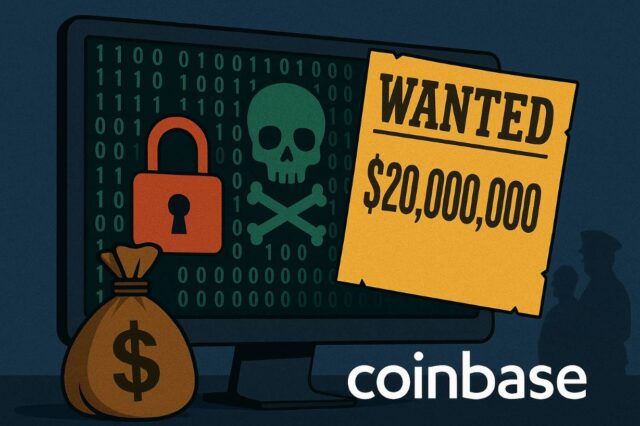

Coinbase Breach: Hackers Demand $20M, Exchange Offers Bounty Instead

$20M Bounty Issued After Coinbase Data Breach

Coinbase has confirmed a major cybersecurity breach that compromised sensitive customer data and internal systems. Instead of complying with the hackers’ demand for a $20 million ransom, the crypto exchange flipped the script and launched a public bounty. It now offers a reward of $20 million to anyone who can help identify and apprehend the perpetrators.

The incident occurred in late 2024 but was only publicly disclosed in May 2025. It involved the theft of portions of Coinbase’s proprietary source code and internal data. According to the company, the attackers did not steal any customer funds, but gained access through compromised employee credentials. The incident has sparked concern across the crypto sector, raising questions about insider threats and the resilience of even the most security-conscious platforms.

Update – May 21, 2025: New details have emerged about the Coinbase data breach, including insider involvement, legal fallout, and potential losses of up to $400 million. Read our latest coverage here https://crispybull.projectsofar.com/400m-fallout-coinbase-faces-backlash-after-data-breach/

A Bold Extortion Attempt

After infiltrating Coinbase’s systems, the threat actors reportedly demanded $20 million to prevent the release of the stolen data. Instead of entering negotiations, Coinbase refused the ransom and decided to go public. It shared details of the attack and offered a bounty of equal value to anyone providing actionable intelligence that leads to the identification or the arrest of the culprits.

The company emphasized that while customer assets remained secure, the breach represents a serious escalation in cybercriminals’ tactics targeting the digital asset industry. Coinbase said it has since taken “aggressive steps to harden infrastructure, rotate credentials, and reinforce internal security practices.”

https://twitter.com/coinbase/status/1922967576209998133

FBI Joins Investigation

The FBI and the Department of Justice are now actively involved in the investigation. Law enforcement agencies have begun tracking the attackers’ digital footprints left behind. Officials are treating the case as a high-priority matter of cyber extortion and potential corporate espionage.

While Coinbase has not officially confirmed how the breach originated, reports from multiple sources suggest the attackers may have leveraged privileged employee access. Others have speculated on the possibility of insider involvement. If such a scenario were confirmed, that would complicate the response and heighten the need for internal auditing.

Bug Bounties vs. Ransomware

The case underscores a growing trend in which tech firms, particularly in the blockchain space, choose transparency and countermeasures over ransom payments. Coinbase’s decision to match the hackers’ demand with a bounty signals a shift in how crypto companies may tackle extortion in the future. They incentivize white-hat collaboration rather than giving in to criminal threats.

A Coinbase spokesperson stated, “We will not reward criminal behavior. Our focus is on accountability and reinforcing trust in our platform. We’re calling on the broader community to help us bring the perpetrators to justice.”

A Persistent Vulnerability in the Crypto Sector

While Coinbase’s response demonstrates a commitment to transparency and accountability, the broader pattern of recurring breaches in the cryptocurrency industry remains troubling. Despite ongoing investments in cybersecurity, critical vulnerabilities, whether technical or human, continue to be exploited. Until the industry moves beyond reactive measures and prioritizes structural resilience, high-profile incidents like this are likely to persist.

Readers’ frequently asked questions

How can hackers steal customer data if user funds weren’t touched?

Customer funds are typically stored in secure, segregated wallets, often with multi-signature or cold storage protection. That makes them harder to access directly. However, user data like email addresses, names, internal account identifiers, and KYC documents may reside in centralized databases. These are more vulnerable if internal systems are breached. Hackers can use this data for phishing, identity theft, or to pressure companies with ransom threats, even if they can’t drain wallets.

What exactly does a $20 million bounty mean, and who can claim it?

A bounty of this size means Coinbase is offering up to $20 million to anyone who provides verifiable information that leads to the identification, arrest, or prosecution of the individuals responsible for the breach. It’s typically open to cybersecurity experts, ethical hackers, or even third parties who may have intel. It’s not a bug bounty for fixing code, it’s a law enforcement aid mechanism aimed at tracking down the criminals.

Can this kind of breach happen on other exchanges I use?

Yes. While Coinbase is known for having some of the strongest security practices in the industry, no system is immune to social engineering, credential compromise, or insider abuse. Most large exchanges face constant attacks. The effectiveness of their defenses often depends on internal training, threat detection systems, and how quickly they respond once a breach occurs. Users should always enable 2FA, monitor for phishing attempts, and avoid storing large amounts of crypto on centralized platforms.

What Is In It For You? Action Items You Might Want to Consider

Reevaluate your exchange risk exposure

Even the most trusted platforms are vulnerable to targeted attacks. If you’re holding significant assets on a centralized exchange, consider spreading your risk. Use multiple platforms, reduce your hot wallet balances, or move some of your holdings to cold storage.

Watch for phishing attempts tied to data leaks

After any major breach, malicious actors often use stolen data to craft convincing phishing campaigns. Stay alert for suspicious emails, fake support messages, and login prompts. Enable two-factor authentication and avoid clicking unsolicited links, especially if they reference your Coinbase account.

High-profile incidents like this one often draw increased scrutiny from regulators. Keep an eye on how U.S. agencies respond and whether other exchanges begin tightening their security policies. Shifts in compliance or enforcement may create trading opportunities—or new risks.

Uniswap Becomes First DEX to Hit $3 Trillion in Volume — Why It Matters for DeFi’s Future

DeFi milestone - Uniswap first DEX to hit $3T trading volume

Uniswap just made DeFi history when the decentralized exchange (DEX) surpassed $3 trillion in total trading volume. It is now the first protocol of its kind to reach that milestone. But beyond the staggering figure lies a deeper story that speaks volumes about the evolution of decentralized finance, the maturity of crypto infrastructure, and the shifting power dynamics between centralized and decentralized platforms.

From ETH Hackathon to DeFi Powerhouse

Launched in 2018 as a modest project during an Ethereum hackathon, Uniswap introduced the concept of automated market making (AMM). It allowed users to swap tokens without relying on order books or centralized intermediaries. The model did not just revolutionize how trading happens on-chain; it laid the foundation for an entire ecosystem of permissionless financial applications.

Fast forward to 2025, and Uniswap has processed more than $3 trillion in trading volume across its core Ethereum deployment and scaling solutions like Arbitrum, Optimism, and BNB Chain. It generates nearly $4 billion in cumulative fees, ranking among the most revenue-generating crypto protocols, outperforming some centralized exchanges.

Why This Milestone Matters for Uniswap and DeFi

1. It Confirms Product-Market Fit for DeFi

Uniswap’s growth wasn’t driven by hype alone. It reflects sustained user demand for decentralized, non-custodial trading platforms. Even during bear markets, Uniswap maintained its position as the go-to decentralized exchange for liquidity providers and traders. Hitting $3 trillion in volume confirms that DeFi isn’t just a fringe experiment — it’s infrastructure people actually use.

2. A Vote of Confidence in On-Chain Finance

As regulatory scrutiny intensifies over centralized exchanges (CEXs), many traders are looking for alternatives that offer transparency, self-custody, and composability. Uniswap fits that bill. This volume milestone shows decentralized platforms are resilient and ready to scale, offering institutional-grade infrastructure without compromising user control.

3. Catalyst for Institutional Interest

The milestone may further attract institutional investors exploring DeFi as an asset class or infrastructure layer. With tokenized assets, on-chain liquidity, and compliant front-ends now under active development, Uniswap’s proven traction makes it a compelling gateway to DeFi for traditional players.

What’s Next? $10 Trillion, Says the Founder

In a series of posts celebrating the milestone, Uniswap founder Hayden Adams called the achievement “surreal” but emphasized that it’s not the finish line. “Next stop is $10 trillion,” Adams said. His vision includes expanding accessibility, increasing protocol efficiency, and strengthening Uniswap’s multichain presence.

https://twitter.com/haydenzadams/status/1921770888690622618

To support these ambitions, the protocol has evolved rapidly. Its most recent iteration, Uniswap v4, introduces “hooks” that allow for advanced trading strategies, dynamic fees, and improved liquidity customization. The Uniswap Foundation, meanwhile, continues to fund public goods and tooling to ensure the protocol remains robust and developer-friendly.

Uniswap A Bellwether for DeFi

Uniswap’s success also comes amid a broader resurgence in DeFi activity. Lending protocols like Aave are posting record volumes, while stablecoins regain traction across chains. As macroeconomic headwinds ease and crypto recovers from regulatory pressure, the sector appears to be entering a new phase of growth, driven less by speculation and more by utility.

The $3 trillion milestone, then, is not just a number. It’s a signal: DeFi is here to stay! Decentralization is more than a talking point, and platforms like Uniswap are not just surviving the crypto cycles; they’re defining them.

Readers’ frequently asked questions

What does it mean that Uniswap is a decentralized exchange?

A decentralized exchange (DEX) like Uniswap allows users to trade cryptocurrencies directly from their own wallets without needing to deposit funds on a centralized platform. There’s no company holding your money or processing trades on your behalf. Instead, Uniswap uses smart contracts — pieces of code running on the blockchain — to automatically match buyers and sellers. This model gives users more control over their assets and increases transparency, since all activity is recorded on-chain.

Why is $3 trillion in trading volume important if I don’t use Uniswap myself?

The $3 trillion milestone is important because it proves that decentralized finance is working at scale. Even if you’re not trading on Uniswap, its success shows that blockchain-based services can operate globally without relying on banks, brokers, or centralized exchanges. It helps build trust in DeFi as a legitimate alternative to traditional finance. It may well influence more crypto wallets, services, and apps to integrate with decentralized exchanges like Uniswap, making it easier for you to access crypto tools in the future.

Can I use Uniswap on mobile or without being an expert?

Yes, you can use Uniswap through several user-friendly mobile wallets and browser-based apps like MetaMask, Rainbow, or Coinbase Wallet. These apps often have built-in support for swapping tokens using Uniswap. You don’t need to be a developer, but you do need to understand gas fees, how to protect your private keys, and what tokens you’re trading. Most wallets now guide you through the process step by step, making it accessible even for beginners.

What Is In It For You? Action Items You Might Want to Consider

Explore trading on decentralized exchanges like Uniswap

With Uniswap surpassing $3 trillion in volume, it’s clear that serious liquidity and user activity are happening on-chain. If you’re still relying solely on centralized platforms, this may be the right time to experiment with DEX trading. Try swapping small amounts, understand slippage, and get familiar with gas fee optimization strategies.

Track multichain opportunities

Uniswap’s expansion beyond Ethereum to Arbitrum, Optimism, and BNB Chain means you can access better fees, faster trades, and new token markets depending on the chain. Consider bridging a portion of your portfolio to one of these networks to capitalize on lower transaction costs and emerging DeFi ecosystems.

Position yourself early for Uniswap v4 features

The upcoming Uniswap v4 upgrade will offer new capabilities like “hooks” for advanced trading logic. If you’re a more experienced trader or looking for an edge, keep an eye on how these features are rolled out. Early adopters of new DEX mechanics often benefit from new strategies, LP incentives, or arbitrage opportunities.

Coinbase’s S&P 500 Entry Sparks Investor Enthusiasm

Coinbase entering S&P 500

Coinbase’s stock soared over 10% in after-hours trading following the announcement of its upcoming inclusion in the S&P 500 index, signaling strong investor sentiment and a pivotal moment for the crypto industry. The move marks the first time a cryptocurrency-focused company has joined the prestigious index. It elevates both Coinbase and the legitimacy of digital assets in traditional financial markets.

A Landmark Milestone for the Crypto Sector

S&P Dow Jones Indices confirmed that Coinbase will officially join the S&P 500 on May 20, replacing Discover Financial Services. The latter is being acquired by Capital One, triggering its removal from the index. Coinbase’s addition comes after the company met the S&P’s eligibility criteria, including profitability in the most recent quarter and sufficient market capitalization.

The inclusion reflects a broader shift in investor sentiment. Traditional market participants increasingly embrace the role of crypto firms in global finance. For many, Coinbase’s entry into the S&P 500 is not only a corporate milestone. It’s a bellwether for the maturing state of the digital asset space.

Strategic Moves Bolster Coinbase’s Position

Despite posting weaker-than-expected earnings earlier this year, Coinbase’s visibility and relevance in both spot and derivatives markets continue to expand. A notable development is its recent Deribit acquisition, one of the leading crypto derivatives exchanges. Though the acquisition is still in process, analysts view it as a strategic step for the crypto exchange. It could help Coinbase capture a larger share of institutional trading volume and enhance its global footprint.

Regulatory Outlook Fuels Market Optimism

Optimism surrounding a potentially more favorable crypto regulation environment under a Republican-led administration has also buoyed investor expectations. Many analysts believe that regulatory clarity could accelerate the growth of U.S.-based crypto firms like Coinbase, particularly as competition intensifies from overseas platforms.

A Turning Point for Market Perception

Shares of Coinbase (COIN) are still down about 17% year-to-date but have rebounded significantly since the start of May, as momentum builds around its S&P 500 entry. Crypto advocates and market watchers herald the company’s inclusion as a watershed moment. They feel increasingly validated that the financial mainstream can no longer ignore the influence and permanence of the crypto sector.

With its S&P 500 debut now imminent, Coinbase stands at the intersection of innovation and institutional validation, ready to shape the next chapter of the digital finance narrative.

Readers’ frequently asked questions

What is the S&P 500, and why is Coinbase being included such a big deal?

The S&P 500 is a stock market index that tracks the performance of 500 of the largest publicly traded companies in the United States. It’s widely considered a benchmark for the overall health of the U.S. economy. Coinbase’s inclusion means it has met strict criteria related to market capitalization, liquidity, and profitability. For a crypto company to join this index signals that digital asset firms are gaining mainstream financial recognition. This was unthinkable just a few years ago.

Will Coinbase’s inclusion in the S&P 500 affect the price of Bitcoin or other cryptocurrencies?

While the article doesn’t claim a direct impact on crypto prices, Coinbase’s elevation into the S&P 500 strengthens the credibility of the entire crypto industry. This could increase investor confidence and attract institutional capital into crypto markets, potentially leading to greater adoption and, indirectly, price movements. However, crypto prices are influenced by many factors, so any correlation would not be guaranteed.

What does the acquisition of Deribit mean for Coinbase users or investors?

Deribit is one of the top platforms for trading crypto derivatives, like options and futures. If the acquisition goes through, Coinbase could expand its product offerings beyond simple buy-and-sell features. Users may gain access to more advanced trading tools. For investors, it shows Coinbase wants to strengthen its global presence and compete more aggressively with international platforms that currently dominate the derivatives space.

What Is In It For You? Action Items You Might Want to Consider

Monitor Coinbase’s S&P 500 inclusion for ETF ripple effects

Now that Coinbase is joining the S&P 500, expect increased exposure through passive investment vehicles and ETFs tracking the index. Traders should watch for short-term liquidity surges and potential buying pressure as institutional funds reallocate.

Position around regulatory sentiment shifts

With optimism building around a friendlier U.S. crypto regulation environment, this is a window to assess your exposure to U.S.-listed crypto equities. Consider how policy changes might affect Coinbase’s revenue streams, particularly from staking, derivatives, and custody services.

Track the Deribit acquisition for derivatives market opportunities

Coinbase’s move to acquire Deribit signals a push into crypto derivatives. Traders interested in volatility plays or cross-exchange arbitrage should keep tabs on product rollouts or integration updates, especially if Coinbase brings derivatives to regulated U.S. users.

BitGo Becomes First Crypto Custodian Licensed Under MiCA in Germany

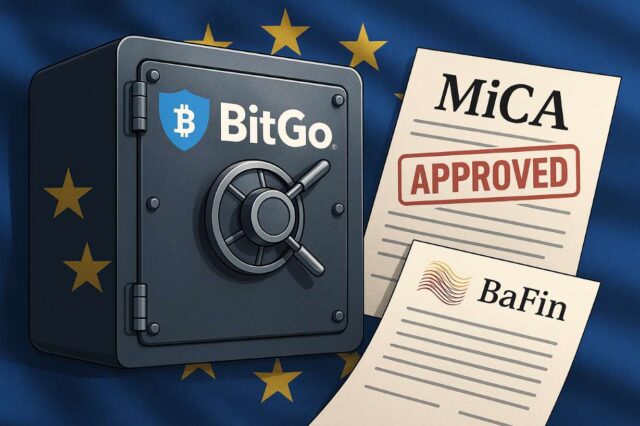
BitGo acquired its MiCA License in Germany.

BitGo has secured a landmark license from Germany’s BaFin under the European Union’s Markets in Crypto-Assets Regulation (MiCA). It will be one of the first crypto custodians officially authorized to operate under the bloc’s new regulatory framework. The license enables BitGo to provide secure digital asset custody services across the EU, offering a compliant infrastructure backbone as MiCA begins to reshape the regulatory landscape for digital assets in Europe.

Regulatory Milestone Under MiCA

According to company statements, U.S.-based digital asset custody firm BitGo has received formal approval from the German Federal Financial Supervisory Authority (BaFin) to operate under the MiCA regime. The license authorizes BitGo to offer crypto custody and wallet services across all EU member states. Thanks to MiCA’s “passporting” mechanism, firms licensed in one EU country can operate across the entire bloc.

Germany as a Strategic Base

Germany, known for its stringent financial oversight and early adoption of crypto regulation, is among the first EU countries to begin implementing MiCA. BitGo’s selection of Germany as its regulatory base underscores the country’s importance in setting standards for crypto compliance in Europe. The firm had already established its European headquarters in Frankfurt in 2023 to prepare for the coming regulatory shift.

Serving a Broad Range of Clients

The MiCA license allows BitGo to serve a broad range of clients, including crypto-native businesses, traditional financial institutions, and fintech firms seeking secure and compliant digital asset custody solutions. BitGo joins a short list of crypto firms — including Bitpanda, Crypto.com, and OKX — cleared by regulators under MiCA so far.

Institutional Trust and Market Advantage

BitGo’s regulatory approval comes as the MiCA framework nears full implementation across the EU, with phased requirements taking effect through 2024 and 2025. The framework introduces harmonized standards for stablecoins, asset-backed tokens, trading platforms, and custodians. These measures aim to improve investor protection and market integrity within the European crypto space.

By being among the first custodians licensed under MiCA, BitGo gains a significant strategic advantage. Institutions increasingly demand regulatory clarity and operational safeguards in the digital asset sector. The firm’s ability to operate under a unified compliance framework across the EU could streamline onboarding for institutional clients wary of fragmented legal environments.

BitGo’s Vision for Growth

Mike Belshe, CEO of BitGo, emphasized in public statements that regulatory readiness is central to the company’s long-term growth strategy. While specific client names were not disclosed, the company has historically provided custody solutions to major exchanges, asset managers, and fintech platforms.

This latest milestone reinforces BitGo’s positioning as a key infrastructure provider in the digital asset ecosystem. It also highlights the EU’s emerging leadership in shaping the global regulatory agenda for cryptocurrencies.

Readers’ frequently asked questions

What is the MiCA regulation, and why does it matter for crypto companies?

The Markets in Crypto-Assets (MiCA) regulation is a new set of rules established by the European Union. The unified legal framework for crypto companies applies across all EU member states. It covers licensing, transparency, consumer protection, and operational requirements for firms offering services such as custody, trading, and issuance of digital assets. For crypto companies like BitGo, getting licensed under MiCA means they can legally and seamlessly operate throughout the EU. They don’t need separate approvals in each country. Hence, it will be easier to scale and gain trust from regulators and institutional clients.

Does this mean BitGo will now serve regular users in Europe, or only financial institutions?

BitGo’s services are primarily designed for institutional clients, such as exchanges, banks, asset managers, and fintech companies, rather than individual retail users. The MiCA license allows BitGo to offer these clients secure custody solutions for their crypto holdings under an EU-approved compliance framework. Individual users won’t typically interact with BitGo directly. However, if they use platforms that rely on BitGo’s custody services, they indirectly benefit from enhanced security and regulatory oversight.

How does BitGo’s license in Germany affect other crypto companies in Europe?

BitGo’s approval sets a regulatory benchmark and may accelerate competition among crypto firms seeking MiCA compliance. Germany is one of Europe’s more rigorous regulatory environments. Securing a license there means a company meets high security, governance, and transparency standards. Other companies will likely follow suit to remain competitive and maintain access to the EU market. It also signals regulators, investors, and institutions that the European crypto market is shifting from fragmented oversight to a more standardized and mature environment.

What Is In It For You? Action Items You Might Want to Consider

Monitor MiCA-compliant custodians for institutional flows

Traders should watch platforms like BitGo that have secured MiCA licenses. They’re likely to become preferred custody partners for institutional capital entering the European crypto market. Tracking on-chain movements to and from these custodians can offer early signals of larger market activity.

Factor regulatory developments into asset selection

MiCA is reshaping how crypto services operate across the EU. Tokens and projects aligning with the new framework, especially those held or supported by licensed custodians, may see increased institutional support. Consider revisiting your portfolio to evaluate exposure to assets with regulatory clarity.

Position ahead of EU-driven liquidity shifts

As MiCA enforcement rolls out and more firms like BitGo receive approvals, EU-based exchanges and custody platforms will become more active. Traders can pre-position on venues connected to licensed entities to benefit from potential liquidity concentration or new market listings compliant with EU regulations.

- Advertisement -

FEATURED