Home Blog Page 115

From Bridge to Backbone: How Stripe Is Reinventing Global Payments with Stablecoins

Stripe acquired Bridge for $1.1B to launch stablecoin infrastructure targeting global payments in underbanked markets.

The stablecoin ecosystem just gained a powerful new player. With its $1.1 billion acquisition of crypto infrastructure startup Bridge, Stripe is laying the groundwork for what could become a decentralized backbone for global payments. The deal was announced in October 2024 and finalized in early February 2025. Stripe’s largest acquisition to date marks a decisive entry into the stablecoin arena.

Unlike many traditional fintechs waiting for regulatory clarity in major Western markets, Stripe is pressing forward with real-world deployment. Post-acquisition, the company began testing a stablecoin-based payment product built on Bridge’s infrastructure. It explicitly targets businesses outside the U.S., EU, and UK.

Bridge’s Infrastructure: Building Global Pipes for Stablecoins

Founded in 2022 by a team of former Coinbase and Square engineers, Bridge developed a robust API platform for stablecoin transactions. Its technology simplifies how businesses send, receive, and convert digital dollars. It’s an alternative to expensive, slow, and often unreliable cross-border payment rails.

Stripe is now integrating this technology into its existing product suite. The goal isn’t to disrupt traditional payments with volatility-prone tokens. Instead, it’s to quietly embed stablecoin support into the backend of global commerce. Developers get tools, businesses get faster settlements, and users never need to interact directly with crypto.

Visa Partnership Brings Real-World Utility to Stablecoins

Two months after completing the acquisition, Stripe and Bridge launched their first live use case: stablecoin-linked Visa payment cards in Latin America. These cards allow users to spend stablecoins like USDC for everyday purchases, while the backend system seamlessly handles the conversion to local fiat currencies.

The service launched in six countries — Argentina, Colombia, Ecuador, Mexico, Peru, and Chile — where local inflation, limited banking and payment infrastructure, and high remittance fees make stablecoins a practical solution. More regions are expected to follow as the platform scales, with expansions already planned for Africa and Asia.

Infrastructure, Not Speculation

What sets Stripe’s approach apart is its refusal to treat stablecoins as speculative assets. There’s no token launch, no liquidity mining scheme, and no attempt to build a branded coin. Instead, the focus is on infrastructure, creating the APIs, developer platforms, and financial integrations needed to make stablecoins function like traditional money, just faster and cheaper.

For Stripe, the Bridge acquisition wasn’t about entering “crypto.” It was about building the next layer of global payments – one that bypasses outdated correspondent banking systems and moves funds in seconds instead of days.

Global Ambition, Local Execution

Notably, Stripe has made a strategic decision to deploy its stablecoin platform in regions where financial services are often inefficient or inaccessible; and where regulation is less of a bottleneck. By starting outside the U.S., EU, and UK, Stripe is able to move quickly. It can test in the real world, and optimize its infrastructure before entering more heavily regulated markets.

The company is not operating in a legal vacuum – it’s simply choosing jurisdictions where it can deploy practical solutions today. This calculated rollout strategy reflects a broader shift in fintech: build first, comply globally when the time is right.

Stripe’s New Backbone for Payments

Stripe’s acquisition of Bridge represents a new phase in the evolution of digital payments. Rather than waiting for stablecoins to be regulated into existence, Stripe is deploying them as infrastructure. Invisible to the end user, but transformative beneath the surface.

This isn’t about replacing fiat, or disrupting central banks. It’s about giving businesses and users a faster, cheaper, programmable alternative to the legacy rails of global finance. Stablecoins, once seen as niche, are now becoming a core layer of the financial stack. And Stripe, quietly but decisively, is building the backbone.

Readers’ frequently asked questions

What exactly are stablecoins, and how are they different from other cryptocurrencies like Bitcoin?

Stablecoins are digital currencies that are pegged to a stable asset, most commonly the US dollar. This peg means that one unit of a stablecoin, like USDC or USDT, is always intended to be worth exactly $1. This is very different from cryptocurrencies like Bitcoin or Ethereum, whose prices fluctuate based on market demand and speculation. The stability of stablecoins makes them more useful for payments, especially across borders, because the value doesn’t swing during the transaction. This stability is what Stripe is leveraging to make global payments faster and cheaper, without the volatility risk normally associated with crypto.

Yes, in the countries where Stripe is launching its stablecoin payment services, including Argentina, Colombia, and Mexico, the use of stablecoins is not banned and often exists in a regulatory gray area. While not officially recognized as legal tender, stablecoins are commonly used in Latin America for remittances, savings, and international transactions due to local currency instability. Stripe and Bridge are launching their services in jurisdictions where stablecoins are legally permitted and have real user demand. Furthermore, they work with partners like Visa to ensure compliance with local financial regulations.

How are stablecoins converted into local currency when someone makes a payment with a card?

When a person makes a purchase using a stablecoin-linked card, the payment platform (in this case, powered by Bridge and Stripe) automatically converts the stablecoin into the merchant’s local currency in real time. This is done through integrated exchange services and liquidity providers that are connected to the payment infrastructure. The user doesn’t need to do anything manually. The stablecoin is deducted from their balance, converted at the current exchange rate, and the merchant receives fiat currency. This process ensures that both users and merchants interact with a familiar payment experience, even though the underlying transaction uses blockchain technology.

What Is In It For You? Action Items You Might Want to Consider

Stripe isn’t just testing the waters – it’s going live in high-need markets with real demand for stablecoin utility. If you’re trading stablecoins like USDC or infrastructure-focused tokens, keep an eye on adoption metrics and partnerships in countries like Argentina, Mexico, and Colombia. These could become future liquidity hubs.

Reassess your exposure to crypto payment infrastructure plays

The Stripe-Bridge deal reinforces the market narrative that stablecoins are transitioning from speculation to utility. Traders should evaluate projects enabling backend payment rails. Think cross-border settlement, API gateways, and tokenized remittance systems. These are no longer theoretical, they’re becoming enterprise-grade.

Monitor regulatory moves in the U.S., but track where deployment is actually happening

While stablecoin regulation in the U.S. is still in flux, Stripe’s strategy shows that innovation is already moving offshore. Consider following the capital: where companies like Stripe are building and deploying today may offer the clearest signals for future volume, user adoption, and stablecoin velocity.


Ripple Wanted Circle. Circle Said No. Now the Stablecoin War Begins.

Ripple Fails to Acquire Circle Stablecoin

A bold takeover attempt by Ripple to acquire rival stablecoin issuer Circle has collapsed, setting the stage for a direct showdown between two of the most strategically positioned players in the digital payments sector. As Ripple arms itself with its newly launched stablecoin RLUSD and Circle sharpens focus on its IPO ambitions, the failure of this deal marks the opening shot in what could become the definitive battle for control of compliant crypto-based settlement infrastructure.

Ripple’s Ambition to Leap Ahead

Ripple’s $5 billion bid was more than an acquisition, it was a shortcut. By absorbing Circle and its flagship USDC stablecoin, Ripple could have overnight vaulted itself to the forefront of institutional-grade stablecoin infrastructure. USDC has been built around regulatory transparency, dollar backing, and mainstream integrations, giving it significant credibility in both crypto and fintech spaces.

Instead, Ripple will have to take the longer route, and it’s already in motion. The company launched its own stablecoin, RLUSD, in December 2024, following its announcement earlier that year. Fully backed by U.S. dollar reserves and issued on both Ethereum and the XRP Ledger, RLUSD is Ripple’s answer to institutional demand for tokenized dollars. The failure to secure USDC only hardens Ripple’s commitment to making RLUSD the go-to asset for on-chain settlement and treasury management.

Circle Plays the Long Game

Circle’s rejection of the offer is a clear statement: the company believes it can unlock more value on the public market than in a buyout. With IPO plans in full swing and growing traction across global financial rails, Circle appears confident that USDC’s positioning in regulated finance will deliver better returns than Ripple’s cash offer.

While the private valuation remains undisclosed, the bid itself serves as an unintended benchmark. It placed Circle’s value above $5 billion in the eyes of potential investors. In declining the deal, Circle may have gained more than it gave up: public validation, leverage in upcoming institutional deals, and a reinforced brand as the most regulation-aligned stablecoin issuer in the market.

Strategic Collision Course

The rejection draws a clear battle line between the two firms. Ripple, flush with capital and post-SEC lawsuit momentum, is looking to buy its way into the core of digital finance. Already embedded in banking and payments infrastructure, Circle is betting on continued organic growth backed by compliance and credibility.

Both are vying for the same prize: institutional trust. As traditional finance inches further into tokenization, the question becomes which stablecoin, RLUSD or USDC, will power the rails of tomorrow’s global settlement systems.

The deal’s collapse signals more than a failed merger. It reveals a shift in crypto’s center of gravity from speculative tokens to stable, fiat-anchored infrastructure. And in this race, Ripple and Circle are no longer potential partners but direct competitors.

Readers’ frequently asked questions

What exactly is a stablecoin, and how is it different from cryptocurrencies like Bitcoin or XRP?

A stablecoin is a digital asset designed to maintain a stable value by being pegged to a real-world asset, most commonly a fiat currency like the U.S. dollar. For example, 1 unit of a USD-backed stablecoin like USDC or RLUSD is always intended to be worth $1. This stability is achieved by holding equivalent assets (like dollars or U.S. Treasuries) in reserve. In contrast, cryptocurrencies like Bitcoin or XRP fluctuate in price based on market demand and speculation. Stablecoins are primarily used for payments, trading, and holding value without exposure to volatility. They act more like digital dollars, making them especially appealing to both businesses and regulators.

Can I use RLUSD or USDC like regular dollars for payments or purchases?

Technically, yes. But it depends on where you are and what platforms or apps you use. RLUSD and USDC are both digital tokens designed to represent U.S. dollars on blockchain networks, but they aren’t accepted in most everyday retail settings. You can use them on crypto exchanges, in DeFi apps, or to transfer money internationally. Some fintech platforms and crypto debit cards do let you spend stablecoins, but they usually convert the tokens into fiat currency at the point of sale. For most users, stablecoins like RLUSD and USDC are currently more practical for trading, saving, or sending money digitally than for everyday shopping.

Is holding stablecoins like USDC or RLUSD safe? What if the company behind it fails?

Stablecoins are generally considered lower risk than volatile cryptocurrencies, but they are not risk-free. Their safety depends on whether the issuer truly holds enough reserves to back every token 1:1 with real dollars or equivalent assets. Both Circle (USDC) and Ripple (RLUSD) claim full backing by U.S. dollar reserves or short-term government bonds. They also publish regular audits or attestations to support this. However, unlike money in a bank account, stablecoin holdings are not insured by the FDIC. If the issuer fails or mismanages reserves, there’s a risk you could lose some or all of your funds. Regulatory oversight helps reduce this risk, which is why USDC and RLUSD emphasize compliance.

What Is In It For You? Action Items You Might Want to Consider

Watch RLUSD exchange listings and liquidity growth – early adoption could offer strategic entry points

Ripple is clearly investing heavily in positioning RLUSD as a serious USDC competitor. While still new, any announcements of major exchange integrations, DeFi pairings, or enterprise partnerships could rapidly shift demand. Traders should consider tracking RLUSD trading volumes and liquidity depth as indicators of growing traction and potential arbitrage or swing trading setups.

Keep an eye on Circle’s IPO timeline – it could trigger a USDC valuation repricing

With Circle turning down a $5B offer, its self-assessed value is clearly higher. The IPO will bring greater transparency into USDC’s financials and regulatory posture. This could influence market sentiment, not just for USDC, but for stablecoin dominance in general. Traders might want to prepare for volatility around the IPO event window and monitor token flows between stablecoins.

Position around the stablecoin rivalry – diversify stablecoin exposure

The Ripple–Circle split signals the start of a stablecoin arms race. Instead of sticking to a single stablecoin, consider diversifying between regulated options like USDC and RLUSD, especially across different chains. This can reduce counterparty risk while giving flexibility to move capital where yields, integrations, or spreads are more favorable.

From Console to Crypto: How Playtron Plans to Tokenize the Gaming Experience

Playtron to issue Game Dollar stablecoin

With its upcoming Linux-based GameOS console and the launch of Game Dollar on the Sui blockchain, Playtron is crafting a vertically integrated Web3 gaming ecosystem. Unlike most blockchain gaming efforts, Playtron controls both the hardware and the in-game economy. It created a unique opportunity to reshape the user experience from the ground up. It’s not just about better payments, it’s about owning the rails.

A Stablecoin Built for Gaming

At the heart of this strategy is Game Dollar, a dollar-pegged stablecoin designed specifically for gaming transactions. Powered by M0, a decentralized stablecoin protocol, and supported by payment infrastructure provider Bridge, Game Dollar aims to be the primary currency for in-game purchases, rewards, and subscriptions across Playtron’s ecosystem. The stablecoin is set to go live in Q4 2025, aligned with the release of Playtron’s new handheld console, SuiPlay0X1.

Vertical Integration from Hardware to Marketplace

What sets Playtron apart is its end-to-end approach. Unlike traditional gaming companies that rely on third-party platforms or existing blockchain layers, Playtron is building its entire stack in-house. GameOS, its custom Linux-based operating system, will come pre-installed on the SuiPlay0X1. It will allow seamless integration with Game Dollar and the Sui blockchain from day one. The company designed the console for both Web2 and Web3 games, potentially widening its user base beyond the crypto-native crowd.

Infrastructure and Payment Rails

Game Dollar will be issued and maintained using M0’s smart contracts and infrastructure, aiming to keep the coin pegged to the U.S. dollar while remaining composable with other decentralized finance (DeFi) tools. Bridge will facilitate fiat on-ramps and off-ramps, ensuring that users can easily convert between traditional currencies and Game Dollar within the Playtron interface.

Owning the Ecosystem with Playtron Select

The company is also integrating its own curated storefront, Playtron Select. In the store, users can buy games and in-game items directly using Game Dollar. This creates a closed-loop payment system that gives Playtron both revenue capture and data control. By unifying hardware, operating system, payment layer, and marketplace, Playtron is effectively positioning itself as a Web3-native version of platforms like Steam or the Epic Games Store. But decentralized payments and ownership are baked in.

Strategic Positioning in a Fragmented Industry

Analysts note that this level of vertical integration is rare in the blockchain gaming space, often marked by fragmentation and a reliance on speculative tokens. By contrast, Playtron’s use of a stablecoin is a deliberate attempt to offer a predictable and user-friendly alternative to volatile crypto assets. The partnership with Sui is strategic as well. The Sui blockchain’s low fees and high throughput capabilities are crucial for gaming use cases.

Whether Playtron’s model will scale remains to be seen. Adoption will depend on the appeal of the hardware, but also on whether developers choose to build for the ecosystem. Not least important, will gamers embrace a stablecoin-based economy? Nevertheless, controlling its infrastructure end-to-end uniquely positions Playtron to experiment, iterate, and potentially define what a truly tokenized gaming experience can look like.

Readers’ frequently asked questions

How will I actually get and use Game Dollar if I’m not already using crypto?

You won’t need to be an experienced crypto user to start using Game Dollar. Playtron is integrating fiat on-ramps into its ecosystem via a provider called Bridge. You’ll be able to buy Game Dollars directly with your credit card or bank account through the console or Playtron’s interface, just like topping up a digital wallet in an app. Similarly, if you want to cash out, Bridge supports off-ramps to convert Game Dollars back into traditional currency. The game developers want to make the experience feel familiar, even if you’ve never used crypto before.

Is Game Dollar just another crypto token that might lose value?

No, it is not. Unlike typical gaming or Web3 tokens that fluctuate in price, Game Dollar is a stablecoin. It’s pegged to the U.S. dollar and built using infrastructure from M0, which is designed to keep it stable and predictable. One Game Dollar will always equal one U.S. dollar. It’s not an investment token; it’s a payment tool meant to remove volatility and simplify in-game transactions.

Will I be able to use Game Dollar in other games or stores outside of Playtron?

At launch, Game Dollar will primarily be in use within Playtron’s own ecosystem, including its handheld console, storefront (Playtron Select), and supported games. However, because it’s built on the Sui blockchain and uses decentralized infrastructure, it’s technically possible that other game developers or platforms could adopt it in the future. But for now, Playtron plans to use it within its own vertically integrated system only. The company will maintain full control over the gaming and payment experience.

What Is In It For You? Action Items You Might Want to Consider

Monitor the rollout of Game Dollar and the SuiPlay0X1 console in Q4 2025

New stablecoins usually fly under the radar, but Game Dollar could quietly carve out a strong utility niche in Web3 gaming. If adoption gains momentum via Playtron’s curated storefront and hardware, early ecosystem alignment could present unique DeFi or liquidity opportunities on Sui.

Keep an eye on M0 and Bridge as infrastructure plays

Behind every new stablecoin is a protocol story worth watching. M0’s involvement in issuing Game Dollar could put it in the spotlight, especially if Game Dollar gains transactional volume. Likewise, Bridge’s fiat gateway services could become essential infrastructure if the user experience proves frictionless.

Explore early builder activity in the Playtron-Sui ecosystem

Whether you’re a gamer, investor, or dev, ecosystems with unified hardware, payment rails, and marketplaces tend to create sticky user bases. Consider scouting early GameOS or SuiPlay0X1 titles and communities. They could offer edge cases or early signals on broader Sui-based gaming traction.

Meta Goes On-Chain: Injective Opens the Door to 24/7 Stock Trading Without a Broker

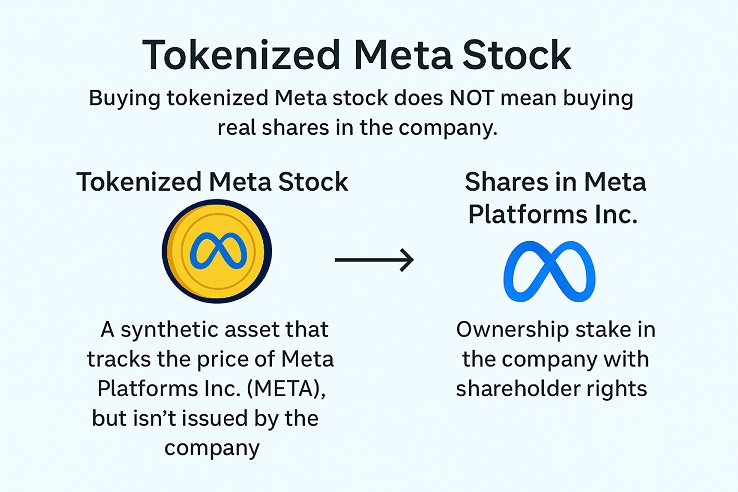
Injective tokenizes Meta Stock.

Imagine trading shares of Meta Platforms Inc. (NASDAQ: META) anytime, anywhere, without needing a traditional brokerage account or being curbed by market hours. Injective, a finance-optimized Layer-1 blockchain, has made this possible by launching a tokenized version of Meta stock through its iAssets framework. This development signifies a significant stride towards financial inclusivity. Particularly, investors in underbanked regions benefit from it, challenging the traditional equity market’s gatekeepers.

Injective’s iAssets: Bridging Traditional Finance and DeFi

Injective’s iAssets framework enables tokenizing real-world assets (RWAs), such as stocks, bonds, and ETFs, into programmable tokens on the blockchain. These tokens can be traded 24/7 on Helix, Injective’s decentralized exchange, offering global users unrestricted access to financial markets.

By minting Meta stock as an iAsset, Injective provides network-wide liquidity. It allows traders, lenders, and DeFi platforms to incorporate $META into various financial strategies without the limitations of traditional markets. This approach democratizes access to high-value equities and integrates them into the decentralized finance ecosystem, enhancing their utility.

Empowering Investors Globally

The tokenization of Meta stock is particularly impactful for individual investors in regions with limited access to traditional financial services. By eliminating the need for intermediaries and offering 24/7 trading, Injective empowers users to participate in global markets, fostering financial inclusion and autonomy.

Moreover, integrating tokenized stocks into DeFi applications allows for innovative financial strategies. For example, investors can use $META as collateral in lending protocols or incorporate it into automated trading strategies. This flexibility enhances the financial tools available to individual investors, enabling them to manage and grow their assets more effectively.

A Step Towards a Decentralized Financial Future

Injective’s initiative to bring Meta stock on-chain is part of a broader movement to integrate traditional financial assets into the decentralized finance landscape. By doing so, Injective not only increases the accessibility and efficiency of financial markets but also paves the way for a more inclusive and decentralized financial system.

As the demand for real-world asset tokenization grows, Injective’s iAssets framework positions the platform at the forefront of this financial evolution. It offers users unprecedented access to a diverse range of financial instruments and opportunities.

In summary, Injective’s tokenization of Meta stock represents a significant advancement in bridging the gap between traditional finance and decentralized platforms. It promotes financial accessibility and empowerment for investors worldwide.

Readers’ frequently asked questions

Do I need to own any cryptocurrency to buy tokenized Meta stock?

Yes, to buy tokenized Meta stock on Injective’s platform, you’ll first need to own a cryptocurrency supported by the Injective network, typically INJ (Injective’s native token) or a stablecoin like USDT or USDC. You’ll also need a crypto wallet that supports Injective, such as MetaMask connected via a bridge. Once your wallet is funded and connected to the Helix decentralized exchange, you can trade your crypto for the tokenized Meta stock.

If I buy tokenized Meta stock, do I get the same benefits as owning real shares?

No, when you buy a tokenized version of Meta stock on Injective, you’re gaining exposure to the stock’s price movements. You don’t own the actual shares, hence you don’t receive dividends, voting rights, or other shareholder benefits related to holding real equity through a regulated broker. The token simply mirrors the stock’s market price through a price feed.

Can I convert the tokenized Meta stock back into regular money?

Yes, but the process is indirect. You can sell the tokenized Meta stock back into a cryptocurrency like USDT or INJ on the Helix exchange. Then, using a crypto exchange that supports fiat withdrawals (like Binance or Coinbase), you can convert your crypto into your local currency and withdraw it to a bank account. Keep in mind that fees, KYC requirements, and withdrawal limits may apply depending on the platform you use.

What Is In It For You? Action Items You Might Want to Consider

Explore 24/7 Trading Opportunities on Helix

Take advantage of Injective’s Helix exchange to gain exposure to Meta stock outside of traditional market hours. This can be especially useful for reacting to after-hours news or global events impacting stock prices before markets open.

Diversify with Tokenized Real-World Assets

Don’t limit your DeFi exposure to crypto-native tokens. Consider adding tokenized stocks like Meta, Tesla, or Nvidia to your portfolio to mirror TradFi performance while staying within the blockchain ecosystem.

Use iAssets in DeFi Strategies

Look into DeFi protocols on Injective that allow you to lend, borrow, or leverage tokenized assets. Using $META tokens as collateral or pairing them with stablecoins in liquidity pools could add extra utility and yield to your holdings.

Crypto Traders Dodge Fees – So Why Do Sports Bettors Pay 5% Without Realizing It?

What sports bettors can learn from cypto traders

Imagine paying a 5% commission every time you trade Bitcoin – you’d call it a scam. Yet millions of sports bettors do exactly that, betting -110 odds (1.91 decimal). This hidden cost, known as the vig, goes largely unnoticed, while crypto traders haggle over basis points. It’s time to ask: why do sports bettors accept unnecessary friction, and what can they learn from fee-obsessed crypto traders? 

The parallel between betting and trading becomes even more relevant in today’s evolving market. Crypto trading is built around speed, transparency, and efficiency, principles that are finally starting to take hold in the world of crypto sports betting and crypto sportsbooks. As bettors become savvier, understanding concepts like arbitrage and +EV is no longer niche; it’s essential. 

The Hidden Cost of Sports Betting: Understanding the Vig

In sports betting, the vig (short for vigorish) is the sportsbook’s commission. Typical point spreads or totals are priced at -110 on both sides, meaning you must wager $110 to win $100 – a built‑in fee of roughly 4.76%.

  • Embedded Fee: The vig is hidden in the odds, so few bettors see it as a separate cost.
     
  • Breakeven Impact: To break even at -110 you need a 52.38% win rate. At -105 (“reduced juice”), that drops to 51.22%, giving savvy bettors a real edge.

Parlays and props compound the issue, since the vig applies on every leg, which pushes the effective house edge to 12%+. These bets are what standard sportsbooks market, not sharp books. 

Traders Know Better: The Obsession with Low Fees in Crypto

Crypto traders live and die by minimizing costs. On major centralized exchanges like Binance or Kraken, fees range from 0.1% down to 0.01%. On DEXes like Uniswap, liquidity‑provider fees hover between 0.05% and 0.3%, and aggregators or Layer‑2 solutions can shave fees even lower.

Every basis point matters to a trader. Slippage, fee tiers, and gas costs can erode margins quickly, especially for those employing high-frequency or arbitrage strategies. Traders track these costs obsessively because their profits depend on precision.

Strategies like arbitrage and market making collapse under high friction. That’s why paying 4.76% per transaction, like you would at standard sportsbooks, is completely unthinkable in the world of crypto trading. It’s no wonder serious bettors are now turning to crypto sports betting platforms that operate more like efficient exchanges. 

Paying 4.76% per transaction in sports betting? Unthinkable in crypto.

Why Bettors Pay What Traders Wouldn’t

  1. Invisible Fee: Sportsbooks don’t label the vig as a fee. They embed it in odds and normalize it across sportsbooks. Unlike crypto traders who see fees line-by-line in their transaction history, bettors rarely see a breakdown.
  2. Mindsets differ: Bettors often wager for entertainment, social bonding, or the thrill. They’re emotionally invested and far less price sensitive. Traders are ruthlessly profit-driven. They’re in it to extract value, and every fee is a drag on performance.
  3. Lack of Alternatives: Many bettors stick with a single sportsbook, unaware of better pricing elsewhere, and out of convenience.

The Rise of Reduced Juice Sportsbooks

The good news? A new wave of sportsbooks is bringing the low-fee mindset to sports betting. Reduced juice sportsbooks – offering odds like -105 instead of -110 – are gaining traction among bettors who understand the long-term value of cutting the vig.

Bet105 is one such platform. Relaunched in 2024, Bet105 positions itself as a crypto sportsbook that offers -105 reduced juice lines as its standard. It’s crypto-only, supports major coins like BTC, ETH, USDT, and USDC, and has fast, fee-free withdrawals. Modeled after low-margin pioneers like Pinnacle, Bet105 aims to give bettors fairer odds and better long-term value.

Other low‑juice pioneers include Pinnacle (often –105/–106), DraftKings -110/-110 and limit sharp/educated players, and Stake (seamless crypto integration). But books like bet105 stand out by combining industry‑leading odds with a crypto‑first platform designed for sharp and EV‑driven players. 

What Bettors Can Learn from Crypto Traders
  • Line‑Shop Religiously: Use odds‑comparison tools just like traders use DEX aggregators. 
  • Switch to Reduced Juice Books: Moving from –110 to –105 can double your expected return. 
  • Track Your Edge: Log your bets, calculate real cost, and measure your win rate.
  • Ditch High‑Vig Markets: Parlays and props carry the worst vig—opt for straight value bets.

Conclusion – Stop Accepting the 5% Scam 

In crypto trading, paying 5% per transaction is financial suicide. In sports betting, it’s considered “normal.” But it doesn’t have to be. Traders optimize for every basis point, bettors should too. Whether you’re in it for fun or profits, cutting your vig is the single biggest move you can make to improve your bottom line.

Readers’ frequently asked questions

What is the vig in sports betting? 

The vig is the commission sportsbooks charge. At -110 odds, it equates to a 4.76% fee hidden in the price. 

Why do sportsbooks use –110 odds? 

To ensure a profit on 50/50 events: pricing both sides at -110 gives the book a mathematical edge. 

What is reduced juice betting? 

Reduced juice means betting at lower odds (e.g., -105 instead of -110), which reduces the sportsbook’s edge and improves your breakeven rate. 

What are the best low‑vig sportsbooks? 

Pinnacle, bet105, Cloudbet, and Stake are known for offering -105 or better odds on many markets. 

How do crypto exchange fees compare? 

Major exchanges charge 0.1%–0.01% per trade, with some pairs even trading fee‑free. Compared to -110 odds, crypto trading fees are dramatically lower.

Why are traders more fee‑conscious than bettors? 

Traders are profit‑maximizers—every fee hits their ROI. Bettors often chase excitement and don’t see the hidden cost baked into odds. 

What is EV betting? 

EV betting refers to Expected Value betting, a strategy where bettors place wagers only when the potential return outweighs the risk. Professional bettors commonly use it as a long-term profit-oriented approach.  

What is arbitrage betting? 

Arbitrage betting is a risk-free betting strategy that exploits pricing discrepancies across multiple sportsbooks. Bettors place bets on all outcomes of an event at odds that guarantee a profit regardless of the result. It’s one of the most popular tactics among sharp players using crypto sportsbooks.

- Advertisement -

FEATURED