Home Blog Page 116

The Man Who Lost 7,002 Bitcoin: Who is Stefan Thomas Beyond the Headlines?

Stefan Thomas, the man who forgot his Bitcoin password

Stefan Thomas’s story has fascinated millions in and out of the crypto world: a programmer who, in 2011, received a Bitcoin payment for making an explainer video, stored it on an IronKey USB drive, and then forgot the password. With only two attempts remaining to recover his Bitcoin, now worth over $250 million, his predicament has become one of the most infamous lost password sagas in tech history.

But defining Stefan Thomas by a lost key alone would be a mistake.

Beyond the viral headlines, he is a pioneering open-source developer and a champion for financial inclusion. Thomas is the co-creator of the Interledger Protocol, former CTO of Ripple, and founder of Coil.

This is the story of a brilliant programmer, a risk-taker, and an innovator who continues to leave a lasting mark in decentralized finance.

Early Life and Education

Stefan Thomas was born in 1988 in Germany. He developed an interest in programming at an early age and became a “pro” even before graduating from high school.

As a teenager, Thomas taught himself how to program, driven purely by curiosity. He felt an insatiable need to understand how things worked. In one interview, he described how he spent hours on end locked in his room, just writing code and trying to understand the world of programming.

Beyond his self-taught programming skills, Thomas holds a BA (Hons) in Business Studies from The Open University.

Career Beginnings

First Steps

Stefan Thomas started as a consultant for several companies before landing his first major role as CTO of Solutions Four Impact Ltd. He has also worked as CTO for Eload24. While working for Eload, he encountered Bitcoin, a technology that would change the course of his career.

Thomas became fascinated by the concept of decentralized currency. He created one of the earliest and most widely recognized “What is Bitcoin?” videos. As a token of appreciation, he was paid 8,000 Bitcoins. He used a small portion and stored the rest (7,002) in a secure digital wallet; a decision that would later haunt him when he forgot the password.

Bitcoin was not worth much then. Like many others, he felt the need to work on something on the side, but it was still related to digital assets. In 2012, Thomas joined Ripple as Chief Technology Officer (CTO), and his career snowballed.

Rise to Prominence

Under his leadership, Ripple became a major player in the blockchain industry.

During his five-year tenure, Thomas designed new protocols for international transactions, significantly reducing costs and increasing efficiency. He pioneered the Interledger Protocol, a groundbreaking framework enabling seamless payments across different financial networks. Interledger Protocol laid the groundwork for what would later become a critical component in blockchain-based financial infrastructure.

Thomas left Ripple in 2018 and started his second company, Coil, a startup that created a “subscription for the whole web” and the Open Web Monetization Standard. Coil leveraged the Interledger Protocol to enable seamless micro-transactions, allowing content creators to earn revenue without relying solely on ads or subscriptions. Under Thomas’ leadership, Coil processed 78 billion payments, proving that blockchain technology could power real-world financial ecosystems at scale.

However, in 2023, Coil announced it would pause development. Thomas’s focus shifted toward his ongoing work at the Interledger Foundation, where he continues to champion decentralized financial solutions as the Chairperson.

Key Projects and Initiatives

Other than the famous “What is Bitcoin?” video that helped millions understand Bitcoin, Stefan Thomas has made significant contributions to the Bitcoin world and the digital payment space in general. He is the brains behind BitcoinJS, the first implementation of Bitcoin cryptography in browsers. He also co-created the Interledger Protocol and partnered with the Bill & Melinda Gates Foundation to build Mojaloop, an open-source national payment switch for mobile wallets in developing countries.

Leadership and Vision

Leadership Style

Unlike many flashy crypto personalities, Stefan Thomas is known for his practical and measured leadership. He doesn’t chase hype. Instead, he focuses on building solutions that have a real-world impact.

Colleagues have previously described him as a visionary problem solver with a deep passion for financial inclusivity and blockchain. His current vision revolves around the same.

Vision

One of Thomas’s key priorities is creating a better, inclusive, and sustainable web business model. He has voiced concerns about the environmental impact of cryptocurrency mining and continuously explores ways to create more eco-friendly digital finance solutions. Additionally, Thomas raises awareness about digital currency security. He uses his own experience as a cautionary tale to emphasize the importance of secure asset management.

Personal Insights

Personal Life

Stefan Thomas prefers to keep a low profile in his personal life, but one thing stands out – his love for writing. Thomas occasionally shares his thoughts and insights on blockchain and world events on Medium, Twitter, and LinkedIn.

Challenges and Controversies

Obstacles Overcome

Of all his achievements, Thomas is best known for his lost Bitcoin fortune. In an interview with The New York Times, he explained the angst he felt when he learned he had somehow lost his money.

“I would just lay in bed and think about it. Then I would go to the computer with some new strategy, and it wouldn’t work, and I would be desperate again.”

Stefan Thomas’s 7,002 Bitcoin fate remains unknown to date. He has used up eight of his ten attempts to unlock the drive. Several people, including hypnotists and well-known hackers, reached out to help. But it seems no one has succeeded so far.

An article by Wired, however, suggests that Thomas has been working with a different set of experts on the recovery.

Lessons Learned

Ironically, his loss has become one of crypto history’s most powerful cautionary tales, making security a top priority for blockchain users worldwide.

Many people in the industry now share Stefan Thomas’ story to “warn” their counterparts.

Future Plans

Industry Impact/Upcoming Projects

Stefan Thomas’s work has left an undeniable mark on blockchain and digital currencies. From shaping the early days of Bitcoin education to pioneering web monetization, his contributions have helped define the future of decentralized finance. But he is far from done. According to his social media, he has many exciting projects lined up.

Conclusion – More than just the guy who forgot his Bitcoin password

Stefan Thomas may forever be associated with the forgotten password and lost Bitcoin. However, his legacy extends far beyond that single moment. He has profoundly shaped the digital economy through his work both at Ripple and Coil.


Are you a founder, executive, or operator building in crypto or blockchain?
We regularly profile leaders shaping the industry. Contact us to be featured!


Daniela Barbosa, A visionary Leader in Decentralized Technologies

Daniela Barbosa, Executive Director Hyperledger Foundation, GM at Linux Foundation

Blockchain technology is reshaping multiple industries, and at the heart of this revolution is Daniela Barbosa, the Executive Director of Hyperledger Foundation and General Manager of Blockchain and Identity at the Linux Foundation.

Barbosa has spent years championing open-source collaboration to develop enterprise-grade blockchain solutions. Through Hyperledger, Barbosa has helped businesses, governments, and other institutions integrate decentralized technologies, driving innovation in identity management, supply chains, financial systems, etc.

Who is Daniela Barbosa, and how did she become this influential figure in the blockchain space?

Early Life and Education

Daniela Barbosa is an alumnus of Rutgers University, class of 2002. She holds a master’s in Library and Information Science from the institution.

In an interview with Medium, Barbosa explained how she has always been interested in information and its usage. It really motivated her to get her master’s and even pursue a career in the field.

Career Beginnings

First Steps

Daniela Barbosa started her professional journey in the late 1990s as an Account Manager at Advo. She then joined Factiva as the Integration Services Manager and later as the Solutions Architect-Team Leader.

During her seven-year tenure at Factiva, Barbosa honed her skills in enterprise systems and semantic web solutions. She collaborated with top global brands across various sectors, including finance, consumer goods, and energy.

Rise to Prominence

Barbosa’s career took a significant leap when she joined Dow Jones in 2007 as the Business Development Manager, Synpatica.

As Business Development Manager, Barbosa was responsible for growing the business by providing client services and working with partners. She worked in this role for two years before earning her promotion to Senior Business Development. Barbosa left Dow Jones in 2012 for FirstRain, a developer of cloud-based business analytics, marking her entry into decentralized technologies.

Barbosa joined the Linux Foundation in 2017 as the Vice President of Worldwide Alliances for Hyperledger. And in 2024, she became the General Manager of Decentralized Technologies and Executive Director of the LF Decentralized Trust.

Key Projects and Initiatives

Under Barbosa’s leadership, the Hyperledger Foundation has achieved significant milestones.

She has been a leading voice for the power of openly developed decentralized technologies to optimize critical infrastructures. Her efforts have fostered a thriving ecosystem around open-source blockchain software technologies, coordinating a community of member and non-member organizations, individual contributors, and software developers.

Leadership and Vision

Leadership Style

Daniela Barbosa is known for her collaborative and inclusive leadership style, which has contributed to her success in the industry. Her colleagues described Barbosa as a great leader who listens and focuses on making the blockchain space better for everyone.

Vision

Her vision centers on building decentralized systems that are efficient, private, and inclusive. She has been a featured speaker at key blockchain conferences worldwide, discussing topics like advancing technology through open-source collaboration and fostering inclusive communities within the blockchain and identity sectors.

Personal Insights

Personal Life

Barbosa loves to keep her personal life private, but we also know she loves a good work-life balance. She has been featured in interviews discussing the importance of balancing work and family and how she maintains that balance herself.

Challenges and Controversies

Throughout her career, Barbosa has navigated numerous challenges inherent to the rapidly changing business landscape. Onboarding blockchain for enterprises seems to stand out as one of the main issues, though.

In a 2021 Interview with Magazine, she said that onboarding was no longer a question of whether the technology would work, but more about governance and how you onboard.

“We have seen plenty of proven enterprise networks across many use cases — in supply chain, trade finance, digital payments, healthcare, and more. It is how those networks are governed as active growing networks beyond the POC stage and how you onboard a diverse ecosystem of both small and large players,”- Daniela Barbosa.

Her experiences have reinforced the importance of adaptability, continuous learning, and the need to foster diverse perspectives in driving innovation.

Future Plans

Upcoming Projects- The Vision of Daniela Barbosa

Looking ahead, Barbosa is committed to furthering the development and adoption of decentralized technologies. She continues to lead initiatives at the Linux Foundation and Hyperledger Foundation aimed at building open-source solutions that enhance business processes and promote inclusivity.

Conclusion

Daniela Barbosa is definitely someone to look out for in decentralized technologies. Her contributions at the Hyperledger Foundation and the Linux Foundation, where she is the General Manager of Blockchain and Identity, have significantly impacted the development of open-source and decentralized technologies. She positioned herself as a trailblazer in the industry. As she continues to lead and inspire, Barbosa’s work promises to shape the future of technology, fostering efficient, private, and inclusive systems.


Are you a founder, executive, or operator building in crypto or blockchain?
We regularly profile leaders shaping the industry. Contact us to be featured!


IPO on the Horizon: Bithumb Spins Off Non-Core Units, Eyes Nasdaq Listing

South Korean crypto exchange Bithumb plans IPO second half of 2025

In a strategic move aimed at global expansion, South Korean cryptocurrency exchange Bithumb has announced plans to spin off its non-core business units into a separate entity, “Bithumb A,” by July 31, 2025. This restructuring is a key step toward a potential Initial Public Offering (IPO) in the second half of 2025. The company considers listings on both South Korea’s Kosdaq and the U.S.-based Nasdaq stock exchange.

Strategic Restructuring for Global Ambitions

The spin-off will separate Bithumb’s investment and holding operations from its core cryptocurrency exchange business. Bithumb Korea will maintain a 56% stake in the original exchange, while the new entity, Bithumb A, will hold the remaining 44%. The goal is to enhance operational efficiency, reduce risk exposure, and streamline corporate governance. All are critical factors for attracting investors and meeting regulatory standards in global markets.

Samsung Securities has been appointed as the lead underwriter, underscoring Bithumb’s commitment to a well-structured IPO. While a domestic listing is still under consideration, a potential Nasdaq debut signals the company’s broader ambition to become a globally recognized crypto trading platform.

Financial Momentum Fuels IPO Push

Bithumb’s financial performance in 2024 supports its IPO ambitions. The company reported a net profit of $110 million, a 560% year-over-year increase. The surge reflects both the market recovery and internal operational improvements. However, Bithumb still trails its closest rival, Upbit, which generated over six times that amount in net profits. This emphasizes the competitive pressure in South Korea’s digital asset sector.

The spin-off aims to strengthen Bithumb’s positioning by enabling each business arm to focus on distinct goals. Growth for the exchange and innovation for the investment and holding division.

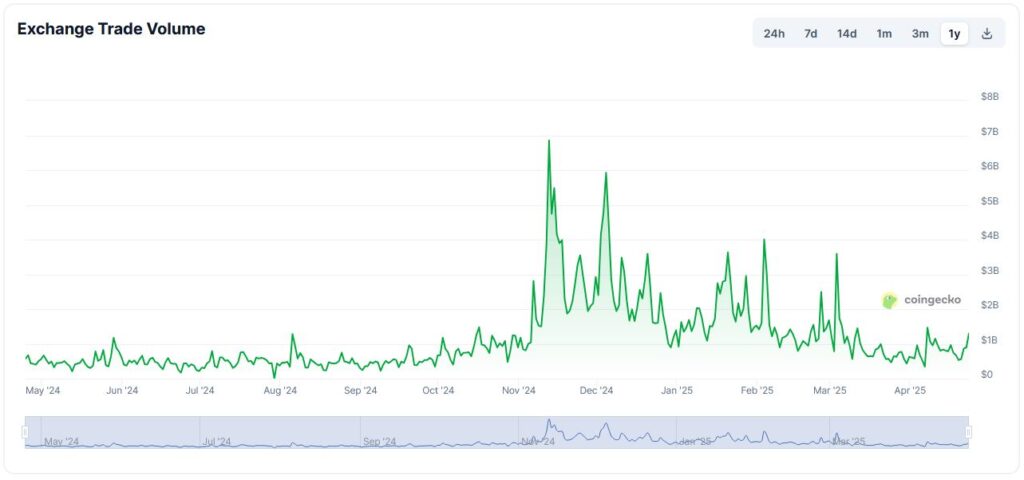
Bithumb's 1Y exchange trade volume chart
Source: CoinGecko

Regulatory Hurdles Ahead of Bithumb IPO

While the restructuring demonstrates strategic foresight, Bithumb must still overcome significant regulatory obstacles. The exchange has recently faced compliance issues, including a suspension related to lapses in Know Your Customer (KYC) procedures and connections to unregistered foreign platforms. These challenges have led to increased scrutiny from South Korea’s Financial Intelligence Unit. They could well complicate the path to a successful IPO, particularly if Bithumb seeks approval from U.S. regulators for a Nasdaq listing.

Nevertheless, separating the business units may serve to mitigate regulatory risk. It creates clearer operational boundaries and enables each entity to implement focused compliance strategies.

Looking Forward

Bithumb’s corporate overhaul and renewed IPO push mark a pivotal moment in its evolution from a regional exchange to a contender on the global stage. Realigning its structure and sharpening its compliance efforts, the company is betting that streamlined governance and international visibility will resonate with investors and regulators alike.

Whether it can clear the regulatory hurdles and deliver a successful public debut, domestically or abroad, will be a key narrative to watch in the second half of 2025.

Bitcoin’s 2024 Halving: The Cycle That Changed Everything?

Bitcoin’s Trajectory after 2024 Halving

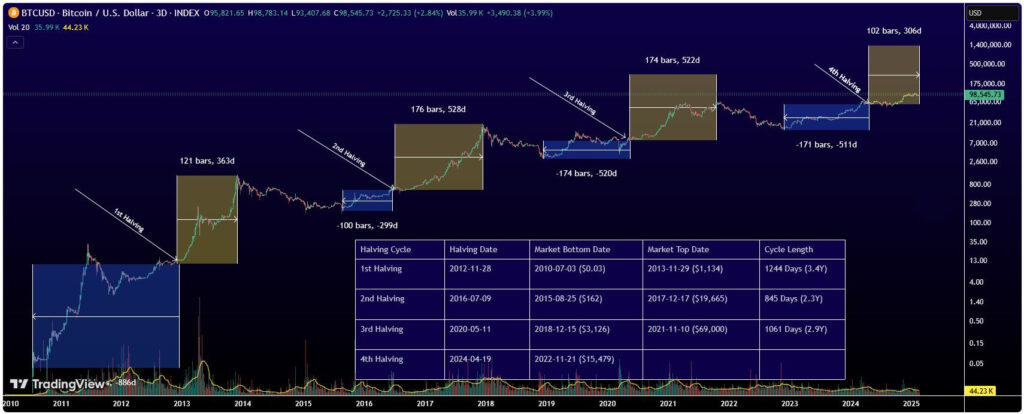
The 2024 Bitcoin halving cycle promised a familiar pattern: reduced supply, skyrocketing prices, and a crescendo of retail euphoria. But this time, the script flipped. One year later, Bitcoin delivered a modest return, institutional capital dominated the market, and macroeconomic forces, not just blockchain mechanics, seemed to steer sentiment. Is Bitcoin entering a fundamentally new era?

Halving Delivered, But the Rally Didn’t Roar

In previous halving cycles, Bitcoin reliably posted triple-digit gains within a year. After the 2012, 2016, and 2020 events, prices soared by over 400% in the following 12 months. By contrast, the 2024 cycle has brought a far more muted outcome: a roughly 33% gain year-on-year, despite briefly reaching a new all-time high.

Rather than triggering another euphoric bull run, the latest halving has unfolded amid tempered expectations and measured growth. The cycle hasn’t been absent of milestones but has clearly deviated from the historical script.

Institutional Capital Rewrites Market Behavior

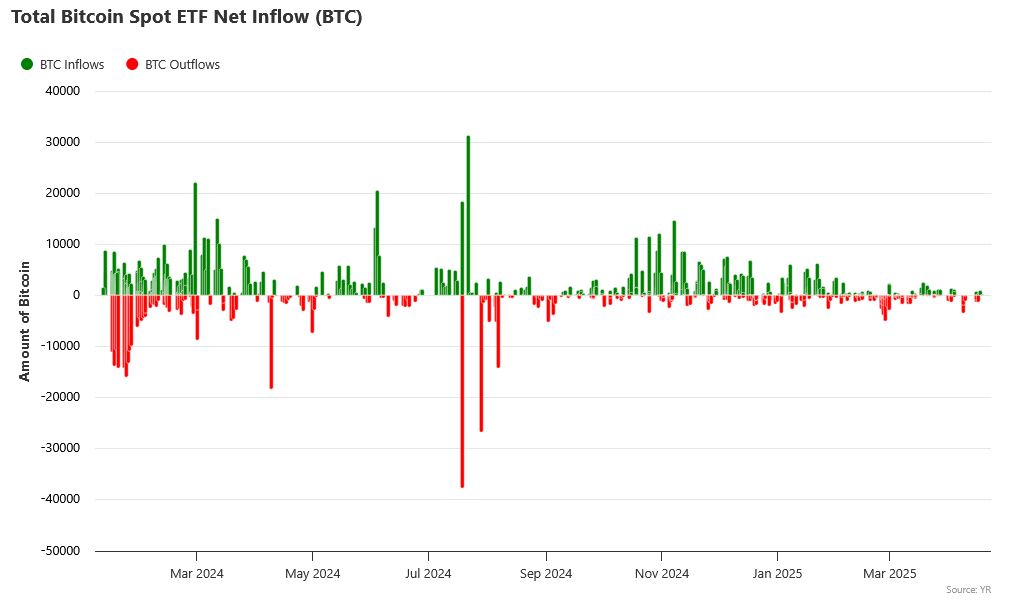
A major shift in this cycle is the growing presence of institutional investors. With spot Bitcoin ETFs approved and launched in major markets, capital inflows from traditional finance have become a defining feature of the current landscape.

ETF Inflows and Outflows since inception of Bitcoin ETFs.
Source: treasuries.bitbo.io

As a result, Bitcoin’s volatility has diminished. Retail participation, once the dominant market driver, has taken a back seat to more conservative, long-term holders. Speculation hasn’t disappeared, but it has become more subdued. The result is a market that feels more structured, and arguably, more stable.

For the first time, Bitcoin behaves less like a speculative asset and more like a maturing financial instrument.

Macro Trumps Halving

Another key factor in this cycle’s deviation is the outsized role of macroeconomic conditions. In past years, Bitcoin’s price action was largely attributed to supply dynamics and internal crypto sentiment. Today, it’s increasingly tied to global trends: interest rate decisions, inflation outlooks, and liquidity in the broader economy.

Bitcoin has shown heightened sensitivity to central bank policies, equity market performance, and risk appetite among institutional players. This alignment with macro forces suggests that halving events may no longer be the primary catalyst for market direction.

A Compressed, Front-Loaded Cycle?

Interestingly, while the current post-halving rally appears less explosive, it may simply be operating on a different timeline. Bitcoin reached new all-time highs earlier in the cycle than in any previous post-halving period. In that sense, the market may have “priced in” the halving sooner due to increased efficiency in capital deployment and faster information flow.

With ETF inflows continuing and long-term holders maintaining strong conviction, there’s still a case to be made for further upside, especially if macro headwinds begin to ease in the second half of 2025.

Source: TradingView

Maturity or Monotony?

The most debated question is whether this more disciplined cycle signals Bitcoin’s maturation or its stagnation. For advocates of long-term adoption, the shift toward stability and institutional alignment is a welcome evolution. It positions Bitcoin as a credible asset class, less vulnerable to boom-and-bust dynamics.

For others, however, the lack of retail excitement and speculative energy raises concerns. The 2024 cycle, so far, lacks the narrative momentum that has historically fueled parabolic growth.

One year after the 2024 halving, Bitcoin stands at a crossroads. The once-reliable four-year cycle appears to be evolving—no longer the sole driver of price action. Instead, institutional participation and macroeconomic trends have become dominant forces.

This doesn’t mean the halving has lost all relevance, but it does suggest a shift in how markets interpret its impact. Bitcoin is no longer just a frontier experiment—it’s a maturing asset in a complex global system. And that might be the biggest transformation of all.

Readers’ frequently asked questions

What exactly is a Bitcoin halving, and why does it happen every four years?

A Bitcoin halving is a scheduled event where the reward given to miners for validating new blocks is cut in half. This happens approximately every four years, or every 210,000 blocks. It’s built into Bitcoin’s code as a way to control inflation and gradually reduce the total number of new bitcoins introduced into circulation. Originally, miners received 50 BTC per block; after the most recent halving in April 2024, they now receive 3.125 BTC. The halving will continue until the maximum supply of 21 million bitcoins is reached, expected around the year 2140. The purpose is to create scarcity over time, similar to how commodities like gold become more difficult to extract.

What is a Bitcoin ETF, and how does it allow institutions to invest in Bitcoin?

A Bitcoin ETF (Exchange-Traded Fund) is a financial product that allows investors to gain exposure to the price of Bitcoin without having to buy or store it directly. It’s traded on traditional stock exchanges, just like shares in a company. When institutions invest in a Bitcoin ETF, they’re purchasing a regulated, simplified way to access Bitcoin’s price performance. This avoids the technical and security complexities of using crypto wallets or exchanges. ETFs have made it easier for pension funds, mutual funds, and professional investors to include Bitcoin in their portfolios under existing compliance rules.

What does it mean that Bitcoin is now affected by macroeconomic factors like interest rates?

As Bitcoin becomes more integrated into the global financial system, its price increasingly reacts to economic policies and trends that affect traditional assets. For example, when central banks raise interest rates to control inflation, borrowing becomes more expensive, and cash flow tightens. This can lead investors to pull money from riskier assets like Bitcoin and stocks. Similarly, when interest rates fall or when economic stimulus increases liquidity, Bitcoin may benefit from higher demand. This means Bitcoin no longer moves independently of global markets; it now behaves like a financial asset influenced by broader economic conditions.

What Is In It For You? Action Items You Might Want to Consider

Rethink your timing strategy – don’t rely solely on the halving narrative

This Bitcoin cycle has shown that the traditional four-year halving pattern is no longer a dependable timing signal. If you’ve based your buy-sell windows around post-halving rallies in the past, it’s time to recalibrate. Consider integrating macroeconomic indicators, like interest rate trends and ETF inflow data, into your market timing decisions.

Follow institutional activity – it’s shaping the new price structure

With ETFs and long-term institutional holders now controlling major market flows, retail sentiment no longer drives short-term volatility. Track ETF volume, fund allocations, and custody data. When institutional momentum shifts, it often sets the tone for the broader market.

Shift toward longer time horizons and structured entries.

This maturing cycle favors disciplined positioning over aggressive speculation. If you’re trading short-term, be prepared for tighter ranges and slower setups. For swing or position traders, consider dollar-cost averaging and holding through macro cycles. The wild parabolic runs might be fading, but the trend, backed by fundamentals, may still favor long-term accumulation.

Crypto Kingpins Fall: Brazil Jails Braiscompany Leaders in Record $190M Ponzi Scheme Ruling

Braiscompany leaders sentenced to prison

In a landmark ruling that sends a clear message to crypto fraudsters worldwide, a Brazilian federal court has handed down a staggering 128-year prison sentence to Antonio Inácio da Silva Neto, CEO of the now-defunct Braiscompany. His wife and co-founder, Fabrícia Farias, received 66 years behind bars. The court handed down one of Brazil’s harshest penalties ever issued for a financial crime. The duo orchestrated a $190 million Ponzi scheme masked as a crypto investment operation. They exploited regulatory gaps and investor enthusiasm during the peak of the digital asset boom. Legal experts say the case may set a new precedent in international efforts to clamp down on crypto-related financial crimes.

The Scheme Behind the Façade of Braiscompany

Operating out of Campina Grande in Paraíba state, Braiscompany marketed itself as a legitimate cryptocurrency management and blockchain services firm. From 2019 until early 2023, it attracted thousands of investors, promising monthly returns of up to 10% through purported arbitrage trading and blockchain innovation. In reality, the company was operating as a Ponzi scheme. It relied on a constant influx of new investor funds to pay off earlier participants.

Despite lacking authorization from the Brazilian Securities and Exchange Commission (CVM) to operate as a financial entity, Braiscompany aggressively promoted itself through social media and flashy events. Investigators revealed that the company funneled money into luxury goods, offshore accounts, and untraceable crypto wallets instead of investing the funds.

Collapse and Capture

Complaints from unpaid investors began to surface in late 2022, prompting investigations by Brazilian authorities. In March 2023, arrest warrants were issued for Neto and Farias. The pair fled Brazil and were apprehended several months later in Argentina, thanks to coordination between Brazil’s Federal Police and Interpol.

Their extradition to Brazil paved the way for a high-profile trial that captured national attention. The 13th Federal Court of Paraíba ultimately convicted the couple on multiple counts, including financial fraud, money laundering, and unauthorized operation of a financial institution.

In total, Brazilian courts handed down over 171 years in combined prison sentences to Braiscompany’s leadership team. That’s an unprecedented figure in the country’s crypto crime history.

Braiscompany’s Victims and Fallout

According to the Federal Public Ministry (MPF), the couple defrauded more than 7,000 victims across Brazil. Individual losses range from a few thousand to several hundred thousand reais. The damage was compounded by the company’s use of technical jargon and blockchain buzzwords to lend credibility to its operations.

Efforts to recover the stolen funds are ongoing. Authorities are working to trace cryptocurrency transactions and seize assets purchased with illicit gains. However, the decentralized and pseudonymous nature of digital currencies poses significant challenges.

Legal analysts view the ruling as a watershed moment for financial enforcement in the crypto sector. “This is a case that will resonate beyond Brazil,” said one legal expert quoted in local media. “It demonstrates that crypto crimes can be prosecuted with the same severity as traditional financial fraud, and that the judicial system is willing to respond accordingly.”

The severity of the sentences is also expected to influence regulatory momentum. Brazil was already on a trajectory toward clearer digital asset legislation. This case has now accelerated calls for tighter controls on crypto investment platforms, mandatory licensing, and enhanced investor protection frameworks.

A Global Warning to Crypto Fraudsters

Braiscompany’s downfall is a cautionary tale of how easily blockchain hype can be manipulated. And how devastating the consequences can be for unsuspecting investors. It also underscores the growing capabilities of law enforcement and international cooperation in addressing financial crimes, transcending borders and technology.

As the crypto sector continues to mature, the Braiscompany case may be remembered not only for its staggering fraud and dramatic collapse but also for catalyzing a new era of legal accountability in digital finance.

- Advertisement -

FEATURED