Home Blog Page 117

Gillian Lynch: The Woman Shaping the Future of Crypto in Europe

Gillian Lynch, CEO Gemini Europe

Cryptocurrency is changing how the world thinks about money, and Gillian Lynch is at the center of that transformation in Europe. As the CEO of Gemini in Europe, she played a crucial role in helping the crypto exchange expand across the region, navigating complex regulations and setting new standards for compliance.

Under Gillian, Gemini has grown to 20 markets in Europe. The exchange received a license as an Electronic Money Institution (EMI), which allows it to operate within regulated financial services in the region. Gemini is also the first crypto company registered as a Virtual Asset Service Provider (VASP) under the Central Bank of Ireland (CBI).

But who is Gillian Lynch beyond the boardroom?

Early Life and Education

Gillian Lynch was born and raised in Ireland. While little is publicly known about her early years, her academic journey reflects a strong commitment to understanding both the financial and operational aspects of business management.

Gillian holds a bachelor’s degree in commerce (B.com) from the University College of Dublin. She also has a master’s in Business Studies, specializing in International Studies and Human Resources, from the same institution.

Career Beginnings

First Steps

Gillian’s career started in financial services.

After her master’s, she got a job as the IT and Operations Manager at Post Office Financial and Travel Services. She later became the Head of IT. She worked with Post Office Financial and Travel Services for four years before leaving for Bank of Ireland, where she spent over a decade, greatly shaping the institution’s retail banking operations.

From her entry-level roles to her eventual position as Head of Retail Planning (2013-2019), Gillian was responsible for developing strategies to modernize banking services, improve customer experiences, and enhance digital capabilities. In one interview, she said her experience at the bank really pushed her into fintech.

Rise to Prominence

In 2019, after over a decade in traditional banking, Gillian joined Leveris, a fintech company focused on building next-generation banking solutions. She started as Chief Operating Officer (COO) and later became Chief Strategy Officer (CSO).

Her time at Leveris deepened her exposure to the tech-driven transformation of finance. It reinforced the potential of blockchain, decentralized finance, and digital assets to reshape financial systems. Gillian was part of the team that engineered and built a fully modular, non-legacy, cloud-based core banking platform based on open API and service-oriented architecture.

Then, in April 2021, Gillian made another career move, now stepping fully into the world of cryptocurrency. Her appointment as the CEO of Gemini Europe signaled Gemini’s commitment to responsible growth and regulatory compliance in Europe. She was always a strong advocate for balancing regulation and innovation. Under her leadership, Gemini has secured major regulatory approvals, including the Electronic Money Institution (EMI) licensing. Thanks to this achievement, Gemini can operate within regulated financial services in Europe.

Key Projects and Initiatives

Gillian Lynch’s career is dotted with significant milestones. From engineering a non-legacy cloud-based core banking platform, one of its kind, to helping Gemini become the first crypto exchange registered as a Virtual Asset Service Provider under the Central Bank of Ireland, her contribution and influence in financial services are unmatched. Her work has helped redefine financial services in the era of technology.

Leadership and Vision

Leadership Style

Her success in traditional banking and even fintech can be highly attributed to her leadership style. Gillian’s style has been described as pragmatic and forward-thinking. These qualities allow her to navigate the rapidly changing landscape of digital assets.

Vision

Gillian is an advocate for regulatory clarity and financial transformation. She believes that clear regulations are essential for consumer protection, market stability, and the long-term success of digital assets. One of her goals is to change this globally.

Gillian has spoken widely about the proactive regulatory environment in Europe. She particularly praised the Markets in Crypto Assets Regulation (MiCA) for providing a clear framework for businesses and investors.

Personal Insights

Personal Life

Gillian Lynch likes to maintain a private lifestyle. Outside of Gemini and her work in fintech, very little is known about her. However, from her professional journey, we can confirm she is deeply committed to financial transformation and creating regulatory clarity in the crypto industry.

Challenges and Controversies

Obstacles Overcome

Blockchain is difficult to govern and regulate for various reasons, including decentralization and its cross-border nature. For Gillian, one of the biggest challenges has been bridging this gap.

Her strategy? Finding common ground – advocating for regulatory frameworks that provide stability without stifling innovation. She has been very vocal about how the industry can balance regulation and innovation for a much better outcome. And, she is leading by example.

“Gemini’s mission is to unlock the next era of financial, creative, and personal freedom, and building trust is the key element for that. Since our inception eight years ago, we’ve worked with regulatory stakeholders and lawmakers to help shape thoughtful regulation that fosters both consumer protection and innovation, whilst championing best practices that encourage market integrity and innovation, and will continue to do this as we grow in Europe. We believe that MiCA is a much-needed part of the regulatory landscape in Europe,” Gillian Lynch, in an interview with The Cryptonomist.

Future Plans

Upcoming Projects

As crypto adoption continues to grow in Europe, Gillian is focused on several items, including expanding Gemini’s services across more European markets. Gemini recently launched in France, making it the 20th European market.

Conclusion – The woman that is Gillian Lynch

From her early days at the Post Office Financial and Travel Services, Gillian Lynch was a change-maker. She never let anyone or anything get in her way, and she continues to do so to date.

Since becoming the CEO of Gemini Europe in 2021, Gillian has secured key regulatory approvals that have positioned Gemini as a trusted exchange in a highly competitive market. As Europe continues to embrace digital assets, her voice will be one of the most important in shaping the future of crypto regulation, adoption, and mainstream integration.


Are you a founder, executive, or operator building in crypto or blockchain?
We regularly profile leaders shaping the industry. Contact us to be featured!

Digital Euro vs Stablecoins: Can Europe Break Free from USD Dominance in Payments?

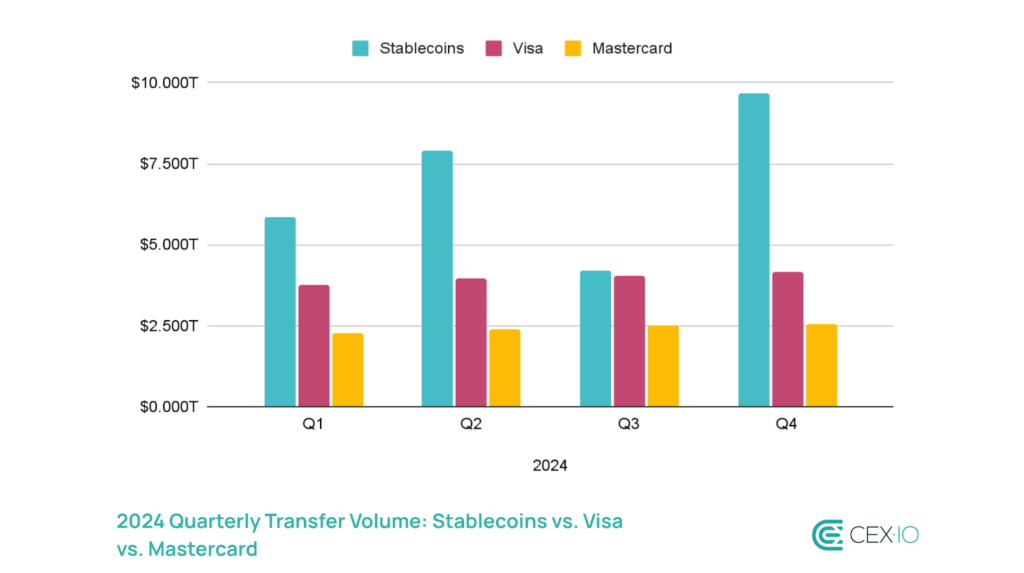
In 2024, a quiet revolution took place in global finance. Stablecoins, once considered a niche utility for crypto traders, processed more transaction volume than Visa and Mastercard combined. Estimates place stablecoin activity between $15.6 trillion and $27.6 trillion, marking a historic shift in how value moves globally. What started as a fringe innovation on public blockchains has now evolved into a parallel financial system with significant weight.

This development raises urgent questions for the European Union. Can it chart its own path as the world tilts toward blockchain-based financial rails? Or, is it simply swapping reliance on Visa and Mastercard for dependence on dollar-pegged stablecoins? In the battle of digital euro vs stablecoins, the answer could define Europe’s economic sovereignty for decades to come.

Stablecoins Surpass Visa: The Rise of Crypto Payment Infrastructure

The stablecoin surge of 2024 wasn’t driven by retail crypto trading alone. It reflected the growing use of blockchain rails for remittances, cross-border commerce, and decentralized finance. At the heart of this trend sits Tether (USDT), which accounts for the majority of transaction volume. Most of it passes through the TRON network, which offers low fees and high throughput.

Source: CEX.IO

What this means is clear: global users are increasingly opting for stablecoin-based alternatives over traditional payment systems. These digital tokens offer instant settlement, lower friction, and global reach. Traditional financial institutions are still struggling to replicate these qualities. The fact that stablecoin transaction volume has eclipsed Visa and Mastercard underscores that we’re no longer speculating about the future of payments. It’s already happening.

Europe’s Strategic Push for Payment Sovereignty

For years, the European Union has talked about reducing its reliance on U.S.-dominated financial infrastructure. This includes not only Visa, Mastercard, and SWIFT, but increasingly, U.S.-based stablecoin issuers like Tether and Circle. Recent geopolitical events, from the weaponization of payment networks to legal disputes over data sovereignty, have made this goal more urgent.

The EU’s response has included efforts such as the European Payments Initiative (EPI) and the TARGET Instant Payment Settlement (TIPS) system. They designed regulatory frameworks like MiCA (Markets in Crypto-Assets Regulation) to create legal clarity for stablecoins and crypto assets. Yet despite these measures, Europe still lacks a native, scalable alternative that matches the liquidity and adoption of U.S. dollar-backed stablecoins.

The Digital Euro: Ambition Meets Resistance

The most visible symbol of the EU’s ambition is the digital euro, a central bank digital currency (CBDC) being developed by the European Central Bank (ECB). Intended as a digital extension of fiat money, the digital euro could offer citizens a stable, public form of programmable money, fully backed by the ECB.

But resistance is strong. Privacy advocates worry about government surveillance. Commercial banks fear that a CBDC could siphon deposits, disrupting their balance sheets and lending models. And ordinary citizens, accustomed to SEPA transfers and contactless cards, seem largely indifferent to yet another payment option. Without clear advantages over existing solutions, the digital euro risks becoming a politically costly tool with limited adoption.

At best, the ECB may launch a restricted, opt-in CBDC with usage caps. It will be useful for specific segments, but unlikely to counter the dominance of dollar-pegged stablecoins.

Stablecoins and the Illusion of Independence

Even as Europe looks to stablecoins for inspiration, it risks falling into a different trap. Most stablecoins used today are USD-denominated and backed by U.S. Treasuries. Tether, USDC, and even algorithmic solutions like DAI remain deeply tied to American monetary infrastructure. And, they are subject to U.S. regulatory reach.

This means a future built on stablecoins doesn’t free Europe from external control. It simply shifts the axis of dependency from card networks to token issuers. These stablecoins can be frozen, de-platformed, or regulated at the discretion of U.S. authorities. In this light, the debate around digital euro vs stablecoins is not just about technology. It’s about who controls the infrastructure and the monetary levers behind it.

The Missing Pillar: Euro-Pegged Stablecoins

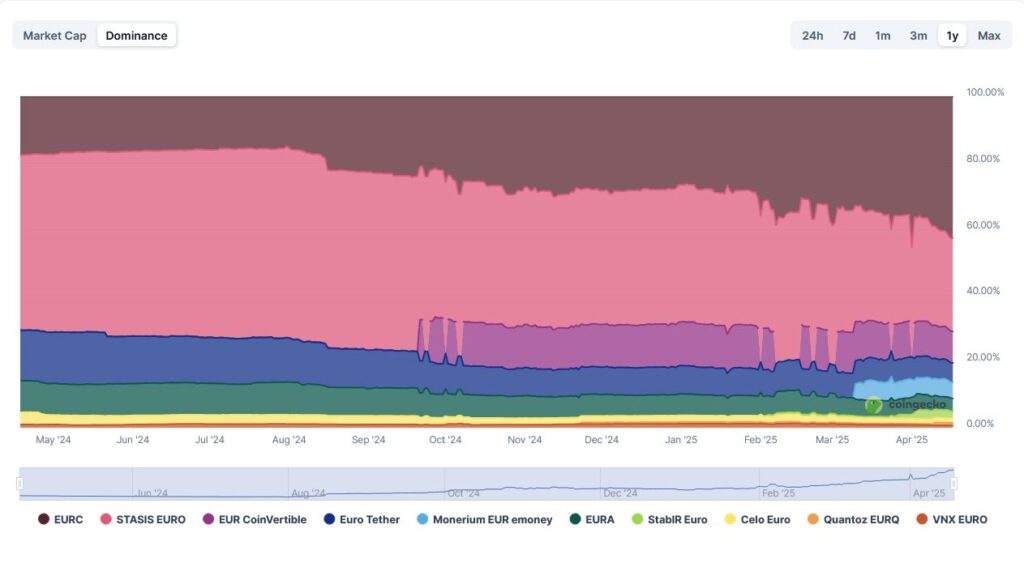
For Europe to compete in this new environment, it needs its own stablecoin ecosystem, backed by euros, regulated under MiCA, and widely integrated across DeFi and fintech platforms. While several euro-denominated stablecoins exist, such as EURS by Stasis, agEUR by Angle Protocol, and EUROC by Circle, none have achieved a meaningful market share.

Liquidity is low, DeFi adoption is fragmented, and institutional trust remains cautious. Without a strong network effect or coordinated support, these tokens struggle to find relevance in a stablecoin market still overwhelmingly tilted toward the U.S. dollar.

What Would a Sovereign Digital Strategy Look Like?

Europe’s path to true payment sovereignty likely won’t hinge on a single solution. A holistic strategy might involve the limited rollout of the digital euro for public-sector and wholesale use, promotion of MiCA-compliant euro stablecoins through bank and fintech partnerships, and deeper integration of euro-backed digital assets with decentralized finance platforms. Meanwhile, infrastructure like TIPS must evolve to support programmable digital money in real-time settlement environments.

The stakes are high. Sovereignty in digital finance means not just issuing currency, but shaping how it is programmed, transferred, and stored. Without strong European alternatives, the value infrastructure in the 21st century will continue to be governed from outside the bloc.

Conclusion: Digital Euro vs Stablecoins – A Defining Contest

The contest between the digital euro and stablecoins reflects a broader geopolitical tension. Europe desires to maintain monetary autonomy in a world where code rewrites finance. Stablecoins have proven what’s possible. They are fast, flexible, and borderless. But they are also built atop a U.S.-centric system of reserves, rules, and risks.

Europe must act swiftly if the euro is to remain a relevant currency in the digital era. It must not just issue new forms of money, but ensure that the rules governing them reflect European values, privacy standards, and economic priorities. Otherwise, the future of European payments may be settled, not in Frankfurt or Brussels, but in Washington, New York, or on a smart contract running in the cloud.

Readers’ frequently asked questions

What is the difference between a CBDC and a stablecoin?

A Central Bank Digital Currency (CBDC) is a digital version of a country’s official currency, issued and guaranteed by its central bank. It’s like cash in digital form, fully controlled by public monetary authorities. In contrast, a stablecoin is issued by a private entity (such as Tether or Circle) and typically backed by assets like U.S. Treasury bonds or fiat deposits held in commercial banks. While both are designed to maintain a stable value and can be used for digital payments, the key difference is that CBDCs are sovereign money. They are legal tender backed by the state, whereas stablecoins are private instruments that may be regulated but are not state-issued. This distinction affects everything from trust and legal status to how they function in cross-border payments or emergency interventions.

Despite regulatory clarity in the EU through frameworks like MiCA, euro-pegged stablecoins haven’t taken off mainly due to weak network effects and a lack of liquidity. The global crypto economy is mostly priced and paired in U.S. dollars, so exchanges and DeFi protocols prioritize USD-backed stablecoins. Additionally, there has been limited participation from major European banks or fintechs in issuing or promoting euro-backed digital assets. Trust also plays a role. Issuers of euro stablecoins haven’t yet established the scale or transparency to rival USDT or USDC. Without a large trading volume or compelling use cases specifically demanding euro-denominated liquidity, these tokens struggle to gain relevance in global markets.

If stablecoins are so dominant, why doesn’t Europe just use them?

Using USD-backed stablecoins might seem practical, but it poses long-term risks for the EU. These assets are tied to the U.S. financial system. They’re backed by U.S. dollars, rely on American banks, and operate under U.S. regulatory influence. That means U.S. authorities can exert control over how and where they’re used, even freezing assets or blacklisting wallets. For Europe, depending on these instruments would replicate the vulnerabilities it already faces with Visa, Mastercard, and SWIFT. The EU wants to build digital infrastructure aligning with its own legal standards, privacy protections, and monetary policy. It will not achieve this goal through outsourcing critical financial rails to foreign-controlled stablecoins.

What Is In It For You? Action Items You Might Want to Consider

Start tracking euro-pegged stablecoins before the crowd does

While USD-backed stablecoins dominate for now, euro-denominated options like agEUR and EUROC could see renewed interest if Europe ramps up its regulatory support. Consider adding them to your watchlist; not for immediate trades, but as long-term positioning in case liquidity and utility pick up.

Don’t overlook TRON’s role in stablecoin flows

Tether on TRON continues to lead in transaction volume, especially in remittance-heavy corridors. If you’re active in arbitrage, cross-chain DeFi, or even OTC flows, TRON-based USDT might offer faster and cheaper settlement routes than Ethereum-based assets. Time to check your bridge strategies.

Stay alert to CBDC policy shifts – they’re a market signal

The Digital Euro may be slow-moving, but when central banks speak, markets listen. Keep an eye on ECB statements and pilot programs. Any serious push toward a retail CBDC, even with restrictions, could impact euro stablecoin demand, EUR-denominated trading pairs, and regional on/off-ramps. Think macro, position micro.

Survival Over Stacking: Why Bitcoin Miners Are Selling and What It Means for the Industry

Bitcoin miners on a selling spree.

A growing number of Bitcoin mining firms are shifting from accumulation to liquidation. Miners are selling significant portions of their BTC holdings in response to mounting financial and operational pressures. This ongoing trend, driven by tighter post-halving rewards, rising energy costs, and changing market dynamics, signals a clear departure from the longstanding “hodl” strategy that once defined the sector. Rather than panic-driven capitulation, the sell-off increasingly reflects a pragmatic shift: miners are choosing operational sustainability over speculative conviction.

The Economics Behind the Exodus

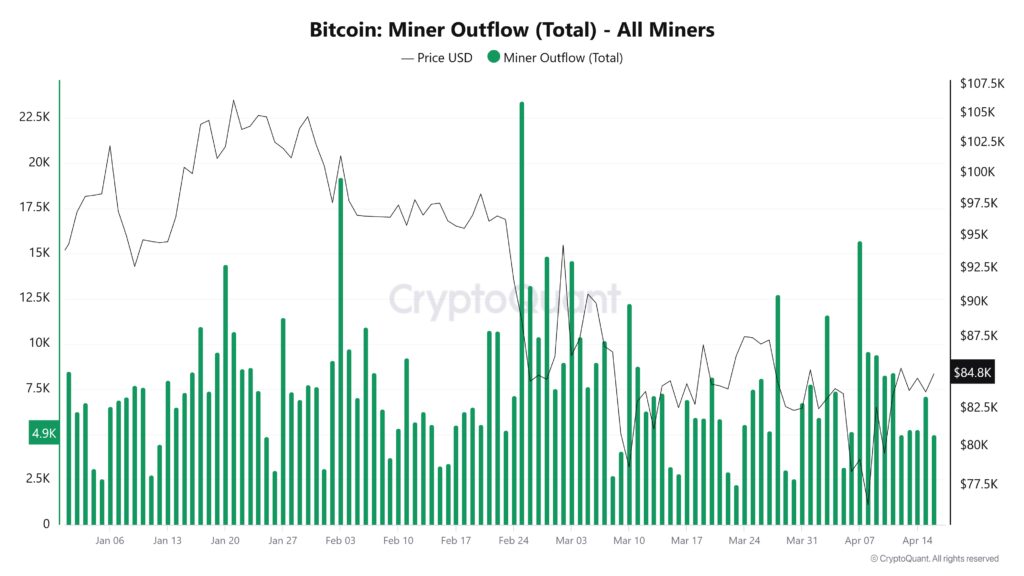
Throughout the first quarter of 2025, miner activity on-chain has shown a marked increase in BTC outflows. In early April alone, over 15,000 BTC, valued at approximately $1.1 billion at the time, were transferred from miner wallets to exchanges. This behavior aligns with the economic aftermath of the April 2024 halving, cutting block rewards from 6.25 to 3.125 BTC. Combined with higher mining difficulty and energy prices, particularly in key jurisdictions like North America and parts of Asia, many miners now face significantly compressed margins.

Bitcoin’s price performance over the past year added both complexity and urgency to this shift. After surpassing its previous all-time high in November 2024 and briefly topping $100,000 in December, BTC entered 2025 on a volatile note. It retreated to the $80,000–$85,000 range by March. As profit expectations narrowed, miners, especially those with debt obligations or public shareholders, began selling more aggressively.

From HODL to Self-Funding

A notable sign of this strategic shift is the move toward self-funding models among prominent mining firms. Instead of holding mined Bitcoin for long-term gains, these companies are increasingly using BTC sales to finance operations, reinvest in infrastructure, or service credit lines.

This approach reflects a maturing attitude in the sector. Mining firms are evolving from speculative entities into capital-efficient businesses, better aligned with the demands of institutional investors and public markets. Miners aim to remain agile in a more competitive and less forgiving landscape. Hence, they build liquidity buffers and reduce dependency on external financing.

A Divided Industry

Importantly, not all players are following the same script. While many mid-sized and public miners have opted to reduce their BTC reserves, others with lower operational costs or more diversified revenue streams continue to accumulate. This divergence underscores a structural shift within the industry. Miners are no longer a unified cohort of holders, but are instead adapting to localized economic and regulatory pressures.

Moreover, a contrasting trend has emerged among institutional investors and publicly listed crypto funds. Some of these entities have used the recent miner-led price dips as buying opportunities, reinforcing the dynamic of miners selling into institutional demand. The result is a gradual power shift: while miners once held the majority of newly issued Bitcoin, financial firms are now absorbing a larger share of the circulating supply.

Implications for Market Stability

The scale and consistency of miner selling have naturally raised concerns about market health. Sudden inflows of BTC to exchanges often foreshadow price corrections, and many traders are closely watching miner reserve data for signs of sustained pressure. However, historical patterns suggest that miner sell-offs, especially following halving events, are not inherently destabilizing. Rather, they often coincide with broader consolidation phases before the next bullish expansion.

That said, the broader implications are significant. As miners reduce their role as primary holders, price dynamics are increasingly shaped by institutional strategies, regulatory shifts, and macroeconomic trends. The decentralization ethos that once defined Bitcoin is now evolving into a more complex financial ecosystem, one where power, liquidity, and influence are more diffusely distributed.

The recent surge in miner-led BTC selling marks more than just a response to market stress. It is a strategic recalibration for survival. As 2025 unfolds, miners are repositioning themselves as financially disciplined operators, attuned to the realities of a post-halving, high-cost environment. For investors and analysts, this transformation offers both challenges and opportunities: while miner capitulation can weigh on short-term prices, it may also pave the way for a healthier, more resilient Bitcoin ecosystem in the long run.

Readers’ frequently asked questions

What exactly does a Bitcoin miner do, and why do they earn Bitcoin?

Bitcoin miners use powerful computers to solve complex mathematical problems that validate and secure transactions on the Bitcoin network. This process is called proof-of-work. When a miner successfully confirms a block of transactions, they are rewarded with newly created Bitcoin. This is known as the block reward. Miners also earn small fees paid by users making those transactions. This reward system incentivizes miners to keep the network running, but it becomes less profitable over time, especially after a halving event cuts the reward in half.

What is a “halving,” and why does it affect how much Bitcoin miners earn?

A halving is a scheduled event that happens roughly every four years on the Bitcoin network. It cuts the amount of new Bitcoin given to miners in half. For example, in April 2024, the block reward dropped from 6.25 BTC to 3.125 BTC. Halvings are built into Bitcoin’s code to control inflation by gradually reducing the rate at which new BTC enters circulation. While this makes Bitcoin scarcer over time, it also reduces the income miners earn from mining. It often forces them to sell more of their holdings to cover their costs.

Is it bad for Bitcoin if miners sell a lot of their BTC?

Not necessarily. Miners selling Bitcoin is a normal part of the ecosystem. They need to cover their expenses like electricity, hardware, and facility costs. While large sales can temporarily affect the market, Bitcoin is a global asset with many types of buyers, including retail investors and institutions. In fact, many institutional investors are now buying the Bitcoin that miners are selling. This shift in who holds Bitcoin doesn’t weaken the network but does change the market dynamics. It moves influence from miners to financial firms and long-term investors.

What Is In It For You? Action Items You Might Want to Consider

Monitor miner wallet flows for early market signals

Keep an eye on on-chain data tracking Bitcoin miner reserves and outflows. Significant BTC movements from miner wallets to exchanges can act as an early indicator of potential price pressure. Tools like CryptoQuant and Glassnode provide real-time metrics. Adding those to your watchlist could help you anticipate short-term volatility before it hits the broader market.

Use dips from miner sell-offs as strategic accumulation windows

If you’re long-term bullish on Bitcoin, periods of miner-driven selling may present ideal entry points. Historically, these sell-offs occur during post-halving adjustments and often lead to temporary price corrections, not full market breakdowns. Set buy orders near psychological support levels (e.g., $78K–$80K) and consider dollar-cost averaging to take advantage of market dips without overexposing.

Reassess your allocation strategy as market structure evolves

As power shifts from miners to institutions, the volatility profile and liquidity landscape of Bitcoin are evolving. Traders may want to rebalance their portfolios accordingly. This could mean shifting some exposure toward BTC derivatives, tracking ETF flows, or even adding miner equities if you’re bullish on their adaptation strategies. Understanding who’s driving the market now can give you an edge in aligning with the momentum.

Mantra Token Crash Triggers Market Shock and Insider Trading Concerns

Mantra’s OM token plunged over 90% in a sudden freefall

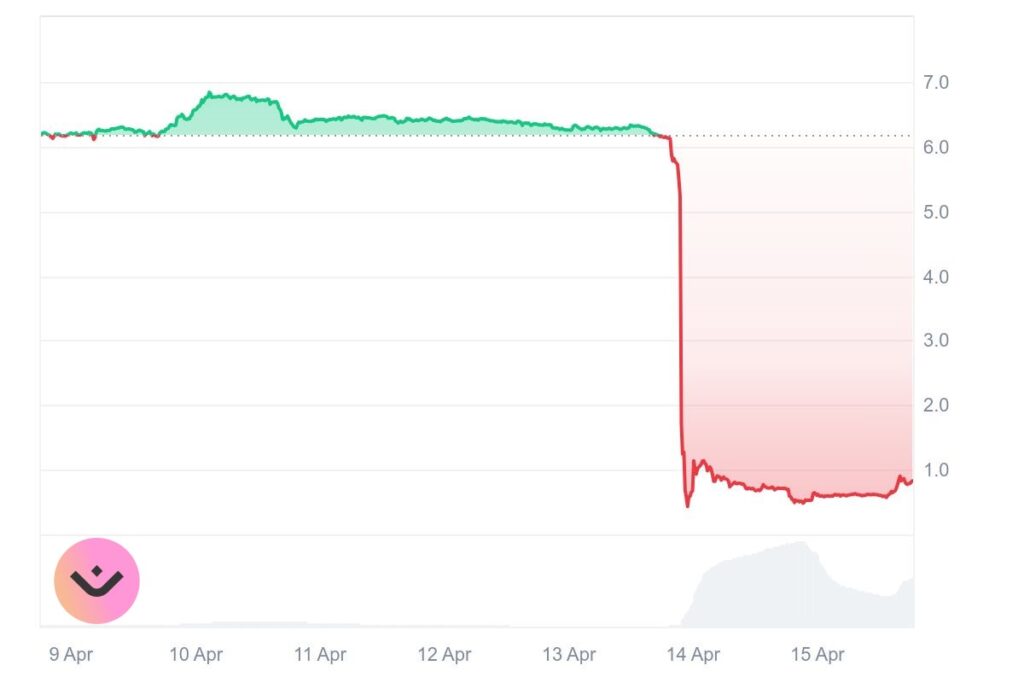
Mantra’s OM token experienced a catastrophic crash on April 13, plummeting more than 90% in value within a single hour and wiping out over $5 billion in market capitalization. The sudden collapse sparked widespread panic across crypto markets, with industry analysts and investors scrambling to understand what went wrong. The project’s leadership points to forced liquidations on centralized exchanges (CEXs) as the root cause. However, emerging on-chain data suggests there may be more to the story.

Mantra Blames Forced Liquidations by CEXs

According to Mantra co-founder John Patrick Mullin, a series of automatic liquidations on exchanges such as Binance and OKX triggered the token’s freefall. These were allegedly initiated during low-liquidity trading hours, leading to a cascade effect as margin positions were force-closed without warning. Mullin criticized CEXs for lacking transparency and acting without adequate safeguards. He argued that these exchanges hold disproportionate power over the fate of crypto assets.

Suspicious On-Chain Activity Sparks Insider Concerns

However, blockchain analysts have uncovered a series of suspicious transactions that suggest possible pre-crash token dumping. Seventeen wallets reportedly transferred over 43 million OM tokens to exchanges in the hours leading up to the price collapse. This volume represents more than 4.5% of OM’s circulating supply at the time. While some of these wallets have been linked to early investors and private round participants, these parties have denied involvement in any coordinated sale.

https://twitter.com/jp_mullin888/status/1912089490119860245

Tokenomics Adjustments Raise Transparency Issues

Further complicating the narrative, OKX quietly updated OM’s tokenomics during the chaos. The circulating supply jumped from 60 million to over 880 million tokens. The move, made without public explanation, raised concerns about how such backend adjustments may have influenced price discovery or affected leverage ratios on derivative platforms.

Derivatives Surge Amid Retail Losses

In the aftermath, derivatives trading volume for OM surged by over 7,000%, indicating that some traders capitalized on the extreme volatility. Meanwhile, retail investors took to social media to express outrage and despair. Many compared the event to the 2022 Terra (LUNA) collapse.

Regulatory Scrutiny and Erosion of Trust

Mantra, a Dubai-regulated project under VARA (Virtual Assets Regulatory Authority), had positioned itself as a credible DeFi platform with ties to major real estate developers in the UAE. The crash now places its regulatory standing and investor trust under significant pressure.

As the dust settles, the incident highlights the urgent need for greater transparency in token issuance, clearer exchange disclosure practices, and enhanced investor protection mechanisms. Whether this was a systemic failure or a more coordinated act remains under investigation. But one thing is clear: trust in crypto market infrastructure has once again been shaken.

Readers’ frequently asked questions

What is a circulating supply, and why did the change in OM’s supply matter during the crash?

Circulating supply refers to the number of tokens that are actively available for trading on the market. When OKX updated OM’s circulating supply from 60 million to over 880 million during the crash, it signaled that far more tokens might suddenly be tradable than previously thought. This change can affect a token’s price because it impacts how scarce the asset appears to be. If traders think there are suddenly many more tokens available, they may value each one less. That can lead to panic selling or rapid devaluation, especially if the change isn’t explained clearly in real-time.

What are “forced liquidations” on exchanges, and how can they crash a token’s price so quickly?

Forced liquidations happen when a trader uses borrowed funds (leverage) to make a bet on a token’s price and the market moves against them. Exchanges like Binance or OKX automatically close these positions to prevent further losses when the trader’s collateral falls below a certain threshold. If a token’s liquidity is thin, meaning there aren’t enough buy orders to absorb rapid sell-offs, these liquidations can cause a sharp price drop. When many liquidations happen at once, especially in off-hours when fewer trades are taking place, it can trigger a cascade effect where each liquidation causes more, creating a rapid freefall in price.

How can wallet activity be tracked before a crash, and is that information public?

Yes, wallet activity on blockchain networks is public and traceable using blockchain explorers like Etherscan or third-party analytics tools like Arkham or Nansen. These platforms allow users to monitor how much of a token is being moved between wallets and to exchanges. In the case of OM, analysts noticed that certain wallets sent millions of tokens to exchanges shortly before the crash. That kind of movement is often interpreted as a sign that the holders might be preparing to sell, especially if they’ve been inactive for a long time or are linked to early investors.

What Is In It For You? Action Items You Might Want to Consider

Keep an eye on token unlock schedules and circulating supply updates

If a project’s circulating supply can jump from 60 million to 880 million without prior notice, as it did with Mantra’s OM token, you need to know before it happens, not after. Bookmark the project’s tokenomics page (if it has one). You can also use on-chain tools like TokenUnlocks or DeFiLlama to stay ahead of major unlock events that could flood the market.

Track large wallet movements before you trade

Want to spot trouble early? Start watching what the big wallets are doing. If you see multiple dormant or investor-linked wallets moving large amounts of tokens to exchanges right before a price dip, that’s your cue to sit back; or get out. Tools like Arkham, Nansen, or even free explorers can give you a serious edge.

Be cautious when trading tokens with high-leverage exposure

If a token is heavily traded in derivatives markets, its price can collapse fast under pressure, especially during off-peak hours. Before jumping into a trade, check platforms like Coinglass to see if open interest is rising too quickly. High leverage might look like an opportunity, but it’s often the match that lights the fuse.

Paul Atkins SEC Chair Confirmation: Crypto Industry Applauds Deregulatory Pivot

Paul Atkins nominated for SEC chair

The U.S. Senate has confirmed Paul Atkins as SEC Chair, signaling a significant shift in U.S. financial regulation and crypto policy. With a 52–44 vote largely split along party lines, the move places a seasoned deregulator at the helm of the Securities and Exchange Commission at a time when digital assets are front and center in the regulatory debate.

Atkins served as an SEC commissioner from 2002 to 2008 and is widely known for his pro-market stance. He prefers lighter-touch regulation, hence his confirmation marks a turning point for the crypto sector. The industry has long called for a more constructive and consistent regulatory environment.

A New Direction for Crypto Oversight

Atkins’ arrival follows months of transition at the SEC. Under interim Chair Mark Uyeda, the Commission had already begun retreating from the aggressive enforcement strategies that defined Gary Gensler’s tenure. Several pending cases against crypto firms, particularly those involving stablecoins, meme coins, and proof-of-work mining, have been scaled back or quietly dropped.

In his confirmation hearing, Paul Atkins signaled support for a principled and coherent regulatory framework for digital assets, suggesting a preference for rulemaking over enforcement-first tactics. Industry leaders have welcomed this position.

“Under Chairman Gensler, we were operating in a climate of fear and uncertainty,” said one executive at a major U.S.-based crypto exchange. “With Atkins, there’s real hope we’ll see a more constructive approach that balances investor protection with innovation.”

Financial Disclosures Raise Questions

Atkins’ close ties to the digital asset space, however, have drawn criticism. Ethics disclosures reveal a joint net worth of over $327 million, with holdings in Anchorage Digital and Securitize, two well-known crypto firms. He also previously advised Off the Chain Capital, a digital asset investment fund.

These connections have prompted concerns from Democrats and regulatory watchdogs. Senator Elizabeth Warren, who opposed the confirmation, described Atkins’ ties to the industry as “a textbook case of regulatory capture.”

Progressive advocacy group Better Markets issued a warning, stating that Atkins “helped lay the groundwork for the 2008 financial crisis through reckless deregulation, and now he’s poised to do the same with crypto.”

Internal Challenges at the SEC

Atkins takes over an SEC that has been significantly reshaped. Staff reductions and unfilled commissioner seats have weakened the agency’s capacity. Only two commissioners currently serve, both Republican, with Democrat Caroline Crenshaw holding an expired term.

With Congress actively reviewing legislation to redefine digital asset regulation, Atkins may enjoy a broad mandate to lead the SEC into a new era of crypto oversight. While some of that authority could shift to lawmakers, the Chair’s influence over enforcement priorities, rulemaking, and guidance remains substantial.

Outlook: Relief or Risk?

Many in the crypto space view Paul Atkins’ SEC Chair confirmation as the start of a long-awaited policy reset. Critics, however, warn that excessive deregulation could expose investors and the broader economy to new risks.

Atkins now faces the challenge of navigating these competing pressures: fostering innovation while maintaining market integrity.

The confirmation of Paul Atkins as SEC Chair marks a pivotal moment in the ongoing evolution of U.S. financial regulation. For the crypto industry, it offers hope for long-sought clarity and relief from aggressive scrutiny. For skeptics, it raises familiar concerns about regulatory rollback and market vulnerability. Either way, whatever happens under Atkins’ leadership will significantly shape the path ahead for digital assets in America.

Readers’ frequently asked questions

What does the SEC actually do in the crypto space, and why does its leadership matter so much?

The U.S. Securities and Exchange Commission (SEC) is the federal agency responsible for enforcing securities laws. These are the rules that govern how investments are offered and sold. In crypto, the SEC decides which digital assets qualify as “securities,” meaning they must follow the same rules as stocks or bonds. That includes being registered, providing public disclosures, and being subject to investor protection laws. The Chair of the SEC sets the agency’s priorities. He decides whether to focus on enforcement, propose new rules, or pull back regulation altogether. So when someone like Paul Atkins, who supports fewer restrictions, steps in, it can dramatically shift how the crypto market operates in the U.S., especially when it comes to legal clarity and business risk.

What happened to the lawsuits the SEC had filed against crypto firms under the previous chair?

According to multiple reports, several enforcement actions initiated under former SEC Chair Gary Gensler have been either paused, dismissed, or deprioritized in recent months. This includes actions targeting stablecoin issuers, memecoin-related projects, and proof-of-work mining operations. These decisions began under interim Chair Mark Uyeda and will likely continue under Paul Atkins. However, so far, no formal rule has been issued reversing the SEC’s enforcement stance.

If Atkins supports crypto, does that mean investing in crypto is safer now?

Not necessarily. Regulatory support might improve market clarity and reduce legal uncertainty, making the environment more stable for legitimate crypto businesses. But it doesn’t make individual cryptocurrencies or tokens less risky. Prices can still swing wildly, scams can still happen, and not every project is trustworthy. Even with a friendlier SEC chair, investors still need to do their own research, understand what they’re buying, and consider the risk of loss. Atkins may make the space more open to innovation, but that doesn’t equal safety for every investment.

What Is In It For You? Action Items You Might Want to Consider

Keep an eye on SEC enforcement updates – some cases may quietly disappear

With Paul Atkins now leading the SEC, the agency’s aggressive stance on crypto enforcement is cooling off. If you’re holding tokens previously caught in regulatory crossfire, like stablecoins or meme-related assets, it might be worth revisiting those positions as legal pressure eases. Check for any dropped cases or revised guidance; it could signal a new entry window.

Reassess your exposure to U.S.-based crypto projects

A more industry-friendly SEC means reduced regulatory risk; for now. That could benefit U.S.-registered platforms and DeFi protocols looking to re-engage with domestic markets. If you’ve avoided U.S.-linked tokens or exchanges due to past SEC actions, consider re-evaluating their upside under the new leadership.

Don’t confuse deregulation with immunity – DYOR remains critical

While the tone from Washington may be shifting, not all regulatory risks are off the table. Traders should stay cautious: Atkins may ease enforcement, but fraud and project failures are still real. Make sure your trading decisions are backed by research, not just headlines.

- Advertisement -

FEATURED