Home Blog Page 118

Ripple Breaks TradFi Barrier with $1.25B Hidden Road Acquisition: Crypto’s First Full-Service Prime Broker Is Born

Ripple acquires Hidden Road

In a landmark $1.25 billion acquisition, Ripple has secured Hidden Road, a premier multi-asset prime brokerage firm, clearing over $3 trillion in trades annually. This deal marks an unprecedented strategic pivot for the crypto-native giant. It catapults the company into the institutional finance realm and positions Ripple as a direct challenger to legacy financial institutions.

A Strategic Leap into Institutional Finance

Ripple’s acquisition of Hidden Road signals a significant transformation in its business model. Traditionally known for its blockchain-based payment solutions and digital asset initiatives, Ripple is now poised to extend its operational footprint into the traditional brokerage domain. Hidden Road’s established infrastructure caters to over 300 institutional clients across diverse asset classes including FX, digital assets, and derivatives. This merger furnishes Ripple with capabilities that bridge decentralized finance (DeFi) and traditional finance (TradFi).

Hidden Road: A Robust Institutional Backbone

Hidden Road has built its reputation by processing a staggering volume of transactions, with annual clearances totaling around $3 trillion. The firm’s expertise in prime brokerage and its comprehensive service offerings have made it a trusted partner for institutional investors. Integrating these services under Ripple’s umbrella will enhance the operational scale and enrich the range of services Ripple can offer, from order execution to post-trade processing.

Amplifying RLUSD Utility

Bolstering Ripple’s USD-backed stablecoin, RLUSD, is one of the acquisition’s key components. Hidden Road already utilizes RLUSD as collateral within its suite of brokerage products. This move can further integrate RLUSD into mainstream financial operations. By leveraging this stablecoin in cross-margining and collateralization frameworks, Ripple aims to improve its competitive positioning against other leading stablecoins in an increasingly crowded market.

Bridging TradFi and DeFi

Ripple’s bold move comes at a time when the boundaries between decentralized finance and conventional banking are becoming increasingly blurred. Hence, the acquisition represents more than a mere expansion. It is a clear statement that digital asset firms are now prepared to offer the comprehensive, cross-asset services traditionally reserved for established financial institutions. With Hidden Road’s infrastructure, Ripple is set to become a formidable contender in the institutional finance space, offering a blend of cutting-edge blockchain technology and conventional brokerage expertise.

Looking Ahead

As regulatory clarity continues to improve in key markets, Ripple’s acquisition of Hidden Road is also viewed as a response to the evolving financial landscape. Institutional players are just beginning to embrace digital assets as a core component of their portfolios. The deal is pending final regulatory approvals and is anticipated to close in the coming months. Industry watchers are keenly observing how this integration might redefine market dynamics and influence the future trajectory of blockchain-driven financial innovation.

Ripple’s integration of Hidden Road augments its service offering and cements its position as a pioneer in merging blockchain innovations with institutional-grade financial services. For an industry eager to see crypto not merely as an experimental asset class but as an essential component of global finance infrastructure, this acquisition is a significant milestone that could accelerate the ongoing convergence of traditional and digital finance.

Readers’ frequently asked questions

What are the key operational differences between Hidden Road’s service offerings and Ripple’s existing business model?

Hidden Road operates as a multi-asset prime brokerage firm. It provides services such as order execution, risk management, collateral management, and post-trade settlement for various asset classes, including foreign exchange, derivatives, and digital assets. It processes approximately $3 trillion in transactions annually and serves over 300 institutional clients. By contrast, Ripple has primarily focused on blockchain-based payment solutions. It developed the XRP Ledger, which facilitates cross-border payments and digital asset transactions. The acquisition of Hidden Road integrates these established financial services into Ripple’s portfolio. It expands Ripple’s operational capability to encompass both traditional brokerage functions and blockchain technology.

What is RLUSD, and what role does it play in the Hidden Road acquisition?

RLUSD is Ripple’s stablecoin pegged to the U.S. dollar and is designed to maintain a stable value to support high-volume, institutional trading. In the context of the acquisition, Hidden Road already uses RLUSD as collateral within some of its brokerage products. This integration enhances RLUSD’s function by embedding it directly into established financial operations. It links digital asset transactions with traditional collateral management practices.

What regulatory approvals does Ripple need to finalize the Hidden Road acquisition?

The acquisition of Hidden Road is subject to final regulatory approvals, as noted in official communications and public press releases related to the deal. Ripple has indicated that completing the transaction requires clearance from the relevant financial regulatory authorities. The available sources do not provide further details on the specific regulatory bodies involved. However, they emphasize that the approval process is a standard requirement for such a significant financial transaction.

What Is In It For You? Action Items You Might Want to Consider

Keep a close watch on Ripple’s official communications and regulatory updates surrounding the acquisition

Stay informed about key milestones, such as final regulatory approvals and updates on the integration timeline. This can help you better anticipate market reactions that may influence XRP and RLUSD performance.

Monitor the trading volumes and liquidity metrics of RLUSD across major exchanges

Since RLUSD is being integrated as collateral in established brokerage products, any significant changes in its usage and liquidity could signal shifts in market dynamics. These signals can offer practical information for timing stablecoin-related trades or hedging strategies.

Track institutional market engagement indicators and broader sentiment on the XRP Ledger

Ripple is expanding its institutional footprint by bridging traditional brokerage services with blockchain technology. Investors can observe trends in institutional flows or sentiment changes on platforms connected to XRP. Changes in sentiment may offer valuable signals to refine your trading approach.

Staking Is Now Official in Hong Kong: What It Means for Crypto Platforms and Investors

Hong Kong's Securities and Futures Commission approved crypto staking

Licensed crypto platforms in Hong Kong can now legally offer staking services, following new guidance issued by the Securities and Futures Commission (SFC). For investors, this opens the door to compliant yield-generation options under a regulated umbrella. Platforms, meanwhile, face strict requirements on custody, transparency, and operational safeguards. As staking goes mainstream in Hong Kong, the market may enter a new era of secure, institutional-grade crypto finance.

A Regulated Path to Passive Income

The SFC’s updated guidelines allow licensed Virtual Asset Trading Platforms (VATPs) and authorized virtual asset funds to provide staking services. That marks a pivotal shift in the region’s crypto landscape. Staking, a process by which users lock up digital assets to support proof-of-stake blockchains and earn rewards, has often operated in regulatory grey zones. Hong Kong’s move brings this practice under a clear compliance framework.

The decision contrasts sharply with other jurisdictions. While Singapore banned retail staking in 2023 and the U.S. Securities and Exchange Commission continues to take an aggressive enforcement stance, Hong Kong is embracing staking within a tightly controlled regulatory structure. The shift forms part of the city’s broader “ASPIRe” roadmap to position itself as a premier Web3 and digital asset hub.

Strict Conditions for Platforms and Funds

Under the new rules, VATPs must retain full control over staked assets. The rule explicitly prohibits delegating to third parties, ensuring platforms cannot outsource key custodial functions, thereby reducing counterparty risks and maintaining accountability.

Additionally, platforms must:

  • Disclose all staking-related risks, including validator inactivity, blockchain errors, or hacks.
  • Clearly outline fees, lock-up periods, and the terms for unstaking.
  • Implement robust continuity plans for service disruptions.

Authorized virtual asset funds are also permitted to stake, provided they:

  • Use only SFC-licensed or authorized platforms.
  • Avoid leveraged or derivative exposure tied to staked assets.
  • Adhere to caps designed to manage liquidity and volatility risks.

Investor Implications

These developments mean investors can now access staking via compliant, regulated platforms with greater confidence in asset protection and risk transparency. Legitimizing staking could draw in institutional participants who previously remained on the sidelines due to uncertainty around its legal status.

While yields from staking remain as volatile as the crypto markets, the regulatory clarity offered by the SFC may attract capital seeking yield without compromising on compliance.

Outlook

Hong Kong’s staking framework represents a rare middle ground between innovation and regulation. It accommodates the demand for decentralized financial services while prioritizing investor protection and systemic integrity.

As regional and global players evaluate their stance on staking, Hong Kong’s model could serve as a blueprint, especially for jurisdictions aiming to foster digital finance ecosystems without compromising oversight.

Readers’ frequently asked questions

What does it mean that platforms must “retain full control over staked assets”? Can users still access or withdraw their funds while staking?

When the SFC says platforms must retain full control over staked assets, it means these licensed crypto platforms cannot pass the staked cryptocurrencies to third-party providers, custodians, or external validators. Instead, the platform itself must directly manage the staking process and custody of the tokens. This requirement is meant to increase accountability and reduce the risk of loss due to outsourcing. For users, this means your assets are managed by the platform you signed up with, and not sent elsewhere. However, staking usually involves locking your assets for a fixed period, during which withdrawals may not be possible. Each platform will have its own rules for how long your assets are locked and how the unstaking process works. But, they are now required to clearly explain these terms upfront.

If I live outside of Hong Kong, can I use one of these licensed platforms to stake my crypto?

That depends on the platform’s licensing terms and your local regulations. The new rules apply to platforms licensed by the Hong Kong SFC, meaning they must follow Hong Kong law. Some of these platforms may choose to offer services only to Hong Kong residents or users in certain jurisdictions. Others might apply for licenses in multiple countries to serve a broader audience. If you’re based outside of Hong Kong, you’ll need to check whether a particular platform accepts users from your location and whether staking services are legally available in your country. Also, keep in mind that your home country’s tax laws or financial regulations might treat staking income differently. So, it’s wise to consult a tax advisor before getting involved.

How do staking rewards work in this regulated setup, and are they guaranteed?

Staking rewards are generated in the process of helping run a proof-of-stake blockchain. Your crypto helps validate transactions and in return, you receive a share of the network’s rewards. In Hong Kong’s new regulated environment, the staking process must be transparent and compliant. But that still doesn’t mean rewards are guaranteed. The return you earn will depend on several factors, like the blockchain network’s own reward system, the performance of the validator your platform uses, and any fees charged by the platform. The SFC requires platforms to disclose all these details, including the risks involved, such as losing rewards due to validator downtime or technical failures. So while staking can offer a yield, it still carries risk, and no specific return can be promised in advance.

What Is In It For You? Action Items You Might Want to Consider

Explore SFC-Licensed Platforms for Safer Staking Opportunities

If you’ve been hesitant to stake due to regulatory uncertainty, now’s the time to reconsider. Start scouting licensed Hong Kong-based platforms offering staking under the new SFC rules. With mandatory custody safeguards and transparent risk disclosures, you can explore passive income with more confidence.

Reassess Your Yield Strategy in Light of Regulatory Clarity

With staking now officially greenlit in a major financial hub, it’s worth revisiting your DeFi vs. CeFi staking allocations. You might want to shift part of your portfolio to regulated platforms offering more protection, especially if you manage significant capital or plan for long-term holds.

Stay Ahead by Tracking Platform Licensing Status

Not every platform will qualify under the SFC’s strict conditions. Keep tabs on which exchanges are gaining or applying for licenses. Early adoption could offer first-mover benefits, like new staking products, promotions, or improved liquidity on compliant platforms.

U.S. Sanctions $1B in Crypto Tied to Houthis and Garantex: Stablecoins in the Crosshairs

US imposes sanctions on Houthi crypto wallets.

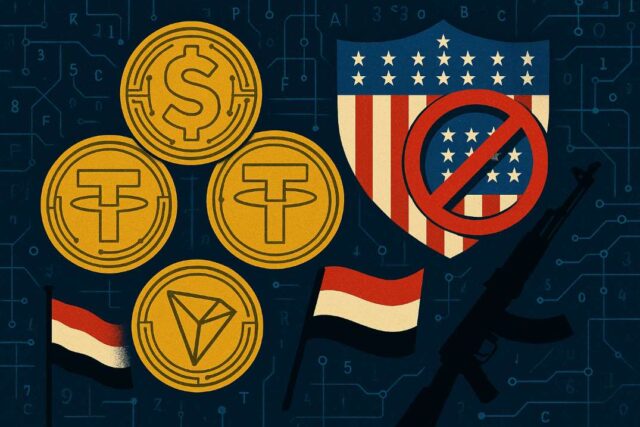
The U.S. Treasury has blacklisted eight cryptocurrency wallets allegedly tied to Yemen’s Houthi rebels and the Russia-based sanctioned crypto exchange Garantex. This marks a new chapter in using digital assets for geopolitical destabilization, with nearly $1 billion in USDT transacted across Tron-based wallets. The case underscores how stablecoins are becoming the preferred tool for sanctioned entities to move funds beyond the reach of traditional financial systems.

Crypto-Backed Sanctions Evasion: The Treasury’s Findings

The U.S. Department of the Treasury’s Office of Foreign Assets Control (OFAC) sanctioned eight wallets allegedly linked to Houthi operatives and Garantex. OFAC stated they were used to launder significant volumes of stablecoins. All eight wallets operated on the Tron blockchain and were transacting in Tether (USDT).

Two addresses were reportedly tied to centralized exchanges. The other six wallets were controlled by individuals or entities facilitating peer-to-peer transactions. According to the Treasury, the wallets were involved in procurement networks acquiring weapons and dual-use goods. Iranian and Russian intermediaries allegedly played a key role.

“Houthi financial facilitators have used a complex network of exchange houses and money launderers, including individuals located in Iran, Djibouti, and Turkey, to collect funds and to funnel the group’s financial activity through a global web of exchange operators,” the Treasury said in its April 4 statement.

Tron and Tether: Tools for Terror?

The transactions occurred exclusively in USDT on Tron. Such a pattern is frequently observed in illicit activity due to Tron’s low transaction costs and speed. According to Chainalysis, a blockchain analytics firm, most of the illicit wallet activity happened after Garantex was initially sanctioned in 2022. That raises questions about the effectiveness of sanctions enforcement in the decentralized finance ecosystem.

Garantex, a Russian crypto exchange already blacklisted for facilitating ransomware and darknet activity, was again linked to this laundering network. The Treasury’s findings suggest that the Houthis leveraged Garantex and affiliated intermediaries to convert crypto into tangible assets, including weapons and equipment.

A Growing Role for Stablecoins in Illicit Finance

This enforcement action highlights a growing trend: stablecoins are emerging as a favored vehicle for sanctioned actors. Unlike Bitcoin, which is volatile, stablecoins like USDT offer price stability and dollar exposure. Stablecoins are ideal tools for operational spending by groups operating outside the formal banking system.

The Houthis themselves have previously acknowledged using crypto as a workaround for banking restrictions and sanctions. In a now-deleted Telegram post, a Houthi spokesperson described digital assets as “a necessary alternative” in light of international financial blockades.

Industry Implications: Pressure Mounts on Infrastructure Providers

The case raises serious questions about crypto infrastructure’s role in enabling illicit finance. Neither Tether nor Tron are accused of wrongdoing. Nevertheless, their networks were used to facilitate nearly $1 billion in illicit transfers.

Tether Ltd. froze wallets in previous law enforcement cases and claims to work closely with authorities. But, these actions are typically reactive rather than proactive. The incident renews scrutiny of the need for real-time monitoring tools and deeper wallet-level due diligence. That holds particularly true for platforms facilitating off-ramp transactions or host wallet infrastructure.

A Policy Turning Point for Crypto and National Security

The OFAC sanctions mark a turning point in how the U.S. treats stablecoins, as financial products, and as potential instruments of national security risk. They also reflect a broader trend in global regulation, where digital asset compliance standards are increasingly tied to counterterrorism and anti-money laundering frameworks.

With U.S. lawmakers and regulators already weighing stricter controls on stablecoin issuance, this case could accelerate the legislative push toward requiring stablecoin issuers and blockchain platforms to enforce KYC, wallet tracking, and counterparty risk controls.

Conclusion: The Double-Edged Sword of Blockchain Technology

The Houthis–Garantex case demonstrates the strengths and vulnerabilities of blockchain-based finance. While blockchain offers transparency and traceability, bad actors are exploiting the speed and pseudonymity of decentralized networks to circumvent global sanctions regimes. For policymakers, this incident is a warning shot. Stablecoins are no longer a theoretical risk vector but a present and operational one.

Readers’ frequently asked questions

If Tether and Tron weren’t directly involved in any wrongdoing, why are they mentioned so often in connection with illicit activity?

Tether and Tron weren’t implicated as bad actors, but their technologies were used in the transactions now under sanction. That’s because USDT, Tether’s dollar-pegged stablecoin, and the Tron blockchain are popular for very legitimate reasons. USDT is widely accepted and holds its value. Tron is fast and cheap to use. However, these same features also make them attractive to people trying to move money discreetly or cheaply. And that includes those engaged in illegal activities. That doesn’t make Tether or Tron guilty, but it does put their infrastructure under more scrutiny. Regulators are increasingly questioning whether platforms and issuers like these should do more to monitor the use of their services, even if they aren’t directly responsible for the wallets involved.

How does the U.S. government enforce sanctions on crypto wallets if the blockchain is supposed to be decentralized?

Enforcing sanctions in a decentralized system is tricky, but not impossible. When the U.S. sanctions a crypto wallet, it adds the wallet’s address to the Specially Designated Nationals (SDN) list. From that point on, U.S.-based companies, crypto exchanges included, may not legally interact with those wallets. Major exchanges and financial service providers must block transactions with those addresses. In addition, some stablecoin issuers like Tether can technically freeze tokens held in blacklisted wallets if requested by law enforcement. So while the government cannot shut down the blockchain itself, it can heavily restrict access to the real-world services that make crypto useful, such as exchanges and stablecoins.

What should regular crypto users or investors take away from this? Could this kind of enforcement affect them?

Most everyday crypto users won’t be directly affected by these sanctions if they’re using legitimate platforms and not transacting with wallets on the sanctions list. However, these actions highlight a growing trend: governments are no longer just watching crypto; they’re acting on it. This means compliance is becoming a bigger part of the crypto landscape. If you’re an investor, it’s worth being aware that regulatory actions could impact stablecoins and exchanges you rely on if they’re found to be tied to illicit flows. Over time, users may see more identity checks, more frozen wallets, and tighter restrictions, even for innocent users, especially on platforms with global reach. Staying on regulated exchanges and being aware of where your funds go is becoming increasingly important

What Is In It For You? Action Items You Might Want to Consider

Reevaluate your exposure to USDT on the Tron network

Given that USDT on Tron was the preferred vehicle for nearly $1 billion in illicit flows, it’s safe to say this pairing has drawn regulatory heat. While it’s still widely used, traders should consider diversifying across other chains or stablecoins (like USDC on Ethereum or Arbitrum) that may carry less risk of scrutiny or disruption going forward.

Double-check your counterparties and wallet connections

It’s no longer enough to avoid darknet markets or obvious scam projects. Regulatory bodies are tracking wallet flows more aggressively, and transacting (unknowingly or not) with sanctioned addresses could put your funds or access at risk. Consider using wallet screening tools or services with built-in compliance alerts to stay on the safe side.

Stay ahead of enforcement by favoring KYC-compliant platforms

While some traders prefer non-custodial and offshore platforms, the regulatory tide is turning fast. The safest move may be to stick with exchanges that enforce KYC and AML procedures. These platforms are more likely to survive in a tightening regulatory environment. They also reduce your exposure to reputational or transactional fallout.

Ohio Cracks Down on Sports Prediction Markets Over Integrity, Risk and Underage Access

Ohio moves to reign in sports prediction markets

In a high-profile move underscoring mounting tensions between fintech innovation and state oversight, the Ohio Casino Control Commission (OCCC) has issued cease-and-desist orders to Kalshi, Robinhood, and Crypto.com. The orders effectively halt their sports prediction markets within the state. The OCCC’s action reflects growing national concern about how they should regulate these event-based financial contracts, often built on blockchain structure or marketed via crypto-native platforms.

Regulators Say: It’s Gambling, Not Innovation

The Commission’s Executive Director, Matthew Schuler, stated that the products offered on the platforms were “akin to sports betting,” which falls under Ohio’s legal gambling framework. Regulators pointed to concerns about underage participation, lack of consumer protections, and insufficient transparency. They argue the platforms did not meet the standard imposed on licensed sportsbooks operating legally within Ohio.

“Purchasing a contract based on which team a person thinks will win a sporting event is no different than placing a bet through a traditional sportsbook,” Schuler wrote.

Kalshi Pushes Back: A Federally Regulated Exchange

Kalshi, a federally registered Designated Contract Market (DCM) overseen by the Commodity Futures Trading Commission (CFTC), contests that view. It maintains that its event contracts, including those tied to sports outcomes, are legitimate financial products governed by federal law. However, the OCCC and other state regulators see such contracts as gambling under state statutes, regardless of federal registration.

Ohio is the latest state to act, joining New Jersey, Nevada, and Massachusetts. Those states recently took steps to prohibit Kalshi and similar platforms from offering prediction markets linked to sports results. Kalshi has already initiated legal action against regulators in New Jersey and Nevada, setting the stage for a broader jurisdictional showdown between federal and state authorities.

Sports Leagues Warn of Integrity Threats

Meanwhile, Major League Baseball (MLB) has voiced its own concerns. In a letter to the CFTC last year, MLB warned that sports prediction markets, especially those not subject to established integrity protocols, could threaten the fairness and perception of sports competitions. The league argued that these platforms do not share real-time information, leaving sports organizations without tools to detect suspicious activity.

Robinhood and Crypto.com Also Targeted

Robinhood and Crypto.com, both of which have expanded into crypto-forward prediction market offerings, are also under scrutiny. The cease-and-desist letters did not detail their specific products. Nevertheless, their inclusion signals Ohio’s intent to draw a hard regulatory line as fintech and crypto platforms continue to blur boundaries between financial speculation and gambling.

Innovation Meets the Limits of State Law

Prediction markets have gained popularity recently as novel instruments within decentralized finance (DeFi) and retail trading communities. Platforms like Kalshi pitch themselves as democratizing tools for public forecasting and hedging. They offer users the chance to trade on everything from political outcomes to economic indicators. However, the inclusion of sports outcomes, particularly those accessible to retail users, appears to have pushed state regulators into action.

The Bigger Picture: A Regulatory Crossroads

The regulatory uncertainty surrounding prediction markets underscores a growing gap between innovation and compliance. Platforms argue they are creating new asset classes akin to options or futures. States, on the other hand, are increasingly treating them as unlicensed gambling operations, especially when tied to sports.

For now, Ohio’s decision raises fundamental questions for the fintech and crypto sectors: Can they safely offer blockchain-based or CFTC-regulated event contracts without violating state laws? Or will the legacy frameworks designed to govern brick-and-mortar sportsbooks constrain innovation in this space?

As legal challenges unfold and regulatory boundaries are tested, the outcome will have significant implications for how DeFi intersects with consumer protection. Can prediction markets mature into mainstream financial instruments – or will they remain confined to legal grey zones?

Readers’ frequently asked questions

What exactly is a prediction market and how does it work on platforms like Kalshi?

A prediction market is a type of exchange where users can trade contracts whose value is tied to the outcome of future events. On platforms like Kalshi, these contracts function similarly to financial derivatives. For example, you might buy a contract that pays out if a specific sports team wins a match. If the event occurs as predicted, the contract pays $1; if not, it pays $0. The price of the contract before the event reflects the market’s collective belief in the likelihood of that outcome. E.g. $0.65 implies a 65% chance. Kalshi operates these markets under federal approval from the Commodity Futures Trading Commission (CFTC). When applied to sports outcomes, these contracts closely resemble bets, which is why state regulators are stepping in.

Why is there a conflict between state and federal regulators over these platforms?

The conflict arises from how different authorities define and regulate these products. Kalshi and similar platforms argue that their markets are federally regulated financial instruments, much like futures contracts. They have received approval from the CFTC, which governs derivatives markets in the U.S. However, states like Ohio classify any contract based on the outcome of a sports event as a form of gambling, which requires a state license. This leads to a legal grey area. A platform can comply with federal law but is still considered illegal at the state level. That’s why Kalshi faces legal challenges in multiple states, despite federal approval.

Can I still use these platforms if I live in Ohio or another state that banned them?

The affected platforms are legally required to block access to their sports prediction markets for users physically located in a state that issued a cease-and-desist order like Ohio did. This typically means using geolocation tools to restrict participation. If you try to access the service from a banned state, you may either be blocked entirely from the platform or only restricted from trading specific contracts, such as those tied to sports events. Attempting to bypass these restrictions could violate state laws. It’s important to check whether a platform is authorized to operate prediction markets in your state before using it, especially if it involves real money.

What Is In It For You? Action Items You Might Want to Consider

Monitor State-Level Regulations Closely – Especially If You’re Trading Event Contracts

If you’re dabbling in prediction markets or event-based trading, now’s the time to pay attention to your state’s stance. Even platforms with federal clearance, like Kalshi, can face shutdowns at the state level. This means access to specific contracts, or the entire platform, could disappear overnight depending on where you live. Consider using platforms that are fully transparent about their regulatory status in your jurisdiction.

Reassess Exposure to Sports-Linked Products on Crypto Platforms

With Robinhood and Crypto.com being targeted for sports prediction activities, it’s worth reviewing any positions or experimental features you’ve used tied to sports outcomes. Even if they’re marketed as “event contracts,” regulators are now scrutinizing them as gambling. You might want to pause activity in this category until there’s more legal clarity; or stick to financial or political markets that haven’t yet triggered the same level of enforcement

Watch for Market Signals on Regulatory Crackdowns

This Ohio move could be a bellwether. If more states follow, platforms may pull back or reconfigure offerings, which could affect liquidity, volatility, and user access. Traders who stay ahead of these shifts by tracking legal actions and platform announcements will have a better edge in adjusting strategy or pivoting to compliant DeFi alternatives where available

Circle’s $5 Billion IPO: A Major Step for Cryptocurrencies in Mainstream Finance

Stablecoin issuer Circle initiates IPO process

Circle, the issuer of the USDC stablecoin, is preparing for an Initial Public Offering (IPO) scheduled for late April 2025. The company is targeting a valuation of up to $5 billion and has enlisted JPMorgan Chase and Citigroup as underwriters. This move represents a pivotal moment for Circle as the first major stablecoin issuer to go public. It’s signaling a shift toward greater integration of cryptocurrencies into traditional financial markets.

A Strategic Move Toward Mainstream Financial Integration

Circle’s decision to go public comes at a time when traditional financial institutions are increasingly accepting cryptocurrencies. The involvement of JPMorgan Chase and Citigroup highlights the growing recognition of digital assets and blockchain technology within the mainstream financial sector. For Circle, an IPO could provide the necessary visibility and credibility to expand its influence as a leader in the stablecoin space. A space that has become crucial for digital payments and decentralized finance (DeFi) applications.

Circle’s CEO, Jeremy Allaire, has long emphasized the company’s commitment to building trust and transparency. By going public, Circle wants to solidify its place within both the cryptocurrency and traditional finance ecosystems. It could also open the doors for other crypto companies seeking legitimacy in the eyes of institutional investors.

Lessons from Past Setbacks

Circle’s path to this IPO has not been without its challenges. The company had previously attempted to go public through a special purpose acquisition company (SPAC) merger. It was initially valued at $4.5 billion, but the deal fell apart in late 2022 due to market volatility and regulatory uncertainties. Instead of retreating, Circle pivoted to pursue a more traditional IPO, beginning its filing process in early 2024. This move reflects a strategic realignment. Circle is now looking to take advantage of more favorable market conditions and a clearer regulatory environment.

A Move to New York: Symbolizing Financial Integration

As part of its preparations for the IPO, Circle is relocating its global headquarters from Boston to New York City. The company plans to set up shop at One World Trade Center in early 2025, signaling its intent to further integrate with traditional financial markets. This relocation is a powerful statement of Circle’s ambition to align itself with the giants of the finance world and deepen its connections within the industry.

Implications for the Cryptocurrency Landscape

Circle’s IPO could potentially set a significant precedent for other cryptocurrency firms looking to go public. As the first major stablecoin issuer to pursue such a move, Circle’s success, or challenges, could influence the trajectory of other digital asset firms seeking to secure a foothold in the public markets. The IPO may also enhance the legitimacy of cryptocurrencies in general, making them more attractive to institutional investors and mainstream financial players.

However, Circle’s IPO is not without risks. The cryptocurrency market remains volatile, and regulatory challenges surrounding stablecoins continue to evolve. Circle will need to navigate these complexities carefully if it is to succeed in its public market debut. Despite these challenges, Circle’s determination to move forward with its IPO reflects its resilience and long-term vision for growth within the cryptocurrency and broader financial sectors.

Looking Ahead: What’s Next for Circle and the Crypto Market?

The financial world will watch closely as Circle prepares to file its IPO and complete its move to New York City. This landmark event could have far-reaching implications for the future of cryptocurrency firms and their place within the traditional finance industry. Circle’s successful IPO could pave the way for other crypto companies to follow suit. The digital asset space is increasingly seen as a legitimate and integral part of the global financial system.

For Circle, the IPO is not just a financial milestone. It’s a step toward redefining how cryptocurrencies interact with traditional finance. As the company continues to innovate and expand its offerings, its public debut will likely mark the beginning of a new chapter for Circle and the broader cryptocurrency market.

- Advertisement -

FEATURED